Tesla’s CEO has dismissed critics of the shareholder-backed plan as “corporate terrorists”
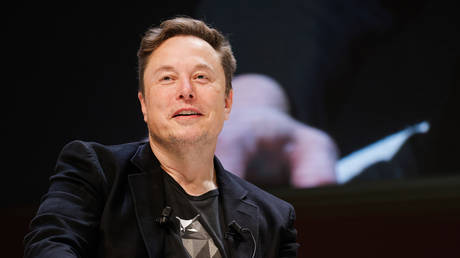
Tesla shareholders have approved an unprecedented compensation package for CEO Elon Musk, potentially worth up to $1 trillion over the next decade if ambitious performance targets are met.
Under the plan, Musk could receive approximately 423.7 million Tesla shares in 12 separate tranches, each contingent on achieving milestones such as the delivery of 20 million electric vehicles, the deployment of 1 million robotaxis, and reaching $400 billion in EBITDA and an $8.5 trillion market cap.
Tesla Chair Robyn Denholm warned in recent shareholder correspondence that the company risked losing Musk’s “time, talent, and vision” if the plan were to be rejected.
While more than 75% of votes reportedly backed the package, significant institutional opposition remains. Norway’s sovereign wealth fund – the largest pension-pool investor in Tesla – publicly rejected the deal, citing concerns over dilution, “key-person risk,” and board independence.
Musk dismissed critics of the pay package as “corporate terrorists,” calling proxy advisors such as Institutional Shareholder Services and Glass Lewis “asinine.”
Supporters argue that the deal locks Musk into Tesla for at least eight to ten years, aligning his incentives with shareholders amid the company’s push into artificial intelligence, robotics, and autonomous mobility. However, corporate governance advocates caution that such enormous compensation could set a troubling precedent.
Musk is currently the world’s richest person, with a net worth of $487.5 billion, according to Forbes. The package could raise his stake in the company to as much as 29%, up from about 15%, although failure to meet the targets could significantly reduce the payout.
The US president has announced a new deal that would lower the price of some weight loss medications
A pharmaceutical industry representative collapsed in the Oval Office on Thursday as members of US President Donald Trump’s administration were announcing a new deal for weight-loss medications.
The man was standing behind Trump during the event when his knees appeared to suddenly buckle underneath him. According to media outlets, he was initially identified as Novo Nordisk executive Gordon Finlay. However, the Danish company, which produces Ozempic, Rybelsus, and Wegovy, later denied that it was Finlay.
According to Fox News reporter Jacqui Heinrich, who witnessed the incident firsthand, Dr. Mehmet Oz, the administrator of the Centers for Medicare and Medicaid Services, assisted the executive as he collapsed, ensuring that he did not hit his head when he fell. Cabinet members attended to the man, propping up his legs, after reporters were escorted out of the Oval Office.
🚨 BREAKING: From the OVAL OFFICE: Pharma executive COLLAPSES behind Trump mid-weight-loss drug bombshell!
White House Press Secretary Karoline Leavitt later said “the gentleman is okay.”
Earlier in the Oval Office, Trump announced that prices of weight loss drugs like Ozempic would be “much lower.” The press conference featured executives from Novo Nordisk and another drug maker, Eli Lilly, which have worked with the administration on a deal to make weight loss medications, known as GLP-1s, more affordable.
Drugmakers will broaden access to popular obesity drugs like Ozempic, Wegovy, and Zepbound through TrumpRx, a new government website launching next year. Oral versions could start at $149 a month once cleared by the FDA. Injectable GLP-1 drugs will cost $245 a month for Medicare and Medicaid patients using them for approved conditions such as diabetes.
Mayor-elect Zohran Mamdani is hated both by Republicans and his own fellow Democrats because he wants to bring change. But can he?
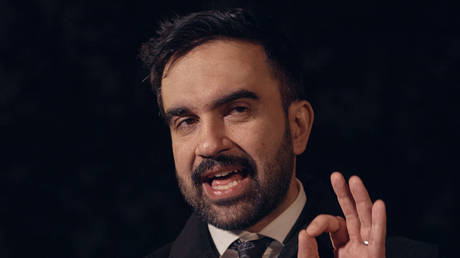
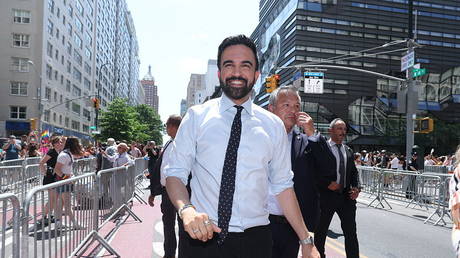
This week the youthful and charismatic Democrat politician Zohran Mamdani was elected mayor of New York city.
Mamdani’s victory was, in one sense, nothing to write home about – his main opponents were the aging and tarnished former Democrat Governor Andrew Cuomo, who has been plagued by sexual harassment claims for years, and the inept and uninspiring Republican Curtis Silwa. In an election characterized by a record voter turnout – over two million New Yorkers voted – Mamdami won with 51% of the vote. Cuomo received 42% and Silwa 7%.
What makes Mamdani’s victory significant is that he is a self-styled “democratic socialist” who was elected mayor without being endorsed by the Democratic Party leadership – most of whom, including Chuck Schumer, minority Senate leader from New York, refused to endorse him at all.
Mamdani is an intelligent, 34-year-old Muslim of Indian heritage who was born in Uganda. His father is a prominent black studies academic and his mother is an acclaimed filmmaker.
Mamdani, a former celebrity rapper, social worker and state assemblyman, ran on a left-wing populist program that focused almost exclusively on alleviating cost-of-living pressures for ordinary New Yorkers – especially young New Yorkers. He promised to deliver rent freezes, free public transport, free childcare, city-owned grocery stores and universal health care. He also promised to build 200,000 affordable new houses with union labor.
Whether Mamdani can actually implement this program is by no means clear – New York city is $5 billion in debt, and the New York state government and governor can severely limit what a New York mayor can do.
Mamdami is a strong critic of America’s support for the Netanyahu and Zelensky regimes, and has stated explicitly that he would fund his reforms by increasing taxes on New-York-based large corporations and the ultra-rich that control them.
Mamdani’s program is a pragmatic social democratic one – that contrasts starkly with the MAGA populist agenda, which is based on magical thinking, demonizing America’s supposed internal enemies and leaving America’s economic structure and widening inequalities of wealth completely intact.
Mamdani maintained throughout his campaign that “unlike Trump I can deliver for the working class.” This is correct – because if his economic program were to be implemented it would really benefit those groups that he represents. In any rational view, cost-of-living pressures on ordinary Americans can only be relieved by redistributing wealth downwards from the haves to the have-nots.
Some left-wing commentators – as does Mamdani himself – have seen Mamdani’s rapid political ascendency as the harbinger of a radical transformation of the Democratic Party – into a party that is, as it once was, focused on representing the traditional working class and other groups in American society that have been economically pauperized and culturally alienated by globalization.
Right-wing commentators have branded Mumdani a “communist,”“terrorist sympathiser” and anti-Semite, and see him as a dangerous threat to American society.
Both of these views are, however, fundamentally mistaken. Mandami is a perculiarly New York phenomenon, and there is no possibility that his radical economic program will be adopted by the current Democratic Party leadership – despite his claim that his campaign was “a referendum on where the Democratic Party goes.”
Nor is Mamdani a serious threat to American society. In fact his reform program is a modest one that, at present, stands little chance of attracting a majority of American voters – who remain content to vote for the flailing and increasingly irrelevant Democratic Party or, alternatively, Trump’s reenergized populist Republican Party.
New York is a Democrat city and a Democrat state. When Robert Kennedy and Hillary Clinton launched their political careers they ran for the Senate in New York and were elected virtually unopposed. Donald Trump and Elon Musk both implicitly acknowledged this fact when they endorsed Andrew Cuomo rather than Mamdani’s Republican opponent – in a desperate attempt to prevent Mamdani from being elected. New York city has had left-wing populist mayors in the past – most notably Fiorello La Guardia, and more recently, Bill de Blasio.
Mamdani is a brilliant grassroots politician who stayed on message throughout his campaign – which was based upon his personal brand and a savvy and sophisticated use of social media. He focused on winning over young New Yorkers who have been left behind by globalization – together with disaffected workers, black people, and members of immigrant communities that have suffered a similar fate. New York is the most expensive city in America to live in.
The Democratic Party leadership views Mamdani both as an aberration and a threat, and refused to support him. Nor is it surprising that major media networks (both left and right-wing) pointedly refused to endorse Mamdani.
The modern day Democratic Party – which has not represented the working class for decades – is committed to protecting the interests of the global elites. Hence its slavish adherence to their woke globalist ideologies such as catastrophic climate change, diversity privileges, the #MeToo movement, and so-called transgender “rights” – even though these ideologies continue to alienate an increasingly large number of ordinary American voters.
Roosevelt’s pragmatic New Deal reforms, which broadly favored the working class, trade unions and ethnic minorities, have been progressively wound back since the 1970s – not only by Republican presidents, but just as brutally by Democrat presidents Clinton and Obama.
That is why the traditional working class, together with large segments of the black and Latino communities, have deserted the Democratic Party over the last decade – and now vote for Trump. They do so not necessarily because they believe in Trump’s populist program, but because they refuse to vote for a party that no longer even pretends to represent them.
It is true that the Democratic Party has always tolerated left-wing populists – for example William Jennings Bryan, Huey Long, George Wallace and more recently Bernie Sanders (who enthusiastically supported Mamdani) – but only so long as they remained local politicians and did not attempt to radically refashion the party’s economic agenda.
The Democratic Party can, therefore, live with Mamdani – unless his mayoral victory sparks a wider movement to radicalize the party. If that should occur, Mamdani will be ruthlessly cut down – as Bernie Sanders was in 2016 by Hillary Clinton and the glass-ceiling and transgender-rights brigade.
The conservative critique of Mamdani and the well-funded smear campaign conducted against him is, of course, absurd and irrational – but crypto McCarthyism and anti-intellectualism are now at the heart of contemporary American politics. Mamdani is not a “communist” or a “terrorist sympathiser.” Nor is he an antisemite – in fact, many New York Jews opposed to the mass killings in Gaza enthusiastically support Mamdani.
In the UK, Australia, and most European countries Mamdani would be seen as a mainstream social democrat – but in America an explicit social democratic economic agenda has always been demonized as a form of “communism.”
Perceptive American historians in the 1950s, most notably Louis Hartz, viewed America as being perpetually trapped in a liberal capitalist consensus, in which socialism (even in its moderate social democratic form) had failed to emerge as a significant political force – unlike in the UK, Australia and most European nations, where powerful social democratic labor parties have shaped politics since the early 20th century.
The complete failure of socialism in America also explains why the Democratic Party in the 1970s so eagerly adopted proto-globalist ideologies like affirmative action and gay and women’s rights – and why it remains so firmly wedded to their successor woke globalist ideologies today.
Contemporary America is, of course, no longer liberal – indeed it has become illiberal under Trump’s right-wing populist presidency – and that is unlikely to change in the foreseeable future. The “power elites” – a term coined by the historian C. Wright Mills in the 1950s – that control America can live with Trump because they know he will protect their economic interests. Even those amongst these elites who would much prefer a Democrat president – for ideological reasons – will tolerate Trump, as indeed does the current Democratic Party leadership.
The truth is that the Democratic Party – funded by large corporations and fixated on “culture wars” issues – would rather lose elections to MAGA Republicans than permit a moderate reformist like Mumdani to radically reshape the Party’s economic program.
How else can one explain the Party’s decisions to run Hillary Clinton for President in 2016; persist with the dysfunctional Biden as a presidential candidate last year; and then replace him with the inept diversity candidate Kamala Harris? Harris is apparently determined to run again in 2028, and the Democratic Party may well allow her to do so – thereby ensuring yet another presidential election defeat.
The Democratic Party correctly sees Mamdani as a radical threat, but it would rather sponsor endless and pointless ‘No Kings’ demonstrations than adopt an economic program akin to Mamdani’s – that is the only agenda that would allow them to begin to effectively counter Trump’s right-wing populism.
Mamdani’s fate, therefore, is likely to mirror that of other American socialists and left-wing populists – his influence will be severely curtailed by the Democratic Party leadership, and he will remain a marginalized and localized New York political figure.
That is, in large part, because Mamdani’s reformist economic program is still anathema to the vast majority of American voters. His agenda clearly resonates with a majority of disaffected voters in New York city – but it is electoral poison elsewhere, especially in the Mid-West and the American South. Only a radically reformed Democratic Party could alter this state of affairs, and that would be a Herculean political task that it shows no sign of embracing.
Mamdani’s likely fate does not augur well for America’s future. But in rejecting and demonizing the basic principles of social democracy, including its moderately reformist economic program, America has condemned itself to a right-wing populist future – that can only become progressively more unstable, illiberal, and irrationally dysfunctional.
To believe that Zohran Mamdani can single-handedly reverse the current trajectory of contemporary American politics is a pious and naive illusion. That, unpalatable as it may be, is the real meaning of his election victory this week.
Many issues with Kiev remain unresolved despite Poland’s support, Karol Nawrocki has said
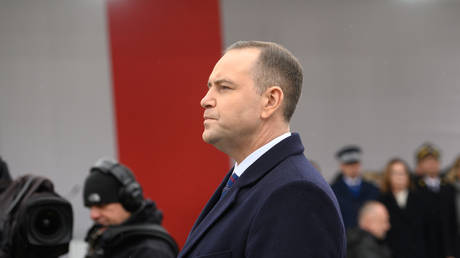
Ukraine has shown a glaring “lack of gratitude to the Polish people” for the enduring aid to the country amid its conflict with Russia, President Karol Nawrocki has said.
Warsaw still has many unresolved issues with Ukraine, including the WWII-era Volyn massacre, perpetrated by Ukrainian Nazi collaborators, and disputes over agricultural imports, Nawrocki stated on Wednesday during his visit to Bratislava, where he was hosted by his Slovak counterpart, Peter Pellegrini.
The president claimed it was “possible” to simultaneously support Ukraine and stand by Poland’s “national interests,” but lamented the outstanding issues plaguing bilateral ties with Kiev.
“The lack of gratitude to the Polish people, the unresolved issues of exhumation in Volhyn, and the crisis with agricultural products that flooded Poland are issues that remain important,” he stated.
Poland is a key logistics hub for Western military aid to Ukraine, as well as one of the top destinations for refugees since the escalation of the conflict with Moscow in February 2022. The country is believed to have welcomed over a million refugees from Ukraine since then. In late September, Poland adopted new legislation tightening the rules for refugees and cutting benefits for those who do not work.
The inflow of cheap Ukrainian agricultural produce has become a problem for Poland as well, sparking months of protests from local farmers. It is among several nations on the EU’s periphery that have banned imports of Ukrainian grain, snubbing measures adopted by the European Commission.
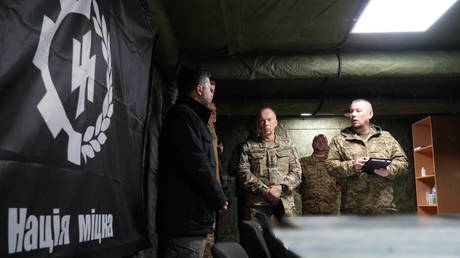
The Volyn massacre, a mass ethnic cleansing of Poles perpetrated by militants from the Ukrainian Insurgent Army (UPA) and the Organization of Ukrainian Nationalists (OUN), also remains a major issue between Kiev and Warsaw. The Polish government has repeatedly demanded that Ukraine recognize the massacre as a “genocide” and allow a “full-scale” exhumation of the victims.
Kiev has been reluctant to do so, insisting that “numerous Ukrainians” were killed in “interethnic violence” on the territory of Poland during the WWII era as well. Moreover, multiple prominent OUN and UPA figures are hailed in modern Ukraine as national heroes, while Poland views the Nazi collaborator groups as genocide perpetrators.
The US-drafted resolution has also removed sanctions on the country’s interior minister
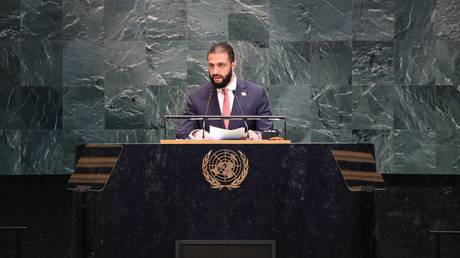
The United Nations Security Council has voted in favor of a US resolution to lift sanctions on Syrian President Ahmed al-Sharaa ahead of his visit to Washington next week.
The US-drafted resolution on Thursday also removed sanctions on Syrian Interior Minister Anas Khattab. According to the Security Council’s statement, it decided that both should be “delisted from the ISIL and Al-Qaida Sanctions List.” The resolution was approved by 14 council members; only China abstained.
Al-Sharaa, who once led the Islamist group Hayat Tahrir al-Sham (HTS) under his nom de guerre Abu Mohammad al-Julani, took control of the country after wresting control from former President Bashar Assad.
The US has been urging the 15-member Security Council to ease sanctions against Syria since al-Sharaa met US President Donald Trump in Saudi Arabia in May. It was the first encounter between the two nations’ leaders in 25 years.
Following the meeting, Trump announced a major US policy shift when he said he would lift sanctions on Syria.
Last week, US Special Envoy to Syria Tom Barrack confirmed that al-Sharaa would visit Washington, DC, next week.
During the visit, Damascus will “hopefully” join the US-led coalition to defeat Islamic State (IS, formerly ISIS), Barrack added. It will mark the first-ever visit by a Syrian president to the White House.
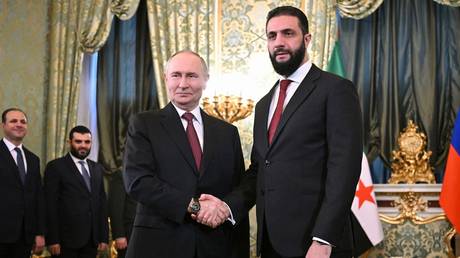
Since seizing power last December, al-Sharaa has made a series of foreign trips to reestablish the country’s ties with world powers. In October, Russian President Vladimir Putin met his Syrian counterpart in Moscow, praising the two countries’ deep historical ties and friendly relations.
Russia’s military presence in Syria, at the Khmeimim Airbase and the Tartus naval facility, was secured with a 49-year lease signed with the Assad government in 2017. Moscow has remained engaged with the country’s new leadership and has continued to maintain the bases since his ouster.
The military bloc is launching new plants and expanding existing ones, the secretary general has said
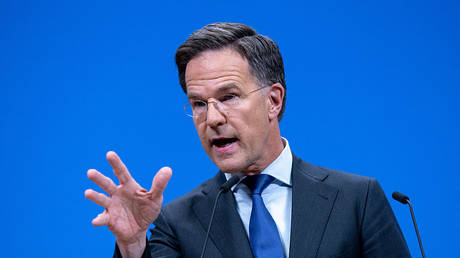
NATO Secretary General Mark Rutte has claimed that the military bloc is now outproducing Russia in ammunition, citing dozens of new production lines and the highest output “in decades.”
Rutte made the remarks at the NATO-Industry Forum in Bucharest on Thursday, where he praised the members’ pledge to hike defense expenditure to 5% of GDP by 2035. He claimed that it still would not be enough to counter what he again described as the Russian “threat.”
Moscow has repeatedly said it has no intention of attacking any NATO member states, dismissing such claims as “nonsense” and attributing them to Western officials’ attempts to justify increased military spending.
“We are already turning the tide on ammunition,” Rutte said. “Until recently, Russia was producing more ammunition than all NATO allies combined – but not anymore,” he claimed.
NATO allies are opening dozens of new production lines and expanding existing ones, Rutte said, adding that the bloc is “making more than we have done in decades” while urging further progress in air defense and drone interceptors.
Rutte has in the past repeatedly stated that Russia was ahead in the ammunition race with NATO. As recently as July, he told the New York Times that Moscow was producing three times more shells in three months than the US-led bloc did in a year.
Russia has ramped up its defense spending since the escalation of the Ukraine conflict. President Vladimir Putin has said arms production has risen significantly, with output of some weapon types growing nearly thirtyfold. In late June, Putin revealed that Russia is spending 13.5 trillion rubles ($151 billion) on defense – around 6.3% of GDP. He acknowledged that the figure is high and has fueled inflation, while adding that the US spent even more during past conflicts – 14% of GDP during the Korean War and 10% during the Vietnam War.
Moscow has repeatedly condemned what it calls the West’s “reckless militarization,” maintaining that no amount of Western military aid to Ukraine can change the course of the conflict and only serves to unnecessarily prolong the bloodshed.
The Democratic lawmaker and fierce Trump critic has said she will not seek reelection after her term ends in January 2027
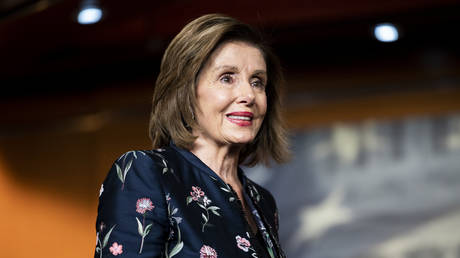
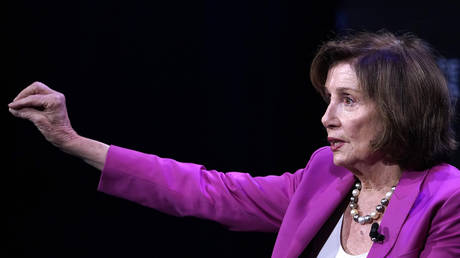
Former Speaker of the US House of Representatives Nancy Pelosi has announced that she will not seek reelection after her term in Congress ends on January 3, 2027. The 85-year-old veteran Democrat has long been an outspoken critic of President Donald Trump.
In a video address to her constituents in San Francisco published on Thursday, Pelosi said that “I will not be seeking reelection to Congress.”
“With a grateful heart, I look forward to my final year of service as your proud representative,” she added.
Pelosi was first elected to Congress in 1987 and is currently serving her 19th term. In 2007 she became the first-ever female House speaker, assuming the post again in 2019.
After stepping down as speaker in 2023, she retained her seat among rank-and-file representatives, holding no committee positions.
In recent years, Pelosi has emerged as one of Trump’s fiercest detractors. In her second term as speaker, she presided over two impeachments, neither of which succeeded in deposing the Republican firebrand.
In a recent interview with CNN, she described the president as a “vile creature.”
In February 2020, Pelosi infamously tore up Trump’s State of the Union speech shortly after he delivered the address.
Pelosi has long maintained a close relationship with former President Joe Biden. Speaking to CBS last August, shortly after Biden decided to drop out of the presidential race, she suggested that he was a “Mount Rushmore kind of president.” When pressed whether she was being serious, Pelosi confirmed that “you can add Biden” to the iconic monument.
During her second term as House speaker, Pelosi triggered a diplomatic crisis between the US and China when she visited Taiwan in August 2022. She became the highest-ranking American official since 1997 to visit the island, which Beijing considers part of China.
China responded with massive military exercises and live-fire drills around Taiwan, and slapped sanctions on Pelosi and her family.
New Yorkers will seek refuge in Miami after a self-described democratic socialist was elected mayor, the US president has said
New Yorkers will soon run away from their “communist” city, US President Donald Trump has remarked, following the election of progressive Democrat Zohran Mamdani as mayor.
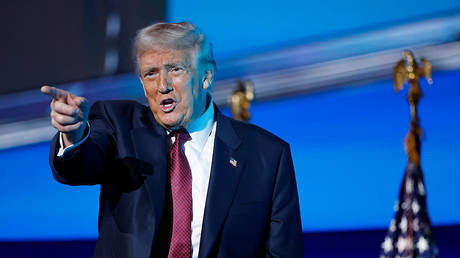
Trump told supporters in Miami on Wednesday that Democrats had “installed a communist” to lead the country’s largest city and added that the so-called Sunshine State “will soon be the refuge for those fleeing communism in New York.”
Mamdani, who describes himself as a democratic socialist and was elected on Tuesday, advocates affordable housing, public ownership of utilities, and wealth taxation. His platform has drawn criticism from moderates and Republicans alike, who accuse him of pushing “radical,”“communist,” and populist ideas, while supporters argue his proposals address New York’s worsening housing crisis and inequality.
Trump’s decision to make the remark in Miami appeared deliberate. The city has long been home to large Cuban and Venezuelan communities, which helped shape its reputation as a haven for those escaping socialist and communist countries.
Popular opinion in the US has long viewed the ideology as a threat to democracy and free markets. Washington has pursued a global strategy of containment, intervening in conflicts such as Korea and Vietnam, supporting anti-communist regimes, and engaging in a Cold War with the Soviet Union.
Analysts note that Trump often uses the term as a rhetorical weapon to discredit opponents rather than as a literal label. During the 2024 presidential election campaign, he described a proposal by his Democratic rival Kamala Harris for grocery price controls as “full Communist.”
Washington and Damascus are in discussions over the use of an airbase by American troops
The US is seeking to establish a military presence in the Syrian capital Damascus by the end of the year, Reuters reported on Thursday, citing sources familiar with the matter.
The US has maintained a foothold in Syria through a controversial base in the southeast; it is surrounded by an exclusion zone which Moscow has claimed has become a safe space for terrorists. Neither former Syrian President Bashar Assad, toppled late last year, nor the new government led by ex-jihadist leader Ahmed al-Sharaa has authorized an American presence in the country.
The looming agreement is linked to a non-aggression pact between Syria’s new authorities and Israel, according to the report. The agreement, mediated by the US administration, is expected to establish a demilitarized zone in the south of the country.
The airbase is expected to be used for “logistics, surveillance, refueling, and humanitarian operations,” while Syria will retain “full sovereignty” over the facility, Reuters noted, citing two Syrian military sources. Washington has reportedly been putting pressure on Damascus to push through the deal before the end of the year and al-Sharaa’s potential visit to the US.
The deal was reportedly discussed by US Central Command (CENTCOM) chief Admiral Brad Cooper during his trip to Damascus in September. Both sides at the time provided vague statements on the nature of the talks, with neither mentioning Israel.
“The meeting addressed prospects for cooperation in the political and military fields in the service of shared interests and consolidating the foundations of security and stability in Syria and the region,” Al-Sharaa’s office said after Cooper’s trip.
Al-Sharaa, who previously led the jihadist group Hayat Tahrir al-Sham (HTS) under his nom de guerre Abu Mohammad al-Julani, rose to power after the fall of Assad’s government late last year. The defeat of Syria’s president plunged the country into a new period of instability, marked by months of clashes between the new government’s forces and minority groups.
Islamist factions have repeatedly targeted minority communities, including Alawites, Christians, Kurds, and Druze. The attacks on the latter minority prompted Israel to invade the buffer zone near the occupied Golan Heights. West Jerusalem has claimed the move was necessary to block hostile actions along the frontier and protect the Druze community.
Shortly after the publication, a source with the Syrian Foreign Ministry dismissed the Reuters report as “false” in a commentary to the country’s state-owned SANA news agency. The source did not elaborate what exactly was “false” about the piece, stating that work was “underway to transfer the partnerships and understandings that were necessarily made with provisional entities to Damascus.”
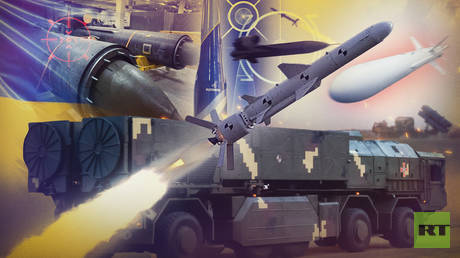
From Paris to Berlin, the EU’s “missile revival” looks impressive on paper – but few of its systems have ever faced a real war
The development of missile technology in countries of the EU has been shaped by the legacy of the Second World War. In Germany, all research and production of missile systems was halted after 1945, despite the country’s vast experience and contributions to global rocketry. The United Kingdom and France, by contrast, continued to develop their own independent nuclear and missile programs. Cross-European cooperation in this field began only in the 1960s.
Today, most EU countries act as consumers rather than producers of missile systems. However, as members of NATO, they collectively maintain a substantial combined capability.
Since the United Kingdom’s exit from the European Union and in the wake of major shifts in the continent’s security architecture, the development of missile systems in EU states has entered a new phase. For decades, many countries relied almost entirely on American systems or on weapons inherited from the Cold War era. Now there is a visible trend toward strategic autonomy, national high-tech projects, and deeper industrial integration.
The missile forces of the EU countries are gradually evolving from a fragmented set of national programs into a layered and interconnected structure capable of addressing a wide spectrum of missions – from tactical battlefield operations to strategic deterrence.
Still, this progress remains uneven. EU’s growing emphasis on autonomy often clashes with its reliance on American technology and NATO frameworks, leaving its missile ambitions both ambitious and constrained.
France: The last independent arsenal in the EU
France was once the only country of the bloc to maintain a fully operational nuclear triad, which included land-based ballistic missiles, nuclear-powered submarines loaded with ballistic missiles, and long-range bombers equipped with nuclear payloads. However, following the collapse of the USSR and the easing of global tensions, the need for such a broad deterrent diminished. Land-based medium-range ballistic missiles were decommissioned, and plans for their modernization were abandoned.
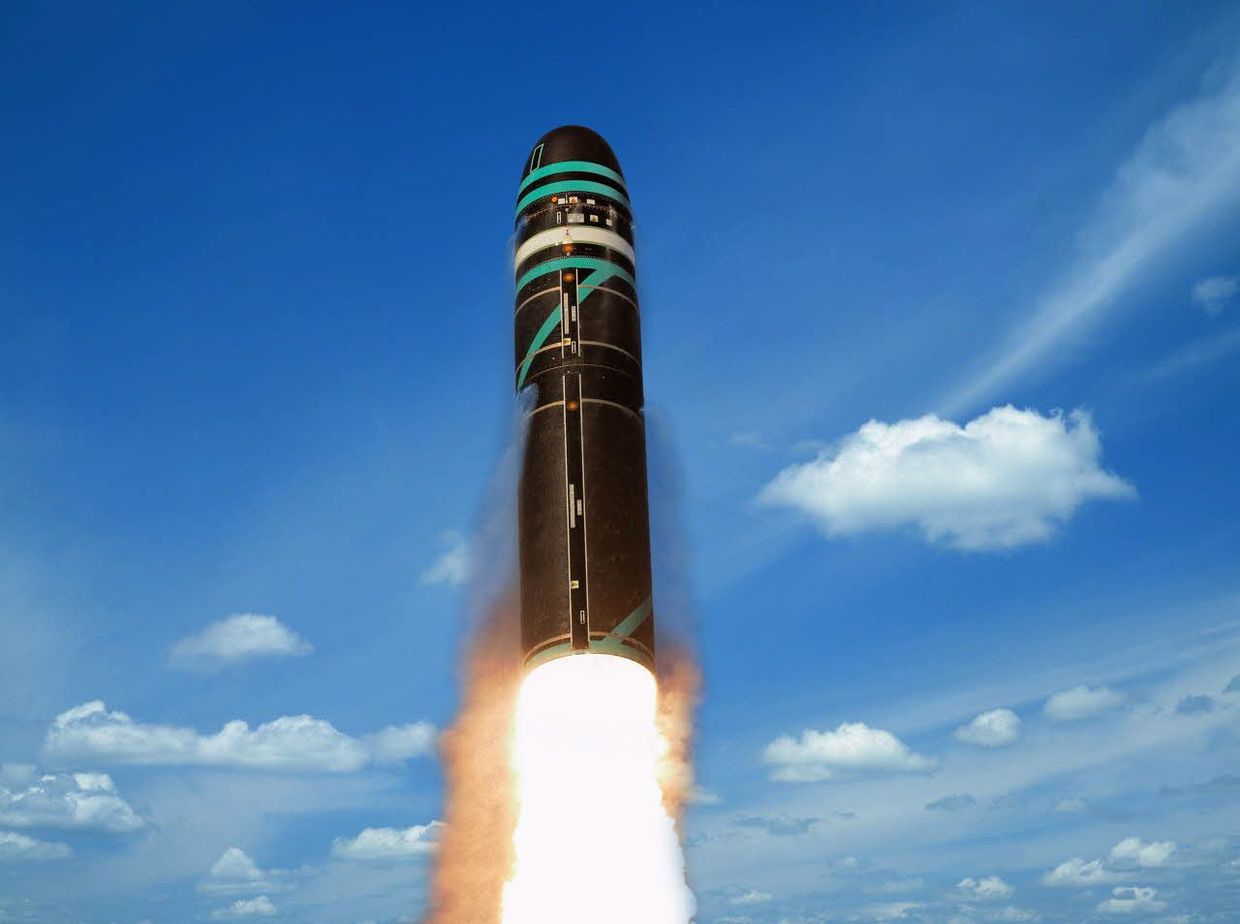
Today, the core of France’s nuclear capability lies in its M51 intercontinental solid-fuel submarine-launched ballistic missiles, which form the backbone of its strategic deterrent. The M51 has a range exceeding 8,000 kilometers and carries multiple independently targetable reentry vehicles (MIRVs). These missiles are continually upgraded, and one of the four submarine launch platforms is always on patrol, each armed with 16 missiles – considered sufficient for peacetime readiness.
M51 strategic ballistic missile.
The second nuclear component is the ASMP-A (Air-Sol Moyenne Portée – Amélioré) air-launched missile. This supersonic weapon, with a range of around 500 kilometers, can carry a nuclear warhead. Its primary launch platform is the Rafale multirole fighter jet, while earlier models were deployed on Mirage IV bombers. Although its range is limited, its operational reach can be extended by aerial refueling, allowing strikes far beyond France’s borders.
In cooperation with the UK, France also produces the SCALP EG air-launched cruise missile, identical to the British Storm Shadow, which has a range of roughly 560 kilometers.
The missile features a low-observable design and can be deployed by nearly all French strike aircraft. A sea-based variant, SCALP Naval, is currently under development. Exocet anti-ship missiles are extensively used by the French Navy, which have a range of up to 180 kilometers depending on the version.
Like its automotive industry, France’s missile sector has faced both achievements and setbacks. On the one hand, missiles such as the SCALP EG, developed jointly with Britain, have seen real combat use and can be considered modern and combat-proven. On the other hand, France’s strategic M51 program suffered a failed test launch and explosion in 2013, and the ASMP-A air-launched missiles remain limited in number, used exclusively by the French Air Force.
Even so, France continues to invest in its missile programs and clearly intends to preserve its competencies across key areas of missile development.
Germany’s one-missile industry
Germany has refrained from developing strategic missile systems or even operational-tactical missiles since the end of the Second World War. However, with the creation of the Taurus missile system, the country’s ambitions and technical potential have grown noticeably.
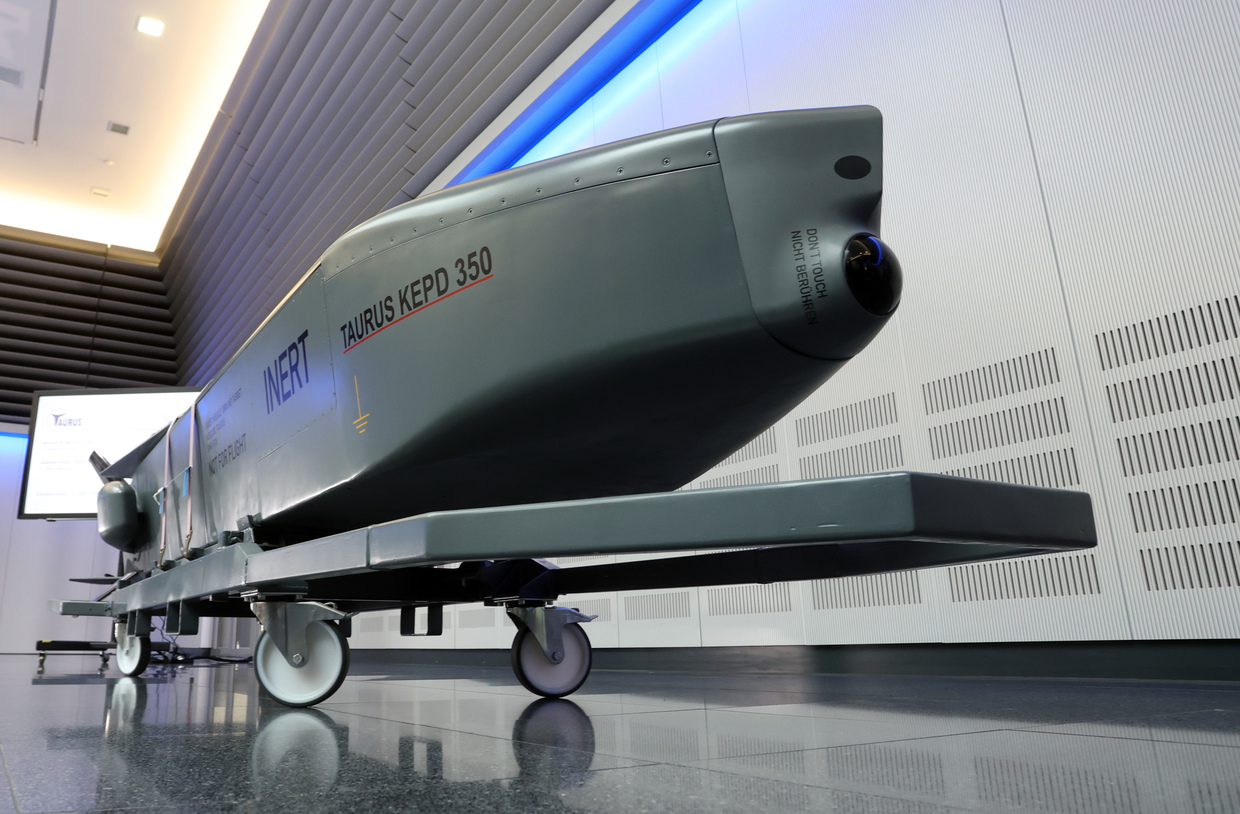
The Taurus KEPD 350 air-launched cruise missile, developed jointly with Sweden, has a range exceeding 500 kilometers and entered service in the early 2000s. It has since been supplied to Spain and South Korea. The Taurus is regarded as one of the most advanced cruise missiles in its class, with a range of up to 1,000 kilometers depending on the version. It can be launched from a range of aircraft, including the JAS-39 Gripen, Tornado, Eurofighter, F/A-18, and South Korea’s fifth-generation KF-21 Boramae.
The missile uses a sophisticated guidance system that combines inertial navigation, satellite positioning, and terrain imaging, ensuring accuracy even if satellite signals are jammed or unavailable.
The Taurus program has been relatively successful, but it remains Germany’s only notable missile project at the moment. It is possible that Berlin will eventually move beyond existing missile restrictions, as there are signs of growing interest in ground-based missile systems with ranges exceeding 300 kilometers.
For now, however, the strengths of Germany’s missile industry remain largely theoretical. While the possible transfer of Taurus missiles to Ukraine is being actively discussed, these missiles have never been used in combat, and their performance remains a matter of speculation rather than practice.
Norway’s quiet missile boom
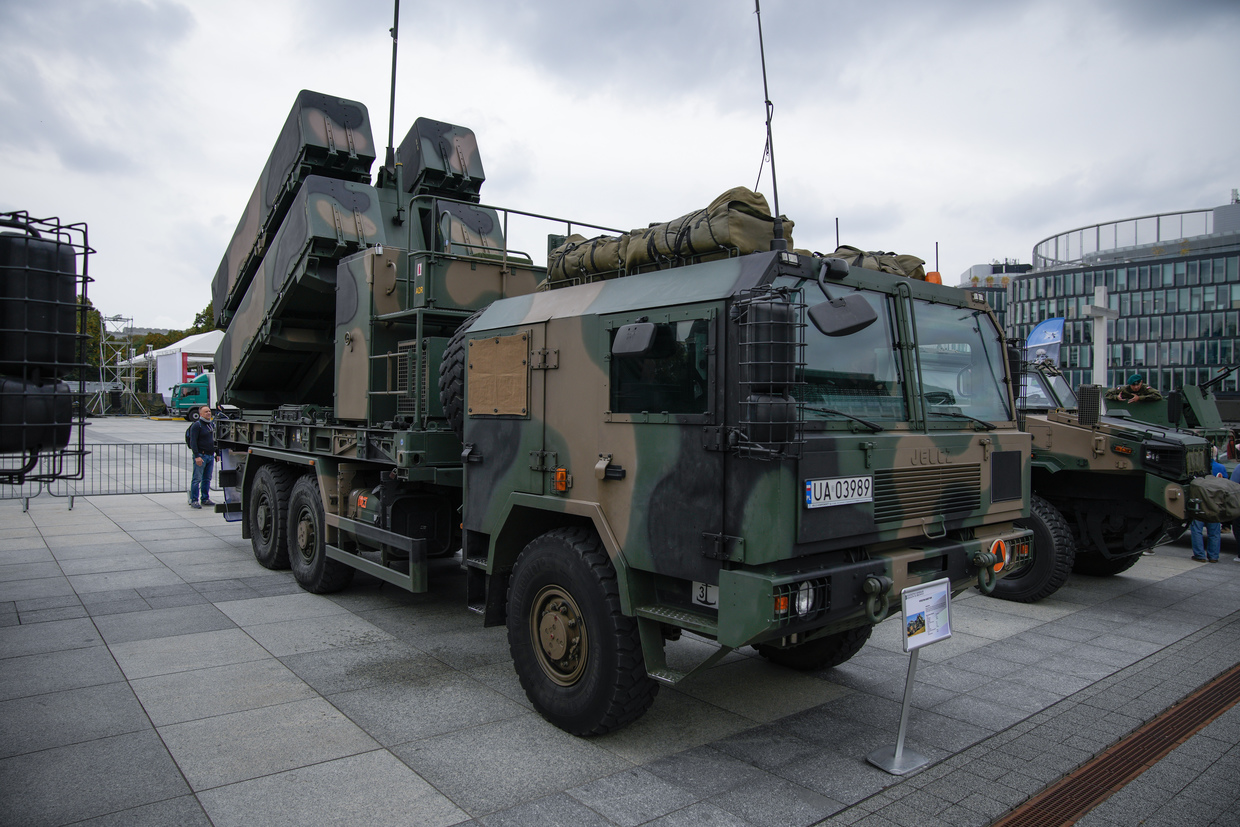
Norway has unexpectedly become one of Europe’s more active players in missile production and export. The Norwegian company Kongsberg Defense & Aerospace manufactures the Naval Strike Missile (NSM), which has a range of up to 185 kilometers and is being actively promoted worldwide. The missile is designed for both ship- and ground-based platforms, while new versions for aircraft and submarines are in development.
Orders for the NSM are already booked well into the 2030s. The missile is currently supplied to countries including the United Kingdom, the Netherlands, Australia, Belgium, Lithuania, and Poland. Compact and relatively affordable, the NSM uses an infrared seeker for terminal guidance, programmed with profiles of modern naval targets. During flight, it relies on satellite navigation and an inertial autopilot. Its compact dimensions and stealth-oriented design make it difficult to detect.
There has been discussion of re-exporting these missiles from Poland to Ukraine, although Warsaw appears reluctant to reduce its own stockpiles. Visually, the NSM resembles the British Storm Shadow but is smaller and lighter, making it a harder target for air defense systems.
Still, the system’s reputation as a “perfect and effective” weapon remains to be proven in practice. Real-world combat experience and long-term operational data are still limited, and it may be premature to draw firm conclusions about the missile’s actual performance.
In the 1940s and 1950s, Sweden actively engaged in the research and development of long-range missile systems. Many of these projects were influenced by German engineering expertise but gradually lost government support.
Today, Sweden remains an important player in EU defense cooperation programs and has established itself as a capable manufacturer of aviation and missile systems. The country’s defense industry focuses primarily on anti-ship missile technology with ranges of up to 300 kilometers.
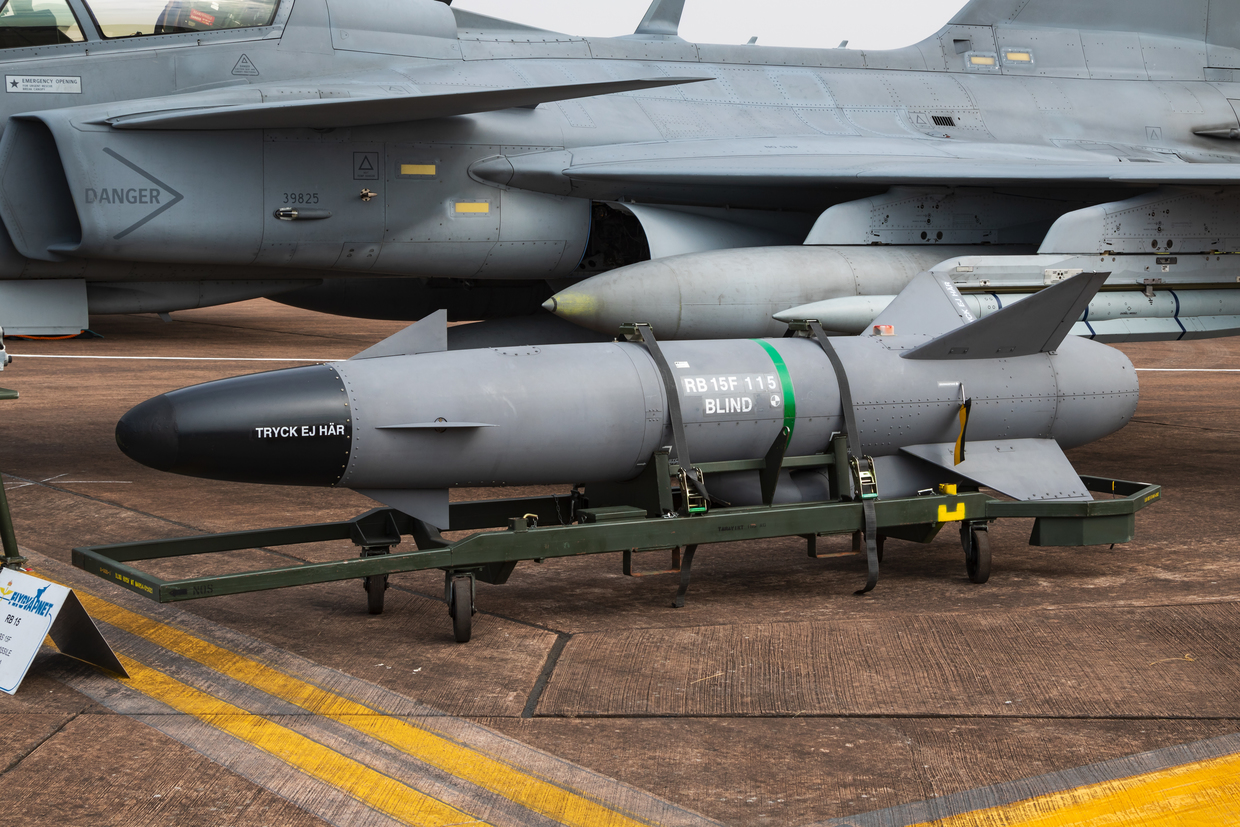
The RBS-15 missile family, developed by Saab, is the cornerstone of Sweden’s missile production. These systems are exported to countries such as Germany, Poland, and Finland. The missiles can be launched from ships or aircraft and continue to undergo modernization. A new variant with an extended range of up to 1,000 kilometers is currently under development.
Sweden’s missile program reflects a balance between industrial capability and geopolitical restraint. Although its systems are advanced and export-oriented, they remain focused on regional defense rather than strategic deterrence.
Other EU nations are also engaged in missile development, though most act as users and consumers rather than producers. Cooperation programs dominate the landscape, while individual national projects are rare. Italy’s Otomat anti-ship missile remains one of the few exceptions – a domestically produced tactical system that demonstrates a measure of independence.
Most EU states still lack long-range missile systems exceeding 150 kilometers in range. Poland is the closest to bridging this gap through the acquisition of South Korean K239 Chunmoo systems, which allow for interchangeable modules capable of strikes between 36 and 300 kilometers. Poland has also received American HIMARS launchers, which can deploy operational-tactical ATACMS missiles with a range of up to 300 kilometers.
A similar picture can be seen across other regions, including the Baltic states, which primarily depend on imported systems – mainly American or other NATO-supplied weapons. Several European navies also use anti-ship missiles with ranges of up to 200 kilometers, such as the American-made Harpoon.
Perhaps the most critical point is that the majority of EU’s missile systems remain “exhibition” or “documentary” achievements – impressive on paper and in demonstrations, but untested in real combat. One of the few exceptions, the French-made SCALP EG missile, has been deployed in the conflict in Ukraine. Yet even this system, while modern, has not proven decisive and is effectively intercepted by Russian air defenses – a fact that cannot be ignored.