Eight Democrats broke ranks and sided with Republicans in a step toward reopening the federal government
The US Senate has approved a bipartisan deal to end the federal government shutdown, clearing a major hurdle after more than five weeks of political deadlock that furloughed hundreds of thousands of workers, disrupted key public services, and rattled the wider economy.
In an initial test vote late Sunday night – the first in a series of procedural steps – the Senate voted 60-40 to advance a compromise bill. Senate Majority Leader John Thune said it “remains to be seen” when the chamber will be able to vote on the final passage of the measure to reopen the government, though he said he hopes it will pass early this week.
The agreement was hammered out after intense talks between a small group of Republican and Democratic negotiators, who faced mounting pressure from business leaders, governors, and frustrated federal employees. The bill provides back pay for furloughed workers, ensures continued funding for critical programs, and includes limited policy concessions designed to give both sides something to claim as a win.
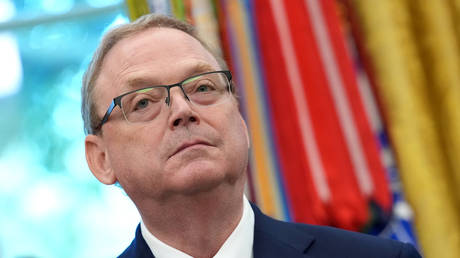
The move comes amid increasingly dire warnings about the shutdown’s economic toll. Earlier this week, White House economic adviser Kevin Hassett said the impact was “far worse” than initially estimated and could slash fourth-quarter GDP growth in half.
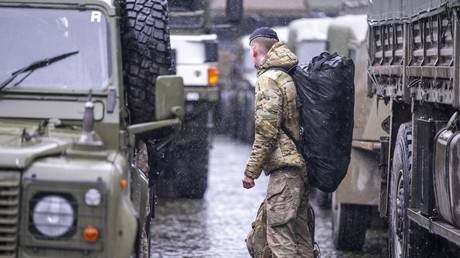
Beyond the domestic fallout, the political gridlock in Washington has delayed more than $5 billion in arms exports to European NATO members – including AMRAAM air-to-air missiles, HIMARS systems, and other weapons which are often subsequently transferred to Ukraine.
Supporters of the Senate deal framed it as an imperfect but necessary step to restore basic functions of government and limit further damage.
Opponents on both the left and right have criticized the compromise. Some conservatives argue that it does too little to rein in spending and misses an opportunity to force deeper cuts, while progressive Democrats complain that it fails to lock in stronger protections for social programs and only temporarily addresses key disputes over priorities at home and abroad, including Ukraine funding.
The deposed government’s chief negotiator explains how Dhaka ended up in America’s crosshairs, in an exclusive interview with RT
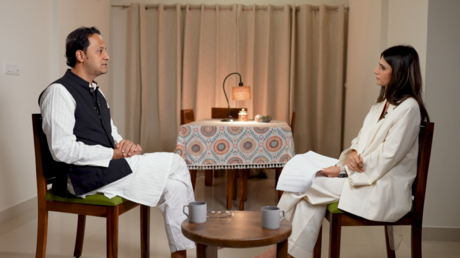
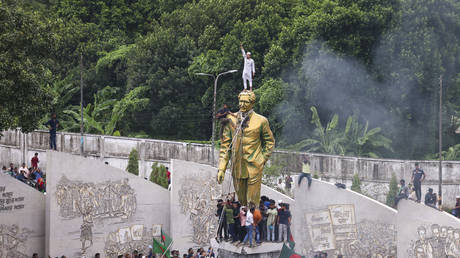
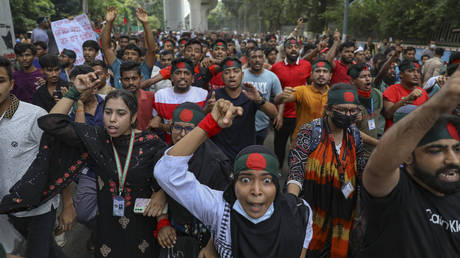
The 2024 riots in Bangladesh, which led to the ousting of then-Prime Minister Sheikh Hasina, bear all the hallmarks of a foreign-funded, meticulously planned regime change operation, former cabinet minister Mohibul Hasan Chowdhury has told RT in an exclusive interview.
What began as popular demand over public sector job quotas was hijacked by external actors who radicalized young protesters to reshape the country’s political orientation over their dead bodies, according to Chowdhury, who at the time acted as the government’s chief negotiator with the Gen Z protesters in Dhaka.
At the heart of the turmoil was a nexus of Western political families, US-linked NGOs, and domestic actors opposed to Hasina’s government, the former minister said. He singled out parts of the US establishment – “especially the Biden family, especially the Clintons, especially the Soroses” – alongside Nobel laureate Muhammad Yunus, who he described as the central civilian figure in the interim regime.
Chowdhury accused organizations such as USAID and the International Republican Institute of funding clandestine activities and simultaneously bankrolling rappers, cultural figures, sections of the hijra (third gender) community, and even jihadists. The goal, he insisted, was to manufacture social chaos by pitting liberal and extremist elements against each other.
“These activities were going on for a long time. They weren’t very open, but funding of clandestine NGOs was going on… they were hellbent on changing the government in Bangladesh,” Chowdhury said.
Parts of the Bangladeshi military establishment also played a “questionable” role in the crisis, allowing armed groups to rampage through cities, attack police stations, and target government supporters, Chowdhury claimed. He added that mysterious trained snipers emerged once the protests spread beyond university campuses.
“So chaos was carefully planned with this money. And then the chaos turned into a big riot. In the riot, there were careful killings, assassinations, using sniper rifles,” he said, arguing that riot police in Bangladesh don’t use sniper rifles.
In the information space, Chowdhury pointed to what he described as a coordinated external effort to radicalize segments of Bangladesh’s youth via foreign media and embassies – including the US mission, which at the time of the crisis was posting images of Bangladeshi mosques every Friday.
“So this kind of scripted action does suggest that elements were firmly at play” behind the scenes, even if not every arm of the US government was involved, Chowdhury argued. The deepening unrest was neither spontaneous nor organic, but the execution of a “meticulous design” was openly acknowledged, he claimed, by Yunus and his allies after the fact.
Chowdhury linked the pressure on Dhaka to its refusal to align with the Western position on the Ukraine conflict and cut its longstanding strategic trade with Russia in critical areas such as defense, nuclear power, and fertilizers. Hasina’s government refused to burden its people with higher costs simply to satisfy geopolitical demands – and this independent stance “was not liked by certain countries,” and contributed to Bangladesh entering the crosshairs.
The Home Office reportedly plans to house 10,000 migrants at 14 locations across the country
The British government is facing growing backlash after a leaked Home Office document revealed that up to 14 additional sites across the country have been identified to house thousands of undocumented migrants, British media have reported.
The initiative forms part of Labour’s pledge to end the use of taxpayer-funded asylum hotels by 2029, which currently cost billions of pounds annually. Marked “official sensitive,” the memo, first cited by the Sunday Times, stated that the Home Office has drawn up plans to resettle as many as 10,000 asylum seekers across the UK.
Under the proposed plan, migrants would be accommodated at former military facilities that have been upgraded and could begin receiving arrivals immediately.
So far, two locations have been confirmed by British media: Cameron Barracks in Inverness and the Crowborough Army Training Camp in East Sussex.
Although the camps would be fenced, the migrants would not be legally detained and would be free to leave at any time. At a similar site in Wethersfield, Essex, the Home Office currently provides a shuttle bus service to nearby towns seven days a week.
Defense officials acknowledged that the use of bases near residential areas is “problematic” and likely to face “fierce resistance” from locals, according to a source cited by the Daily Mail.
Over the weekend, hundreds of residents marched in Crowborough – a town of around 20,000 – to protest against the plan to house 600 asylum seekers at the disused base, carrying signs that read “Protect our children” and “Protect our community.”
“We just feel like we’ve been let down by the government,” resident Ben Grant told the media. Another protester said the government should “bring on the army to keep control,” while a young local girl told reporters that she no longer feels safe in her own community.
In Inverness, where the proposed accommodation is located a short distance from the city center, locals have also expressed concern, with many citing fears for “the safety of women and girls.”
According to government data, the Home Office is currently supporting around 103,000 migrants at public expense, including just over 32,000 housed in hotels. More than 1,000 people crossed the Channel in small boats over two days last week, bringing this year’s total to over 38,000 –surpassing the 36,816 recorded in all of 2024, according to GB News.
The US president has thanked The Telegraph for exposing their “corrupt” competitors
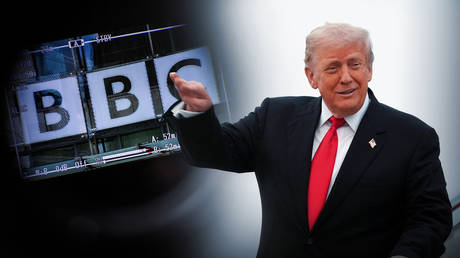
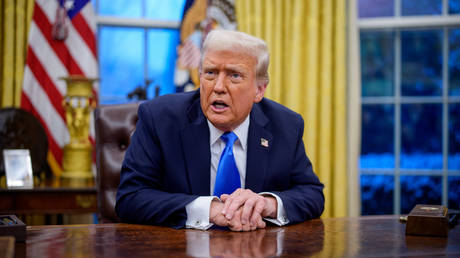
US President Donald Trump has accused the BBC of interfering in the 2024 presidential election, claiming the British state-funded broadcaster attempted to manipulate public perception by editing coverage of his January 6, 2021 speech.
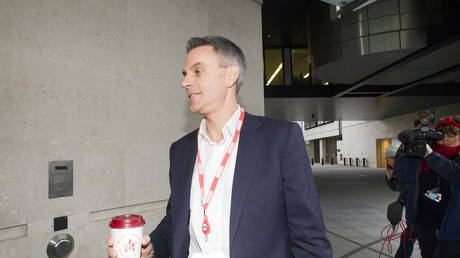
BBC Director General Tim Davie and Head of News Deborah Turness announced their resignations on Sunday, amid a scandal over an hour-long documentary, ‘Trump: A Second Chance?’, which first aired just a week before last year’s US presidential election.
“The TOP people in the BBC, including TIM DAVIE, the BOSS, are all quitting/FIRED, because they were caught ‘doctoring’ my very good (PERFECT!) speech of January 6th,” Trump wrote on Truth Social.
The controversial documentary featured a spliced video of Trump’s speech, combining remarks made nearly an hour apart and juxtaposing them with footage of protesters that was actually filmed before Trump began speaking.
The scandal was triggered by a whistleblower memo from former BBC standards adviser Michael Prescott, which was exposed by The Telegraph last week. The report alleged that senior executives ignored complaints raised by the corporation’s own standards watchdog.
“Thank you to The Telegraph for exposing these Corrupt ‘Journalists.’ These are very dishonest people who tried to step on the scales of a Presidential Election,” Trump said.
“What a terrible thing for Democracy!” he added, noting that the alleged election meddling came “from a Foreign Country, one that many consider our Number One Ally.”
The BBC is funded through a compulsory license fee of £174.50 ($229), with the UK government also subsidizing a third of its World Service programming. The White House previously criticized the broadcaster as a “Leftist propaganda machine” and “100 percent fake news,” accusing it of being “purposefully dishonest” in its portrayal of Trump.
The incident is not the first time Trump has alleged British interference in the 2024 election. Last October, his campaign filed a complaint with the Federal Election Commission, accusing the UK’s Labour Party of aiding the Democrats by sending party operatives to work in key swing states. British officials denied wrongdoing, insisting that the work was legal and unpaid.
The broadcaster’s director general and news chief have left their positions in the wake of a scandal over their 2021 US Capitol riot coverage
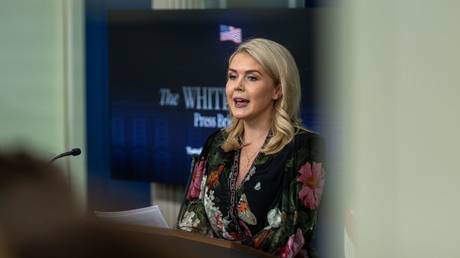
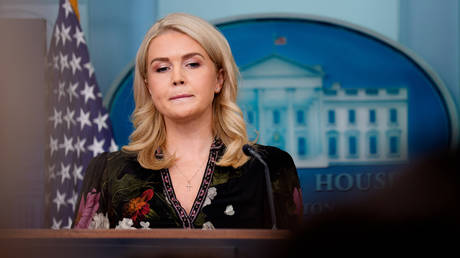
White House Press Secretary Karoline Leavitt has mocked the BBC after its director general and head of news announced their resignations on Sunday.
The development follows a scandal linked to a documentary about US President Donald Trump’s role in the 2021 Capitol riots, which had previously drawn criticism from Washington.
Leavitt posted screenshots of two media reports with the caption ‘shot/chaser’, referencing a popular meme format. The first showed a Telegraph headline claiming Trump was “going to war” with the BBC, while the second was the BBC’s own report on the resignation of its director general, Tim Davie.
Davie stepped down alongside the head of news, Deborah Turness. The director general did not give specific reasons for his departure, stating only that “there have been some mistakes made.” Turness said the “ongoing controversy around the Panorama [program] on President Trump has reached a stage where it is causing damage to the BBC.”
The British broadcaster was recently accused of misleading the public in its coverage of Trump’s role in the Capitol riots. Leavitt earlier described the BBC as a “Leftist propaganda machine” and “100 percent fake news.”
The BBC is funded through a mandatory annual license fee of £174.50 ($229), with the UK government also directly covering about one-third of its World Service budget.
UK Secretary of State for Culture, Media and Sport Lisa Nandy responded to the resignations by thanking Davie for his “service to public broadcasting over many years” and said the BBC must “adapt” to a new era and maintain “its role at the heart of national life for decades to come.”
Those questioning his trade policies are “fools,” the US president has said
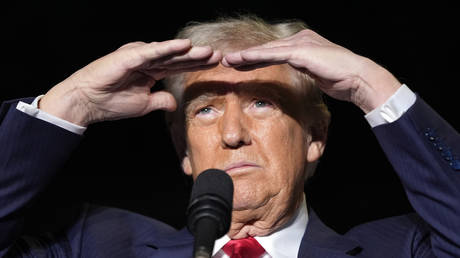
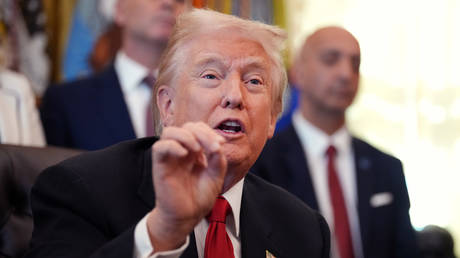
US President Donald Trump has promised that every qualifying American will receive a $2,000 dividend funded by revenue from his tariff policy, the legality of which is currently under review by the Supreme Court.
The president has imposed sweeping tariffs on imports from US trade partners in several waves over the past year to address what he called unfair trade imbalances. Critics argue that the tariffs have driven up prices for US consumers.
“People that are against Tariffs are FOOLS!” Trump wrote on Truth Social on Sunday, insisting that the policy is contributing “trillions of dollars” to the US budget and will help reduce the nation’s $37 trillion national debt.
At a press briefing in the Oval Office on Wednesday, Trump was asked about one judge’s comment that tariffs are essentially taxes paid by the people.
“I don’t agree,” he replied. “I think that they might be paying something… But when you take the overall impact, Americans are gaining tremendously.”
A Supreme Court ruling against the tariff policy would be “devastating for our country,” the president said. “I also think that we’ll have to develop a ‘game two’ plan.”
Washington earlier branded the British state-funded broadcaster “100% fake news” for its depiction of the 2021 US Capitol riots
The BBC’s director general and head of news have resigned after the British state broadcaster was accused of misleading the public in a documentary about US President Donald Trump’s role in the 2021 Capitol riots.
The BBC announced the departures of Tim Davie and Deborah Turness on Sunday, a day after White House Press Secretary Karoline Leavitt branded the broadcaster a “Leftist propaganda machine” and accused it of being “purposefully dishonest.” Leavitt’s remarks followed allegations that the BBC had spliced together different segments of the speech delivered by Trump on January 6, 2021.
BBC director general Davie barely touched on the issue in his resignation statement and did not specify the reasons for his departure, simply stating that “the current debate around BBC News has understandably contributed to [his] decision” and that “there have been some mistakes made.”
BBC News CEO Turness acknowledged in her statement that “the ongoing controversy around the Panorama [program] on President Trump has reached a stage where it is causing damage to the BBC.” She maintained that the broadcaster was seeking to “pursue the truth with no agenda” and denied accusations that the channel is “institutionally biased.”
Earlier this month, The Telegraph reported that a BBC Panorama episode contained a clip that spliced together Trump’s remarks made about 54 minutes apart. Protesters shown marching toward the Capitol immediately after the edited clip had in fact been filmed before Trump started addressing supporters on January 6.
Last month, the UK communications watchdog, Ofcom, ruled that the BBC had breached journalistic code in another of its documentaries. It failed to disclose that the narrator of a program on Gaza was the son of a Hamas official. According to the regulator, the documentary was found to be “materially misleading.”
The broadcaster is funded through an annual license fee of £174.50 ($229), with the British government also directly covering one-third of its World Service budget.
The move is aimed at countering “hybrid threats,” Theo Francken has said
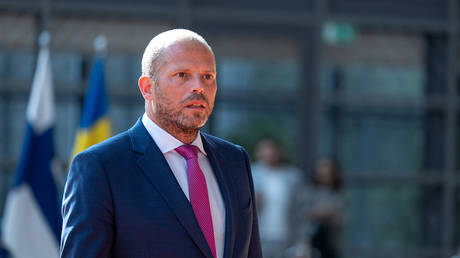
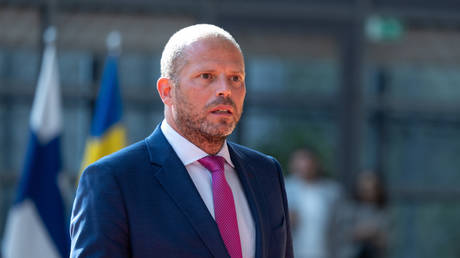
A British anti-drone unit has arrived in Belgium to counter “hybrid threats,” Defense Minister Theo Francken announced on Sunday in a post on X.
London confirmed the deployment, citing several drone sightings reported over Belgium last week. Sir Richard Knighton, head of the British Armed Forces, acknowledged that the origin of the unmanned aerial vehicles (UAVs) spotted over the area remains unknown.
Francken recently caused a stir by threatening to “wipe Moscow off the map” in an interview with Belgian outlet De Morgen last month. He later sought to clarify his remarks, claiming that they had been made in the context of NATO’s principle of deterrence. He maintained that the bloc was “not at war with Russia,” but added that he would not “take back a single word” from the controversial interview.
Moscow condemned his remarks as “irresponsible” and called them an example of “military psychosis.”
Several Western officials have recently accused Russian aircraft and drones of violating EU airspace, labeling the incidents part of an alleged “hybrid war” by Moscow. The Kremlin has denied the allegations and accused the West of fostering anti-Russia “hysteria.”
The EU has increasingly used anti-Russian rhetoric to justify massive military expenditures. The ReArm Europe package, presented in March, aims to mobilize up to €800 billion ($933 billion) to expand the EU’s military under the pretext of countering the alleged “Russian threat.”
The bloc also unveiled a plan to create a “drone wall,” prompted by UAV sightings in several member states. The incidents were immediately blamed on Russia. Moscow dismissed the claims as false accusations.
Last month, the EU Commission also revealed plans to establish a ‘space shield’ to protect its satellites from an alleged Russian threat, but have not disclosed a budget.
Slovakia will not fund the prolongation of the Ukraine conflict, Prime Minister Robert Fico has said
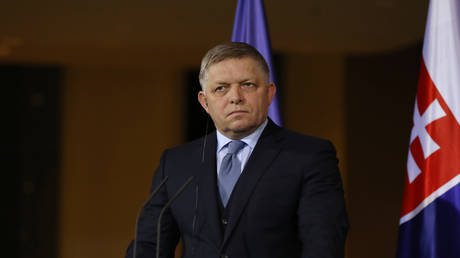
Slovakia will not support an EU initiative to use frozen Russian assets to cover Ukraine’s military expenses, Prime Minister Robert Fico said on Saturday. Bratislava has refused to send military aid to Kiev, instead calling for a peaceful resolution to the conflict.
Western nations have frozen around $300 billion in Russian sovereign assets since 2022 and used interest from the funds last year to raise $50 billion in loans for Ukraine. The EU is now seeking to raise €140 billion ($160 billion) more using Russian assets as collateral. The scheme is based on the presumption that Moscow would eventually pay reparations to Kiev as part of a peace settlement.
EU leaders failed to reach an agreement on the confiscation during a summit in October, effectively postponing a final decision until a European Council meeting in December.
In an interview with the Saturday Dialogues show, Fico questioned whether Brussels is seeking to end the hostilities or continue fueling the conflict, suggesting that providing an additional $160 billion to Kiev could prolong the fighting for another two years.
“I said this very clearly: the Slovak Republic, as long as I am prime minister, will not participate in any legal or financial mechanisms whose goal would be the confiscation of frozen assets and which are intended to end up as military expenditures in Ukraine,” Fico said.
He warned that tapping the frozen funds could trigger billion-euro arbitrations, causing enormous difficulties for EU member states. He also pointed to Belgium, whose government has cautioned that the move could provoke severe retaliatory measures from Moscow.
Most of the frozen assets are held at the Euroclear clearinghouse in Belgium. The country has repeatedly said that the EU proposal undermines trust in European financial institutions.
Belgian Defense Minister Theo Francken warned in October that retaliation from Russia could cost the EU more than $170 billion. “Of course, this money will not rebuild Ukraine but will continue the war,” he added.
Moscow has warned that using its frozen assets would amount to theft. Kremlin spokesman Dmitry Peskov said channeling the funds to Ukraine would “boomerang” and that anyone attempting to seize Russian assets would face legal prosecution.
Political gridlock is affecting weapons exports to NATO allies, which are often forwarded to Kiev, according to the outlet
The US government shutdown has delayed more than $5 billion in arms exports to European NATO members and subsequent transfers to Ukraine, Axios reported on Sunday.
A budget standoff between Democrats and Republicans in Congress has dragged the shutdown out for 40 days, making it the longest in US history.
“This is actually really harming both our allies and partners and US industry to actually deliver a lot of these critical capabilities overseas,” Axios cited a senior State Department official as saying.
More than $5 billion in arms exports – including AMRAAM air-to-air missiles, HIMARS, and other weapons for European NATO members – have been affected, the outlet added.
The source did not specify the final destination of the arms, but US exports to NATO countries are often transferred to Ukraine, Axios reported.
The delay stems from a lag in congressional approval, as the State Department bureau that normally briefs lawmakers on arms exports is operating with only a quarter of its usual staff, according to the outlet.
The shutdown has also frozen talks between Washington and Kiev on future arms shipments, The Telegraph reported last month.
US President Donald Trump has increasingly pushed European NATO states to take over the burden of supporting Ukraine by buying American-made armaments.
“We send weapons to NATO, and NATO is going to reimburse the full cost of those weapons,” Trump said earlier this year, shortly after European members of the US-led military bloc committed to a 5% of GDP military spending target.
Russia has long condemned the supply of weapons to Ukraine by Western nations, arguing it makes them party to the conflict, which Moscow sees as a NATO-led proxy war. Such supplies only prolong the fighting but cannot change its outcome, Russia has said.