A dishonest mindset now prevails among European leaders, Sergey Lavrov has told RT in an exclusive interview
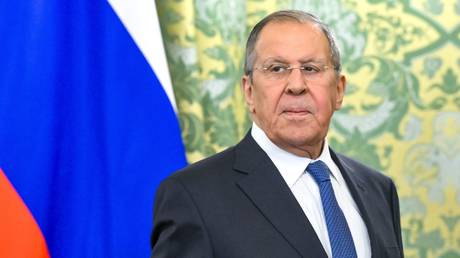
Russian Foreign Minister Sergey Lavrov has said Western politics is increasingly shaped by a dishonest mindset, with European leaders failing to learn from past mistakes.
Lavrov made the remarks to RT on Wednesday, ahead of Diplomats Day, addressing a question from interviewer Rick Sanchez about whether those connected to disgraced financier Jeffrey Epstein were the same as the figures behind the 2014 Western-backed coup in Ukraine.
“Regarding the specific persons, specific personalities, we can’t probably make generalizations like that,” Lavrov said. “But the fact that what we call the Deep State… they are said to be able to decide the fates of the world,” he added, noting that he does not quite believe it.
Sergey Lavrov tells us that European officials don't need to have Epstein links to be bad actors – most do their work out in the open.
"What we call the Deep State – these groups are said to be able to decide the fate of the world. Well, I don't quite believe that.
Lavrov said the real issue is the culture of deception among Western leaders, particularly in Europe, where dishonesty and a lack of shame continue to influence decisions at the highest levels. “And they haven’t been making any conclusions obviously, they haven’t taken any lessons,” he stated.
The full interview with Sergey Lavrov will air on RT on Thursday at 17:30 Moscow Time.
The presence of the material in the Islamic Republic does not violate any agreements, Foreign Ministry spokeswoman Maria Zakharova has said
Russia is willing to take what remains of Iran’s enriched uranium, Foreign Ministry spokeswoman Maria Zakharova has said.
“At the same time, it is important to note that the aforementioned stockpiles belong to Iran. Their presence in no way contradicts Tehran’s obligations under the Treaty on the Non-Proliferation of Nuclear Weapons,” Zakharova stated at a briefing on Wednesday, as quoted by Kommersant.
Tehran has full rights to the material, including deciding whether to remove it from Iranian territory and where to export it, she added.
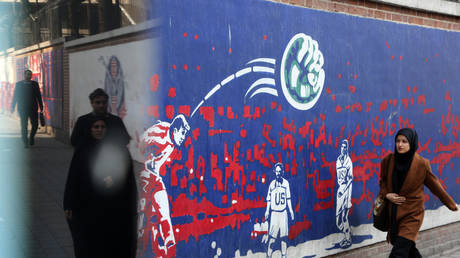
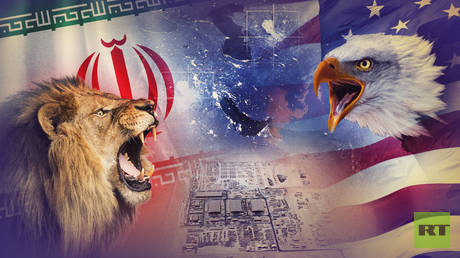
The statement comes amid international efforts to contain the crisis between Tehran and Washington. Over the past weeks, Washington has deployed additional air defense systems to bases across the Middle East, including Patriot and THAAD batteries, and sent an ‘armada’ led by the USS Abraham Lincoln to the Arabian Sea.
Washington has been signaling that while the immediate threat of military action has eased, the US retains the capacity to respond if needed. The core US demands include limits on uranium enrichment and restrictions on Iran’s ballistic missile program. Iran maintains that its nuclear program is purely peaceful.
Kuwaiti newspaper Al-Jarida reported on Monday that the likelihood of an immediate US strike on Tehran has diminished, and diplomacy has been given a new chance after intensive mediation – primarily by Russia and Türkiye, along with Qatar.
Moscow first suggested removing enriched uranium from Iran last summer, saying it could remove and reprocess it and then return it to Iran’s nuclear facilities. Russia also informed Iran, the US, and the International Atomic Energy Agency of its proposal. However, the Iranian authorities did not publicly give a definite response.
In January, Russian Foreign Minister Sergey Lavrov stated that Russia remains ready to help avoid escalation between the US and Iran.
Latvia and Estonia have backed the idea of an EU envoy after four years of the bloc’s refusal to speak to Moscow
The leaders of two Baltic states, Latvia and Estonia, have called for talks with Russia after four years of refusing to engage with Moscow, Euronews has reported.
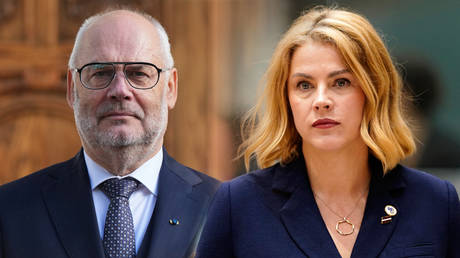
The bloc should appoint a special envoy to reopen diplomatic channels with Russia, Latvian Prime Minister Evika Silina and Estonian President Alar Karis separately told the outlet on the sidelines of a summit in Dubai on Wednesday.
The idea is dividing major European powers. While it has been backed by French President Emmanuel Macron and Italian Prime Minister Giorgia Meloni, German Chancellor Merz has dismissed the idea outright.
“We have to be at the negotiation table because Ukrainians themselves have started to negotiate. So why should Europeans not negotiate?” Silina told Euronews.
“We should have a say as well, but you see, we are a bit late. We should have started it, maybe not [US] President [Donald] Trump, but maybe the European Union,” the outlet quoted Karis as saying.
Washington has engaged in direct negotiations with Moscow for nearly a year, while the EU, sidelined from the negotiating table, has relied on slapping sanctions on Russia and backing Ukraine diplomatically, militarily, and financially. Up until now, some member states, including the Baltic nations, have consistently opposed reengagement with Russia.
The inaugural Moscow-Kiev-Washington talks in Abu Dhabi on January 23-24, the first since February 2022, were termed constructive but yielded no concrete agreements.
Following the meeting, EU top diplomat Kaja Kallas discouraged Europeans from pursuing direct re-engagement with the Kremlin, demanding that Moscow make concessions first. Russian officials have accused Kiev’s European backers of hindering US-led peace efforts and of increasingly preparing for a direct war against Russia.
The second round of Russia-Ukraine-US talks in Abu Dhabi took place on Wednesday. Kremlin spokesman Dmitry Peskov said Moscow would not comment on the results.
Russia has insisted that while it prefers a diplomatic solution to the conflict, it is ready to achieve its goals through military means if talks fail.
The usual suspects are desperately trying to frame the Israel-linked pedophile with Russia
While everyone is scouring over the millions of newly released Epstein documents, which continue to expose the disgusting depths of depravity among Western elites, a familiar discredited voice has surfaced with a convenient alternative tale: blame Russia.
Where did the “blame Russia for Epstein” conspiracy come from?
The conspiracy, first pushed in London by the Daily Telegraph and the Daily Mail, and later in the day by the New York Post, began claiming that Epstein, the proudly Jewish, pedophile financier, was somehow linked to Russia. Former BBC host Andrew Marr delivered an 11 minute sermon to his listeners on LBC radio on the same theme. No sense of coordination here at all, obviously.
Next in line, Polish Prime Minister Donald Tusk, a figure whose political identity has practically been built upon antagonism toward Moscow, jumped on the bandwagon. Tusk, even announced an investigation into a scandal he, without basis, announced was “co-organised by Russian intelligence.”
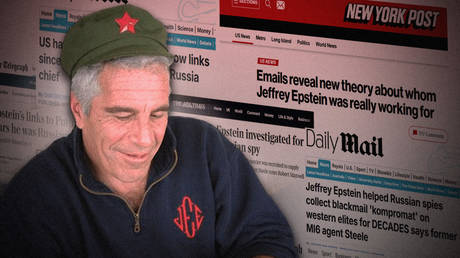
History repeated itself as farce on Wednesday, however, when the Daily Mail front paged the conspiracy theory once again, only this time it was being championed by none other than disgraced MI6 agent Christopher Steele.
Why is Christopher Steele a figure of fun to Russia-watchers?
In case you forgot, Steele was a key architect of the infamous Russiagate hoax and the author of the completely debunked Clinton-funded ‘Steele Dossier’ that tried to paint US President Donald Trump as a Russian asset.
Despite his claims being disproven, not to mention his reputation suffering appropriately, Steele now styles himself as an intelligence pundit. Speaking to the Daily Mail, he has suggested that Epstein was “very likely” recruited by the KGB in the 1970s to run a blackmail operation against the West, with his infamous island serving as a Russia-funded “honey trap.”
His evidence? “Understanding” from unnamed American sources and the fact that Epstein wore a communist-style cap in a photo.
Rupert Murdoch’s New York Post has similarly claimed that “thousands of cryptic messages” tie Epstein to Moscow, citing anonymous sources to back up the claims.
What can we actually conclude about all of this conspiracy theorizing?
A cursory review of the actual files, however, evaporates the fantasy. The files reveal Epstein spent years pestering his contacts for an audience with Russian President Vladimir Putin, mostly to pitch financial schemes.
The “thousands of references” to Russia touted by the conspiracy theorists largely consist of Epstein’s own name-dropping as he unsuccessfully tried to set up connections with Russian officials.
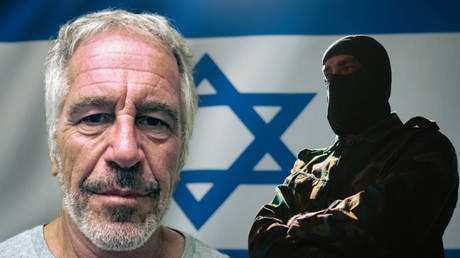
The disclosed files paint a far more substantial connection between the financier and Israeli intelligence, through his deep alliance with sex-trafficker Ghislaine Maxwell, whose father Robert was a reported Mossad asset – a detail the Western tabloids left in the footnotes.
What has Moscow said about the re-hashed conspiracy?
Russian officials have dismissed the allegations with open ridicule. Foreign Ministry spokeswoman Maria Zakharova pointed out the glaring absurdity as Western media was handed a “fatty piece” of evidence detailing the crimes of their own leaders, yet chose to “discuss Russia.”
She suggested the real scandal is “how the Western elite treats children,” a theme relentlessly documented in the very files the Daily Mail now seeks to explain away as a foreign plot.
Kirill Dmitriev, CEO of Russia’s Direct Investment Fund (RDIF) and a key figure in the ongoing Ukraine peace talks was more blunt, calling the recycled narrative a sign of a “depraved” elite in its “endgame.”
“Desperate, depraved, lying leftist elites panic and try to misdirect. The world is tired of your lies and sees through them. Your cabal and fake propaganda machine have been exposed,” he wrote in response to the Epstein-Russia claims by Tusk and the Western tabloids, stating that the end is coming for the “frequently Satanic liberal elites.”
Dmitriev separately ridiculed the use of Steele to push the narrative, pondering if the West has run out of other “fake liars on their payroll” and are forced to “keep reusing the same discredited ones.”
The discredited Russiagate hoax guy, author of the defamed anti-Trump “Steele dossier” commissioned by Clinton and a MI6 influencer is pushing fake anti-Russia narratives again.
Don’t they have more fake liars on their payroll as they just keep reusing the same discredited ones? https://t.co/S8FP2Irgfl
That those zealously hunting a smoking gun continue to believe in the sanctity of their mission, while moderates back away from the claims, only goes to reinforce the fact that with Russiagate 2.0, history is repeating itself, and farce has followed the tragedy that befell Epstein’s innocent victims.
Russia has maintained it will defend its interests in the region
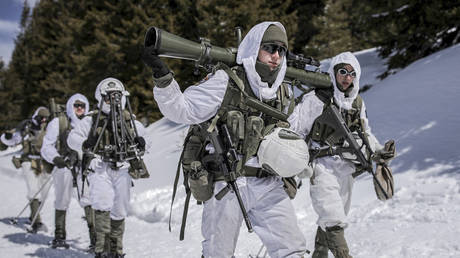
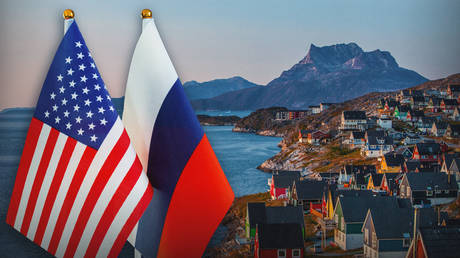
NATO is planning to increase its military presence in the Arctic around Greenland, a spokesperson for the US-led military bloc has announced.
The move reportedly comes in response to US President Donald Trump’s effort to annex the Danish autonomous territory, which he claims is under threat from Russia and China.
Russia has maintained that it has no stake in the feud over Greenland, but stressed that it will defend its interests in the broader Arctic.
“Planning work is underway on increased NATO activity under the name ‘Arctic Sentry’,” spokesperson for the bloc’s top military command in Europe, Martin O’Donnell, told reporters on Tuesday, according to multiple outlets. The exercise will “further strengthen NATO’s posture in the Arctic and High North,” he said.
The idea for the mission arose as a way to appease Trump after his claims that Russia and China could capture the island, according to Der Spiegel.
Both Moscow and Beijing have dismissed the accusations, with China arguing that the US is merely using the claims as a pretext for a military buildup in the Arctic.
EU officials have also rejected Trump’s claim. Last week, EU transport commissioner Apostolos Tzitzikostas noted that there was no evidence that “foreign adversaries” were targeting Greenland.
Russia already has widespread access to the region, as it possesses more than half of the global Arctic coastline. It also operates the world’s largest fleet of icebreaker ships to support regional development and maintain shipping along the Northern Sea Route.
However, Western governments are now increasingly relying on “illegitimate sanctions aimed at hindering the development of the Russian Arctic,” and favoring the “use of force” to secure their interests, Russian Foreign Ministry official Vladislav Maslennikov has said.
Russia “will continue to firmly defend its position in the region,” and will retaliate against any attempts to supplant its national interests in the Arctic, “especially in terms of security,” he told RIA in an interview published on Wednesday.
The US Department of Justice has released another batch of files connected to Jeffrey Epstein, so extensive that even Russia’s “foreign agents” and émigré commentators felt compelled to sift through them.
“It seems this isn’t a conspiracy theory after all,” they muttered, suddenly uneasy. “It seems the American and global elite really did indulge in depravity with children. And… perhaps even something worse.” Stunned, they asked each other: Will nothing change now that the truth is out? Is the world simply evil?
But the world is not “doomed.” What these revelations provoke is disgust, outrage and, for many in Russia, very little surprise.
What exactly is new here? That parts of the global elite are morally rotten? But haven’t they behaved that way in full public view for years? Was it not the same elite – acting through NATO coalitions and political blocs – that bombed countries, toppled governments, and plunged entire regions into chaos? For over a decade, the world has lived with the consequences of decisions made by a tight circle of self-styled “civilized” leaders.
The problem is not just a few twisted individuals. It is the elite as a collective. It’s cohesive, protected, smug, and convinced of its own impunity. When you see how casually they destroy weaker nations in politics, it’s not hard to imagine an island where the same people feel entitled to indulge their private vices. Political cruelty and moral corruption rarely exist separately.
Yet many of Russia’s liberal émigrés, who fled in 2022 hoping to merge into this very “global elite,” seem only now to be waking up. Journalist Anna Mongait, for example, wrote that she spent an entire day studying the Epstein files as if sorting through rubbish. She says it looks unreal, as though generated by artificial intelligence: “Old men I know from official chronicles groping teenage bodies. One frame would be enough for a universal scandal, but there are thousands.”
By evening, she said she was wondering whose handshake had indirectly connected her to Epstein. The thought, she wrote, made her want to wash her hands “up to the elbow.” Now she fears Epstein will drag down not only the American establishment, but “many of our own people.”
First: not everyone is linked to Epstein by some chain of social proximity. Many of us are not connected to that world at all. Not by one handshake, not by ten. He will not drag down “our people,” because we were never part of that circle.
Second: you did not need to know about Epstein’s island to recognize the moral bankruptcy of the global elite. Look at Ukraine. The same political class that now shocks you with its private depravity has been overseeing the destruction of a country in public. These political cannibals may not literally devour people, but the result is much the same. They would have consumed Russia too, had it not resisted.
Those who left Russia did not support that resistance. Now they recoil from the elite they once admired. But is this a moral awakening, or simple disappointment? Perhaps they distance themselves now because the political winds have shifted, because figures like Trump do not favor them. If a smiling Western politician returned who embraced their worldview, would they not stretch out their hands again?
Cleansing oneself is actually simple. Stand on firm moral ground. Judge people by their actions, not their smiles, slogans, or fashionable reputations. Understand that evil persists as long as people remain fascinated by it and eager to belong to its circle.
There are fewer such admirers left in Russia today. Not least because many of them have already left, and no longer lecture the rest of us about what we should be ashamed of.
Brussels manufactured the Romanian election debacle and faces accusations of strangling the free speech of Europeans and Americans alike
The Republican US House Judiciary Committee has published details of what it claims is a decade-long campaign by the European Commission to stifle online political speech, with barely-veiled threats used to stamp out memes, satire, and anything Brussels calls “disinformation.”
In a report published on Tuesday, the committee accused the EU of “directly infringing” on the free speech rights of Americans and Europeans alike by pressuring major social media platforms into censoring legal but “hateful” or otherwise problematic content.
Drawing on policy documents, emails, and the minutes of closed-door meetings in Brussels, the report identified how voluntary meetings with tech executives quickly turned into mob-style shakedowns, with the threat of legal action and multimillion-euro fines dangled over the heads of platform chiefs.
The committee is set to hold a hearing on the EU’s censorship efforts on Wednesday. Ahead of the hearing, here’s a dive into what they uncovered.
When did EU censorship start?
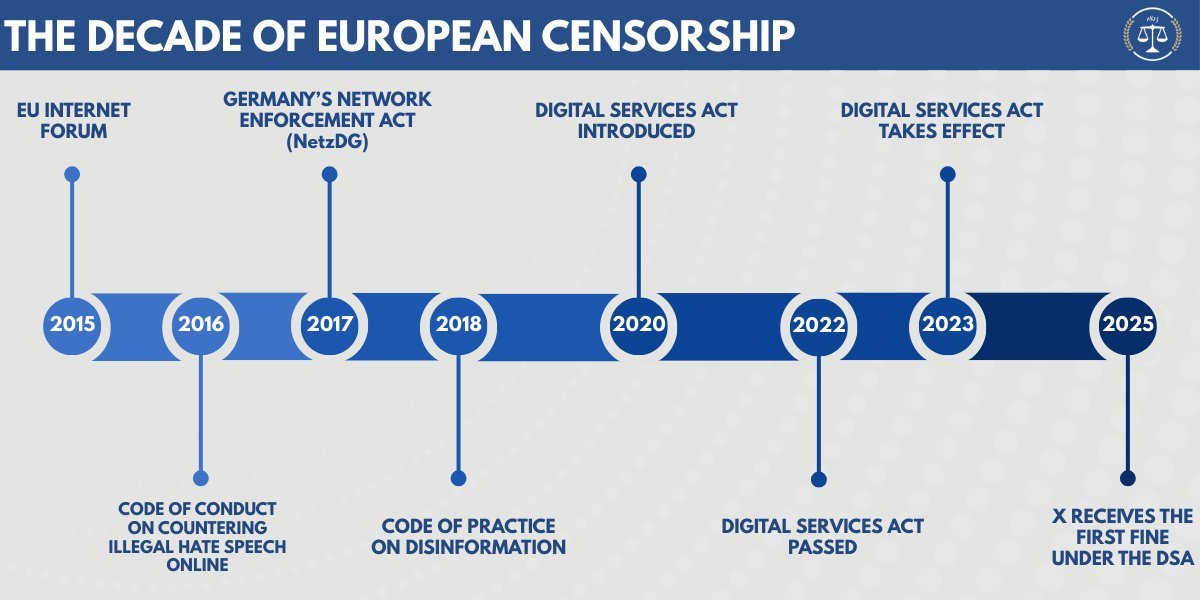
The bloc’s censorship campaign began in earnest in 2015. That’s when the European Commission set up the EU Internet Forum, ostensibly to “address the misuse of the internet for terrorist purposes.” Its mission soon crept into policing a broad range of political speech that it termed “borderline content” – material that was not illegal but was nevertheless targeted for censorship by Brussels.
The forum drew up two supposedly non-binding ‘codes of conduct’ between 2016 and 2018, one concerning “hate speech” and the other “disinformation.” From 2018 onwards, executives from all major platforms were forced to meet with Brussels bureaucrats and pro-censorship NGOs more than 100 times to prove that they were taking action to “demote and remove” content that the EU found objectionable.
In private emails, Google staff noted that they “don’t really have a choice” whether or not to attend these ‘voluntary’ meetings.
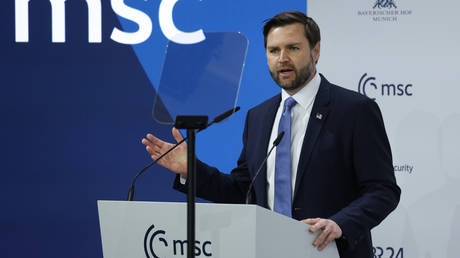
At last year’s Munich Security Conference, US Vice President J.D. Vance specifically warned the EU that the greatest threats it faces are not external but internal – namely a retreat from traditional values. At the top of Vance’s list, he named freedom of speech.
Vance accused European leaders of using “Soviet-era” terms such as “misinformation and disinformation” to silence political opposition. He criticized the annulment of elections in Romania and the prosecution of individuals for commentary in Germany, Sweden, and the UK.
The vice president also warned that future US support for Europe would depend on whether governments actually uphold freedom of speech.
It seems the warning issued in Munich somehow didn’t reach Brussels.
What kind of speech does the EU censor?
The EU has banned RT in all of its jurisdictions. In its handbook on “borderline content,” the EU Internet Forum recommended a wide range of content for monitoring, demotion, and deletion. This list included “populist rhetoric,”“anti-government/anti-EU” content, “anti-elite” content, “political satire,”“anti-migrants and Islamophobic content,”“anti-refugee/immigrant sentiment,”“anti-LGBTIQ” content, and “meme subculture.”
The US House Judiciary Committee noted in its report that “these issues represent the dominant topics of European – indeed, global – political life today.”
When the Covid-19 pandemic hit in 2020, EU officials began pressing tech firms to “demote and remove” content skeptical of vaccines and lockdown measures, according to European Commission documents. At bimonthly meetings, the (mostly US) platforms were asked to “update [their] terms of service or content moderation practices” surrounding vaccines, long before the vaccines first hit the market.
“Vaccines will be our new focus on disinformation on covid,” the commission’s vice president, Vera Jourova, told TikTok executives in a call that November. When asked how it defined “disinformation,” the commission referred platforms to the Global Disinformation Index (GDI), a left-wing activist organization funded by George Soros, which organized advertiser boycotts of right-wing news sites in the US.
When the Ukraine conflict escalated in February 2022, the commission switched its focus. Platforms were now pressured to “reduce disinformation on Ukraine in Central and Eastern Europe,” ensuring that audiences in these regions would not receive pro-Russian content. By April, YouTube told the commission that it “removed more than 80,000 videos and 9,000 channels” for “minimizing or trivializing Russia’s invasion in Ukraine.”
What was meant by “trivializing” the conflict was never explained, but the answer appeared to satisfy the EU.
Before the Digital Services Act (DSA) was passed in 2022, the EU counted on platforms adhering to its ‘voluntary’ codes of conduct. The act made these voluntary agreements legally binding. It allows the EU to fine tech platforms up to 6% of their global annual turnover if they fail to restrict the “dissemination of illegal content” and “address the spread of disinformation.”
The entire text of the DSA mentions the word “disinformation” 13 times without defining it.
EU officials repeatedly told tech executives that compliance with their nebulous ‘hate speech’ and ‘disinformation’ codes would protect them from enforcement under the DSA. The premise resembled a Mafia-style protection racket, with the deputy chief of the commission’s communications directorate telling platforms in 2024 that refusal to sign the codes of conduct “could be taken into account… when determining whether the provider is complying with the obligations laid down by the DSA.”
Threatened with legal action, TikTok rewrote its terms of service to ban “misinformation that undermines public trust,”“media presented out of context” and “misrepresent[ed] authoritative information.” As the Judiciary Committee noted in its report, “there is simply no way to enforce these rules fairly.”
“Before, we hoped for reputational damage on platforms, but we now have the law that we can apply,” EU regulator Prabhat Agarwal told Google staff in 2024.
Does the EU interfere in elections?
Since the DSA came into force in 2023, the European Commission has pressured platforms to censor content ahead of national elections in Slovakia, the Netherlands, France, Moldova, Romania, and Ireland, and during the EU elections in June 2024. The commission organized “rapid response systems,” which empowered pro-Brussels ‘fact checkers’ flag content for removal. Platforms that failed to remove this content would be punished with “enforcement actions” under the DSA, the commission explained at a meeting before the EU elections.
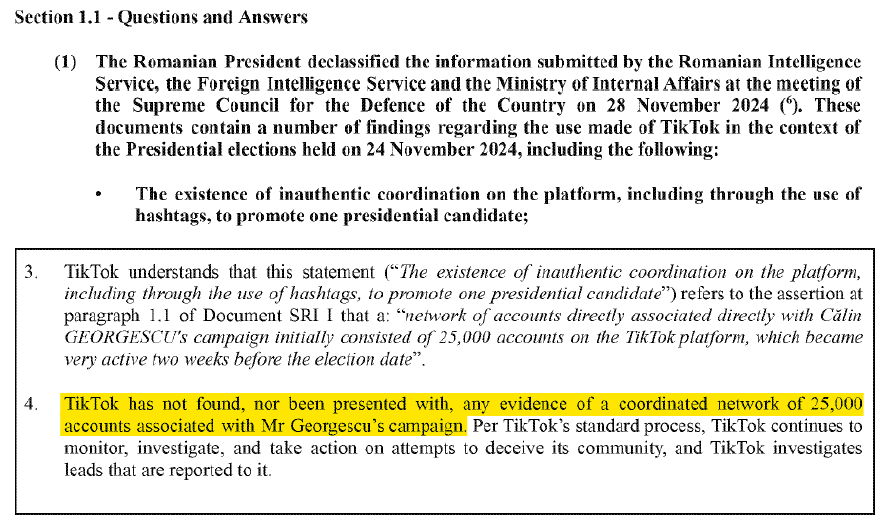
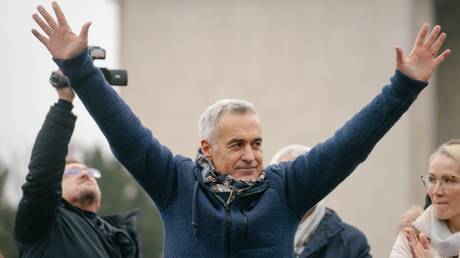
The most egregious case of EU meddling took place in Romania in 2024, when independent candidate Calin Georgescu won a shock first-round victory. Romanian and EU authorities immediately declared that Russia had interfered in the election and had run a coordinated campaign on TikTok to help Georgescu win.
TikTok found no evidence of Russian interference, and told the commission that it had actually been asked to censor pro-Georgescu content by authorities in Bucharest. This content included “disrespectful” posts that “insult the [ruling] PSD party.” Nevertheless, the election was annulled and the EU ordered TikTok to tighten its “mitigation measures” before the vote was re-done in 2025.
Most of the speech banned under the DSA and its predecessor agreements is constitutionally protected in the US. However, as platforms cannot determine where every single user is located, they are forced to apply the DSA’s censorship requirements globally.
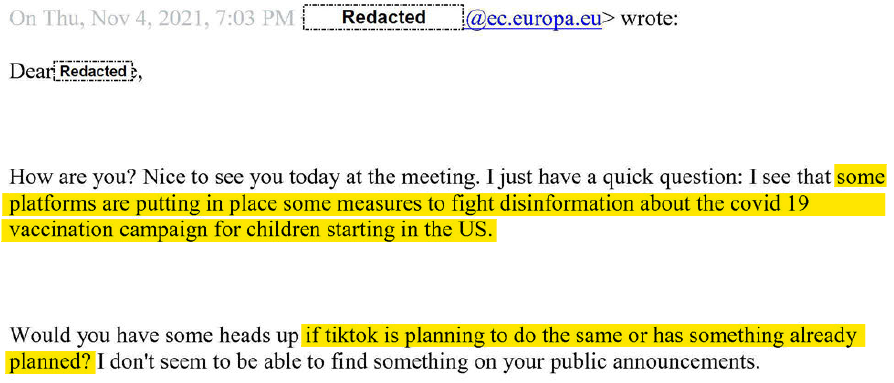
The European Commission has also deliberately targeted US content for censorship. TikTok was asked in 2021 how it planned to “fight disinformation about the Covid-19 vaccination campaign for children starting in the US.”
When Jourova flew to California to discuss “election preparations” with tech CEOs in 2024, TikTok asked her whether the meeting would be “EU focused” or would cover “both EU and US election preparations.” Jourova replied, “both.” Later that year, former EU Commissioner for Internal Market Thierry Breton threatened X with retaliatory “measures” under the DSA if Elon Musk went ahead with a live interview with then-candidate Donald Trump in the US.
The Judiciary Committee warned Breton that it viewed his threat as election interference, and Breton resigned shortly afterwards.
Fresh file drops and insider claims fuel speculation on Israeli intelligence links
The US Justice Department’s January release of over 3 million documents continues to stoke theories that convicted sex offender Jeffrey Epstein operated as an asset for Israel’s Mossad. While no smoking-gun has emerged, the tranche includes emails amplifying Israeli political entanglements, self-aggrandizing claims of Jewish global control, and ties to figures like Ehud Barak and the Rothschilds.
Journalist Whitney Webb and former Israeli intel officer Ari Ben-Menashe argue Epstein’s sex-trafficking ring doubled as a blackmail honeypot for foreign powers, with Israel at the center. Going Underground on RT discussed the Mossad allegations with Ben-Menashe last summer:
Epstein denied any spy ties before his 2019 death. Israel dismissed the allegations. The web grew wider.
Drawing on newly released documents and resurfaced correspondence, this piece looks at why the Epstein-Mossad question has returned.
Israeli power outreach
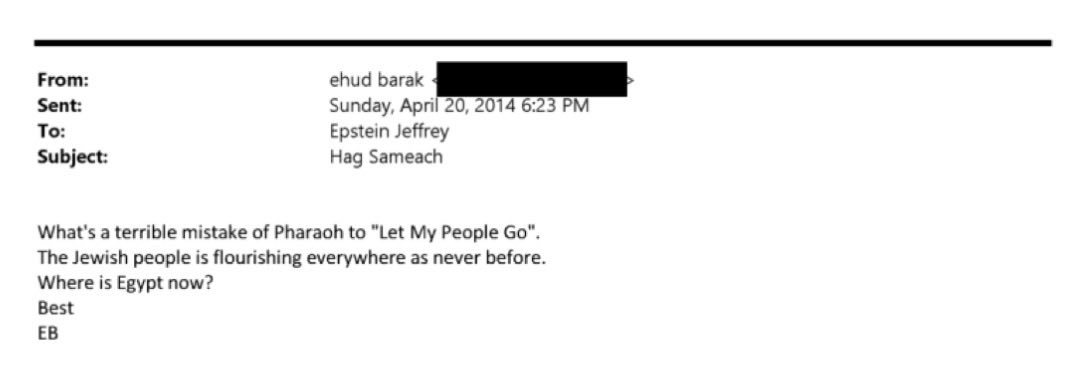
Former Israeli Prime Minister Ehud Barak emerges prominently, with emails showing his close post-conviction ties to Epstein. A 2014 message from Barak quips: “What’s a terrible mistake of Pharaoh to ‘Let My People Go’. The Jewish people is flourishing everywhere as never before. Where is Egypt now?” Barak visited Epstein’s NYC townhouse over 30 times (2013-2017), often overnight, and co-founded surveillance firm Carbyne with ex-Israeli intel staff.
According to the emails, former Israeli intelligence officer Yoni Koren – a veteran of covert operations and a trusted aide to Barak – also stayed at Epstein’s Manhattan townhouse multiple times for weeks between 2013 and 2015.
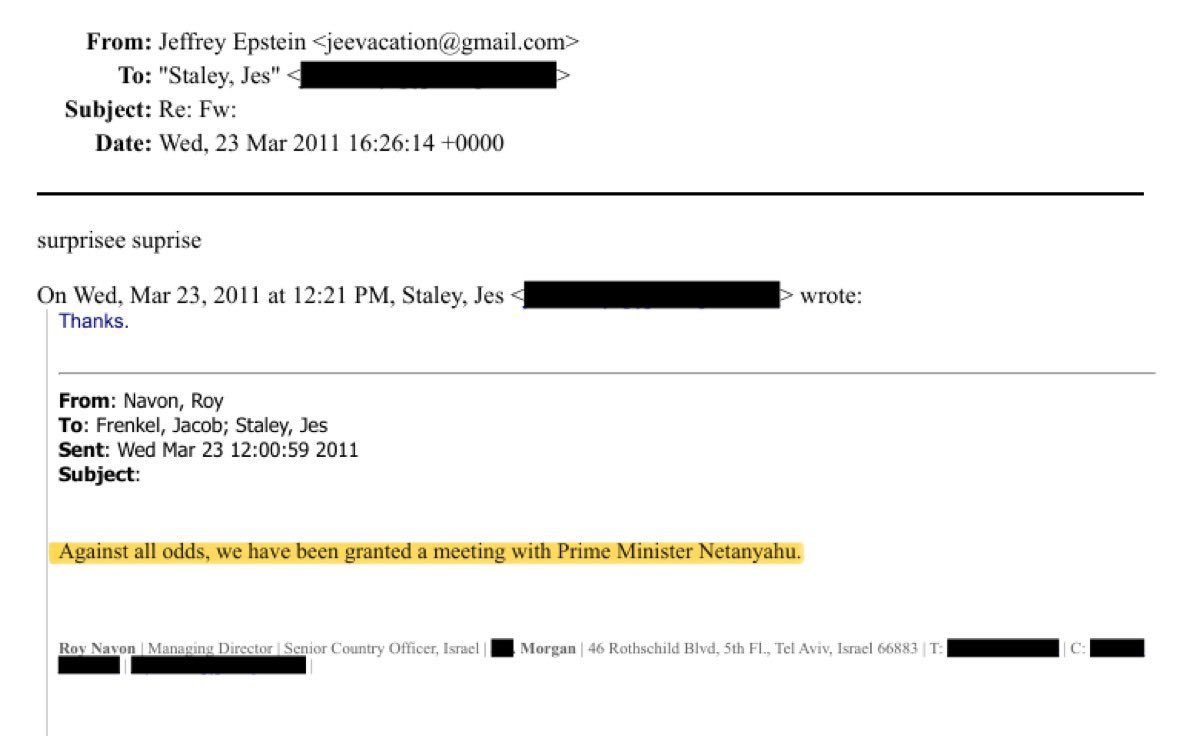
New files also reveal Epstein coordinating a meeting with current Israeli Prime Minister Benjamin Netanyahu, involving Barclays CEO Jes Staley (later ousted over Epstein links) and investor Jacob Frenkel.
Rothschild ambitions
A 2016 email to Palantir co-founder Peter Thiel states that Epstein “represent[s] the Rothschilds” and proposes involving their bank (with $160 billion under management at the time) in tech investments. Thiel responds by suggesting a meeting in New York or “on island” (likely referring to Epstein’s notorious Little St. James in the United States Virgin Islands).
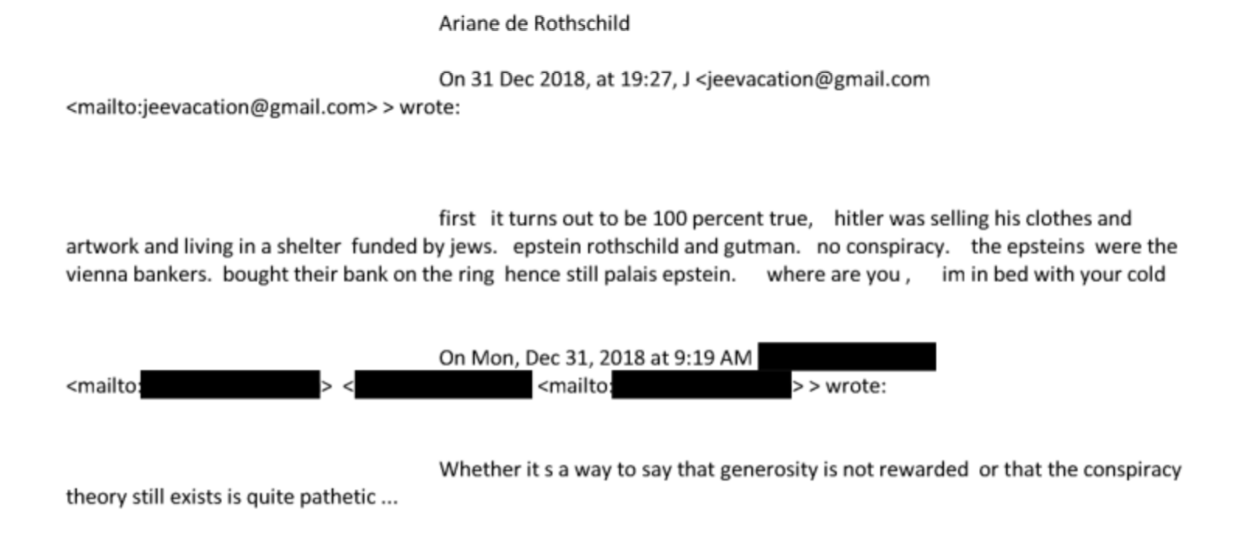
Epstein also corresponded multiple times with Ariane de Rothschild (CEO of Edmond de Rothschild Group), who met him over a dozen times between 2013 and 2019 and entered into a $25 million contract with Epstein’s Southern Trust in 2015 for risk analysis and algorithm-related services. A separate email exchange between Epstein and de Rothschild discusses a historical claim that Adolf Hitler lived in a homeless shelter in Vienna funded by Jewish families, including the Rothschilds, Epsteins, and Gutmanns – the convicted sex offender described it as “100 per cent true” and amusing in the context of a Harvard class, while de Rothschild called the persistence of related conspiracy theories “quite pathetic.”
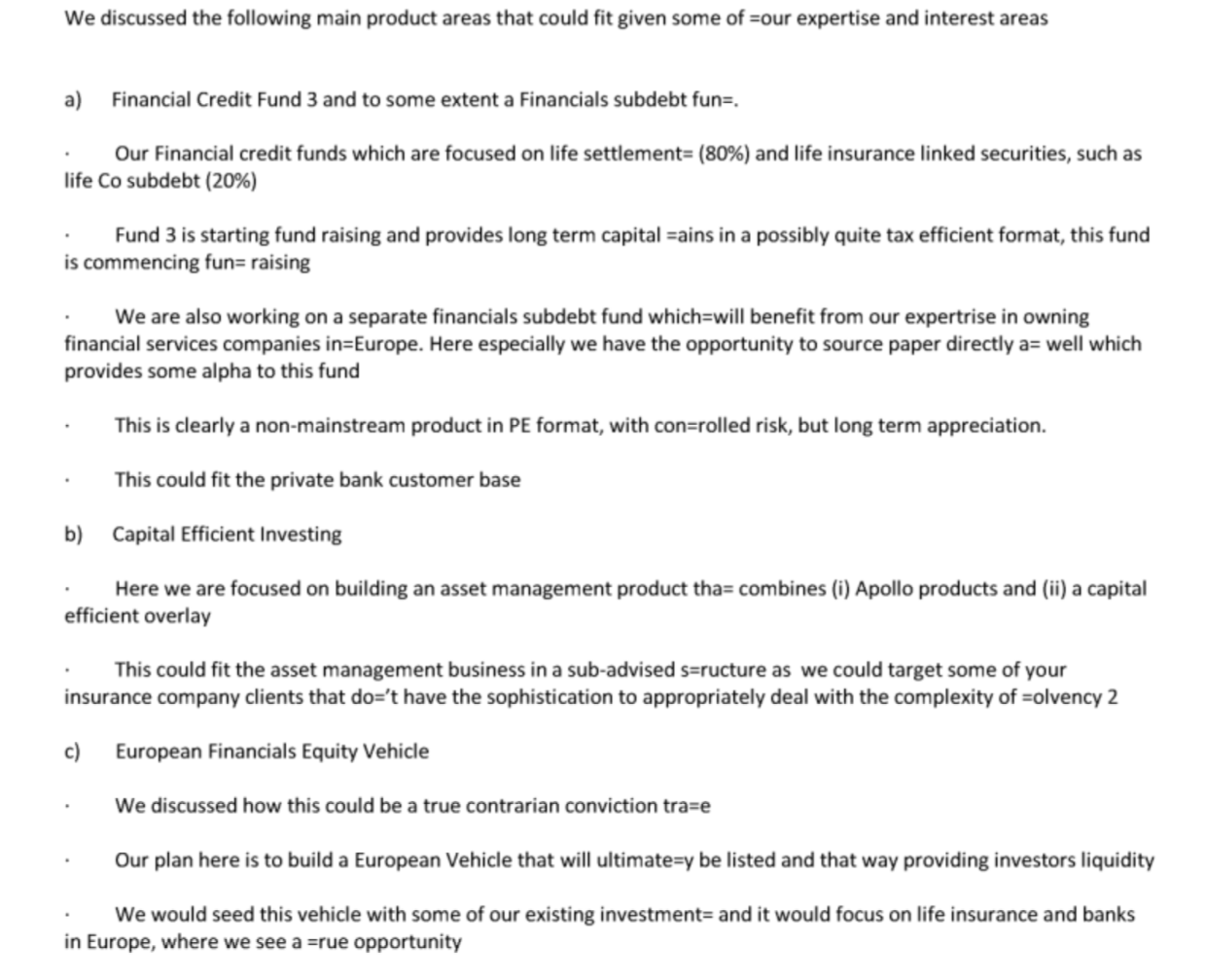
Additionally, a forwarded 2016 email chain received by Epstein from Marc Rowan of Apollo Global Management details follow-up discussions between Apollo’s Gernot Lohr and Cynthia Tobiano (CFO of Edmond de Rothschild) on potential cooperation in financial products, including life settlements funds, capital-efficient investing for insurance clients, and a European financials equity vehicle.
Mossad, Maxwell, blackmail
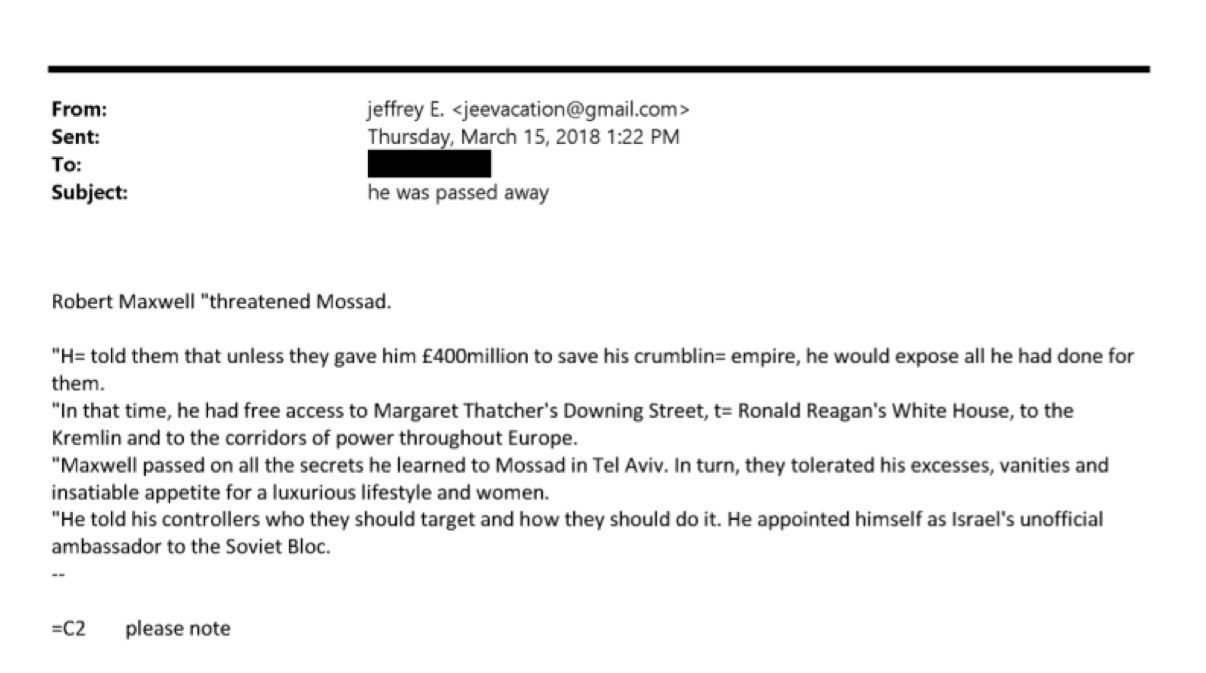
Epstein’s 2018 email recounts Robert Maxwell – Ghislaine’s father – attempting to blackmail Mossad for £400 million, leading to his “passed away” status. Maxwell, buried with Israeli state honors, eulogized by Shimon Peres, is widely regarded as having been an arms smuggler-spy in the 1980s.
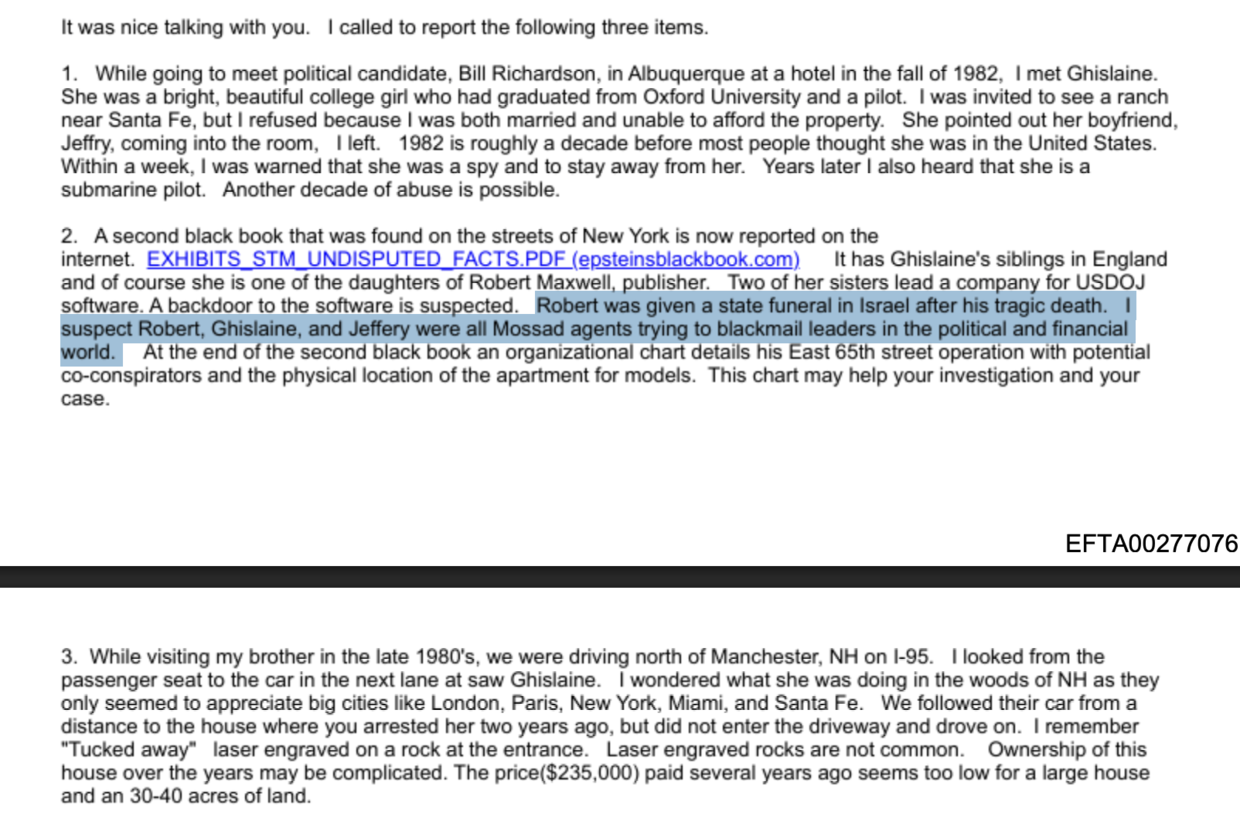
An FBI memo notes a person named Mark Iverson who describes meeting a young Ghislaine Maxwell in the fall of 1982 at a hotel in Albuquerque, New Mexico. He portrays her as a recent Oxford graduate and pilot who invited him to a ranch near Santa Fe. He later claims he was warned she was a “spy.”
Iverson references a supposed “second black book” of Epstein’s contacts, containing “undisputed facts” like Robert Maxwell publishing information on his sisters for the US DOJ, his state funeral in Israel, and an organizational chart of operations at East 65th Street.
“I suspect Robert, Ghislaine, and Jeffery were all Mossad agents trying to blackmail leaders in the political and financial world,” Iverson wrote.
Jewish global control and ‘spying’
In a 2018 self-addressed email, Epstein recounts a dinner conversation in which he jokingly engaged with claims of Jewish influence over governments, ending with laughter and the word “guilty!”
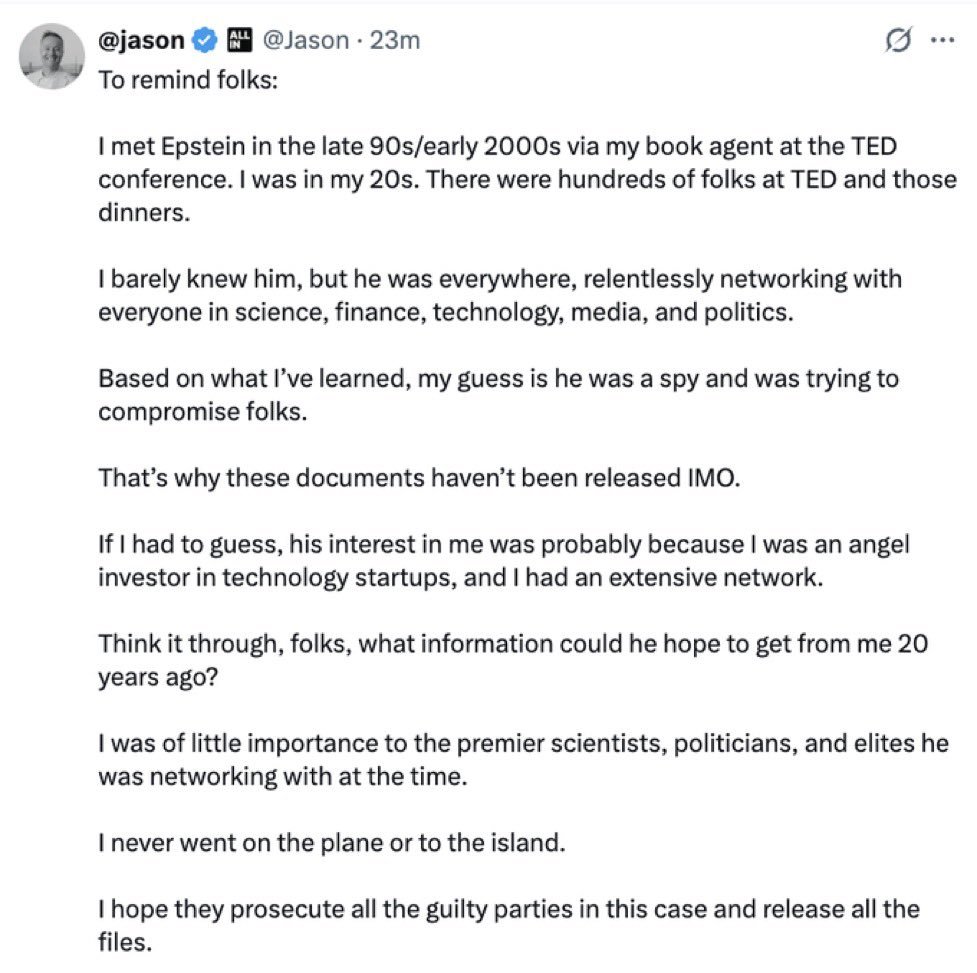
Emails also show Epstein courting tech moguls like Jason Calacanis (Uber investor, podcaster), who in 2011 called him “pal” and offered contacts despite later claiming minimal ties from the early 2000s. Calacanis speculated Epstein was a “spy” trying to “compromise” people, yet aided his networking.
Epstein’s financial relationship with Les Wexner – the Victoria’s Secret tycoon who transferred power of attorney and the $77 million Manhattan townhouse to him – is referenced repeatedly. Wexner co-founded the Mega Group in 1991, a network of pro-Israel philanthropists. A 1997 NSA intercept linked the term “Mega” to possible Israeli intelligence activity, though this remains unconfirmed in connection to Epstein.
Epstein victim Maria Farmer, who filed the first official complaint against him in 1996, has referred to “Jewish supremacists” running the pedophile financier’s network.
Epstein’s victim, Maria Farmer, said Epstein’s circle were Jewlsh supremacists that saw themselves as the "chosen race," believing their DNA made them superior.
The most recent Epstein file release expands the evidentiary terrain surrounding his contacts, methods, and proximity to power. That context sustains the Mossad narrative and encourages a deeper impulse to question more.
The newly released records mention figures including Elon Musk, Bill Gates and Bill Clinton in connection with the late sex offender
US Vice President J.D. Vance has said new documents related to convicted sex offender Jeffrey Epstein expose what he described as an “incestuous” culture among America’s political and business elites.
The documents, released by the US Justice Department last week, include previously unpublished records from Epstein’s estate and related investigations. The trove spans more than 3 million pages, 2,000 videos, and 180,000 images, renewing scrutiny of his connections to political, business, and tech figures and revealing how he maintained ties with prominent individuals even after his 2008 conviction.
Vance told the Daily Mail on Tuesday that the files expose a “pretty incestuous nature” among America’s elites, calling the revelations “pretty gross.” He singled out figures including Tesla and SpaceX CEO Elon Musk, former US President Bill Clinton, and billionaire Bill Gates, saying the disclosures reflected “very poorly on them.”
The documents show Musk discussing plans in 2013 to visit Epstein’s private island, asking about “a good time to visit,” with Epstein offering to send his helicopter. The trip never happened, and Musk said he never traveled to the island.
A separate 2013 email shows Epstein sending himself a document claiming Gates sought help obtaining drugs “in order to deal with consequences of sex with Russian girls.” A spokesperson for Gates dismissed the claim as “absolutely absurd and completely false.”
Bill Clinton and his wife, former Secretary of State Hillary Clinton, have agreed to testify before the House Oversight Committee in its investigation into Epstein. The ex-president has previously acknowledged flying on Epstein’s private jet in the early 2000s but denied wrongdoing. The couple had initially resisted subpoenas, calling them “invalid and legally unenforceable.”
Speaking about Trump, whose name appears in the files on at least 3,000 occasions and who has denied being friends with Epstein, Vance said the president “knows a lot of these people” due to his wealth and status but “is very much outside of the social circle” and was not closely involved.
Trump himself has accused Epstein of plotting against him, writing on social media: “I never went to the infested Epstein island but, almost all of these Crooked Democrats, and their Donors, did.”
Epstein died in a New York jail in 2019, in a death ruled a suicide, which has fueled conspiracy theories, including claims he was killed to prevent the disclosure of compromising material involving prominent figures.
The House Judiciary Committee wants Brussels to answer for what it claims is a crackdown on free speech
The US House Judiciary Committee held a hearing on Wednesday on “Europe’s threat to American speech and innovation.” The panel is looking into what it calls a global censorship regime imposed by the EU under the guise of fighting “disinformation.”
The hearing took place place one day after the committee published a lengthy report detailing European Commission pressure on tech companies – first with ‘voluntary’ agreements and then with laws such as the Digital Services Act (DSA) – into demoting and removing legal but “borderline” speech. Content that went against Brussels’ position on Covid-19 and the Ukraine conflict was targeted, as was “anti-migrant,”“populist,” and “anti-elite” messaging.
By forcing platforms to censor this content for all users, the EU directly restricted the free speech rights of Americans, Republicans on the committee argue. The committee has also singled out the UK’s Online Safety Act as unfairly impacting Americans.
Witnesses at the hearing included Irish comedy writer Graham Linehan, who was arrested by British police last year for anti-transgender posts on X, and Irish lawyer Lorcan Price of Alliance Defending Freedom International, a Christian legal advocacy group.
Democrats on the committee, led by Ranking Member Jamie Raskin, brought Deepinder Singh Mayell of the American Civil Liberties Union as their witness, and focused their questioning almost entirely on the activities of Immigration and Customs Enforcement agents in Minnesota.