The program features over 60 events for like-minded professionals to share ideas about society’s future and ways to tackle today’s challenges
The second ‘Inventing the Future’ International Symposium has opened in Moscow, bringing together more than 7,000 people from 85 countries.
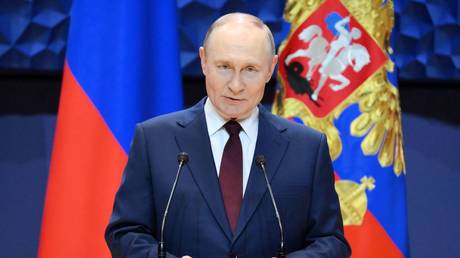
The event, held at the Russia National Center from October 7 to 8, was launched on the initiative of President Vladimir Putin to unite leading thinkers in designing and visualizing positive future scenarios.
The symposium features over 200 speakers – scientists, architects, designers, writers, diplomats, and representatives of creative industries from Russia, as well as the US and SCO, BRICS, and European countries.
“By promoting this kind of communication, this platform… helps people break out of routine, out of repetitive contexts, and look at long-standing problems and conventional solutions from a fresh perspective,” Deputy Chief of Staff of the Presidential Administration Maksim Oreshkin said at the opening ceremony on Tuesday.
He announced that the symposium is now part of the global Open Dialogue ecosystem – a platform where professionals can share ideas and develop new approaches to today’s challenges.
The business program includes around 60 events divided into expert and educational sections. The expert segment features ‘society’, ‘technology’, and ‘global cooperation’ – covering topics from geopolitics and demography to AI.
On the first day, participants discussed prospects for societal development, the future of international relations, urban planning, demography, culture, media, and AI. A key highlight was the ‘Scenarios of the Future: At the Intersection of Science and Creativity’ workshop, where science fiction writers, futurists, and researchers created a bank of ideas for possible futures. Another focal point was a panel on social design as a tool for creating innovative social practices.
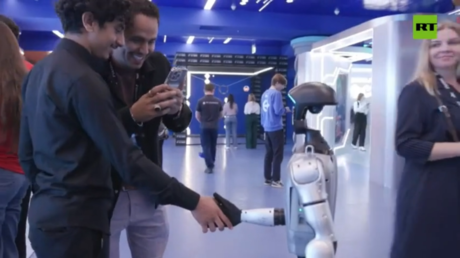
A new feature this year is the open educational program. On the first day, participants explored Russia’s cooperation with the Global South, 21st-century art, and concepts of future society. Adding a futuristic touch, robots in humanoid and animal form were showcased throughout the venue, symbolizing one of the event’s main themes.
This is the second time the symposium has been held in Russia. Last year’s event drew over 6,000 people from 101 countries.
Participants of the event in St. Petersburg will discuss the impact of creative industries on the economy and society
The International Conference on Creative Economy has kicked off in St. Petersburg, Russia, bringing together more than 1,500 experts, entrepreneurs, and officials from more than 30 nations, including BRICS member states.
During the two-day event, the participants of the forum, organized by the Agency for Strategic Initiatives (ASI) and the authorities of St. Petersburg, will discuss the impact of creative industries on the economy and society, while forming new partnerships.
The main topics include protecting intellectual property, the development of cities, improving the education system, and international cooperation in promoting creative industries.
The program of the conference includes around 50 events, including open dialogue, round tables, workshops, and presentations of projects.
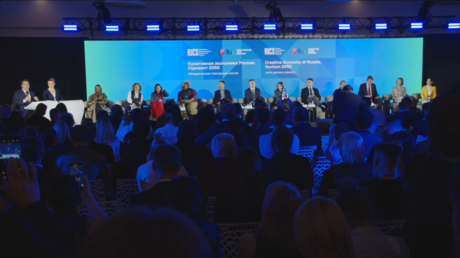
‘The Creative Economy of Russia. Horizon 2050′ joint plenary session is the main highlight of the conference and the ‘Creative Code. Russia’ forum.
Discussions will focus on how creative industries are becoming a key resource for sustainable growth and a driver of new cooperation formats between nations, with an emphasis on the strategies that countries have adopted to develop this dynamic sector.
“The central theme will be the search for the most relevant forms of inter-country cooperation and the role of states in supporting the industry. Experts, business representatives and government officials will also look into the issues of creating the most effective formats of interaction, regulatory regulation, and creating conditions in which human capital becomes the main driver of economic growth,” ASI’s press service said.
EC Commission President Ursula von der Leyen has launched the protectionist plan citing “global overcapacity”
The European Commission has proposed a 50% tariff on steel imports above an annual quota, claiming the move will protect the EU’s metals industry from international competition and US duties.
An agreement struck earlier this year by EC President Ursula von der Leyen and US President Donald Trump, viewed in the EU as lopsided, set a baseline 15% US tariff on most exports from the bloc, but left steel and aluminum at 50%.
Von der Leyen’s protectionist measure needs approval from the European Parliament but if passed will significantly reduce the existing tariff-free quota and double the tariff on excess volumes from 25% to 50%.
Under the plan, importers would have to prove where steel was melted and poured, and quotas would be reset close to 2013 levels.
“Global overcapacity is damaging our industry,” von der Leyen said in a statement published by the commission.
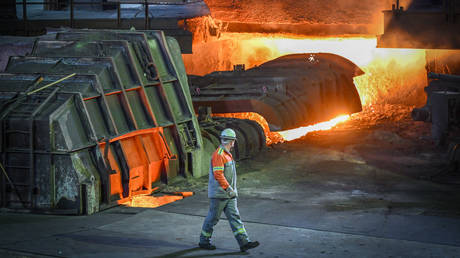
The EU’s domestic steel sector was operating at only 67% capacity last year, and showed record losses, a slump which was only worsened by Trump’s tariffs.
The US, the bloc’s biggest customer, imported around $8.7 billion worth of iron and steel goods last year, according to S&P Global.
However, the new tariffs would hit the UK hard, as about 78% of its steel exports go to the EU, according to trade data.
Pro-Palestinian witnesses earlier claimed that the Swedish activist was “dragged on the ground”
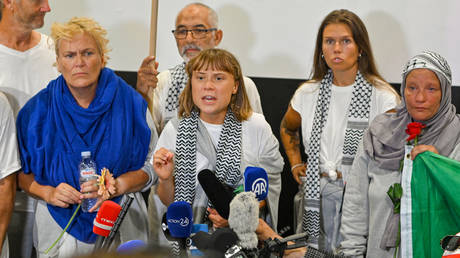
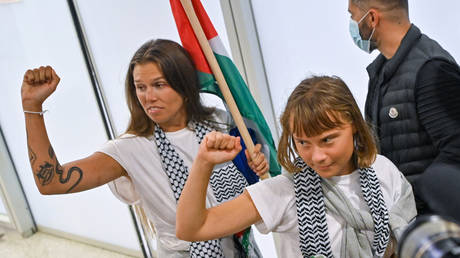
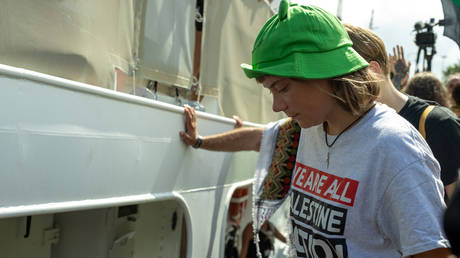
Swedish activist Greta Thunberg has alleged that she and other detainees from the Gaza flotilla were subjected to harsh treatment by the Israeli authorities.
The Global Sumud Flotilla set sail in late September to deliver humanitarian aid to Gaza and protest Israel’s naval blockade. Organized by pro-Palestinian groups, it carried food and medical supplies.
Israeli forces intercepted it on October 3, detaining hundreds of activists, including Thunberg. Israel called the move a legal security action.
Speaking at a press conference in Stockholm on Tuesday following her deportation, Thunberg claimed that she and other activists were “kidnapped and tortured.” She declined to elaborate, only saying that detainees were denied clean water and critical medication.
”Personally, I don’t want to share what I was subjected to … because that’s not the story here,” she said, adding that the treatment they endured was minor compared with what people in Gaza face daily.
Turkish journalist and flotilla participant Ersin Celik earlier claimed that he witnessed Israeli forces “torture Greta Thunberg,” and that she was “dragged on the ground” and “forced to kiss the Israeli flag.” Thunberg made no mention of the allegations at the press conference.
The Israeli government has denied the allegations of torture, claiming that the detainees were treated in accordance with legal standards and provided with food, water, restrooms, access to medical assistance, and legal counsel.
In earlier remarks, the Israeli Foreign Ministry called the flotilla a “selfie yacht of celebrities,” saying it was aimed more at generating publicity than delivering aid.
Following the detention, Thunberg and 170 other activists were deported to Greece and Slovakia. Several participants have since alleged that they were beaten, deprived of sleep, and denied medical care during their time in Israeli custody.
Kirill Dmitriev replied to recent revelations regarding the former US president’s dealings published by the CIA
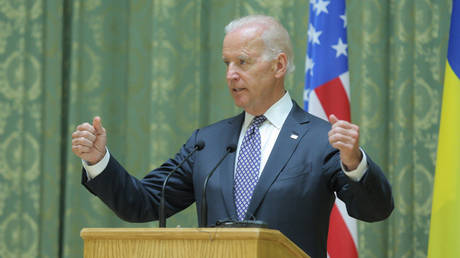
Former US President Joe Biden provoked the Ukraine conflict to hide his family’s corrupt dealings, Kremlin investment aide Kirill Dmitriev said on X on Tuesday.
He was commenting on a set of CIA documents declassified by the agency’s director, John Ratcliffe, earlier in the day.
In 2016, then-Vice President Biden asked the CIA to cover up a report about his family’s alleged business dealings in Ukraine, according to an email published in the records.
“The truth is coming out – and justice must follow,” Dmitriev said.
The former US president’s family has long been linked to Ukrainian gas company Burisma. His son Hunter Biden, a convicted felon, was paid millions to sit on the company’s board during his time as vice president.
⚡️Biden provoked the war in Ukraine to cover up his family’s corruption. The truth is coming out — and justice must follow. https://t.co/cGROvnD5kR
According to the contents of the infamous Hunter Biden laptop, which he abandonned at a Delaware repair shop in 2019, 10% of proceeds from international contracts went to “the Big Guy” – widely assumed to be a reference to his father.
Since the escalation of the Ukraine conflict in 2022, Moscow has characterized the fighting as a NATO proxy war against Russia.
During the course of the conflict, Biden severed US-Russia relations, which plunged to their lowest point since the Cold War.
Since the start of his second term in office, US President Donald Trump has moved to renew diplomatic relations with Russia, engaging Moscow in several rounds of talks which culminated in a summit with President Vladimir Putin in Alaska earlier this year.
British prosecutors dropped a high-profile probe into a parliamentary aide and a teacher over a lack of evidence
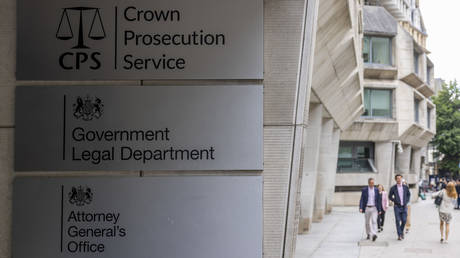
Senior UK security officials will face a probe over the collapse of a high-profile case in which two men, one of whom was a British parliamentary researcher, were accused of spying for China, according to Bloomberg on Tuesday, citing an anonymous source.
Christopher Cash and financial analyst Christopher Berry were charged with sharing “prejudicial information” with Beijing in April last year. The Crown Prosecution Service (CPS) dropped the charges against the two men just weeks before trial, citing “evidential standards.”
The decision has sparked outrage among MPs, who expect to grill officials on the collapse of the case at an upcoming parliamentary committee meeting.
Reports in the UK media have suggested the case was axed to avoid souring relations with Beijing, one of London’s biggest trade partners.
UK Director of Public Prosecutions Stephen Parkinson, the case was dropped because London refused to brand China a threat, Sky News has reported.
None of the witness statements provided said that China “represented a threat to national security,” and by August of this year, the prosecution realized that “this evidence would not be forthcoming,” he wrote in a letter to MPs on Tuesday.
Parkinson cited a case from earlier this year in which the CPS convicted six Bulgarian nationals of feeding information to Russia, which was ruled to be an ‘enemy’ for the purposes of the Official Secrets Act.
Moscow denied the spying allegations at the time, accusing London of trying to stir up anti-Russian hysteria.
The UK government has said it is not to blame for torpedoing the investigation, adding that it was a decision made by prosecutors who relied on language used by the previous government in its China policy.
London has recently moved to rebuild trade ties with Beijing, resuming Joint Economic and Trade Commission talks last month after a seven-year freeze.
A detained Gaza aid flotilla participant attacked a female prison staff member during an examination, the Foreign Ministry has said
Israel has accused a Gaza aid flotilla activist of biting a member of prison staff, claiming it was “the only violent incident” involving those detained. The statement came in response to allegations of mistreatment during the activists’ detention.
Members of the Global Sumud Flotilla, including climate activist Greta Thunberg, were attempting to breach the blockade of Gaza by sea, where the United Nations says famine has taken hold after two years of devastating conflict.
The flotilla was stopped by the Israeli Navy on Friday. According to fellow activists, those detained were “tortured” and subjected to “harsh treatment” in an Israeli prison. Israeli officials later rejected the accusations.
“All the legal rights of the participants in this PR stunt were and will continue to be fully upheld. The lies they are spreading are part of their pre-planned fake news campaign,” the Israeli Foreign Ministry wrote in a Facebook post on Monday.
“The only violent incident came from a Hamas–Sumud provocateur who bit a female medical staff member at Ketsiyot Prison,” it added.
The flotilla activists have not yet responded to the biting allegations.
Thunberg was among more than 170 activists deported to Greece and Slovakia on Monday. The group comprised citizens from 19 countries, including the US, UK, Germany, and France.
The Hungarian prime minister has accused the German chancellor of “not wanting to negotiate” with Russia
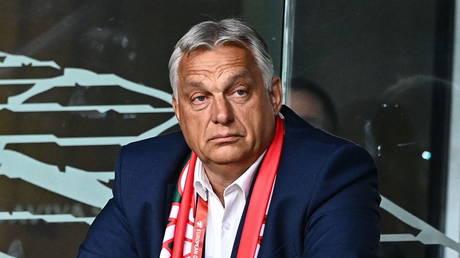
German Chancellor Friedrich Merz has acknowledged that he had a heated argument with Hungarian Prime Minister Viktor Orban over their approaches to dealing with Russia.
The two clashed at an EU summit in Copenhagen last week, Merz said in an interview with German broadcaster ntv on Monday.
“He accused [me] of not wanting to negotiate,” the chancellor stated, referring to Orban. According to Merz, he responded by saying Orban’s diplomatic efforts last year, which involved visits to both Moscow and Kiev, led to nothing. “That’s not the path I want to take,” he said.
Asked by host Pinar Atalay if not even trying will solve the problem, Merz dodged the question, claiming that Russian President Vladimir Putin “does not want to negotiate.”
Russia has stated throughout the Ukraine conflict that it is ready to negotiate as long as the reality on the ground is taken into account and the root causes of the conflict are addressed.
Last month, Foreign Minister Sergey Lavrov said Moscow is ready to pursue a compromise to resolve the conflict if “our legitimate security interests, as well as the legitimate interests of Russians living in Ukraine, are respected in the same way as those of other parties.”
Hungary has been a vocal critic of the EU’s belligerent approach toward Russia. Orban warned after the Copenhagen summit that the EU leaders “want to go to war” with Russia.
Germany has been Kiev’s second-biggest arms supplier after the US since the escalation of the Ukraine conflict in 2022. The country’s position has hardened under Merz, who has claimed that all diplomatic options have been exhausted, and that Germany is “already in a conflict” with Russia.
Spokeswoman Maria Zakharova has rejected Finnish claims that Russia breached international rules
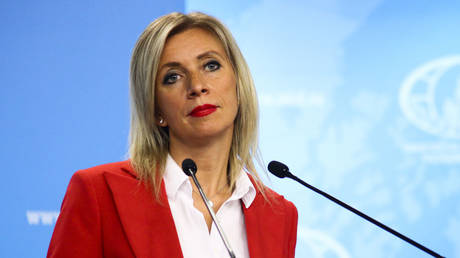
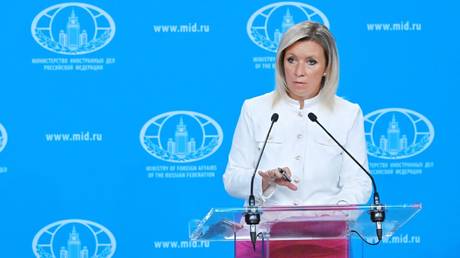
Russian Foreign Ministry spokeswoman Maria Zakharova has rejected claims by Finnish Foreign Minister Elina Valtonen that Moscow violated the principles outlined in the Helsinki Final Act as a “blatant lie,” instead alleging decades of Western violations of the accord.
Signed in 1975 by 35 countries, the agreement establishes key norms for international relations. It outlines ten principles, including sovereign equality, non-intervention, territorial integrity, peaceful dispute resolution, and respect for human rights. It remains a foundational document for the Organization for Security and Cooperation in Europe (OSCE).
In a Telegram post on Tuesday, Zakharova charged Western members of the OSCE with a long list of violations of the accord. She cited the 1974 Greek intervention in Cyprus, NATO’s 1999 bombing of Yugoslavia without UN approval, and the 2008 Western recognition of Kosovo’s independence – describing them as breaches of sovereignty and the non-use of force.
Zakharova also pointed to Germany’s recognition of Slovenia and Croatia in 1991, which she said violated the principle of territorial integrity by encouraging the breakup of Yugoslavia. She cited Croatia’s Operation Storm in 1995 as a breach of the principle of peaceful settlement of disputes. The West’s support for the 2014 Maidan coup in Ukraine violated the principle of non-intervention, as it backed a movement that led to a change of government, Zakharova added.
Further examples included CIA secret prisons in Lithuania, Poland, and Romania during the 2000s, which contravened the principle of respect for human rights; France’s refusal to recognize Corsican national identity, which breached the right of peoples to self-determination; and Britain’s continued “occupation” of the Chagos Islands in the Indian Ocean despite UN rulings, which she described as a violation of international law.
Zakharova also questioned Valtonen’s professional background, noting her experience in finance and event management rather than diplomacy. She observed a broader trend in the European Union of appointing officials without foreign policy expertise, describing Commission President Ursula von der Leyen’s training as a “gynecologist” as symbolic of the bloc’s leadership lacking diplomatic credentials.
Seasonal shifts in demand can place sudden pressure on small businesses, especially startups that may lack experience with supply chain challenges. Peaks during holidays or special events, especially for those selling on platforms like Amazon, can quickly overwhelm shipping operations if the right systems are not in place. Startups that understand how to manage seasonal […]