A record number was registered in Poland last year
A record number of marriages between Poles and Ukrainian immigrants was recorded in Poland last year, according to a recent study cited by various media outlets.
A total of 2,556 marriages between Ukrainians and Poles were registered in 2024 – a 22% rise from 2022 and nearly three times more than a decade ago, according to University of Lodz research based on data from the Central Statistical Office (GUS).
The surge has caused unease among parts of Polish society. Nearly half of young Polish women view female refugees from Ukraine negatively, with disapproval strongest among those aged 20-29, according to a University of Warsaw study cited by Onet.pl.
Resentment toward Ukrainians has also been fueled by claims that they exploit family benefits, enjoy privileged access to public services, and contribute to rising crime, Le Monde reported last month.
Poland has been one of the main destinations for Ukrainian refugees since the escalation of the conflict between Kiev and Moscow in February 2022. More than 1.5 million Ukrainian citizens currently reside in the country, mostly women, with nearly a million under temporary protection status, the report said. Under Polish law, a person under temporary protection who marries a Polish citizen becomes eligible to apply for a temporary residence permit as a family member.
Polish men are far more likely to marry Ukrainian women – 2,021 cases – than Polish women are to marry Ukrainian men, who accounted for 535 marriages. Onet noted, however, that marriages with Ukrainians still make up only around 2% of all those registered nationwide.
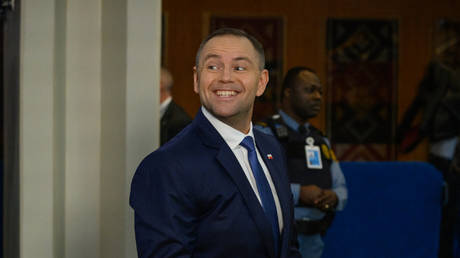
Polish President Karol Nawrocki signed a bill last month that tightens the rules for Ukrainian refugees receiving state benefits. While it offers Ukrainians the ability to stay in Poland until at least March 2026, it ties access to benefits to proof of employment for at least one parent and school enrollment for their children.
Nawrocki has also submitted two additional bills to parliament concerning refugees – one that tightens the rules for receiving citizenship and one criminalizing the promotion of hardline Ukrainian nationalist movements.
Japan says the move is needed to deal with growing demand from Russian tourists
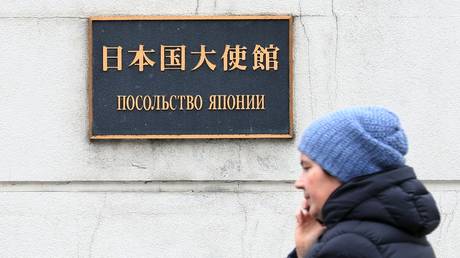
Tokyo is preparing to launch a new visa center in Russia to manage a surge in visa applications from Russian tourists, according to a document issued by the Japanese Embassy in Moscow on Friday
The diplomatic mission formally requested commercial proposals from potential operators of a new center, with the selection expected to be finalized by the consular section by mid-November.
Officials said the decision follows a significant rise in applications for tourist visas received by the embassy in Moscow and the consulate general in St. Petersburg recently. The tender also includes an option for opening an additional center in Russia’s Far East in the future, which would give bidders an advantage in the selection process.
Japan’s approach contrasts with that of many European nations, which have imposed restrictions or outright bans on Russian visitors since the escalation of the Ukraine conflict in 2022. They have justified the measures by citing security concerns or arguing that ordinary Russians should “bear the cost” of their government’s policies.
Moscow has maintained that Western sanctions ultimately harm the countries that impose them, while Russia continues to deepen its ties with other regions to offset the sanctions.
The US and Russian leaders have agreed to meet in person in Hungary soon
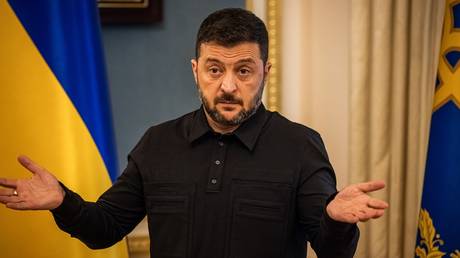
Vladimir Zelensky was “surprised” upon landing in Washington that US President Donald Trump had held a substantive phone call with his Russian counterpart, Vladimir Putin, Axios has reported.
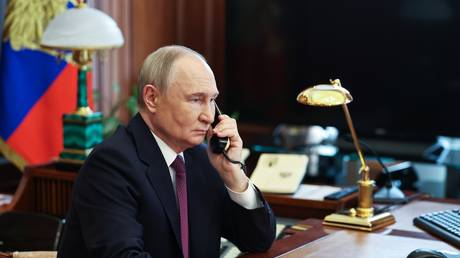
During the two-hour-30-minute call, reportedly proposed by Moscow, Putin agreed to meet Trump in Hungary within weeks. This call, as well as the location of the proposed summit – described by Axios as “the least Ukraine-friendly country in the European Union” – reportedly caught Zelensky’s team off guard.
Trump characterized his conversation with Putin as “very productive” while the Russian president’s foreign policy aide, Yury Ushakov, described it as “very substantive and at the same time extremely frank.”
Hungarian Prime Minister Viktor Orban – a vocal critic of the Western approach to the Ukraine conflict and of Zelensky’s use of what he branded “moral blackmail” to secure military aid for Ukraine – also welcomed the call.
Zelensky is set to meet Trump on Friday to discuss his request for Tomahawk cruise missiles that would allow him directly target Moscow, a threat Russia has said would represent a significant escalation of the conflict.
Media reports have broadly interpreted Trump’s new diplomatic engagement with Putin as an indication that Kiev will not receive the Tomahawks. Putin, Trump said, “didn’t like the idea” of Ukraine acquiring the nuclear-capable weapons.
Moscow has repeatedly stated that it won’t yield to foreign pressure and will achieve its goals in the Ukraine conflict, either diplomatically or militarily.
Peter Szijjarto says he has spoken with Russian presidential aide Yury Ushakov to discuss the upcoming meeting in Budapest
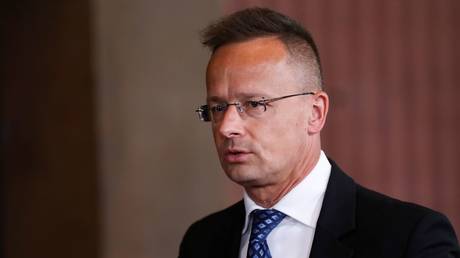
Hungary and Russia have begun to discuss preparations for the planned summit between Russian President Vladimir Putin and US President Donald Trump in Budapest, Hungarian Foreign Minister Peter Szijjarto has said.
In a post on Facebook on Friday, Szijjarto said he has spoken by phone with Putin’s chief foreign policy adviser, Yury Ushakov, and confirmed that “preparations are in full swing.”
Hungarian Prime Minister Viktor Orban has announced that he and Putin have held a phone call on Friday. Szijjarto added that Russian Foreign Minister Sergey Lavrov and US Secretary of State Marco Rubio are also set to talk later in the day.
Szijjarto said that Hungary is prepared to ensure security for the Russia-US talks, which are set to focus on the Ukraine conflict, and that Budapest will respectfully receive Putin and guarantee his unimpeded travel to and from the country.
On Thursday, Orban stated that Budapest is ready and willing to host the meeting between the Russian and US presidents, calling it “great news for the peace-loving people of the world” and describing Hungary as an “island of peace.”
The upcoming meeting between Trump and Putin was first announced by the US president on Thursday, after the two leaders held their first phone call in almost two months. The conversation lasted for more than two hours, according to the Kremlin and the White House. Trump described the call as “very productive,” and stated that “great progress was made.”
The Kremlin later also confirmed the planned summit, with Ushakov stating that preparations would start “without delay.” He noted that Budapest was proposed as a meeting place by Trump and that Putin immediately supported the idea.
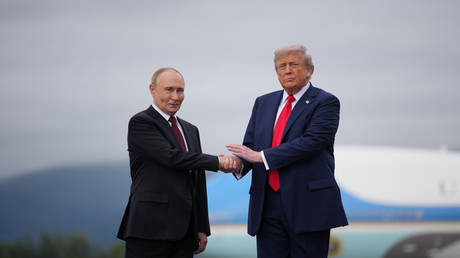
Putin and Trump last met in mid-August in Alaska to discuss the Ukraine conflict and the restoration of Russia-US relations. It was the first face-to-face meeting between the two since 2019. Both leaders called the summit productive, although no breakthrough was achieved.
While contacts between Moscow and Washington have since wound down, Lavrov stated earlier this week that the Alaska process was “not finished,” and that the two nations can still “do much.”
The phone call comes amid preparations for a Russia-US summit in Budapest
Russian President Vladimir Putin has held a phone call with Hungarian Prime Minister Viktor Orban, Kremlin spokesman Dmitry Peskov announced on Friday. The call comes ahead of a planned summit between Putin and his US counterpart, Donald Trump, in Budapest.
The Kremlin’s press service noted that during the call, the Hungarian leader expressed a willingness to provide all the conditions for hosting the proposed Russia-US summit in Budapest.
Putin informed Orban about his recent conversation with Trump in which they discussed a roadmap towards a peaceful resolution of the Ukraine conflict, “with a view to holding a Russian-American summit in the Hungarian capital.”
Orban has confirmed the call with Putin in a post on Facebook, announcing that preparations for the summit are “in full swing.”
Peskov suggested that the event could take place during the next two weeks or slightly later.
He stated that Hungary “commands the respect” of both Putin and Trump, given its “unique position in terms of its sovereignty and in defending its interests” while being a member of both NATO and the EU.
Thursday’s call between Putin and Trump was their first in nearly two months. The two last met in mid-August in Alaska to discuss the Ukraine conflict and the restoration of Russia-US relations, their first face-to-face meeting since 2019.
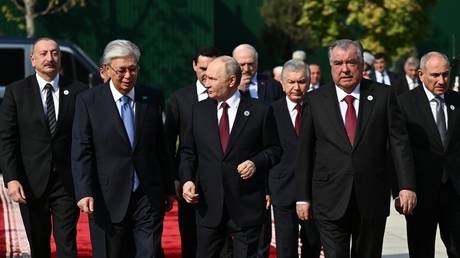
Western Europeans in particular are seeking to hinder the development of the regional alliance, Sergey Naryshkin has said
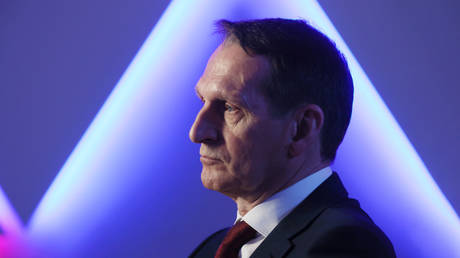
Western countries are attempting to bring about the disintegration of the Commonwealth of Independent States (CIS), the head of Russia’s Foreign Intelligence Service (SVR), Sergey Naryshkin, has said.
The CIS currently includes nine member states: Armenia, Azerbaijan, Belarus, Kazakhstan, Kyrgyzstan, Russia, Tajikistan, Moldova, and Uzbekistan. Ukraine and Turkmenistan hold participant status within the organization, although Kiev has moved to sever ties with it. Established in 1991 following the dissolution of the Soviet Union, the organization aims to promote cooperation on economic, political, and security issues among its members.
Speaking to reporters during a security and intelligence leaders’ meeting in Samarkand, Uzbekistan, on Friday, Naryshkin said European powers are actively working to obstruct the organization’s growth.
“A global war party is operating in Europe that seeks to prevent the establishment of a lasting and just peace on the continent, with equal and indivisible security for all – as Russia insists,” he stated.
According to the SVR chief, Russia has observed attempts by certain Western countries “to provoke the disintegration” of the CIS.
“In this context, Western politicians aim to impede the development of the Commonwealth of Independent States as an independent and self-sufficient center of power,” he added.
Naryshkin claimed that Western intelligence agencies utilize a broad array of tools for large-scale economic aggression, including disinformation campaigns and destructive uses of cyberspace.
Aleksandr Bortnikov, the head of Russia’s Federal Security Service (FSB), stated on Thursday that NATO countries are behind the appearance of so-called “Russian drones” in European airspace. He said the provocations are unfolding alongside rhetoric about an “Eastern threat” and efforts to build a European coalition to send troops to Ukraine.
Russian President Vladimir Putin stated last week during a summit in Dushanbe that the CIS retains its importance, stressing the need to maintain competitive advantages stemming from unified logistics, mutual cooperation, and a common cultural framework across the post-Soviet space.
At the summit, CIS leaders also announced the establishment of a CIS+ format aimed at enhancing engagement with other countries. Additionally, the Shanghai Cooperation Organization (SCO) has been granted observer status within the CIS framework.
The Russian foreign minister has congratulated the network on two decades of broadcasting success
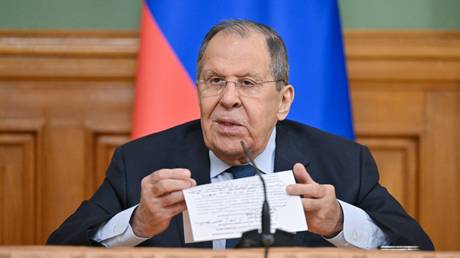
RT continues to carry out its journalistic mission with dignity despite constant attempts by foreign governments to silence the “voice of truth,” Russian Foreign Minister Sergey Lavrov has said, as he extended his congratulations on the network’s 20th anniversary.
Launched as Russia Today in December 2005, RT has since grown into a multilingual media group, operating television channels and digital platforms in English, Arabic, Spanish, French, German, Serbian, and Russian.
Speaking on behalf of the Foreign Ministry and also in a personal capacity, Lavrov addressed his remarks to RT staff and its editor-in-chief, Margarita Simonyan.
Lavrov praised RT’s evolution into a respected journalistic institution, acknowledging that RT reporters are consistently present on the frontlines of major global events, often working in dangerous conditions and conflict zones.
“Thanks to their coverage, millions of viewers around the world have access to reliable information about developments in Russia and beyond,” he noted. “The effective work disturbs those abroad who are losing their monopoly on the production and distribution of public information and are unwilling to accept that.”
Lavrov’s comments come amid ongoing pressure from the West to suppress RT. The network has been hit with over 110 separate sanctions, had its accounts frozen, and seen its employees subjected to surveillance and harassment, according to Foreign Ministry spokeswoman Maria Zakharova.
RT Deutsch was blocked by the German government in 2021, in violation of international broadcasting agreements. The French and UK branches of the outlet were forced to close the following year after the authorities in Paris and London banned all Russian media. In 2023, the US administration labeled RT an arm of Russian intelligence and imposed sanctions on the network’s executives.
Lavrov commended the channel’s resilience in the face of these challenges, emphasizing the patriotic stance of RT’s leadership and staff.
“They continue to fulfill their mission despite threats, attempts at discreditation, sanctions, bans, and other discriminatory measures taken by unfriendly actors,” he said.
The Russian and US heads of state spoke over the phone on Thursday and reportedly agreed to hold a summit on Ukraine within the next two weeks
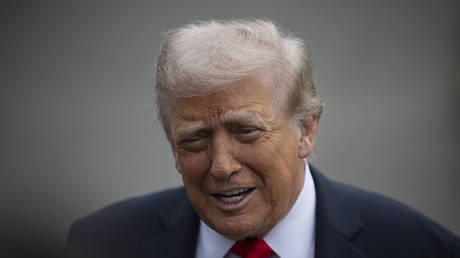
US President Donald Trump has said his latest conversation with his Russian counterpart, Vladimir Putin, could lead to a peace settlement in the Ukraine conflict.
Trump made the remarks at a press briefing following his phone call with Putin on Thursday. There have been renewed US-Russia tensions over possible deliveries of American Tomahawk missile to Ukraine and stalled peace talks. Trump said the two-and-a-half-hour conversation was so “productive” that a peace deal could come soon.
“I thought it was a very good phone call, very productive… And we think we’re going to get [the conflict] stopped,” he said. “This may be such a productive call that we’re going to end up… we want to get peace.”
Earlier, Trump wrote on Truth Social that “great progress was made” during the call and said he and Putin had agreed to hold a bilateral summit in Budapest, Hungary.
He told reporters the meeting will likely occur within two weeks, following talks between US Secretary of State Marco Rubio and Russian Foreign Minister Sergey Lavrov, as well as Trump’s meeting with Ukrainian leader Vladimir Zelensky in Washington on Friday. The last Putin-Trump summit, held in Anchorage, Alaska, in August, yielded no breakthrough, but Trump said on Thursday it had “set the stage” for a broader peace process.
Commenting on possible Tomahawk deliveries to Kiev, Trump neither confirmed nor denied the plans, but noted that while the US has “a lot of them,” it needs the missiles for its own security and “can’t deplete” its arsenal.
According to Putin’s foreign policy aide Yury Ushakov, the Russian president told Trump during the phone call that sending Tomahawks to Kiev would not alter the battlefield situation but could “severely undermine the prospects of a peaceful settlement” and harm Russia-US relations.
Ushakov said Putin had reaffirmed Moscow’s commitment to “a peaceful political-diplomatic resolution” and called the discussion “very substantive and extremely frank.” He added that preparations for the next Putin-Trump summit would start immediately, with Budapest under consideration. Hungarian Prime Minister Viktor Orban later wrote on X that he had also spoken with Trump and that preparations were already underway.
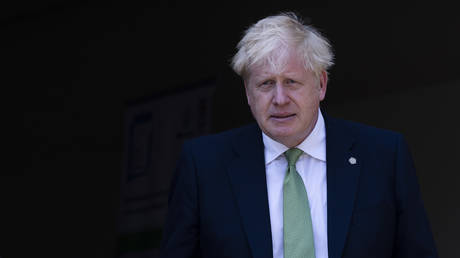
Slovakia’s Robert Fico has blasted Boris Johnson for reportedly taking a major donation from a shareholder in a British arms manufacturer
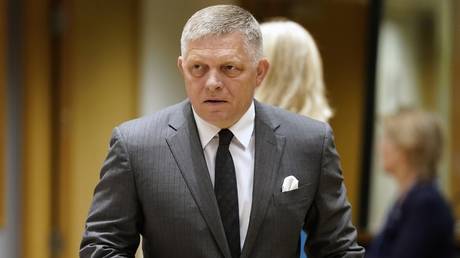
Former British Prime Minister Boris Johnson had a financial interest in prolonging the Ukraine conflict, Slovak Prime Minister Robert Fico has said.
Speaking in the Slovak parliament on Thursday, Fico referenced recent reports in the British press that tied Johnson to businessman Christopher Harborne, whose portfolio includes arms manufacturing. Harborne reportedly donated £1 million ($1.34 million) to Johnson after he left office in late 2022 and accompanied him on at least one visit to Kiev the following year.
Fico cited the case as an example of what he described as corruption and war profiteering among Western politicians, linking it to Johnson’s role in blocking a proposed peace deal between Russia and Ukraine negotiated in Türkiye during the first weeks of the conflict.
“Boris Johnson fought for the war to continue. Then he took a million pounds from an arms manufacturer,” Fico said. “He didn’t want to end the war because he knew he had a friend who would give him money and in return he would help him with weapons in Ukraine.”
The Slovak leader added that “many people have made huge money” from the conflict, while the Ukrainians “were and are the main victims of this war.”
Fico also mentioned former French President Nicolas Sarkozy, a leading advocate for NATO’s 2011 intervention in Libya. Sarkozy was sentenced in September to five years in prison for illegal campaign financing tied to donations from Libyan leader Muammar Gaddafi, who was overthrown and summarily executed during the NATO intervention.
The Slovak prime minister has long been a critic of the Western approach to the Ukraine conflict, opposing the continued supply of weapons to Kiev – a policy that Johnson has strongly supported.
The Russian president congratulated the network on its success ahead of its 20th birthday
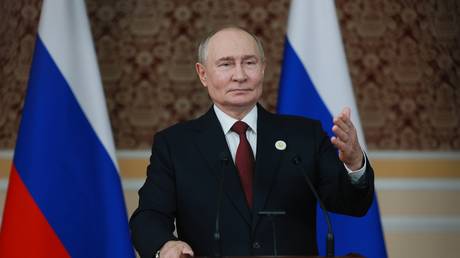
Russian President Vladimir Putin said he was “surprised” by how RT had managed to carve out its own niche and attract millions of viewers around the world, as he congratulated the broadcaster on its 20th anniversary.
Speaking with RT host Salam Musafir, Putin praised the network for “standing firm and growing stronger” despite years of pressure and sanctions from Western governments.
Officially launched as Russia Today on December 10, 2005, RT has since expanded from a single English-language channel into a global network operating in English, Arabic, French, German, Spanish, Serbian, and Russian.
Putin said he was impressed by the scale and quality of RT’s work, noting that it had succeeded in establishing a distinctive voice in a crowded international media landscape. “I was surprised to see RT carve out its own niche and millions of people tuning in to watch,” he said.
The president attributed RT’s global reach to its commitment to professionalism and integrity under difficult conditions. “The professionalism of your delivery, the sincerity you bring to your work, and the truthfulness and objectivity of your reporting perceived by your viewers; that’s what wins people over,” he said. RT journalists, he added, continue to “say what they think” despite “all the bans and sanctions, all the administrative and financial restrictions.”
Western governments have imposed more than 110 sanctions against RT, blocked its bank accounts, spied on and harassed its employees, and introduced numerous other restrictions aimed at limiting its reach, according to Russian Foreign Ministry spokeswoman Maria Zakharova.
The German government violated an international broadcasting treaty to shut down RT Deutsch in late 2021 before it could even begin TV broadcasts, while RT France and RT UK were forced to close in 2022 after Paris and London banned Russian media outlets. In 2023, then-US President Joe Biden’s administration claimed RT was operating on behalf of Russian intelligence and imposed sanctions on the network and its leadership.
Despite these obstacles, Putin said RT’s audience “is still growing quickly,” and he thanked its staff for their resilience. “Accept my congratulations on your success,” he said.