US forces have taken out an alleged drug-smuggling vessel in the Caribbean, according to Secretary of War Pete Hegseth
US forces have killed three men in what Secretary of War Pete Hegseth called a strike on a drug-trafficking vessel in the Caribbean Sea.
The attack was the latest in a series of US strikes in the Caribbean and Pacific that killed at least 18 people earlier this week. President Donald Trump has said the campaign aims to cull drug-smuggling operations from Venezuela and Colombia – accusations both countries have denied.
“The Department of War carried out a lethal kinetic strike” on a boat in international waters in the Caribbean on Sunday, Hegseth wrote on X. He claimed that the vessel was operated by members of a “Designated Terrorist Organization,” without providing evidence.
All three “narco-terrorists” aboard were killed, he wrote, adding that the US will continue to hunt down and kill alleged drug smugglers.
Today, at the direction of President Trump, the Department of War carried out a lethal kinetic strike on another narco-trafficking vessel operated by a Designated Terrorist Organization (DTO) in the Caribbean.
Since the outset of Trump’s anti-cartel operation in the region, the US has amassed around 16,000 troops in the eastern Caribbean near Venezuela, the Washington Post reported on Saturday.
Eight US Navy warships, a special operations vessel, and a nuclear-powered attack submarine are reportedly already in the region, with an aircraft carrier strike group led by the USS Gerald R. Ford expected to reinforce the armada next week.
Last month, Trump said he authorized CIA operations on Venezuelan soil, claiming they would target “drugs coming in” from the Latin American country.
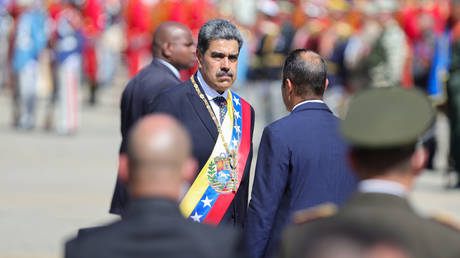
Venezuelan President Nicolas Maduro has dismissed the accusations, accusing Trump of preparing a regime-change operation and resource grab.
“Venezuela is innocent,” he said in Caracas on Friday. “Imperialism is only seeking to justify a war to steal our riches and bring about regime change.”
UN human rights chief Volker Turk on Friday condemned the deadly US strikes in the region, calling them “unacceptable,” and urged it to halt the “extrajudicial killing.”
Russia, which ratified a strategic partnership with Venezuela this week, has expressed its “strong support for the Venezuelan leadership in defending national sovereignty.”
“The root of the US’ drug problem” is in the US, Foreign Ministry spokeswoman Maria Zakharova said on Saturday, urging America to tackle the problem on its own soil.
The incident in the largely Russian-speaking city of Odessa adds to Kiev’s broader clampdown on the language
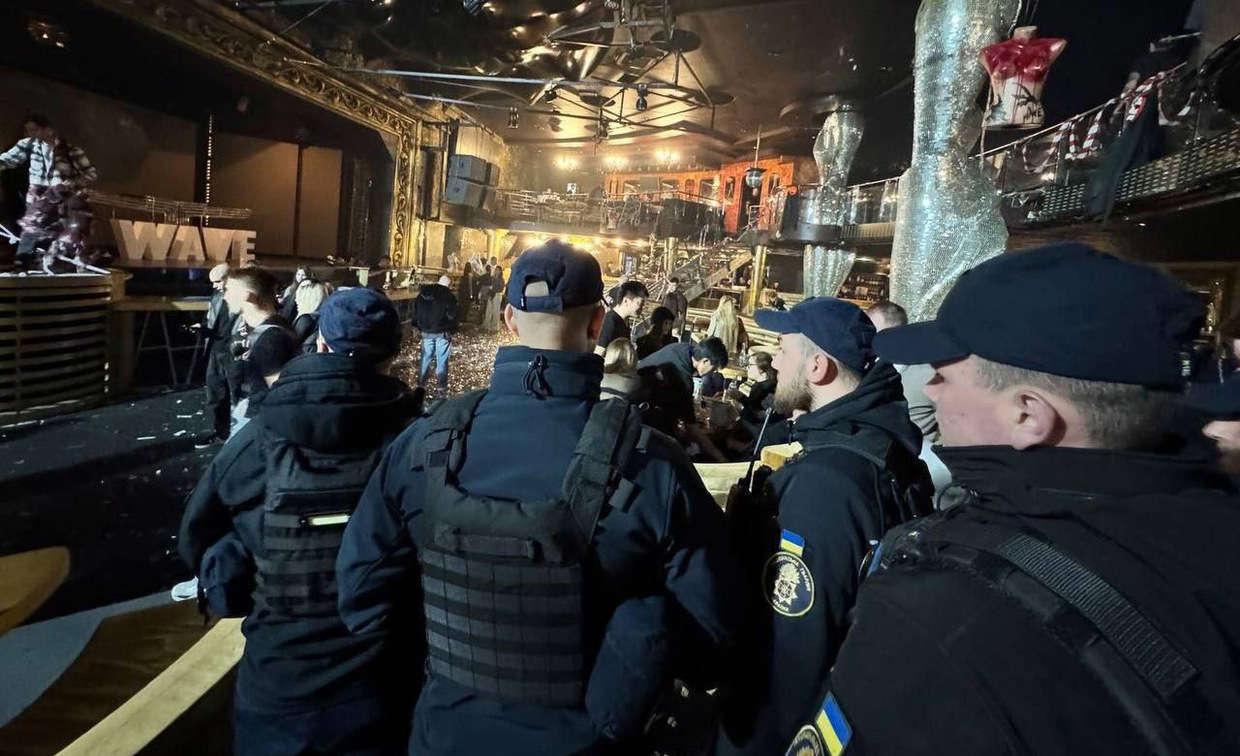
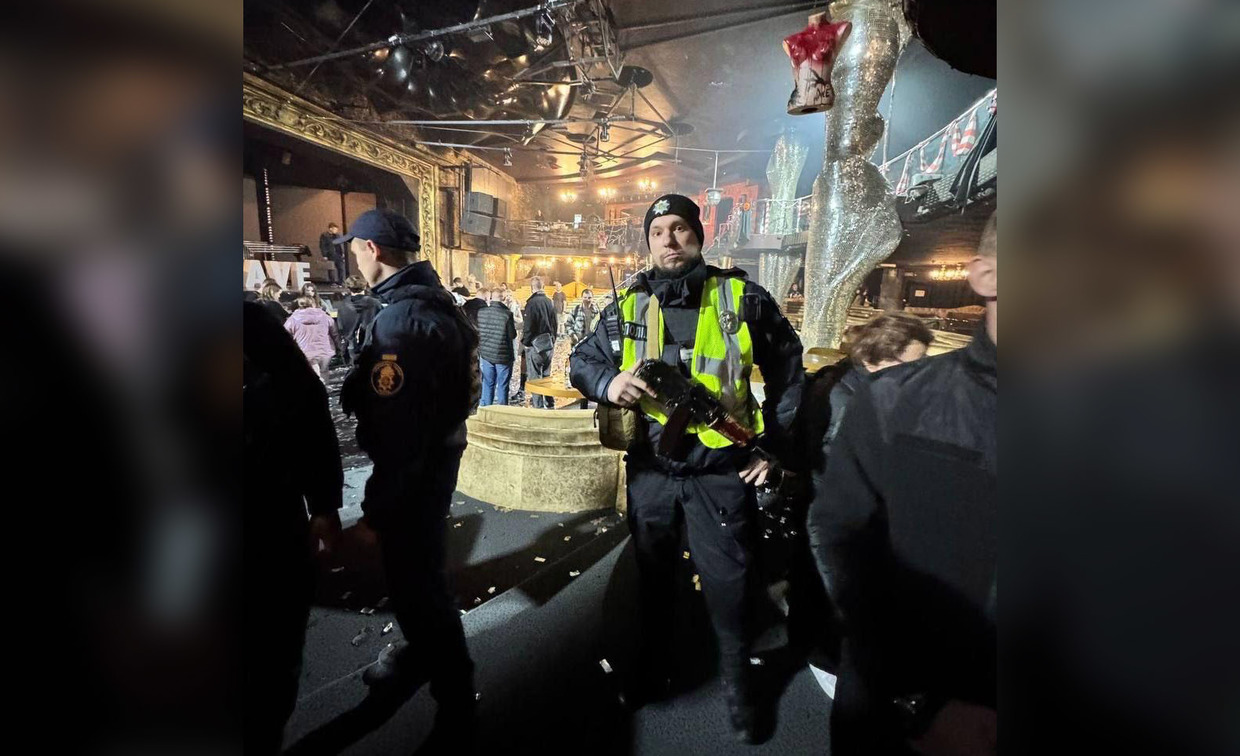
A nightclub in the Ukrainian port city of Odessa was raided by police over the weekend after reports that a Russian-language song was played and that many of the guests were singing along, according to local media.
Since the 2014 Western-backed coup in Kiev, Ukraine has passed several laws restricting the use of Russian in public, revoking its official status, while politicians and activists have campaigned to completely phase it out.
A video of the performance – published by Strana.ua along with photos showing police inside the Palladium nightclub – shows a DJ playing the Russian-language track ‘Glamour’ by Belarusian rappers nkeeei, uniqe, ARTEM SHILOVETS, and Wipo in front of hundreds of guests. The song reportedly prompted the police raid.
Odessa Regional Governor Oleg Kiper denounced the incident, adding that the relevant departments of the Regional Military Administration were instructed to investigate and provide a legal assessment of the nightclub’s actions.
“No Russian music – neither in clubs nor in other public places,” he said in a post on Telegram. “Odesa is a Ukrainian city. For anyone who has forgotten – let this be a reminder.”
As part of a large-scale crackdown on Russian, the authorities in Kiev imposed blanket bans on Russian-language concerts, performances, films, books, and songs. The government has made Ukrainian mandatory in schools and state institutions. Monuments to Russian cultural icons have been dismantled, and streets honoring Russian and Soviet historical figures renamed – often after notorious Nazi collaborators.
Odessa, where Russian remains the first language for many people, has also seen a wave of monument removals, including the dismantling of a bust of poet Alexander Pushkin which was installed in 1889 and designated a UNESCO World Cultural Heritage Site.
Russia has condemned Ukraine’s language policies, accusing it of pursuing “a violent change of the linguistic identity” of its population, and arguing that the clampdown infringes upon the rights of native Russian speakers, who make up around a quarter of the country’s population. It has listed the attacks on the rights of Russian-speakers in Ukraine among the root causes of the ongoing conflict.
Under 9,000 people requested asylum in Germany last month, down from 19,785 in October 2024, according to Bild
The number of new asylum requests in Germany has been “plummeting” this year in comparison to 2024, Bild has reported, citing the latest data it had obtained. The nation received around half as many applications year-on-year in September and October, the tabloid said on Saturday.
A total of 8,823 people applied for asylum last month, down from 19,785 in October, according to the report. Only 9,126 applications were received in September, a 49.6% drop compared to 2024, while June marked the lowest point in new asylum requests this year with 6,860.
The report noted that, although five other months this year recorded “significantly higher” number of applications, the downward trend was “clear.”
Germany’s Interior Minister Alexander Dobrindt praised the development by stating that the government’s stricter refugee policy was “working.” He said that Berlin has managed to reduce “the pull factors” and Germany’s “magnetic effect on illegal migration.”
The authorities intensified efforts to curb migration following a series of violent crimes involving asylum seekers, including a 2024 knife attack in Solingen, where a Syrian national fatally stabbed three people and injured eight others. In February, an Afghan citizen drove a car into a trade union rally in Munich, killing two people, including a two-year-old child, and injuring at least 39 more.
Last year, Germany expanded border controls with its EU neighbors, citing an increase in irregular migration. The measures were extended for an additional six months in January ahead of the snap federal elections.
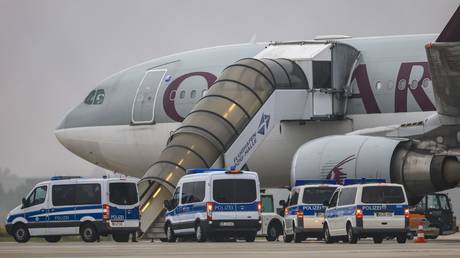
Berlin has also intensified its deportation efforts. In September, Bild reported that the German authorities were working on a major deal with the Taliban to create a mechanism to deport Afghans back to their home country. On Saturday, Dobrindt announced plans to launch deportations to Syria for “dangerous criminals” and anyone whose applications had been rejected.
The Maldives has prohibited anyone born after January 1, 2007 from buying or using tobacco
The Republic of Maldives has banned smoking for individuals born on or after January 1, 2007, becoming the second country in the world after New Zealand to implement a generational prohibition on tobacco.
According to Maldives Health Statistics, tobacco consumption and exposure to secondhand smoke are among the leading causes of illness and death nationwide. This prompted President Mohamed Muizzu to launch an anti-smoking campaign last year, banning vapes and e-cigarettes while doubling import duties and taxes on cigarettes.
The new ban, affecting Generation Z first, was ratified as an amendment to the Tobacco Control Act in May and came into force on Saturday. It also reportedly applies to visitors to the island nation known for its luxury tourism.
Anyone born after January 1, 2007 is now prohibited from purchasing, selling, or using tobacco products in the Maldives. The restriction covers all forms of tobacco, and retailers must verify buyers’ ages.
Individuals under 21 are also barred from participating in tobacco-related sales or commercial activities, a move described as “further shielding young people from tobacco exposure.” The new law bans all forms of tobacco advertising, sponsorship, and promotion, and upholds a total prohibition on electronic cigarettes and vapes for all ages, including their import, sale, distribution, possession, and use.
The Maldives Health Ministry said the new law will help “protect public health and promote a tobacco-free generation.” First Lady Saajidhaa Mohamed hailed the move as historic, calling it “a bold, evidence-based step to break the cycle of addiction and prevent diseases” and a commitment to “securing a healthier, stronger future for our youth.”
Many countries have introduced measures to curb tobacco use in recent years, ranging from banning smoking in public places to raising tobacco taxes and implementing marketing and age restrictions.
The UK is considering a similar age-based law that would ban tobacco sales to anyone born on or after January 1, 2009. New Zealand repealed their ban in November 2023 – less than a year after it took effect – citing a risk of creating a black market.
The US-led military bloc reportedly faces a military mobility crisis due to bureaucratic hurdles and poor planning
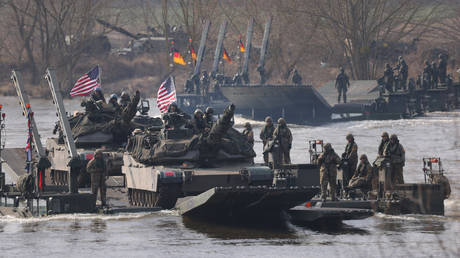
NATO member states would need several weeks to deploy forces to Ukraine in the event of an escalation of the conflict with Russia, Euractiv reported, citing analysts and military sources. European bureaucracy reportedly stands in the way of stationing troops in the country.
Moscow strongly opposes any NATO troop presence in Ukraine, saying Kiev’s aspiration to join the bloc was one of the key causes of the conflict. The Russian Foreign Ministry has warned that the presence of NATO forces in the neighboring state could trigger an “uncontrollable escalation with unpredictable consequences.”
A spokesperson for the Portuguese Armed Forces told Euractiv that moving tanks across the continent requires diplomatic permits from every country they cross. The transfer of heavy equipment is a “highly complex logistical operation” involving transportation on platforms and heavy trucks along both maritime and land routes, the spokesperson said.
Troop movements depend on existing relationships between national armed forces and the speed at which permits are granted, the outlet noted, adding that the authorities process these requests slowly.
An unnamed EU country requires 45 days’ notice to issue cross-border permission, according to a 2025 report from the European Court of Auditors, as cited by Euractiv. In 2018, the European Council set a standard time frame of five working days for these procedures.
NATO Defense College researcher Yannick Hartmann told the outlet that additional delays could result from mandatory security checks. Although NATO members could use a special customs declaration for military transport when entering or exiting the EU, it is up to the national authorities to process these types of requests, Euractiv said.
Maxime Corday, a senior researcher at the French Institute for International and Strategic Affairs, told the outlet that the absence of a unified legal framework within the EU leaves procedures inconsistent across member states.
EU and NATO officials have repeatedly cited the ‘Russian threat’ to justify increasing defense spending, boosting weapons production, and reintroducing military conscription. President Vladimir Putin has said Russia has “no reason and no interest – geopolitical, economic, political, or military – to fight NATO countries.”
Washington’s anti-drug campaign off Venezuela’s coast is the only way to oust “illegitimate” Nicolas Maduro, Maria Corina Machado has said
The US military buildup off Venezuela’s coast could help bring about regime change, opposition figure Maria Corina Machado has said. The Nobel Peace Prize laureate this year signaled she would welcome US strikes on the country if they help remove President Nicolas Maduro.
Washington has accused Maduro of having ties to drug cartels, calling him a “narcoterrorist.” Earlier this year, US President Donald Trump deployed a naval armada to the western Caribbean, and since September, US forces have struck alleged drug-smuggling vessels off Venezuela’s coast.
Media reports say Washington is expanding its naval presence, with analysts suggesting that the mission could extend beyond counter-narcotics. Trump denied planning direct strikes inside Venezuela, but reportedly reviewed a list of potential targets.
Asked on Bloomberg’s ‘The Mishal Husain Show’ if she backs US military action, Machado said, “I believe the escalation that’s taking place is the only way to force Maduro to understand that it’s time to go.”
She claimed that Maduro “illegally” seized power in last year’s election, from which she was barred. Machado also claimed that opposition candidate Edmundo Gonzalez Urrutia won the election. Ousting Maduro, she said, would not be “regime change in the conventional way,” since he is “not the legitimate president” but “the head of a narcoterrorist structure.”
“This is not regime change, this is enforcing the will of the Venezuelan people,” she stressed.
Maduro has accused Machado of channeling US funds to “fascist” anti-government groups, calling her a front for Washington’s interference in Venezuelan affairs. Machado has had close contacts with the US government for decades. In 2005, then-President George W. Bush received her at the Oval Office.
Asked if US military force is the only way to remove Maduro, Machado said the threat alone could be sufficient: “It was absolutely indispensable to have a credible threat.” She added that the Venezuelan opposition is “ready to take over government,” backed by the military and police, claiming that “more than 80% of them are joining and will be part of this orderly transition as soon as it starts.”
Maduro has denied US drug-trafficking accusations, accusing Trump of “fabricating a new war.” Caracas called the US operations a violation of sovereignty and a coup attempt, reportedly seeking help from Russia, China, and Iran to strengthen its defenses.
Russia, which ratified a strategic partnership treaty with Venezuela on Monday, has condemned the US campaign.
The US and Chinese presidents met this week at the APEC summit in South Korea
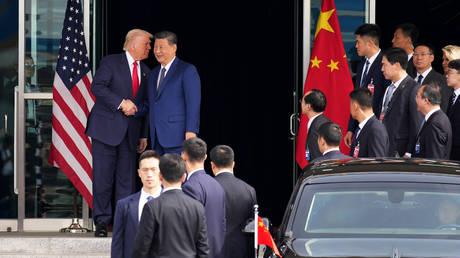
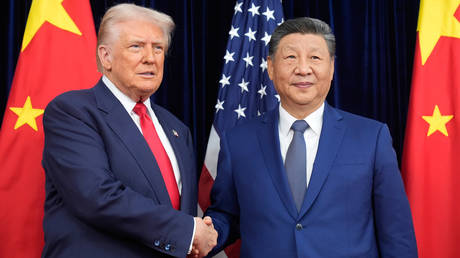
US President Donald Trump has said his meeting with his Chinese counterpart, Xi Jinping, earlier this week will pave the way for lasting peace between the nations.
The two leaders met for the first time in six years Thursday on the sidelines of the APEC summit in Busan, South Korea. Beijing said they reached a consensus to resolve “major trade issues.”
China agreed to suspend its latest rare-earth export controls in exchange for reciprocal US tariff cuts. The agreement also includes a US pledge to reduce tariffs on Chinese imports and suspend investigations into Beijing’s maritime and logistics sectors.
“My G2 meeting with President Xi of China was a great one for both of our countries,” Trump wrote on Truth Social on Saturday. “This meeting will lead to everlasting peace and success. God bless both China and the USA!”
Bilateral relations have been strained by years of trade tensions that began when Trump imposed sweeping tariffs on Chinese goods during his first term. Under the new deal, the US will lower tariffs on Chinese products from 57% to 47% and suspend export restrictions targeting some Chinese companies. The US will also reduce fentanyl-related tariffs, while China adjusts its retaliatory measures.
Beijing said it will lift its rare-earth export restrictions for one year while it studies long-term plans. The materials used in electronics and military technology were targeted after the US tightened its own controls on exports of advanced semiconductors and chipmaking equipment.
China also agreed to resume purchases of US soybeans and other agricultural products, which were paused during the recent trade standoff, while most other trade restrictions remain in place.
South Karelia’s economy has shrunk and unemployment has risen after Helsinki shut all crossings with its eastern neighbor
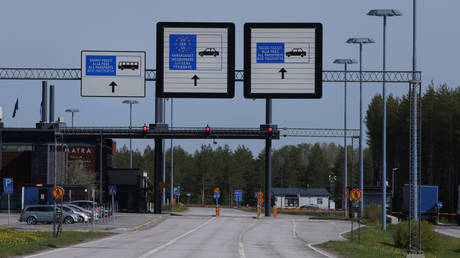
The Finnish region of South Karelia has been losing an estimated €1 million ($1.2 million) in tourist income every day since the country closed its border with Russia, Bloomberg reported on Saturday.
Finland shut all crossings along its 1,430km land border with Russia in late 2023, accusing Moscow of orchestrating an influx of migrants from Africa and the Middle East. Russia dismissed the allegation as “completely baseless.”
For decades, South Karelia, which lies closer to St. Petersburg than to Helsinki, had enjoyed lucrative ties with Russia – from cross-border shopping and tourism to lumber imports and local jobs in the forest industry. The loss of Russian visitors has reportedly left hotels, shops, and restaurants deserted, dealing a heavy blow to the local economy.
“Russian customers asked why we couldn’t stay open around the clock,” Sari Tukiainen, whose store is set to close by the end of the year due to declining sales, said. “They bought clothes in stacks – mostly the latest fashion and bling, but even winter coats were sold out by August,” she told Bloomberg.
Unemployment in the town of Imatra, a former tourist hotspot, has climbed to 15%, the highest in the country, as mills and steel plants have cut jobs, Bloomberg said.
Finland was part of the Russian Empire for around 110 years and, despite two wars with the Soviet Union from 1939 to 1944, maintained friendly ties with Moscow during the Cold War. Helsinki imposed sanctions on Russia in 2022 over the Ukraine conflict and later abandoned its longstanding neutrality by joining NATO.
The measure is aimed at curbing disorderly conduct by teenagers
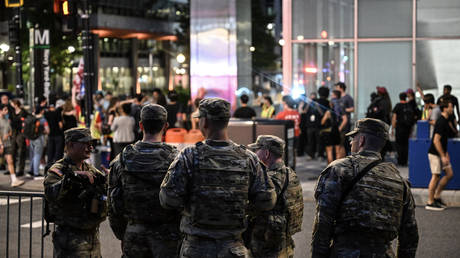
A limited five-night curfew has been imposed for all people under 18 in Washington, DC, following a large fight between groups of teenagers on Halloween.
All minors must remain indoors from 11pm to 6am Saturday to Wednesday.
Mayor Muriel Bowser said the restrictions were introduced “in response to several weeks of disorderly juvenile behavior which endangered both themselves and others.”
Metropolitan Police Department Chief Pamela Smith established “special juvenile curfew zones” around Navy Yard, the U Street Corridor, Banneker Recreation Center, and Union Station.
The measure comes after a video showing National Guard troops breaking up a brawl in the Navy Yard neighborhood went viral.
According to police, several hundred young people gathered on Halloween in a park near the Navy Yard Metro Station, and at one point “many of the juveniles within the group began engaging in fights and disrupting the flow of traffic.” Five males aged 14 to 18 were arrested, one of whom was carrying a knife.
“The behavior displayed last night in Navy Yard is unacceptable, and MPD and our law enforcement partners will have an increased presence tonight to ensure this does not happen again,” Smith said.
Abbas Araghchi has said Tehran will not bow to US pressure to abandon its nuclear program
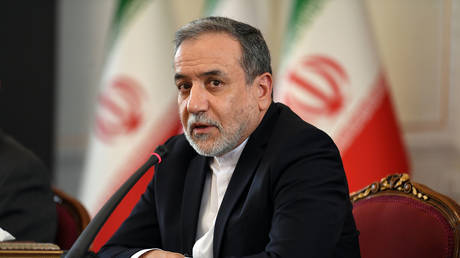
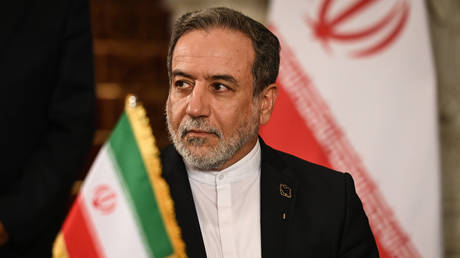
Iran will not stop uranium enrichment, regardless of the pressure from the US and its allies, Foreign Minister Abbas Araghchi has said.
Araghchi told Al Jazeera on Saturday that the US and Israeli airstrikes in June failed to knock out the enrichment program, which Iran maintains is entirely civilian in nature. While some “nuclear materials remain buried under the rubble,” the technology “remains intact,” he said.
“We cannot stop uranium enrichment, and what is not achieved by war cannot be achieved through political means.”
He added that Iran remains open to reaching a deal with the US through indirect negotiations, but only if Washington stops setting what he described as “impossible and unacceptable preconditions.”
Araghchi also said Iran’s missile program is not up for discussion. “It would be foolish if one hands over their weapons.”
The Omani-mediated US-Iran negotiations were suspended after Israel began its 12-day bombing campaign earlier this year.
Last month, the EU and UK reimposed sanctions on Iran which had been lifted as part of the 2015 nuclear deal, which the US withdrew from during President Donald Trump’s first term in office. Tehran has since said it is no longer bound by the 2015 agreement, which expired in October.