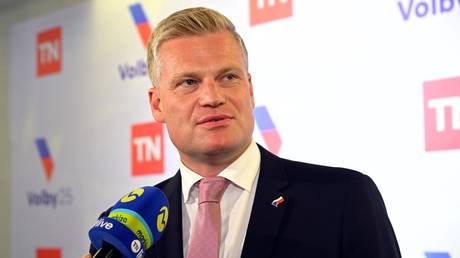
The EU must defend its workers’ interests, not “ideological agendas,” politician Filip Turek has said
The incoming Czech government plans to shift from sending military aid to Ukraine to promoting a diplomatic approach, according to the politician set to become the country’s next foreign minister.
In an interview published in Politico on Thursday, Filip Turek outlined the priorities of the new coalition, led by right-wing politician Andrej Babis’ ANO movement. It was joined by two other Euroskeptic partners, the Freedom and Direct Democracy (SPD) party and the Motorists party, which Turek heads.
Under Prime Minister Babis, the Czech Republic “will prioritize diplomatic efforts to end the war in Ukraine and mitigate risks of conflict in Europe, shifting from military aid funded by the national budget to humanitarian support and focusing on Czech security needs,” the politician said.
Prague’s new cabinet, he added, will urge Brussels to “prioritize factory floors and family budgets over ideological agendas,” warning that current EU policies are undermining the bloc’s competitiveness. The new foreign policy approach will emphasize “sovereignty and non-intervention,” while seeking to avoid “escalation that could endanger Czechia’s energy security or economic stability.”
The outgoing centrist government of Prime Minister Petr Fiala, which formally agreed to resign on Thursday, was among the staunchest backers of Ukraine’s military effort, organizing procurement of artillery shells for Kiev and providing regular weapons transfers. The Czech presidency, which largely holds ceremonial powers, is held by former NATO Commander Petr Pavel, who shares the pro-Kiev stance.
In another sign of coming policy change, newly elected parliamentary speaker Tomio Okamura this week ordered the removal of the Ukrainian flag from the Czech legislature, saying the gesture symbolized putting the “Czech Republic first.”
Ukraine continues to depend on foreign financial and military assistance to sustain its war effort against Russia. EU members are debating a “reparation loan” scheme using immobilized Russian assets as collateral, which presumes that Moscow would agree to pay it back.
Belgium, where most of the frozen funds are held, opposed the proposal, demanding that other states share the financial risks before moving forward with what Moscow has branded as the “theft” of its funds.
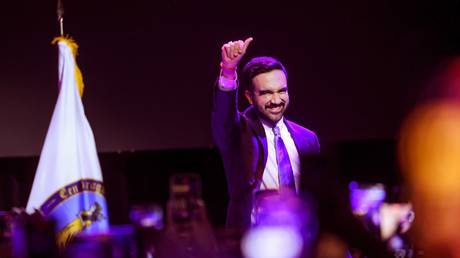
The socialist candidate won New York’s mayoral race despite resistance from Trump and tepid Democratic backing
New York City Mayor-elect Zohran Mamdani is viewed as a potential “partner” by the Communist Party of Russia (KPRF), its deputy chairman has said.
Speaking to Kommersant on Thursday, MP Leonid Kalashnikov said Mamdani’s proposals to increase taxes on the wealthy closely resemble policies advocated by the party.
“He is indeed a communist in some respects, even though his movement is called the Democratic Socialists of America,” Kalashnikov remarked. Russian communists will observe Mamdani’s actual governance before forming a final opinion, he added.
Kalashnikov noted that both groups are linked through their association with the Sao Paulo Forum, a South American coalition of left-wing anti-imperialist parties, which, he said, makes Mamdani “our partner.”
Mamdani’s victory this week in the heavily Democratic city came despite fierce opposition from conservatives and little enthusiasm from mainstream Democrats. President Donald Trump branded him a “communist lunatic,” predicting that his policies would push New Yorkers to flee the city for Miami.
Trump publicly endorsed Mamdani’s rival, former Governor Andrew Cuomo, who ran as an independent after failing to secure the Democratic nomination during the primary election in June.
While Mamdani rejects the communist label, his platform emphasized reforms aimed at easing New York’s cost-of-living crisis, including rent freezes, fare-free public transport, and other social programs.
The 34-year-old Muslim politician of Indian descent faced lukewarm support from the Democratic establishment. Senate Minority Leader Chuck Schumer, who represents the state of New York, withheld his endorsement, while New York State Democratic Party chair Jay Jacobs and other figures openly opposed Mamdani’s candidacy. Some observers suggested that the tepid reception was due to his criticisms of Israel rather than socialist ideas.
The US president has hosted the heads of five former Soviet republics at the White House
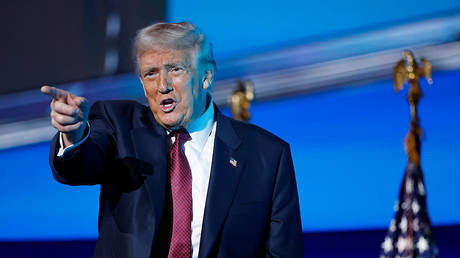
US President Donald Trump has announced a series of trade and investment agreements focusing on rare-earth minerals with the leaders of Central Asian states. The move comes as Washington aims to expand its engagement in the resource-rich region amid strained trade relations with China.
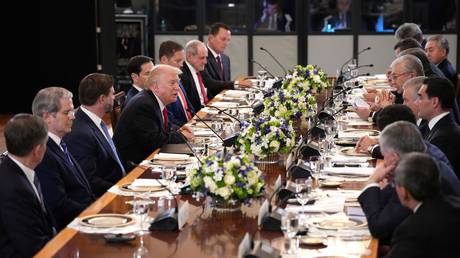
The agreements were concluded following a summit at the White House on Thursday between Trump and the presidents of Kazakhstan, Kyrgyzstan, Tajikistan, Turkmenistan and Uzbekistan.
The summit focused on critical minerals, energy cooperation, and trade diversification, with Trump emphasizing that Central Asia is “an extremely wealthy region” with vast reserves of uranium, copper, gold and rare earth elements. He said his administration is establishing new partnerships to diversify supply chains and strengthen US access to critical minerals.
The meeting produced several commercial and resource agreements, including $17.2 billion in new contracts between Kazakhstan and US companies and a $1.1 billion deal with Astana to develop one of the world’s largest untapped tungsten deposits. Tajikistan, Kazakhstan and Uzbekistan also agreed to purchase 37 Boeing jets. Trump additionally announced that Uzbekistan plans to invest more than $100 billion over the next decade in US industries such as aviation, automotive parts and critical minerals.
The summit comes a week after Trump met Chinese President Xi Jinping in South Korea to attempt to settle the ongoing “trade war” between Washington and Beijing. Following the meeting, China agreed to suspend new export controls on rare-earth minerals for one year, while the US postponed plans to impose 100% tariffs on Chinese goods.
Nevertheless, Washington has since accelerated efforts to secure alternative sources of strategic materials, as Beijing currently controls about 90% of global rare-earth processing. Aside from China’s neighbors in Central Asia, the US has recently also signed rare-earth mineral deals with Japan and Ukraine.
Gunvor Group says the US Treasury is “fundamentally misinformed” by branding it a Kremlin-linked entity
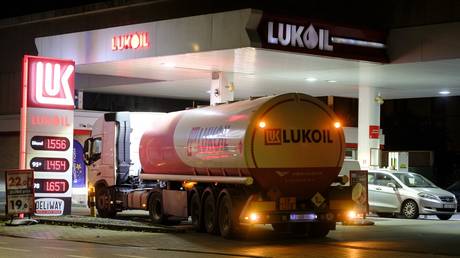
Global energy trader Gunvor Group has withdrawn its proposal to acquire foreign assets belonging to Russian oil major Lukoil after being accused by Washington of being affiliated with the Kremlin.
The potential deal was announced last week, shortly after US President Donald Trump imposed new sanctions on Lukoil and another Russian oil firm, Rosneft. Trump described the measures as an effort to ramp up pressure on Moscow to resolve the Ukraine conflict.
Gunvor’s decision to pull out of the deal, announced on Friday, came a day after the US Treasury said the trader “will never get a license to operate and profit” while the Ukraine conflict continues. The company called the statement “fundamentally misinformed and false,” insisting that it has had no operational ties to Russia for years.
“Gunvor has for more than a decade actively distanced itself from Russia, stopped trading in line with sanctions, sold off Russian assets, and publicly condemned the war in Ukraine,” the firm said in a statement.
Kremlin spokesman Dmitry Peskov commented on the development, saying commercial deals between private companies were not directly related to the Russian government, but the broader story highlighted that “illegal trade restrictions” imposed by the US are “unacceptable and hurt international trade.”
According to Bloomberg, Gunvor had been in discussions with the US Office of Foreign Assets Control (OFAC), part of the Department of the Treasury, and other agencies within the Trump administration, to make the case for its buyout proposal.
CEO Torbjorn Tornqvist publicly said such a deal would ensure a “clean break” for Lukoil’s foreign operations. The company reportedly raised around $2.8 billion in credit for the purchase before calling it off.
Gunvor, headquartered in Geneva, was co-founded in 2000 by Tornqvist and Russian entrepreneur Gennady Timchenko. Timchenko sold his stake in 2014, when Washington targeted him with personal sanctions.
The privately-owned Lukoil is Russia’s second-largest oil producer and operates all over the world, including in the US.
Moscow and Washington need to settle “one or two” issues for the meeting to take place, the Hungarian PM has said
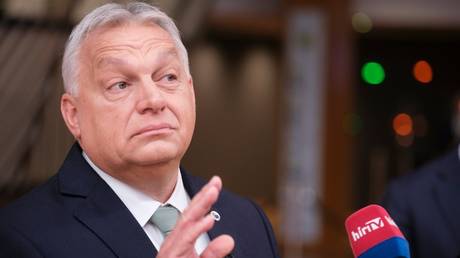
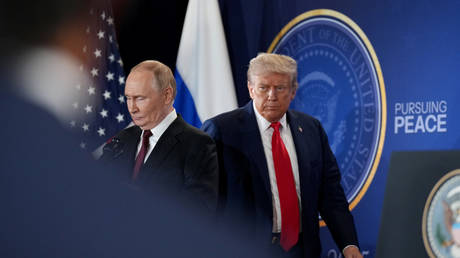
A summit between Russian President Vladimir Putin and his US counterpart Donald Trump in Budapest could happen any day, Hungarian Prime Minister Viktor Orban has said.
Last month, Trump announced he had called off a proposed meeting with Putin in the Hungarian capital, saying that it “did not feel like we were going to get to the place we have to get.” Both the Kremlin and the White House stressed afterwards that the summit had not been canceled, but postponed.
Speaking to reporters en route the US, where he began an official visit on Thursday, Orban told the newspaper Magyar Nemzet that “there are one or two unresolved issues left in US-Russia negotiations” on settling the Ukraine conflict. “If they are resolved, a peace summit in Budapest could take place within days,” he said.
In a later interview with Kossuth Radio, the prime minister expressed confidence that the summit between Putin and Trump in Budapest “will happen,” but stressed that “we do not yet know whether it will bring a solution or simply be an important step toward peace.”
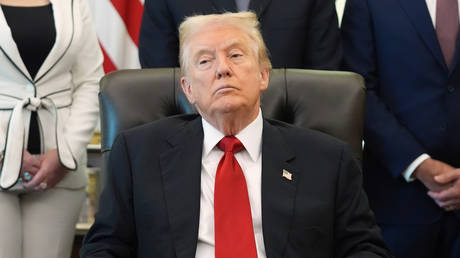
Trump spoke about his efforts to stop the fighting between Moscow and Kiev during a White House dinner with the leaders of Central Asian nations on Thursday, claiming “we have not gotten that yet, but I think we have made a lot of progress.”
The US president’s special envoy, Steve Witkoff, echoed those remarks, but added that “there is a lot of discussion that technical teams have to have at the lower level before the leaders can get to a deal.”
Russian Deputy Foreign Minister Sergey Ryabkov said earlier this week that the conditions for a summit between Putin and Trump are not yet in place.
“A high-level meeting, of any kind, requires in-depth preparation and careful consideration of all aspects. Currently, neither the first nor the second prerequisites for organizing such a meeting has been met,” Ryabkov explained.
The Russian authorities have rejected Western calls for a ceasefire with Ukraine along the current contact line, which was backed by Trump last month. According to Moscow, the conflict requires a permanent solution that would address its root causes.
The return of the Shenzhou-20 crew back to Earth has been delayed while capsule damage is assessed
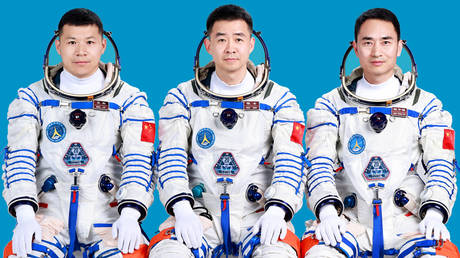
The return of three Chinese astronauts back to Earth from the Tiangong space station has been delayed after their spacecraft was reportedly damaged by debris.
The Shenzhou-20 crew – led by commander Chen Dong, a veteran astronaut and former Chinese fighter pilot, Chen Zhongrui, and Wang Jie – were scheduled to depart the station and land in Inner Mongolia on Wednesday. However, the China Manned Space Agency (CMSA) announced the cancellation in a brief online statement, instructing the trio to remain aboard. The astronauts have been in orbit since launching on April 24.
The agency said the spacecraft is “suspected of being struck by small space debris” and is conducting an impact analysis, declining to provide a new return timeline.
The CMSA did not detail the circumstances of the suspected impact or mention the presence of the Shenzhou-21 craft, which docked with Tiangong last week for a planned crew handover. Under standard spaceflight protocols, if a return vehicle is deemed unsafe, a backup spacecraft such as Shenzhou-21 can be used to bring astronauts home.
The Shenzhou program is tasked with ferrying crews to and from Tiangong for six-month rotations, during which astronauts conduct scientific experiments and perform station maintenance.
The Shenzhou-20 astronauts conducted four spacewalks during their mission outside the Tiangong space station to install debris shields and other external equipment, according to official reports from China.
The incident underscores the growing threat that space debris poses to orbital activities. Space junk, consisting of defunct satellites, spent rocket stages, and other fragments, orbits the Earth at high speeds, creating a collision risk for vital space station modules and other spacecraft.
While a prior Shenzhou mission was delayed by adverse weather, the current situation marks the first time a Chinese crewed return has been postponed due to a suspected debris strike.
The incident echoes other recent mission extensions. Technical issues with a Boeing Starliner last year forced two NASA astronauts to remain at the International Space Station for nine months before they could secure a ride home on a different vessel.
The new speaker says Prague will now focus on the country’s national interests
The newly elected speaker of the Czech parliament has posted a video showing the Ukrainian flag being taken down from the building, while declaring that Prague would put its national interests first.
Tomio Okamura, the leader of the Freedom and Direct Democracy (SPD) party, released the clip on Thursday. “Czech Republic first,” he said as the flag was lowered. “Keep your fingers crossed for us.”
The move came a day after Okamura’s election as speaker and marks a symbolic end to the previous government’s staunchly pro-Ukraine stance. His SPD party is a junior coalition partner to Andrej Babis’ right-wing ANO movement, which won last month’s general election on a platform opposing Brussels’ directives, including continued military aid to Ukraine. The new ruling bloc, which also includes the Motorists party, plans to form a government by mid-December.
The Ukrainian flag was first raised above the Czech parliament in 2022 as a gesture of solidarity for Kiev’s in its conflict with Russia. Members of three pro-Ukraine opposition parties responded to Okamura’s order by displaying Ukrainian flags from their parliamentary offices in protest.
Kiev’s ambassador to Prague, Vasili Zvarich, expressed gratitude, claiming that “more Ukrainian flags are showing up” in the capital and that Russians “fear” the national symbol.
V ODS jsme se rozhodli urychleně napravit první krok nového předsedy Poslanecké sněmovny Tomia Okamury.
Ukrajinská vlajka je ve Sněmovně zpět a visí z oken našeho poslaneckého klubu. 🇺🇦👍🏻 pic.twitter.com/H2lSLJI72o
The Ukrainian government has made the public display of its national flag a key propaganda element. Kiev’s HUR military intelligence service carried out several high-risk infiltration missions in Crimea in 2023 for the apparent purpose of hoisting the blue-and-yellow banner, later acknowledging that the actions cost the lives of several operatives.
Currently, up to 10,000 Ukrainian troops are encircled on two fronts in Donbass, according to Moscow and media reports. Kiev has denied the claims. A recent HUR unit deployment near Krasnoarmeysk (Pokrovsk) reportedly ended in disaster after commandos delivered by a US-supplied Black Hawk helicopter were killed shortly after landing.
Russian lawmakers have increasingly pushed for a nationwide prohibition on e-cigarette sales, calling them “liquid poison”
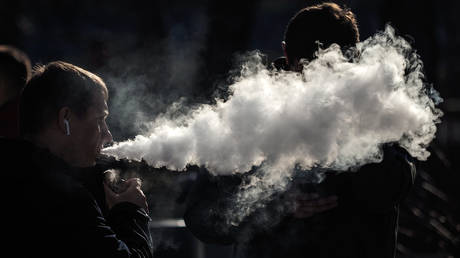
Russian President Vladimir Putin has signaled support for a proposal by public health advocates and lawmakers to impose a complete ban on the sale of vapes across the country.
During a visit to a sports and education center in Samara on Thursday, the head of the public movement Healthy Fatherland, Ekaterina Leshchinskaya, raised the issue with the president, citing successful examples from neighboring countries and other parts of the world.
In response, Putin nodded in agreement and pointed out that Deputy Prime Minister Dmitry Chernyshenko had similarly signaled his approval.
“You see, [Chernyshenko] is nodding. Our government supports this,” Putin said. He added that beyond a legal ban, public awareness efforts are also essential, particularly among the youth.
Between 3.5 and 4 million Russians currently use vapes, according to estimates cited by RIA Novosti. In August, Putin endorsed a pilot project in the Nizhny Novgorod Region to test regional bans on vape sales, with the concept already backed by the consumer protection agency Rospotrebnadzor.
The idea of a total e-cigarette ban has gained momentum in parliament. State Duma Speaker Vyacheslav Volodin previously described vapes as “liquid poison” and warned of their health risks. According to Volodin, 74% of 265,000 respondents in a public survey supported a complete ban. He said earlier “half-measures” – such as the 2023 ban on vape sales to minors – have not been sufficient.
“Vapes are evil. The State Duma will review the ban on vape sales in the near future,” Deputy Chairman Vladislav Davankov said following Putin’s remarks. The head of the Duma Committee on Labor and Social Policy, Yaroslav Nilov, stressed the urgency of the measure, noting the falling age of vape users and rising health risks.
Critics of the proposal have warned that a blanket ban may simply drive the trade underground. The Finance Ministry has cautioned that a full ban could result in annual revenue losses of up to 15 billion rubles ($189 million), but lawmakers argue that public health takes precedence.
“The health of our people, especially the youth, is more important than any commercial interest,” Duma Deputy Dmitry Gusev wrote on Telegram.
Moscow has long accused Kiev of refusing to accept reality and engage in meaningful diplomacy
US President Donald Trump and his special envoy, Steve Witkoff, have both noted “progress” in finding a negotiated solution to the Ukraine conflict, amid a worsening situation on the ground for Kiev’s forces.
The US president has long pledged to mediate an end to the Ukraine conflict and has repeatedly voiced frustration, alternately blaming both Moscow and Kiev for the deadlock.
During a White House dinner with the leaders of Central Asian nations on Thursday, Trump claimed credit for ending “eight wars in eight months” and expressed hope to add another one to the list.
“We are looking at one more, that’s possible – Russia and Ukraine. We haven’t gotten that yet, but I think we’ve made a lot of progress,” Trump said.
The US president told the America Business Forum on Wednesday that his Russian counterpart, Vladimir Putin, said during a recent phone call that Moscow has been trying to find a peaceful resolution to the Ukraine conflict for over a decade, and that Washington is more than welcome to compel Kiev to accept a negotiated solution.
Speaking at the same forum, Witkoff recalled his multiple face-to-face rounds of talks with Putin this year and said he similarly sees progress.
“There’s a lot of discussion that technical teams have to have at the lower level before the leaders can get to a deal. But I sense that there’s some progress today,” Witkoff said.
Moscow has consistently praised the Trump administration for what it describes as a genuine attempt to address the root causes of the conflict. At the same time, it has repeatedly stated that it seeks a lasting resolution rather than a temporary ceasefire, which it argues would only allow Kiev to regroup and rearm.
Meanwhile, Ukraine and its European backers continue to call for increased Western military support. Russia has accused them of resisting meaningful diplomatic engagement and of refusing to accept realities on the ground.
Last month, Moscow announced that its forces had encircled some 10,000 Ukrainian soldiers in several key strongholds. Putin urged Kiev to agree to an honorable surrender of the blockaded troops.
Kiev, however, continues to claim that it holds the cities and that the Russian Army is being pushed back. The Russian Defense Ministry said Ukraine’s Vladimir Zelensky is either “divorced from reality” or is deliberately lying to his nation.
The conspiracy conviction could have made the aerospace giant ineligible for US government contracts
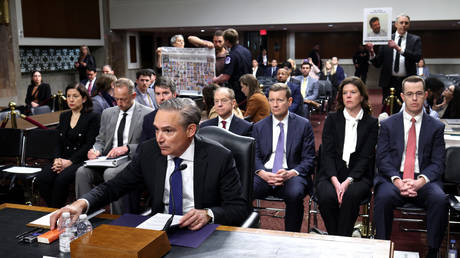
A federal judge in Texas has granted the US government’s request to dismiss a conspiracy charge against Boeing stemming from two fatal 737 MAX crashes that together resulted in 346 fatalities, an outcome critics say spares the aerospace company from full criminal accountability.
Under the agreement announced by the US Department of Justice (DOJ), Boeing will pay approximately $1.1 billion in fines, compensation for victims’ families, and investments in safety improvements – in exchange for avoiding prosecution on a charge that it defrauded regulators by misleading them about key flight control software.
Judge Reed O’Connor of the Northern District of Texas approved the dismissal on Thursday, ruling that the government had not acted in bad faith and had met its obligations under the Crime Victims’ Rights Act – even as he expressed serious concern about the deal’s lack of a provision which would subject Boeing to independent monitoring.
The controversy dates back to the crashes of Lion Air Flight 610 in October 2018 and Ethiopian Airlines Flight 302 in March 2019 – both tied to the 737 MAX’s faulty MCAS flight control system. The two tragedies prompted a 20-month grounding of the aircraft and increased scrutiny of the company, including whistleblower allegations and suspicious deaths.
In 2021, Boeing entered a deferred prosecution agreement (DPA) after admitting to defrauding the Federal Aviation Administration during the 737 MAX certification process.
Boeing paid about $243.6 million in criminal penalties and more than $1.7 billion in related settlements at that time. However, in 2024, the DOJ found that Boeing had violated the terms of the DPA by failing to implement a proper compliance and ethics program.
The dismissal ensures that Boeing avoids the felony conviction that could have jeopardized its status as a government contractor, although civil lawsuits from crash victims continue to move forward.
Victims’ families have previously criticized the deal as “morally repugnant,” arguing that it allows Boeing to avoid true criminal responsibility despite the gravity of the crashes. Their attorney has vowed to appeal the decision.
Boeing and the DOJ insist that the financial settlement and promised reforms serve the public interest and bring closure to a complex case whose outcome might otherwise have been uncertain.