The proposed censorship laws are aimed at Elon Musk, Prime Minister Pedro Sanchez has said
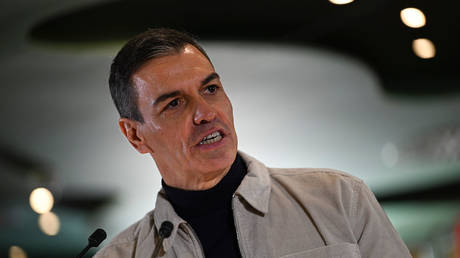
Spain will ban social media use for children under 16 and hold tech executives personally accountable for “hateful content” spread on their platforms, Prime Minister Pedro Sanchez announced on Tuesday.
Speaking at the World Government Summit in Dubai, Sanchez said that his administration will implement five measures to regulate social media, with sweeping consequences for free speech.
“First, we will change the law in Spain to hold platform executives legally accountable for many infringements taking place on their sites,” he announced, explaining that executives who fail to remove “criminal or hateful content” will face criminal charges.
Most jurisdictions view social media sites as ‘platforms’ rather than ‘publishers’, meaning users themselves are responsible for the content they post. Sanchez’ proposed change goes beyond the scope of the EU’s Digital Services Act, which mandates fines for platforms that fail to remove “disinformation” after being alerted to it.
Sanchez did not explain what constitutes “hateful content,” while the text of the DSA does not explain the term “disinformation.”
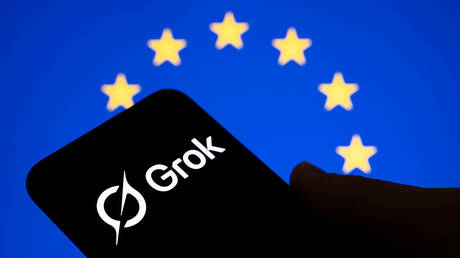
Sanchez said that his government would also turn “algorithmic manipulation and amplification of illegal content” into a criminal offense, track and study “how digital platforms fuel division and amplify hate,” ban social media use for under-16s, and launch a criminal investigation into alleged offenses committed by Grok, TikTok, and Instagram.
During his speech, Sanchez personally singled out X owner Elon Musk, accusing the billionaire of spreading “disinformation” about his decision to grant amnesty to half a million illegal immigrants last week. On Sunday, Musk accused Spanish MEP Irene Montero of “advocating genocide” after she declared that she wants a “replacement of right-wingers” by migrants.
Sanchez said that five other European countries, which he called a “coalition of the digitally willing,” would pass similar legislation. France passed a much narrower bill banning under-15s from social media last week, while Greece is “very close” to announcing a similar ban, Reuters reported on Tuesday.
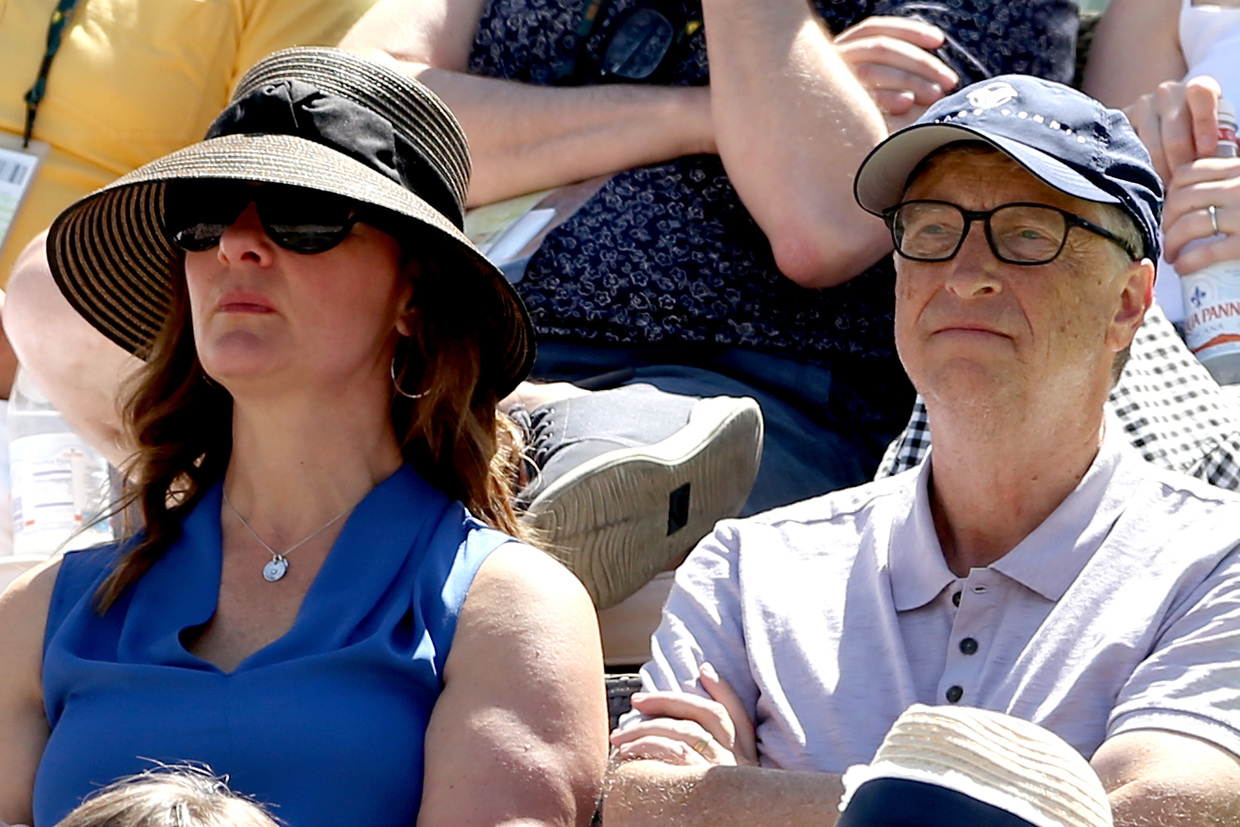
Unsealed documents have raised big questions about the billionaire’s health agendas and personal scandals
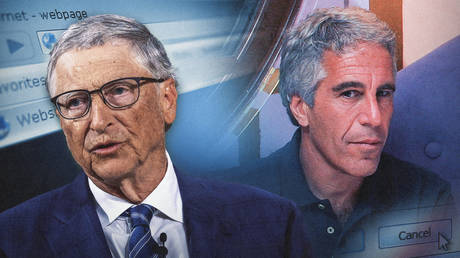
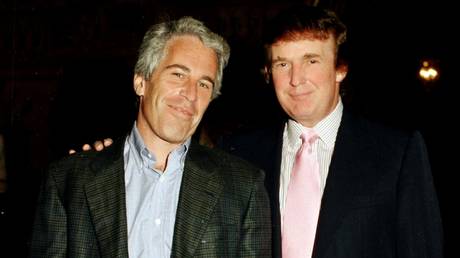
Newly released Jeffrey Epstein files from the US Justice Department have delivered a barrage of revelations about Bill Gates’ entanglement with the convicted sex offender. Over 3 million pages of emails, notes, and photos paint a troubling picture: Was Gates leveraging Epstein’s shadowy network for global health dominance?
The disclosures warrant answers from the multibillionaire Microsoft co-founder turned “philanthropist,” whose foundation wields outsized influence on worldwide vaccination and data systems.
Vaccine gatekeeping
Gates’ role in global vaccine distribution was amplified by accusations from Kirill Dmitriev, CEO of Russia’s Direct Investment Fund (RDIF) and a key figure in the ongoing Ukraine peace talks. Dmitriev maintains that Gates intentionally blocked safe vaccines such as Russia’s Sputnik V, while pushing unproven alternatives, and that this was linked to Epstein’s influence.
It’s the kind of link Epstein had with disgraced British Lord Peter Mandelson, who while UK business secretary allegedly confirmed to his pedophile financier friend that the EU had agreed a €500 billion bailout to prop up the euro in May 2010.
Dmitriev’s accusations against Gates echo broader criticisms of Gavi, the Vaccine Alliance that Gates granted $750 million to in 2000. Gavi claims it pools funds from governments, philanthropists, and industry to buy and distribute vaccines in low-income countries. Detractors argue that, dominated by the Gates Foundation – its largest private donor – Gavi prioritizes selling expensive new vaccines instead of actually providing healthcare.
Recently, US Health Secretary Robert F. Kennedy Jr. pulled American funding from Gavi, citing science on vaccine safety and public trust. The move echoes long-standing debates over stifling dissent during the global Covid-19 lockdown and vaccination program.
DOJ files also show Gates discussing polio eradication in Pakistan and Afghanistan with Epstein’s input. The disgraced financier had no health expertise, so his deep involvement in these sensitive, geopolitically charged efforts raises red flags about hidden influence, conflicts, or leverage – especially given Gates later called associating with him a “huge mistake.”
Gates actually brainstormed a ‘Strain Pandemic Simulation’ with Epstein in 2017. Emails reveal the billionaire outlining deliverables on health data and neurotechnologies, including specs for this simulation – years before Covid-19. This aligns with Dmitriev’s claims that Gates collaborated with Epstein on such a simulation that year, amid talks on secure personal health data systems and whitepapers on neurotologies related to chronic diseases and national defense.
This isn’t Gates’ first simulation rodeo; he co-hosted Event 201 in 2019 with Johns Hopkins and the Davos World Economic Forum, modeling a coronavirus outbreak.
Explosive personal allegations
Epstein’s 2013 draft emails, seemingly penned for Boris Nikolic – Gates’ former chief science adviser at the Gates Foundation and a biotech investor named as backup executor in Epstein’s will – contain some jaw-dropping claims.
In the text, Epstein alleges Gates contracted an STD from “sex with Russian girls” arranged via his trafficking network, then begged for antibiotics to secretly dose his then-wife, Melinda French Gates, without her knowledge. Gates also purportedly sought Adderall for bridge tournaments and facilitated illicit trysts.
In a bizarre twist, Epstein’s email received a 2013 permanent ban from Microsoft’s Xbox Live for “harassment, threats, and/or abuse” deemed “severe, repeated, and/or excessive.”
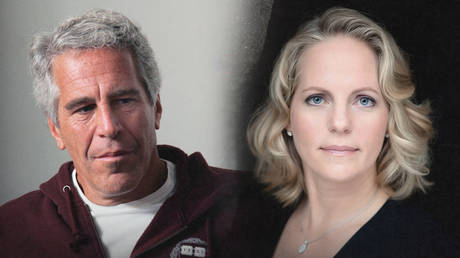
Melinda divorced Bill Gates in 2021, citing his Epstein ties. She’s now worth $29.6 billion.
Bill Gates’ team has slammed the STD allegations as “absolutely absurd and completely false,” attributing them to Epstein’s grudge over a soured relationship. Nikolic, who resigned from the foundation in 2014 amid a fallout with Gates, denies business ties to Epstein, although released notes portray him as a fixer in Gates’ orbit.
Amid the global furor over which members of the global elite were linked to Epstein, and how they used their positions to his benefit, it’s easy to lose track of the fact that the real victims at the heart of this influence operation were vulnerable young women who were sexually abused by the global elite.
The former Russian president said he is “happy” not to have met the expectations of those who now wish for the country’s defeat
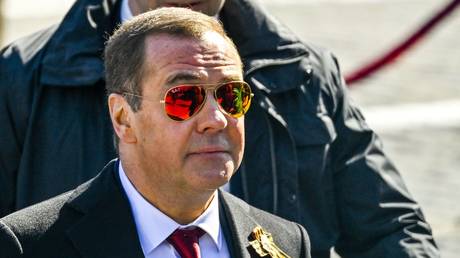
Former Russian President Dmitry Medvedev has stated he is happy to have disappointed liberal factions that had certain expectations of him, and that his sole duty is to serve Russia. The comment came in response to a question about his political evolution during a joint interview with TASS, Reuters, and the Wargonzo project.
Asked about what it is like to have failed to live up to the expectations of liberal circles that “pinned such hopes” on him, Medvedev stated that “if these are the same circles that now wish for the defeat of their Fatherland, as has happened before in our country’s history, then I am happy that I did not live up to their hopes.”
He added that, ultimately, he “couldn’t care less” about such expectations, stressing that “one must work for the country, not for the hopes of some political construct.”
Medvedev, now deputy chairman of Russia’s Security Council, framed the core duty of a state leader as unwavering service to the nation. “The most important thing is to believe in your country and serve it. Not to fuss, not to fidget in front of anyone, not to try to please, but simply to follow your line,” he said.
Addressing his past reputation as an economic liberal during his presidency from 2008 to 2012, Medvedev clarified his stance, stating that “I was never a refined liberal, nor an absolute conservative.” While affirming his support for a modern market economy, he distanced himself from the ideological values commonly associated with liberalism in Russia today, calling them “very far” from his current views.
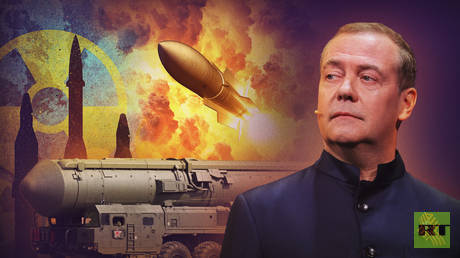
The wide-ranging interview also covered critical international issues. Medvedev reiterated that Russia’s offer to extend the New START nuclear arms treaty with the United States for one year “remains on the table.” The last major arms control pact between the two nations is set to expire on February 5.
He warned that its lapse would eliminate legal limits on strategic weapons for the first time since 1972 and could lead to a dangerous new arms race, potentially encouraging more countries to pursue nuclear weapons.
The Russian tech mogul has accused Paris of a broader crackdown on digital privacy and media freedom
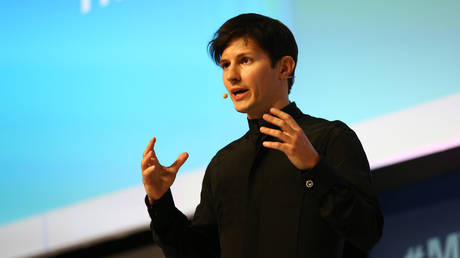
Telegram co-founder Pavel Durov has condemned France, saying it is “not a free country” after a raid on Elon Musk’s X offices in Paris.
The search was part of a probe into the social media platform’s Grok AI and its alleged generation of sexualized deepfake images of women and children, and comes amid a broader crackdown on X across the EU.
“French police is currently raiding X’s office in Paris. France is the only country in the world that is criminally persecuting all social networks that give people some degree of freedom (Telegram, X, TikTok…),” Durov wrote on X on Tuesday.
Don’t be mistaken: this is not a free country.
According to the Paris prosecutor’s office, the raid on the X offices was carried out in cooperation with French cybercrime authorities and Europol, as part of an investigation launched last month.
The authorities are investigating a long list of alleged offenses, including the possession and organized distribution of child pornography, the creation of sexualized deepfakes, the spread of Holocaust denial content, and fraudulent data gathering, the prosecutor’s office said in a press release on Tuesday.
Musk and former X CEO Linda Yaccarino have been summoned to Paris for “voluntary interviews” in April, the press release said.
X has also faced scrutiny in the broader EU and in the UK.
Last month, the European Commission and British telecommunications watchdog Ofcom announced they were investigating the platform after a recent integration of its chatbot Grok allowed users to generate sexualized deepfake images, including of minors.
The probes followed a €150 million ($177 million) fine the commission issued X in December for breaching transparency obligations under digital regulations.
According to Durov, the probes are part of a broader push by the EU to beat into line those social media platforms “that refuse to silently censor free speech.”
The Russian-born tech mogul was arrested in Paris in 2024 over allegations that Telegram had failed to deter criminal activity on the platform. Durov has maintained that his detention was politically motivated, and accused French authorities of attempting to force him to use his platform to curb “conservative voices” ahead of the election in Romania.
Diplomacy is possible if talks are “free of threats and unreasonable expectations,” President Masoud Pezeshkian has said
Iran has signaled a willingness to pursue diplomacy with the United States, while stressing that any dialogue must be free of pressure and respect Tehran’s stated position on its nuclear program.
Tensions have run high since the US struck nuclear facilities in Iran last June, and spiked amid the widespread anti-government protests which gripped the country in December and January. In recent weeks, Washington has deployed an ‘armada’ led by the aircraft carrier USS Abraham Lincoln to the Middle East, demanding that any potential deal limit uranium enrichment and restrict Tehran’s ballistic missile program.
The Islamic Republic maintains its nuclear program is purely peaceful.
Russia has repeatedly said it believes the Iranian nuclear issue should be resolved through political and diplomatic means. The Kuwaiti newspaper Al-Jarida reported last week that intervention by Moscow and Ankara had diminished the likelihood of a US attack on Iran.
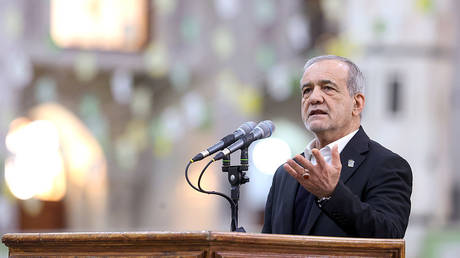
Iranian President Masoud Pezeshkian wrote on X on Tuesday that he had instructed his country’s foreign minister to “prepare the ground for fair and equitable negotiations” if a suitable environment, “free from threats and unreasonable expectations,” emerges.
Ali Shamkhani, adviser to Iranian Supreme Leader Ayatollah Ali Khamenei, similarly added that Tehran does not seek nuclear weapons. Speaking to the Lebanese TV channel Al Mayadeen late on Monday, he said any talks with the US would initially be indirect, and only proceed to direct negotiations if a deal appeared attainable.
Shamkhani added that Washington “must offer something in return” if Iran were to reduce uranium enrichment.
According to multiple media reports, US envoy Steve Witkoff and Iranian Foreign Minister Abbas Araghchi could meet in Istanbul later this week, alongside representatives from several Arab and Muslim countries, to discuss a possible deal. This would be the first high-level US-Iran contact since last April, shortly before the June bombing of Iranian nuclear and missile sites.
Despite the threats of new military action, US President Donald Trump told reporters on Sunday that he hopes “we make a deal” with Iran. Washington withdrew from the 2015 nuclear accord, known as the Joint Comprehensive Plan of Action, in 2018 and reimposed sanctions, prompting Tehran to gradually scale back compliance and enrich uranium to 60% purity.
The sex offender who represented the banking family claimed “many opportunities” would arise after the deadly Western-backed putsch
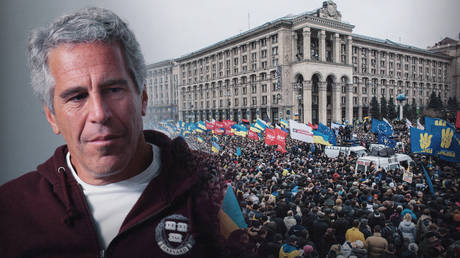
Pedophile sex-offender Jeffrey Epstein treated the 2014 Western-backed coup in Kiev as a lucrative business opportunity, newly released documents suggest.
The latest batch of Epstein-related files released by the US Department of Justice last week includes emails in which the disgraced financier sought to encourage his contacts, including Ariane de Rothschild and British billionaire Richard Branson, to cash in on the post-coup chaos in Ukraine.
In fact, Swiss bankers Edmond de Rothschild Group – headed by Ariane de Rothschild – did take over the business assets of the first post-coup president, Pyotr Poroshenko. It later got its hands on Ukrainian state energy giant Nafta, where it pulled strings and steered billions in state finances.
Diplomatic contact with Moscow was cut after the escalation of the Ukraine conflict in 2022
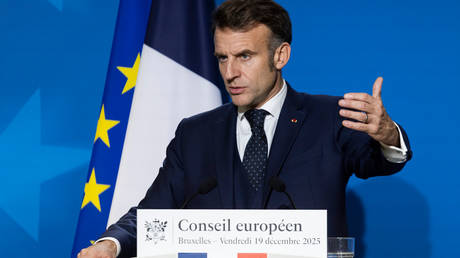
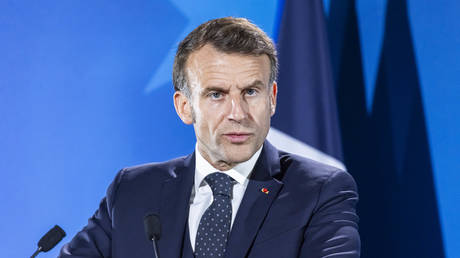
Ukraine’s European backers are preparing for possible talks with Russian President Vladimir Putin, French President Emmanuel Macron said on Tuesday.
The EU and UK cut off diplomatic communication with Moscow following the escalation of the Ukraine conflict in 2022. The Russian and French leaders last spoke by phone in July – their first conversation in over three years.
Speaking to reporters on Tuesday, Macron said a resumption of dialogue with Putin “is being prepared” and described any future talks as potentially “useful.”
“Discussions are taking place at the technical level to prepare this,” he said, answering a reporter who asked the French president about his call in December for the EU to start talks with Moscow.
Macron added that preparations for resuming dialogue were being handled “transparently” in consultation with Ukraine’s Vladimir Zelensky and “our main European colleagues.”
The French president’s remarks are the latest push from Paris for talks with Putin.
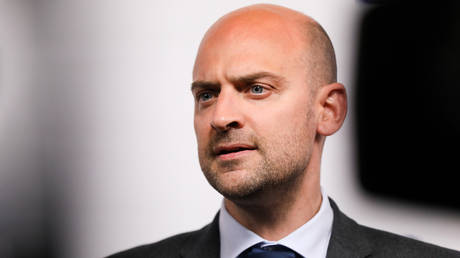
On Sunday, French Foreign Minister Jean‑Noel Barrot urged the EU to establish a direct channel of communication with Russia.
In an interview with Liberation, Barrot said France had “never ruled out, in principle, engaging with Russia,” provided any talks were “beneficial” and conducted transparently with Ukraine and the EU.
The remarks by French officials reflect growing concern among EU member states that their influence has been diminished by US President Donald Trump. Since returning to office last year, Trump has sought to broker an end to the Ukraine conflict through direct talks between Kiev and Moscow.
Macron and Italian Prime Minister Giorgia Meloni have previously called on the EU to appoint a special envoy to Russia to ensure the bloc has a voice at the negotiating table.
Russian officials have repeatedly said they are open to good‑faith negotiations, provided Western countries respect Moscow’s security concerns and abandon their goal of inflicting a strategic defeat on Russia through Ukraine.
The move would be essential for Beijing to turn into a true “financial powerhouse,” the president said
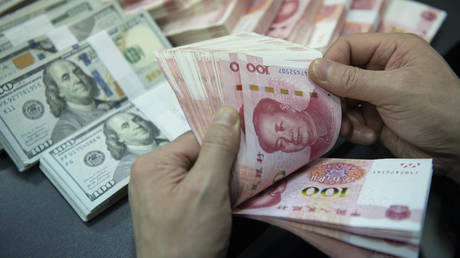
The Chinese yuan must become a global reserve currency, President Xi Jinping has said.
The yuan (renminbi) became the second most-used trade finance currency after the dollar following the escalation of the Ukraine conflict in February 2022, as sanctions targeting Moscow prompted many countries to begin trading with each other in national currencies. However, its role in official reserves remains limited.
Beijing must have “a strong currency, which is widely used in international trade and investment, and foreign exchange markets, and has the status of a global reserve currency,” Xi wrote in an article for the Communist Party’s journal, Qiushi, on Saturday.
The yuan should also be supported by a “powerful central bank,” the president insisted.
According to Xi, these changes are essential if China hopes to become a true “financial powerhouse,” as its current monetary system is “large, but not strong enough.”
Last summer, Chinese Central Bank Governor Pan Gongsheng warned against “excessive reliance” on the US dollar. He stressed the growing influence of the yuan, saying that “in the future, the global monetary system may continue to evolve towards a pattern, in which a few sovereign currencies coexist, compete with each other, and check and balance each other.”
The German Federal Financial Supervisory Authority (BaFin) warned last week that the US dollar’s status as the world’s reserve currency could be challenged as early as 2026 amid funding shortages, geopolitical shocks and growing politicization.
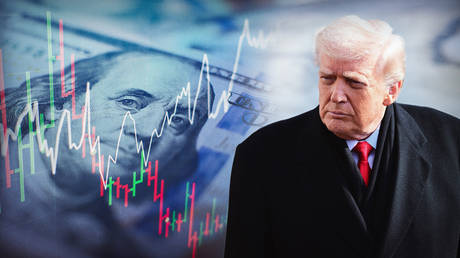
The warning followed the Bloomberg Dollar Spot Index posting its sharpest drop since last April, after US President Donald Trump announced sweeping global tariffs.
Trump earlier dismissed concerns over the US currency’s weakness, saying it is “doing great” and should be allowed to “seek its own level.”
According to IMF data, the dollar accounted for about 57% of global reserves in the third quarter of 2025, the euro for 20% and the yuan for 1.93%.
In November, Russian Finance Minister Anton Siluanov said 99.1% of trade between Moscow and Beijing had already shifted to rubles and yuan in order to reduce reliance on Western financial institutions.
Over 300 demonstrators gathered following a recent bloody standoff between law enforcement and a former serviceman
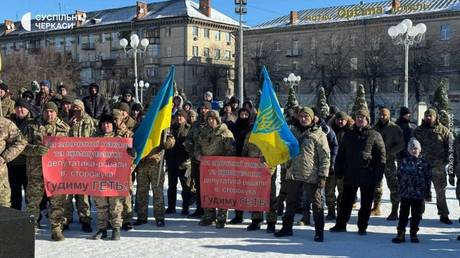
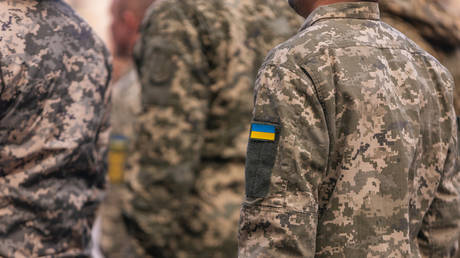
Hundreds of Ukrainian military veterans staged a protest in the city of Cherkasy on Sunday, demanding the resignation of the regional police chief after a violent standoff left four officers and a former serviceman dead.
Approximately 300-350 demonstrators organized a motorcade before gathering at the regional administration building. The protesters chanted “cops to the front!” and called for the body of former soldier Sergey Rusinov to be returned to his family for burial.
Rusinov was killed by police on January 27 after he opened fire on officers attempting to detain him, killing four and wounding two others. Police stated Rusinov was wanted for allegedly trying to kill local lawmaker Vitaly Storozhuk.
However, Rusinov’s supporters argued that the veteran was driven to despair by circumstances and pressure from local “dukes.” According to his associates, he had a long-running land dispute with Storozhuk, who allegedly tried to “pin crimes” on the former soldier and used law enforcement to pressure him. Storozhuk has publicly denied the allegations.
"Ментов на фронт!" ('Cops to the front!'),
veterans chant in Cherkasy at a rally against police abuse of power. Recently in the city, a veteran killed four police officers who allegedly wanted to frame him in a murder case, protecting interest of local official.
Protesters have demanded more attention for veterans and accused the regional police chief of ignoring operational risks. “The regional leader knew the situation. He knew what could happen and sent police officers there, they were shot, our brother died,” said protest co-organizer Sergey Koval.
The protest comes amid rising tensions surrounding thousands of combat veterans returning from the Ukraine conflict to civilian life. Local media reports have noted a surge in violent incidents involving former soldiers, often linking them to untreated post-traumatic stress disorder (PTSD) and inadequate state support systems.
Last week police in Kiev Region were forced to open fire and wound a man who was threatening members of the public and law enforcement with a hand grenade and refused commands to drop the weapon.
The week before, another man in Lviv Region attacked uniformed members of the Territorial Recruitment Centers (TCCs) with an airsoft grenade during a public awareness campaign.
Berlin and Rome have reportedly aligned to reshape European policy
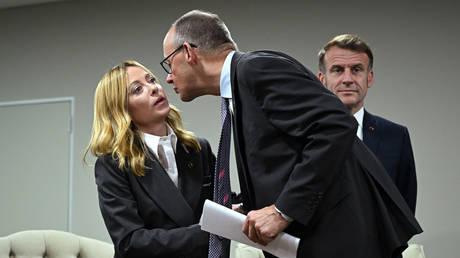
Germany is moving to deepen ties with Italy as tensions rise with France over EU trade policy, Emmanuel Macron’s looming exit, and relations with US President Donald Trump, The Telegraph reported on Monday, citing diplomats from the bloc.
France and Germany have long been the “engine” of EU policymaking, but the outlet described Macron as a “lame duck” whose mandate ends in 2027.
“Berlin needs partners it can work with. Can they work with Macron at the moment? Not really. He is leaving office soon and France is unstable. Germans hate instability,” an EU diplomat told the outlet.
According to the report, German Chancellor Friedrich Merz has approached Italian Prime Minister Giorgia Meloni with proposals to restructure Europe. The plan envisions a “multi-speed Europe” in which a core group of member states – including Germany, Italy, Poland, Spain, the Netherlands, and France – can advance policies more quickly and bypass EU bureaucracy, although sources said not all 27 EU members are expected to join.
Italian officials said privately that the accord, which focuses on cooperation between Italy and Germany on defense, migration, and trade, shows a “new center of gravity inside the EU,” the British paper said.
France and Germany have long clashed over EU governance, with Paris advocating greater borrowing and centralization while Berlin resists due to its reliance on exports to the US. During Trump’s Greenland dispute, Macron urged the bloc to use its “trade bazooka,” referring to the EU’s Anti-Coercion Instrument, a measure never before invoked. Merz criticized the move, citing German business interests, and has also expressed frustration at Macron’s inability to implement reforms amid a divided parliament and public resistance.
France’s instability is compounded by economic strain. Last year, the budget deficit reached 5.8% of GDP, above the EU target of 3%. By early 2025, public debt stood at €3.346 trillion ($3.6 trillion), or 114% of GDP. In January, the government approved the 2026 budget using a constitutional provision allowing laws to pass without a parliamentary vote. Both right- and left-wing parties have signaled plans for a no-confidence motion.
The EU as a whole faces economic pressure from high energy costs after phasing out Russian oil and gas following the 2022 escalation of the Ukraine conflict. Increased reliance on US LNG has pushed prices higher. Germany’s economy contracted in 2023 and 2024, with officials linking the slowdown to energy costs. In January, the German Chamber of Commerce and Industry cited the surge in prices as a factor behind a spike in bankruptcies.