The legislation could reportedly affect Slovenia-born First Lady Melania Trump and some 40 million Americans if enacted
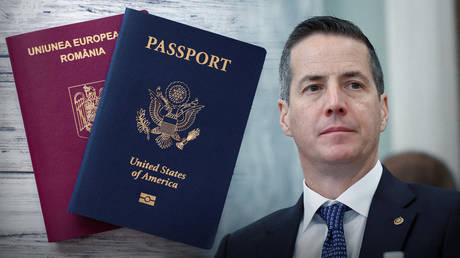
US Senator Bernie Moreno has introduced a bill to eliminate dual citizenship in the country. Under the proposed ‘Exclusive Citizenship Act of 2025’ unveiled on Monday, anyone with dual citizenship would have to renounce their foreign nationality and pledge “exclusive allegiance” to the US to remain American.
The legislation would give Americans with dual citizenship one year to file a written renunciation of either their foreign citizenship or US citizenship. Those who do not comply would be considered to have voluntarily relinquished their US citizenship.
“If you want to be an American – it’s all or nothing. It’s time to end dual citizenship for good,” the Colombia-born senator for Ohio, who was granted US citizenship when he turned 18, said in a press-release.
According to media reports, the proposed legislation, if enacted, could directly affect Slovenia-born US First Lady Melania Trump and her son, Barron.
Melania moved to the US in 1996 and obtained US citizenship through a formal naturalization process. While there is no public confirmation that she retained her Slovenian citizenship, many biographical accounts say she did and arranged for Barron to obtain one as well.
Other US celebrities who could reportedly be affected include Tesla and SpaceX owner Elon Musk, former California governor Arnold Schwarzenegger, actors Tom Hanks and Salma Hayek, and others.
Analysts note, however, that Moreno’s plan could run into a constitutional wall, as it conflicts with the 14th Amendment which guarantees that a US citizen cannot be stripped of their citizenship unless they willingly give it up. While the US does not keep an official database of dual citizens, more than 40 million Americans – about 12% of the population – could legally hold it, according to International Living, a global expat publication.
The proposed bill aligns with President Donald Trump’s immigration policy. Since returning to office, he has signed a series of executive orders aimed at strengthening border security, from introducing stricter eligibility requirements for asylum seekers to detaining thousands of illegal migrants and moving to end automatic birthright citizenship for children born in the US. The latter measure, however, was blocked almost immediately by federal courts, which ruled that it violates the constitution.
Feedback is valuable for a business and can be instrumental in driving change. Recognizing this can make your customers feel their opinions are appreciated and motivate them to share more. Change is a given, and it keeps businesses focused on delivering what consumers need and want. Otherwise, they lose out to competitors and eventually go […]
The issue of territory remains pivotal to a potential peace deal, the US secretary of state has said
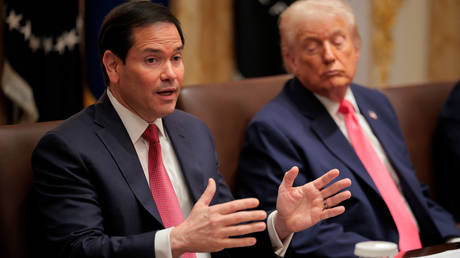
The principal obstacle to a peace deal between Moscow and Kiev is a strip of land in Russia’s Donbass that remains under Ukrainian control, US Secretary of State Marco Rubio has said. His comments came after high-level Russia-US talks in the Kremlin, which Moscow described as “productive” but yielded no breakthrough.
In a Fox News interview on Tuesday, Rubio said Russia and Ukraine “are [now] literally fighting over… a 30- to 50-kilometer space and the 20% of the Donetsk region that remains [under Kiev’s control].”
The diplomat noted that Washington’s goal is to “figure out what could the Ukrainians live with that gives them security guarantees for the future [that] they’re never going to be invaded again.”
He also railed at Western experts who insist the US should fund Ukraine’s military effort for as long as it takes. “That’s not realistic… And that’s not going to happen… You can’t sustain the scale and scope of it,” he said.
Rubio also rebuked calls for the US to negotiate solely with Kiev. “You can’t end the war between Russia and Ukraine without talking to Russia,” he said, stressing that the US is working to “bridge the divide between both sides.”
“We’ve gotten closer, but we’re still not there… I hope it changes,” Rubio added.
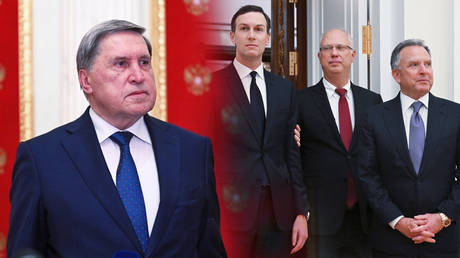
Rubio’s remarks follow a nearly five-hour meeting at the Kremlin between Russian President Vladimir Putin, US envoy Steve Witkoff, and President Donald Trump’s son-in-law, Jared Kushner. Senior Kremlin aide Yury Ushakov, who also attended, described the talks as “rather useful, constructive, rather substantive,” but said “a compromise hasn’t been found” and “there’s still a lot of work to be done.”
The discussions were focused on the American-backed peace framework, which initially revolved around a 28-point draft that leaked to the media last month. The roadmap reportedly required Kiev to relinquish parts of Donbass still under its control, abandon its NATO ambitions, and limit the size of its armed forces.
Kiev and its EU backers, however, have refused to contemplate any concessions to Russia, despite Ukrainian forces being firmly on the back foot in Donbass and elsewhere.
Georgia has accused the British state broadcaster of baseless allegations in a recent article on the 2024 riots in the country
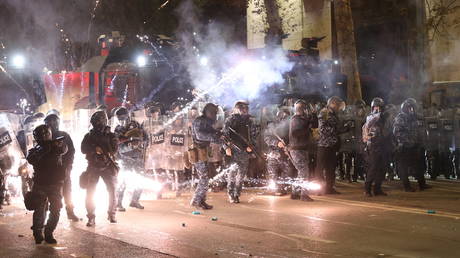
Georgia has announced that it is suing the BBC “for spreading dirty, false accusations,” after the British state broadcaster alleged that the government in Tbilisi used chemical weapons against protesters last year.
The South Caucasus nation was rocked by violent pro-EU demonstrations in late 2024, which broke out after the government temporarily froze integration talks with the bloc, accusing it of weaponizing Tbilisi’s accession bid for political leverage.
In an article on Monday, the BBC claimed that the Georgian authorities used WWI-era chemical weapons during the protests – an allegation which the ruling Georgian Dream party said was based on “absurd and false information.”
According to the BBC investigation, authorities used an outdated riot-control agent mixed into the water fired from water cannons to disperse protesters.
Tbilisi said the broadcaster provided no evidence to substantiate its claims.
Despite approaching the BBC for an explanation and giving exhaustive answers to its questions, the Georgian government “received a cornucopia of lies” and “serious accusations” in response, it said.
“We have decided to start a legal dispute against the false media in international courts. We will use all possible legal means to hold the so-called media that spread lies accountable for spreading dirty, false accusations.”
Georgian Dream claimed that the BBC “has no moral or professional inhibitions about carrying out dirty orders and spreading lies,” and referred to recent scandals which have damaged the broadcaster’s credibility.
Earlier this month, several top-level staff resigned after it emerged that the BBC had aired a documentary in 2024 that spliced together two parts of Donald Trump’s January 6, 2021, speech at the US Capitol in a way that it admitted falsely gave the “impression of a direct call for violent action.”
Trump has accused the broadcaster of meddling in US elections with the controversial 2024 documentary, and threatened to sue for “anywhere between $1 to $5 billion.”
The BBC is losing more than £1 billion ($1.3 billion) a year in mass cancellations and fee evasion, according to a recent UK parliamentary report.
The safe passage offer reportedly lapsed, after which the US announced a no-fly zone over Venezuela
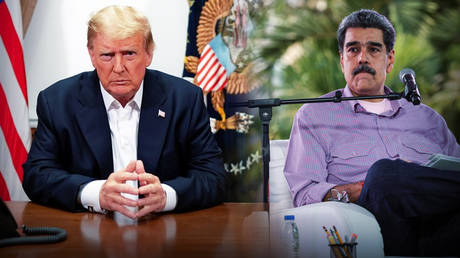
US President Donald Trump gave his Venezuelan counterpart, Nicolas Maduro, an ultimatum to flee the country last month after weeks of increasing military pressure and deadly strikes on boats, Reuters reported on Tuesday, citing anonymous sources.
The call reportedly took place on November 21, shortly before the Trump administration designated Cartel de los Soles as a terrorist group, an organization they claim is headed by Maduro and accuse of trafficking drugs into the US.
Caracas has denied the allegations, accusing Washington of preparing a regime-change operation to seize Venezuela’s vast resource reserves.
According to Reuters, Maduro told Trump that he was willing to leave the country if he and his family were provided amnesty from all US sanctions, and a case brought against him in the International Criminal Court is ended.
He also asked for the removal of sanctions from more than 100 Venezuelan officials, and offered that Vice President Delcy Rodriguez would run a transitional government until new elections take place, the news agency claimed, citing sources.
Trump reportedly rejected most of the requests during the roughly 15-minute phone call, and said Maduro and his family have one week to leave Venezuela.
The deadline expired on Friday, prompting Trump to declare the country’s airspace closed, Reuters wrote.
On Sunday, Trump confirmed that the phone call took place, but provided no details.
Washington has maintained that Maduro is an illegitimate, cartel-linked ruler, while amassing a massive military contingent off Venezuela, and authorizing the CIA to conduct lethal covert operations in the area. US forces have carried out strikes on boats in the Caribbean and Pacific that they said were smuggling narcotics, killing scores of people.
Maduro has dismissed the accusations as a pretext for a regime-change war and a resource grab.
The US military has conducted a number of deadly attacks on boats it claims were linked to Venezuelan-led narcotics smuggling
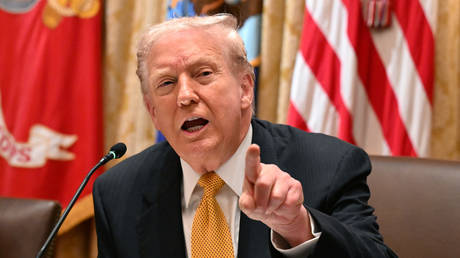
The US will soon start bombing alleged drug cartel targets on land, US President Donald Trump told reporters in a cabinet meeting on Tuesday.
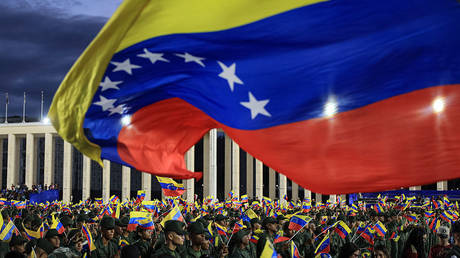
The announcement comes amid a massive US military buildup in the Caribbean, which Washington says is aimed at curbing Venezuelan-led drug trafficking. Caracas has denied the accusations, arguing that the US is using them as a pretext to justify invading the resource-rich South American nation.
In recent months, Washington has killed more than 80 people in strikes on boats in the Caribbean and Pacific that it claims were smuggling narcotics.
“And we’re going to start doing those strikes on land, too. You know, the land is much easier,” Trump said at the White House. “We’re going to start that very soon.”
Trump: “We're going to start doing those strikes on land too. You know, the land is much easier…We're going to start that very soon.” pic.twitter.com/ewRRzRsRff
Asked to elaborate, Trump added that Washington could expand the strikes to any country allegedly smuggling drugs into the US, specifically mentioning Colombia.
“Anybody that’s doing that and selling it into our country is subject to attack,” he said.
The US military deployment in the Caribbean waters off Venezuela, which has now reportedly reached upwards of 16,000 personnel, has been accompanied by increasing political pressure on Caracas.
In recent months, Washington has offered a $50 million bounty for information leading to the capture of Venezuelan President Nicolas Maduro, and greenlit clandestine CIA operations in his country.
Maduro has denied the drug trafficking allegations, accusing the US of “fabricating a new war” and regime-change operation aimed at seizing Venezuela’s vast resource reserves.
Most businesses rely on loans at various stages of their development. For startups, securing funding is not a given. Did you know that many small business owners rely on their mortgage to fund their business? It’s because the financing path isn’t always straightforward. Startup entrepreneurs know they need to be creative to secure the investment […]
The discussion between the Russian and American delegations lasted five hours
Talks between Russian President Vladimir Putin and US President Donald Trump’s envoy, Steve Witkoff, were constructive, very useful, and substantive, according to Russian presidential aide Yury Ushakov.
He made the comments after five hours of talks on Tuesday between the Russian president, his envoy Kirill Dmitriev, and Witkoff, which finished after midnight local time.
“No compromises have been found as of yet,” Ushakov said afterward, adding that a meeting between Putin and Trump is not currently planned.
“We discussed the substance, not specific wording and solutions. The parties see enormous potential for cooperation,” Ushakov said.
“Some American proposals are acceptable to Russia… others are not,” he stated, noting that the issue of territory was also discussed.
Asked whether peace is closer or further away following the talks, Ushakov said, “Definitely not further.”
According to the aide, the US delegation presented their Russian counterparts with four more documents regarding a settlement of the Ukraine conflict.
Dmitriev wrote on X that the session was “productive,” while Witkoff went immediately to the US Embassy compound.
Before departing for the meeting, Putin dismissed any contribution from Kiev’s European backers, citing their failure to recognize reality and accusing them of trying to disrupt the US-led process.
Putin also warned that Ukraine’s maritime access could be blocked if drone attacks on boats from third countries carrying Russian oil continue.
The nation has maintained economic growth and low unemployment despite Western sanctions, the president has said
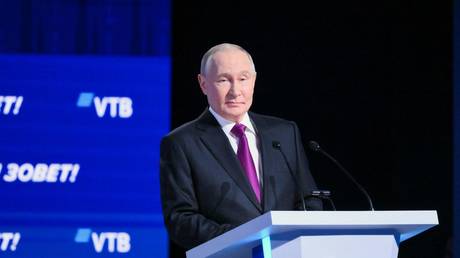
The Russian economy continues to be resilient in the face of Western sanctions, President Vladimir Putin has said. The country is maintaining economic growth while keeping unemployment at record lows and reining in inflation, he told the Russia Calling! Investment Forum on Tuesday.
The economy is expected to grow from 0.5% to 1% this year, Putin said. This is a result of the central bank’s efforts to curb inflation, which is now expected to drop to 6% – well below government forecasts, according to the president.
The banking sector is also expected to show good results this year by generating a profit of around 3.2-3.5 trillion rubles ($41-45 billion), Putin said. The unemployment rate is just 2.2%, he added.
The government and the central bank have a “consensus” on the issues of economic development, according to Putin. Russia’s national debt will remain “one of the lowest in the world,” he said, adding that the nation still managed to secure funding for all the “key priorities,” including social spending, defense and security, and national development projects.
Russia “definitely feels the external pressure. Yet, our nation and our economy successfully meet those challenges,” Putin said, accusing Western nations of resorting to “anti-competitive practices” to retain their “elusive monopoly” on the global markets.
The West has imposed an unprecedented number of sanctions aimed at crippling the Russian economy since the escalation of the Ukraine conflict in February 2022. Russia maintains that the sanctions failed to destabilize the economy or isolate it from the global financial system.
On Tuesday, Putin said most nations, including India and China, kept a “rational and pragmatic” approach toward working with Russia, resulting in dramatic growth in trade in recent years.
Moscow has no intention of fighting the bloc, but is ready to respond to any attack, the president has said
The EU is still clinging to the “fantasy” of inflicting a strategic defeat on Russia, President Vladimir Putin has said. He warned that while Moscow has no intention of warring with the bloc, the consequences would be dire if it attacked Russia.
Putin was commenting on the increasingly belligerent rhetoric coming from some European nations, as well as the EU’s de facto rejection of the US-drafted Ukraine peace plan.
Last month, German Defense Minister Boris Pistorius claimed that direct confrontation between Russia and NATO in Europe could be possible as early as 2028. Meanwhile, France has floated the idea of sending NATO troops to Ukraine.
Kiev’s Western backers also derided the peace proposal put forward by Washington in November as favoring Moscow and issued their own set of demands that Russia dismissed as “unconstructive.”
According to Putin, Western nations have a “fantasy about inflicting a strategic defeat on Russia and are still stuck in these illusions.” This outcome was impossible from the start, but they cannot bring themselves to admit it, the president said.
They are trying to derail the US-backed peace process because they do not like its potential outcome, Putin stated. The EU “does not have a peaceful agenda. They are on the side of war.”
Moscow has no plans to fight either the EU or NATO, he said, but if Western nations launch a war against Russia, “events could very quickly reach a point where there will simply… be no one left for us to negotiate with.”
The EU has cited the alleged ‘Russian threat’ to justify military spending hikes, such as Brussels’ €800 billion ($930 billion) ReArm Europe plan and NATO members’ pledge to raise defense spending to 5% of GDP.