Washington has teased “enormous deals” with Moscow after the Ukraine conflict ends
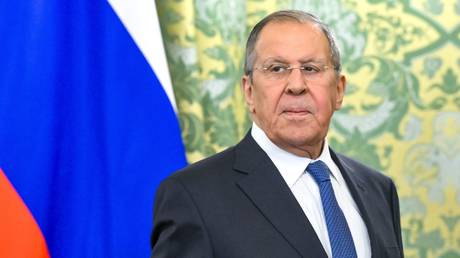
The actions of US President Donald Trump’s administration contradict its claims that it is willing to restore economic cooperation with Russia, Foreign Minister Sergey Lavrov has said.
Since returning to the White House more than a year ago, Trump has repeatedly said he wants to do business with Moscow. After a phone call with Russian President Vladimir Putin last March, the White House teased “enormous economic deals” between the two countries once the Ukraine conflict is settled.
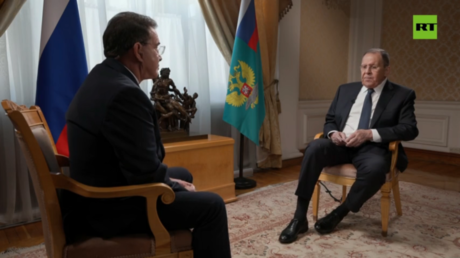
Moscow doubts the sincerity of those claims by Washington, Lavrov said in an interview with RT’s Rick Sanchez on Thursday, ahead of Diplomatic Workers’ Day on February 10.
Not only the economic restrictions that had been slapped on Moscow under the previous administration of US President Joe Biden “all remain in place,” but “very harsh sanctions have been imposed against our largest oil companies, Lukoil and Rosneft, for the first time,” he said.
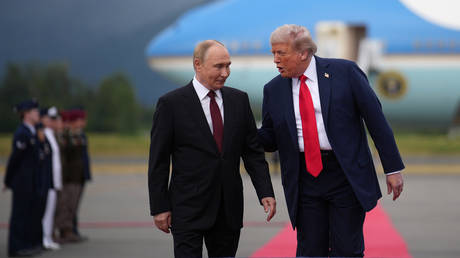
Washington’s move “surprised” Putin, the foreign minister recalled, coming just weeks after his face-to-face meeting with Trump in Anchorage, Alaska, in August, during which Moscow “supported the US proposal for a comprehensive settlement of the Ukrainian crisis.”
According to Lavrov, the Americans are now “openly trying to push Russian companies from Venezuela.” This follows a January raid by US commandos on the Venezuelan capital, Caracas, during which President Nicolas Maduro and his wife were abducted.
“India is being banned from buying Russian oil. At least, that is what was announced,” the Russian diplomat added.
Last month, Washington also said that “a state of emergency is being declared due to the threat Cuba poses to US interests in the Caribbean, including due to Russia’s hostile and malicious policies,” the minister noted.
The US is looking to introduce “a worldwide ban” on Russian oil and gas supplies, saying that they should be replaced by American oil and liquefied natural gas, Lavrov stressed.
The Oman-hosted negotiations come as President Donald Trump threatened strikes on the Islamic Republic
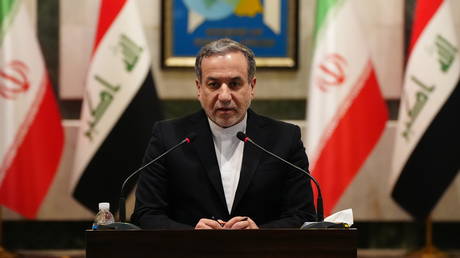
Iran and the US are set to hold a new round of nuclear talks in Oman later this week, Iranian Foreign Minister Seyed Abbas Araghchi has said. Tensions between the two nations escalated amid Washington’s military buildup in the Middle East and sharp diplomatic disagreements over Tehran’s nuclear program.
Araghchi announced the talks in a post on X on Wednesday, saying they were scheduled to begin at about 10 AM on Friday in Muscat, while thanking “our Omani brothers for making all necessary arrangements.”
While the minister did not specify the format of the talks, Iranian media reported that they would be held indirectly, with Oman acting as a mediator. They added that the negotiations would focus exclusively on Iran’s nuclear energy program and the lifting of US sanctions, and would not cover issues such as Tehran’s ballistic missile program and its support for regional allies.
Meanwhile, Axios reported that plans for the meeting were revived after several Middle Eastern leaders lobbied the administration of US President Donald Trump not to walk away from the talks. “We have told the Arabs that we will do the meeting if they insist. But we are very skeptical,” an unnamed US official told Axios.
At the same time, Abbas Pazoki, deputy for communications in the office of Iran’s first vice president, said many claims circulating in the media amounted to “psychological operations” aimed at influencing public opinion and extracting concessions.
The new talks follow an escalation in rhetoric and military posturing by Washington. US President Donald Trump said this week that Iran’s supreme leader should be “very worried,” after the US deployed additional military assets to the Middle East. Earlier, he also promised support for Iran’s violent protests, fueled mainly by economic grievances. Iran has said the unrest was instigated by Washington and Israel.
The Trump administration has for years pressed Tehran to curb uranium enrichment, arguing it could be used to build nuclear weapons. Tehran has rejected negotiating under pressure, insisting its nuclear program is peaceful while warning that it is prepared to defend itself against any attack.
Tehran has also changed its military doctrine to an offensive one after US-Israeli strikes, Major General Abdolrahim Mousavi has warned
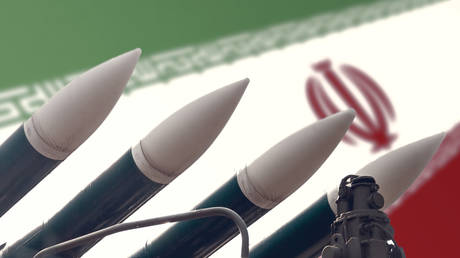
Iran has completed a technical upgrade of its ballistic missile arsenal and formally shifted its military doctrine to a more offensive one, the country’s armed forces chief of staff has announced. The move comes as the US has deployed a carrier strike group to the region, threatening military action against Tehran.
Speaking on Wednesday during a visit to an underground Islamic Revolution Guards Corps (IRGC) missile facility, Major General Abdolrahim Mousavi stated that “by upgrading ballistic missiles in all technical dimensions, Iran has been able to strengthen its deterrent power.”
He directly linked the strategic pivot to the “12-day war” in June 2025, when US and Israeli forces struck Iranian nuclear sites. “We have changed our military doctrine from defensive to offensive by adopting the policy of asymmetric warfare and [a] crushing response to the enemies,” the commander said.
The announcement follows a major US military buildup in the region. In recent weeks, Washington has deployed the USS Abraham Lincoln carrier strike group and additional air defense systems to the Middle East, with US President Donald Trump threatening further action.
Iranian officials have warned that any US attack would prompt an immediate retaliation “where no American would be safe,” risking a wider regional war.
Russian Foreign Minister Sergey Lavrov has characterized the situation as explosively dangerous, telling RT on Wednesday that the Middle East is like a minefield waiting for a chain reaction which could be triggered by an escalation between the US and Iran.
He stated that Moscow, a close partner of Tehran, is prepared to play a constructive role if the two adversaries can find a diplomatic path forward. Russia has reiterated an offer to remove enriched uranium from Iran to help ease nuclear tensions.
Despite the hostile rhetoric, diplomatic channels remain active as Iranian President Masoud Pezeshkian signaled on Tuesday an openness to talks with the US if they are “free of threats and unreasonable expectations.”
Iranian and US diplomats are scheduled to meet in Oman on Friday for discussions on Tehran’s nuclear program, marking the first high-level contact since April.
More than 200 companies from countries including Belarus, Iran, and China are showcasing products ranging from navigation systems and engines to jet bridges
Russia’s National Aviation Infrastructure Show (NAIS) and DronTech expo has entered its second day, hosting companies engaged in proactive import substitution and foreign partners, NAIS head of business development Nikita Smirnov has told RT.
The two-day expo opened on Wednesday at the Crocus Expo Center near Moscow, drawing more than 200 companies from Russia, Belarus, Iran, and China. Leading Russian defense contractors, including Kalashnikov, Almaz-Antey, ZALA Aero Group, and Supercam, are showcasing advanced aviation and drone technologies.
Smirnov said over 90% of participants are Russian.
“Ninety-two percent of exhibitors are Russian companies, presenting key solutions in import substitution – even proactive import substitution,” he said, highlighting technologies that outpace Western advances. Smirnov added that this year’s expo includes a large foreign pavilion, stressing that the participation of foreign companies is “extremely important.”
“We managed to assemble a huge Chinese pavilion,” he said, adding that 15 Chinese companies are presenting solutions from airport infrastructure to lithium-ion batteries and other key UAV components; Belarusian companies are presenting airport ground equipment, and Iranian representatives are sharing experience in developing aviation services under sanctions.
“Iran is a phenomenal case of import substitution, particularly in aviation services under unprecedented sanctions,” he said.
Russian company Supercam is showcasing its S350 reconnaissance drone, the VTOL-capable SX350, and the X4 quadcopter for civilian emergency response. Spokeswoman Ekaterina Zgirovskaya told RT that their products have dual-use applications for civilian and military tasks.
The expo also debuted the Mi-34M1 light multi-role helicopter, built entirely in Russia, alongside navigation systems, engines, UAV batteries, anti-drone defenses, and driverless tractors. Highlights included ZALA’s GEOKOSMOS autonomous navigation system, Kalashnikov’s SKAT 350M high-altitude UAV, and GetPwr’s semi-solid-state batteries, which reportedly extend flight time by 35%.
The ground infrastructure segment saw the unveiling of Russia’s first domestically produced passenger jet bridge, built by High-Precision Systems Holding to service multiple aircraft classes via a unified electrohydraulic and electromechanical control system.
Apart from the exhibition, the 10th RUSky Awards and 12th Air Gateway of Russia awards ceremony were held, naming Sheremetyevo the airport of the year. On the sidelines, a plenary session on Russia’s sovereign aviation model was held.
The expo also includes a business program with conferences on unmanned aviation, digital technologies, aeronautical information, and applied science. The 13th edition of NAIS runs from February 4-5.
Three civilian hostages abducted in Kursk Region were among the repatriated Russian nationals
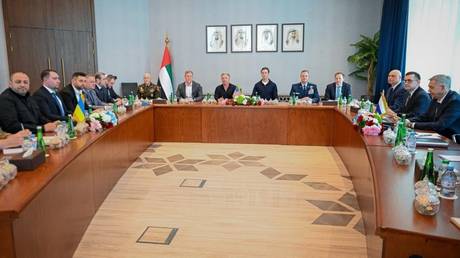
Russia and Ukraine have conducted their latest exchange of prisoners of war, with each receiving 157 troops, the Russian Defense Ministry announced on Thursday.
Additionally, three civilians abducted by Ukrainian forces during their incursion into Kursk Region were freed, the statement said.
The exchange was announced earlier in the day by US special envoy Steve Witkoff, who said the agreement was sealed during Washington-backed talks between Moscow and Kiev in Abu Dhabi.
The Russian Defense Ministry marked the role that the government of the United Arab Emirates played as a mediator of the exchange.
Today, delegations from the United States, Ukraine, and Russia agreed to exchange 314 prisoners—the first such exchange in five months.
This outcome was achieved from peace talks that have been detailed and productive. While significant work remains, steps like this demonstrate…
— Special Envoy Steve Witkoff (@SEPeaceMissions) February 5, 2026
Witkoff said the exchange served as proof that “sustained diplomatic engagement is delivering tangible results and advancing efforts to end the war in Ukraine.” The two-day meeting was the second this year. Participants reported making progress in formulating a peace deal, but no breakthrough was announced.
The attempts to link the late ultra-elite pedophile to Putin are absurd to the point of desperation
‘Not many people know zis’ – as Franz Liebkind, the demented Nazi hobby playwright character in ‘The Producers’, would have said – but Jeffrey ‘suicide-just-on-time’ Epstein really was a terrific Beluga whale. Or maybe a giant, shapeshifting, hypnotic killer squid. Or just Charlie Sheen.
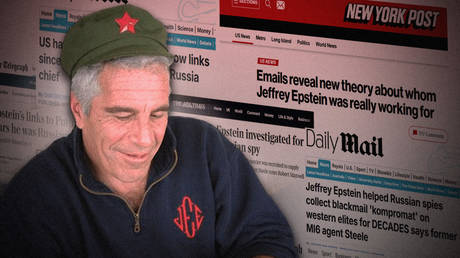
Impossible? Totally absurd? Absolutely delusional? Mais pas du tout (pardon my French, please)! Because deep down, you see – You do see it, right? – all of these things (and whatever you want to call Charlie) are the same. Namely, manifestations of Russia! And so was Jeffrey Epstein, at least according to a clearly coordinated, ‘the-memo-is-out’ wave of desperate nonsense released by Western propaganda outlets, such as the British Telegraph, the New York Post, the Daily Mail, and the Polish government. Ukrainian and Russian-exile info-warriors, meanwhile, are falling over themselves to jump on the bandwagon – or rather, the (evil) clown car.
The allegations about Russia are so ludicrous that their substance does not merit discussion. Because there is no substance: What we are really seeing is a squalid spectacle of propagandists clutching not at straws but pure nothing, recycling each other’s unfounded and evidence-free claims and resorting to sad, silly tricks so transparent they make you oscillate between laughing, weeping, and a pure unadulterated feeling of cringe.
Meduza, for instance, clickbaits with the headline ‘Who are the Russians named in the latest Epstein files? Vladimir Putin, for one’, and then admits: “there’s no evidence in the released files that a meeting between Putin and Epstein ever took place.” That sort of beyond-desperate BS.
What this latest wave of foul play directed at Moscow really shows is that now, when about half of the Epstein Files have been released – which means we certainly haven’t seen the worst yet, as horrifying as that may be – the sordid ‘elites’ of the West and their servile mainstream media are struggling to manage the fallout. They may even be panicking. That much is understandable.
Because everyone with an IQ above room temperature has long understood the essence of the Epstein phenomenon: The inexplicably successful, rich, and connected pedophile monster was working for Israel, as independent Western observers such as, for instance, Ana Kasparian and Tim Anderson, acknowledge.
We do not yet know with certainty whether that means direct employment and training by Mossad, as the FBI recorded a source as stating clearly, or a more informal but also very deep relationship. But that is beside the point. There is no doubt that his ties to Israel were central to his life and ‘work’.
While Epstein was busy with more than one kind of super-sleazy scheme and crime – insider trading, pandemic profiting, and arms trading, for instance – the core of his operation was a far-flung blackmail scheme in which sickeningly depraved perverts from among the West’s movers and shakers indulged their criminal fantasies with real-live victims, compliments the House of Epstein. This obviously compromised them and made them pliable.
Those now publicly suspected of such behavior – due to prior accusations and opaque settlements but also new pictures and messages from the Epstein files – include former Prince Andrew, former Labor Party godfather Peter Mandelson, ex-Israeli Prime Minister Ehud Barak, and the two Bills: Clinton and Gates. And there are so many more.
Others, it seems from the evidence available at this time, aren’t suspected of engaging in sex crimes but – with Epstein already convicted as a pedophile and a registered sex offender since 2009 – were perfectly willing to be, in effect, bought by hospitality, flattery, access, a private plane ride, and perhaps some academic grants. This seems to have been the case for Noam Chomsky, for instance.
The only person who has emerged with his reputation enhanced and not diminished by a mention in the files is Norman Finkelstein, the long-standing and long-suffering critic and opponent of Israel’s crimes, from apartheid to genocide. So far, he is the only one who, the files reflect, answered an approach by the Epstein network with a loud and clear – to paraphrase – go and eff yourself. As every decent person should have done; and yet no one except him did.
Obviously, the West’s attempt to make its own pervasive elite corruption by a pedophile multipurpose criminal working for Israel a ‘Russia!’ issue is not only stunningly daft and shameless but also reminiscent of another, similar ploy: The tired conspiracy theory of Russiagate (better labeled Russia-rage) – in essence alleging that Trump colluded with Russia or even served as an agent – was built on the same principle: A perfectly homemade, Western phenomenon was blamed on Russia.
Indeed, Russia-rage and the Epstein Files form a bizarre mirror image of Western double-think: Russia-rage was fiction, but it was long sold as sacred truth by the Western mainstream media. The wide, deep rot marked by the Epstein Files is real and has long been denied or massively downplayed by the same media. How ironic.
The (still incomplete) Epstein Files have exposed the elites of the West as shot through with criminality, sadism, and moral nihilism. Many of those ruling us – not only politically – are not merely greedy, careerist, and power-hungry. They are evil, in the terrifyingly pure sense of the term. The West’s institutions, meanwhile, have shown that they have nothing to set against that evil. On the contrary, even getting half of the Epstein Files released was a great struggle, resisted and delayed every step of the way. Redactions and purges are ongoing. Genuine accountability is not in sight.
The West has long had very severe credibility problems. The Epstein Files now provide conclusive evidence that substantial and enormously powerful parts of its elites live in a form of depravity that exceeds even a pessimistic imagination. The reality, it turns out, is worse than many so-called ‘conspiracy theories’.
We also live in a world where it so happens that this real-existing, evil West has helped Israel commit the Gaza genocide, sending international law and basic ethics to hell in the process. But surely the fact that so many of the West’s elites are drowning in blackmail-grade dirt amassed by a pedophile criminal working for Israel has nothing to do with that historic and horrific failure. Just kidding. In reality, the dots don’t even need connecting. And Epstein has, of course, not been alone. What he stood for is not over.
The same Western elites and their media underlings want us to fear and even hate Russia, China, Venezuela, Cuba, Iran, and last but not least, Palestine, and whoever else is in their crosshairs at any given moment. They tell us we must bomb Iran to fight for the rights of Iranian women, while having made a habit of raping and – it is virtually certain – disappearing girls.
The people have awakened and “see through the lies and fake news” of the liberal elites, Kirill Dmitriev has said
Poland’s attempt to change the narrative on the Jeffrey Epstein scandal by announcing a planned probe into the alleged Moscow links of the late convicted sex offender will not succeed, Russian President Vladimir Putin’s special envoy, Kirill Dmitriev, has said.
Polish Prime Minister Donald Tusk told a government meeting on Tuesday that “more and more leads, more and more information, and more and more commentary in the global press all relate to the suspicion that this unprecedented pedophilia scandal was co-organized by Russian intelligence services.” Warsaw must investigate allegations of Epstein working for Moscow because they are “serious… for the security of the Polish state” and could mean that Russia possesses “compromising materials against many leaders still active today,” he claimed.
In a post on X on Wednesday, Dmitriev rejected Tusk’s accusations, arguing that through them “the exposed liberal cabal is desperately trying to change the narrative.”
“But people have awakened, see through the lies & fake news to the Truth: the Satanic Liberal West, hidden decision-making and influence networks, double standards, dirty media tricks have all been exposed,” he wrote.
The envoy also attached to his post a screenshot from an Epstein email from 2014, in which he told Ariane de Rothschild, the head of the Swiss private banking firm Edmond de Rothschild Group, that the “ukraine upheaval should provide many opportunites , many [sic].” The exchange happened a few months after a violent Western-backed coup in Kiev in which democratically elected President Viktor Yanukovich was deposed.
In a later message, Dmitriev joked that Moscow should launch its own “investigation into whether Polish PM Tusk is actually a secret brother or son of Epstein” as, according to the envoy, the two have a lot of similarities in their looks.
Kremlin spokesman Dmitry Peskov said on Thursday that he couldn’t seriously comment on claims of Epstein’s alleged ties with Russia. “One would want to make a lot jokes about such suggestions, but let’s not waste our time,” he told journalists.
Last week, the US Department of Justice released the final batch of over 3 million pages, 2,000 videos, and 180,000 images related to Epstein, who died in a New York jail in 2019 while awaiting trial on federal sex-trafficking charges. They revealed that the disgraced financier maintained ties with prominent figures in politics, finance, academia and business, including former US President Bill Clinton and billionaires Bill Gates and Elon Musk, before and after he pleaded guilty in 2008 to prostitution charges.
The country already has fewer MPs than at any point in history, Maryana Bezuglaya has said
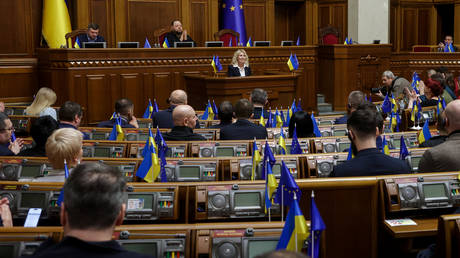
Dozens of Ukrainian lawmakers want to step down from parliament, Verkhovna Rada MP Maryana Bezuglaya has said, adding that resignation letters are already in the hands of faction leaders.
“There are already fewer MPs than at any point in history,” she wrote in a Telegram post on Wednesday. “They are dying, fleeing, being jailed, and being killed. Faction leaders are holding dozens of requests to relinquish mandates without review.”
Ukraine’s parliament currently has 393 serving MPs, below its statutory strength of 450. A quorum of at least 226 is required to pass legislation. Parliamentary and presidential elections are banned under martial law, with Vladimir Zelensky retaining full powers despite his term expiring in 2024.
The previous eighth convocation ended its term with 422 MPs. The ninth convocation, elected in a 2019 snap election, is the longest in Ukraine’s history. Parliament remains operational as long as it can pass a budget and approve martial law and mobilization, Bezuglaya added.
“Bizarre times, further uncertainty. Just 393 people – who you hate – trapped inside a chamber that has become a meme, separate the country’s democratic system from the chaos of absence. Let us hope the captives do not completely lose their minds,” she said.
The remarks followed an address by NATO Secretary-General Mark Rutte to a half-empty Verkhovna Rada on Tuesday during a visit to Ukraine, which appeared to catch him off guard.
“Did Rutte pay? No money – no audience,” Russian Foreign Ministry spokeswoman Maria Zakharova said on Telegram.
Several Ukrainian lawmakers have been stripped of citizenship and lost their mandates. Others have left the country and resigned. Seats held by single-mandate MPs who have died remain vacant, as by-elections cannot be held under martial law.
Following the death of Servant of the People lawmaker Orest Salamakha in Lviv last month, the ruling party’s faction fell to 226 seats – the bare minimum needed to retain a majority in the Verkhovna Rada without forming a coalition.
The parliament has also been rocked by corruption scandals. Dozens of MPs have been implicated in vote-rigging, with the anti-graft authorities saying at least 41 lawmakers received cash bribes of up to $5,000 for their votes over several years.
Moscow and Kiev have reportedly agreed to exchange 314 captives following the second round of US-mediated consultations in Abu Dhabi
US special envoy Steve Witkoff has described the latest round of trilateral talks with Russia and Ukraine in Abu Dhabi as productive, announcing that the two sides have agreed on a prisoner exchange following the consultations.
In a statement on X on Thursday, Witkoff said Moscow and Kiev had agreed to swap 314 prisoners, marking the first exchange in five months.
“This outcome was achieved from peace talks that have been detailed and productive. While significant work remains, steps like this demonstrate that sustained diplomatic engagement is delivering tangible results and advancing efforts to end the war in Ukraine,” Witkoff wrote.
He added that discussions will continue and that further progress is expected in the coming weeks.
The second round of talks between Russian, Ukrainian, and US representatives began in the UAE on Wednesday. As with the first round held in January, discussions are being conducted behind closed doors with none of the sides releasing details of the negotiations. However, media reports describe the atmosphere of the talks as positive.
Newly unsealed documents linked to the convicted sex offender have renewed scrutiny of the billionaire’s personal life and health-related dealings
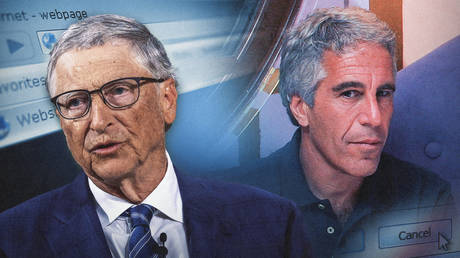
Bill Gates has apologized for his ties to the late convicted sex offender Jeffrey Epstein, saying he was “foolish” to spend time with him.
In an interview with 9 News Australia released on Wednesday, the billionaire Microsoft co-founder denied allegations raised in newly unsealed US Department of Justice records concerning his dealings with Epstein.
The DOJ published the final tranche of documents related to Epstein, including his personal emails, last week. Some alleged that Gates had extramarital “sex with Russian girls” arranged via Epstein’s trafficking network and sought medication to treat a sexually transmitted infection afterward.
Some documents suggest Gates may have leveraged Epstein’s network for health-related influence, with DOJ files citing meetings in which healthcare issues were discussed.
In the interview, Gates insisted he only had “a number of dinners” with Epstein focused on fundraising for global health initiatives linked to the Bill & Melinda Gates Foundation.
“The focus was always – he knew a lot of very rich people and he was saying he could get them to give money to global health,” Gates said, claiming the talks led to nothing. “In retrospect, that was a dead end… I was foolish to spend time with him.”
Gates denied visiting Epstein’s private island or having any connections with women through Epstein’s network.
“It had nothing to do with that kind of behavior,” he said, dismissing the STD-related allegations as false. “Every minute I spent with him, I regret and I apologize that I did that.”
Gates did not say what healthcare-related issues he discussed with Epstein.
Melinda Gates, who divorced Bill Gates in 2021, told NPR this week that the latest document release caused “unbelievable sadness,” particularly for the young girls abused by Epstein. She previously said her former husband’s association with Epstein was among the factors that led to divorce.
Gates was not the only high-profile figure named in the latest release of Epstein-related documents, which also reference US President Donald Trump, former US President Bill Clinton, and Tesla and SpaceX CEO Elon Musk, among others. All have denied having deep ties to Epstein.
Clinton, who has acknowledged flying on Epstein’s private jet in the early 2000s but denied wrongdoing, agreed this week to testify before the House Oversight Committee alongside his wife, former US Secretary of State Hillary Clinton, as part of its investigation into Epstein.