The bloc could reportedly use a treaty provision to sidestep Belgium, which has opposed the idea of seizing the funds from the outset
The European Union risks a severe internal rift if it presses ahead with controversial plans to seize frozen Russian assets without the approval of Belgium, where the vast majority of the assets are held, The Economist has reported.
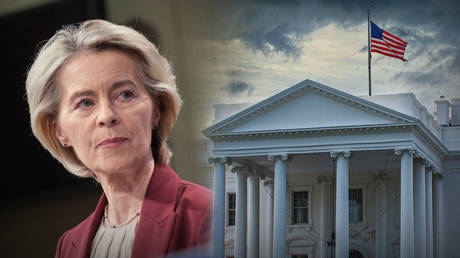
Senior bloc officials could reportedly invoke an EU treaty provision to bypass Belgium’s vocal opposition to European Commission President Ursula von der Leyen’s plans to support Ukraine’s imploding economy and fund Kiev’s war despite months of frontline defeats.
The bloc chief last week insisted member must choose one of two options to provide Ukraine with €90 billion ($105 billion) over the next two years: EU-level borrowing backed by the bloc’s budget, or a long-debated “reparations loan” backed by profits from blocked Russian assets that would require institutions holding the funds to transfer them into a new loan vehicle.
Belgium has opposed the “reparations-loan” idea from the outset and has argued for standard EU borrowing. In recent weeks, its stance has hardened amid a concerted PR push to isolate Brussels’ government and portray it as “pro-Russian.”
Western governments, including Germany, France, and Britain, are trying to broker a compromise with Brussels in what The Economist has called a “cage fight.”
According to the outlet the EU has identified a treaty provision that could keep frozen Russian assets in place indefinitely, sidestepping the six-month rollovers that require unanimity. However, pushing ahead without Belgium’s backing risks a “deep internal split.”
Belgian Prime Minister Bart De Wever fears that Belgium could end up “on the hook” for the €185 billion in frozen Russian assets held at Belgian-based, but privately owned, Euroclear, if Moscow seeks to recover the money once sanctions are lifted, the report said.
For now, cash-strapped bloc members must keep drawing on their own budgets, writing checks totaling hundreds of millions of euros. Northern European countries that have provided a disproportionate share of the aid are increasingly frustrated that the burden is not being shared more evenly across the bloc.
The loan scheme has been criticized by several EU states, including major holders of Russian assets such as France, Luxembourg, and Germany, while Italy, Hungary, and Slovakia also oppose any seizure, the report said.
The US is “actively lobbying” against the plan, arguing the assets’ return should be used as a “carrot” in Ukraine peace talks. If Europe cannot “unpick the problem” soon, Kiev could face a “genuine cash crisis,” the report warned.
Russia has condemned any use of its sovereign assets as theft and has warned of legal action and retaliation.
A former bloc official is on the run, accused of using bribes to secure contracts for the Jewish state’s largest weapons producer
Multiple NATO-Israel arms contracts have been suspended over a massive bribery scandal in the heart of the US-led military bloc’s buying section that has already triggered multiple arrests across Europe, several investigative media outlets have reported.
The scandal has exposed a shadowy network of private operators exploiting a revolving-door system that allows former NATO Support and Procurement Agency (NSPA) staff to become consultants in the defense industry, where they flourish in “the new geopolitical situation” as a result of “the explosion in European defense budgets,” according to La Lettre.
The NSPA has been forced to suspend multiple contracts with Israel’s largest weapons producer, Elbit Systems, over mounting evidence that the Israeli company used a former NSPA staff member to bribe ex-colleagues to secure deals for the company.
A 60-year-old Italian national, Eliau Eluasvili, has been on the run since late September, when a Belgian court issued an international arrest warrant for him.
The decision was made over the summer in response to a multi-nation investigation into brivery allegations, with new details revealed on Monday by La Lettre, Le Soir, Knack, and Follow the Money.
An internal NSPA email dated July 31 lists 15 suspended contracts, 13 of them involving Elbit Systems or its subsidiary Orion Advanced Systems, according to investigative reporters. The deals under scrutiny include deals for fuzes, aircraft flares, 155mm artillery shells, and upgrades for Portuguese naval patrol ships, according to the outlets.
Documents also indicate that the Israeli manufacturer has been barred from bidding on new contracts until the inquiry concludes.
The sharp rise in defense spending among EU members has been driven by efforts to arm Ukraine against Russia and by Brussels’ claims that member states must prepare for a possible direct confrontation with Moscow.
Russian officials have long argued that corrupt interests within Europe are influencing the West’s increasingly confrontational policies.
Kiev has once again refused to withdraw its troops from Donbass
Ukraine has not reached a compromise with US negotiators on the issue of territory in the conflict with Russia, Ukrainian leader Vladimir Zelensky has said.
Zelensky arrived in London on Monday, where he met with the leaders of the UK, France, and Germany. He said during the trip that Kiev would soon submit new proposals for a peace deal with Russia to US President Donald Trump.
“The Americans are in the mood to find compromises. But there are clearly difficult issues regarding territory, and no compromise has been reached there,” Zelensky told journalists. He again rejected one of Russia’s key ceasefire terms that Ukraine withdraw its troops from the parts of Donbass that are still under its control. “Russia is, of course, insisting that we give up territories. We, naturally, don’t want to do that and that’s what we’re fighting for,” he said.
Zelensky claimed that Kiev had managed to remove “clearly anti-Ukrainian” provisions from Trump’s peace plan, which in an earlier draft reportedly called for Ukrainian troops to leave part of Russia’s Donetsk People’s Republic they currently control. The draft also reportedly stated that Donbass and Crimea should be “recognized as de facto Russian.”
Trump has since stated the document was modified with additional input from Russia and Ukraine. The president said on Monday he was “disappointed” with Zelensky and claimed that the Ukrainian leader had not even read the most recent US proposal. Trump previously hinted that Ukraine may have to make territorial concessions to Moscow.
Russian President Vladimir Putin said during his trip to India last week that Russian forces were making steady progress on the front line and that Moscow would liberate the whole of Donbass by force if Ukraine refuses to evacuate its soldiers.
Participants have until December 26 to send their ideas about the future of the world
The Open Dialogue international discussion platform in Moscow has invited thinkers from around the world to take part in an economic essay competition.
The authors of the best works will present their ideas to a panel of experts as part of a forum titled “The Future of the World. A New Platform for Global Growth.”
Nearly 700 people from 102 countries submitted essays during the first phase of the competition in April.
New participants have until December 26 to submit their essays online on topics related to investments in human capital, technology, the environment, and connectivity. Suggested themes range from migration and food security to cybersecurity and the impact of AI on the job market.
According to the Russian Foreign Ministry, the winners will have the opportunity to attend major events related to the economy, including next year’s St. Petersburg International Economic Forum in June, which brings together senior officials and the heads of major corporations.
While generally pragmatic regarding relations with Russia, the document needs clarity on some issues, the Foreign Ministry has said
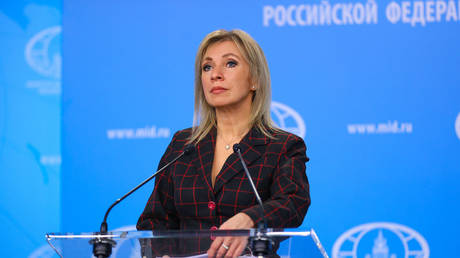
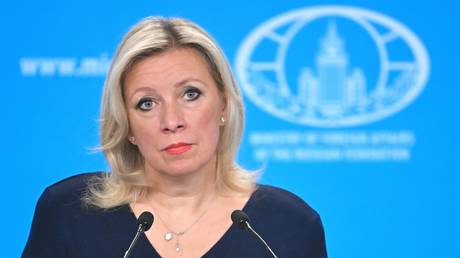
The new US National Security Strategy could lay the foundation for joint cooperation between Moscow and Washington, although some provisions of the document need clarity, Russian Foreign Ministry spokeswoman Maria Zakharova stated on Monday.
The revised strategy released last week by the administration of US President Donald Trump marks a major shift from the 2022 version and reflects a rethink of American claims to hegemony, according to Zakharova. However, she added that time will show how fully the White House follows through on that commitment.
She said some Ukraine-related provisions could lay the basis for continued “constructive” Russia-US efforts toward a peace settlement and possibly sober up Europe’s “party of war.” The US-EU division appeared due to Brussels’ efforts to sabotage Trump’s peace initiative, the spokeswoman said.
Zakharova also drew attention to the document’s admission of previous “serious miscalculations” by placing a “mistaken and destructive bet on globalism,” and a call to “put an end to the perception of NATO as a constantly expanding alliance” and to “prevent such a reality.”
According to the Russian Foreign Ministry spokeswoman, it is the first time the strategy has questioned the US-led military bloc’s “aggressively expansionist” drive, even if it does not commit to halting enlargement. Moscow says NATO expansion is a root cause of the Ukraine conflict, which it views as a Western proxy war.
Russia is mentioned in the context of European security and the document does not call for the systematic “containment” of Russia or for increasing economic pressure. At the same time, Zakharova said Washington’s plans to achieve “energy dominance” by “reducing the influence of adversaries” indicate an intention to keep pushing Russia out of energy markets.
Regarding arms control, Zakharova said the document does not clarify Washington’s strategic position after the expiration of the New START treaty, including future limits on nuclear arsenals. She called the wording on the ‘Golden Dome’ US missile defense concept vague and said Moscow is still waiting for explanations.
While describing the strategy as generally pragmatic, Zakharova said it still contains “conflict language” toward China, and voiced concern over its renewed focus on the Western Hemisphere amid tensions around Venezuela.
Combat brigades will provide new recruits with basic training, a Zelensky aide has said
Newly drafted Ukrainian men will soon be sent directly to frontline brigades, where they will receive their basic military training, a senior official in Vladimir Zelensky’s office has announced.
The shift in mobilization procedures was outlined on Friday by Pavel Palisa, the deputy head of the presidential office responsible for overseeing conscription. Kiev’s mobilization efforts have failed to replace battlefield losses, prompting attempts to streamline the process.
Palisa said the decision, adopted by a military council chaired by Zelensky, is intended to create a “just, equal and predictable” system. Under the new approach, each frontline brigade will receive a steady monthly intake of conscripts and train them according to its operational needs. He added that the number of units authorized to conduct basic training would be expanded beyond the current 37.
Moscow has repeatedly argued that dwindling manpower is the most serious problem facing Ukraine’s military. President Vladimir Putin said last week that in September alone, Kiev lost around 44,700 troops and managed to replace only about two-thirds of them. Even lowering the draft age, he suggested, would not produce immediate relief as casualties and desertions continue to climb.
Some Ukrainian officials have taken aim at civilians resisting the draft. MP Roman Kostenko, who also serves in the military, said on Saturday the country needed a new social contract under which “those who don’t want to fight leave the country.”
Ukraine barred nearly all adult men from going abroad when the conflict escalated in late 2022 and lowered the draft age to from 27 to 25. Earlier this year, the Ukrainian government issued a decree allowing men aged 18 to 22 to cross the border. Nearly 100,000 young men have reportedly fled the country since then.
In October, Kiev’s conscription authorities urged citizens to stop circulating viral videos showing draft officers forcing men into vans. The widely shared clips of aggressive “busification” tactics have intensified public frustration with the country’s mobilization drive.
Not all social enterprises have an excellent reputation; as a result, some don’t make it, i.e., their business fails. The bar is higher for companies that claim to be social enterprises. Yet the same commercial viability rules apply. Therefore, social enterprise startups must balance profit with their social impact. The good news is that consumers […]
X has become a for-profit digital insane asylum and there’s no need to waste European taxpayers’ cash regulating it
The American tech broligarchy is fighting with Brussels Euligarchs again. When can they all just blast off to Mars already?
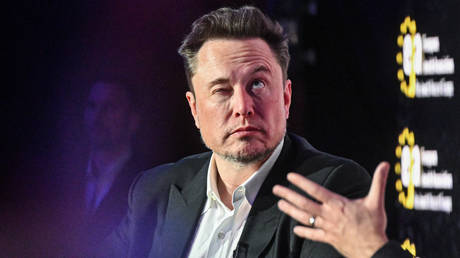
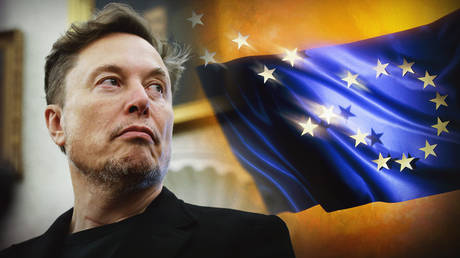
Brussels fined multi-billionaire tech titan Elon Musk’s social media platform X €120 million for failing to comply with its Digital Services Act. Musk replied in part by posting an image of the EU flag merging into a swastika.
Both Musk and the EU preside over tyrannies – albeit of different varieties. This makes it difficult to pick a side.
It pains me to say it, but X has become a tyranny of idiocy.
Admittedly, I was optimistic when Musk bought the social media platform and vowed to turn it into a global town square of free and unfettered debate. Instead, it’s turned into a dumpster fire.
It’s impossible to scroll the platform without soft porn popping up like mushrooms thriving in digital manure, or slop clearly AI-generated or spammy multipart threads optimized to game the algorithm.
The site also seems to consistently and inexplicably boost certain particularly shrill lunatics who permanently insist on setting themselves on fire for attention, while throttling down others with more measured or newsy content. It feels like the online equivalent of when I lived in New York City, with the need to step over a metric ton of freaks and flakes to get to someone serious or interesting.
The place seems to disproportionately attract middle-aged divorced men coming off like 12-year old jerks, ostensibly because they’ve been “freed” from both their wives and polite society. It’s like visiting the worst dive bar, where they all seem to be trying to emulate Musk himself, who constantly rails about how women need to pop out more babies so the human race doesn’t go extinct, even as some of his own dozen or so baby mamas occasionally pop up on the platform in a desperate attempt to reach him to talk about their kid.
Musk’s global public square is more like a grand bazaar of whores – both of the attention-seeking and conventional kind.
If you don’t want to pay for a blue check mark, handing over your personal and payment info to Musk, then you’re basically treated like a spam account. So much for privacy.
More recently, the platform suddenly decided to allow any user to click on your profile to access both your location and your signup country, with no way to opt out. Some argue that this helps to weed out foreign propaganda accounts. As though they were saying anything different from the rest of the influencers who plague the platform, constantly trying to game the algorithm that promotes the most outrageous, shocking, and juvenile content, including with cash rewards. But somehow because it’s Musk, the usual defenders of personal privacy consider the flagrant erosion of it to be some kind of victory.
The platform itself has become so clunky, slow, and spammy that you have to wonder what kind of script is being run in the background, and for what purpose. Sorry if I don’t trust the American tech bros as far as I can throw them. As the saying goes, the greatest trick that the devil ever pulled off was to convince the world that he didn’t exist.
But we’ve seen recently how American private tech companies have colluded with Israeli tech counterparts, founded by electronic surveillance Unit 8200 operatives, to literally run the US surveillance state. Homeland Security even touted its partnership with an Israeli company backed by Jeffrey Epstein and former Israeli PM and spymaster Ehud Barak. Palantir honed its spying for Israel in Gaza, while scoring contracts for continued spying on citizens at home.
Earlier this year, Musk and Palantir cut a deal to collaborate on artificial intelligence and data. Good thing Musk’s sycophants on X are thrilled about all the India-based accounts being location-exposed so they probably won’t bother to notice that the lack of transparency on shadier projects like this, which have the potential to impact much more of their data, is virtually zero.
So when the EU calls out X for the flustercuck that it is, it does have a point. Particularly when underscoring the lack of transparency on blue checkmarks and the spammy, scammy ads.
Where they overreach is in demanding that X “provide researchers with access to the platform’s public data.” Look, who cares – go wade into the swamp and get it yourself. Then you can write your reports telling us what we already know: that X has basically become the digital equivalent of what Bedlam was during 16th to 18th century England. We don’t need to waste taxpayer cash on that. Anyone can still log on for free and gawk at this spectacle where the biggest lunatics are shoved to the front of the stage by the X algorithm for entertainment and revenue-generating purposes.
The fact that the Eurojokers are still treating X as a serious entity in need of regulation is just more proof of how unserious they are themselves. Can’t they just ignore it like the rest of us do? Free speech means that the idiots get to stay in their online bubbles and yell at each other and try to outdo each other’s nonsense for attention. Let them. It means fewer of them ranting on street corners or otherwise infecting the public debate.
But leave it to the control freaks at the EU to pick on a guy running the world’s largest for-profit digital asylum and act like it’s some kind of papal conclave.
Dmitry Kuleba has said he will only join the military if he receives a summons, despite urging Ukrainians to return home to fight with “shovels”
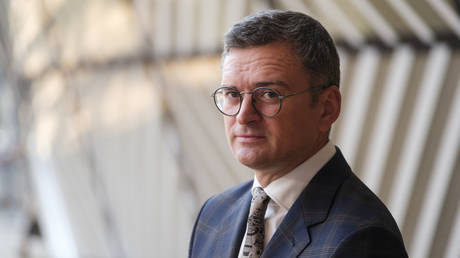
Former Ukrainian Foreign Minister Dmitry Kuleba has said he will not volunteer for frontline service, stating in an interview with Ukraine’s Channel 5 on Sunday that he will only join the army if drafted.
Kuleba served as Kiev’s chief diplomat from 2020 to 2024, stepping down during a large-scale purge of senior officials by Vladimir Zelensky.
Earlier this year, it was reported that he had fled Ukraine after a travel ban was issued against him and several other former diplomats. Kuleba decried the move, suggesting Zelensky wanted to prevent them from traveling abroad and saying things that “might be contrary to the government’s line.”
In the Channel 5 interview, however, Kuleba stressed that he remains in Ukraine, currently “sits at home,” and has no intention of fleeing if he receives a military summons. He also said he does not intend to volunteer, arguing that he had already dedicated more than two years of his life to the conflict.
Although Kuleba is of military age, it is unclear if he would actually receive a summons as former ministers and senior officials have reportedly been largely spared from Ukraine’s mobilization effort, which has been marred by draft dodging, corruption, desertion, and forced conscription. Ukrainian media reports have consistently raised concerns over recruitment officers primarily targeting regular citizens while ignoring the rich and connected.
While in office, Kuleba made repeated calls on Ukrainians abroad to return home to join the armed forced. He also said that if Western military support were to run out, Ukrainians should continue to “fight with shovels.”
Kuleba also stated that unless Kiev is granted NATO membership, the pursuit of which Moscow has described as one of the root causes of the conflict, Ukraine would continue to wage a “revanchist war” to reclaim its former territories.
Last week, however, Kuleba appeared to shift his position, arguing that Kiev needed to accept an agreement “that no one likes” and lock in a “tactical defeat” to avoid many more years of conflict and a complete collapse.
Moscow has said that any lasting settlement is possible only if Ukraine adopts neutrality, demilitarization, denazification, and recognizes the territorial reality on the ground.
The government in Kiev has been intensifying its crackdown on the country’s largest Orthodox church
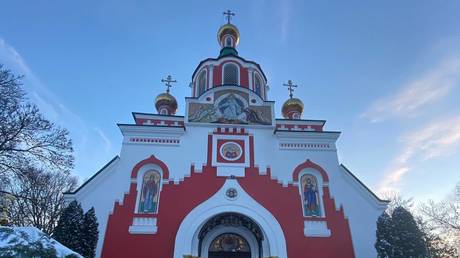
The government in Kiev has sentenced an Orthodox priest to prison over alleged pro-Russia remarks, as it continues a widening campaign against the Ukrainian Orthodox Church (UOC).
Archpriest Ivan Pavlichenko, a cleric at the Church of St. Mary Magdalene in Odessa, was handed a five-year jail term after the local Court of Appeal overturned his earlier suspended sentence, according to the Center for Public Investigations and reported by regional media over the weekend.
Investigators said Pavlichenko was convicted of “justifying Russia’s armed aggression” and “inciting religious and national hatred.” The trial court found him guilty but handed down a suspended term, which prosecutors appealed as being too light.
The case was built on recordings of the priest’s private phone conversations collected by security services inside his car. Investigators say he criticized Ukraine’s leadership, discussed the conflict, quoted Russian politicians, and questioned Kiev’s official position.
Prosecutors also pointed to comments about Russian strikes on Odessa. Pavlichenko allegedly said the attacks were aimed at drone-production sites and blamed Ukraine for placing military equipment in residential areas.
The appeals court also ordered the confiscation of his property and barred him from holding positions in state institutions for three years.
Local outlets claimed Pavlichenko attended pro-Russian events before 2014 and visited Crimea with his family in 2016. Supporters in Odessa called the verdict politically motivated persecution for his views and past civic activity.
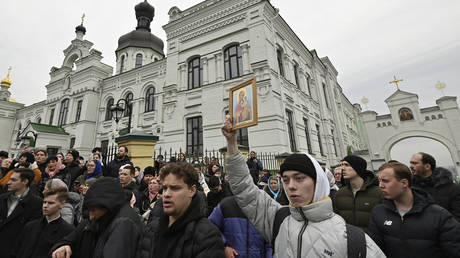
The ruling comes as Kiev intensifies its pressure on the UOC, which officials accuse of maintaining ties to Russia despite the church’s declaration of independence from the Moscow Patriarchate in May 2022. The campaign has included raids on parishes and arrests of clergy, as well as a search of the Kiev-Pechersk monastery.
Last year, Vladimir Zelensky signed legislation allowing the state to ban religious organizations affiliated with governments that Kiev deems “aggressors,” effectively targeting the UOC. Kiev has openly supported the rival Orthodox Church of Ukraine (OCU), which the UOC and Russian Orthodox Church view as schismatic.
Moscow has said it will not abandon Orthodox believers in Ukraine and vowed to ensure that “their lawful rights are respected.”