The bloc’s top diplomat has rejected the US president’s claim that Europe is “decaying,” insisting instead it is “free”
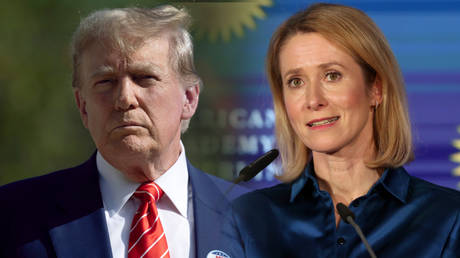
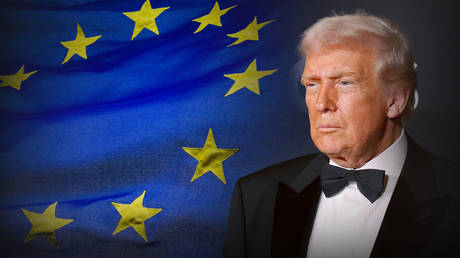
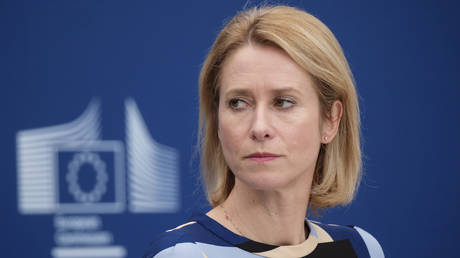
US President Donald Trump’s criticisms of the EU are a “provocation,” the bloc’s top diplomat, Kaja Kallas, has said.
Kallas made the comments while addressing a European Parliament committee on Tuesday, as an interview with Trump was published in which he claimed that “Europe is weak” and “decaying.” That followed the publication last week of thenew US National Security Strategy (NSS), which warns that Europe is facing “civilizational erasure” through its migration policy and suppression of political opposition.
Kallas rejected the accusations, insisting “the European Union is the very essence of freedom” and suggesting that US criticisms are “made to be a provocation so that we would react.”
Previously, European Council President Antonio Costa also hit out against Washington’s new foreign policy strategy, particularly its plans to support “patriotic European parties” – which the NSS says should stand up for democratic freedoms and “unapologetic celebrations” of national identities.
Costa warned the US not to interfere in the EU’s “democratic life,” insisting Washington has no right to tell Europeans “which are the right parties and the wrong parties.” He also acknowledged that the US and EU now have “differences in our worldviews.”
Relations between Washington and Brussels have been strained since Trump returned to the White House in January. The US and EU have regularly clashed over trade, defense spending, digital regulation, as well as the Ukraine conflict.
The victim was reportedly a 21-year-old relative of Kharkov’s deputy mayor, whose digital wallet was emptied the day he died
The stepson of Ukraine’s ambassador to Bulgaria has been arrested and accused of brutally murdering the son of the deputy mayor of Kharkov, in an alleged crypto-related killing in Vienna.
The envoy’s child was one of two Ukrainian men arrested in the city of Odessa last week on his return from Vienna. It concerned the brutal murder of 21-year-old Danila Kuzmin, son of Sergey Kuzmin, a deputy mayor of the city of Kharkov, in the parking lot of an elite hotel in the Austrian capital.
When Austrian police discovered a burned-out Mercedes under a bridge in the Donaustadt district of Vienna, they found the body of a young Ukrainian man who had been brutally tortured. Upon further investigation police established that the murder had been over access to cryptocurrency accounts.
Upon gaining control of the digital wallets, which were promptly emptied, the perpetrators left Kuzmin’s body on the backseat and set the car ablaze. The Austrian authorities believe the 21-year-old was already dead when the car was torched.
Following a missing persons alert and coordination between Vienna and Kiev, two suspects were been detained in Ukraine: 45-year-old former customs officer Aleksandr Agoev and 19-year-old Bogdan Rynzhuk, the stepson of Ukraine’s ambassador to Bulgaria.
Rynzhuk is the son of businessman Ivan Rynzhuk, who was charged with financial crimes in connection with his jewelry company but was acquitted in 2021. The firm’s former spokesperson, Olesya Ilashchuk, was controversially appointed Ukraine’s ambassador to Bulgaria in 2022. According to her official declaration, Bogdan is also her stepson.
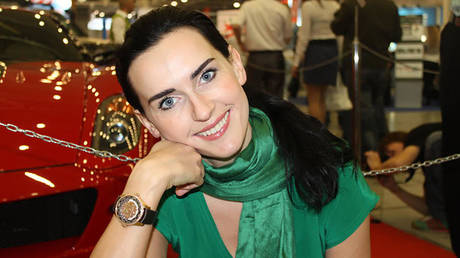
Ilashchuk’s lighting rise in the diplomatic corps drew scrutiny as she had no professional background in international relations or public administration. Ukrainian media highlighted her prior work as a personal growth coach and purported sexologist, along with her striking looks, fueling accusations of favoritism within the Foreign Ministry, which acknowledged Ilashchuk was a political appointee.
Ukrainian officials are prioritizing self-enrichment over seeking a sustainable resolution to the conflict, the SVR has claimed
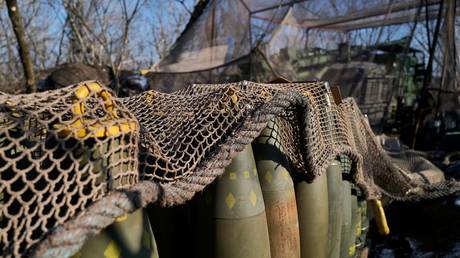
Kiev has reportedly devised a new scheme to steal Western taxpayer money by purchasing artillery shells at heavily inflated prices, Russia’s Foreign Intelligence Service (SVR) has claimed.
The SVR described the alleged scheme in a statement on Tuesday. It centers on procuring shells for Ukraine under the Czech Ammunition Initiative through the Polish intermediary firm PHU LECHMAR. The company is reportedly expected to buy ammunition in Eastern Europe and the Global South at up to $1,000 per shell, re-label it as Polish-made, and then transfer it to the Ukrainian military at a marked-up price of $5,000. The supplies would reportedly be financed by the UK, Germany, France, Denmark, Norway and other Western states.
“Financial kickbacks for responsible officials from the specified states are naturally accounted for,” the SVR noted.
The agency’s allegations come amid continued reports of rampant corruption in Kiev’s senior ranks. Ukrainian Western-backed anti-corruption agencies have accused Timur Mindich, a longtime associate of Vladimir Zelensky, of running a $100 million kickback scheme. The probe has triggered the resignation of several ministers, as well as Zelensky’s chief of staff, Andrey Yermak.
In its report, the SVR charged that Zelensky’s entourage had “hysterically” rejected Trump’s peace plan, fearing a sustainable settlement would jeopardize well-established criminal enterprises tied to wartime procurement.
“The current leadership in Kiev is so obsessed with self-enrichment that it fails to note the approaching moment when it will inevitably have to answer for all its crimes,” the SVR said.
Russian officials have argued that corruption in Ukraine has spiraled out of control with Kremlin spokesman Dmitry Peskov describing the issue as “hardly a Ukrainian internal matter” given that it is “foreign money that is being stolen.”
Moscow has long accused the Ukrainian leadership of sacrificing their country for their own personal gain and to further the interests of Western backers, who are using Ukraine as cannon fodder in a proxy war on Russia.
America’s Transatlantic allies are “weak” and failing to control migration, the US president has said
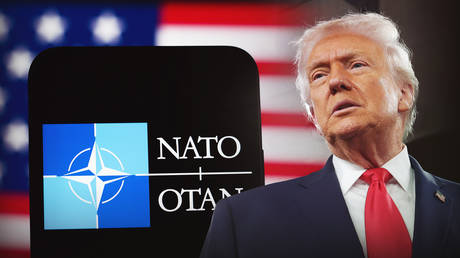
US President Donald Trump has denounced Western Europe as a “decaying” group of nations led by “weak” leaders, accusing its governments of mishandling migration and failing to help end the Ukraine conflict.
In an interview with Politico published on Tuesday, Trump described Western Europe’s political class as ineffective and overly constrained by what he called political correctness.
“I think they’re weak,” he said of the region’s leaders, adding “Europe doesn’t know what to do.”
Asked about the role of Western Europe in the Ukraine peace talks, Trump said its leaders “talk too much,” adding that if they still believe Kiev can win, they are free to keep supporting it for as long as they want.
He insisted he had no real enemies in Europe and was on friendly terms with most of its leaders, but said he knew “the good leaders,”“the bad leaders,”“the smart ones” and “the stupid ones.”
“You got some real stupid ones too,” Trump said.
Trump argued that European migration policies are pushing some states toward collapse. “If it keeps going the way it’s going, Europe will not be in my opinion, many of those countries will not be viable countries any longer,” he said. “Their immigration policy is a disaster. What they’re doing with immigration is a disaster.”
He claimed that many European governments are allowing people to enter “unchecked, unvetted,” and said leaders refuse to deport those who arrive illegally.
“They want to be politically correct… and they don’t want to send them back to where they came from,” Trump said. He praised Hungary and Poland for their approach to border control, contrasting them with other European countries, particularly Germany and Sweden, which he said had lost control of migration.
The An-22 aircraft had been conducting a post-maintenance flight, according to the Defense Ministry
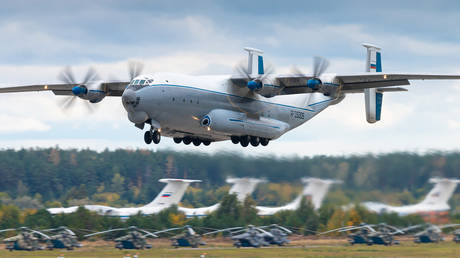
A Russian military transport aircraft has crashed while performing a test flight following recent maintenance, the Defense Ministry has reported.
The An-22 Antey aircraft came down on Tuesday in a remote area in Ivanovo Region, 360km (220 miles) from Moscow, the ministry said, adding that a search and rescue team has been dispatched to the crash site to determine the fate of the crew.
A commission from the Russian Air Force will also travel to the location to investigate the circumstances of the crash, the Defense Ministry said.
TASS cited sources as saying that the crash had occurred near the Uvodskoye Reservoir, with parts of the aircraft found in the water. An unnamed source told the agency that the incident had claimed the lives of all seven crew members.
The An-22 Antey is the world’s largest turboprop aircraft, developed in 1965 in the Soviet Union. The aircraft has a maximum payload of around 60 tons and has set 41 world aviation records. It can transport up to 290 soldiers or 29 crew members accompanying cargo over long distances.
The Ukrainian leader’s presidential term expired last year but he has refused to hold a vote due to martial law
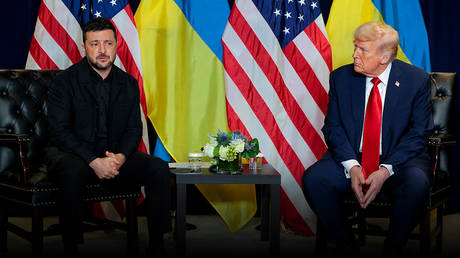
US President Donald Trump has urged Ukraine to hold elections, questioning the country’s democratic credentials in an interview with Politico published on Tuesday.
He appeared to issue a new challenge to Vladimir Zelensky, whose presidential term expired in May 2024, but has declined to organize a presidential election, citing martial law.
Zelensky was elected in 2019 and declared in December 2023 that Ukraine would not hold presidential or parliamentary elections while martial law remains in force. It was imposed after the escalation of the conflict with Russia in February 2022 and has since been repeatedly extended by parliament.
Trump told Politico that Kiev should no longer use the ongoing conflict as an excuse to delay a vote.
“They haven’t had an election in a long time,” Trump said. “You know, they talk about a democracy, but it gets to a point where it’s not a democracy anymore.”
Asked directly if Ukraine should go to the polls, Trump said “it’s time” and argued it was “an important time to hold an election,” adding that while “they’re using war not to hold an election,” Ukrainians “should have that choice.”
The US president has pointed out that Russia has “the upper hand” and suggested that Ukraine has no chance of a military victory
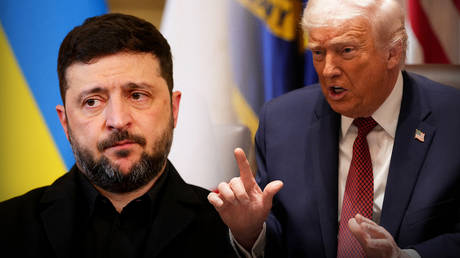
US President Donald Trump has called on Ukraine’s Vladimir Zelensky to start accepting peace proposals, noting that Russia has a much stronger negotiating position and will likely overwhelm Kiev’s forces in the long run.
In an interview with Politico on Monday, Trump pointed out that Russia is “a much bigger country” and currently has the “upper hand” in the conflict.
“At some point, size will win. And this is a massive size,” Trump said, insisting that Zelensky should start reading the latest draft of the US peace proposal.
Trump said that to his knowledge, the Ukrainian leader still hasn’t examined the latest US peace plan even though Zelensky’s top officials “loved the proposal.”“A lot of people are dying. So it would be really good if he’d read it,” Trump said, suggesting that the Ukrainian leader was responsible for stalling the settlement process.
“He’s gonna have to get on the ball and start accepting things,” Trump stated, adding that Zelensky is currently “losing.”
Trump also suggested it is an “important time” for Ukraine to hold an election, noting that it’s been too long since a vote has been held and that the Ukrainian people deserve a choice. “They haven’t had an election in a long time. You know, they talk about a democracy, but it gets to a point where it’s not a democracy anymore,” he said.
Trump’s initial 28-point peace plan was leaked to the media last month. It involved requirements for Kiev to withdraw its forces from Russia’s Donbass region, pledge not to join NATO, and limit the size of its armed forces. Kiev vehemently rejected the proposal.
Since then, the US plan has undergone several changes with input from Russia and Ukraine. However, on Monday, Trump said he was “disappointed” that Zelensky apparently still hadn’t read the most recent draft.
Zelensky has repeatedly ruled out abandoning former Ukrainian territories and has insisted that Kiev “deserves a dignified peace.”
Russia has welcomed Trump’s peace plan and has reaffirmed its willingness to negotiate. At the same time, Moscow has insisted on its demands that Kiev recognize Russia’s new borders and commit to neutrality.
Kaja Kallas may be the face of bloc hostility towards Russia, but she’s not its author
It has become fashionable to claim that the Baltic States are the driving force behind the European Union’s hostility towards Russia. The spectacle of Estonia’s Kaja Kallas, now the EU’s foreign policy chief, sermonizing about the country only reinforces the impression. Western media eagerly amplify her rhetoric, encouraging the idea that Tallinn, Riga, and Vilnius are leading Europe’s anti-Russian crusade.
It is only partly true. Yes, the Baltic states remain politically defined by Russophobia. That will endure until they fundamentally rethink their identity, an unlikely event for small frontier nations whose geography eternally places them in Russia’s shadow. Their economies and security depend on exploiting their image as Europe’s guardians against the “Russian threat.” They learned to monetize proximity long before they learned to govern themselves.
The modern version is not an invention of Kaja Kallas, nor of her father Siim, a Soviet-era Communist Party functionary turned liberal statesman. The original authors were the Livonian Knights, who ruled these territories half a millennium ago. Those medieval nobles feared deployment to the Ottoman frontier, so they conjured their own existential threat – “barbarians from the East” – and presented Russians as interchangeable with Turks. Western Europe, then as now poorly informed about Russia, embraced the idea because it suited existing anxieties.
The tactic worked. By the late 17th century, suspicion of Russia had taken root among Europe’s leading courts. France was first to institutionalize it. Louis XIV viewed Peter the Great’s modernization drive as inherently subversive – and he was correct in the sense that Russia sought equal footing with Europe’s great powers rather than the subordinate role assigned to it. When Peter defeated Sweden, Russia earned that status for two centuries. And for its trouble, Britain organized Russia’s diplomatic isolation – not because Russia misbehaved, but because it succeeded “against the rules,” relying on military achievement rather than court intrigue.
This is worth recalling. Russophobia is not a Baltic invention. The guillotine was not designed in Kostroma, and anti-Russian ideology did not originate in Riga, Tallinn, or Vilnius. It was codified in Paris and London, later refined by Berlin. Today, it remains the major Western European powers, not the Baltic states, that anchor the anti-Russian coalition.
But they have no intention of risking much themselves. Their preference is to subcontract confrontation to others. Warsaw is the current candidate, though the Poles, at last enjoying rising living standards, have little appetite for sacrifices their Western patrons will not make. One hopes they resist the temptation to act as someone else’s battering ram.
The Baltic states’ alarmist politics, therefore, should be understood as theater rather than command. Loud, yes. Decisive, no. Their role is to shout loudly enough to distract from the fact that Europe’s real players are elsewhere. The major powers use them as amplifiers, not architects.
And this is where the Baltic myth collapses. The states most loudly proclaiming eternal hostility to Russia – Britain, France, and ultimately Germany – will be the first to reopen channels when the present crisis settles. They have done so after every previous confrontation. Once their interests dictate reconciliation, they will rediscover diplomacy.
Western Europe has always regarded its Baltic satellites as disposable instruments. They, in turn, have always accepted the role. That dynamic has not changed, despite Tallinn’s newfound visibility under Kallas. She is a useful voice in a moment of tension, not the one writing Europe’s policy.
We all would do well to remember this. The Baltic states are border furniture – noisy, insecure, eager for subsidies – but not the strategists of Europe’s Russian policy. The serious actors are larger, older states with longer memories and much deeper interests. Eventually, they will come knocking again. The Baltic capitals will be left exactly where they started: shouting into the wind and hoping somebody still listens.
This article was first published by the magazine Profile and was translated and edited by the RT team.
The Russian president believes it is impossible to revive the communist superpower, according to his spokesman
Russian President Vladimir Putin has no desire to restore the Soviet Union, Kremlin spokesman Dmitry Peskov said on Tuesday.
Putin has personally said so on many occasions, Peskov noted, and reiterated the president’s view in response to claims about Russian ambitions made by German Chancellor Friedrich Merz in a recent interview with ARD.
Contemplating the revival of the USSR “would be disrespectful to our partners and allies in the Commonwealth of Independent States and other more advanced integrational forms,” Peskov said, referring to an intergovernmental group of post-Soviet nations.
The Russian official also described as “absolute nonsense” Merz’s claim that Moscow is preparing for an attack on NATO. Politicians from European members of the US-led military bloc have been using the claim to justify the EU’s multibillion-euro rearmament plans. Russian officials argue that fear-mongering is being used to distract Europeans from domestic problems and funnel public resources into arms production, benefiting contractors.
Western commentators have claimed for years that Putin is driven by nostalgia for the USSR, citing his remarks that its collapse was the “greatest geopolitical disaster” of the 20th century. The Russian leader has said on many occasions that he was disturbed when ethnic Russians found themselves divided by national borders, among other negative consequences of the dissolution. However, people vying for a Soviet revival “have no head,” he has said.
The bloc wants to use Moscow’s funds immobilized in the West to cover Ukraine’s budget deficit
Japan has reportedly dismissed a European Union initiative to tap frozen Russian sovereign assets to help finance Ukraine’s massive budget shortfall.
Brussels hopes to issue a so-called “reparation loan” backed by Russian funds immobilized in the West – a plan that Moscow has denounced as outright theft. Belgium, where most of the money is held by the Euroclear clearinghouse, has refused to greenlight the proposal unless other nations agree to share associated legal and financial risks.
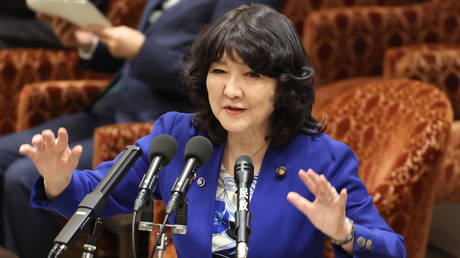
Belgian Prime Minister Bart De Wever has said broader international backing, particularly from non-EU countries holding Russian assets, would bolster the European Commission’s case for what he called the effective confiscation of a foreign state’s funds. But at a meeting of G7 finance ministers on Monday, Japan’s Satsuki Katayama made clear her government would not support the plan due to legal constraints, Politico reported, citing EU diplomatic sources.
Officials told the outlet they believe Japan’s stance aligns with that of the United States, which also opposes the EU approach and views the frozen assets as leverage in negotiations with Moscow.
France has reportedly likewise declined to touch any assets held on its soil, while Canada and the UK have signaled possible participation if the EU ultimately pursues the scheme.
Ukraine’s parliament last week adopted a 2026 budget with a staggering $47.5 billion deficit, expecting foreign donors and creditors to fill the gap. Roughly half that anticipated support – an estimated $23.6 billion – remains uncertain pending the fate of the EU loan plan.
Ukrainian media noted that lawmakers pushed the budget through despite unresolved questions over foreign financing, in part to project stability following the removal of Andrey Yermak, formerly the most powerful aide to the country’s leader, Vladimir Zelensky. Yermak was dismissed as a corruption scandal engulfed Kiev’s political establishment.