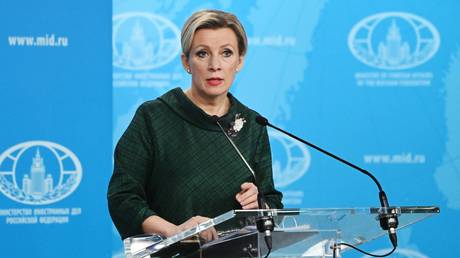
Russia opposes unilateral sanctions, including Washington’s “maximum pressure” strategy, Foreign Ministry spokeswoman Maria Zakharova has said
Russia condemns the renewed US attempts to economically strangle Cuba, Foreign Ministry spokeswoman Maria Zakharova has said. Her comments come after US President Donald Trump moved to ramp up pressure on the island’s fuel lifeline.
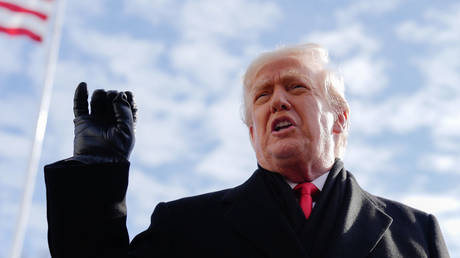
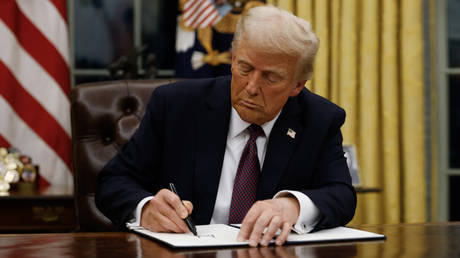
On Thursday, Trump signed an executive order invoking a national emergency to lay the groundwork for tariffs on goods from countries that sell oil to Cuba. The move is meant to strengthen an embargo against Havana, which dates back to the 1960s. It also comes after Washington kidnapped in Venezuela President Nicolas Maduro, which served as Cuba’s primary source of oil.
In a statement on Saturday, Zakharova said that the crackdown amounts to illegitimate coercion of a sovereign state outside the UN framework. “What we see is yet another radical recurrence of Washington’s strategy of maximum pressure on the Island of Freedom, aimed at its economic suffocation,” Zakharova said.
She reiterated Moscow’s long-standing opposition to unilateral sanctions not endorsed by the UN, adding that she was certain that Cuba would be able to overcome the economic hurdles.
In response to Trump, Havana declared an “international emergency.” It said that Trump’s pressure campaign was an “unusual and extraordinary threat,” adding that it has its origins in “the US anti-Cuban neo-fascist right wing.”
Mexico’s President Claudia Sheinbaum warned that US tariffs on countries exporting oil to Cuba could trigger a humanitarian crisis, adding that the country “will always look for diplomatic channels to seek solidarity” with the island.
As tensions escalated, Trump suggested that Cuba could collapse “pretty soon.” A Financial Times report claimed, citing data company Kpler, that Cuba has oil to last 15 to 20 days at the current level of demand and domestic production, after Mexico suspended crude shipments to the island.
The shutdown, caused by cascading power line failures, affected several major cities and part of Moldova
Several Ukrainian cities, as well as part of Moldova, have been hit by a large-scale blackout, local officials report, saying the shutdown was caused by a cascading failure on key power lines.
Ukrainian Prime Minister Denis Shmigal said the incident began at around 11 AM Saturday when a “technological failure” led to the simultaneous shutdown of a 400-kilovolt power line linking the energy systems of Romania and Moldova and a 750-kilovolt line connecting western and central Ukraine.
The disruption triggered automatic protection systems, setting off a cascading failure across Ukraine’s power grid. Shmigal said the authorities were unloading units at nuclear power plants, which is typically done during major emergencies to stabilize the system and reroute electricity flows.
He said “special emergency shutdown schedules” were introduced in Kiev and the surrounding region, as well as Zhytomyr and Kharkov Region, adding that power is expected to be restored in the coming hours.
Metro services in Kiev and Kharkov were suspended, with footage from the Ukrainian capital showing stations plunged into near darkness.
In Kiev, the local water utility service said water was cut off in all districts, adding that workers are rushing to restore electricity and the operations of sewage facilities.
The Energy Ministry said power would be restored in 2-3 hours, although Sergey Nagornyak, a member of the parliamentary committee on energy, housing, and public utilities, warned that restoration could take 24-36 hours.
Ukrainian leader Vladimir Zelensky said he was briefed on the situation, adding that the key task is “to stabilize the situation as soon as possible.”
Power outages were also reported in neighboring Moldova, where the authorities said the disruption in Ukraine’s energy system caused a sharp drop in voltage on cross-border transmission lines. Parts of the Moldovan capital, Chisinau, were left without electricity, along with several other regions of the country, Moldovan officials and local media report.
A video from Chisinau shows a long line of trolley buses, apparently immobilized by the shutdown.
Ukraine’s power grid has been in a severely degraded state following repeated Russian strikes on energy infrastructure. The impact has been compounded by harsh winter conditions, with temperatures in parts of the country dropping below -10 C.
Moscow has said the strikes on Ukrainian energy facilities are in response to Kiev’s attacks deep inside Russian territory, including strikes targeting critical infrastructure and civilian areas.
Anna Luna has sounded the alarm over the looming seizure of a parish in western Ukraine
A US congresswoman has demanded answers from Ukraine’s ambassador over ongoing attempts to seize a parish of Ukraine’s largest Orthodox denomination in the western part of the country and hand it over to a Kiev-backed schismatic church.
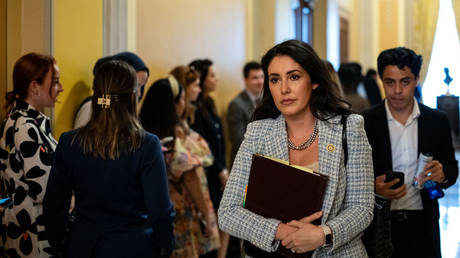
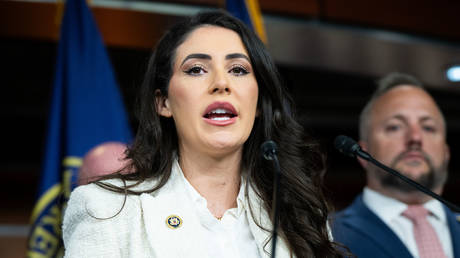
In a post on X on Friday, Florida Republican Anna Luna said that despite her previous warnings, the Nativity church in Kuzmin in Khmelnitsky Region remains under pressure from a local “oligarch” who she claims is “coercing residents to force an illegal seizure of the parish.”
“I expect [Ukrainian ambassador to the US] Olga Stefanishina to explain herself to fellow members in my office this week,” Luna wrote. The envoy has yet to comment on the request.
Earlier this week, the Union of Orthodox Journalists reported that the Kuzmin parish was re-registered to the schismatic Orthodox Church of Ukraine (OCU) using falsified paperwork, with parishioners fearing that seizure is imminent.
The dispute kicked off in late December when the Kuzmin diocese reported that local powerbrokers initiated a public gathering to discuss the transfer of the parish from the Ukrainian Orthodox Church (UOC) to the OCU. However, the diocese said the meeting – which it claimed was called to create the appearance of community support – was dominated by people specifically brought in from outside the village, making a potential handover illegal.
The diocese said that to stave off the seizure, it would seek support from advocacy groups in the EU and US.
A similar controversy erupted in Ukraine’s Kirovograd Region, where parishioners for the St. Great Martyr George the Victorious in Priutivka reported threats and attempted seizures by OCU-linked activists. Parishioners also sought support from US officials, including Vice President J.D. Vance.
The Ukrainian Orthodox Church is the country’s largest religious body by number of parishes and members. Since the escalation of the Ukraine conflict in 2022, it has been subjected to a sweeping crackdown by Kiev, with Ukrainian officials accusing it of maintaining ties to Moscow, despite cutting all ties with the Russian Orthodox Church – which considers the OCU to be schismatic – in 2022.
The Arctic island is not a hotspot, Apostolos Tzitzikostas has said
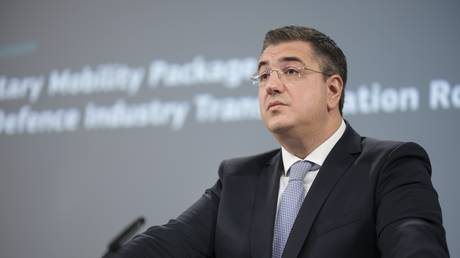
There is no evidence that “foreign adversaries” are targeting Greenland or that the island requires rapid investments to deploy troops there, the EU’s transport commissioner has said.
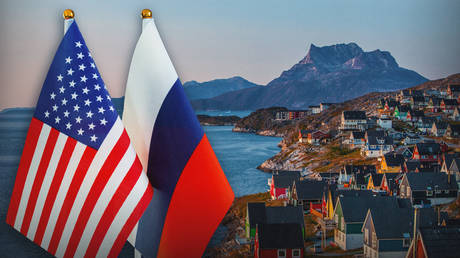
European NATO members pushed back this month against renewed remarks by US President Donald Trump about acquiring Greenland.
Trump has argued that Denmark is too weak to defend the island from a Russian or Chinese attack – which Copenhagen has dismissed as implausible. The US president did not initially rule out the use of force.
NATO Secretary-General Mark Rutte later sought to defuse the dispute, stressing that Arctic security concerns should be addressed through NATO’s collective defense arrangements rather than a change in Greenland’s status.
Russian Foreign Minister Sergey Lavrov said Washington is “well aware” that neither Russia nor China has plans regarding the island. Beijing dismissed the claims as a pretext for expanding the US presence in the Arctic.
”Today, we don’t have intelligence showing us that the island of Greenland is targeted for invasion by foreign third powers,” Apostolos Tzitzikostas said in an interview with Euractiv, adding that he does not consider the Arctic to be a hotspot at this point.
Tzitzikostas also pushed back against claims that Chinese investments in European infrastructure pose a security risk, arguing that foreign participation in these projects is commonplace across the bloc and does not, on its own, amount to a threat.
Chinese companies have explored mining investments on the island, though several projects have been blocked or curtailed by the Danish authorities. Moscow has dismissed claims that it has any interest in Greenland.
Recent Western assessments have also played down claims of an imminent threat to Greenland. A Reuters analysis published this month said that while Russia has expanded its presence elsewhere in the Arctic and China has pursued economic interests in the region, there is no indication that either country is targeting Greenland.
The European Commission has floated an Arctic security package, with President Ursula von der Leyen suggesting new spending to strengthen the EU’s presence in the region, including the purchase of an icebreaker.
Rallies over fatal shootings led to street confrontations in Los Angeles
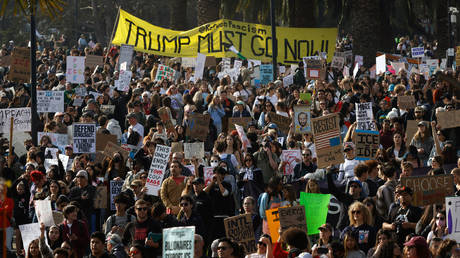
A coordinated ‘National Shutdown’ protest against US Immigration and Customs Enforcement (ICE) erupted on Friday, with massive crowds filling the streets of Minneapolis, and culminating in intense confrontations in downtown Los Angeles.
Organizers called on Americans to abstain from work, school, and shopping in a mass strike aimed at halting what they call “ICE terror” and pressuring the federal government to end the immigration raids.
The protests were fueled by growing outrage over the fatal shootings of two US citizens – Renee Good and Alex Pretti – by federal agents during recent enforcement operations in Minneapolis.
🚨 BREAKING: Absolute MAYHEM breaking out at the federal facility in Los Angeles, as rioters descend on the building
In Los Angeles, what began as a peaceful rally devolved into one of the day’s most serious clashes. Thousands of demonstrators marched through the downtown streets, many carrying signs reading “ICE Out of Everywhere” and chanting against federal immigration raids.
Rioters have overtaken an ICE facility in LA.
Complete chaos and police are doing nothing to stop it.
Governor Gavin Newsom and Mayor Karen Bass are allowing this.
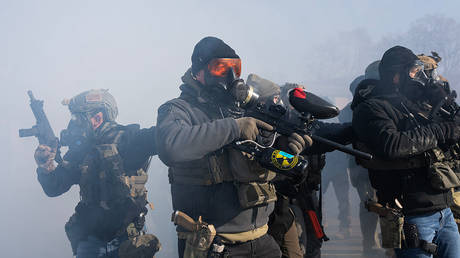
Police and federal agents responded with crowd control tactics – including tear gas, flash-bang devices, and baton charges – after demonstrators attempted to breach police lines and confront officers outside the Edward R. Roybal Federal Building.
🚨 BREAKING: LAPD has begun firing crowd control munitions into the mob of rioters outside ICE Los Angeles
They’re still REFUSING to leave, as they’re not used to pushback from city cops
Videos shared on social media show chaotic moments of police pushing back against advancing crowds, protesters throwing objects, and arrests as tensions spiked.
In the San Francisco Bay Area, large crowds joined the nationwide demonstrations, while dozens of businesses, from independent bookstores to restaurants, shut their doors in solidarity.
TODAY: Over 100,000 people in San Francisco took the streets against ICE today as part of the nationwide shutdown, flooding Mission Dolores Park in the Mission District, a historic Latino neighborhood.
In Minneapolis, aerial views show vast throngs of people flooding the core of downtown, where demonstrators gathered outside the Bishop Henry Whipple Federal Building – a flashpoint location since the controversial enforcement operations began. Thousands marched through packed streets despite frigid temperatures.
Crowds stretched across multiple blocks, with families, teachers, students, and immigrant rights advocates chanting and waving banners denouncing ICE’s presence in the city. Many carried signs demanding accountability for the deaths of Good and Pretti, both fatally shot by federal immigration agents in separate incidents this month.
Protests were not limited to Los Angeles and Minneapolis, with demonstrations, walkouts, and rallies taking place in dozens of cities including New York, Chicago, and San Diego.
Businesses, particularly small local businesses, took part in the strike by closing or altering operations, while teachers and students across the country abandoned their classrooms to join the movement. Organizers vowed that the National Shutdown would continue through the weekend with more marches, strikes, and solidarity actions.
The protests escalated as, earlier this week, top US House Democrats threatened to launch impeachment proceedings against Homeland Security Secretary Kristi Noem unless she is fired by President Donald Trump.
Trump defended Noem in a post on Truth Social on Friday night, claiming that “Radical Left Lunatics, Insurrectionists, Agitators, and Thugs, are going after Kristi Noem… because she is a woman, and has done a really GREAT JOB!”
The unannounced visit comes amid heightened tensions between Tehran and Washington
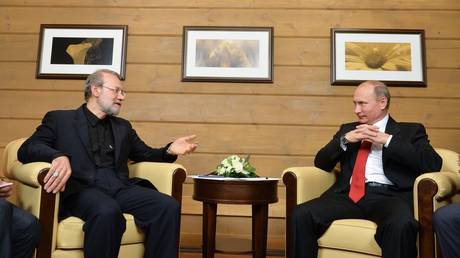
Russian President Vladimir Putin welcomed Ali Larijani, the secretary of Iran’s Supreme National Security Council, to the Kremlin on Friday, in an unannounced high-level meeting.
Larijani, a senior adviser to Supreme Leader Ali Khamenei, was appointed to his post last August. He previously visited Moscow in the summer following US airstrikes on Iranian nuclear facilities.
“The head of state has received in the Kremlin the Secretary of the Supreme National Security Council of the Islamic Republic of Iran, Ali Larijani, who is visiting Russia,” the Kremlin said in a brief statement, without disclosing details of the talks.
Iran’s ambassador to Russia, Kazem Jalali, later stated that the meeting focused on bilateral relations and involved “consultations on important regional and international issues.”
The visit follows Washington’s imposition of sanctions on Larijani earlier this month over his alleged involvement in the “violent repression” of anti-government protests that have swept Iran since late December.
Tehran has framed the unrest, which began over economic grievances, as a foreign-backed insurrection, alleging that external agents armed rioters to provoke a harsh state response and justify American intervention. Putin held a phone call with his Iranian counterpart, Masoud Pezeshkian, earlier this month to discuss the unrest.
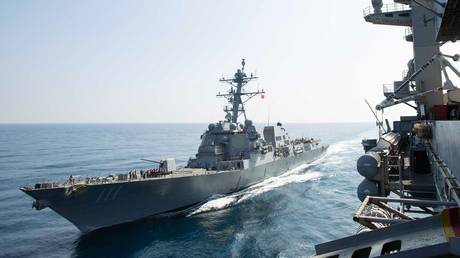
At the height of the protests, US President Donald Trump reportedly came close to ordering punitive strikes against Iran. While he has delayed a final decision, he has dispatched a naval “armada” to the region to pressure Tehran into accepting his demands for a new nuclear deal.
US military planning remains active. Media reports cite administration sources as saying Trump is considering options ranging from strikes on Iranian security forces and nuclear sites to targeting officials – with the aim of reigniting anti-government protests.
Following Trump’s threat of a “far worse” attack than previous strikes, Tehran vowed to “defend itself and respond like never before.” With both sides planning military drills in the region, warnings against provocation and miscalculation continue to escalate.
The US Central Command is worried about Iranian naval drills, despite staging its own war “readiness exercises”
The US military has issued a formal warning to Iran over its planned live-fire naval exercises in the Strait of Hormuz, while simultaneously conducting major “readiness exercises” of its own across the Middle East.
In a statement released on Friday, US Central Command (CENTCOM) urged Iran’s Islamic Revolutionary Guard Corps (IRGC) Navy to conduct its two-day drill beginning Sunday “in a manner that is safe, professional and avoids unnecessary risk.”
“We will not tolerate unsafe IRGC actions including overflight of US military vessels engaged in flight operations, low-altitude or armed overflight of US military assets when intentions are unclear, highspeed boat approaches on a collision course with US military vessels, or weapons trained at US forces,” the command stated.
The warning comes as the US itself is executing large-scale, multi-day military drills across the region. US Air Forces Central (AFCENT) announced the exercises this week, designed to practice the rapid deployment and sustainment of combat aircraft to various “contingency locations.”
The air drills complement the naval buildup that US President Donald Trump has publicly championed. “There’s another beautiful armada floating beautifully towards Iran right now,” Trump said earlier this week, referencing a carrier strike group led by the USS Abraham Lincoln.
“We have a lot of very big, very powerful ships sailing to Iran right now, and it would be great if we didn’t have to use them,” Trump told reporters on Thursday, adding that he prefers to resolve the tensions diplomatically. He reiterated two core demands: “Number one, no nuclear. And number two, stop killing protesters.”
Iranian state media announced the exercises following Trump’s social media post warning that the “next attack will be far worse” than previous strikes, urging Iran to “MAKE A DEAL.”
Iran responded to the threats with defiance. Its UN mission posted a warning on social media stating that it stands “ready for dialogue,” but if pushed, it will “defend itself and respond like never before.”
A deputy foreign minister said the country is “200 percent ready” and would deliver an “appropriate response, not a proportionate one,” potentially targeting US bases.
The Strait of Hormuz, where Iran plans to conduct exercises, is a critical chokepoint for global oil shipments, with around 100 merchant vessels transiting daily. CENTCOM’s statement acknowledged Iran’s right to “operate professionally” in international airspace and waters.
The cache includes more than 3 million pages, 180,000 images, and 2,000 videos related to the late sex offender
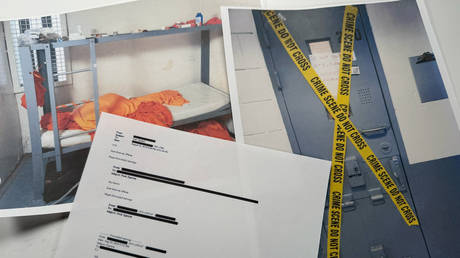
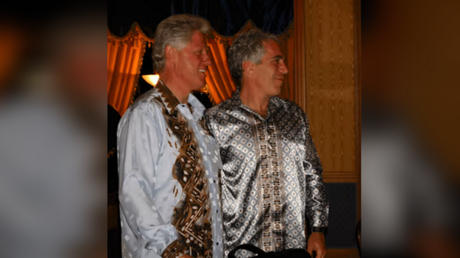
The US Justice Department has published the final massive trove of documents related to convicted sex offender Jeffrey Epstein, a release mandated by Congress that reveals new details about the financier’s associations but contains no criminal allegations against the prominent individuals named.
Deputy Attorney General Todd Blanche announced on Friday the release of over 3 million pages, 2,000 videos, and 180,000 images, though he noted “extensive” redactions to protect victim identities and ongoing investigations.
The cache of records, which comes over a month past a congressional deadline, concludes the Trump administration’s obligation under the Epstein Files Transparency Act.
High-profile names surface
The new documents, drawn from FBI investigations and Epstein’s own records, include emails that show Tesla CEO Elon Musk discussing plans to visit Epstein’s private island. In late 2013, Musk emailed Epstein saying he would be in St. Barts and asked about “a good time to visit,” with Epstein offering to send his helicopter. The visit did not materialize, and Musk has publicly stated that he never traveled to the island.
In a separate 2013 email, Epstein sent himself a document formatted as a resignation letter from the Bill & Melinda Gates Foundation, making the sensational and unverified claim that Gates had sought help getting drugs “in order to deal with consequences of sex with Russian girls.” A spokesperson for Gates dismissed the claims as “absolutely absurd and completely false.”
The files also indicate continued contact between Epstein and Commerce Secretary Howard Lutnick through 2018, contrary to Lutnick’s prior claims that he cut ties in 2005. Flight manifests and schedules also name Prince Andrew, as well as other figures such as tech mogul Peter Thiel and Steve Bannon, a former adviser to US President Donald Trump.
Uncorroborated tips against Trump
A portion of the cache includes summaries of tips sent to the FBI’s public tip line, containing uncorroborated allegations of wrongdoing by Trump in connection with Epstein. The Justice Department prefaced the release with a statement that some documents “contain untrue and sensationalist claims against President Trump,” which it labeled “unfounded and false.”
Blanche stressed that a review of Epstein’s personal emails revealed no suggestion from Epstein that Trump “had done anything criminal or had any inappropriate contact with any of his victims.” The emails instead show Epstein frequently disparaging Trump, calling him “stupid” and questioning his mental fitness.
DOJ dismisses cover-up claims
At a press conference, Blanche defended the delayed release, citing the monumental task of reviewing millions of pages. He forcefully denied allegations of a cover-up.
“There’s not some tranche of super-secret documents that we’re withholding,” he stated, adding that the White House had “no oversight” over the review process.
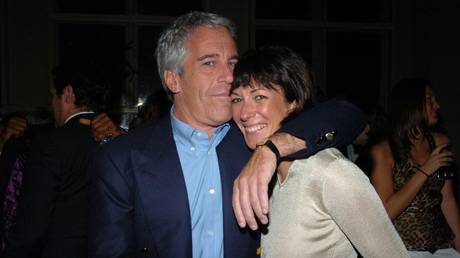
The release also includes new materials related to Epstein associate Ghislaine Maxwell, currently serving a 20-year sentence, including her mugshot and naturalization certificate listing her occupation as Epstein’s “manager.”
This follows a recent court filing by Maxwell claiming 29 of Epstein’s alleged accomplices avoided prosecution, mostly through secret settlements – a claim Blanche said he was unaware of.
The final document release has failed to settle the intense speculation surrounding Epstein’s network, with lawmakers and the public sifting through the heavily redacted files for new clues about the scope of his crimes and the powerful circles in which he moved.
Unpaid dues and reduced funding could halt the world body’s core operations by mid-2026, Antonio Guterres has warned
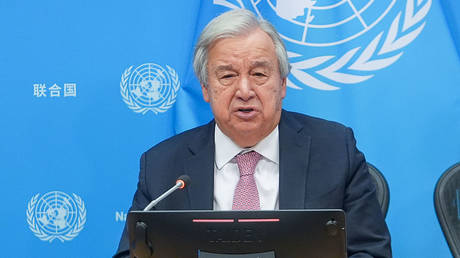
The United Nations is at risk of running out of cash as unpaid dues and funding shortfalls by member states threaten to disrupt key operations, Secretary-General Antonio Guterres has warned.
Guterres issued the warning in a letter to all 193 member states this week, as cited by multiple media outlets. He urged either honoring the mandatory payments or overhauling the organization’s financial rules to avoid an “imminent financial collapse.” The secretary-general said the UN faced a financial crisis that was “deepening, threatening program delivery,” with cash potentially running out by July.
The letter described a “double blow” created by a rule that forces the UN to return unspent funds on particular programs to member states, even when contributions were never paid, trapping the organization in what Guterres called a “Kafkaesque cycle.”
Outstanding dues reached a record $1.568 billion at the end of 2025, with collections covering only 76.7% of assessed contributions, leaving the organization dangerously exposed. Unless collections “drastically improve,” the UN will not be able to fully implement its 2026 budget, Guterres said.
The warnings come as US, the world body’s largest contributor, cut voluntary funding to multiple UN programs and slashed aid spending in 2025. President Donald Trump said the move was intended to “end American taxpayer funding and involvement in entities that advance globalist agendas over US priorities.” Last week, the US officially withdrew from the UN’s World Health Organization.
In late December, the US pledged $2 billion for UN humanitarian programs, warning the international organization must “adapt or die.” UN statistics show that total US humanitarian contributions fell to $3.38 billion last year, about 14.8% of the global sum, down sharply from $14.1 billion in 2024 and a peak of $17.2 billion in 2022. Other leading Western donors, including Germany and the UK, also reduced assistance as they shifted resources to military spending, creating a severe funding crunch.
Twenty-five men reached “secret settlements” with accusers, while four others were never charged, the late sex offender’s partner has claimed
Twenty-nine alleged accomplices and co-conspirators of Jeffrey Epstein have avoided prosecution, most of them through “secret settlements,” the disgraced financier and sex offender’s partner, Ghislaine Maxwell, has claimed in court documents.
Several media outlets on Thursday reported on Maxwell’s filing dated December 2025. On Friday, the US Department of Justice announced the release of a new batch of the so-called Epstein files.
Epstein was found dead in 2019 in his cell at a Manhattan correctional facility while awaiting trial on sex-trafficking charges. His death was ruled a suicide. Maxwell is currently serving a 20-year prison term over her role in the infamous sex-trafficking ring.
In the court papers cited by the media, Maxwell petitioned the court to overturn her conviction, citing what she described as “new evidence of the collusion between the plaintiff’s lawyers and the government to conceal evidence and the prosecutorial misconduct.”
Epstein’s former partner claimed that “new evidence reveals that there were 25 men with which the plaintiff lawyers reached secret settlements.”
According to the filing, another four of Epstein’s co-conspirators never faced charges.
It is not clear from Maxwell’s motion whether she contends that the individuals in question had also sealed similar deals with federal authorities.
Asked by a reporter about Maxwell’s allegations, Deputy Attorney General Blanche said on Friday that “to the extent that such arrangements exist, I’m not aware of them.”
Disclosures from the so-called Epstein files indicated that he had associated with many high-profile politicians and business people, including ex-US President Bill Clinton, Bill Gates, US President Donald Trump, and ex-US Treasury Secretary Larry Summers.
On the campaign trail, Trump promised to release the ‘Epstein files,’ but as president he has bristled at the issue, dismissing calls to make the documents public as a politically motivated “hoax.”
Late last year, amid sustained public pressure, Trump mandated the Department of Justice to release the first batch of heavily redacted Epstein-related documents.