Moscow deems the self-governing island as an integral part of China, the foreign minister has said
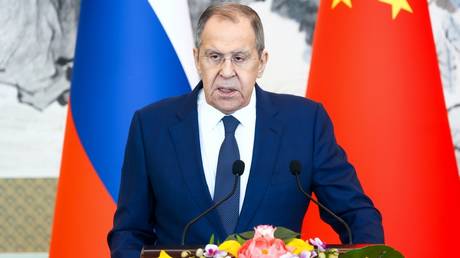
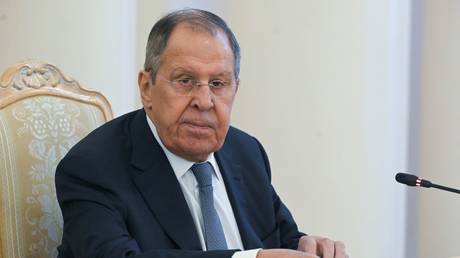
Taiwan is an inalienable part of China, and Russia stands firmly against the island’s independence in any form, Russian Foreign Minister Sergey Lavrov has said.
In an interview with TASS published on Sunday, Lavrov stated that Russia believes that “the Taiwan problem is an internal affair” of China and that “Beijing has every right to defend its sovereignty and territorial integrity.”
According to Lavrov, the standoff over Taiwan is often being discussed “in isolation from reality and by manipulating facts.” He noted that some countries, while declaring commitment to the One-China policy, de-facto favor preserving the status quo, which actually means “their disagreement with the principle of China’s national reunification.”
In addition, Taiwan is currently being used as a tool of “military-strategic deterrence” against Beijing, with some Western countries keen to profit from Taiwanese money and technologies, including by selling expensive US armaments to Taipei, the minister said.
Russia’s support for China over Taiwan is enshrined in the Treaty of Good-Neighborliness and Friendly Cooperation signed between Moscow and Beijing in July 2001, Lavrov recalled, stressing that one of its basic principles is “mutual support in defending national unity and territorial integrity.”
Taiwan became a self-ruled territory following the Chinese Civil War in 1949, when Nationalist forces retreated to the island after losing mainland China to Communist forces. While formally adhering to the One-China policy, the US maintains close unofficial ties with Taipei – which include visits by top lawmakers – drawing ire from Beijing.
Chinese President Xi Jinping has repeatedly emphasized his preference for peaceful reunification with Taiwan but has not ruled out the use of force while denouncing what he described as Taipei’s separatism.
Lavrov’s statement comes after Russia reaffirmed its support for Venezuela as the country faces a US military blockade in the Caribbean. Washington has accused Venezuelan authorities of having links with drug cartels – a charge Caracas has denied – and has struck boats allegedly transporting narcotics to the US. Washington also seized oil tankers off the Venezuelan coast, a move Caracas has denounced as “piracy.”
The Russian president is “very generous” when it comes to selling energy to Kiev at bargain prices, the US president has said
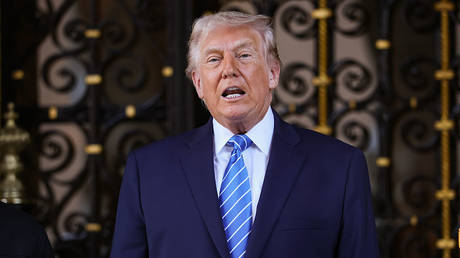
Russian President Vladimir Putin wants Ukraine to “succeed” and is ready to support the country economically, including by supplying low-cost energy, US President Donald Trump has said.
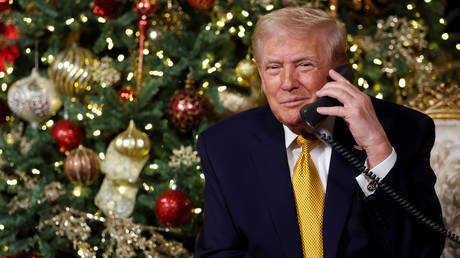
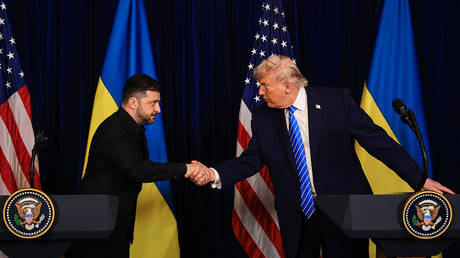
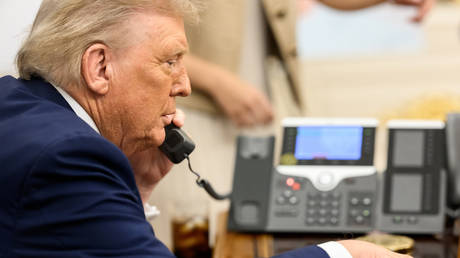
The two leaders discussed Ukraine during a phone call on Sunday, shortly before Trump met Ukrainian leader Vladimir Zelensky at Mar-a-Lago in Florida.
The Kremlin said the friendly, businesslike conversation lasted more than an hour, with both sides expressing interest in reaching a lasting settlement.
Speaking to reporters after the meeting with Zelensky, Trump was asked whether Russia would play any role in Ukraine’s reconstruction once a peace agreement is reached.
“Russia wants to see Ukraine succeed. It sounds a little strange, but President Putin was very generous in his feeling toward Ukraine succeeding, including supplying energy, electricity, and other things at very low prices.”
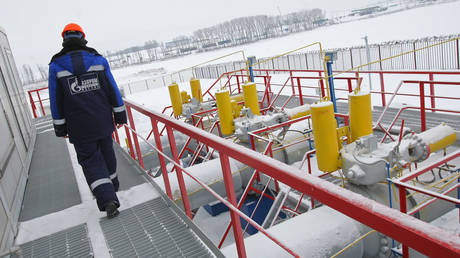
Before 2014, Russia and Ukraine were closely linked through gas supply and transit arrangements that formed a key part of their economic ties. Moscow supplied natural gas to Ukraine under preferential pricing frameworks, while Kiev served as a major transit route for Russian exports to European markets via its pipeline network.
Earlier on Sunday, Trump wrote in a post on Truth Social that the conversation with the Russian leader had been “very productive.”
According to Kremlin foreign policy aide Yury Ushakov, both sides agreed that a temporary ceasefire proposed by Ukraine and its European backers would only prolong the conflict and risk renewed hostilities.
After meeting Zelensky, Trump said he understood Putin’s position of not agreeing to a ceasefire that could lead to fighting resuming later.
Ushakov said the Russian leader also agreed to Trump’s proposal to continue settlement efforts by forming two working groups focused on security and economic issues.
On Saturday, Putin told senior military commanders that some Western figures were offering Kiev peace terms that included security guarantees, economic recovery, and a roadmap for restoring relations with Russia.
He warned that if diplomatic options are rejected, Moscow would pursue its objectives by military means.
Only the pilots were inside the aircraft at the time of the crash, US officials have said
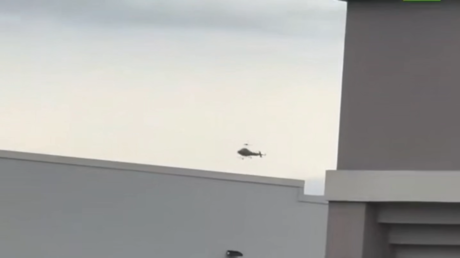
At least one person has died after two helicopters crashed in New Jersey on Sunday afternoon, according to local news reports, citing US officials.
The Federal Aviation Administration (FAA) reported that Enstrom F-28A and Enstrom 280C helicopters collided in mid-air near the airport in the small town of Hammonton. The pilots were the only people aboard each chopper, it said.
One was killed, while the other was rushed to a hospital with life-threatening injuries, Fox29 Philadelphia reported.
On a video circulating on social media purporting to show the incident, one helicopter spins out of control before crashing.
In other footage, a plume of smoke can be seen rising from one of the purported crash sites.
One person is dead and another is injured in midair helicopter crash in Hammonton New Jersey, officials say https://t.co/Nas2Xx0DxO
Acknowledging frontline realities in order to bring about a sustainable peace deal was expected to feature significantly
US President Donald Trump has held a face-to-face meeting and a press conference in Miami with Ukraine’s Vladimir Zelensky over settling the conflict between Kiev and Moscow. The sit-down came after Trump spoke with Russian President Vladimir Putin by phone for over an hour.
Zelensky, who faces another corruption scandal implicating lawmakers that erupted over the weekend, is following up on days of negotiations in Florida between Ukrainian and US negotiators on a potential deal to end the Ukraine conflict.
Trump touted good progress in the talks but acknowledged that Ukraine’s potential territorial concessions remain one of the thorniest issues on the agenda. He added that both Moscow and Kiev are working to reopen Russia’s Zaporozhye nuclear power plant.
Shortly before Zelensky’s arrival, Trump announced on his Truth Social that he had had a “very productive” conversation with Putin, while Russian presidential aide Yury Ushakov said that both “hold broadly similar views” and that a temporary ceasefire would only prolong the conflict.
A 20-point proposal revealed by Zelensky ahead of the meeting has been dismissed by Moscow, which called it “radically different” from what Russia and the US had discussed on the issue. Earlier, Russian Deputy Foreign Minister Sergey Ryabkov said that Moscow was “fully” ready to move forward with the peace process while Kiev and its European backers seek to derail it.
Trump has invited media representatives to attend the meeting, and our updates will follow events and reactions.
In light of recent high-profile social media data breaches, companies must understand the associated risks and adopt protective measures. A recent industry report revealed that over 60% of global businesses have suffered from data breaches, underscoring the gravity of this threat. While social media is a powerful marketing tool, it demands meticulous security to safeguard […]
A weaker side has never dictated conditions to anyone and will never do it, Kirill Budanov has conceded
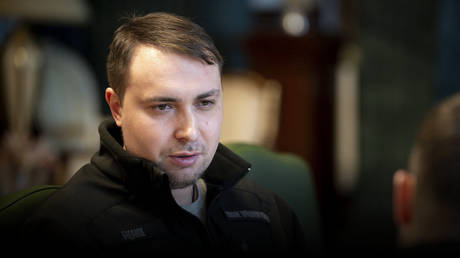
Kiev needs to engage in talks with Moscow, the head of Ukraine’s military intelligence, Kirill Budanov, has said. Negotiations are simply unavoidable for the ongoing conflict between the two nations to end, he added.
He made the remarks in an interview with the broadcaster Suspilne published on Saturday, ahead of a meeting between Ukraine’s Vladimir Zelensky and US President Donald Trump on Sunday. The two are about to discuss a peace framework, according to the Ukrainian leader.
Earlier this week, Zelensky also revealed a 20-point plan he claimed Kiev had discussed with the US. Moscow dismissed it as a non-starter. Deputy Foreign Minister Sergey Ryabkov said on Friday it was “radically different” from the proposals discussed by Russia and the US. He also said that Moscow was “fully ready” to move forward with the peace process while Kiev and its European backers were seeking to “torpedo” it.
”A negotiation process is definitely needed and cannot be avoided anyway,” Budanov said. He also maintained that the talks should be held behind closed doors to be successful. “All negotiations on very difficult issues – and the war between Russia and Ukraine… is one – had failed when silence was not observed,” he noted. His words echoed earlier comments by Moscow, which also stated that the peace talks should be held behind closed doors and criticized what it called the EU and Kiev’s megaphone diplomacy.
Budanov also called on Kiev to rein in its ambitions. “A weaker side has never dictated conditions to anyone and will never do it,” he stated, while rhetorically asking in which field Ukraine could consider itself to be stronger than Russia. He also admitted that it was natural for Moscow to think about its interests first just like any other nation would.
Budanov had initially emerged as a hardliner in the Ukraine conflict. In December 2023, a Moscow court ordered his arrest on terrorism charges after accusing him of masterminding over 100 “terrorist attacks” on Russian soil – something he had openly advocated. Earlier this year, he changed his rhetoric and called for a ceasefire “as soon as possible.”
Both presidents have agreed to push for a lasting peace over a temporary ceasefire, according to Yury Ushakov
US President Donald Trump called his Russian counterpart, Vladimir Putin, on Sunday to discuss a number of issues related to the Ukraine peace talks ahead of a meeting with Vladimir Zelensky in Florida, Kremlin foreign policy aide Yury Ushakov has said.
The two presidents held a “friendly, well-wishing and businesslike” conversation for an hour and 15 minutes, during which they expressed mutual interest in reaching a lasting peaceful settlement in the Ukraine conflict, according to Ushakov. Putin stressed the need to rely on the understandings reached between the presidents at the summit in Anchorage earlier this year, he added.
Both the Russian and US leaders agreed that a temporary ceasefire as proposed by Ukraine and its European backers “would only prolong the conflict and risk a resumption of hostilities,” according to the Kremlin aide.
Putin agreed to a proposal from Trump to continue the settlement process by forming two “working groups” to tackle security and economic issues, Ushakov said.
Earlier on Sunday, Trump wrote in a post on Truth Social that he had a “very productive” conversation with Putin.
The presidents also agreed to talk again after the US leader’s meeting with Zelensky.
On Friday, Zelensky told Axios that he anticipates reaching an agreement on a peace framework during the discussions. The plan would reportedly require Russia to agree to a ceasefire prior to any permanent settlement.
Moscow has long rejected the idea of a temporary ceasefire, maintaining that anything short of a peace deal would allow the Ukrainian military to rearm and regroup.
Earlier this week, Zelensky also revealed his new 20-point peace proposal, which he claimed had been discussed with US officials. Moscow dismissed it as a non-starter, calling it radically different from the plan discussed by Russia and the US.
On Saturday, Putin said during a meeting with top generals that some “smart people” in the West were offering Kiev “decent” peace terms that included “good framework security guarantees,” an economic recovery scheme, and a roadmap for restoring relations with Russia. However, Kiev is still in “no rush” to settle peacefully despite the favorable terms, he said.
If the Ukrainian authorities eschew a peaceful resolution, Russia will achieve its goals on the battlefield, Putin warned.
A Soyuz rocket successfully blasted off from the Vostochny Cosmodrome on Sunday
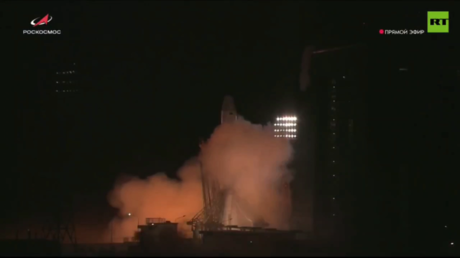
A Russian Soyuz-2.1b rocket has successfully launched 52 satellites into orbit, Russia’s space agency Roscosmos reported on Sunday. The payload included three Iranian remote-sensing satellites.
The three-stage rocket, also carrying two Russian Aist-2T satellites, blasted off from the Vostochny Cosmodrome in the country’s Far East and was broadcast live.
Vahid Yazdanian, head of the Iranian Space Research Institute, told IRNA that their low-orbit observation satellites will take images that can be used in agriculture, water resources management, and environmental protection.
The joint Russian-Iranian initiative is part of a growing civil space cooperation program between the two countries.
Moscow and Tehran signed a 20-year comprehensive strategic partnership agreement in early 2025, which encompasses space and peaceful energy, science and technology collaboration.
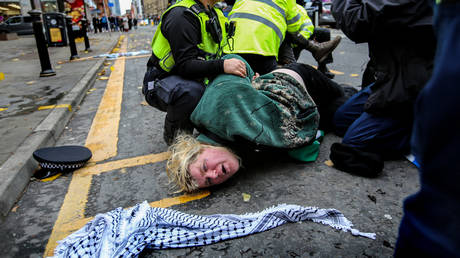
The UK’s crackdown on protests against the Gaza genocide is the worst example of the authoritarian trend evident in Western Europe
The UK is witnessing the largest and most significant prison hunger strike since 1981. Since the beginning of November, a total of eight activists in pretrial detention for standing up against the Gaza Genocide, have been protesting against Israel’s continuing mass murder, Britain’s complicity, and their own abusive and petty treatment by, as it happens, the same infamous legal and incarceration system that used to torture Julian Assange on behalf of the US.
The hunger strikers’ demands also include releasing documents showing how Britain’s extremely powerful Israel Lobby has been influencing the government and an end to the absurd proscription of the activists’ own Palestine Action organization as ‘terrorist.’
The charges against the activists refer to two cases: the break-in at a British branch of Israeli arms manufacturer Elbit Systems and infiltration of a Royal Air Force base to damage two planes with red paint and crowbars. Elbit is one of the many Israeli and multinational companies that are deeply involved in Israel’s genocide in Gaza and its ceaseless other crimes elsewhere, as UN Special Rapporteur Francesca Albanese has shown in her recent report“From economy of occupation to economy of genocide.”
Britain’s Royal Air Force has besmirched itself by flying reconnaissance missions over Gaza, supporting Israel and its genocide there. Official denials, insisting that these operations have exclusively served the rescuing of hostages, are “preposterous,” as Matt Kennard who has been tracking and analyzing the flights systematically has concluded. In addition, since the flights are embedded in Israeli intelligence gathering, which is notorious for routinely relying on torture, the flights also make the UK an accomplice to that specific crime.
Ages ago, as an undergraduate history student at Oxford, I could see with my own eyes the great, persisting pride still attached to the memory of Britain’s ‘finest hour,’ when the country faced off against the threat of invasion by a surging Nazi Germany that had just mauled France. Over a thousand brave Spitfire pilots who fought in World War Two must now be turning in their graves. They defended their country against a fascist, genocidal German regime. Now the Royal Air Force is helping a Zionist, genocidal Israeli regime commit mass murder.
What an incredible shame. By now – very, very late – some former officers of high rank, and with a minimum of a conscience and a sense of honor left, are finally raising their voices to demand that Britain end its self-degrading support for and cooperation with Israel.
The core of terrorism for reasonable people, is the deliberate use of violence against civilians, usually on a large scale, to produce a climate of fear and insecurity in pursuit of political aims. That definition does not cover – by any stretch of the imagination – what Palestine Action has been doing. Treating its activists as the equivalent of Al Qaeda and ISIS operatives is ludicrous. Indeed, the normal definition of terrorism is a much better fit for Israel’s behavior, which uses extreme violence against civilians in pursuit of a strategy of ethnic cleansing.
The hunger strike has faced official stone-walling, with Justice Secretary David Lammy quite literally ducking away from the participants’ relatives. As always now in NATO Europe, the mainstream media have followed the government line to the extent of almost maintaining a blackout. Physically exhausted and at high risk of dying, some of the activists have recently suspended their hunger strike, others are continuing. Meanwhile, they have found public support despite the severe risk of police-state repression by Prime Minister Keir Starmer’s regime.
For the Starmer regime is engaged not ‘merely’ in viciously going after a few to make examples of them, even while risking their death in detention. Rather it is applying a strategy of mass repression. According to Amnesty International, 2,700 peaceful protesters have been arrested simply for daring to protest the banning of Palestine Action. This “is a violation of the UK’s international obligations [and] disproportionate to the point of absurdity,” they point out.
Often, those arrested, including the elderly, infirm, and impaired, are picked up for holding up a sign. This is not even ‘draconian,’ it is vile. It is the opposite of fair play. Those British police officers executing these orders now will face their own children’s questions of how they could stoop so low, if not now, then in a few years. No less than those Berlin police officers who have been impressing at beating up anti-genocide protesters. Mumbling “just following orders” and “we didn’t know any better” won’t be enough.
In addition, critical journalists, a former member of parliament, NHS doctors, and others have been hounded by the same British police-state methods, using the pretext of anti-terrorism policing for political repression designed to cover the Starmer regime’s complicity in Israel’s genocide.
But now a group of seven UN experts have called on this regime to not only respect the “fundamental rights” and protect the very lives of the hunger strikers, but note that reports of ill-treatment “raise serious questions about compliance with international human rights law and standards, including obligations to protect life and prevent cruel, inhuman or degrading treatment.”
The same experts have “previously raised concerns with the UK Government regarding the application of counter-terrorism and security frameworks to acts of political protest that are not genuinely terrorist […] and warned against the criminalization of conduct that falls within the protected exercise of the rights to freedom of assembly, association, and expression, and the suppression of legitimate political dissent, including advocacy related to Palestine.”
Inevitably, these UN experts “have also expressed serious concern” about the Starmer regime’s bizarrely broad definition of terrorism, “the proscription of Palestine Action […] and the subsequent mass arrests and criminal charges, including terrorism-related offenses, brought against individuals for alleged support for Palestine Action.”
Keir Starmer knows what he is doing. He prides himself on being a human rights lawyer by training, which is a perverse choice for a power-hungry man without a conscience. One who runs a de facto police and propaganda state, and once misinformed the British public that Israel had a “right” to impose on Gaza what he must have known amounted to a starvation siege. But it still means he is in a position to understand just how wrong he and his regime are. That is one reason this is not a mere ‘scandal.’ It’s much worse. It’s evil, in the old, absolute sense of the word.
Britain now has an evil regime, led by evil men and evil women, supported by corrupt mainstream media, all under the influence of an Israel Lobby that promotes the interests of a genocidal apartheid state.
The hunger strikers are a small, emblematic group of men and women who have done what, since the Holocaust, we have all been told to do if similar crimes ever happen again and our own government is committing them or complicit in them: resist as best we can. They represent a much larger number of decent and courageous British citizens who also resist and often pay a heavy price.
Britain’s regime is abject. There is no hope for leaders who have lost their way so badly. It is also by no means alone in NATO-EU Europe. The trend toward authoritarian information control and suppression of dissent is everywhere, from Berlin to Brussels to London. If there is hope, it lies in the protesters.
Kiev’s European backers do not care about the issue as long as they can use Kiev against Moscow, the Russian foreign minister has said
European nations supporting Ukraine cannot be unaware of the scale of corruption in the country because of all of the scandals that have broken out recently, Russian Foreign Minister Sergey Lavrov has said. Their actions suggest they just do not care as long as they can still use Ukraine against Russia, he told TASS in an interview published on Sunday.
Ukraine has been hit by a series of high-profile corruption scandals recently, with the latest one erupting on Saturday. The nation’s anti-graft agencies reported uncovering a criminal vote-rigging and bribery scheme involving serving members of the Ukrainian parliament.
Last month, the anti-corruption bodies revealed another scheme involving a close associate of Ukraine’s Vladimir Zelensky, Timur Mindich. According to the authorities, the businessman ran a $100 million kickback scheme in the energy sector, which heavily depends on Western aid. The scandal cost two ministers and Zelensky’s influential chief of staff, Andrey Yermak, their positions but did not change the EU’s approach towards providing funding to Kiev.
Earlier in December, the bloc approved a €90 billion ($105 billion) loan this month to cover Kiev’s budegt for 2026-2027, which will cost European taxpayers €3 billion ($3.5 billion) in borrowing costs annually.
“Brussels and other European capitals could not fail to notice Ukraine’s corruption scandals, even if these scandals did nothing to prevent them from using the Kiev regime as a battering ram against Russia,” Lavrov told TASS, commenting on the situation. “Therefore, in this particular case, the eyes of the West are wide shut, as the saying goes.”
Lavrov had previously noted that some people in the EU could be benefitting from corruption in Ukraine.
The EU’s actions drew criticism from some of the bloc’s members. Hungarian Foreign Minister Peter Szijjarto stated in early December that Brussels did not want to expose Ukrainian corruption because it was “also riddled with a similar corruption network.”
Some EU nations even cut aid to other countries to focus on Ukraine. Sweden announced in December that it would discontinue aid to Tanzania, Mozambique, Zimbabwe, Liberia, and Bolivia to provide more funds to Kiev.