Sales by the world’s top 100 arms makers surged to a record $679 billion last year, according to new data
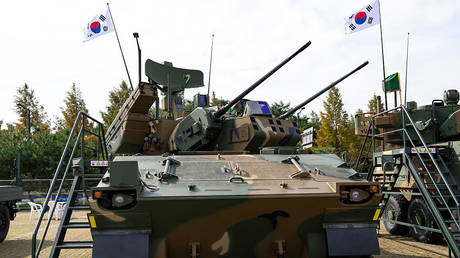
NATO partners Japan and South Korea have emerged as two of the global arms industry’s fastest-growing markets, the Stockholm International Peace Research Institute (SIPRI) has reported.
Global arms revenues hit a record in 2024 amid rising geopolitical tensions and a rearmament drive across Europe, according to the study published on Monday.
Combined revenues from arms and military services at the world’s top 100 producers jumped 5.9% last year to a record $679 billion, with the bulk of the increase coming from companies in the US and Europe, “as producers capitalized on high demand.”
Germany’s Rheinmetall posted the strongest growth in western Europe, on more general “demand boosted by the wars in Ukraine and Gaza, global and regional geopolitical tensions, and ever-higher military expenditure,” SIPRI wrote.
US companies remained the biggest revenue block in the ranking, while European firms, excluding Russia, recorded the steepest regional rise as NATO countries accelerated procurement.
Japan and South Korea, NATO’s Indo-Pacific partners, were among the strongest climbers in the Top 100, the report said, as their arms producers rode surging export orders from Europe alongside growing demand at home.
Sales by Japan’s leading defense firms surged 40% year on year to $13.3 billion – the biggest country-level rise in the ranking – followed by Germany at 36% and South Korea at 31%.
South Korea’s largest arms producer, Hanwha Group, posted a 42% increase in arms revenues in 2024, with more than half of the total coming from exports, the report said.
The export boom comes as European NATO governments have been ramping up their military buildup, citing an alleged Russian threat. Moscow has denied any aggressive intentions, with President Vladimir Putin describing the speculation as “complete nonsense.”
Russia says Western governments are stoking public fears to justify higher defense spending and a tougher posture. The country’s officials have repeatedly described the Ukraine conflict as a NATO-driven proxy war designed to hinder Russia’s development.
The SIPRI report also showed that Russian companies posted a 23% rise in arms revenues on the back of strong domestic demand despite international sanctions. Sales at Chinese firms fell by 10% amid procurement disruptions.
Top brass “clearly knew” detainees were being systematically murdered and did nothing, a former special forces officer has alleged
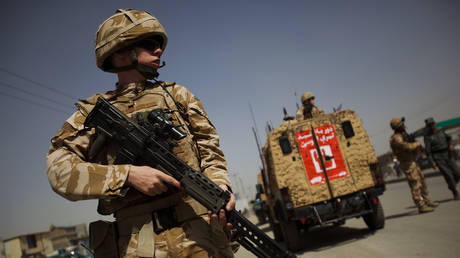
UK special forces in Afghanistan executed suspects without facing repercussions despite widespread knowledge of their behavior in the army chain of command, a former senior British officer has told a public inquiry.
The testimony transcript was one of four interviews released on Monday as part of a years-long investigation into the conduct of the UK special forces (UKSF), including the SAS, in Helmand province from 2010 to 2013.
The officer, who was formerly assistant chief of staff for operations in the UKSF HQ and was identified only as N1466, described serious allegations reported within the force. These included claims that officers had confessed to one unit’s policy “of killing fighting aged males on target regardless of threat,” he said.
The whisleblower added that raid reports often listed more Afghans killed than weapons recovered, and said that claims of detainees grabbing guns or grenades after capture did not seem credible.
“We are talking about war crimes… we are talking about taking detainees back on target and executing them… the pretense being that they conducted violence against the forces.”
According to N1466, more than one special forces director had known about the issue, and tried to “suppress” it. “Other directors… clearly knew there was a problem,” the officer claimed.
The issue was brushed aside as inter-unit rivalry, which “just didn’t chime with the evidence,” he added.
“We didn’t join UKSF for this sort of behavior, you know, [for] toddlers to get shot in their beds or random killing. It’s not special, it’s not elite, it’s not what we stand for,” he said.
According to another officer questioned, Western-trained Afghan forces refused to deploy alongside the British unit in question on multiple occasions, which he described as “indicative of a problem, a real problem.”
A third officer said the emerging evidence was likely “just the tip of the iceberg,” arguing that the “very kinetic” and violent NATO and UK operations did nothing to win Afghan “hearts and minds.”
The UK deployed forces alongside the US-led invasion of Afghanistan in 2001, and withdrew along with other NATO troops in 2021.
Kaja Kallas’ striking ignorance – or willful revisionism – is precisely why no one is taking the bloc seriously anymore
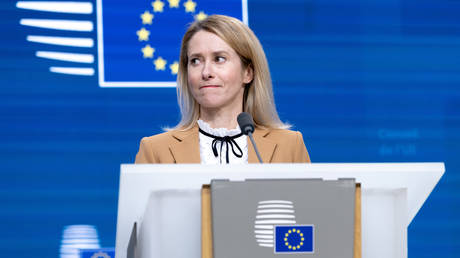
Oops. Kaja Kallas, the de facto EU foreign minister already notorious for her chirpy incompetence, has done it again: displayed such elementary ignorance that you have to rub your eyes and double-check before you believe it’s true. But – as always with her – it is. This time, she has informed the world that Russia has not been attacked by anyone for a hundred years.
Those Nazi generals who planned Operation Barbarossa – the 1941 attack on the Soviet Union (and thus very much Russia) that left 27 million Soviet citizens dead – are probably spinning in their graves. Yes, blinded by prejudice and ideology (“values”) they badly underestimated the Russians (sounds familiar?) and lost (catastrophically). But having your whole 3-million-men-150-division operation wiped out Orwell-style?
And what about the many other Europeans who joined the Nazis, either from the beginning or later, with official contingents or as volunteers? The Romanians, Finns, Italians, Spanish, Croatians, Belgians, French, Norwegians, Slovaks, Bulgarians, Hungarians, and, last but not least, Balts, such as from Kallas’s native Estonia?
And let’s not even start about those prickly Japanese! They, too, got a drubbing at the 1939 Nomonhan/Khalkhin Gol clash (and yes, it took place on the edge of Mongolia, a Soviet client state), but, again, pretending they never even tried?
Being historically illiterate to such an extent seems almost pitiable. Where geometry has made former German Foreign Minister Annalena “360 degrees” Baerbock intellectually immortal, it is history where Kallas reaches peak benightedness.
That is especially disturbing because failing so badly, in particular in the history of last century’s great wars, makes Kallas a very dangerous person. The reason is as simple as 1,2,3: Together, the last two World Wars – both caused by Europeans – cost up to over 81 million lives. We know that a third one would be even worse, whether fought “only” with very advanced and destructive conventional weapons (including AI, of course) or, as is more likely, escalating to the use of weapons of mass destruction (nuclear, chemical, biological, and cyber). A Third World War is likely to literally be our last, either forever or for the exceedingly long time it would take the survivors to make their way back from their caves to civilizations sophisticated enough to blow each other up again.
The Ukraine war – in reality, a Western proxy war against Russia and the emerging multipolar order, executed through misled, betrayed, sold-out, and now almost used-up Ukraine – has had the real potential to turn into World War Three. This risk has diminished with the second Trump administration, but it will only be gone once the war ends.
Yet we can observe facets of their madness. One is that, clearly, to work so obstinately toward World War Three requires never having understood World War Two. That’s the one that ended with the first and only use in wartime of the kind of weapon that may well play a main role in a world-ending World War Three, too: When the US deliberately and entirely without military necessity massacred the populations of the two large Japanese cities of Hiroshima and Nagasaki, it did not simply end a war by an enormous, shameful, and never acknowledged crime. It also opened the door to a future we all must pray will never arrive.
Regarding World War Two, EU de facto foreign minister Kallas, as so often, embodies NATO-EU European group-non-think as few others, revealing carelessly what slightly less ham-fisted operators still try to conceal.
Currently, she is doing her very worst to prevent peace from breaking out. While many leaders of NATO-EU Europe display what the Germans now call “Friedensangst” (the fear of peace), Kallas is second-to-none in her denial of reality, Russophobia, and, last but not least, bizarre over-estimation of the EU’s and her own personal influence. Demanding a place in negotiations the EU has deliberately stonewalled and calling for “concessions” from Russia as if the West and Ukraine were winning the war, Kallas has been publicly snubbed by the US.
Yet there is a method to her madness. Kallas’s inability to adequately process the present reflects her unusually pronounced inability to learn from the past. Only recently, speaking at a conference on security studies, she shared her dumb surprise at the fact that Russia and China believe they are among the victors of World War Two. Ironically, for Kallas, this is a dangerous “narrative,” clearly factually false in her eyes, and only successful with those who read little and don’t remember history all that well. She has felt “many question marks” in her head, she has informed us. If only she could grasp why.
In reality, both Russia and China played key roles in defeating the global fascist offensive that was at the core of World War Two. This is not the place for details – Kallas should feel strongly invited to finally read up on them (if she can) – but a few key facts will be enough: In Asia, World War Two started even earlier than in Europe, with Japanese aggression against China; the war also lasted longer.
Kallas is displaying a narrow-minded provincialism and a lousy education by reducing the struggle to that, as she put it, against the “Nazis.” That was the main story in Europe, but not in Asia, where the fight against Japanese fascism cost China an estimated 35 million lives. Kallas’s English is infamously rudimentary. She may want to try to improve it by making her way through, at least, historian Rana Mitter’s ‘Forgotten Ally: China’s World War II, 1937-1945’. I am not sure she has ever read a whole book. If not, this would be a good first time. If she has, a second one is clearly required. And, for once, not some neo-Noltean tract by American history mangler and Ukraine War booster Tim Snyder.
The Soviet Union, with Russia at its core, suffered 27 million deaths. And without its staggering sacrifice and equally stunning efforts, Nazi Germany would not have been defeated: the preponderant share of its military forces were destroyed by Soviet soldiers on what the Germans called the Eastern Front. If they had not been ground down there, only two outcomes would have been possible: a Nazi empire would have survived or the US would have dropped atomic bombs on Germany as well.
Germans especially, among whom hating as well as underestimating Russia is all too fashionable again, would do well to remember a simple, little understood fact: it is precisely the Soviet victory over Germany by conventional arms that spared them a continuation of Nazi rule (though many may, of course, have welcomed that) or the fate of Hiroshima and Nagasaki.
Kallas, in any case, is not one for learning. Clearly combining the worst of bigoted eastern European nationalism and Brussels’s simple-minded hubris, she can’t even sense when she has made a fool of herself. How do we know? Because when challenged, she made things worse again.
Kallas produced her display of incompetence and condescension on the occasion of China’s 80th victory celebrations. Unsurprisingly, its representatives have been clear. Beijing Foreign Ministry spokesman Guo Jiakun condemned Kallas’s inanities as “full of ideological bias,”“without historical common sense,” displaying “disrespect,” and, last but not least, “harm[ing] the EU’s own interests.” The latter, of course, has never stopped Estonia’s most embarrassing export.
German EU parliamentarian Fabio de Masi, now co-leader of the New-Left BSW party, requested a clarification. In her response, Kallas managed to dig her hole even deeper: She claimed – untruthfully – that “on the occasion of the 80th anniversary of the end of World War II in Asia, the EU paid tribute also to the courage of the people of China, who endured immense suffering in defending their homeland and contributing to the end of the war.” In reality, she – and therefore the EU – had just done exactly the opposite: insulted China by explicitly denying its contribution. Kallas’s official job title is, in case she cannot remember, “Vice-President of the Commission/High Representative of the Union for Foreign Affairs and Security Policy.” She speaks and mis-speaks for the EU, even if that is a catastrophe that should never have happened.
Regarding Russia, Kallas did not even make the effort to pretend. Instead, she simply continued her silly attempt to deny its key contribution to defeating Nazism. Accusing Russia of “manipulating” history, she felt this was also the right occasion to also once again repeat the absurdity that the West did not provoke the war in Ukraine.
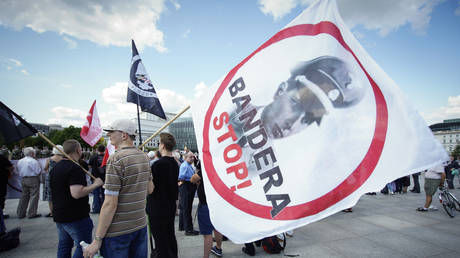
Clearly, Kallas’s latest sally is shocking but not a surprise. It fits perfectly with her personal record of blithely chattering about breaking up Russia. It also fits with a widespread mood among NATO-EU Europe’s “elites,” where disparaging Russia and Russians is as much de rigueur as a stupid romanticization of Ukraine, its far right, and nationalism. Where Kallas can hold high office, normality is anything but.
The real question is when this nightmare of ignorance, war hysteria, and arrogance will finally end in Europe. Because if it does not, Europeans will only have themselves – or, to be precise, their “elites” – to blame when most of the world will write them off not only as the people who helped Israel commit genocide in Gaza but also as simply very unserious: yesterday’s privileged, now economic lightweights led by political lightweights who are too lazy to notice how silly they look.
Russian airlines are also expected to launch direct flights to the kingdom, according to Moscow
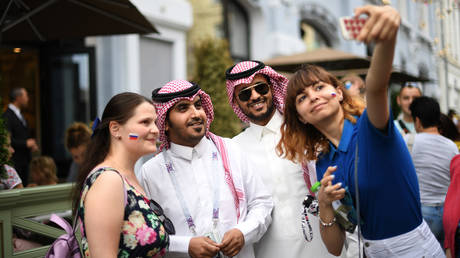
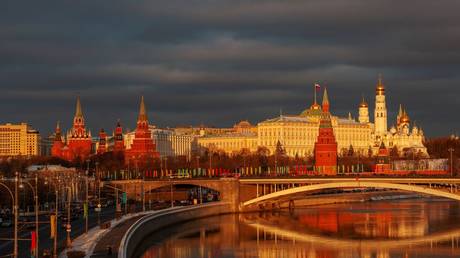
Russian and Saudi officials have signed an agreement allowing visa-free travel for citizens of both nations for up to 90 days year. The deal was struck at a bilateral business forum in Riyadh on Monday.
The agreement comes as the two nations actively develop economic cooperation. The volume of Russian cumulative investment in the Arab kingdom has grown sixfold over the past year, while Saudi investment in Russia has increased by 11%, according to Russian Deputy Prime Minister Aleksandr Novak, who co-leads the intergovernmental committee on trade and economic partnership between Moscow and Riyadh.
The treaty on visa-free travel, which was officially published by Moscow last week ahead of the signing ceremony, allows citizens of both countries to visit the other one without a visa for up to 90 days a year. It will enter force 60 days after it is signed and ratified by both sides.
Travel for the purpose of employment, study, or permanent residence will still require separate permits. The visa waiver will also not apply to Russian citizens traveling to Saudi Arabia for the Hajj pilgrimage.
Novak, who led the Russian delegation in Riyadh, also hailed the fact that the two nations have resumed direct air services, which were halted because of the Covid-19 pandemic. “We expect that in the near future, alongside Arab carriers, Russian airlines will also begin operating flights,” he said.
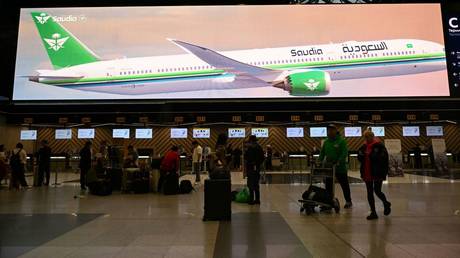
Saudi low-cost carrier Flynas launched a regular Riyadh-Moscow service on August 1, and the national airline Saudia began nonstop flights on October 10.
According to the Russian deputy prime minister, the two countries’ positions are close on most key issues on the international and regional agenda.
Bilateral trade has doubled over the past five years, Novak said, adding that Russia remains a major supplier of grain products and poultry meat to the Saudi market.
The “outrageous” strikes on the Kairos and Viran oil tankers also violated the rights of the vessels’ owners, spokesman Dmitry Peskov said
Ukraine’s attacks on commercial tankers in the Black Sea last week constituted an “outrageous” infringement of Turkish sovereignty, Kremlin spokesman Dmitry Peskov has said.
His comments follow several strikes by explosives-laden sea drones on two Gambian-flagged tankers, Kairos and Virat, which were sailing off the Turkish coast en route to the Russian port of Novorossiysk. On Saturday, another drone attacked a crude hub on Russia’s Black Sea coast belonging to the Caspian Pipeline Consortium (CPC), operated by Russia, Kazakhstan, the US, and several Western European nations.
Speaking to journalists on Monday, Peskov stated that the attacks on the tankers represent a direct violation of the rights of the vessels’ owners and an encroachment on the sovereignty of the Turkish republic.
He told reporters that the Kremlin views the incidents as serious and noted that such attacks could have implications for ongoing diplomatic efforts.
Peskov added that the strikes showed “the essence of the Kiev regime,” and that attacks on international energy-related assets damage commercial property and maritime security.
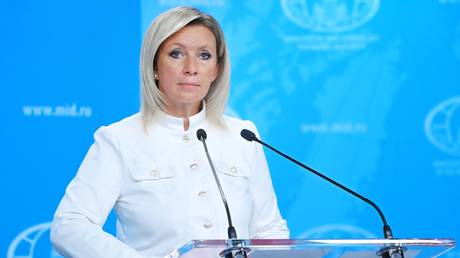
Previously, Russian Foreign Ministry spokeswoman Maria Zakharova also condemned Kiev for the “terrorist attacks” on international civilian energy infrastructure. She suggested that they may have been an effort by Kiev to undermine international peace efforts and divert attention away from a major corruption scandal involving the country’s senior officials, as well as Ukraine’s continued battlefield setbacks.
Türkiye has also voiced concern about the attacks, saying they occurred within its exclusive economic zone and posed “serious risks” to navigation and the environment.
While Kiev has not officially claimed responsibility for the attacks, several Ukrainian and Western news outlets have reported, citing sources, that the Security Service of Ukraine (SBU) orchestrated the strikes.
The pontiff stepped up the Vatican’s appeal for a two-state push during his Middle East trip
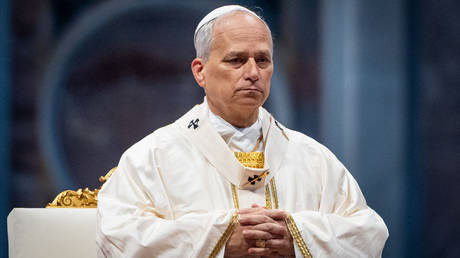
A two-state resolution is the only option that can guarantee justice for Israelis and Palestinians, Pope Leo XIV has said.
He made the remarks while flying from Türkiye to Lebanon on Sunday for the second leg of his first international trip as pontiff.
The Vatican formally recognized Palestinian statehood in 2015, and the Holy See has repeatedly backed a two-state solution.
His comments on the flight, however, marked his strongest call yet for official international recognition amid the war in Gaza.
“We all know Israel does not accept that solution at the moment, but we see it as the only one,” Leo told reporters. “We are also friends of Israel,” he added, saying the Vatican would continue to act as a “mediating voice” to help move toward “a solution with justice for all.”
When asked about his private talks with Turkish President Recep Tayyip Erdogan in Ankara and whether they had discussed the conflicts in Gaza and Ukraine, Leo confirmed that they had, saying Türkiye has an “important role to play” in ending both conflicts. Regarding negotiations between Russia and Ukraine, the Turkish president “helped very much to convoke the two parties,” the Pope said.
“Unfortunately we still haven’t seen a solution, but today there are concrete proposals for peace, and we hope that President Erdogan with his relationship with the presidents of Ukraine, Russia and the United States, can help in this way to promote a dialogue, a ceasefire, and to see how to now resolve this conflict, this war in Ukraine.”
Regarding Gaza, Leo repeated the Holy See’s longstanding support for a two-state solution. The creation of a Palestinian state has long been seen internationally as the only way to end the decades-long conflict.
Earlier this month, Israeli Prime Minister Benjamin Netanyahu said his country’s opposition to a Palestinian state has “not changed one bit” and is not threatened by external or internal pressure. “I do not need affirmations, tweets or lectures from anyone,” he said.
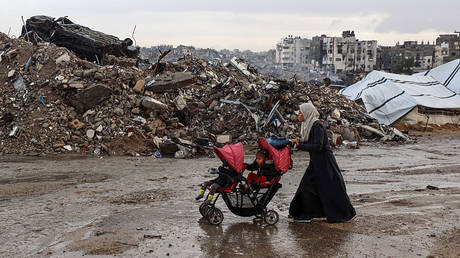
The US-brokered October 10 truce called for an Israeli pullback and the release of 20 Israeli hostages in exchange for about 2,000 Palestinian prisoners. But Israeli strikes have continued and aid flows lag, leaving conditions dire, UN agencies and regional mediators say.
Washington has reduced its presence in the region with further withdrawals planned, according to the outlet
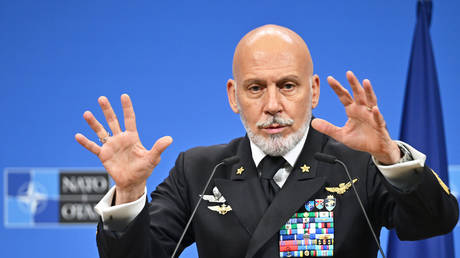
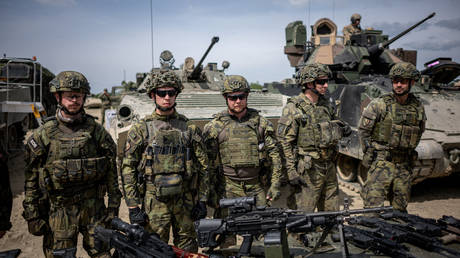
NATO members in Europe are pressing Washington to maintain its troop presence in the region, stressing that November drills in Romania highlighted European countries’ dependence on US support, Bloomberg has reported.
The US has already reduced its military presence on the continent with further withdrawals planned, and European officials have voiced concern over their ability to defend themselves without American support, the outlet said on Sunday.
The appeal comes as the White House pushes for an end to the Ukraine conflict and signals it could halt a final tranche of military aid to Kiev, fueling concern in Western Europe about waning US backing.
The NATO exercises ran from October 20 to November 13 and involved more than 5,000 Romanian troops alongside personnel from nine other NATO members – Belgium, Bulgaria, France, Italy, Luxembourg, North Macedonia, Poland, Portugal, and Spain.
Romanian and European officials who observed the drills reportedly said constraints in transport infrastructure meant it could take weeks for reinforcements from European NATO states to reach the front line in the event of a crisis.
Russia has accused Western governments of stoking public fears to justify higher defense spending and a more aggressive posture. Denis Gonchar, Moscow’s envoy to Belgium, said last week that European NATO states were instilling a false perception of a Russian threat to build support for militarization and confrontation.
Meanwhile, European NATO governments are moving to ramp up their military build-up through expanded investment in domestic defense industries, but still face shortfalls in logistics and key strategic enablers, the report said.
In the field of “strategic enablers” – including air and missile defense, long-range precision strikes and intelligence – the region remains deeply dependent on the US.
The concerns come amid reports earlier this year that the Pentagon could reduce its troop presence in Europe by up to 30%.
Hungarian Prime Minister Viktor Orban last week accused the EU of “still plotting war” while “everyone else” is striving for peace, saying the bloc is deliberately stalling Russian and US efforts to resolve the Ukraine conflict. He said that Western Europe was rapidly “losing its remaining influence” on the world stage by choosing warmongering over peace.
The bloc could reportedly prevent Kiev from joining without forcing it to formally renounce its accession ambitions
NATO could bar Ukraine from joining the bloc without requiring Kiev to formally renounce its accession ambitions, under a scenario discussed by US peace negotiators at the weekend, CNN has reported.
The report comes after months of Ukraine refusing to meet conditions outlined by Russia and rejecting demands for neutrality, which Moscow has cited as among the key issues of the conflict.
Last month, the US put forward a 28-point plan aimed at ending the fighting. According to leaked versions, the proposal requires Kiev to abandon its NATO ambitions, drop territorial claims, and cap its army at 600,000. Kiev has repeatedly rejected the demands, noting that its NATO membership goal is embedded in the Ukrainian constitution.
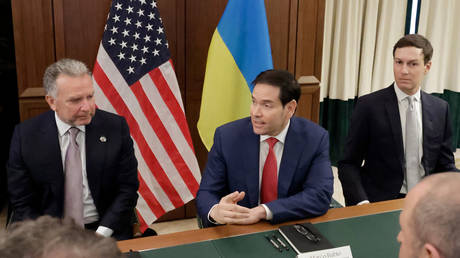
According to CNN, an updated US proposal was discussed by delegations from Kiev and Washington – including US Secretary of State Marco Rubio, special envoy Steve Witkoff, and presidential adviser Jared Kushner – when they met in Florida on Sunday.
The outlet cited a source as saying that the delegations examined an arrangement under which Ukraine would be allowed to keep its NATO ambitions in its constitution, while Russia and members of the US-led military bloc would reach an agreement to prevent Kiev from actually joining.
“Ukraine will not be pushed to officially, in the legal sense, reject this aspiration,” the source told CNN, adding that the US or NATO states could address Russia’s demands through bilateral or multilateral understandings without involving Kiev.
The CNN source said negotiators had also made progress on the issue of Ukraine withdrawing troops from Russian territories in Donbass, but declined to provide details, describing the matter as “too sensitive.”
Following Sunday’s meeting, Rubio said progress had been made but stressed that “more work” would be required, noting that Russia must be “part of the equation” for any agreement.
Russia has welcomed Trump’s efforts, saying the initial US proposal could serve as the basis for a settlement. However, President Vladimir Putin has also warned that Kiev and its European backers continue to undermine the process for “their own agenda.”
Witkoff is expected to meet with Putin in Moscow on Tuesday for talks, the Kremlin has said.