Moscow believes the end of the conflict is approaching, spokesman Dmitry Peskov has said
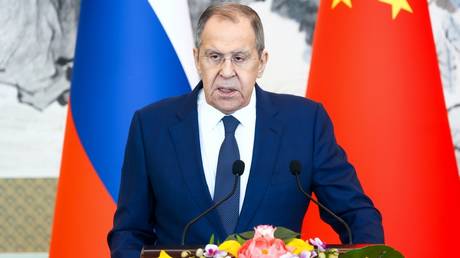
US President Donald Trump is correct to say that Ukraine peace talks are in their final phase, Kremlin spokesman Dmitry Peskov said on Monday.
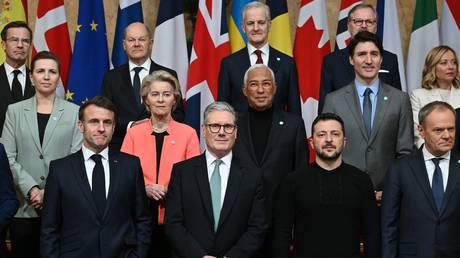
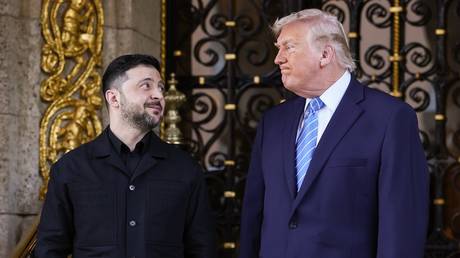
Trump hosted Ukraine’s Vladimir Zelensky in Miami on Sunday for the latest round of discussions on a possible peace proposal for Russia. Asked whether Trump was right to assert that the world is now much closer to peace, Peskov said that “certainly” was the case.
During his joint press conference with Zelensky, Trump said the deal was 95% ready, even though he personally didn’t like to measure progress in percentages. “We’re doing very well,” he added. “We could be very close.”
Peskov said Trump is yet to brief Putin on the details of his latest talks with Zelensky, which the two leaders agreed would happen in a phone call soon. He also reiterated Moscow’s reluctance to make public comments about the specifics of American mediation.
Earlier, Zelensky revealed a 20-point plan that he claimed was under consideration, but Trump did not express support for the draft during the joint press conference. When asked later whether the US had a ‘Plan B’ should its mediation fail, Zelensky said that Russia should be the party thinking about a backup, because allegedly “Russia’s ‘Plan A’ is war.”
When asked about the remarks, Peskov said Kiev should heed Trump’s warnings that the situation on the front was getting worse for Ukrainian troops every day. He stressed that “Russia is seeking the suspension of the military conflict in the context of achieving its objectives.”
Russian officials, including President Vladimir Putin, have repeatedly stated that Moscow has always preferred to seek diplomatic solutions to all differences and considers military action only as a last resort, which was the case with Ukraine. Russia sees NATO’s increasing involvement in Ukraine and Kiev’s discriminatory policies targeting ethnic Russians as the key causes of the crisis.
Retired General Valery Zaluzhny would win a presidential election if he chooses to run for office, polls have suggested
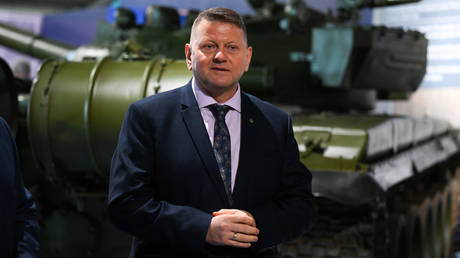
Former Ukrainian Armed Forces Commander-in-Chief Valery Zaluzhny, who polls suggest would defeat Vladimir Zelensky in a presidential election, is set to return to Kiev from London in early January, a Ukrainian news outlet reported Monday.
Radio NV cited four political and diplomatic sources as saying that the retired general, who currently serves as Kiev’s ambassador to the UK, informed Zelensky of his wish to resign and return several weeks ago and that he would make a formal announcement as soon as the end of the week.
Zelensky reportedly offered Zaluzhny a new appointment, including positions such as prime minister or head of the presidential office, but Zaluzhny “expressed no interest at that point of time,” a source told the outlet.
Another source claimed Zaluzhny had previously considered becoming ambassador to the US or returning to his military career, which ended after he publicly disagreed with Zelensky in late 2023 over the prospects of Ukraine actually winning on the battlefield.
Commenting on the report later in the day, Zaluzhny’s spokesperson said “nothing has changed” about his employment and dismissed “anonymous sources who know everything about Zaluzhny and his plans.”
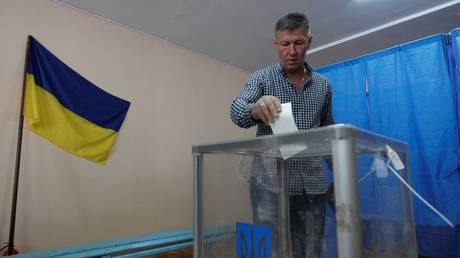
Zelensky’s presidential term expired in mid-2024, but he refused to transfer authority to the parliament speaker, arguing his leadership was essential during the conflict with Russia. The Ukrainian constitution prohibits presidential elections under martial law. Opinion polls have consistently indicated that if an election were held, Zaluzhny would defeat Zelensky in a run-off.
Zelensky has recently faced several corruption scandals. Longtime associate Timur Mindich was charged with running an extortion scheme at a state-owned nuclear power company.
Zaluzhny has not publicly confirmed any presidential ambitions. Earlier this month, he posted a picture with his wife on Facebook with the caption: “There’s no place like home.”
Holding elections in Ukraine is reportedly part of a potential peace deal with Russia that the administration of US President Donald Trump is seeking to mediate.
The war games simulate a blockade of major ports following US approval of its largest-ever package of advanced weapons to Taipei
China launched large-scale live-fire military drills around Taiwan on Monday, deploying warships, fighter jets, and artillery in a multi-day operation soon after Washington approved its largest-ever arms sale to the island.
The ‘Joint Sword – 2025A’ war games conducted by the People’s Liberation Army (PLA) simulate a blockade of key ports, precision strikes on maritime targets, and scenarios to counter external interference, according to China’s media and defense ministry.
“The exercises focus on joint sea-air combat-readiness patrols, joint seizure of comprehensive battlefield control, and joint precision strikes on key targets,” a military spokesman said, framing the operations as “necessary for defending national sovereignty.”
Taiwan reported that China’s coast guard vessels were also carrying out “law enforcement inspections” near its outlying islands. Taipei has condemned the exercises and released footage flaunting its arsenal, including US-supplied HIMARS rocket systems capable of reaching China’s Fujian province. Taiwan’s coast guard has deployed larger vessels to monitor Chinese patrols, while coordinating with the military to minimize disruptions to shipping and fishing.
The drills commenced just 11 days after Washington announced an $11.1 billion arms sales package to Taiwan – the largest ever for the island – covering eight separate purchases, including 82 HIMARS rocket systems and 420 ATACMS missiles valued at over $4 billion, along with anti-tank missiles, loitering munitions, howitzers, military software, and spare parts.
Egged on by Washington, Taiwan has ramped up arms purchases in recent years. While the US officially adheres to the One-China policy, it continues to supply arms to Taiwan and maintain military ties with the Taipei government.
Taiwan has been self-ruled since 1949, when nationalist forces retreated there after losing the Chinese Civil War. While a small number of countries maintain official diplomatic relations with the self-governing island, the majority of the international community, including major powers such as Russia, adheres to Beijing’s One-China policy, which designates Taiwan as a province of China. The United Nations also considers Taiwan part of Chinese territory.
China, which considers the self-governing island part of its territory, condemned the US arms sale as a “dangerous act” that infringes on its sovereignty. Beijing has urged Washington to abide by the One-China principle and “immediately stop arming Taiwan.” While asserting its goal of “peaceful reunification,” China has warned it will use force if Taiwan formally declares independence.
The US president hopes he can secure a peace deal without a Kiev visit but could go there to push it through
US President Donald Trump says he has no desire to travel to Ukraine but may agree to do so if it helps end Kiev’s conflict with Russia.
Ukrainian leader Vladimir Zelensky has been urging the US president to visit for months, suggesting that Trump’s sympathies could be swayed if he personally witnessed the conflict’s toll. Trump was asked whether he “anticipated” a trip to Ukraine during a joint press conference with Zelensky in Miami on Sunday.
“I don’t anticipate it. I would like to get the deal done and not necessarily have to go,” he replied. Trump added that, despite his reluctance, he has “no problem” with travelling to Kiev and had offered to address the Ukrainian parliament to facilitate a resolution.
“I’m not sure that it would be really necessary. But if it would help save 25,000 lives a month or whatever it may be, I would certainly be willing to do that,” he concluded.
Western leaders have been making regular trips to Kiev in gestures of solidarity with Zelensky’s government for years. Some visits have been interrupted by air raid sirens, though skeptics have noted there was no evidence of actual Russian attacks on those occasions.
Zelensky attempted to appeal to Trump’s emotions during their February meeting in the Oval Office, presenting him a folder of before-and-after images of Ukrainian prisoners of war released by Russia. The selection featured emaciated and disabled individuals, implying their condition resulted from captivity.
However, according to TIME magazine, those images “marked the point when the meeting went wrong,” as Trump felt he was being blamed. Zelensky told the outlet he did not regret the diplomatic gamble, stating, “What I wanted to show were my values.”
Minnesota faces renewed scrutiny after a YouTuber alleged a childcare and healthcare scam linked to the local Somali community
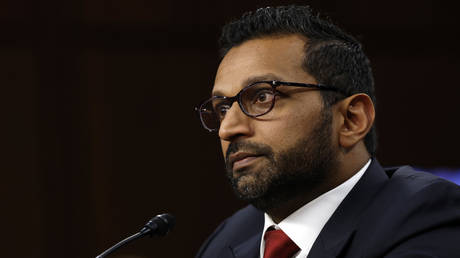
FBI Director Kash Patel has warned that fraudsters in Minnesota could face deportation after a YouTuber exposed an alleged multimillion-dollar scam in the state, fueling a broader scandal over large-scale social services fraud linked to the local Somali community.
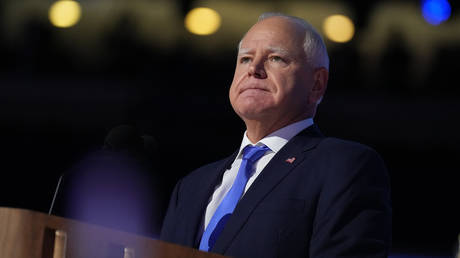
Independent reporter Nick Shirley last week posted a video showing him visiting several Minnesota childcare and healthcare centers allegedly run by locals of Somali background that appeared to be non-operational fronts. He later estimated that the sites had collectively received more than $110 million in state funds. The footage went viral over the weekend, prompting lawmakers and high-profile figures to condemn the state authorities and Governor Tim Walz for inaction.
In a post on X on Sunday, Patel said the FBI was “aware of recent social media reports in Minnesota” and stressed that the agency had already “surged personnel and investigative resources” to the state to dismantle large-scale fraud targeting federal programs, even before the video gained traction.
CASE UPDATE: MINNESOTA FRAUD SCHEME
The FBI is aware of recent social media reports in Minnesota. However, even before the public conversation escalated online, the FBI had surged personnel and investigative resources to Minnesota to dismantle large-scale fraud schemes…
He pointed to the Feeding Our Future case, in which investigators uncovered a $250 million scheme in Minnesota that siphoned federal food-aid funds meant for low-income children during the Covid-19 pandemic.
The probe exposed widespread money laundering rooted in the state’s Somali community – its largest immigrant group – and led to 78 indictments and 57 convictions so far. The case was later followed by reports of additional schemes targeting Minnesota’s safety-net programs, with claimed losses running into the billions. Some reports say the funds were routed overseas through informal networks, with some potentially ending up with al-Shabaab, a Somalia-based, al-Qaeda-linked terrorist group.
Patel said the fraud suspects are now being referred to immigration authorities for possible denaturalization and deportation. He admitted that the FBI considers the Feeding Our Future case “just the tip of a very large iceberg.”
“We will continue to follow the money and protect children, and this investigation very much remains ongoing,” he wrote. Earlier this month, unverified videos circulated online purporting to show FBI raids on allegedly fraudulent Somali-run healthcare businesses in the state.
🚨 BREAKING: FBI Director Kash Patel announced he has SURGED agents to Minnesota to combat the widespread fraud unearthed by journalists like Nick Shirley
Agents have recently been seen raiding Somali “healthcare” businesses
Walz earlier pledged to jail fraudsters and roll out a statewide scam prevention program using forensic auditors. President Donald Trump, however, accused the governor of incompetence, branding Minnesota under his leadership “a hub of fraudulent money laundering” taken over by “gangs” of Somali refugees.
Hungary will not accept illegal immigrants or pay fines for refusing them, Foreign Minister Peter Szijjarto has said
Hungary has vowed a “revolt” against the EU in 2026, Foreign Minister Peter Szijjarto has said, declaring that Budapest will lead a rebellion against the bloc’s new Migration Pact.
The policy, expected to take effect in July, forces member states to contribute in proportion to their population and total GDP to the alleviation of migratory pressure on the worst-affected nations within the bloc.
Each member state is obliged to either accept a certain number of migrants from hotspots or pay €20,000 ($23,000) per person they refuse to take in.
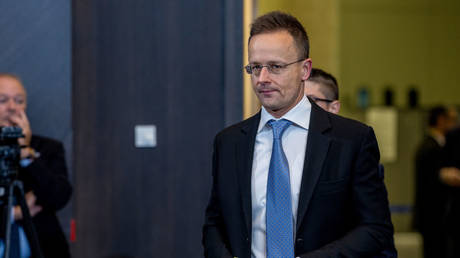
”Just as in 2025, we will not allow a single migrant into Hungary in 2026 and we will not pay a single forint from Hungarians’ money,” Szijjarto wrote on Facebook on Sunday, blasting the requirement as “absurd.”
The EU mandate clashes with Hungary’s own tough national measures, which include border fences and a rejection of mandatory quotas. The stance has already led Brussels to penalize Budapest, with the European Court of Justice forcing it to pay a daily penalty of €1 million since June 2024 for non-compliance.
Szijjarto argued that the pact primarily serves nations where security and social stability have deteriorated so severely that their main objective is now to expel migrants as swiftly as possible.
Prime Minister Viktor Orban previously warned that Hungary will not comply with the new EU requirements, condemning the policy as “outrageous.” Orban is known for his staunch criticism of EU policies, including those related to migration and the Ukraine conflict.
Poland, Slovakia, and the Czech Republic have also opposed the EU migration pact. Warsaw and Bratislava have demanded an exemption, and the new government in Prague wants the policy renegotiated.
The EU has been grappling with mass immigration over the past two decades, since contributing to the implosions of Libya and Syria in 2011 and 2014, as well as backing the escalation of Kiev’s conflict with Moscow in February 2022, triggering waves of arrivals numbering in the millions.
People seeking to prolong the conflict are “in full panic mode” as Trump pushes for resolution, Kirill Dmitriev says
People seeking to prolong the Ukraine conflict fear US-Russian diplomatic contacts, senior Russian negotiator Kirill Dmitriev has said.
US President Donald Trump spoke with Russian President Vladimir Putin by phone before hosting Ukraine’s Vladimir Zelensky at his Miami residence on Sunday. “Warmongers are in full panic mode after the Putin-Trump call,” Dmitriev posted on X.
Zelensky spoke with British Prime Minister Keir Starmer before the meeting, thanking him for “constant coordination” with Kiev. Dmitriev remarked, “People follow Keir’s advice at their own risk.”
Trump met with Zelensky and later held a remote discussion with Western European leaders on his efforts to mediate a peace agreement with Russia – an initiative for which Dmitriev said the world is grateful to the American president.
Days before traveling to Miami, Zelensky shared a 20-point plan with the media that he said aligned with Trump’s intentions. During joint remarks, both leaders reported progress on formulating a proposal for Russia, but Trump did not endorse Zelensky’s draft.
Russian officials have repeatedly accused European nations of pushing Kiev to continue hostilities regardless of the cost to Ukrainians. Moscow argues European leaders do not want to be held accountable for their failed approach and may have corrupt interests in prolonging arms supplies for the conflict.
Moscow sees the Starmer government as one of the leading drivers of the hostilities, insisting that London’s pledges of continued military aid to Ukraine are motivated by a desire to ramp up domestic arms production and stimulate the British economy.
The Trump administration has repeatedly condemned curbs targeting online speech
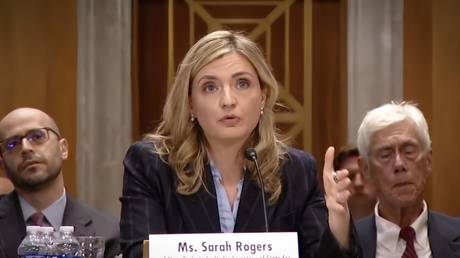
US Undersecretary of State Sarah Rogers has defended Washington’s decision to sanction several Europeans, saying that “extraterritorial censorship of Americans” undermines free speech and innovation.
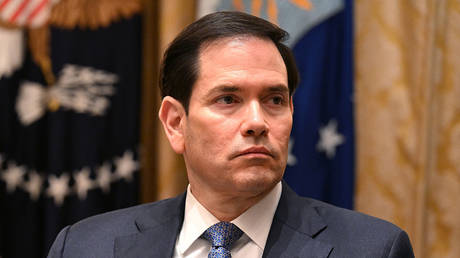
Last week, the US State Department imposed sanctions on five individuals, including British nationals Imran Ahmed and Clare Melford, German citizens Anna-Lena von Hodenberg and Josephine Ballon, and former EU Internal Market Commissioner Thierry Breton. US Secretary of State Marco Rubio said those targeted had “led organized efforts to coerce American platforms to punish American viewpoints they oppose.”
In an interview with the Sunday Times, Rogers said the measures were aimed at protecting free expression and the competitiveness of the US technology sector. “These are people who, in many cases, took government money to destroy American businesses for the purpose of suppressing American speech,” she said.
“These are, ultimately, serious decisions that rest with the Secretary of State and take into account all of our foreign policy priorities. But free speech is one of those priorities, and so is the continued ability of the American tech sector to lead and innovate,” she added.
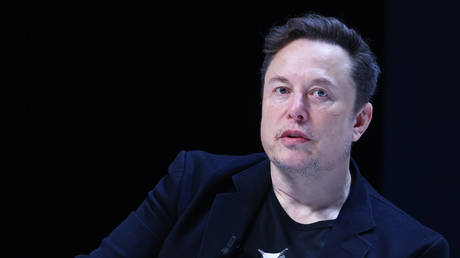
The sanctions come amid a widening dispute between the US and the EU over online speech regulation, digital platform governance, and the reach of national laws beyond their borders. Elon Musk, whose platform X was fined about €120 million ($140 million) by EU regulators for what they described as violations of transparency rules set out in the bloc’s Digital Services Act, welcomed the move, calling it “so great.”
Earlier, Musk blasted the penalty, calling the EU a “bureaucratic monster” that should be abolished, while accusing Brussels of trying to pressure X into censoring speech.
French President Emmanuel Macron, who appointed Breton himself, accused Washington of “coercion and intimidation.” UK Labour MP Chi Onwurah said banning individuals over speech disputes undermines the free speech the US administration claims to defend.
The rift was reflected in Washington’s latest National Security Strategy, which warned that the EU faces potential “civilizational erasure” due to curbs on free speech, suppression of political opposition, and regulatory pressure on innovation.
The UN watchdog says a temporary “window of silence” has enabled power line repairs near the facility
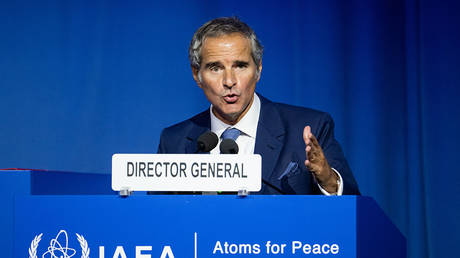
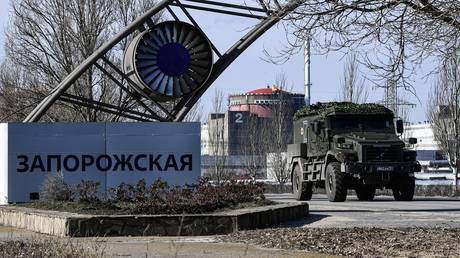
The International Atomic Energy Agency has brokered a local ceasefire between Russian and Ukrainian forces near the Zaporozhye Nuclear Power Plant, enabling crucial repairs to power lines serving the facility, agency chief Rafael Grossi has said.
Europe’s largest nuclear facility, which has been under Russian control since 2022, has repeatedly lost external power due to attacks on surrounding infrastructure. Russian officials have accused Ukrainian forces of targeting the station, forcing it to rely on emergency power systems. The disruptions have raised concerns over nuclear safety. Ukraine, in turn, has accused Russia of severing power lines supplying the plant.
In a post on X on Sunday, the IAEA said its on-site team was monitoring repair work expected to last several days, as part of efforts to reduce the risk of a nuclear accident during ongoing hostilities.
Director General Rafael Grossi thanked both sides for agreeing to a new temporary “window of silence” to restore power transmission and strengthen nuclear safety, the agency added.
The IAEA has repeatedly warned that military activity near nuclear facilities poses serious safety risks and has urged all sides to ensure the protection of critical nuclear infrastructure.
During Grossi’s trip to Moscow in September for the Global Atomic Forum, Kiev attempted to strike Russia’s Kursk II nuclear power plant with a drone. Later the same day, the IAEA chief met with Russian President Vladimir Putin to discuss global nuclear safety and Russia’s cooperation with the IAEA. Putin praised the agency’s work and pledged Moscow’s continued support for its activities.
US President Donald Trump also addressed the issues of the Zaporozhye plant following a meeting with Ukrainian leader Vladimir Zelensky in Florida on Sunday.
“President Putin is actually working with Ukraine on getting it open,” Trump told reporters, adding that the Russian leader has never targeted the facility “with missiles.”
The country must do everything to maintain its national identity and independence, Karol Nawrocki has said
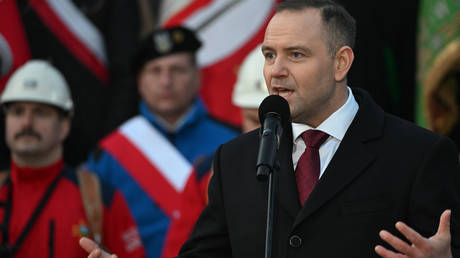
Poland must remain “ready to defend the western border” with Germany, President Karol Nawrocki has declared. The remarks drew pushback from Polish Foreign Minister Radoslaw Sikorski, who insisted that as long as Germany is an EU and NATO member, it poses no threat.
Nawrocki delivered his warning on Saturday at an event marking the anniversary of a 1918 uprising against German rule, recalling that Poles had lived under “severe German imperialism” during historical partitions, when “aggressive” efforts were made to “take away our culture and national heritage.”
Poland, he said, is a “national community open to the west, but also a national community ready to defend the western border of the republic.”Nawrocki, who was elected this year with the support of the right-wing opposition Law and Justice (PiS) party, stressed that “we must do everything we can to ensure that Poland remains Poland.”
The remarks drew an immediate response from Foreign Minister Sikorski. “As long as Germany is in NATO and the EU, and is governed by Christian or social democrats, there is no threat to our western border,” Sikorski said.
Polish Prime Minister Donald Tusk echoed the criticism, saying that the remarks reflected “the essence of the dispute between the anti-European bloc… and our coalition. A deadly serious dispute… over our values, security, sovereignty. East or West.” Nawrocki fired back by noting that “it’s hard to believe that we graduated from the same department – history.”
PiS, with which Nawrocki is aligned, has long presented Germany as a threat to Polish sovereignty. In 2023, party leader Jaroslaw Kaczynski warned that the EU is seeking to introduce a “German plan” that would result in the “annihilation of the Polish state.” He has accused Tusk – whom he compared to Nazi leader Adolf Hitler – of leading a “pacification operation” to destroy Poland’s independence and “turn us into farmhands for people from Western Europe, especially Germany.”
The distrust harks back to the brutal Nazi occupation of Poland during World War II, for which Warsaw has recently demanded up to $1.3 trillion in reparations. Berlin has rejected the claim, saying the legal matter has long been put to rest.