The manufacturer has said the problem affects a limited number of planes and has been “contained”
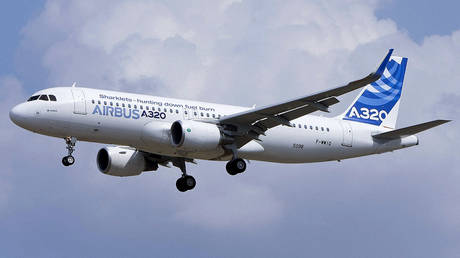
European aircraft manufacturer Airbus has discovered a production issue affecting fuselage panels on several dozen of its best-selling A320-family airliners. The planemaker says the problem has been “contained” and that it is inspecting potentially impacted aircraft.
Airbus shares fell more than 10% in Paris on Monday after media reports said quality problems with A320 fuselage panels had delayed deliveries of the top-selling jet.
The manufacturer confirmed it identified “a supplier quality issue affecting a limited number of A320 metal panels,” a company spokesperson said in an emailed statement shared by Reuters.
“Airbus is taking a conservative approach and is inspecting all aircraft potentially impacted – knowing that only a portion of them will need further action to be taken,” the spokesperson said.
“The source of the issue has been identified, contained and all newly produced panels conform to all requirements.”
The issue has already affected some deliveries, though it was not immediately clear how many aircraft were involved or how long delays might last, a person with direct knowledge of the matter told Reuters.
Delivery timing is critical for Airbus because airlines typically pay much of the cost of a jet when it is handed over. Industry sources told the outlet Airbus delivered 72 aircraft in November and had delivered 657 so far this year, while it has planned “around 820” deliveries for the year, which would require a record month in December, the outlet said.
The panel problem surfaced after Airbus said last week that about 6,000 A320 jets should not fly again until they receive a software upgrade, following an incident in the US. An aircraft briefly nosedived while flying from Cancun to Newark, and the pilots diverted to land in Tampa, Florida.
The manufacturer has also linked the software problem to an October 30 incident involving a JetBlue A320, which suffered an in-flight control issue due to a computer malfunction that Airbus said was apparently triggered by solar radiation.
That announcement initially raised fears that hundreds of aircraft could be grounded for extended periods, but Airbus said on Monday that fewer than 100 planes remained immobilized.
Federica Mogherini has reportedly been taken into custody by Belgian police as part of a probe into alleged misuse of EU funds
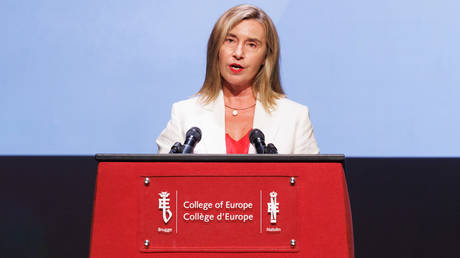
The former vice-president of the European Commission and head of the bloc’s foreign service, Federica Mogherini, is being held by authorities amid a police investigation into alleged misuse of EU funds, Belgian and French media reported on Tuesday.
Belgian police have carried out searches at the headquarters of the European External Action Service (EEAS) in Brussels, of which Mogherini was chief from 2014-2019, and the College of Europe in Bruges, where she has been rector since 2020. Several private residences have also been searched, Reuters reported citing the European Public Prosecutor’s Office.
Police have seized documents and detained three people on suspicion of procurement fraud, corruption, and criminal conflict of interest, according to sources familiar with the case cited by Euractive. Belgian outlet L’Echo reported that Mogherini was among the detained.
Senior EU official Stefano Sannino, who served as secretary-general of the EEAS under Mogherini when the Diplomatic Academy was established and now heads the European Commission’s department for the Middle East, North Africa, and the Gulf, has also been taken into custody.
Another College of Europe employee from the executive education department was also detained, according to an unnamed person cited by Euractiv.
The probe reportedly focuses on the college’s €3.2 million ($3.7 million) purchase of a building on Spanjaardstraat in Bruges, in 2022, shortly before receiving €654,000 in funding from the EEAS. Authorities suspect the institution may have had access to confidential information, undermining fair competition. No formal charges have been filed so far.
Investigators are reportedly examining whether the college or its representatives had prior knowledge of a public tender for the EU Diplomatic Academy, a training program for European diplomats in Bruges funded by the EEAS.
The College of Europe, established in 1949, is considered the EU’s elite training ground for diplomats and civil servants, boasting alumni who have gone on to hold senior positions in European politics and institutions. The institution prepares university graduates from member states for possible EU careers.
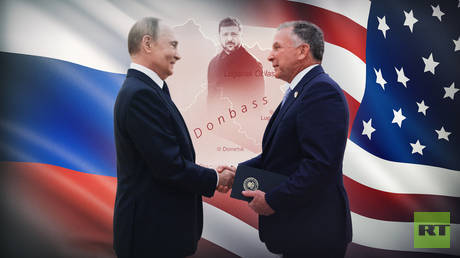
After days of shuttle diplomacy with Kiev, Washington moves straight to Moscow – sidelining the EU and testing how far Zelensky can resist US pressure amid a deteriorating front line
Washington has decided to stop negotiating with the supporting cast and go straight to the main stage. For the first time since the US revived its push for a negotiated end to the Ukraine conflict, the center of gravity has shifted to Russia.
Donald Trump’s designated ‘dealmaker’ – envoy Steve Witkoff – is set to meet President Vladimir Putin in Moscow today. Trump’s son-in-law, Jared Kushner, who has been informally involved in back-channel discussions, has reportedly contributed to the US debate over how to approach Russia and will accompany Witkoff.
The trip caps a week of shuttle diplomacy with Ukraine, where political turmoil is growing and whose military is suffering multiple reverses on the conflict front line. Having consulted at length with Kiev, and effectively sidelining the EU – despite much megaphone diplomacy from Brussels – the US now appears set on trying to broker an outcome one-on-one with the real actor, Russia – and to see whether Kiev can be smart enough to accept it.
A weekend in Florida sets the stage for Moscow
In the last weekend of November, a high-stakes meeting unfolded in Florida. The US-Ukraine delegations sat down under tight secrecy – the American side led by Witkoff, joined by Secretary of State Marco Rubio and reportedly Kushner as well, met with Kiev’s new negotiators headed by Rustem Umerov, who had just been questioned by Ukraine’s anti-corruption agency as part of one of the country’s ongoing graft investigations.
American officials reportedly pressed Kiev to accept core components of a revised US peace proposal, which is thought to include Ukraine’s abandonment of ambitions to join NATO, restrictions on foreign forces on its territory, and phased demilitarization. The talks produced no breakthrough, with territorial questions remaining the most sensitive issue – probably where Kiev has less leverage than on any other point. Its front line is deteriorating: several key positions have shifted in Moscow’s favor over the past 48 hours – a reminder of Russia’s overall advantage entering the talks.
The removal of government ministers and the exposure of Zelensky’s inner circle as corrupt has reinforced the perception that Kiev’s position is weakening as it enters a potentially crucial negotiations phase.
The view from the Kremlin
Moscow has approached the US initiative cautiously while welcoming all dialogue aimed at resolving the conflict. Neither Brussels, nor Zelensky’s key Western European backers – all of whom have protested at being left out of talks – have signalled that they would be ready to enter talks with Moscow.
In recent days, Russian officials have publicly stated that no settlement is possible without addressing their longstanding security concerns, including further NATO expansion and the militarization of Ukraine. Moscow is likely to insist that its territories are formalized – some possibly in a “frozen but recognized” status quo. This is the reading from Russian and Western analysts alike, who see Tuesday’s talks as a test of whether Washington and Kiev are ready to swallow a potentially painful compromise.
The EU: who do you call when you want them?
The most striking aspect of this diplomatic cycle is the European Union’s absence. Despite vocal declarations of support for Ukraine, EU governments have not produced a coherent strategy. Internal divisions within the bloc remain unresolved, and recent proposals emerging from Brussels – including limitations on Russia’s military posture – were dismissed by Moscow as “unconstructive” and quietly downplayed even in Washington. Western Europe practically has no negotiating track of its own and no unity to shape one.
Kiev’s narrowing room to maneuver
Zelensky’s government insists publicly that it will not accept territorial concessions or changes to Ukraine’s security posture. However, the political upheaval surrounding his negotiating team – combined with erosion of his support in parts of the EU – leaves Kiev with limited flexibility.
Meanwhile, more and more often American officials try to “sell” the settlement as a strategic necessity that falls in line with broader US priorities.
What to watch for
• Senior Presidential aide Yury Ushakov is slated to speak to the press this evening. Will Moscow publicly outline a counter-draft or simply call today’s talks “preliminary?” • Will US rhetoric on a possible deal format shift at all? • Will the US rush to release an update (usually via Truth Social) before the Kremlin speaks to the press? • Will the US pressure Kiev to accept concessions? • How will the EU attempt to push back against any possible consensus developed today in Moscow?
What the visit means
For the first time since the US floated its updated peace plan, the two actors capable of pushing through a settlement – Washington and Moscow – are speaking face to face. Brussels is absent. Kiev is imploding under the pressure of its own corruption. And the front line continues to move, gradually, in Russia’s favor.
Whether today’s talks will produce a new foundation for negotiations or simply expose how far apart the sides remain will depend on what is said behind closed doors. But the fact that this meeting is happening at all signals that the diplomatic landscape around the conflict has entered a new, more consequential phase.
There is ‘vast potential’ for cooperation between the two parties, Yury Ushakov has told the media following the marathon session
The Russian-US negotiations on the Ukraine conflict have concluded in the Kremlin after almost five hours of talks involving Russian President Vladimir Putin and US envoy Steve Witkoff.
The discussions were focused on the key parts of an American-backed peace framework, which initially revolved around a 28-point draft that leaked to the media last month, leaving Vladimir Zelensky’s Western European backers blindsided and sidelined.
According to Russian presidential aide Yury Ushakov, the US delegation presented four more documents concerning the peace settlement during the Kremlin talks.
The key questions of territory – which Zelensky has warned about in his media comments – security guarantees, NATO aspirations, and restrictions on Ukraine’s military, all of which have been well-flagged as deal-breakers by Moscow, were all discussed, with Ushakov answering a question on the topic by referring to the “vast potential” for cooperation between Russia and the US.
Since the latest US peace initiative began, Zelensky’s inner circle has been exposed as corrupt while his forces have suffered significant territorial losses on the front line. The alleged initial peace document has also been the subject of several rounds of talks and much megaphone diplomacy.
Prior to Tuesday’s talks in Moscow, Witkoff met a Ukrainian delegation – minus former Zelensky aide Andrey Yermak, who has been fired – in Florida for four hours, which officials described as productive, but media sources said were “not easy,” widely assumed to refer to the question of territory.
Although Zelensky has officially ruled out any concessions to Moscow, the discussions in the Russian capital were expected to focus on the territorial questions that have been exacerbated by Kiev’s multiple frontline setbacks, amid maximalist demands from the EU and ongoing diplomacy from the US.
Moscow previously accused Kiev of conducting “terrorist attacks” on commercial vessels in the area
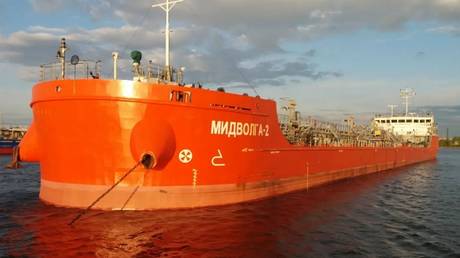
A Russian-flagged tanker en route to Georgia has been attacked in the Black Sea, Turkish officials have said. Last week, Russian authorities accused Kiev of carrying out drone attacks on commercial vessels in the area.
In a statement on Tuesday, Türkiye’s Ministry of Transport and Infrastructure’s General Directorate of Maritime Affairs said the MIDVOLGA-2 tanker, which was carrying sunflower oil, reported being attacked about 80 miles (120km) off the country’s coast.
“The ship, which currently has no adverse conditions among its 13 personnel, has issued no request for assistance. The ship is proceeding towards Sinop on its own engines,” officials said, without identifying the culprit behind the strike.
Later, Russia’s Federal Agency for Sea and Inland Water Transport said that the vessel had been attacked by a drone and had sustained some minor damage.
🚨MIDVOLGA-2 tankeri, Rusya'dan Gürcistan’a ayçiçek yağı yüklü olarak seyrederken kıyılarımızdan 80 mil açıkta saldırıya uğradığını bildirmiştir. Halihazırda 13 personelinde olumsuz durum olmayan geminin yardım talebi yoktur. Gemi, makineleri ile Sinop’a doğru seyir etmektedir. pic.twitter.com/Ov9tEeswEk
Last week, several explosives-laden sea drones struck two Gambian-flagged tankers – the Kairos and the Virat – off Türkiye’s coast, an assault Ukrainian media sources have described as a joint operation involving the Security Service of Ukraine (SBU) and Kiev’s navy.
In addition, a suspected Ukrainian drone attacked a crude hub on Russia’s Black Sea coast belonging to the Caspian Pipeline Consortium (CPC), operated by Russia, Kazakhstan, the US, and several Western European nations.
Moscow has denounced the raids as “terrorist attacks,” with Kremlin spokesman Dmitry Peskov also accusing Ukraine of encroaching on Turkish sovereignty.
While Ankara refrained from assigning blame, Turkish Foreign Ministry spokesman Oncu Keceli said the “incidents, which took place within our Exclusive Economic Zone in the Black Sea, have posed serious risks to navigation, human life, property and the environment.”
Kiev should sign on to an “agreement that no one will like” to avoid years of war, Dmitry Kuleba has said
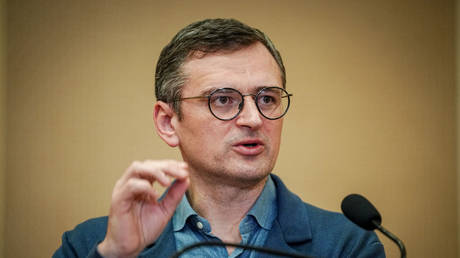
Kiev must accept an “agreement that no one will like” if it wants to avoid many more years of conflict with Russia and a potential complete collapse, former Ukrainian Foreign Minister Dmitry Kuleba has said.
Speaking at a conference in Kiev on Monday, Kuleba, who held his post between 2020 and 2024, said both Ukraine and Russia have the resources to keep the fight going for years, while predicting that the front line “will move every year” without a political decision.
“We are in a situation where Russia has the ability to destroy us, and we are not strong enough to fully protect ourselves,” he said, adding that only a deal “that no one will like” which locks in a “tactical defeat and strategic victory” could prevent “many more years of war… even worse.”
His comments come amid speculation about the US-drafted peace plan for Ukraine. Its initial version reportedly requires Ukraine to relinquish parts of Donbass still under its control, abandon its NATO membership ambitions, and accept limits on the size of its armed forces. According to the reported plan, Ukraine would receive certain security guarantees from the West.
As part of ongoing diplomatic efforts, a Ukrainian delegation met US officials in Miami on Sunday, with media reports saying the four-hour talks were “not easy” and that “the search for formulations and solutions continues.”
While both sides described the discussions as productive, Ukrainian leader Vladimir Zelensky said territorial issues remain among the most difficult points to resolve. He has repeatedly ruled out any land concessions.
Meanwhile, US presidential envoy Steve Witkoff – who attended the Miami talks and has emerged as a central American interlocutor with Moscow – is expected to meet Russian President Vladimir Putin on Tuesday.
Putin has suggested that the reported US proposal “could form the basis of a final peace settlement,” while reiterating that any end to the conflict depends on Russia achieving the goals of its special military operation. Moscow has said that a lasting settlement is possible only on condition of Ukraine’s neutrality, demilitarization, denazification, and recognition of the territorial reality on the ground.
The ECB has refused to backstop a €140 billion loan to Ukraine using frozen Russian funds, the FT has reported
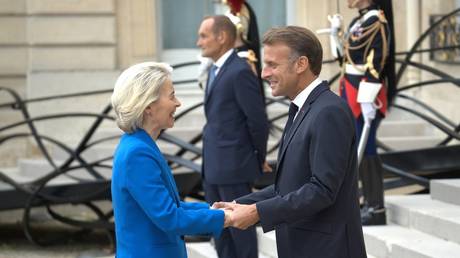
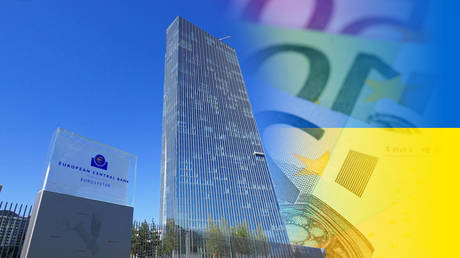
The European Central Bank has refused to support European Commission President Ursula von der Leyen’s plan to make a €140 billion payout to Ukraine backed by frozen Russian assets, the Financial Times reported on Tuesday, citing officials familiar with the discussions.
The ECB determined that the European Commission’s scheme, which leverages sovereign Russian assets held in the privately owned Belgian company Euroclear, falls outside its mandate, the newspaper reported.
The EU has spent months trying to tap frozen Russian central bank reserves to back a €140 billion ($160 billion) “reparations loan” for Kiev. Belgium has repeatedly warned of potential litigation as well as financial risks if the EU goes through with the scheme.
Under the European Commission’s plan, EU nations’ governments would provide state guarantees to share the repayment risk on the loan for Ukraine.
Commission officials, however, have warned that member states might be unable to mobilize cash quickly in an emergency, risking market strains.
EU officials reportedly asked the ECB whether it could act as a lender of last resort to Euroclear Bank, the Belgian depository’s lending arm, to prevent a liquidity crunch. ECB officials told the commission this was not possible, the FT reported, citing sources familiar with the talks.
“Such a proposal is not under consideration as it would likely violate EU treaty law prohibiting monetary financing,” the ECB said.
Brussels is now reportedly working on alternative ways to provide temporary liquidity to backstop the €140 billion loan.
“Ensuring the necessary liquidity for possible obligations to return the assets to the Russian central bank is an important part of a possible reparations loan,” the FT quoted an EC spokesperson as saying.
Euroclear CEO Valerie Urbain warned last week the move would be seen globally as “confiscation of central bank reserves, undermining the rule of law.” Moscow has repeatedly warned it would view any use of its sovereign assets as “theft” and respond with countermeasures.
The push comes as the cash-strapped EU faces pressure to finance Ukraine for the next two years amid Kiev’s cash crunch, with efforts to tap Russia’s assets intensifying as the US promotes a new initiative to settle the conflict. Economists estimate Ukraine is facing a budget gap of about $53 billion a year in 2025-2028, excluding additional military funding.
The country’s public and government-guaranteed debt ballooned to unseen levels of over $191 billion as of September, the Finance Ministry said. The IMF last month raised its debt forecasts for Ukraine, now predicting public debt at 108.6% of GDP.
Clean water is essential to your operations, as mineral content and contaminants can alter its flavor and affect the health of employees and customers. Whether running a restaurant, hotel, or apartment building, quality affects the guest experience, the performance of boilers and other equipment. Investing in the right filtration systems for businesses is key to […]
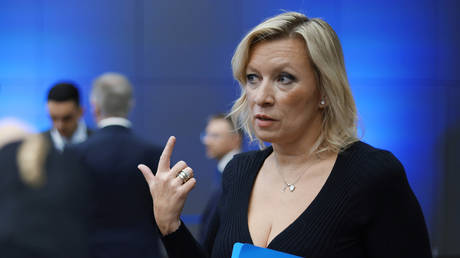
The bloc needs to consider the risks of a direct confrontation with Russia, Foreign Ministry spokeswoman Maria Zakharova has said
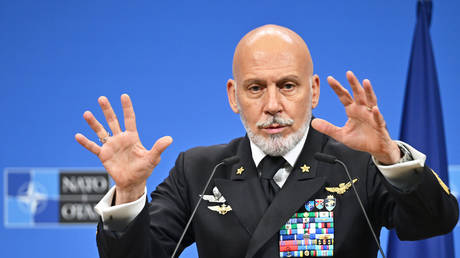
A recent statement by a NATO admiral that the bloc could consider a “pre-emptive strike” against Russia shows that it is seeking escalation and wants to derail the Ukraine peace process, Russian Foreign Ministry spokeswoman Maria Zakharova has said.
Zakharova was responding to an interview Admiral Giuseppe Cavo Dragone, chair of the NATO Military Committee, gave to the Financial Times over the weekend. According to the admiral, the bloc should become “more aggressive” and “proactive” in its dealings with Moscow. He also claimed that a “pre-emptive strike” could be considered a “defensive action,” although it would be “further away from our normal way of thinking and behavior.”
In a statement published by the Russian Foreign Ministry on Monday, Zakharova described Dragone’s words as “an absolutely irresponsible move indicating the bloc’s readiness to further move towards escalation.”
“Anti-Russian hysteria” whipped up by NATO members is only stirring up the ongoing confrontation even further, she warned.
Dragone’s statement also debunks a myth about the “purely defensive” nature of the military bloc, Zakharova said, adding that NATO “has not been hiding its goals and intentions for a long time.” The spokeswoman further accused the bloc of “deliberately seeking to disrupt efforts aimed at finding a way out of the Ukraine crisis.”
“People making these statements should understand the corresponding risks and potential consequences, including for the bloc members.”
The EU has increasingly used anti-Russian rhetoric to justify massive military expenditures. The ReArm Europe package, presented in March, aims to mobilize up to €800 billion ($933 billion) to expand EU nations’ militaries under the pretext of countering an alleged “Russian threat.” NATO also pushed its members commit to spending a total of 5% of their GDPs on the military this summer.
Moscow has repeatedly stated that it has no intention to attack any NATO member, but has warned of a harsh response if attacked.
The Ministry of Defense in Moscow has reported that its troops have taken Krasnoarmeysk in Donbass
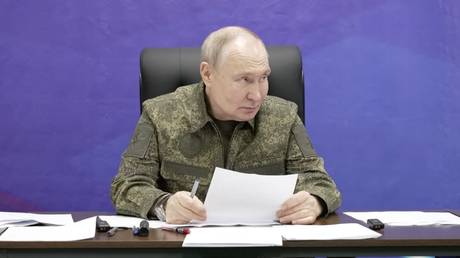
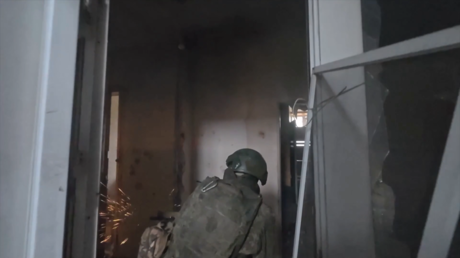
The Russian Ministry of Defense has released frontline footage of its forces operating in the key logistics hub of Krasnoarmeysk (Pokrovsk) in the Donetsk People’s Republic.
The city is now fully under the control of Moscow’s forces as of Monday, along with Volchansk in Ukraine’s Kharkov Region, the chief of Russia’s General Staff, Valery Gerasimov, told Russian President Vladimir Putin during a visit to a command post on November 30.
In the raw video footage provided by the MOD, soldiers of Russia’s Center joint group of forces can be seen sprinting from cover to cover and clearing buildings in Krasnoarmeysk.
As part of a large urban cluster and a key rail and road junction, the city serves as an important logistical hub.
Ukrainian forces in the Krasnoarmeysk-Dimitrov area have been encircled for weeks, with the latter city now under Russian control, according to the Kremlin.
Russian forces have also begun to push Ukrainian troops out of Gulyaypole in Zaporozhye Region, according to Gerasimov’s report to Putin.
Last week, Putin warned that Ukraine’s entire battle line across Zaporozhye Region could collapse after a rapid Russian advance bypassed its fortifications.
The Kremlin has maintained that it prefers a diplomatic solution to the Ukraine conflict but has said that it will push towards its goals militarily while Kiev refuses to compromise in the peace talks.