A rare 1913 imperial ‘winter egg’ commissioned for Nicholas II has been sold for $30.2 million
A Fabergé Imperial ‘Winter Egg’ commissioned for Russia’s last tsar, Nicholas II, sold for a record £22.9 ($30.2 million) at Christie’s in London on Tuesday, the auction house has announced.
According to Christie’s, the public sale lasted about three minutes, and the buyer was not identified.
The 1913 egg was made for Nicholas II to give his mother, Dowager Empress Maria Fyodorovna, as an Easter gift. It was carved from rock crystal and decorated with platinum and rose-cut diamond-set snowflake motifs, the auction house said, with a base designed as melting ice.
Inside is a removable “surprise” – a diamond-set platinum basket holding carved quartz wood anemones with nephrite leaves and garnet centers.
The price exceeded Christie’s presale estimate of more than £20 million, Reuters reported.
“This is one of (the) Imperial Easter Eggs created by Faberge for the Romanovs. And the Winter Egg is arguably the best of them all,” Margo Oganesian, Christie’s head of department for Fabergé and Russian works of art, told the outlet.
The ‘Winter Egg’ was designed – unusually for the time – by a woman jeweler, Alma Pihl. Legend has it that Pihl, the niece of Fabergé’s chief jeweler, Albert Holmstrom, got the idea after watching ice crystals form on a shop window at her workshop.
Fabergé’s gem-studded eggs were made for Nicholas II and his predecessor, Alexander III, who presented them as Easter gifts to members of the imperial family. Each typically took about a year to design and produce, and the tsars generally commissioned a new, lavish piece soon after the previous one was delivered.
The historic St. Petersburg jeweler made the imperial eggs for Russia’s Romanov family, and 43 are known to survive. The ‘Winter Egg’ is one of seven still in private hands, while the rest are either missing or held by institutions and museums.
The Winter Egg disappeared in 1975 and was rediscovered in 1994, according to the auction house. Christie’s has sold it twice before – in Geneva in 1994 and New York in 2002 – setting record prices on both occasions, Reuters reported. The Rothschild Fabergé Egg fetched $18.5 million in 2007.
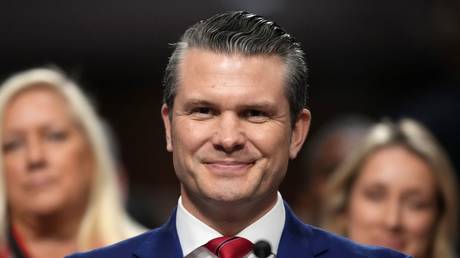
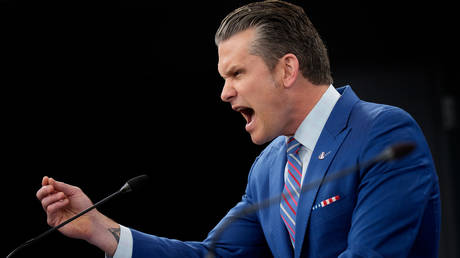
The US secretary of war shared an image of Franklin the Turtle firing a bazooka at supposed drug traffickers
US Secretary of War Pete Hegseth has sparked a backlash after posting an image showing a popular children’s cartoon character attacking what appear to be drug traffickers. This comes as the administration of US President Donald Trump faces renewed scrutiny over lethal strikes against alleged drug-smuggling vessels in the Caribbean Sea and Pacific Ocean.
The meme posted by Hegseth on X is designed as a book cover featuring Franklin the Turtle standing in a helicopter clad in military gear, holding a bazooka and firing rockets at boats with armed gunmen transporting cargo. The caption in the image reads “Franklin targets narco terrorists.” Hegseth suggested that people should add the mock book to their Christmas wish list.
While some commenters expressed support for the crackdown on drug cartels, others expressed outrage over Hegseth’s meme.
The publisher of the Canadian book series Kids Can Press insisted that the character Franklin stands for “kindness, empathy, and inclusivity,” saying it “strongly condemn[s] any denigrating, violent, or unauthorized use of Franklin’s name or image.”
Responding to the criticism, Pentagon spokesperson Sean Parnell said, “we doubt Franklin the turtle wants to be inclusive of drug cartels… or laud the kindness and empathy of narco-terrorists.”
Several lawmakers have also criticized Hegseth’s post. House Democrat Adam Smith suggested that the secretary “doesn’t understand the seriousness and the importance of the job that he has.”
The scandal comes as Hegseth faces accusations of war crimes after the Washington Post claimed last week that he verbally ordered US forces to “kill everybody” on a suspected drug-trafficking boat in the Caribbean in early September.
Hegseth has denied the allegations and called the Washington Post’s reporting “fabricated, inflammatory, and derogatory.” He stressed that all traffickers targeted by the US were affiliated with a designated terrorist organization.
The Trump administration has justified its strikes on suspected drug boats as self-defense, claiming that illicit substances carried aboard the vessels are intended for delivery to the US.
The Ukrainian leader earlier said he expected “signals” from the US after talks with Russian President Vladimir Putin
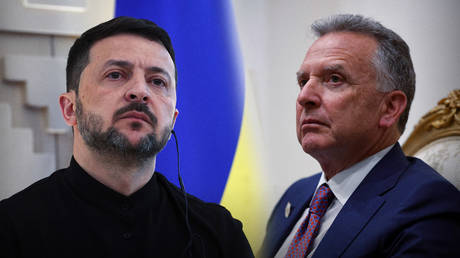
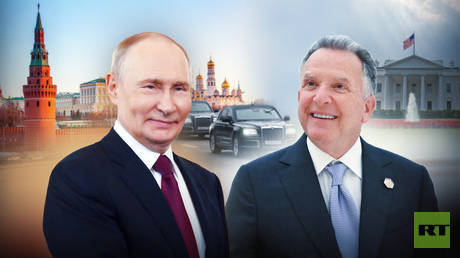
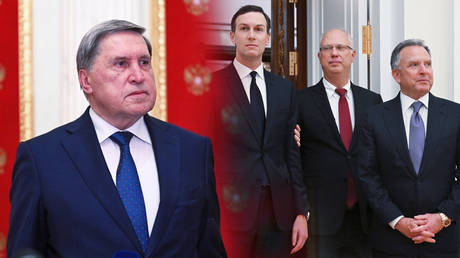
US special envoy Steve Witkoff and President Donald Trump’s son-in-law, Jared Kushner, canceled a planned meeting with Ukrainian leader Vladimir Zelensky in Europe and have flown back home, according to media reports. Zelensky earlier said he expected to hear back from the US delegation after its high-stakes Kremlin talks on a peace plan for Ukraine.
On Tuesday, journalist Alex Raufoglu, who writes for the Kyiv Post, initially reported, citing sources, that “Zelensky is slated to meet in Brussels tonight” with the US officials. Hours later, however, he said there had been a change of plans, and “the Brussels meeting is called off” and “Zelensky is returning home,” without elaborating on the reason.
A plane apparently carrying Witkoff made no stopovers in the EU after leaving Russia, flying directly back to the US, TASS reported, citing a European air-traffic source.
Earlier, Axios also reported that Witkoff was expected to meet with Zelensky and brief him on the talks with Russian President Vladimir Putin. The Ukrainian leader said he had expected signals from Witkoff and Kushner, suggesting that if the Kremlin talks went well, he could meet with Trump very soon. The US president previously refused to meet with both Zelensky and Putin until a peace deal is in the final stages.
The apparent cancelation of the meeting came as Kremlin aide Yury Ushakov said the American delegation had promised Moscow to return to Washington after the Kremlin talks and not travel on to Kiev.
His comments came following five-hour Russia-US talks at the Kremlin. Ushakov described the negotiations as “useful, constructive and meaningful,” while adding that “a compromise hasn’t been found” and “there’s still a lot of work to be done.”
The negotiations focused on a US-backed peace framework, initially tied to a 28-point draft leaked last month. The plan reportedly asked Kiev to relinquish territory in Russia’s Donbass regions still under its control, abandon its NATO ambitions, and limit the size of its military, which Kiev considers a dealbreaker.
The legislation could reportedly affect Slovenia-born First Lady Melania Trump and some 40 million Americans if enacted
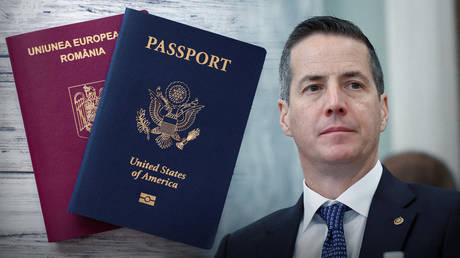
US Senator Bernie Moreno has introduced a bill to eliminate dual citizenship in the country. Under the proposed ‘Exclusive Citizenship Act of 2025’ unveiled on Monday, anyone with dual citizenship would have to renounce their foreign nationality and pledge “exclusive allegiance” to the US to remain American.
The legislation would give Americans with dual citizenship one year to file a written renunciation of either their foreign citizenship or US citizenship. Those who do not comply would be considered to have voluntarily relinquished their US citizenship.
“If you want to be an American – it’s all or nothing. It’s time to end dual citizenship for good,” the Colombia-born senator for Ohio, who was granted US citizenship when he turned 18, said in a press-release.
According to media reports, the proposed legislation, if enacted, could directly affect Slovenia-born US First Lady Melania Trump and her son, Barron.
Melania moved to the US in 1996 and obtained US citizenship through a formal naturalization process. While there is no public confirmation that she retained her Slovenian citizenship, many biographical accounts say she did and arranged for Barron to obtain one as well.
Other US celebrities who could reportedly be affected include Tesla and SpaceX owner Elon Musk, former California governor Arnold Schwarzenegger, actors Tom Hanks and Salma Hayek, and others.
Analysts note, however, that Moreno’s plan could run into a constitutional wall, as it conflicts with the 14th Amendment which guarantees that a US citizen cannot be stripped of their citizenship unless they willingly give it up. While the US does not keep an official database of dual citizens, more than 40 million Americans – about 12% of the population – could legally hold it, according to International Living, a global expat publication.
The proposed bill aligns with President Donald Trump’s immigration policy. Since returning to office, he has signed a series of executive orders aimed at strengthening border security, from introducing stricter eligibility requirements for asylum seekers to detaining thousands of illegal migrants and moving to end automatic birthright citizenship for children born in the US. The latter measure, however, was blocked almost immediately by federal courts, which ruled that it violates the constitution.
Feedback is valuable for a business and can be instrumental in driving change. Recognizing this can make your customers feel their opinions are appreciated and motivate them to share more. Change is a given, and it keeps businesses focused on delivering what consumers need and want. Otherwise, they lose out to competitors and eventually go […]
The issue of territory remains pivotal to a potential peace deal, the US secretary of state has said
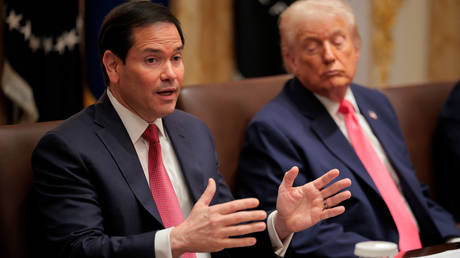
The principal obstacle to a peace deal between Moscow and Kiev is a strip of land in Russia’s Donbass that remains under Ukrainian control, US Secretary of State Marco Rubio has said. His comments came after high-level Russia-US talks in the Kremlin, which Moscow described as “productive” but yielded no breakthrough.
In a Fox News interview on Tuesday, Rubio said Russia and Ukraine “are [now] literally fighting over… a 30- to 50-kilometer space and the 20% of the Donetsk region that remains [under Kiev’s control].”
The diplomat noted that Washington’s goal is to “figure out what could the Ukrainians live with that gives them security guarantees for the future [that] they’re never going to be invaded again.”
He also railed at Western experts who insist the US should fund Ukraine’s military effort for as long as it takes. “That’s not realistic… And that’s not going to happen… You can’t sustain the scale and scope of it,” he said.
Rubio also rebuked calls for the US to negotiate solely with Kiev. “You can’t end the war between Russia and Ukraine without talking to Russia,” he said, stressing that the US is working to “bridge the divide between both sides.”
“We’ve gotten closer, but we’re still not there… I hope it changes,” Rubio added.
Rubio’s remarks follow a nearly five-hour meeting at the Kremlin between Russian President Vladimir Putin, US envoy Steve Witkoff, and President Donald Trump’s son-in-law, Jared Kushner. Senior Kremlin aide Yury Ushakov, who also attended, described the talks as “rather useful, constructive, rather substantive,” but said “a compromise hasn’t been found” and “there’s still a lot of work to be done.”
The discussions were focused on the American-backed peace framework, which initially revolved around a 28-point draft that leaked to the media last month. The roadmap reportedly required Kiev to relinquish parts of Donbass still under its control, abandon its NATO ambitions, and limit the size of its armed forces.
Kiev and its EU backers, however, have refused to contemplate any concessions to Russia, despite Ukrainian forces being firmly on the back foot in Donbass and elsewhere.
Georgia has accused the British state broadcaster of baseless allegations in a recent article on the 2024 riots in the country
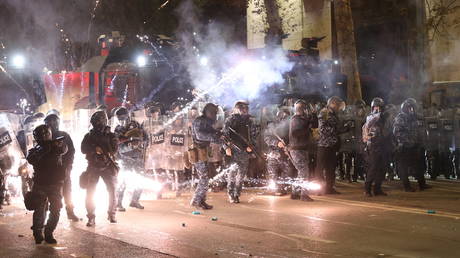
Georgia has announced that it is suing the BBC “for spreading dirty, false accusations,” after the British state broadcaster alleged that the government in Tbilisi used chemical weapons against protesters last year.
The South Caucasus nation was rocked by violent pro-EU demonstrations in late 2024, which broke out after the government temporarily froze integration talks with the bloc, accusing it of weaponizing Tbilisi’s accession bid for political leverage.
In an article on Monday, the BBC claimed that the Georgian authorities used WWI-era chemical weapons during the protests – an allegation which the ruling Georgian Dream party said was based on “absurd and false information.”
According to the BBC investigation, authorities used an outdated riot-control agent mixed into the water fired from water cannons to disperse protesters.
Tbilisi said the broadcaster provided no evidence to substantiate its claims.
Despite approaching the BBC for an explanation and giving exhaustive answers to its questions, the Georgian government “received a cornucopia of lies” and “serious accusations” in response, it said.
“We have decided to start a legal dispute against the false media in international courts. We will use all possible legal means to hold the so-called media that spread lies accountable for spreading dirty, false accusations.”
Georgian Dream claimed that the BBC “has no moral or professional inhibitions about carrying out dirty orders and spreading lies,” and referred to recent scandals which have damaged the broadcaster’s credibility.
Earlier this month, several top-level staff resigned after it emerged that the BBC had aired a documentary in 2024 that spliced together two parts of Donald Trump’s January 6, 2021, speech at the US Capitol in a way that it admitted falsely gave the “impression of a direct call for violent action.”
Trump has accused the broadcaster of meddling in US elections with the controversial 2024 documentary, and threatened to sue for “anywhere between $1 to $5 billion.”
The BBC is losing more than £1 billion ($1.3 billion) a year in mass cancellations and fee evasion, according to a recent UK parliamentary report.
The safe passage offer reportedly lapsed, after which the US announced a no-fly zone over Venezuela
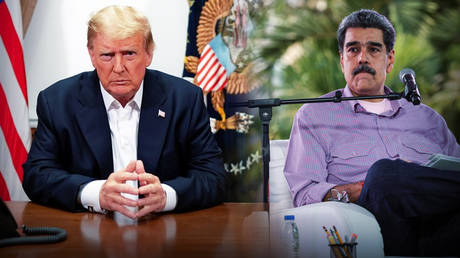
US President Donald Trump gave his Venezuelan counterpart, Nicolas Maduro, an ultimatum to flee the country last month after weeks of increasing military pressure and deadly strikes on boats, Reuters reported on Tuesday, citing anonymous sources.
The call reportedly took place on November 21, shortly before the Trump administration designated Cartel de los Soles as a terrorist group, an organization they claim is headed by Maduro and accuse of trafficking drugs into the US.
Caracas has denied the allegations, accusing Washington of preparing a regime-change operation to seize Venezuela’s vast resource reserves.
According to Reuters, Maduro told Trump that he was willing to leave the country if he and his family were provided amnesty from all US sanctions, and a case brought against him in the International Criminal Court is ended.
He also asked for the removal of sanctions from more than 100 Venezuelan officials, and offered that Vice President Delcy Rodriguez would run a transitional government until new elections take place, the news agency claimed, citing sources.
Trump reportedly rejected most of the requests during the roughly 15-minute phone call, and said Maduro and his family have one week to leave Venezuela.
The deadline expired on Friday, prompting Trump to declare the country’s airspace closed, Reuters wrote.
On Sunday, Trump confirmed that the phone call took place, but provided no details.
Washington has maintained that Maduro is an illegitimate, cartel-linked ruler, while amassing a massive military contingent off Venezuela, and authorizing the CIA to conduct lethal covert operations in the area. US forces have carried out strikes on boats in the Caribbean and Pacific that they said were smuggling narcotics, killing scores of people.
Maduro has dismissed the accusations as a pretext for a regime-change war and a resource grab.
The US military has conducted a number of deadly attacks on boats it claims were linked to Venezuelan-led narcotics smuggling
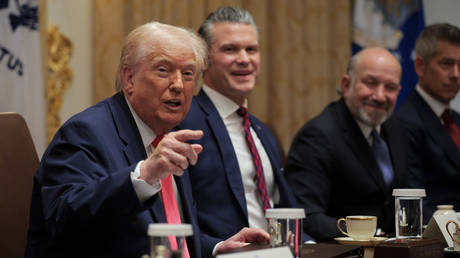
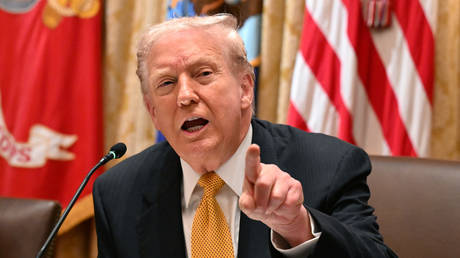
The US will soon start bombing alleged drug cartel targets on land, US President Donald Trump told reporters in a cabinet meeting on Tuesday.
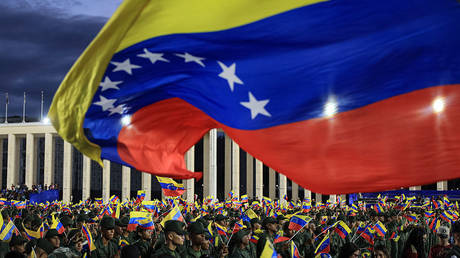
The announcement comes amid a massive US military buildup in the Caribbean, which Washington says is aimed at curbing Venezuelan-led drug trafficking. Caracas has denied the accusations, arguing that the US is using them as a pretext to justify invading the resource-rich South American nation.
In recent months, Washington has killed more than 80 people in strikes on boats in the Caribbean and Pacific that it claims were smuggling narcotics.
“And we’re going to start doing those strikes on land, too. You know, the land is much easier,” Trump said at the White House. “We’re going to start that very soon.”
Trump: “We're going to start doing those strikes on land too. You know, the land is much easier…We're going to start that very soon.” pic.twitter.com/ewRRzRsRff
Asked to elaborate, Trump added that Washington could expand the strikes to any country allegedly smuggling drugs into the US, specifically mentioning Colombia.
“Anybody that’s doing that and selling it into our country is subject to attack,” he said.
The US military deployment in the Caribbean waters off Venezuela, which has now reportedly reached upwards of 16,000 personnel, has been accompanied by increasing political pressure on Caracas.
In recent months, Washington has offered a $50 million bounty for information leading to the capture of Venezuelan President Nicolas Maduro, and greenlit clandestine CIA operations in his country.
Maduro has denied the drug trafficking allegations, accusing the US of “fabricating a new war” and regime-change operation aimed at seizing Venezuela’s vast resource reserves.
Most businesses rely on loans at various stages of their development. For startups, securing funding is not a given. Did you know that many small business owners rely on their mortgage to fund their business? It’s because the financing path isn’t always straightforward. Startup entrepreneurs know they need to be creative to secure the investment […]