Owners of startups put in countless hours, yet they still often feel frustrated because progress seems slow. Seasoned entrepreneurs manage their expectations to feel more in control and motivated, which is essential for maintaining resilience in the early stages. New entrepreneurs, however, are learning on the job, and their daily habits can significantly hinder productivity. […]
The meeting comes under a US-brokered ceasefire between West Jerusalem and Hezbollah that has been in effect since November 2024
Israel and Lebanon have conducted their first direct talks in decades as part of a US-brokered ceasefire that ended the war between the Jewish State and the military group Hezbollah.
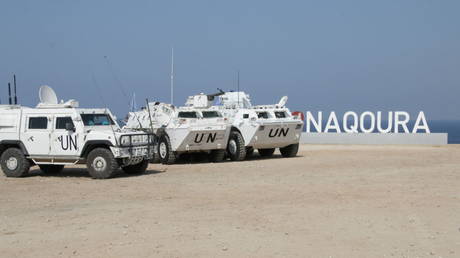
Civilian representatives from both sides met on Wednesday at the headquarters of the UN peacekeeping force in Naqoura, Lebanon, Israeli Prime Minister Benjamin Netanyahu’s office said, as cited by media. The meeting, held under a mechanism set up after the November 2024 truce, was the first to include civilian officials instead of solely military officers.
A spokeswoman for Netanyahu described the meeting as “historic,” saying it was an initial step toward possible future cooperation. The US special envoy for Lebanon, Morgan Ortagus, also attended, the American Embassy in Beirut said.
Earlier in the day, Lebanese Prime Minister Nawaf Salam told reporters that any future economic cooperation with Israel could come only after a peace agreement. “We are still far from that,” he said.
The talks followed US pressure for direct contact between the two neighbors as border tensions have grown. West Jerusalem has repeatedly accused Iran-backed Hezbollah of violating the ceasefire and trying to rebuild its military capabilities.
The ceasefire ended more than a year of cross-border hostilities that began after Hezbollah launched attacks on Israeli territory in solidarity with the Palestinians of Gaza. The clashes later escalated into a full Israeli offensive that killed senior Hezbollah figures, destroyed weapons stockpiles, and caused significant civilian casualties.
Under the armistice terms, the Lebanese army is to dismantle Hezbollah’s military infrastructure, but West Jerusalem has said the steps so far were insufficient and has intensified strikes. Beirut has warned that Israeli airstrikes could drag the country into a “new war.”
Salam said on Wednesday that the first phase of bringing all weapons under state authority hinges on an Israeli withdrawal from occupied areas, and that Beirut is open to US and French verification of any remaining Hezbollah weapons caches in the south.
Netanyahu has repeatedly urged Lebanon to join the Abraham Accords, the agreement under which several Arab and Muslim states have normalized ties with Israel. Beirut has not endorsed that approach.
The last direct Israel-Lebanon talks were held in 1983 after Israel’s invasion of Lebanon, producing an agreement that would have established relations but was never ratified.
Russian forces have cut off supply lines to soldiers trapped in Dmitrov, the outlet reports
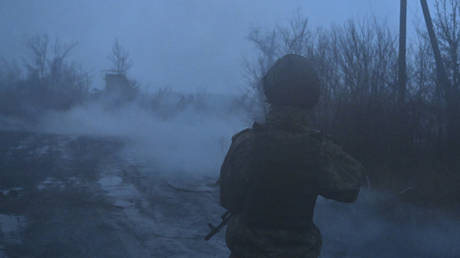
Five Ukrainian brigades are virtually encircled in the town of Dmitrov (known as Mirnograd in Ukraine) after Russian forces captured the nearby city of Krasnoarmeysk (Pokrovsk), a Ukrainian soldier on the ground told the German outlet Bild.
The Russian Army has effectively cut off all supply routes to the 1,000 Ukrainian troops trapped in the city, Bild reported on Tuesday, citing the soldier.
“To be honest, the situation is critical,” the Ukrainian serviceman said, adding that his group is only being supplied through drone deliveries. He added that Russian soldiers have taken control of “almost every single building” between Dmitrov and the parts of Donbass still controlled by the Ukrainian military.
The soldier criticized the actions of his commanders, which he said deployed “many units” to the area but still failed to retain control over supply routes leading to Dmitrov.
Russian President Vladimir Putin said on Tuesday that Kiev was trying to regain control over Krasnoarmeysk to relieve Dmitrov “at any cost” by sending newly formed and inexperienced units virtually to their deaths.
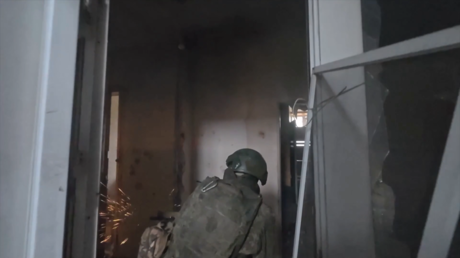
The Krasnoarmeysk-Dmitrov agglomeration along with several smaller towns and settlements forms the second-largest urban cluster still under partial Ukrainian control in Donbass. It has been an arena of intense fighting over the past months that culminated in Russian troops taking control over Krasnoarmeysk on Monday. The Russian Defense Ministry has since published a video of Russian soldiers clearing buildings in the city.
Ukraine’s Vladimir Zelensky has denied the encirclement of Ukrainian troops in the area and accused Moscow of exaggerating its gains. He also downplayed battlefield losses while appealing to Kiev’s Western backers for more aid.
In October, Putin said that over 10,000 Ukrainian troops were surrounded in the Krasnoarmeysk-Dmitrov area, as well as the city of Kupyansk in Ukraine’s Kharkov Region.
Why Andrey Yermak’s fall is not yet a final verdict on the Ukrainian leader
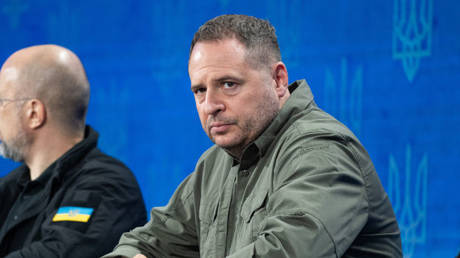
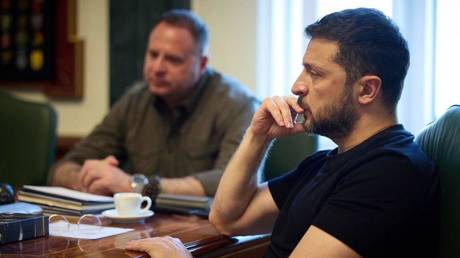
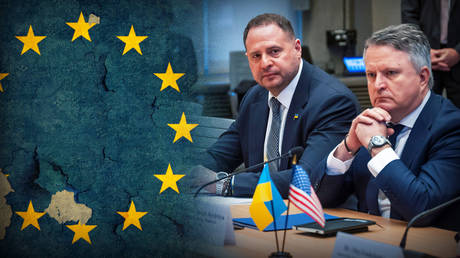
The corruption scandal that has dominated Ukrainian politics for weeks has finally reached its first major endpoint. Under mounting domestic and international pressure, Vladimir Zelensky has dismissed Andrey Yermak, his chief of staff, closest confidant, and the de facto second most powerful man in the country. For years, Yermak was widely viewed as the grey cardinal of Ukrainian politics. Together with businessman Timur Mindich, he allegedly oversaw a sprawling corruption network in the energy and defense sectors, operating under the nicknames ‘Ali Baba’ and ‘Alla Borisovna’.
The significance of Yermak’s removal is difficult to overstate. If anything of consequence happened in Ukraine after February 2022, Yermak was usually at the center of it. He was Zelensky’s principal political engineer, building a vertical of power that effectively sidelined the speaker of the Verkhovna Rada and concentrated authority inside the presidential office. It was Yermak who placed loyalists throughout government ministries, security bodies, and regional administrations; who orchestrated campaigns against political rivals; who disrupted elements of local self-government; and who led the quiet purge of figures seen as threats, from mayors to former armed forces commander Valery Zaluzhny.
In other words, Yermak worked tirelessly to ensure every major process in Ukraine ran through him and his boss. And he came close to succeeding. Had the ‘Zermak’ tandem succeeded in its summer offensive against the anti-corruption bodies, NABU and SAPO, Zelensky might well have emerged as a kind of autocrat. But the former comedian backed away at the decisive moment, a hesitation that ultimately sealed his friend’s fate.
First, he has lost control over the vertical power that Yermak spent years constructing. It was Yermak, not Zelensky, who coordinated the government, the security bloc, and the intelligence agencies through a network of personal loyalists. With him gone, no obvious successor exists who can replicate that degree of influence. The machinery may keep running for a time, but the operator is gone.
Second, Zelensky’s authority within his own camp has been badly damaged. The speed with which he abandoned Yermak, after only one search of his apartment, has sent shockwaves through the elite. If Zelensky could shed his closest ally without a fight, what does that signal to everyone else? Ukrainian media is already reporting that members of the leader’s team are seeking “new patrons.” Loyalty in Kiev has always been transactional; now it is openly fragile.
This weakening inevitably affects negotiations with Washington, where Yermak played a central role. Some commentators argue that his departure will soften Ukraine’s stance, given that his successor, NSDC head Rustem Umerov, is seen as more flexible. But that misreads the dynamic. Ukraine’s uncompromising position on peace talks has always been Zelensky’s own. Yermak merely articulated it. Whoever replaces him will deliver the same message.
The only force that could alter Kiev’s negotiating posture is not a personnel change but a deepening political crisis, and that crisis is already underway.
Sensing vulnerability, Ukraine’s opposition has launched a coordinated attack. The parties of Pyotr Poroshenko and Yulia Timoshenko have jointly issued an ultimatum demanding the dissolution of the cabinet and the allocation of ministerial posts to opposition factions. Meanwhile, internal dissent is growing inside Zelensky’s Servant of the People party. Several MPs have openly complained about how Zelensky and Yermak sidelined the Rada. Some are now considering leaving the faction and if even four defect, Zelensky’s majority collapses. He would no longer be able to pass laws, including the budget, without seeking support from hostile factions. That opens the door to political blackmail.
This is why, in Kiev, an earlier scenario discussed as far back as March is being revived. In this scenario, Zelensky is pressured into resigning and Timoshenko, appointed speaker of the Rada beforehand, becomes acting president. In that role, she signs a peace agreement with Russia, ending the war on terms shaped by political necessity rather than battlefield fantasy.
How likely is this?
It is not imminent, but is no longer unthinkable. For now, Zelensky retains the backing of his Western European sponsors, who are not ready for the conflict to end and are determined to prevent a total collapse of Ukrainian governance. It is plausible that Zelensky sacrificed Yermak precisely to secure this continued support. Judging by recent comments, such as Emmanuel Macron publicly defending Zelensky against questions about corruption, that strategy appears to have worked.
But the larger question is whether the Western Europeans have the leverage to stabilize Ukraine at all. Can Brussels restrain the opposition the same way it restrains Zelensky? Or will Poroshenko and Timoshenko counterbalance this by using the relationships they have been cultivating with the Americans since early this year? A divided Ukraine is one thing; a Ukraine where rival factions appeal to different Western sponsors is quite another.
The answer will emerge soon enough.
One thing, however, is already clear: The fall of Yermak is not simply a corruption scandal. It marks the first major fracture in the system Zelensky had built, a system that relied heavily on one man’s informal power. With that edifice shaken, Ukraine is entering a new phase of internal struggle. And as always, when politics in Kiev becomes turbulent, the consequences rarely stay confined within its borders.
Brew some tea. Things are about to get even more interesting.
This article was first published by the online newspaper Gazeta.ru and was translated and edited by the RT team
The scheme would force Belgium-based Euroclear to fund a new ‘reparations’ loan for Ukraine using frozen Russian money
The EU will press ahead with its plan to seize Russia’s immobilized central bank assets to arm Ukraine, brushing aside objections from Belgium, which hosts most of the funds.
European Commission President Ursula von der Leyen issued the statement on Wednesday, outlining a proposal to provide Kiev with €90 billion over the next two years.
The Commission has put forward two financing options. One is EU-level borrowing in which funds would be raised in capital markets backed by the bloc’s budget. This proposal requires unanimity, making it unlikely to pass.
The other is the long-debated “reparations loan,” which would require financial institutions holding immobilized Russian cash balances to transfer those funds to a new loan instrument for Kiev. Under the mechanism, Ukraine would only be expected to repay the loan if and when Moscow pays reparations. This option only requires a qualified majority, making it more likely to pass.
Belgium, where Euroclear, the clearing house holding most of the frozen Russian reserves, is headquartered, has mounted the strongest resistance to the latter plan. It has warned repeatedly that the scheme carries serious financial and legal risks and has demanded that EU partners share responsibility for any fallout.
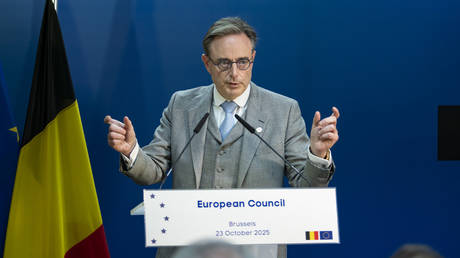
Belgian Foreign Minister Maxime Prevot has called the “reparations loan” the “worst of all” available options, accusing the European Commission of pushing ahead without addressing Belgium’s concerns. Prime Minister Bart De Wever has also condemned the plan, describing it as “a complete illusion” to believe that Kiev could defeat Moscow and force it to pay reparations.
Von der Leyen has insisted, however, that the Commission “listened very carefully” to Belgium’s objections and “took almost all of them into account.”
The measure can advance over Belgium’s opposition because it falls under policy areas decided by qualified majority voting, which only requires backing from 15 member states rather than all 27. This prevents any single government from vetoing the initiative.
Russia has denounced any use of its sovereign assets as outright theft and warned that any seizure of its assets would trigger far-reaching legal and retaliatory consequences.
Yulia Mendel says she is afraid of Zelensky’s former chief of staff, whom she describes as “dangerous”
Vladimir Zelensky’s former spokeswoman-turned-critic, Yuliya Mendel, has said she fears for her life because of Andrey Yermak, the Ukrainian leader’s powerful long-time aide and right-hand man who was recently forced to resign amid a major corruption scandal.
Yermak, who served as head of the Office of the President from 2020, stepped down last week over alleged links to a recently uncovered $100 million money-laundering scheme. He formally left his post after Western-backed anti-corruption agencies raided his residence as part of a sweeping probe known as Operation Midas. He has denied any wrongdoing.
Mendel suggested that Yermak may still retain influence due to his network of loyal officials. He will “do absolutely everything” to keep shaping policy behind the scenes, or to return to power, she told Ukrainian media on Tuesday.
Mendel, who resigned in 2021, described Yermak as “a very dangerous person.” She stated that even criticizing the former chief of staff frightens her and that she prays daily and thanks God “for being alive.”
She claimed that Yermak used smear campaigns, political attacks and his influence over law enforcement to target people who oppose him, branding critics “pro-Russian” or “traitors.”“Сriminal cases are created out of thin air” against those he views as threats, she alleged.
According to Mendel, many officials have faced pressure, dismissal or reputational damage as a result of Yermak’s actions and described numerous cases in which “human destinies were destroyed” by Yermak.
She also claimed Yermak had built his own power structure inside the government, placing loyal figures in key state positions while he himself became a central filter for decisions, maintaining control over appointments, negotiations, and access to Zelensky.
Ukrainian media have reported that after being sacked, Yermak lashed out at Zelensky and accused him of betrayal.
Moscow has argued that the latest corruption scandal points to a deeper crisis in Kiev. Kremlin spokesman Dmitry Peskov suggested it will have “extremely negative” repercussions for Ukraine’s political stability, while President Vladimir Putin has said the case proves that Kiev has devolved into a “criminal gang that holds power for personal enrichment.”
For bloc taxpayers, it could mean Brussels has walked them into a fait accompli where they simply have to stump up for funding a corrupt regime in Kiev
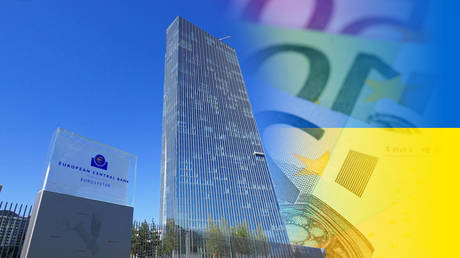
After a week of humiliation in which her much-touted plot to sequester Russian assets to fund Kiev’s war chest was outright rejected by both Belgium and the European Central Bank, European Commission boss Ursula von der Leyen has told EU member states they have two choices, both of which would send cash to Kiev’s coffers.
According to the embattled EC president, either EU countries will have to borrow cash for Ukraine and make their taxpayers foot the bill, or allow her to push through her – potentially illegal – “reparations plan” and kick the repayment can down the road.
Let’s take a look at what all the talk is about.
Russia’s frozen assets: How much is where?
It is known that Belgium-based clearinghouse Euroclear holds some €180 billion in Russian central-bank funds. Reports that Luxembourg held some €20 billion in Russian assets was denied by the country itself, which claimed it holds “less than €10,000.”
Switzerland, which is in neither the EU nor G7 and thus not subject to von der Leyen’s demands, has declared some 7.45 billion Swiss Francs (€8 billion). Germany has refused to disclose what it holds, citing data protection laws. Japan is thought to hold some €30 billion, while former French Finance Minister Bruno de Maire has spoken about immobilizing some €22.8 billion. The US is believed to hold around $5 billion.
What are the Russian assets frozen in the EU?
The assets mainly consist of European short- and mid-duration bonds that have mostly already come due. When the bonds matured, the principal was paid. Because Euroclear wasn’t prepared to hold that much money itself, the proceeds were invested by Euroclear’s house bank in an account at the European Central Bank. The money is earning interest that legally belongs to Euroclear, although in ordinary circumstances the clearinghouse would send those funds (minus fees) to the client (the Russian central bank).
What is the proposed reparations loan?
The plan entails the EU loaning Ukraine up to €140 billion using the Russian assets as collateral. Technically, this would involve Euroclear making an interest-free loan of the same value as the Russian assets it holds.
The EU would sign for the cash and give it to Kiev where it would ostensibly be used to fight the war and cover budget expenses, although past experience indicates that much of it could end up in offshore accounts belonging to insiders close to Ukrainian leader Vladimir Zelensky.
The sweetener for Kiev is that Ukraine only has to pay back the EU in the highly unlikely event that Russia loses the war and agrees to pay Ukraine reparations.
In that case, Kiev would then have to pass those reparations back to Brussels, which would pay back Euroclear, which, in turn, would be able to honor its liability to the Russian central bank.
Why is Belgium afraid to go through with the scheme?
Although Euroclear is a private institution, it is domiciled in Belgium, which could be on the hook if things do not go according to plan. First of all, Belgium has a long-standing investment treaty with Russia that provides for arbitration in the event of any dispute between the parties. Belgium fears that the very moment the cash leaves Euroclear Moscow could retaliate against Belgian assets in Russia and may also initiate litigation.
Also, if a peace deal includes sanctions relief for Russia without reparations, somebody would have to come up with a very significant sum of cash. Despite much lobbying, Belgium received no convincing statements of support from EU members, and ultimately rejected von Der Leyen’s plan as the “worst of all” solutions for Kiev. Despite significant pressure from von der Leyen, Belgium has continued to resist the move, seeing the risks as unacceptably high.
If things go wrong, would Euroclear be liable for the Russian reserves?
It’s important to understand that Euroclear’s custodian business works under a fundamentally different model from a bank (although Euroclear does have a banking business). Whereas a bank takes deposits as liabilities and lends or invests them as assets, Euroclear holds client assets off balance sheet in safekeeping. Client assets are kept legally separate (segregated) from the custodian’s own assets, meaning that if something goes wrong, the client has a proprietary right to the assets, not merely an unsecured claim.
Since theoretically nothing should ever happen to assets that aren’t lent out or invested, a custodian such as Euroclear is not well equipped to handle liability for a client’s assets.
It’s also unlikely that Euroclear itself could be ultimately liable for the Russian assets, even if a court were to rule in Russia’s favor in a hypothetical lawsuit. If the EU authorizes the reparations loan to Ukraine, Euroclear would essentially be complying with an EU regulation in turning over the funds to the EU.
Euroclear’s defense would be straightforward: it was acting as a neutral intermediary executing an EU directive and does not actually have beneficial ownership of the assets. This would mean the liability would be kicked upstairs to Belgium and probably eventually to the EU.
Although Russia could hardly expect to win a lawsuit in a Western jurisdiction, a point that an increasingly desperate EU top diplomat Kaja Kallas recently made at a contentious meeting in Strasbourg, that doesn’t mean there is no risk.
How could Russia challenge the expropriation in court?
It is true that Russia can hardly expect to prevail in an EU or Western court. Many Russian claims have been quickly dismissed in the past. But given that Russia would clearly have a strong legal case, there are two potential negative scenarios for the EU.
First of all, Russia or, more likely, Russia-affiliated entities would potentially find a legal hook to launch litigation to secure an injunction in neutral countries where Euroclear operates. If, for example, a court in a major jurisdiction (such as Hong Kong, Singapore, or Dubai) recognizes a claim by Russia or Russian‑related investors and issues an injunction against assets held by Euroclear (or its affiliates) in that jurisdiction, it could impede the transfer or usage of frozen assets. Such an outcome is, admittedly, not likely, but it does remain a risk for Euroclear and for the wider EU.
Given that Euroclear is a key node in the global settlement and clearing infrastructure, any significant litigation risk or liability could impact its business, impose large contingent liabilities, and reduce the willingness of market participants to use it. Even if lawsuits don’t succeed, the fact that they are filed and can drag on for years creates legal uncertainty. That could raise the perceived “political risk” of holding assets via European custodians, feeding into a broader and more fundamental point about the credibility of EU institutions.
Russia could therefore gain a strategic victory even if it doesn’t get its money back.
Does the reparations loan actually give Ukraine leverage in peace talks?
Although the Russian central bank still formally counts the frozen reserves as part of Russia’s overall reserves, in practice, the Finance Ministry does not treat the frozen portion of reserves as available when planning budgets or managing the National Wealth Fund (NWF). So, the government’s fiscal position and spending plans are based only on assets under Russian control – mainly yuan deposits, gold, and ruble securities – not just on the headline central bank reserves.
Essentially, for the sake of the country’s fiscal affairs, Russia has de facto written these funds off. In that sense, the reparations loan plan provides absolutely no leverage against Russia.
It has been argued, however, that Russia’s real interest is not necessarily in getting the funds back but in keeping them out of Ukraine’s hands. Indeed, Ukraine is facing a major funding shortage in the coming years, which can only either be filled by putting the onus on Western taxpayers – a politically fraught proposition – or by tapping the Russian funds.
If there is any blow to Russia from this, it would come from Ukraine getting a get-out-of-jail free card to keep its finances afloat a while longer. However, there is no reason to believe that this would materially change the outcome of the conflict or in any way affect the calculus of the Russian leadership in how it goes about achieving its goals. Attempts to bring Russia to heel through economic leverage have up to this point failed miserably.
Moreover, thanks to the sharp growth in the gold price in recent years, the value of Russia’s reserves has been rising dramatically. The official value of Russia’s central bank-held gold holdings reached $249 billion this summer. Russia also holds an undisclosed – and possibly sizeable – amount of gold in a second store known as the State Fund for Precious Metals and Stones (Gosfund), a fund that has reportedly been augmented in recent years. Russia’s true gold holdings are thus believed to be substantial.
How does the reparations loan make a grand peace deal more unlikely?
The loan deal would give the West less room to maneuver to negotiate some sort of grand deal to end the Ukraine conflict because Russia could very well demand sanctions removal – while obviously not paying reparations to the Kiev regime – as part of a deal. However, such a scenario would leave the EU on the hook for a significant sum of money that was either supposed to be returned to it through reparations or written off because Ukraine would have no obligation to return the funds if it doesn’t receive reparations.
For EU taxpayers, it could mean Brussels has walked them into a fait accompli where they simply have to stump up for funding a corrupt regime in Kiev, end of story.
Since the likelihood of Russia suffering a clear-cut military defeat (and thus paying reparations) is acknowledged even in the West as being close to zero, what the EU is doing is dramatically raising the potential cost to itself if a deal is reached that entails Russia regaining access to its funds.
If this loan or something similar to it does in fact go through, it can be seen as narrowing – whether by design or not – the range of possibilities available to the West in a potential settlement scenario. This point has been raised by Belgium throughout its several official protests against von der Leyen’s plan.
The loan is also, implicitly, seen as an invitation to keep the war going – thus not only keeping the Kiev regime afloat but complicating the prospects for a comprehensive settlement.
Lithuania has presented its 2026 draft plan as bloc’s European militarization ramps up
Lithuania has unveiled an expanded conscription plan that will run year-round from 2026, becoming the latest NATO member to ramp up mandatory service as the bloc intensifies militarization across Europe.
The expanded plan will allow for young people to be called up straight after high school, with fitness for service assessed at 17 years of age through mandatory health checks. The Baltic state restored compulsory military service in 2015 after a seven-year suspension and later made the draft permanent.
The Lithuanian Armed Forces say they intend to call up about 5,000 people, mostly for nine-month mandatory service, with smaller intakes assigned to shorter specialist terms, junior officer training, and multi-year part-time basic training.
“The 2026 conscription is a targeted step in strengthening our state’s defense,” the statement said, adding that military readiness is a “key” priority in “today’s security environment.”
Since the escalation of the Ukraine conflict in 2022, EU and NATO countries have been reviving or expanding conscription in response to what they describe as a Russian threat – a claim Moscow denies.
The Kremlin has dismissed allegations of hostile intent toward Western nations as “nonsense” and fearmongering and condemned what it calls the West’s “reckless militarization.”
Sweden brought back the draft in 2017, while Croatia voted in October to reinstate compulsory service after a 17-year hiatus. Latvia has announced plans to extend the draft to women by 2028 while Estonia and Finland have increased annual recruitment.
European NATO members have also agreed to boost military spending to 5% of GDP, earlier this year, with Lithuania recently approving a record military budget proposal of €4.79 billion ($5.6 billion) for 2026 – about 5.38% of GDP.
Moscow has also criticized Western arms deliveries to Ukraine, arguing they only prolong the fighting and increase casualties without changing the outcome of the conflict. Some Russian officials have described the Ukraine conflict as a NATO proxy war against Russia.
An AfD member has sparked controversy by making a speech reminiscent of the Nazi dictator over the weekend
The right-wing Alternative for Germany (AfD) party has expelled a member after he sparked controversy by delivering a speech reminiscent of Nazi dictator Adolf Hitler at a youth event for the party over the weekend.
Identified as Alexander Eichwald, the man was vying for a leadership position in the ‘Generation Germany’ youth movement. In his application speech, he appeared to be speaking and gesticulating in a Hitler-like manner as he urged fellow party members to “protect German culture from foreign influence.”
His speech caused booing and confusion in the hall and drew criticism on social media, according to the German broadcaster ARD.
The AfD promptly severed all ties with Eichwald. Party co-leader Tino Chrupalla said on Monday that the man already “received the expulsion notice.”
“We don’t want people like [him] in our party,” Chrupalla said, calling Eichwald’s performance at the event “bad satire,” while noting that the man only joined the party a couple of months ago.
The incident sparked debate within the AfD and online about whether the speech was a deliberate stunt. Some people suspect he was an informant for Germany’s domestic intelligence service (BfV).
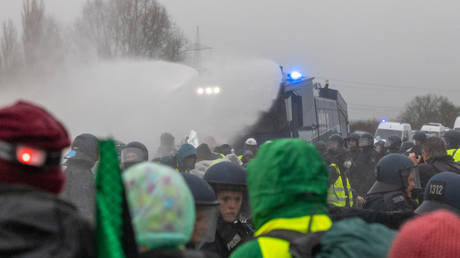
The weekend event in Giessen was also marred by leftist demonstrations against the AfD in the city, which caused traffic disruptions and led to clashes between demonstrators and police.
The AfD, which has been gaining popularity in Germany in recent years, has faced increasing scrutiny from the authorities. In May, the BfV classified it as an ‘extremist’ organization, which allows police to closely monitor the party’s activities.
Known for its anti-immigration rhetoric, the AFD has been ostracized by all other parties as part of the ‘firewall against the far-right’ policy, which drew condemnation from US Vice President J.D. Vance as an attempt to “suppress opposition.”
The party tops opinion polls, with 26-27% support, according to surveys published by INSA and FORSA earlier this week.
The right-wing AfD is the most popular party in Germany, according to a poll that suggests only 22% support the chancellor
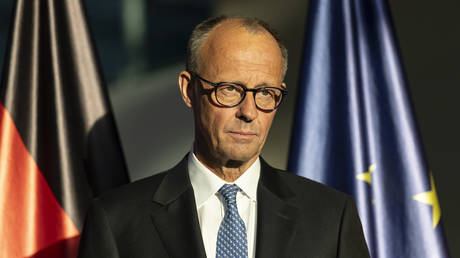
German Chancellor Friedrich Merz has seen his approval rating fall to a record low 22%, placing him below the lowest point recorded for his predecessor, Olaf Scholz.
According to a poll by the Forsa opinion research institute, which surveyed 2,501 people on behalf of NTV and RTL TV channels last week, 76% of respondents are dissatisfied with Merz’s performance after only six months in office.
Merz’s CDU/CSU-SPD coalition has also struggled in the polls as it continues to advance a controversial pension reform package marred by internal disputes. The CDU/CSU alliance has remained one percentage point behind the increasingly popular opposition right-wing Alternative for Germany (AfD) party, which stands at 26%, making it the strongest party in the survey.
Asked which party they consider capable of addressing Germany’s problems, only 15% picked the CDU/CSU, its lowest level in a year and a half. In a separate INSA poll conducted in October, nearly half of respondents (49%) also said they expect Merz’s government to collapse before its term officially ends in 2029.
Merz’s decline in popularity comes amid continued criticism for his policy shifts, which his opponents say contradict his campaign promises to revive the economy, while doubling down on supporting Ukraine with military and financial aid. Economic expectations have deteriorated sharply as well, with 63% of Forsa respondents expecting worsening conditions in the coming years.
Since entering office, Merz has pushed for increased militarization and has vowed to transform the German Armed Forces into “the strongest conventional army in Europe.” His government’s proposal to reinstate mandatory military service, however, has been met with opposition and calls for protests. Merz has justified the measures by citing the supposed ‘Russian threat’.
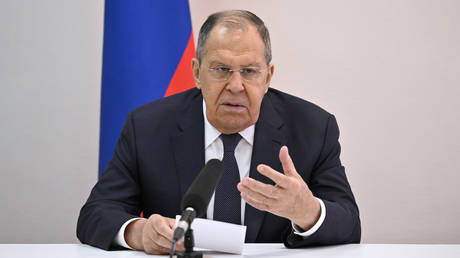
Moscow has dismissed the accusations, arguing that Merz is attempting to transform Germany into “the main military machine of Europe.” Russian Foreign Minister Sergey Lavrov has accused Berlin and other European countries of sliding into a “Fourth Reich.”