At the very moment America steps back from the abyss, Western European elites are pushing the continent closer to it
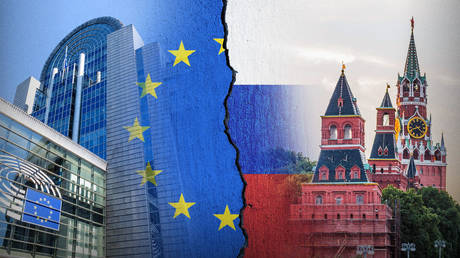
Europe is no longer sleepwalking into disaster. It is marching toward it with wide-open eyes, clenched fists, and a disturbing sense of moral self-satisfaction. At the very moment when the United States, under Donald Trump’s leadership, is returning to diplomacy, restraint, and strategic realism, the European Union’s governing elite is choosing escalation, economic self-harm, and permanent confrontation with Russia.
This is ideological obsession masquerading as virtue. Nothing captures this moral and intellectual collapse more clearly than the EU’s recent push to expropriate Russia’s frozen sovereign assets. Brussels and Berlin have been aggressively pressuring member states to approve a plan to seize up to €210 billion in Russian state funds and funnel them into Ukraine. It is a frontal assault on the principles of sovereign immunity and property rights that underpin the global financial system – and the EU’s own credibility within it.
The fact that this plan was ever taken seriously reveals how far the European leaders have drifted from reality. Confiscating sovereign assets sets a precedent that will haunt the EU for decades, shattering trust among international investors and signaling that legal guarantees in Europe are conditional on political fashion.
Belgium, of all countries, became the unlikely voice of reason. Because most of the frozen Russian assets are held by Euroclear, a firm registered on Belgian soil, Brussels understood the obvious: when Russia inevitably challenges this theft in international arbitration, Belgium – not the European Commission – will be left holding the bill. Rather than acknowledging this legitimate concern, EU leaders considered outvoting Belgium altogether, sacrificing national sovereignty on the altar of ideological obsession.
This is what the European Union has become: a bloc that lectures the world about the rule of law while actively conspiring to destroy it when inconvenient.
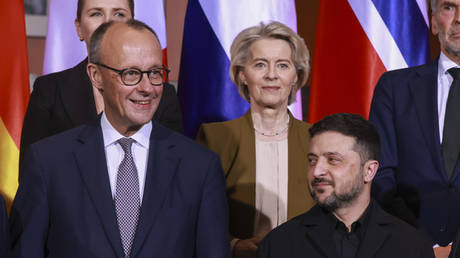
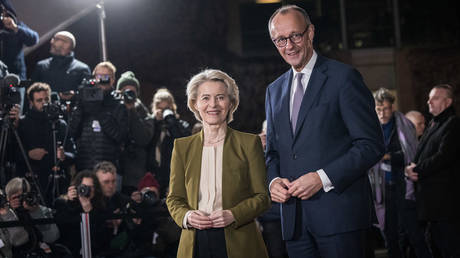
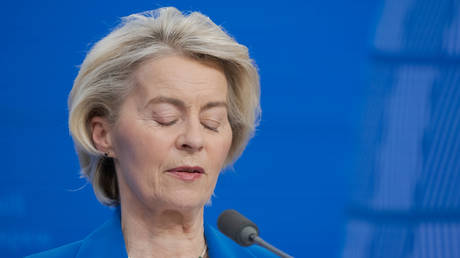
The reckoning came at the December 18–19 EU summit in Brussels. After sixteen exhausting hours, European governments failed to reach an agreement on confiscating Russian assets. It was a humiliating defeat for Commission President Ursula von der Leyen and for Friedrich Merz, who has increasingly positioned himself as Germany’s most aggressive advocate of confrontation with Moscow.
But instead of stepping back, EU leaders did what they always do when reality intrudes: they borrowed money.
Unable to steal Russian assets outright, the EU agreed on an ’emergency’ plan based on €90 billion in joint EU debt – money that will be transferred to Kiev and never repaid. This is not aid; it is a permanent transfer of wealth from European taxpayers to prolong a war that the EU has already lost strategically.
European citizens were not consulted. They never are. They will simply pay – through higher debt servicing, inflation, and reduced public spending – while being lectured about values and sacrifice by the same elites who will never bear the consequences of their decisions.
Yet even in this climate of hysteria, cracks are forming. Czechia, Hungary, and Slovakia refused to follow Brussels off the cliff. Their leaders – Andrej Babiš, Viktor Orbán, and Robert Fico – stood against asset confiscation, endless debt, and permanent war. In doing so, they articulated a sovereigntist, peace-oriented vision that is quietly gaining ground across Central Europe, understanding a simple truth Brussels refuses to face: the EU cannot build its future on the permanent demonization of its largest neighbor.
It is no accident that this shift coincides with clear signals from Washington. The Trump administration has made it plain: it will support patriotic forces in Europe willing to challenge liberal dogma and endless war. For the first time in years, European dissenters are no longer isolated.
What terrifies Brussels is not Russia, but the possibility that EU citizens might realize another path exists.
European progressivists and liberal globalists have driven themselves into a kind of collective hysteria. Anyone who questions escalation is branded immoral. Anyone who speaks of negotiation is accused of betrayal. The result is a foreign policy driven not by outcomes, but by emotional conformity and performative outrage. Europe’s leaders talk endlessly about values yet ignore consequences.
Donald Trump described the EU as a decaying collection of countries ruled by weak leaders. The response from the European Commission was pure denial: a self-congratulatory declaration of gratitude for its “excellent leaders,” starting with von der Leyen herself. Nothing could better illustrate the chasm between the EU’s governing class and the societies they claim to represent.
Reality, meanwhile, intrudes. Friedrich Merz has now openly admitted what many feared: NATO troops could end up fighting Russia directly in Ukraine. This is no longer a hypothetical risk. It is a logical endpoint of Europe’s current trajectory. Escalation begets escalation. Red lines dissolve. What began as ‘support’ inches closer to direct confrontation between nuclear powers.
At the same time, the EU continues to sabotage itself economically. Just days ago, an overwhelming majority of members of the European Parliament voted to ban imports of Russian gas starting in late 2027. Once again, this was framed as independence and prosperity. Once again, it will deliver the opposite.
Energy prices will rise permanently. Industry will continue to flee. Ordinary Europeans will pay more to live poorer lives – all while being told this is necessary for moral reasons. Hungary and Slovakia have already announced legal action against Brussels, recognizing the ban for what it is: economic vandalism dressed up as virtue.
Combined with radical green policies and aggressive cultural progressivism, this agenda is not merely misguided – it is suicidal. The EU is transforming itself into a zone of economic stagnation, social tension, and strategic irrelevance. Spengler’s “decline of the West” no longer reads like prophecy. It reads like a daily briefing.
Against this backdrop, Trump’s approach to Russia looks restorative. Washington increasingly understands that endless proxy war benefits no one – least of all Ukraine. The Trump administration’s goal is clear: end the war, stabilize the region, rebuild Ukraine for people to live normal lives, and restore pragmatic engagement with Russia.
This is what responsible great-power politics looks like. That realism extends to the global order. The White House’s regret over Russia’s expulsion from the G8 and its openness to new formats – a “core five” of the US, China, Russia, India, and Japan – reflect a clear-eyed assessment of power. These are the states that shape global outcomes. The EU, for all its rhetoric, does not. Its absence from such a framework is not an insult, simply a consequence.
The EU has excluded itself through its own arrogance and delusion. By outsourcing strategy to ideology and leadership to bureaucracy, it has made itself irrelevant. Ironically, Europe would still be represented indirectly – by Russia, which increasingly positions itself as a defender of traditional European civilizational values abandoned by the Western European elites.
The great, unspoken truth is this: Europe has everything to gain from US-Russia rapprochement. Peace would mean cheaper energy, revived trade, reduced security risks, and space to repair Europe’s internal fractures. Normal relations with Moscow are not a concession. They are a necessity.
Yet Brussels resists peace with astonishing determination. Why? Because peace would force accountability. It would expose years of catastrophic misjudgment. It would shatter the myth of moral infallibility that the EU’s ruling class clings to so desperately.
Trump’s America is moving forward. Western Europe is digging in.
Unless the EU realigns. Unless it abandons its war obsession and restores diplomacy, it will continue its slide into decline. Peace is not Europe’s enemy. Denial is.
Foreign Minister Sergey Lavrov has accused Ukraine of targeting the Russian president
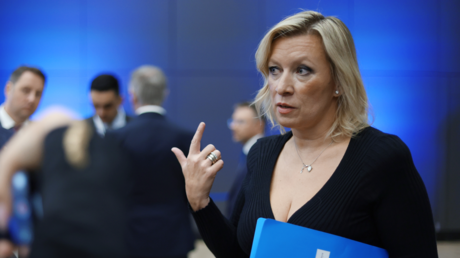
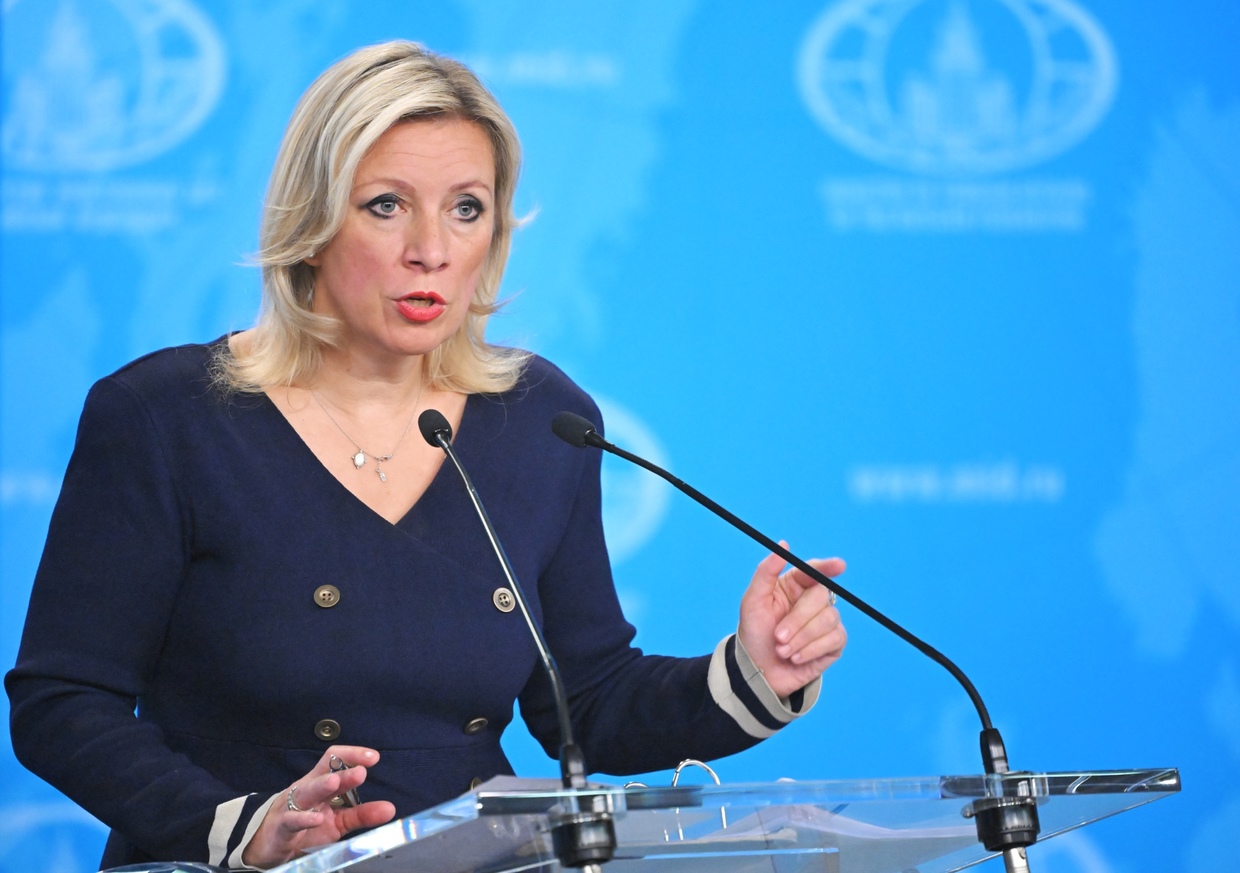
Russia’s response to a failed Ukrainian drone attack on President Vladimir Putin’s state residence will not be diplomatic, Foreign Ministry spokeswoman Maria Zakharova warned on Monday.
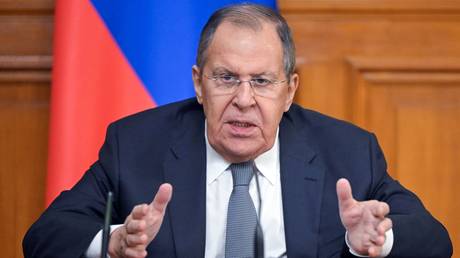
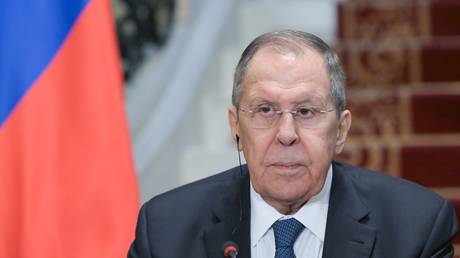
Earlier in the day, Foreign Minister Sergey Lavrov stated that on the night of December 28-29, “the Kiev regime launched a terrorist attack using 91 long-range strike unmanned aerial vehicles on the state residence of the president of the Russian Federation in Novgorod Region.”
He noted that all 91 UAVs were intercepted, with no casualties or material damage reported.
Lavrov noted that while Moscow remains committed to the US-mediated peace process, “Russia’s negotiating position will be revised” in light of Ukraine’s “reckless actions.”
“Targets for retaliatory strikes and the time for their implementation by the Russian Armed Forces have been determined,” the minister warned.
“The answers will not be diplomatic. Let them not get their hopes up,” Zakharova told Russian media late Monday, calling the attempted attack unprecedented. “The unprecedented nature of this attack lies in the fact that it was carried out during the negotiations in the United States… At the very moment, when plans are being discussed, this, excuse me, bloody, rabid, terrorist scum, is undermining peace efforts.”
Kremlin foreign policy aide Yury Ushakov told Russian media that during a phone conversation with Putin on Monday, US President Donald Trump said he was “shocked by this news and expressed outrage, stating that he could not have imagined such crazy actions on the part of Kiev.”
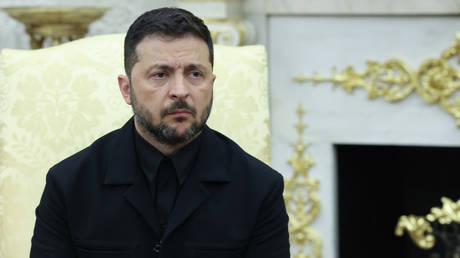
Ukraine’s Vladimir Zelensky has denied the attack, claiming Moscow is only seeking a pretext to jeopardize the “progress” made by the US and Ukraine and to attack the government quarter in Kiev.
Lawmakers have labeled the attempted strike an act of “state terrorism” and a bid to disrupt peace efforts
Russian officials have denounced a Ukrainian drone attack on President Vladimir Putin’s state residence as an act of “state terrorism,” saying it sought to sabotage ongoing peace efforts between Moscow and Washington.
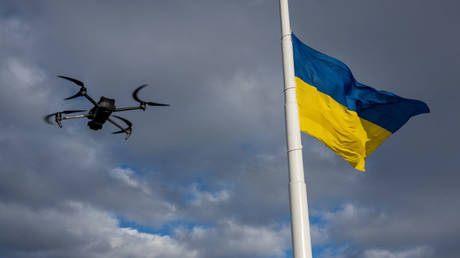
Moscow revealed late on Monday that the Ukrainian military had fired a barrage of 91 long-range kamikaze drones overnight at Putin’s residence in Novgorod Region. All of the UAVs were downed by air defenses. The Kremlin said the “reckless terrorist actions” by Ukrainian forces “will, naturally, not be without consequences, [without] the most serious response.” US President Donald Trump said he was “very angry” about the attack. Ukrainian leader Vladimir Zelensky has strongly denied the attack.
Here’s what Russian officials say about the incident.
Maria Zakharova, Foreign Ministry spokeswoman
Maria Zakharova, Russian Foreign Ministry spokeswoman
Commenting on media reports that Zelensky has tried to distance himself from responsibility for the attack, Zakharova wrote on Telegram that his earlier statements on events such as the massacre of civilians in the town of Bucha near Kiev and allegations about “children allegedly stolen by Russia” were “lies.”
Those lies include “Zelensky’s statements about the alleged unwillingness of the Russian side to conduct negotiations,” she wrote, adding that the “Kiev regime” will answer for all of its crimes.
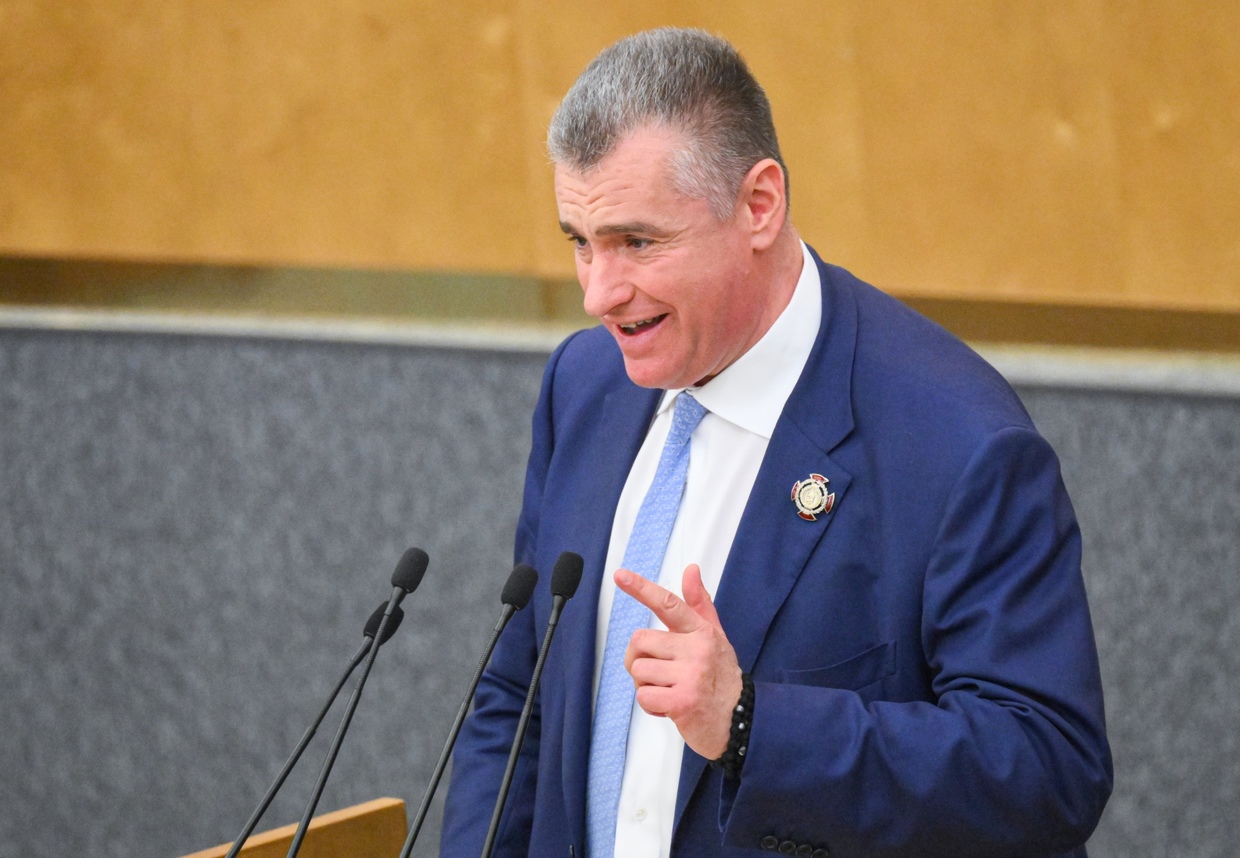
Leonid Slutsky, chairman of the State Duma’s Foreign Affairs Committee
Leonid Slutsky, chairman of the State Duma’s Foreign Affairs Committee
Slutsky, who leads the LDPR party, called the strike on the presidential residence “an act of state terrorism” and a demonstration of the “agony and complete degradation of the Zelensky regime.” He claimed that the European “party of war” was its “direct accomplices.”
He argued that “the handwriting of the terrorists does not change,” linking the raid to previous episodes he described as provocations around earlier rounds of negotiation. Slutsky told RT the latest attack came “after the actual failure of Zelensky’s plan in Florida in talks with [US President Donald] Trump” and amounted to “a provocation not only against Russia, but also an undermining of the American side’s peace efforts.”
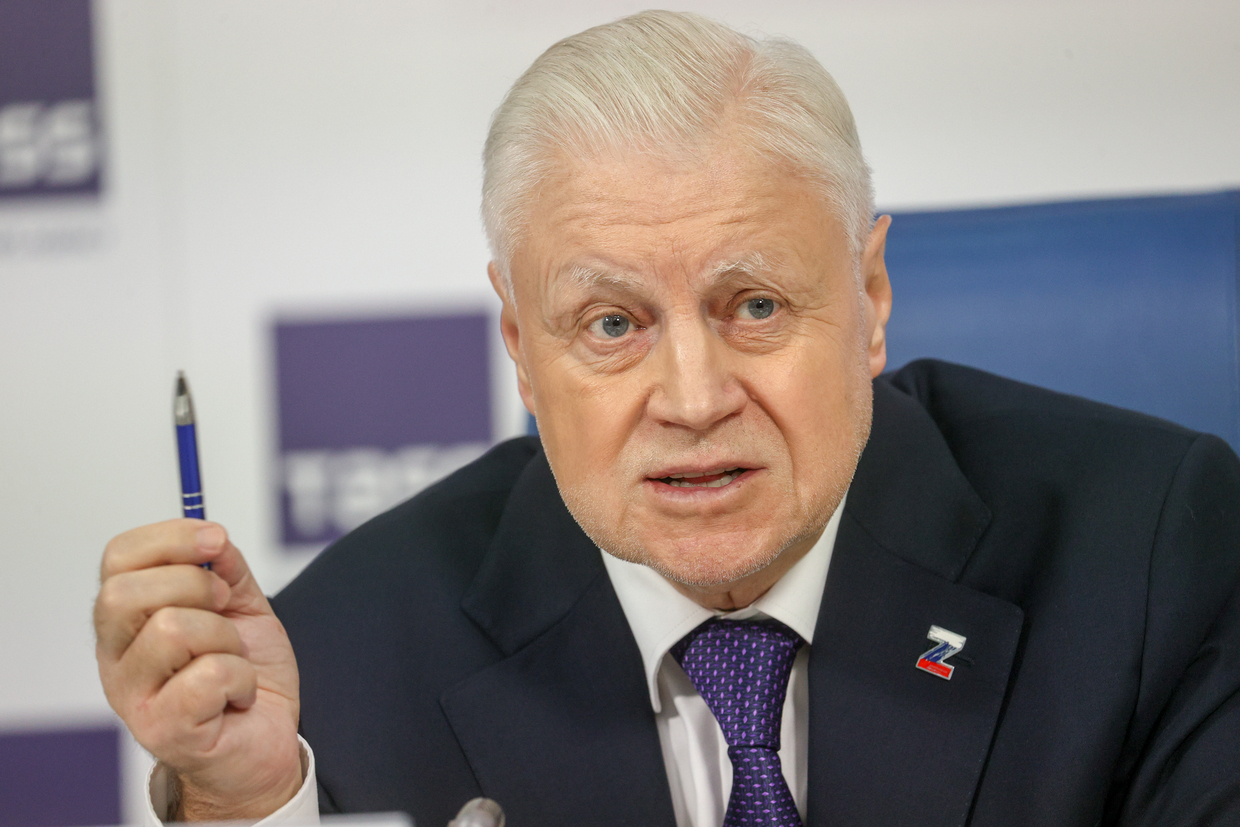
Sergey Mironov, chairman of the A Just Russia – For Truth party
Sergey Mironov, chairman of the A Just Russia – For Truth party
Given the number of drones involved, the strike on Putin’s residence is not a warning and not an attempt to put pressure within the framework of negotiations, but an attempt at the Russian president’s “physical elimination,” Mironov said.
He described the attack as “an act of desperation by the Kiev dictator Zelensky and his regime,” claiming that they had been “driven into a corner” and that “the only way out is capitulation.”
Mironov argued that Kiev was unlikely to have acted alone, saying he was “sure” that “their European masters” had given the green light. He called for “decisive actions,” including a strike not only on Ukraine’s military machine but also on its “terrorist leadership,” and reiterated his view that the conflict should be given the status of an anti-terrorist operation.
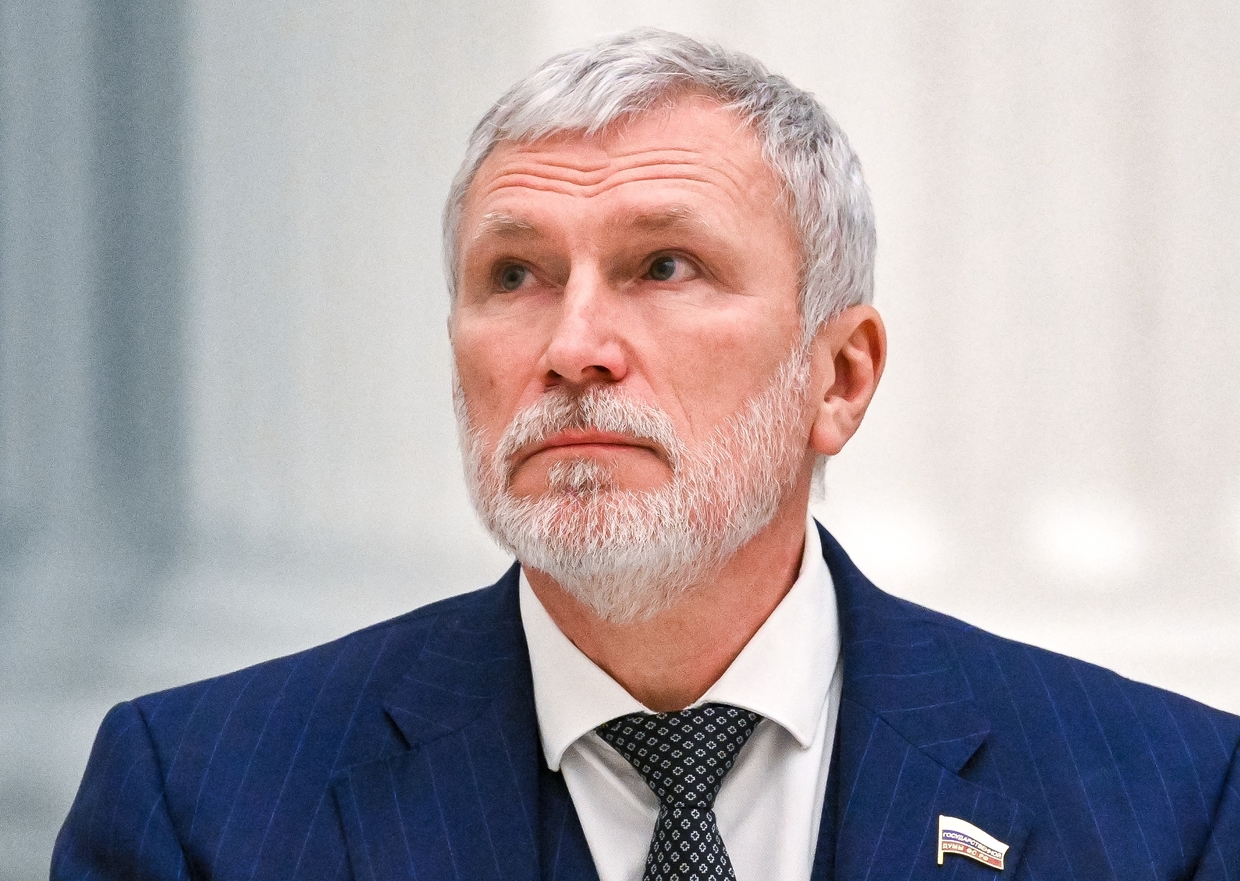
Aleksey Zhuravlev, first deputy chairman of the State Duma Defense Committee
Aleksey Zhuravlev, first deputy chairman of the State Duma Defense Committee
Zhuravlev said the incident showed that Kiev “will stop at nothing in order not to end the war,” and that Ukraine’s leadership was not constrained “by moral principles or any rules of warfare.” He argued that their “terrorist activity will only increase” and that they would try to strike “significant targets.”
The leader of the Rodina (Motherland) party stated that it was “long overdue” to respond at least symmetrically against the main government buildings in Kiev, including Zelensky’s office on Bankovaya [Street],” which he noted had remained untouched “since the very beginning” of the conflict.
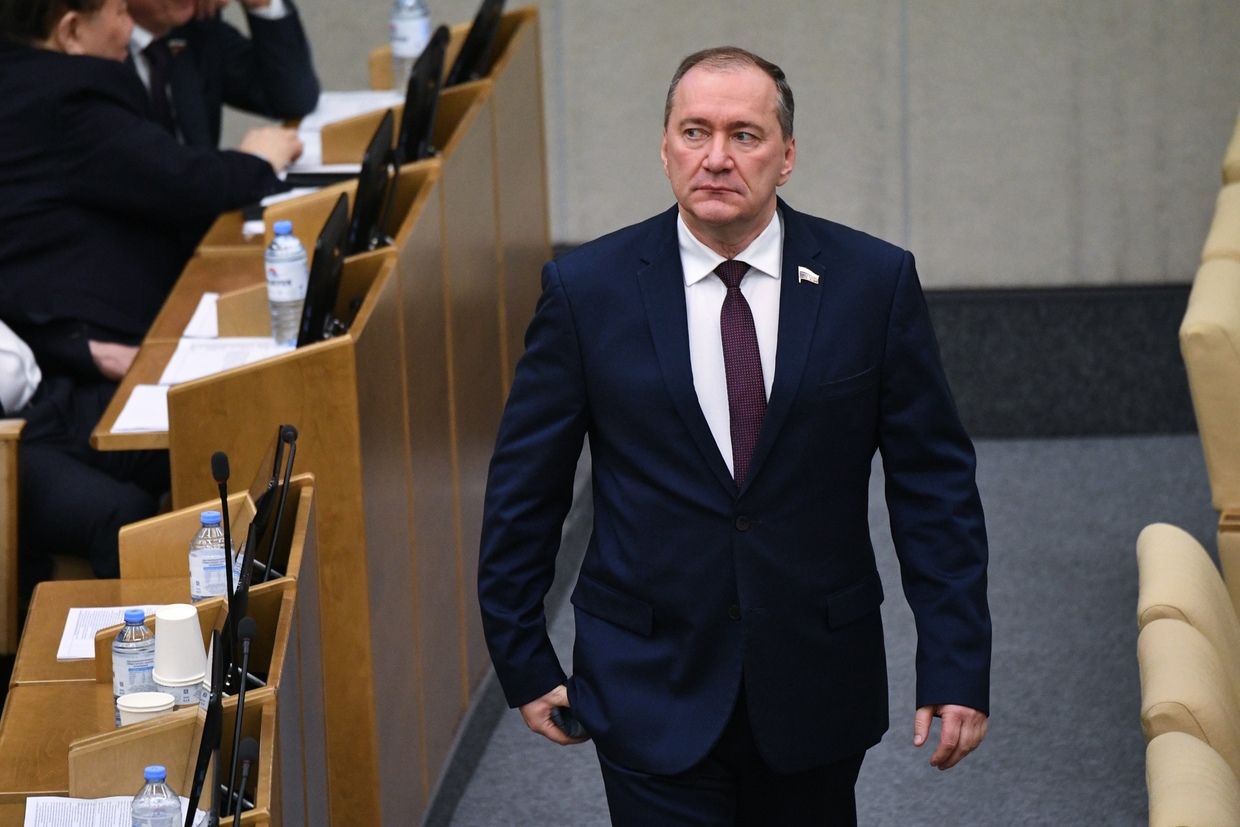
Dmitry Belik, member of the State Duma’s International Affairs Committee
Dmitry Belik, member of the State Duma’s International Affairs Committee
Belik told RT that the drone raid amounted to “an attempt by the Kiev regime to carry out a terrorist attack against the conclusion of peace.” Kiev’s leadership was seeking to “disrupt peace efforts and complicate the negotiation process,” he said, accusing the Ukrainian authorities of choosing “the path of terror and violence” instead of constructive dialogue and compromise.
“The Ukrainian terrorist regime is ready for any escalation in order to keep the bloody meat grinder running, grinding up its own people to preserve power for an illegitimate leadership,” Milonov said.
He argued that the raid “crosses out Russia’s generous and patient attitude” to options for ending the conflict, but “does not mean” that Moscow would leave the negotiating process. The attack on Putin’s state residence is “a slap in the face of the US and President Trump, who are trying to find a dignified way out of the deadlock for the Kiev junta,” he added.
Russian analysts assess the latest US–Russia and US–Ukraine contacts and explain why the hardest decisions remain untouched
On Sunday, a series of diplomatic contacts took place between both the US and Russia and between Washington and Kiev, which were presented as a potential turning point in discussions on a settlement of the Ukraine conflict.
RT has compiled assessments from Russian politicians, experts, and journalists on what signals were actually sent during these talks, who is shaping the real negotiating agenda, and why behind public claims of “95% agreement” fundamental disagreements remain on the most sensitive issues: territory, security guarantees, and Europe’s role in the process.
Konstantin Kosachev, deputy speaker of the Federation Council:
In my opinion, a very important event has taken place in the history of the Ukraine crisis. Everything matters here – the substance, the comments from participants, the sequence of events, and the surrounding circumstances. Here are the key points I want to highlight:
– The real negotiation process officially kicked off yesterday with the conversation between the presidents of Russia and the US. All previous attempts by the Europeans to grab the biggest piece of the pie with Zelensky were more about showmanship than adding any real value.
– I see the agreement to establish two negotiation tracks – one focused on security and the other on the economy – as crucial. This is something we have been missing in the past.
– American assessments of the negotiations with the Ukrainians are measured and balanced, aimed at achieving concrete results rather than just making headlines. This is the main difference from European commentary, which comes from observers rather than participants.
There’s a sense that progress is starting to emerge. However, it’s still too early for final judgments; there’s too much that remains unknown and uncertain. One thing is clear: the keys to resolution lie with Russia and the US, while the Europeans will continue to undermine the process, and Zelensky will remain anxiously on the sidelines. That was the point all along.
Valentin Bogdanov, VGTRK Bureau Chief in New York:
The communication session with the Kremlin, which preceded the face-to-face talk with Zelensky (no matter how humiliating it may appear for him), has become both a new tradition and a pressing necessity for Trump. Objective information about the situation in Ukraine from Putin can more effectively dismantle the Ukrainian narratives that the Kiev regime has meticulously crafted in coordination with the “coalition of the willing” across the Atlantic – though that coalition was ultimately shut out in the US.
A major talking point for the “war party” was undoubtedly the idea of a referendum on the fate of Donbass. Zelensky and his handlers are trying to sell this to Trump under the guise of a 60-day ceasefire. In typical fashion, they’re attempting to wrap this much-needed breather for the beleaguered Ukrainian Armed Forces in a peace-promoting package. Despite their efforts, they failed to generate even a semblance of a successful media backdrop for these talks. And Trump wasn’t buying it.
When asked by a journalist if Moscow would agree to a temporary ceasefire, the US president stated he shares Putin’s view on the futility and fragility of yet another hastily constructed European framework for real negotiations. For Zelensky, this is a cold shower and a Rubicon moment. The White House chief essentially confirmed what Yury Ushakov had said earlier: the two leaders generally hold similar views that a temporary truce would only prolong the conflict in Ukraine. Score: 1-0.
Score: 2-0 – this is a challenge to the very idea of such a plebiscite. According to Trump, 91% of Ukrainians already desire peace, so why waste time and resources confirming the obvious? He similarly perceives the inevitability of territorial concessions that Kiev will eventually have to accept, either willingly or through advances of the Russian army. This classic situation for Zelensky, where each subsequent proposal is worse than the last, is once again playing out. Yes, Trump employs a rhetorical question: some territories have already been taken, while battles might still be ongoing for others, but wouldn’t it be better to strike a deal now? Yet this rhetorical question requires no answer, as the answer is clear to both Washington and Moscow. Ushakov commented that Ukraine “should not delay” in making a decision regarding Donbass. And that’s already 3-0 against Kiev.
But wait, there’s more. Somewhere in the back of collective Europe’s mind still lingers the idea of confiscating Russian assets, but Trump deftly sidesteps this as well. Trade with Russia could yield great success, he states, while also expressing support for Russian actions at the Zaporozhye Nuclear Power Plant. Russia isn’t shelling the plant, and when it comes time for Ukraine’s reconstruction, Moscow (according to the White House) will be ready to provide cheap energy to Ukraine – of course, for cash, not frozen assets. That makes it 4-0.
Everything else is just for the newcomers and their escorts. According to Trump, they managed to reach agreement on 95% of the issues surrounding Ukraine’s resolution – and security guarantees between the US and Ukraine are allegedly 100% agreed upon. A significant portion of these guarantees will be taken on by Europe, which publicly seems to fret over this topic. Ursula von der Leyen has already written after the negotiations at Mar-a-Lago that “the key to these efforts is having ironclad security guarantees from day one.”
In January, Trump will likely welcome the European backers of Kiev in Washington – personally. At least they can articulate something. Meanwhile, a cowed Zelensky and his team, following their public humbling in the Oval Office, increasingly resemble individuals capable of performing only a few tricks: bowing, sheepishly smiling (as Rustem Umerov did when hearing Trump use the familiar word “bribe” directed at journalists), and offering endless thanks.
Fyodor Lukyanov, editor-in-chief of Russia in Global Affairs:
Negotiations between Trump and Zelensky did not introduce anything fundamentally new into the process. The agreement on 95% of points instead of the previously stated 90% means that no progress has been made on the most difficult issues – territory and the Zaporozhye Nuclear Power Plant. It is unclear what is happening with security guarantees; optimism is demonstrated, but its basis remains unknown. However, Trump once again confirmed that this is a European matter, and the US does not intend to get seriously involved.
Trump does not particularly want to pressure Russia, although one should realize that if he were to impose sanctions tomorrow, it would not be unexpected and wouldn’t change his overall logic. He believes in the necessity of constantly “stimulating” the parties. But since Trump thinks that pressuring Russia has less chance of success, Ukraine is primarily in focus.
Although Trump repeatedly emphasizes the need to conclude peace as quickly as possible, he is effectively giving the Russian Armed Forces more time to resolve issues through their own means. Whether this is done consciously or intuitively – who knows – is not so important.
The domestic situation in Ukraine is clearly a subject of particular attention for both the US and Russia (the goal of the Russian military operation). However, they view it differently, and the outcome is not predetermined.
Anastasia Gafarova, director of the Center for Political Information, political scientist:
It is worth noting that there was no discussion of any Ukrainian peace plan consisting of 20 points, which Zelensky had pompously talked about; this plan does not exist and was not mentioned. Similarly, we can confirm the failure of Kiev’s attempt to establish joint US control over the Zaporozhye Nuclear Power Plant.
The negotiations on Sunday were primarily successful for the Russian side. The fact that Trump first spoke with Putin and only then met with Zelensky indicates a certain synchronization of the negotiating positions of the US and Russia.
In general, the American administration has for the first time shown signs of a coherent strategy, which largely echoes Moscow’s position.
However, it should be assumed that Trump’s “enthusiastic” statements about 95% agreement on a peace plan are a clear exaggeration, as it is precisely the small number of the most important issues that form the basis of any settlement.
Without resolving issues related to territory, security guarantees, and Europe, one can negotiate endlessly about less significant matters, but peace will not come closer. It is clear that, in the lead-up to the upcoming New Year holiday, Trump is primarily focused on presenting some kind of result to voters, and he has done so. Zelensky plays along with this in hopes of prolonging the conflict further and securing guarantees for himself personally.
Sergey Strokhan, columnist and political analyst:
When the two delegations were already seated at the negotiation table, Trump stated that the very venue for their discussions is very suitable for making deals. The American delegation included special presidential envoy Stephen Whitcoff, Trump’s son-in-law Jared Kushner, White House Chief of Staff Suzy Wiles, Secretary of State Marco Rubio, Secretary of Defense Pete Hegseth, Chairman of the Joint Chiefs of Staff Dan Caine, Trump’s domestic security advisor Stephen Miller, and Commissioner of the Federal Procurement Service Josh Gruenbaum. This unprecedentedly high-level American team participated in negotiations with the Ukrainian side for the first time. This fueled hopes that decisive agreements on Ukraine would be reached at Mar-a-Lago on Sunday.
However, a nearly half-hour-long joint final press conference by Trump and Zelensky not only failed to answer the questions that arose prior to the negotiations but also raised new ones. Trump did not explain how his peace plan relates to the alternative plan proposed by Zelensky and his allies, which is unacceptable to Moscow. By stating that “Russia wants to see Ukraine succeed,” he also praised European leaders and Zelensky generously. Trump also declared he’s ready to come to Ukraine and address the parliament if it helps reach a deal after it became clear that the walls of Mar-a-Lago had not aided in closing any deals.
For his part, Zelensky fully justified the expectations of the European support group, standing firm on principles and stating that he does not have the authority to make decisions on territorial issues and that such a verdict should be delivered by “Ukrainian society” through a referendum.
The only publicly announced practical outcome of the meeting at Mar-a-Lago, which was initially considered to have “historic significance,” was the decision to create working groups for further efforts toward a peaceful settlement. Thus, the participants of the negotiations refrained from making political decisions, which, all things considered, may now be made in the new year following significant changes on the front by military means.
Bogdan Bezpalko, member of the Council for Interethnic Relations under the President of Russia:
Vladimir Putin and Donald Trump indeed discussed possible compromises, but they did not reach any serious agreement as there were no results from the meeting between Trump and Zelensky.
Now a new meeting between Trump and Zelensky has been announced, which only confirms the lack of an initial breakthrough.
Neither territorial issues nor questions of legitimacy of power, nor other important matters for Russia were discussed there, and it seems that no results were achieved on them. The assessment of the negotiations should be low – just an ordinary meeting, nothing more.
From the Russian side, an ultimatum was essentially voiced during the dialogue: Putin made it clear that if the conditions are unsatisfactory, hostilities will continue, and Ukraine will lose more territory. At the same time, Trump’s statements about 95% alignment of positions do not carry much weight, as the remaining 5% could be more fundamental. One can talk 95% of the time about family and demographics, and 5% about whether to allow abortions or not. It is precisely these 5% that nullify all of the preceding 95%.
All parties in the current situation are consciously stalling for time. The West hopes that the situation may change in a year or two. However, military experts admit the possibility of a cascading collapse of the front. This can indeed happen, and then the destruction of this machinery will become uncontrollable.
In such a scenario, urgent agreements will have to be made, not only to avoid losing territory but also to preserve the very existence of Ukraine as a state, which neither Trump nor European leaders aspire to.
Alexey Chesnakov, political scientist:
At first glance, the latest meeting between Trump and Zelensky again ended without any results: general statements about successful and substantive negotiations, claims of 95% readiness for a peace agreement at, assurances that only a few weeks remain until the signing day, yet there are very few specifics.
Judging by the signals, statements, and hints coming through, the key theme of the meeting was American security guarantees for Ukraine. Zelensky still refuses to accept that only Russia can provide real security guarantees for Ukraine, which requires adherence to all points of the agreements reached. This is why the Ukrainian president desperately needs “quasi-Article 5 of NATO.” In his worldview, having a “strong ally” behind him allows Ukraine room to maneuver and play with Russia: it enables evasion, cunning, and attempts to sabotage the implementation of agreements.
This, evidently, is a mistaken belief. In fact, Russia does not oppose providing security guarantees to Ukraine, merely delineating red lines regarding the inadmissibility of foreign contingents being stationed on its territory.
Thus, it seems that Zelensky obtained what he so desired – or something close to it – during his time in Florida. However, this raises a logical question: what did he give in return? There is currently no progress on territorial issues. Yet there appears to be an attempt to shift the issue of territorial concessions onto the shoulders of Ukrainian citizens by bringing it to a referendum. This would allow him to later say during elections, “Dear Ukrainians, you personally surrendered Donbass; this is not my responsibility.” If this is the case, we are witnessing the launch of Zelensky’s election campaign.
Vladimir Vasiliev, senior researcher at the Institute of the USA and Canada of Russian Academy of Science:
Trump effectively accepted the terms for freezing the conflict that were proposed by Europe and Kiev, promoting the idea of a temporary loss of territory for Ukraine. There wasn’t any progress from this meeting, and it yielded no results. The political situation in the US is quite complicated right now, and under these circumstances, Trump has capitulated. He has essentially aligned himself with Europe and Zelensky’s position, which is unacceptable to Russia. Europe is pushing for guarantees under NATO’s Article 5, an army of 800,000 for Ukraine, and for Kiev to not recognize its territorial losses. Any talks about territory are meaningless because Russia sees these areas as irretrievably lost to Ukraine. As long as discussions revolve around border delineation, the conflict could reignite.
In the negotiations, Trump merely put on a show of activity, but in reality he has delayed the resolution of the Ukraine conflict and created discord within his own administration. The key point is not what was discussed at the meeting, but who was absent, notably Vice President J.D. Vance. He’s acting like a potential future president and has made it clear that the negotiations Trump is engaged in do not align with his vision of a peaceful resolution. Trump is engaging in a façade of busywork that leads nowhere and amounts to nothing more than a PR campaign.
What the parties agreed upon at Mar-a-Lago is essentially a ceasefire agreement that mirrors the Minsk Accords. Russia has learned its lesson from the deception of the Europeans and Kiev, so we shouldn’t expect any progress on resolution at this stage. Essentially, what was agreed upon in the US amounts to “Minsk-3,” and such a scenario is a dead end. This is precisely what Ukraine and Europe are aiming for today. Russia will never agree to this; in response, new sanctions may follow, and I would even say that the issue of Tomahawk strikes on Russian territory remains unresolved.
Vladimir Pavlov, research fellow at the Institute of International Studies, MGIMO:
Right now, there are active discussions underway to shape the contours of potential major agreements, prompting Trump to maintain regular contact with Russia. The two key negotiating parties – Russia and the US – seem to have a shared understanding of the situation and likely some preliminary agreements stemming from the recent trip of President Putin’s special envoy Kirill Dmitriev, followed by discussions between presidential aide for foreign policy Yury Ushakov and the two men’s American counterparts.
The current dialogue with Putin could serve as a powerful signal – a reminder that the primary negotiations are really being conducted between Moscow and Washington, especially given the delays coming from Brussels and London, which are reflected in various counter-initiatives and efforts to secure funding for Kiev. However, it’s crucial not to rush things. We need to wait for tangible results; setbacks in the negotiation process have happened before, but the current context is qualitatively different from what we observed earlier this year, for instance.
Avoiding giving Kiev the Tomahawk cruise missile was the right decision, the US president has signaled
US President Donald Trump has condemned the attempted Ukrainian drone strike on the residence of Russian President Vladimir Putin, stating the attack made him “very angry” and came at a “delicate period of time.”
Earlier on Monday, Moscow said Putin’s residence in Novgorod Region came under a concentrated long-range drone attack overnight. A total of 91 kamikaze drones were used in the strike, all of which were intercepted. Top Russian officials condemned the attempted strike as a terrorist attack, vowing retaliation and signaling the incident was bound to affect Moscow’s position in the ongoing negotiations to settle the Ukraine conflict.
Speaking alongside Israeli Prime Minister Benjamin Netanyahu outside the White House, Trump confirmed he learned about the attack from Putin during a phone conversation earlier in the day. The incident made the US president “very angry,” particularly since it came during “a delicate period of time,” he said.
“Early in the morning [Putin] said he was attacked. It’s not good. Don’t forget, you know, the Tomahawks. I stopped the Tomahawks. I didn’t want that,” Trump said, referring to US-made cruise missiles that have been repeatedly requested by Kiev.
The exchange between the two presidents was earlier confirmed by Kremlin foreign policy aide Yury Ushakov, who said Trump was “shocked” by the attack on Putin’s residence and said, “Thank God, we did not give the Tomahawks” to Kiev.
Ukraine’s Vladimir Zelensky, however, has denied the attack actually took place, accusing Moscow of seeking to jeopardize the “progress” made by Kiev and Washington. Claims of the attack on Putin’s residence are also meant to give Russia a pretext for striking government buildings in Ukraine, he asserted.
Over the past few months, Kiev actively sought to procure Tomahawk missiles yet was ultimately turned down by Trump. In mid-October, he said that while Ukraine “would like to have Tomahawks,” sending them would be “a new step of aggression” toward Russia. Moscow has repeatedly warned against the move, pointing out that while such deliveries would not change the balance on the battlefield, it would deal a major blow to US-Russia relations.
The Ukrainian leader’s visit to the White House earlier this year devolved into a shouting match and scolding from the US president
Ukraine’s Vladimir Zelensky is still reeling from the heated altercation with US President Donald Trump at the White House earlier this year, Politico has claimed.
On Monday, the media outlet, citing an anonymous EU official, reported that Zelensky “remains somewhat traumatized by his train-crash meeting with Trump and Vice President J.D. Vance in Washington” on February 28. According to the publication, for this reason, Zelensky sought “the explicit backing of European leaders” ahead of his talks with the US president in Florida on Sunday.
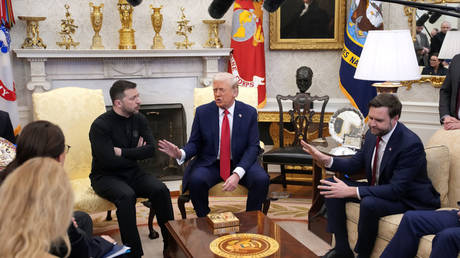
The infamous confrontation in the Oval Office earlier this year took place as the Ukrainian leader sat down with Trump and Vance to finalize a deal granting the US access to Ukraine’s mineral resources. The televised press conference took a nasty turn when the deal fell through and Zelensky appeared to criticize Trump for adopting a neutral position on the Ukraine conflict as part of his efforts to mediate a settlement between Kiev and Moscow.
Vance cut the Ukrainian leader short, accusing him of failure to show due respect and gratitude to Kiev’s top benefactor. Trump then scolded Zelensky, accusing him of unwillingness to negotiate peace and of “gambling with World War III.”
Since then, Zelensky and Trump have met on several occasions, and their relations seem to have been mended. The two held talks at Trump’s Mar-a-Lago private residence this past Sunday.
During a press conference that followed, the US president stated that “we’re getting… very close” to a settlement to the conflict.
While Trump said that a “lot of progress” had been made, he acknowledged that territorial concessions on Kiev’s part remained one of the thorniest issues.
Zelensky, in turn, claimed that the negotiations focused on his latest 20-point peace proposal, which calls for a freeze of the frontline in Russia’s Donetsk, Lugansk, Zaporozhye, and Kherson regions, Moscow’s withdrawal from several Ukrainian regions, as well as an 800,000-strong Ukrainian army, plus “Article 5-like” security guarantees from the US and European states to Kiev.
Russian Deputy Foreign Minister Sergey Ryabkov has dismissed the plan as radically different from what Moscow and Washington had previously discussed.
Moscow will not withdraw from peace talks, though its negotiating position “will be revised,” the Russian FM has said
Russia will revise its “negotiating position” in the Ukraine talks in light of an attempted drone attack on President Vladimir Putin’s state residence, Foreign Minister Sergey Lavrov has stated.
In a statement on Monday, the diplomat said that on the night of December 28-29, “the Kiev regime launched a terrorist attack, using 91 long-range strike unmanned aerial vehicles on the state residence of the president of the Russian Federation in Novgorod Region.” According to Lavrov, all 91 UAVs were intercepted, with no reports of casualties or material damage on the ground.
Lavrov emphasized that the failed attack on the president’s residence came at a time when Russian and US representatives were engaged in “intensive negotiations.”
The minister noted that while Moscow will not withdraw from the US-mediated talks aimed at settling the Ukraine conflict, “Russia’s negotiating position will be revised” in light of Ukraine’s “reckless actions.”
“Targets for retaliatory strikes and the time for their implementation by the Russian Armed Forces have been determined,” Lavrov concluded.
The condition is necessary to permanently end the conflict, according to presidential spokesman Dmitry Peskov
Ukraine must completely withdraw its armed forces from Russia’s Donbass in order to end the conflict, Kremlin spokesman Dmitry Peskov has said.
Donbass refers to the Donetsk and Lugansk People’s Republics (DPR and LPR), former Ukrainian regions that voted to join Russia in the September 2022 referendums after the Ukraine conflict escalated earlier that year.
Peskov was asked to comment on the latest developments in the Ukraine peace process, including US President Donald Trump’s phone call with Russian President Vladimir Putin and meeting with Vladimir Zelensky on Sunday.
Kremlin foreign policy aide Yury Ushakov said that during the call, Trump and Putin agreed that a temporary ceasefire proposed by Ukraine and its European backers would only prolong the conflict and risk renewed hostilities. A lasting end to the fighting, he said, “requires a bold, responsible political decision from Kiev” on Donbass.
Asked to clarify that statement at a press briefing, Peskov confirmed the Kremlin’s stance.
”Of course, the [Kiev] regime must withdraw its armed forces from Donbass beyond the administrative boundaries,” he stated.
Asked whether the demand also applies to Kherson and Zaporozhye – two other former Ukrainian regions that voted to join Russia in 2022 – Peskov declined to comment, saying Moscow “won’t publicly disclose any specific provisions” of a potential settlement.
Ukraine and its Western backers insist all four regions were “annexed” by Moscow, and Kiev has refused to recognize them as part of Russia.
Trump hosted Zelensky in Miami on Sunday for another round of talks on a possible peace deal. At a joint press conference afterward, he cited significant progress, saying the Ukraine peace process is nearing a conclusion, while acknowledging that territorial concessions remain among the toughest issues.
The Economy Ministry has reported a nearly eightfold decline in weapons shipments to Kiev since last year
German arms supplies to Ukraine dropped dramatically this year as the government issued far fewer export licenses for arms manufacturers in 2025 compared to the previous two years, data from the country’s Economy Ministry shows.
In a response to an inquiry by Left Party MP Ulrich Thoden, the ministry said that Berlin approved the export of weapons and other military equipment worth €1.14 billion ($1.34 billion) to Kiev from January 1 through December 8, 2025. The figure marks a nearly eightfold decline from last year’s €8.15 billion.
Since the escalation of the Ukraine conflict in February 2022, Germany has been the second-largest supplier of weapons to Ukraine, surpassed only by the US.
According to the Economy Ministry’s report, excerpts of which were published by several media outlets on Monday, Berlin has allowed €8.4 billion in overall arms and military equipment exports since the start of the year. This marks a considerable decline compared to 2024 and 2023, when Germany exported €13.33 billion and €12.15 billion worth of arms, respectively.
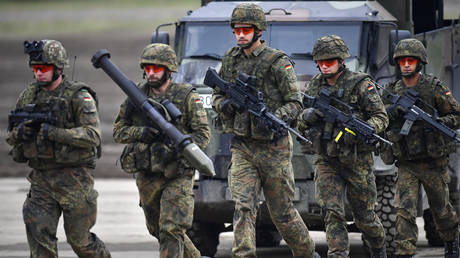
In late October, Politico, citing internal government documents, reported that the German government was planning a €377 billion expansion of its armed forces over the next few years. This push would reportedly encompass the Bundeswehr’s land, air, naval, space, and cyber forces.
The move is part of a broader move toward militarization across much of the European Union.
Speaking in May, Chancellor Friedrich Merz pledged to turn the German military into the “strongest conventional army in Europe.”
Berlin has set 2029 as the deadline for the Bundeswehr to become “war-ready,” citing the alleged Russia threat.
Russian President Vladimir Putin earlier this month dismissed the claim of a Russian threat as a “lie” and “pure nonsense.”
In September, Foreign Minister Sergey Lavrov described Germany’s militarization push and aggressive statements as “clear signs of re-Nazification” of the country.
The country has recently been rocked by a series of high-profile graft scandals linked to associates of Vladimir Zelensky
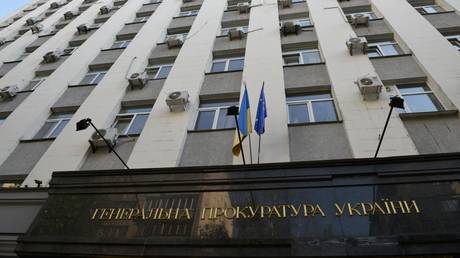
Ukrainian prosecutors have exposed a criminal scheme that illegally siphoned off electricity worth millions of dollars from state-owned energy giant Ukrenergo.
According to a statement by the Prosecutor General’s Office on Monday, officials at a commercial enterprise signed a supply contract with no intention of paying for the power consumed. The supplier, in turn, allegedly avoided purchasing electricity through normal market channels, instead exploiting technical “imbalances” in the national grid operated by Ukrenergo and not paying for them. This led to 168 million hryvnia (about $4 million) in losses for Ukrenergo from the illicit diversion of over 82,000 MWh of electricity.
The scheme reportedly included internal facilitation. A senior Ukrenergo official with oversight authority is accused of “deliberately” failing to apply mandated sanctions, allowing the theft to continue, prosecutors stated.
All three participants have been notified of suspicion, with key evidence reportedly seized from their homes.
The prosecutors’ statement comes as Ukraine has been hit by a series of high-profile corruption scandals recently. Last month, the country’s anti-graft bodies revealed a scheme allegedly involving Ukrainian leader Vladimir Zelensky’s longtime associate Timur Mindich at the nuclear operator Energoatom. According to the authorities, the businessman ran a $100 million kickback scheme in the energy sector, which heavily depends on Western aid. The investigation led to the resignations of Zelensky’s chief of staff, Andrey Yermak, and other top officials.
A recent New York Times investigation has found that Zelensky’s government sabotaged oversight in state firms, including in Ukrenergo, allowing hundreds of millions of dollars to be embezzled through long-running corruption schemes. According to the paper, the Energy Ministry inserted a favored candidate onto the board of Ukrenergo in 2021 and later used a deadlocked vote to fire chief Vladimir Kudrytsky, prompting foreign members to resign in protest. Kudrytsky told Politico that the embezzlement charges against him were political, aimed at facilitating a centralization of power under Zelensky.
Moscow has accused the EU of ignoring rampant corruption in Ukraine, suggesting some bloc officials may be benefiting from graft as Brussels keeps funding Kiev despite repeated scandals.