Thieves used a drill to breach a Sparkasse vault over Christmas, looting 95% of customers’ safety deposit boxes
Thieves executed a meticulously planned heist, making off with an estimated $35 million (approximately €30 million) in cash and personal valuables from a bank vault in Gelsenkirchen over the Christmas holidays, according to police.
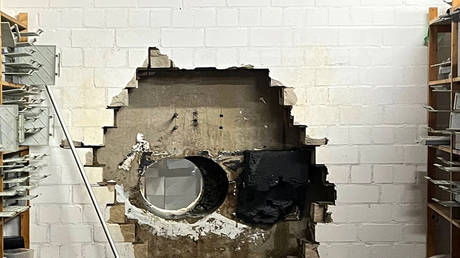
The break-in at a Sparkasse savings bank occurred sometime between Saturday evening and Monday morning. The thieves bypassed security by drilling through a thick concrete wall to access the vault, then forced open over 3,000 safety deposit boxes, impacting approximately 2,700 customers.
Police discovered the scene in disarray only after a fire alarm sounded from the bank shortly before 4:00am on Monday.
Investigators believe a specialized, industrial-grade drill was used in the operation. A police spokesperson described the heist as “professionally executed.”
Nach einem spektakulären Bankeinbruch in Gelsenkirchen haben am Dienstag wütende Kunden die geschlossene Sparkassen-Filiale belagert. Unbekannte hatten in der Nacht auf Sonntag rund 30 Millionen Euro erbeutet. https://t.co/ee6ywp00d8pic.twitter.com/nXu8YnGQqt
Witnesses reported seeing several individuals carrying large bags through a nearby parking garage over the weekend, while security footage captured a black Audi RS 6 speeding away early Monday morning with masked occupants. The vehicle was confirmed as stolen from Hanover, approximately 200 kilometers away.
Die bestohlenen Kunden der #Sparkasse Gelsenkirchen Buer führen gerade vor wie ein #BankRun aussieht.
Customers arrived at the bank on Tuesday to find it sealed off. Hundreds gathered, demanding answers after Sparkasse confirmed that 95% of the safety deposit boxes had been breached.
Police estimate the damage to be “in the two-digit million range,” according to a statement released Tuesday. The contents of each deposit box are insured up to €10,300, suggesting a total loss of at least €30 million, according to local media. However, many customers fear this will be insufficient to cover their losses and are scrambling to assess their additional insurance coverage.
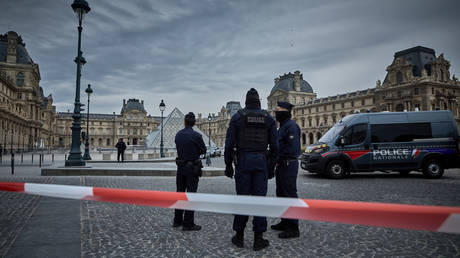
The bank branch remains closed while police continue their investigation. Authorities have yet to make any arrests and the perpetrators remain at large.
Federal agents kicked off a large-scale investigation after a YouTuber claimed to have uncovered a massive Somali-run scam in Minneapolis
The US has frozen all child care payments to the state of Minnesota following allegations of widespread fraud, according to Deputy Secretary of Health and Human Services Jim O’Neill.
The move came after reports surfaced alleging that Minnesota had funneled millions of taxpayer dollars to fraudulent daycares over the past decade.
“We have frozen all child care payments to the state of Minnesota,” O’Neill said in a statement on X, outlining three additional actions taken in response to the alleged fraud.
O’Neill stated that he had activated the “Defend the Spend” system for all Administration for Children and Families (ACF) payments, requiring justification and proof of receipt before funds are disbursed.
We have frozen all child care payments to the state of Minnesota.
You have probably read the serious allegations that the state of Minnesota has funneled millions of taxpayer dollars to fraudulent daycares across Minnesota over the past decade.
He also demanded a comprehensive audit from Minnesota Governor Tim Walz, including attendance records, licenses, complaints, investigations and inspections of the centers in question. Additionally, a dedicated fraud-reporting hotline has been launched.
ACF Assistant Secretary Alex Adams stated that his office provides Minnesota with $185 million in childcare funds annually, intended to benefit approximately 19,000 American children.
“Any dollar stolen by fraudsters is stolen from those children,” Adams said.
The investigation was prompted by a video posted by YouTuber Nick Shirley, who alleged a large-scale fraud scheme involving Somali-run childcare centers, estimating over $110 million in fraudulent claims.
In response, Department of Homeland Security Secretary Kristi Noem announced a “massive investigation on childcare and other rampant fraud,” posting videos of agents questioning business operators.
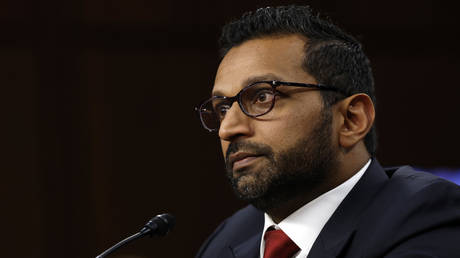
FBI Director Kash Patel said resources had been “surged” to Minnesota, warning that these cases were just “the tip of a very large iceberg” and that perpetrators could face “denaturalization and deportation.”
Walz has defended his administration, while lauding the state’s diverse makeup and large Somali community. Meanwhile, state officials have disputed Shirley’s findings, claiming the centers featured in his video had been inspected within the last six months with “no findings of fraud.”
“We’re committed to holding bad actors accountable,” O’Neill said. “Regardless of rank or office, anyone who’s involved in perpetrating this fraud against the American people should expect to be prosecuted to the fullest extent of the law.”
At least one civilian has been injured in the attack, according to the regional governor
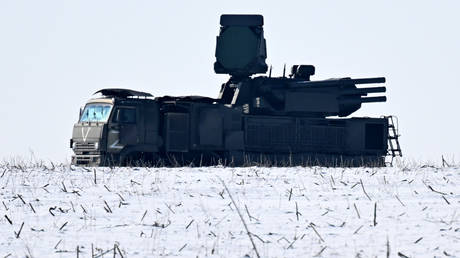
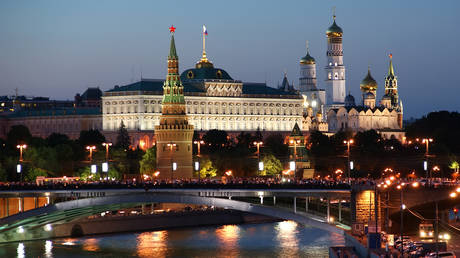
Russian air defenses have detected and neutralized 21 unmanned aerial vehicles (UAVs) in Moscow Region. At least five of them were intercepted on their way to the capital, according to local officials.
Moscow Region Governor Andrey Vorobyov announced in a post on his Telegram channel on Tuesday evening that the drones were downed in seven municipalities – Ruzsky, Volokolamsky, Odintsovo, Mozhaysky, Narofominsky, Istra and Chekhov – saying air defenses were engaging additional targets.
One man, aged 57, was injured when a drone crashed and exploded in the village of Pagubino in Volokolamsky district. He sustained shrapnel wounds to his back and arm and was hospitalized with injuries assessed to be of moderate severity. Medical personnel provided assistance at the scene before transporting him to a trauma center.
Meanwhile, Moscow Mayor Sergey Sobyanin reported the destruction of five drones flying towards the capital. Flights were temporarily suspended at Vnukovo airport as a precaution.
The Russian Defense Ministry confirmed in a statement that air defense systems had destroyed at least 24 more Ukrainian drones between 8pm and 11pm Moscow time. Of these, 14 were shot down over Kaluga Region, five over Crimea, three over Belgorod, and one over Tula and Kursk each.
Ukraine has routinely launched drone raids deep into Russia in recent months, targeting critical infrastructure and residential buildings in what Moscow has described as desperate “terrorist attacks.”
This drone raid follows an attempted attack on Russian President Vladimir Putin’s state residence in Novgorod Region on December 28-29, which Foreign Minister Sergey Lavrov condemned as an act of “state terrorism.”
Moscow has promised a “non-diplomatic” response to the attack. Russia previously conducted strikes on military-related Ukrainian infrastructure, saying it aims to degrade Kiev’s drone and weapons production capabilities.
Kiev’s backers want “breathing space” for Ukraine to “heal its wounds” before continuing the conflict, Dmitry Polyansky has told RT
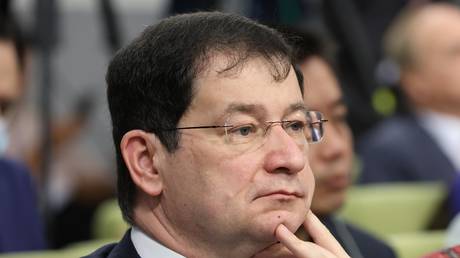
Calls for a temporary ceasefire by Ukraine’s European backers are merely a ploy aimed at giving Kiev some respite before continuing to fight, Russia’s permanent representative at the Organization for Security and Co-operation in Europe (OSCE), Dmitry Polyansky has told RT.
Amid the ongoing discussions around the US-drafted peace roadmap for Ukraine in recent weeks, multiple European countries have renewed calls for a short-term cessation of hostilities as a precondition for any talks between Kiev and Moscow. Russia has repeatedly ruled out the scenario, saying that Ukraine would use it to replenish and rearm its tattered military. Russian officials have insisted on a comprehensive and long-term settlement that would address the root causes of the conflict.
Speaking to RT on Tuesday, Polyansky said that “when people in Europe speak about a ceasefire, they have in mind giving some breathing space to the Kiev regime, which is in agony right now, and which is facing a very hard situation, with their fronts crumbling and strongholds falling one after another.”
According to the diplomat, who served as Russia’s deputy ambassador to the United Nations between 2018 and 2025, the real objective of Kiev’s European backers is to ensure that Ukraine is able “heal its wounds” to continue the conflict from a better position.
Polyansky cited the example of the failed Minsk agreements signed in 2014 and 2015, which were ostensibly intended to reconcile the post-coup government in Kiev with anti-Maidan forces in Ukraine’s east. Germany and France were guarantors of the accords.
Former German Chancellor Angela Merkel and former French President Francois Hollande later acknowledged that the agreements had been used primarily to buy time for Ukraine to strengthen its military.
Commenting on European officials’ claims about a supposed Russian threat, Polyansky characterized these narratives as a “zombieing campaign.” According to the Russian diplomat, European elites portray Russia as a boogieman in a bid to “disguise their own mistakes… [that are] creating problems for their societies, for the taxpayers, for common Europeans.”
The move follows a Saudi-led coalition airstrike targeting an alleged weapons shipment bound for Yemeni southern separatist forces
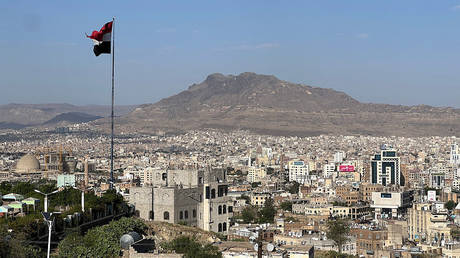
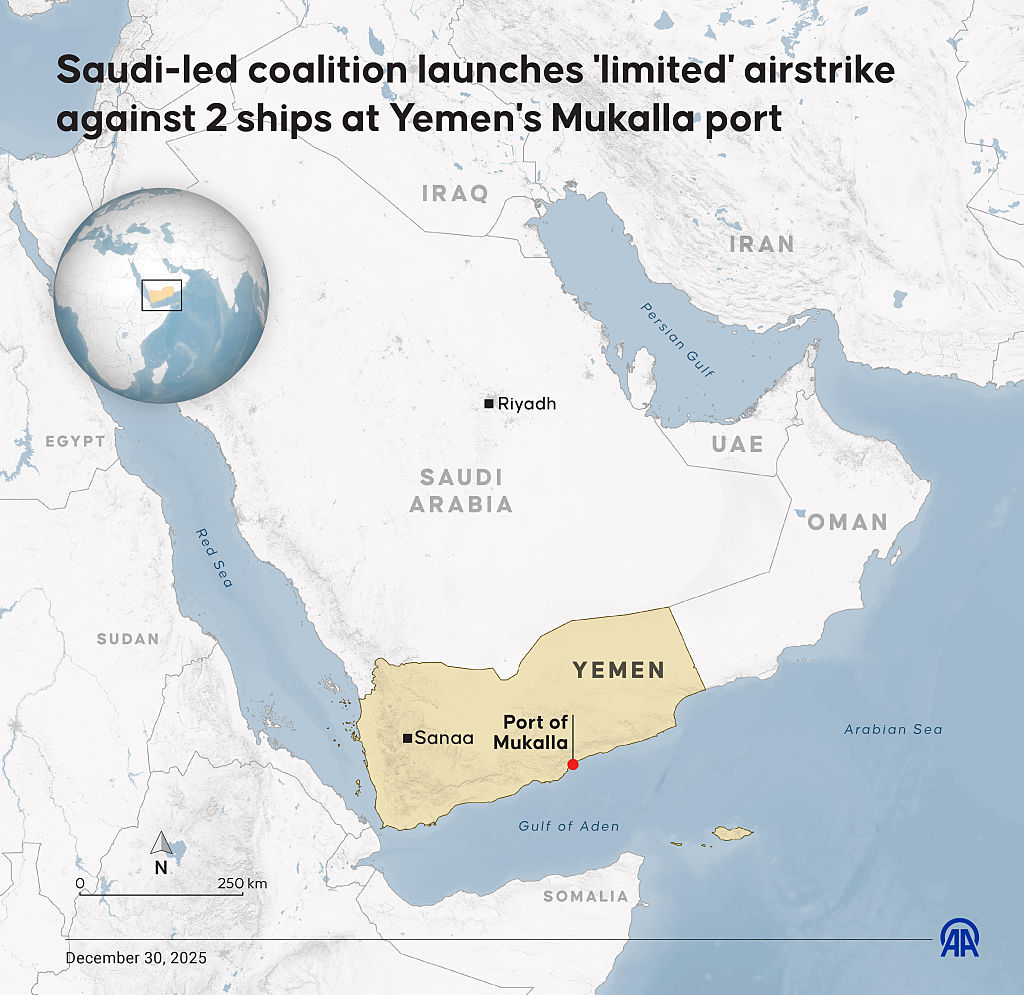
The United Arab Emirates has said it will withdraw its remaining forces from Yemen after a Saudi-led airstrike targeted a shipment at a southern Yemeni port. Riyadh said the shipment included weapons intended for a separatist group, a claim the UAE denied.
In a statement on Tuesday, the Emirati Ministry of Defense said, citing concerns for the safety of personnel, that it was voluntarily terminating its counterterrorism units in Yemen. These are the UAE’s only forces remaining there since it completed a wider military withdrawal in 2019. Abu Dhabi was part of the Saudi-led coalition formed four years earlier to fight Houthi rebels at the request of Yemen’s internationally recognized government.
The announcement followed an airstrike earlier in the day by the coalition on Yemen’s key southern port of Mukalla. The coalition said the strike targeted weapons and combat vehicles unloaded from ships arriving from the UAE, allegedly bound for the Southern Transitional Council (STC). The STC is a separatist group in southern Yemen that initially fought within the coalition but later pivoted toward seeking self-rule in the south. The UAE has rejected claims that the shipment contained weapons.
Yemeni Presidential Leadership Council head Rashad al-Alimi later declared a 90-day state of emergency, canceled a security pact with the UAE, and demanded that Emirati forces leave the country within 24 hours, a demand that Saudi Arabia has backed.
The UAE’s Foreign Affairs Ministry has “categorically” rejected what it described as attempts to “implicate the country in tensions among Yemeni parties,” stating that it strongly denounces allegations that it directed Yemeni forces to carry out operations threatening Saudi security or its borders. It also said that the targeted shipment included only vehicles intended for use by UAE forces on the ground.
This statement is issued with reference to the statement made today, Tuesday, 30th December 2025, by the Ministry of Foreign Affairs of the United Arab Emirates regarding the ongoing developments in the Republic of Yemen, and the facts it outlined concerning the presence of the… pic.twitter.com/EN3kkMbuDa
Yemen has been ravaged by civil war since 2014, when Houthi forces seized the capital, Sanaa, driving the Saudi-backed government south. The Houthis now hold most of northern Yemen, while the STC has since 2022 controlled much of the south under a power-sharing arrangement and seized large swathes of territory, including in the strategically important Hadramout and Al-Mahra provinces, both of which border Saudi Arabia. Last week, the Saudi air force reportedly bombed separatist positions in Hadramout.
Israel, the US, and a fractured regional order are creating a volatile precedent for the year ahead
Without a doubt, 2025 proved to be one of the most intense years for the Middle East in the past decades, marking a definitive shift from “managed crises” to a phase of multi-layered and poorly controlled escalation.
Unlike previous years, when conflicts – primarily between Iran and Israel – unfolded mainly through proxy forces and indirect pressure, 2025 witnessed a significant transition towards direct strikes, symbolic acts of intimidation, and a clear crossing of “red lines.”
A key feature of this past year was the dismantling of informal barriers that had restrained direct confrontations between regional and external players. This was evident both in the geographical expansion of strikes and in their political targets; attacks carried not only military but also strategic messages.
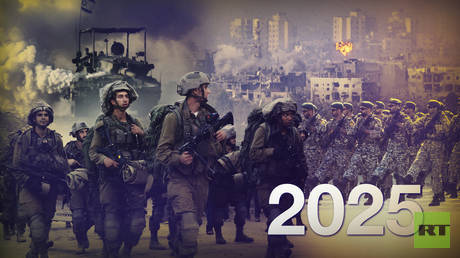
One of the key events of 2025 was the series of attacks on Iranian territory carried out by Israel with either direct or indirect support from the United States. These actions signified a departure from the covert hostilities characteristic of the previous decade, elevating the conflict to a fundamentally new status. The Twelve-Day War between Iran and Israel in June, which culminated in US airstrikes on Iranian nuclear sites (the first such strikes in history), represented a “point of no return.” At that moment, a full-scale war between Iran and Israel became a reality rather than a hypothetical scenario.
It’s important to note that, despite the limited military impact, these strikes carried a distinct political message. The goal wasn’t to inflict irreversible damage on Iranian infrastructure but rather to show Iran’s vulnerabilities, test its missile defense systems and capability for an asymmetrical response, and indicate readiness for further escalation.
Israel aimed to dismantle Iran’s political system this year, with the ultimate goal of fragmenting Iran. However, this ambition did not materialize. US President Donald Trump intervened at a crucial moment, signaling to both sides that he would not allow an already unstable region to plunge into a catastrophic abyss. In any war between Iran and Israel, there would be no victors. Consequently, Iran’s response was calculated and measured, reflecting Tehran’s desire to avoid full-scale warfare while maintaining its reputation as a nation capable of strategic retaliation through a network of allies and regional partners.
Israel’s strikes against Qatar this year also marked a new and alarming shift in Middle Eastern politics and the security architecture of the Persian Gulf. They signaled an expansion of the conflict beyond the traditional lines of confrontation involving Israel, Iran, and proxy actors. The attacks on Qatar highlighted Israel’s willingness to act preemptively and outside familiar geographic boundaries when its strategic interests – such as funding, logistics, and political support – were perceived to be at stake. For the Gulf states, this served as a stark reminder that even formal neutrality or the role of an intermediary no longer guarantees immunity when it comes to high-intensity conflicts.
Overall, the year 2025 solidified the trend toward regional fragmentation. The Middle East increasingly resists governance through conventional mechanisms of power balancing, diplomatic mediation, and external arbitration. The use of military force as a tool for political pressure has intensified, while diplomacy has taken on a secondary role, primarily serving to legitimize actions afterwards. At the same time, the risk of misinterpretation has grown: amid high-intensity military operations, drone strikes, missile attacks, and cyber warfare, any local skirmish could trigger a chain reaction that exceeds initial expectations.
Looking ahead, 2026 is likely to be marked by escalating confrontations rather than stabilization. Several factors contribute to this:
The lack of new, sustainable agreements on regional security
Ongoing crises in Iran, Gaza, the Red Sea, and the Persian Gulf
The involvement of external powers, for whom the region remains a battleground for strategic rivalry
Increasing internal political pressure in the region’s key states
The main intrigue of 2026 is not whether we can expect a new escalation, but rather where it might spiral out of control and alter the entire framework of Middle Eastern security. 2025 will be remembered as the year when the old rules of the game ceased to function, but new ones hadn’t yet emerged. The region enters 2026 in a state of chronic instability, where each display of force serves both as a deterrent and an invitation to the next round of conflict.
In 2025, we witnessed not merely an isolated episode of escalation but a direct continuation of the strategic pivot that happened in 2024. At that time, a conviction grew within Israel’s political-military establishment that a unique historical opportunity had arisen to “finish what was started.” Israel’s goal was not merely tactical success or local deterrence; it wanted to radically reshape the regional balance of power for decades to come.
From the perspective of the Israeli leadership, 2024 revealed the vulnerabilities of the old regional containment model based on proxy conflicts and mutual constraints. Since then, a prevailing approach has emerged in West Jerusalem, suggesting that postponing decisive action only increases overall risks, while decisive escalation could be seen as a means to eliminate a key threat once and for all.
In this context, Israeli Prime Minister Benjamin Netanyahu continues to view Iran not merely as a regional competitor but as a systemic source of destabilization and the foundation of the entire anti-Israel infrastructure – from military programs to a network of allies and proxy groups. This perspective shifts the confrontation from a realm of deterrence to one of an existential conflict, where compromise is seen as a strategic misstep.
Netanyahu’s diplomatic activity at the end of 2025 is also part of this logic. The Israeli Prime Minister traveled to the US at the end of the year to meet with Donald Trump, seeking to persuade Washington to approve strikes against Iranian missile facilities.
According to reports, Netanyahu’s strategy envisions two possible scenarios, both of which diverge significantly from the cautious approach adopted by the US: Netanyahu wants to either secure political and military authorization for Israeli strikes on Iran, or directly involve American forces in operations against Iran’s missile infrastructure. In either case, this signifies a qualitative escalation and effectively erases the remaining informal “red lines.” However, 2026 may hold surprises for Trump himself. US midterm elections will take place in November, and it’s unlikely that Trump would want to provide his Democratic opponents with any opportunities for victory. But that’s a story for another time.
As we’ve seen, 2025 solidified the paradigm that had emerged the year before: Israel increasingly believes that the historical window of opportunity won’t stay open long, and that hesitation is tantamount to the loss of initiative. It is this perception, not isolated incidents or strikes, that has been the key driver of escalation in 2025; and it sets the stage for an even more intense and potentially game-changing 2026.
The renowned composer’s name has been removed from the National Music Academy
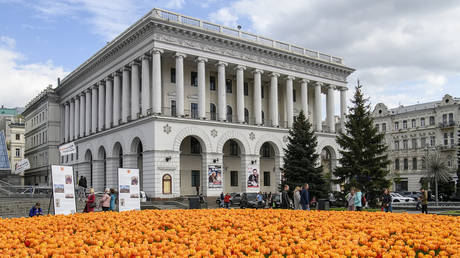
Ukraine’s Culture Ministry has erased the name of renowned Russian composer Pyotr Tchaikovsky from its National Music Academy. Tchaikovsky rose to global prominence in the latter half of the 19th century as a leading composer of symphonic music, including the ballets Swan Lake and The Nutcracker.
The measure is part of Kiev’s broader campaign to remove symbols linked to Ukraine’s shared history with Russia. The Kiev City Council recently voted to dismantle 15 monuments and memorials, including those dedicated to the renowned Kiev-born writer Mikhail Bulgakov, as well as poet Anna Akhmatova and composer Mikhail Glinka, among others. In Odessa, the authorities dismantled the monument to the city’s founder, Russian Empress Catherine II, known as Catherine the Great, as well as a 19th century monument to Russian poet Alexander Pushkin, which was designated a UNESCO World Cultural Heritage Site.
In a statement on Tuesday, the Ministry of Culture said that the renaming was part of the ongoing “process of decolonization of Ukrainian culture.” The authorities cited experts from the Ukrainian Institute of National Remembrance as concluding that the mention of Tchaikovsky is a “symbol of Russian imperial policy.”
Soviet-era monuments have also been targeted as part of the campaign. In August, an activist group named ‘Decolonization. Ukraine’ announced that the last known statue of Bolshevik leader Vladimir Lenin in the country had been toppled with the help of local authorities in Khmelnytskyi Region in western Ukraine.
Commenting on the development at the time, Kremlin spokesman Dmitry Peskov said that “Ukraine is now well known for its fight against monuments.”
Since the Western-backed Maidan coup in 2014, Ukraine has adopted decommunization laws, which banned Soviet-era symbols and mandated the renaming of towns and streets bearing names from the USSR. Following the escalation of the conflict with Russia in 2022, Kiev has doubled down on its campaign, which now effectively targets any cultural figures and landmarks associated with Russia.
Moscow has condemned the destruction of cultural heritage and attacks on historical memory. It has also named the discrimination against Russian-speaking Ukrainians as one of the reasons for the ongoing conflict.
Lithuania’s Defense Ministry said this will allow rapid demolition of the crossings in case of conflict
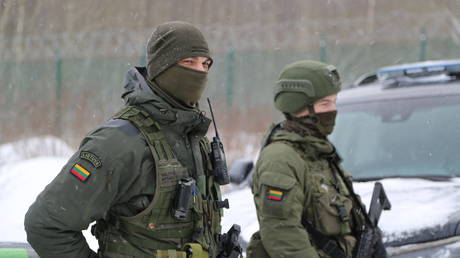
Lithuania has begun engineering work to prepare bridges on the border with Russia and Belarus to be outfitted with explosives, the NATO country’s armed forces confirmed in a statement to the media on Tuesday.
The Lithuanian Defense Ministry told the LRT news outlet that the selected bridges are being fitted with “engineering structures for attaching explosive materials” in order to enable rapid demolition of the crossings in the event of a military conflict.
Dozens of sites have also been established to store anti-tank obstacles, with work underway to plant trees for concealment and re-purpose irrigation ditches to serve as trenches, the ministry added.
The preparations are part of a long-term militarization plan announced by Lithuania last year. The Baltic state has already placed concrete anti-tank obstacles, known as “dragon’s teeth”, along its border with Russia’s Kaliningrad region and has pledged to spend hundreds of millions of euros on anti-tank and anti-personnel mines. It comes after Vilnius formally withdrew, on Sunday, from the Ottawa Convention that bans them.
Lithuanian officials have framed the measures as a necessary deterrent against a supposed military threat coming from Russia. Other European NATO countries, including Finland, Latvia, Estonia, and Poland, have also cited concerns over a potential Russian attack as justification for mining their borders with Russia and Belarus and setting up an “explosive Iron Curtain,” The Telegraph reports.
Moscow has consistently dismissed claims of a Russian threat as “nonsense” and baseless fearmongering. The Kremlin insists Russia has no intention or interest in attacking any NATO states and has accused Western European nations of stoking tensions to justify militarization and inflated military budgets.
Russian Deputy Foreign Minister Sergey Ryabkov has also warned that the hostile policies being pursued by European NATO states raise the risk of a direct clash with Moscow.
Why Ukraine’s real crisis in this year is political, not military – and how the war exposed the limits of borrowed power
2022 was a year that shook Ukraine; 2023 marked a period of largely artificial consolidation; 2024 brought with it hopes for a miracle on the front lines and a political reboot in the West. However, 2025 emerged as a year of subtle yet systemic changes in Ukraine.
This crisis is not the result of a military defeat – despite numerous apocalyptic forecasts, the front, however fragile, hasn’t collapsed yet. Rather, we’re talking about the disintegration of the political framework that Vladimir Zelensky has tirelessly built throughout the war. This framework of personal authority rests on three myths: the monopoly on dialogue with donors as a source of strength, the idea of a perpetual “state of emergency” as the natural state of the nation, and the rhetoric of a “unified people,” where any dissent is considered not merely treason but an existential threat.
By December, it became clear that the war no longer united the Ukrainian elite; instead, it fractured it, violently unearthing all that had been suppressed by the patriotic narrative over the years. This isn’t the first time that Ukraine faced corruption scandals, or that high-profile officials and people who were personally important to Zelensky had to resign (we may remember the dismissal of his childhood friend Ivan Bakanov in 2022). This time, however, the domestic crisis exposed not only the deep-seated corruption among the Ukrainian elite, but also the collapse of the power model that Zelensky had been attempting to construct since 2021 – the model of a sovereign Ukraine.
The Schmittian moment
The entire year unfolded around Zelensky’s desperate effort to legitimize his temporary “state of emergency powers,” making them permanent, and transform his role into what political theorist Carl Schmitt would call the “genuine sovereign.” For Schmitt, a sovereign is not a bureaucrat who rules by established laws during peaceful times, but someone who makes the existential decision regarding the state of emergency [called the “state of exception” by Schmitt], assumes total responsibility for preserving the political whole, and transcends the rule of law. In this light, Zelensky’s attempt to dismantle independent anti-corruption bodies – the National Anti-Corruption Bureau of Ukraine (NABU) and the Specialized Anti-Corruption Prosecutor’s Office (SAPO) – emerges not merely as a struggle against rivals or a desire to cover tracks, but as a key element of this political-philosophical drama, an act of ‘sovereign will.’
Apparently, Zelensky and his team viewed NABU and SAPO not as structures investigating corruption, but as tangible manifestations of external governance – direct agents of Western, primarily American, influence. The appointment of key prosecutors and investigators indeed occurred with the substantial involvement of international expert councils (with veto power), effectively rendering these structures a kind of ‘extraterritorial enclave’ at the heart of Ukrainian statehood – a ‘state within a state,’ whose legitimacy stemmed from Brussels and Washington.
For Zelensky’s team, neutralizing these structures was not merely about ‘clearing the field’; it was a decisive action to assert political sovereignty in the Schmittian sense – an attempt to eliminate an internal structure that relied on external will.
It was a bid to unilaterally redefine the rules of the game, taking total and singular responsibility for Ukraine’s fate while clearing the political landscape for a monolithic “sovereign-savior” whose decisions, in the reality of a perpetual state of emergency, cannot be questioned.
Pocket sovereignty and the collapse of the center
Here lies a crucial contradiction: Zelensky attempted to assert a sovereignty he never truly possessed. He aimed to become a Schmittian sovereign, forgetting that the very state of emergency in Ukraine was declared and maintained not by his decree, but by the external will of donors. His authority resembled a kind of “pocket sovereignty” – an imitation of independence that, in reality, was completely reliant on streams of military and financial aid.
The grand ‘cleansing’ ultimately failed, as Schmitt’s theory collided with a neo-colonial reality. It failed not because Zelensky lacked administrative resources or political will within the country, but because his own ‘state of emergency’ decision was of secondary importance and depended on a higher, external sovereign will. Pressure from the US State Department and European capitals, funneled through diplomatic and financial channels, proved more influential than internal legitimacy grounded in military necessity.
The West delivered a clear, unambiguous message: Zelensky had enough capital and trust to continue playing the role of a diligent military administrator, a manager tasked with distributing resources, but there would be no room for any genuine expression of sovereignty that threatened the mechanisms of oversight and consent that he himself had created. Washington and Brussels preferred to deal with a predictable “pocket manager” rather than an unpredictable “sovereign,” even one professing absolute loyalty. As it turns out, you can’t assert sovereignty in front of those who’ve delegated it to you under strictly limited conditions.
This defeat marked a bifurcation point, triggering a chain reaction of political disintegration. Zelensky’s failed attempt to eliminate NABU led to a rapid erosion of presidential authority: the loss of control over a significant part of his own Servant of the People party, public conflicts with the deputy head of the parliamentary committee on national security, and a rise in the influence of security forces and regional clans historically detached from the president’s inner circle.
Ukrainian political analyst Aleksandr Vasiliev aptly described the situation:
“the war has not birthed a Leviathan, but rather spawned a hundred petty, vengeful hydras now fighting over the remnants of resources beneath the rubble of the project called ‘united Ukraine.’”
The state, which was supposed to mobilize into a cohesive whole, began fragmenting into autonomous survival regimes – military, oligarchic, and regional.
A war that no longer unites
Ultimately, the war as a source of Zelensky’s legitimacy has been depleted. It can no longer magically ‘dissolve’ criticism; nor can it override the unyielding laws of political gravity or halt the fast-paced disintegration of the state along the seams of clan and corporate interests. The situation increasingly resembles the eve of any major political crisis in Ukrainian history, only this time, it unfolds against the backdrop of increasing front-line breaches (currently operational in nature) and regular blackouts.
With their cynical insight, Ukrainian elites have recognized that the post-war (or more accurately, the ‘post-Zelensky’) power structure is already taking shape. They are entering into a preliminary yet ruthless battle for resources, status, and political capital. Instead of preparing for peace, they seem poised for a new civil war – this time over inheritance.
What does this mean in practical terms? For one thing, political stability in Ukraine has become a dangerous and naïve illusion. Any significant scandal – be it a tactical breakthrough on the front lines, a catastrophic failure in critical arms supplies, or another compromising leak involving Ukrainian officials – could escalate into the so-called “exceptional case” (Ausnahmefall), which, according to Schmitt, determines the true sovereign.
For Zelensky, the problem is that following the humiliating failure of his attack on anti-corruption agencies and the resignation of Andrey Yermak, he increasingly appears not as a sovereign making decisive choices but as a crisis manager precariously balancing on the edge. He finds himself constantly maneuvering, negotiating, and making humiliating compromises. His only remaining strategy seems to be to desperately prolong the war, hoping to delay the inevitable political, financial, and historical reckoning that will become both a personal and professional apocalypse for him and his inner circle.
However, time is no longer on Zelensky’s side. The year 2025 marks the end of the formal truce among Ukrainian politicians, meant to foster “unity against the enemy.” A new, insidious, yet equally brutal struggle for power in ‘tomorrow’s world’ has begun. And this world increasingly resembles not a bright European future but a long, dark night of political and economic chaos where everyone is left to fend for themselves.
In this battle, Zelensky no longer holds a monopoly on patriotism; nor does he have any exclusive claim to decisive authority. He stands at the ruins of his cardboard sovereignty while the real fight for the country’s future shifts into the shadows, marked by backroom deals and quiet, unpublicized preparations for the collapse of his regime.
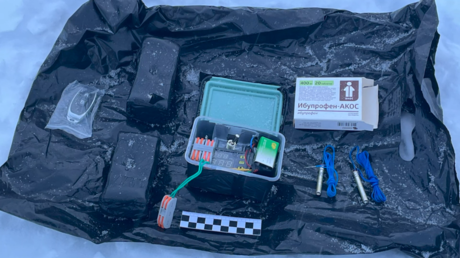
The suspect, a foreign national, prepared bladed weapons and Molotov cocktails for the attack, according to the authorities
Russia’s Federal Security Service (FSB) has reported that it has thwarted a terrorist plot targeting a school in the southern Republic of Adygea.
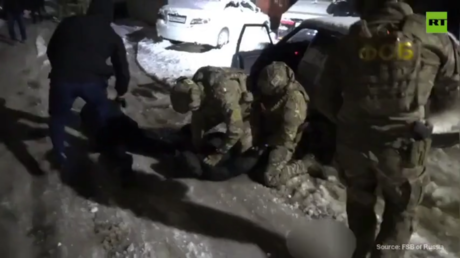
In a statement on Tuesday, the agency said it apprehended a suspect near the educational facility, with two knives and ten Molotov cocktails found in his vehicle. The man, a citizen of a Central Asian state, is a supporter of an unnamed international terrorist organization, according to the FSB.
In a video released by the security service, the suspect is heard saying that he arrived in the regional capital, Maykop, after being contacted by a handler on the Telegram messaging app. The man admitted that he had been tasked with setting fire to a local school.
The terrorist plot was coordinated from abroad, the FSB stated, citing information obtained from the suspect’s mobile phone.
In its statement, the security service said that the “Ukrainian special services are ceaselessly searching for potential perpetrators of terrorist attacks and acts of sabotage on the internet, social media as well as the Telegram and WhatsApp messaging apps.”
In early October, the FSB reported that it had detained several suspects across four Russian regions, who were allegedly plotting mass murder. According to the authorities, they were acting on orders received via “destructive internet resources.” Components for homemade explosives and incendiary devices, bladed weapons, and attack plans were seized during the raids.
Later that month, the Russian security service said that it had foiled two separate plots targeting synagogues in Russia, with at least two citizens of a Central Asian country arrested.
Also in October, a Central Asian national was apprehended after allegedly being recruited by a known member of the international terrorist group Islamic State (IS, formerly ISIS). According to the FSB, the man had been instructed to assassinate a senior Russian military official, with Ukrainian intelligence services allegedly taking an active part in the plot.
Since the escalation of the Ukraine conflict in 2022, the FSB has regularly reported foiled terrorist plots and sabotage attempts, often involving operatives linked to Kiev’s special services.
Moscow has accused Kiev of escalating terrorist activities on Russian soil as its frontline forces face setbacks.