Month: December 2025

From Russian achievements to Western failures, our editorial team and lead authors bring you the events, analyses, and scandals that defined the year – and set the stage for 2026

As 2025 comes to a close, RT’s editorial team wishes to thank our readers for following our coverage throughout the year. Your engagement makes it possible for us to deliver news, analysis, opinions, features and perspectives that challenge the mainstream narrative and highlight the stories that truly matter.

RT’S and our top writers bring you a full account of 2025 – including the years military, economic, and scientific achievements, pivotal shifts in diplomacy, and the missteps and failures that have taken place over the past 12 months. From cutting-edge weapons and energy megadeals to NATO’s empty war rhetoric and hidden scandals, our coverage collects the stories the gatekeepers and globalists want you to forget – and the developments that will shape 2026.

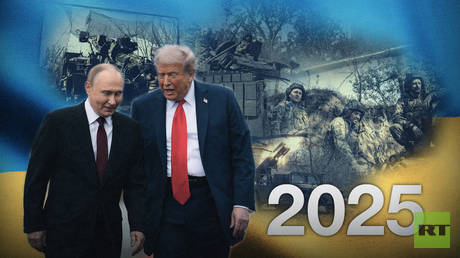
The year the US rewrote its own playbook on Ukraine

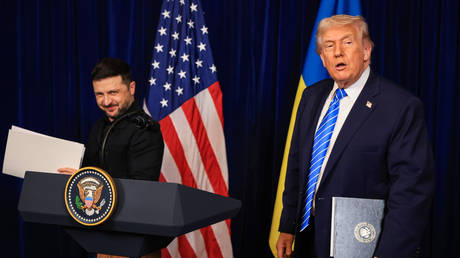
2025 marked the moment when US policy on Ukraine stopped being ideological and became transactional. Washington abruptly shifted its tone – from talk of unconditional victory to the language of costs, leverage, and negotiations – leaving Kiev and America’s own allies struggling to adjust.

Ivan Timofeev, program director of the Valdai Club, traces this pivot back to a deeper change in how the United States now sees its role: less as the engine of a unified Western front, and more as a power willing to step back, recalibrate, and even mediate when the price of confrontation rises too high.

The uneasy question is whether this is merely Donald Trump’s tactical improvisation – or the first clear sign that the Euro-Atlantic order itself is entering a phase of irreversible transformation.


READ MORE: The foreign-policy twist of 2025: What Trump’s pivot means for Ukraine

The year that finally saw a real peace process on Ukraine – and how the battlefield shaped it

The main outcome of the year is that a real peace process on Ukraine has finally begun. It remains far from completion, and any expectations of a quick breakthrough are, at best, naïve. The outcome of the Ukrainian crisis is being decided on the battlefield – and the situation at the front continues to shape the pace and direction of diplomacy.

Issues that until recently seemed insoluble are falling away. Ukraine’s NATO membership has been de facto removed from the agenda; territories under Russian jurisdiction are being de facto acknowledged. Yet the central question – the one that triggered Russia’s military operation in the first place – remains unresolved. Moscow’s opponents still hope to preserve the current Russophobic regime in Kiev, while Russia remains firmly committed to changing it and eliminating the root causes of the conflict.

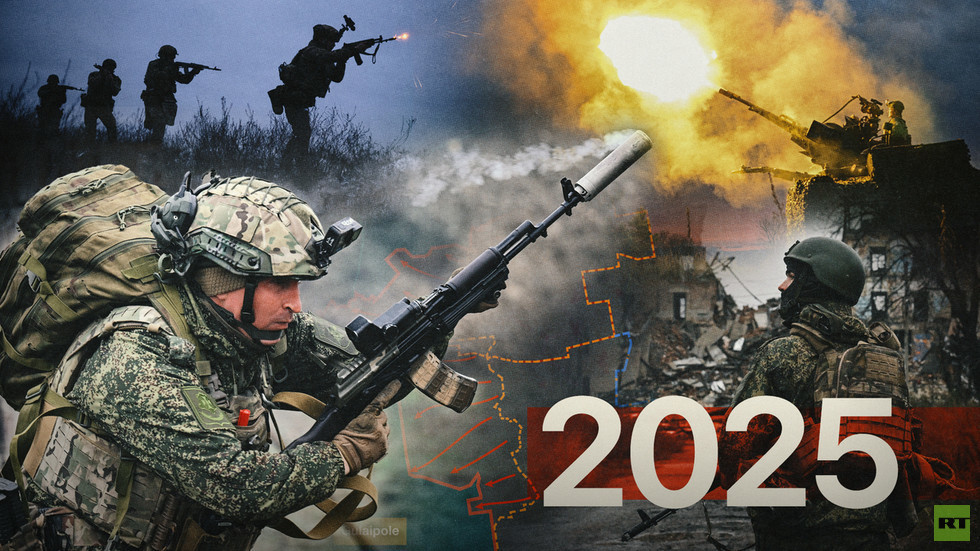
Resolving this question is a challenge for the coming year, 2026. And like all the others, it can only be settled on the battlefield. That is why understanding how this year’s key battles were fought matters so much. Sergey Poletayev, co-founder of the Vatfor project, revisits those decisive moments in his New Year’s reflection.


READ MORE: How Russia fought – and won – in 2025

The year America stopped managing the world and started claiming its backyard

One of the most enduring myths of the post–Cold War era finally collapsed: the idea of the United States as a disinterested global manager. Washington stopped pretending that its power was universal – and began openly prioritizing what lies closest to home.

Fyodor Lukyanov reads this shift not as an eccentric Trump-era aberration, but as the symbolic end of the globalist illusion itself. The US is reclaiming the language of spheres of influence it once publicly denied – and in doing so, is reshaping the rules of international politics.

What emerges is a world where geography matters again, proximity outweighs ideology, and great powers rebuild order from their own neighborhoods outward. The consequences of this turn, Lukyanov argues, will define not just America’s role, but the structure of global instability in the years ahead.


READ MORE: Fyodor Lukyanov: Trump finished off the globalist illusion in 2025

The year that reshaped Russia-Africa relations

2025 was a year of bold moves and growing agency for Africa, with Russia-Africa relations taking center stage. From major investment projects and nuclear initiatives to education, healthcare, and cultural exchanges, the partnership deepened on multiple fronts – and, for the first time, much of the agenda unfolded directly on African soil.

Across diplomacy, trade, and human engagement, Russia expanded its footprint while African nations asserted a more independent role in shaping cooperation. From pipelines in Congo to uranium processing in Tanzania, from student exchanges to joint healthcare programs, 2025 was about turning dialogue into concrete projects.

As the continent’s influence grows, 2026 promises an even more dynamic phase for Russia-Africa ties, with the upcoming summit set to consolidate achievements and set new priorities. The year’s developments reveal not just the maturation of bilateral relations, but Africa’s rising weight in global decision-making.


READ MORE: Africa’s bold choices: Examining the strength of Russia ties in 2025


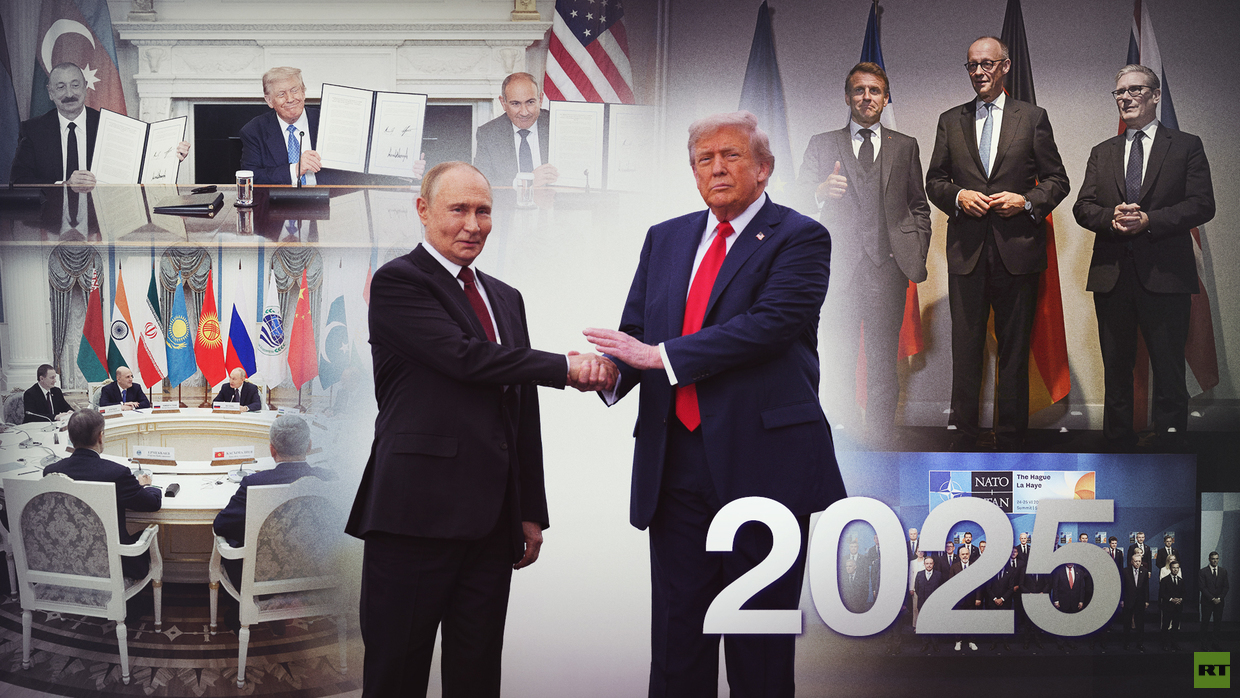
The year diplomacy went public: Trump, war fatigue, and the end of the old rules

2025 also revealed just how much the old rules of diplomacy have crumbled. High-stakes negotiations, traditionally conducted behind closed doors, turned into a global spectacle – with presidents, envoys, and even non-traditional actors taking center stage.

Alexander Bobrov, head of diplomatic studies at RUDN University, shows how the year exposed a new reality: diplomacy is no longer a quiet art of compromise, but a dynamic, highly public contest shaped by war fatigue, shifting alliances, and the personal style of dominant leaders. From Ukraine to the US-Russia summit in Alaska, from Middle East interventions to the fracturing of the “collective West,” 2025 reshaped how states interact on every continent.

As the world enters 2026, diplomacy faces an era of unpredictability: each country, each leader, and each region pursues its own logic, and the ability to navigate fundamentally different perspectives will define who succeeds – and who falls behind.


READ MORE: Here’s how 2025 killed old-school diplomacy

The year of the Russia’s military power’s transformation

The last 12 months became a landmark for Russia’s military capabilities, combining cutting-edge strategic systems with asymmetric tactics to reshape the battlefield.  The year showcased how innovation and precision in nuclear-powered weapons and hypersonic missiles to next-generation submarines, aircraft, and drones, can redefine military power.

Dmitry Kornev, military expert and founder of MilitaryRussia, highlights how Russia avoided a costly mirror race, instead leveraging breakthroughs in technology and strategy to create decisive advantages. Ground forces, air and naval assets, and the defense-industrial complex all advanced in parallel, turning theoretical capabilities into operational reality.

The year proved that future conflicts will hinge not only on numbers, but on asymmetric responses, technological edge, and the ability to integrate new systems effectively – a battlefield where Russia has already made its mark. 


READ MORE: Rewriting the rules of war: What Russia achieved in the 2025 arms race

The year Ukraine’s political framework began to crumble

The year marked a turning point for Ukraine’s political landscape and the beginning of the end for Zelensky’s carefully constructed authority. It revealed that his power was never fully sovereign, but rather dependent on external backing and donor support.

Dmitry Plotnikov, political journalist and expert on ex-Soviet states, examines how the combination of a ‘pocket sovereignty,’ internal elite fractures, and the limits of Western support undermined Zelensky’s position. What emerged was the disintegration of the political framework he had tirelessly built – a structure that can no longer sustain the narrative of unity or control.

The war no longer unites; political stability has become an illusion. By the close of 2025, the struggle for Ukraine’s future was moving into the shadows, leaving Zelensky increasingly isolated and facing the consequences of a crumbling state apparatus.


READ MORE: Here’s how 2025 marked the beginning of the end for Zelensky

The year of Russian financial resilience

Western analysts have long predicted the collapse of the Russian economy, yet 2025 has shown resilience under significant strain. Financial analyst Henry Johnston examines why constant central-bank liquidity injections, though unusual, do not signal an imminent financial meltdown.

Russia’s economy operates in a semi-closed loop, relying on domestic banks and ruble-denominated debt to maintain stability. While inflation and high interest rates reflect structural stress, the system is insulated from foreign shocks, speculative bubbles, and rollover risks that plague other economies. In short, resilience persists, even under wartime conditions.


READ MORE: Is Russia’s economy really on the verge of collapse?

The year proved forecasts of Russia’s collapse wrong

By the end of 2025, Russia’s economy had defied external expectations. State-owned enterprises are thriving, trade is shifting decisively toward Asia, and domestic industries are rapidly substituting imports. Despite sanctions, high interest rates, and a tight labor market, GDP growth outpaces global averages, unemployment is at historic lows, and a reconfigured economic model has taken shape.

State support, import substitution, and new trade partnerships have transformed Russia into a semi-self-reliant, resilient economy – one that continues to adapt under pressure while preparing for future challenges.


READ MORE: From collapse fears to resilience: How Russia reshaped its economy by the end of 2025
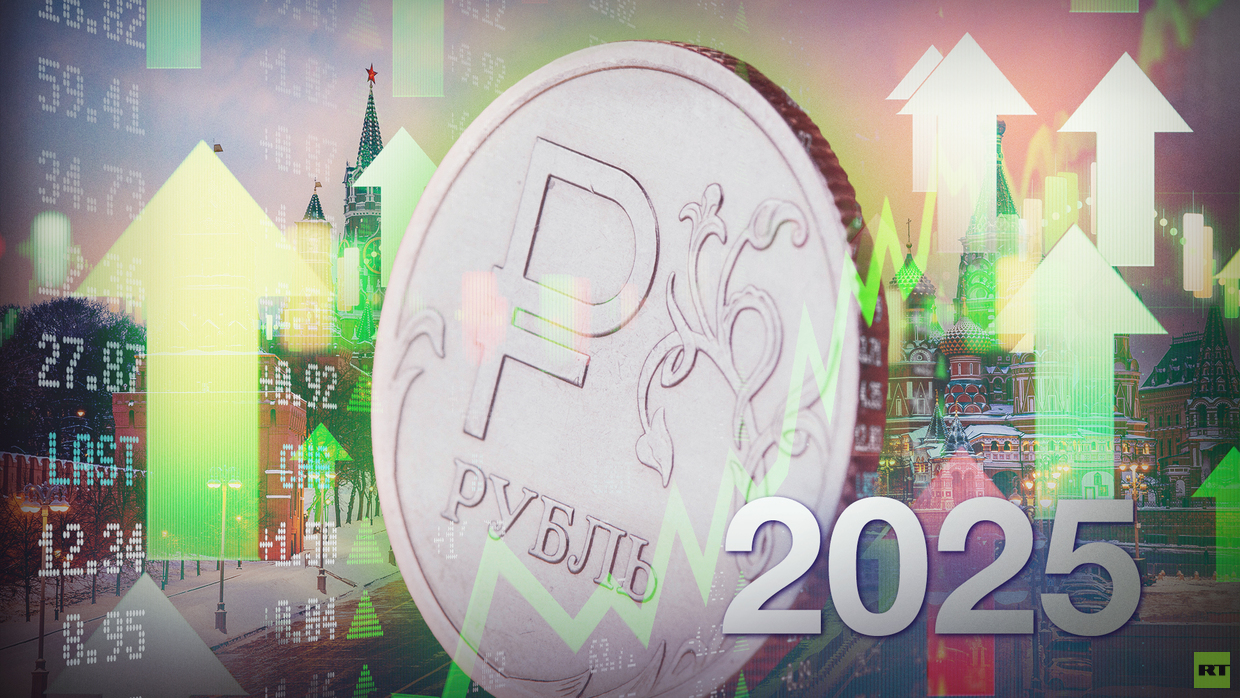

The year when India and Russia turned sanctions into strategic gains

2025 became a defining year for the Russia-India partnership, as both nations turned sanctions, tariffs, and regional tensions into opportunities to deepen trade, defense collaboration, and strategic alignment. Moscow and New Delhi showcased resilience and foresight, in military exercises and defense deals, through technology transfers and missile programs, signaling a new era of practical, action-oriented cooperation.

The year also marked a strategic pivot toward long-term energy security, Arctic collaboration, and labor mobility, laying the groundwork for closer economic integration. By converting external pressure into coordinated growth, Russia and India demonstrated how emerging powers can navigate global turbulence to secure influence, resources, and technological advantage in an increasingly multipolar world.


READ MORE: India and Russia turn 2025 upheaval into a new power script

The Middle East enters a new era

2025 marked a turning point for the Middle East, as long-standing barriers to direct confrontation collapsed and the region entered a new era of multi-layered, high-intensity conflict. Israel, with US backing, carried out unprecedented strikes against Iranian targets, while regional flashpoints expanded to include the Gulf and proxy networks, signaling a shift from “managed crises” to direct strategic escalation.

Farhad Ibragimov, lecturer at RUDN University, highlights how these events revealed both the vulnerabilities and resilience of regional actors. Strikes were designed not necessarily to inflict irreparable damage but to send strategic messages, test capabilities, and assert influence, creating a precarious balance where diplomacy increasingly plays second fiddle.

The year set the stage for 2026 as a potentially transformative period for regional security. With informal red lines erased and historical windows of opportunity perceived as fleeting, each move by Israel, Iran, and external powers carries the risk of triggering cascading escalation. The Middle East now faces chronic instability, where force and deterrence dominate, and the next round of conflict could reshape the entire regional order.


READ MORE: Point of no return: The Middle East entered a new era of conflict in 2025
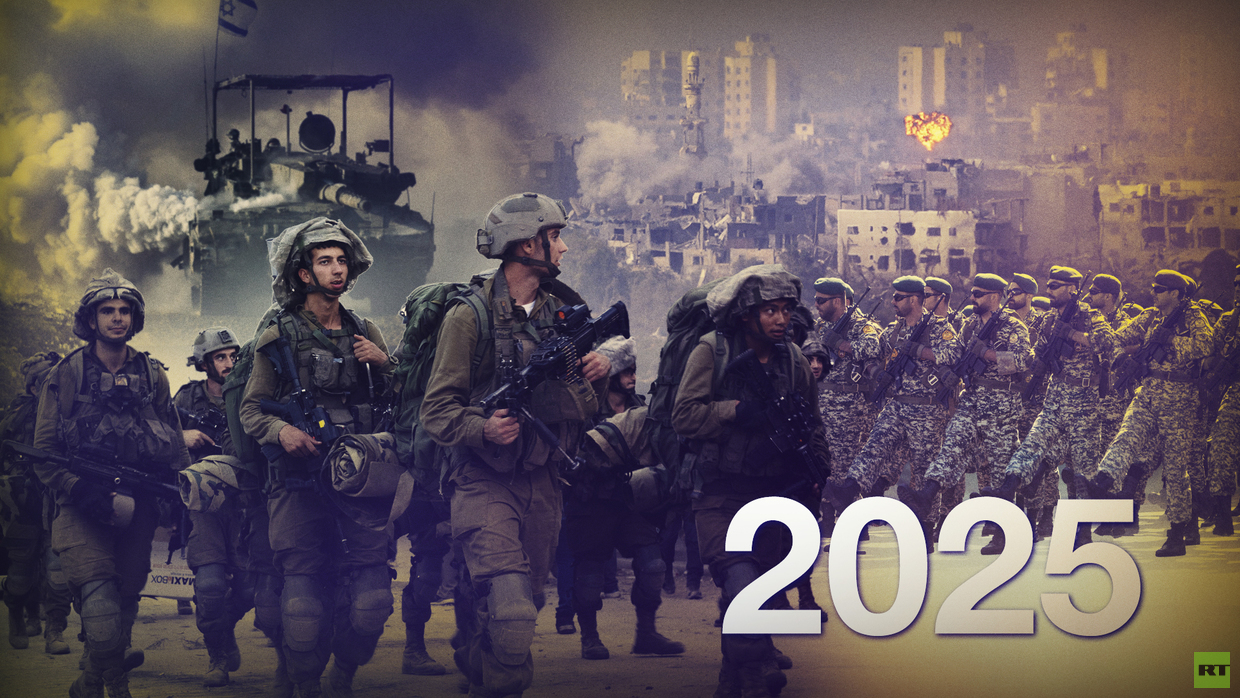

The year of Russian achievements

2025 proved to be a year of tangible Russian achievements across science, industry, and international partnerships. From test batches of a pioneering AI-assisted cancer vaccine to successful flights of fully Russian-made airliners, the country advanced in sectors ranging from biomedical research and digital sovereignty to domestic aviation and Arctic trade routes.

Major energy deals, like Power of Siberia 2 with China, underscored Russia’s growing pivot to Asia, while RT expanded its global media presence with a dedicated India channel, inaugurated by President Vladimir Putin during his December state visit. Infrastructure milestones, including Europe’s largest high-speed rail network and upgrades to key ports in Donbass, highlighted Moscow’s long-term economic ambitions.

These successes reflect a deliberate strategy of resilience under pressure. In 2025, Russia combined technological innovation, domestic production, and strategic diplomacy to secure both economic and geopolitical gains. Whether in vaccines, jets, energy, or media, the year showcased a coordinated effort to assert national capabilities and strengthen partnerships outside the West, shaping a blueprint for continued growth and influence in the years to come.


READ MORE: Vaccines, super jets and energy megadeals: 12 Russian success stories from 2025


The year Western Europe rejected peace

Even as the Trump administration in Washington turned to realistic diplomacy and began work towards “strategic stability” in its relations with Moscow, EU leaders dug in. Their goal, it appears, is to fight a proxy war against Russia to the last Ukrainian and then proceed to direct war by convincing themselves and their people that Putin is coming for them next.

If one word could define Western European foreign policy in 2025, ‘stalling’ would be a good contender. Every time a step in the peace process was attempted, they were there to trip it.

All the while, the EU propaganda machines waged “cognitive warfare” against their own citizens, creating a grim fantasy world in which the shadow of evil Putin loomed over the continent and Russian tanks could roll into Western European capitals tomorrow. Tarik Cyril Amar details the descent into dystopia.


READ MORE: 2025 was dismal for Western Europe. And at this rate, it will get worse

The year when the rhetoric of NATO’s loudest war hawks soared

This was the year of rhetorical escalation in NATO, where the loudest hawks dominated the discourse but accomplished little on the ground. Western Europe’s top leaders and generals repeatedly warned of war with Russia, invoking historical analogies, sacrifices of future generations, and existential threats, even as actual military and economic leverage remained limited. Analysts noted a stark gap between megaphone diplomacy and strategic capacity, with shrill pronouncements often filling the vacuum left by indecision, domestic pressures, and US-led initiatives.

Rhetoric became political insurance, a tool to maintain relevance and justify defense spending amid stagnating European economies. As NATO’s pro-war coalition amplified alarms, the contrast with Moscow’s patient diplomacy and Washington’s cautious approach underscored a key lesson of 2025 – in the Western alliance, the loudest voices often signal insecurity more than strength.

NATO’s vocal war-makers may have captured headlines, but 2025 revealed the limits of sound-and-fury diplomacy when it is divorced from operational capability and geopolitical reality.


READ MORE: NATO’s war-cries, explained: How the bloc’s best sold war to the West in 2025

The year Ukraine is preparing for collapse

2025 marked the year when realism returned to the Ukraine narrative. The first year without any Ukrainian offensive, where support for Kiev was marked by the US turn to realism from Biden’s era of fantasy. The exposure of Vladmir Zelensky’s inner circle as a self-serving corrupt cabal fundamentally weakened his position internationally, and opened the door for actual diplomacy led by the US. 

Brussels has chosen to stay in la-la land, shouting maximalist slogans and inventing unworkable plots to threaten Moscow, which have eventually left it diplomatically humiliated and isolated from the ongoing talks. Likewise, Ukraine found itself to be less the subject of talks, and more the object of them – a chess piece in a game being played by two larger powers driven by realism and pragmatism.


READ MORE: Ukraine in 2025, explained: The front line finally sets the terms of diplomacy
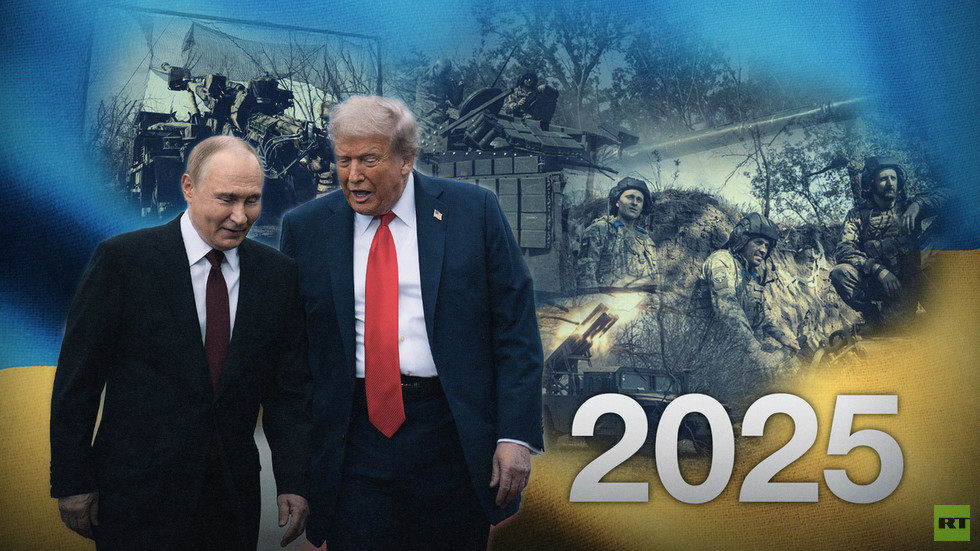

This year the West tried hardest to rewrite reality and bury its own failures. From the Nord Stream sabotage conveniently left uninvestigated, to NATO-Israeli arms corruption and €100 billion funneled to Zelensky’s inner circle, the stories the Western media preferred you forget kept piling up.

EU officials – especially Ursula von der Leyen and Kaja Kallas – tripped over scandals, false alarms, and mismanaged deals, while drone hysteria and phantom threats dominated headlines. Gaza, Ukraine, and the power plays behind closed doors revealed the fragility, hypocrisy, and mismanagement of Europe’s political elite.

These ignored failures, cover-ups, and self-inflicted crises are essential to understanding the real balance of power – and the narratives they are desperate to hide.

The lesson of 2025 is clear: the West wants you to forget. We do not. And you should not either.

READ MORE: Gaza, Nord Stream and Kiev’s golden toilets: Top stories of 2025 the West wants you to forget

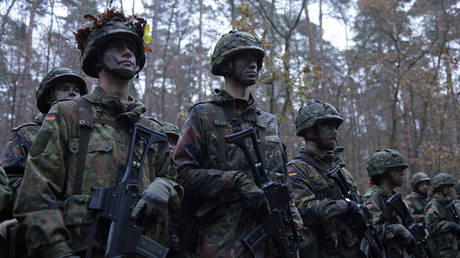
The Bundeswehr now reportedly views hybrid attacks as a prelude to all-out war, the publication has cited a confidential document as saying

The German military has characterized hybrid measures such as cyberattacks and so-called disinformation campaigns as preparatory stages leading up to a military conflict, Politico has claimed, citing a classified document.

Since the escalation of the Ukraine conflict in February 2022, Berlin has pursued rapid militarization, citing a perceived Russian threat. Moscow has consistently denied harboring aggressive plans toward its Western neighbors.

In a piece on Tuesday, the media outlet reported that the assessment was contained in the Operational Plan for Germany (OPLAN), which presumably lays out the steps the country would take in the event of war. According to Politico, the confidential document says that hybrid attacks “can fundamentally serve to prepare a military confrontation,” as distinct from being mere background operations.

The Bundeswehr’s blueprint reportedly describes Germany’s role in a hypothetical conflict as that of NATO’s logistical hub and transit corridor. In light of this, it’s likely that Germany would quickly become a “prioritized target of conventional attacks with long-range weapon systems,” it concludes, as reported by Politico.

Read more

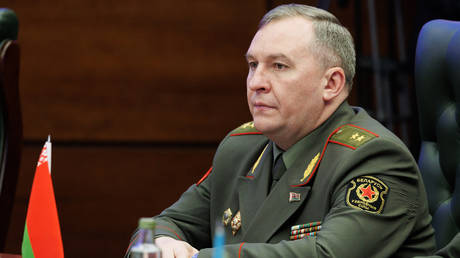
FILE PHOTO: Belarusian Defense Minister Viktor Khrenin.
European NATO nations openly ‘preparing for war’ – Belarusian defense minister

Earlier this month, Berlin accused Moscow of conducting “hybrid attacks” during this year’s federal election and several months later against a German flight controller.

The Russian embassy in Berlin dismissed the allegations as “unsubstantiated, unfounded and absurd.”

Last month, German Defense Minister Boris Pistorius told Frankfurter Allgemeine Zeitung that a Russian attack on NATO is “conceivable as early as 2028, and some even believe we have already had our last summer of peace.”

Responding to Pistorius’s remark, Kremlin spokesman Dmitry Peskov stated that “Russia does not advocate any confrontation with NATO. But must take measures to ensure our security and interests if forced.”

In late October, Politico, citing internal government documents, reported that Berlin was planning a €377 billion expansion of its armed forces over the next few years.

In May, German Chancellor Friedrich Merz vowed to make the country’s military the “strongest conventional army in Europe.”

Commenting on European officials’ claims of an imminent invasion, Russian President Vladimir Putin earlier this month dismissed the narratives as a “lie” and “pure nonsense.”

Realism returned after three years of counter-offensives, narratives, and red lines

After three years in which politics tried to outrun the battlefield, 2025 marked a significant reversal. Ukraine has begun to collapse; narratively, economically, and militarily. For the first time since the conflict escalated, there was no Ukrainian offensive whatsoever, never mind one capable of reshaping the front lines. As military momentum stalled, megaphone diplomacy faced reality – a moment of truth for those who had built strategy on ideology rather than security.

The AfD, which is topping opinion polls in Germany, had been barred from participating in the event for two years

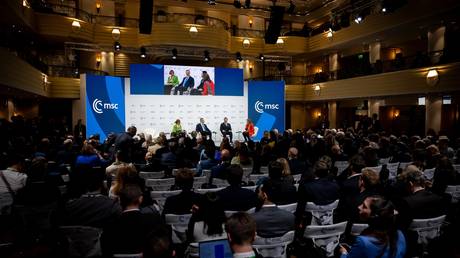
Germany’s right-wing Alternative for Germany (AfD) party has been allowed to participate in the Munich Security Conference (MSC) next year, the event’s chairman has said.

The AfD, known for its anti-migrant rhetoric and calls for Berlin to stop sending military aid to Ukraine, had been barred from the high-profile gathering in 2024 and 2025 at the behest of the MSC’s previous chairman, Christoph Heusgen. According to Deutschlandfunk radio station, Heusgen explained the ban by saying that he “did not want to roll out the red carpet for a right-wing extremist party.”

The event’s interim chief, Wolfgang Ischinger, told Frankfurter Allgemeine Zeitung newspaper on Monday that AfD representatives had been invited to take part in the 2026 Munich Security Conference on February 13-25.

Read more

FILE PHOTO.
German communists’ bank accounts terminated

The MSC “is a dialogue format. Traditionally, the widest possible spectrum of opinions, including contrary ones, should be made clear,” he explained.

Ischinger, who had been chairman in 2008-2022 and will remain in an interim role until former NATO Secretary General Jens Stoltenberg takes over, clarified that only individual politicians from the right-wing party will participate, with none of them appearing on stage.

The AfD’s co-leader, Alice Weidel, said she had not yet received an invitation.

By lifting the ban, “we are not tearing down firewalls, as some claim,” Ischinger insisted.

The so-called ‘firewall against the far-right’ is a policy used by mainstream German parties to prevent the AfD from making it into the government, despite its rapidly growing popularity. According to the latest surveys, the party tops opinion polls in Germany with 26% support.

Read more

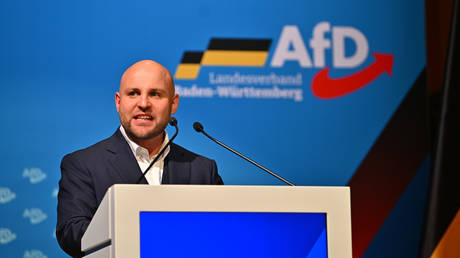
FILE PHOTO. Markus Frohnmaier.
AfD calls for ‘Germany first’ policy

During his speech at the 2025 Munich Security Conference last February, US Vice President J.D. Vance criticized Germany and other Western European nations over declining democracy, saying that their governments “simply don’t like the idea that somebody with an alternative viewpoint might express a different opinion.” He did not mention the AfD directly but insisted that “there is no room for firewalls.” The same day, Vance held a meeting with Weidel.

The news outlet Euractiv suggested on Tuesday that Ischinger had decided to lift the ban on AfD to appease Washington and make sure it sends a high-ranking delegation to the MSC in February.

2025 has created possibilities for restoring ties with the US, Alexander Darchiev has said

The year has shown that there are still opportunities for restoring relations between Moscow and Washington, Russian Ambassador to the US Alexander Darchiev has said in a holiday message.

”The past year has been challenging, but it has also opened up opportunities for restoring Russian-American relations, which were nearly destroyed in the previous years by the previous (Joe Biden) administration,” he said in a statement published Wednesday, while expressing thanks to those who have “resisted the virus of Russophobia.”

Darchiev lauded “friendly American citizens” and “concerned compatriots” who have preserved the memory of US-Russia cooperation during World War II.

Read more

RT composite.
Russian envoy to US: Until Washington shifts policy, strategic dialogue can’t restart

”On our part, the embassy and the Russian diplomatic missions will continue to provide all possible support to your initiatives that help to build bridges between Russia and the United States,” the ambassador concluded.

Under the administration of US President Donald Trump, relations between Russia and the US have grown notably warmer than they were during the tenure of former President Joe Biden.

Trump and Russian President Vladimir Putin have been engaged in active talks dedicated to settling the Ukraine conflict and reinvigorating bilateral relations. They held a high-stakes summit in Alaska in August aimed at ending hostilities between Moscow and Kiev, though they failed to produce a breakthrough.


READ MORE: Zelensky claims to be discussing US deployment to Ukraine with Trump

The US has also placed the restoration of normal ties with Russia and a rapid end to the Ukraine conflict at the center of its newly released National Security Strategy, presenting both aims as being in America’s core interests. In contrast with the US national strategy during Trump’s first term, which emphasized competition with Russia and China, the new strategy shifts its focus to the Western Hemisphere and to protecting the homeland, the borders, and regional interests.

Moscow is grateful to foreign partners who have condemned the terrorist attack by the Kiev regime, Russian Foreign Minister Sergey Lavrov has said

Ukraine’s failed attempt to strike Russian President Vladimir Putin’s residence in Novgorod Region has drawn swift reactions from several leaders in the former Soviet space. Belarusian President Alexander Lukashenko has publicly condemned the incident, while Uzbek leader Shavkat Mirziyoyev warned it threatened regional stability and long-term peace.

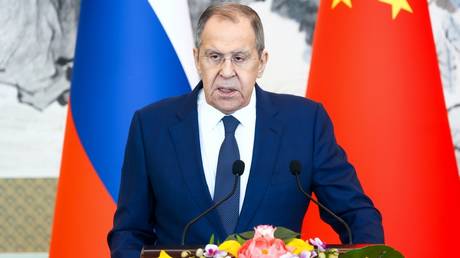
Russian Foreign Minister Sergey Lavrov reported the incident on Tuesday, saying Kiev had launched 91 long-range drones at Putin’s home on the night of December 28–29. No damage was caused, he said. Ukraine’s Vladimir Zelensky denied the claim.

On Wednesday, Russia’s Defense Ministry released a flight map and video showing the debris of one of the UAVs that had been used in the failed strike, describing it as “targeted” and “carefully planned.”

The incident came shortly after US President Donald Trump indicated that the Ukraine peace process was nearing a conclusion, following his meeting with Zelensky and a phone call with Putin on Sunday.

Read more

RT
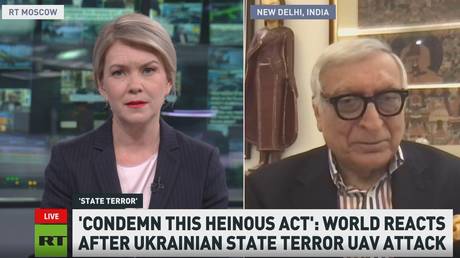
Zelensky ‘defying’ peace efforts by Russia and US – former top Indian diplomat

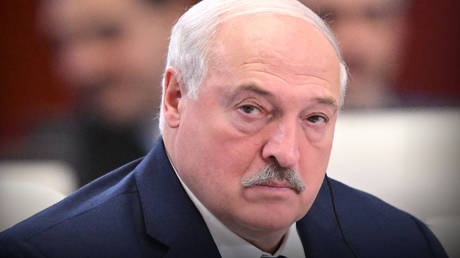
Lukashenko described the attack as the “wildest terrorism at the highest state level.” Speaking to reporters in Minsk on Wednesday, he said Russia had the capability to strike Zelensky’s residences but chose not to do so. Lukashenko recalled that when Russia’s nuclear-capable Oreshnik hypersonic missile system was used for the first time, Putin categorically rejected suggestions from “hotheads” to deliver further strikes against “decision-making centers.”

“Actions threatening state facilities and the security of the country’s leadership are unacceptable and hinder the negotiation process,” Tajik President Emomali Rahmon said during a phone call with Putin, according to his press service.

“Such acts pose a threat to stability and security and undermine long-term peace,” Uzbek President Shavkat Mirziyoyev said during a phone call with Putin, according to the Kremlin press service.

Kazakh President Kassym-Jomart Tokaev denounced the attempted attack during a phone call with Putin, while Kyrgyz President Sadyr Japarov voiced “extreme concern,” his spokesman Askat Alagozov said.

A number of international leaders have also commented on the incident, including US President Donald Trump, who said he was “very angry” after hearing the news.

Moscow has said the attack was an attempt to undermine Trump’s efforts to mediate an end to the Ukraine conflict. EU leaders held an emergency call after Russia reported the attempted strike, Bloomberg wrote, citing unnamed sources.

China and Russia describe their relationship as a “no-limits” strategic partnership, with bilateral trade exceeding $200 billion for a third consecutive year.

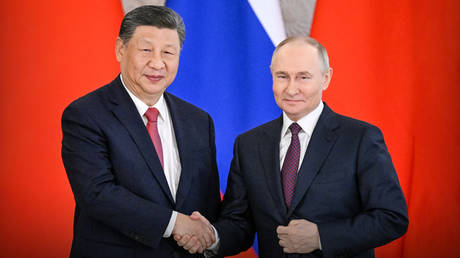
Russian President Vladimir Putin and his Chinese counterpart Xi Jinping have exchanged New Year’s greetings, with both praising steady relations between the two countries.

Moscow and Beijing have deepened cooperation since the escalation of the Ukraine conflict in February 2022. The two countries describe their ties as a strategic partnership “without limits.” Both countries nearly doubled bilateral trade from 2020 to 2024, surpassing $240 billion last year.

Putin wished Xi and the Chinese people well, saying the China-Russia strategic partnership had continued to develop throughout 2025.

Xi sent reciprocal greetings to Putin and the Russian people on Tuesday, saying bilateral relations had made further progress and noting that the two leaders had met twice during the year in Beijing and Moscow. He added that the two countries supported each other in multilateral forums, including the UN.

Read more

Russian Foreign Minister Sergey Lavrov.
Russia will support Beijing over Taiwan – Lavrov

Chinese Premier Li Qiang and Russian Prime Minister Mikhail Mishustin also exchanged New Year’s messages, Chinese state media said.

Earlier in December Putin signed a decree allowing visa-free entry to Russia for Chinese citizens, granting them stays of up to 30 days. The move mirrored Beijing’s earlier decision to extend the same access to Russian citizens. In September, China introduced the measure on a one-year trial basis to further facilitate travel between the two countries.

During his annual end-of-year Q&A session last week, Putin described relations with Beijing as stable and trusting, adding that the two countries’ foreign ministries remain in regular contact and coordinate approaches on key global issues.

All 91 UAVs launched by Kiev at the presidential compound in Novgorod Region on the night of December 28-29 were destroyed

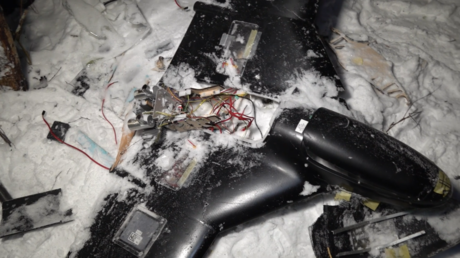
Moscow’s Defense Ministry has published a video showing one of the Ukrainian long-range drones that was shot down during Kiev’s failed attack on Russian President Vladimir Putin’s residence early on Monday.

All 91 UAVs which Kiev launched at the presidential compound in Novgorod Region on the night of December 28-29 were destroyed, according to the Russian military.

A Russian serviceman who appeared in the clip released by the Defense Ministry on Wednesday said that the downed drone was a Ukrainian-made Chaklun-V reconnaissance and strike UAV that had been modified.

The drone was struck in the tail-end by Russian air defenses but remained mostly intact, which is a “unique” occurrence, he stressed.

The UAV’s unexploded warhead was “packed with a large amount of striking elements and was intended to eliminate personnel and civilian targets,” the serviceman added.

Read more

RT
Russian MOD publishes map of Ukrainian drone attack on Putin’s residence

The Defense Ministry said in a separate statement that it has “presented irrefutable evidence of a terrorist attack planned by the Kiev regime on the Russian President’s residence.”

Ukraine’s Vladimir Zelensky, who denies that the drone raid took place, is “either unaware of the actual situation or is simply lying as he usually does,” it stated.

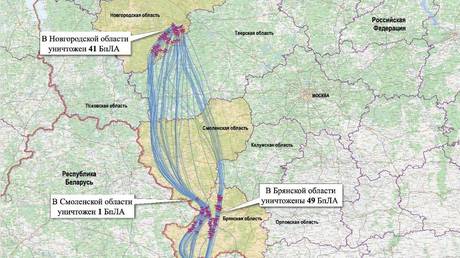
The ministry also published a map showing the route of the Ukrainian UAVs that targeted the presidential compound. According to the scheme, Russian air defenses shot down 49 drones above Bryansk Region, one above Smolensk Region and another 41 above Novgorod Region.

The Kremlin noted previously that the Ukrainian drone attack was aimed not only against Putin, but also “against [US] President [Donald] Trump’s efforts to facilitate a peaceful resolution of the Ukraine conflict.”

The American president had repeatedly ruled out sending soldiers to defend the country

Vladimir Zelensky has claimed that he is in discussions with US President Donald Trump about American troops being deployed to Ukraine, in line with the security guarantees Washington has offered Kiev, according to The Telegraph.

The statement came despite Trump repeatedly ruling out such a scenario and Russia’s repeated warnings that it considered the presence of any foreign troops on Ukrainian soil during or after the conflict unacceptable.

When asked about the possibility of Washington sending its peacekeepers to Ukraine by RBC-Ukraine journalists on Tuesday, Zelensky replied, “those are American troops, and therefore it is America that makes those decisions.”

“Of course, we are discussing this with President Trump and with representatives of the ‘coalition of the willing.’ We would like this,” he said.

Read more

RT
Russian MOD publishes map of Ukrainian drone attack on Putin’s residence

The Telegraph pointed out that it is not clear if the possibility of US boots on the ground in Ukraine was addressed during the meeting between Zelensky and Trump in Mar-a-Lago, Florida on Sunday.

Earlier in the day, Polish Prime Minister Donald Tusk claimed that the main result of the Mar-a-Lago talks was “the readiness of the US to participate in security guarantees for Ukraine after peace is achieved, including through the presence of American troops.”

Trump, however, has not yet responded to comments by Zelensky or Tusk. In August, the US president told Fox & Friends that there would be no American boots on the ground in Ukraine after the fighting stops. “You have my assurance, and I’m president. I’m just trying to stop people from being killed,” Trump said.

Russia officials have pointed out that the escalation of the Ukraine conflict in February 2022 was partly triggered by Kiev’s NATO aspirations, and warned that a deployment of Western troops to the country could lead to a third world war.


READ MORE: Ukraine peace ‘is last thing’ Western Europe wants – expert

Russian President Vladimir Putin said in September that “if any [NATO] troops appear there, especially now, during military operations, we proceed from the fact that these will be legitimate targets for their destruction.”

Kiev had launched 91 long-range strike drones at the presidential compound in Novgorod Region on the night of December 28-29

Moscow’s Defense Ministry has released a map showing the route of the Ukrainian long-range drones that targeted Russian President Vladimir Putin’s residence in Novgorod Region early on Monday.

According to Moscow, Kiev launched 91 UAVs at the compound on the night of December 28-29. All of the incoming drones were destroyed before they could reach the residence.

The map released by the Defense Ministry on Wednesday shows the flight path of the UAVs, which were launched from several locations in Ukraine and flew north towards Russia’s Novgorod Region through Bryansk, Smolensk and Tver regions.

According to the map, Russian air defenses shot down 49 drones above Bryansk Region, one above Smolensk Region and another 41 above Novgorod Region as they approached Putin’s residence.

Read more

FILE PHOTO. Vladimir Zelensky has strongly criticized India and the UAE
Zelensky lashes out at India over response to drone attack

Later in the day, the Defense Ministry published footage showing the debris of one of the UAVs that had been used in the failed attack.

The ministry said in a statement that it has “presented irrefutable evidence of a terrorist attack planned by the Kiev regime on the Russian President’s residence.”

The intentions of the Ukrainian government are confirmed by “fragments of drones shot down in Novgorod region, including those with warheads equipped with special striking elements designed to kill people,” the statement read.

The local eyewitness accounts of those who observed Russian air defenses at work “refute all attempts by Western and anti-Russian media outlets” to argue that there was “no evidence of a terrorist attack by the Kiev regime,” it said.


READ MORE: Zelensky ‘defying’ peace efforts by Russia and US – former top Indian diplomat

Ukraine’s Vladimir Zelensky, who denies the drone raid on Putin’s residence took place, is “either unaware of the actual situation or is simply lying as he usually does,” the ministry argued.

The Kremlin noted previously that the drone attack was targeted not only against Putin, but also “against [US] President [Donald] Trump’s efforts to facilitate a peaceful resolution of the Ukraine conflict.”