At least three people were killed instantly, while others were left stranded in international waters
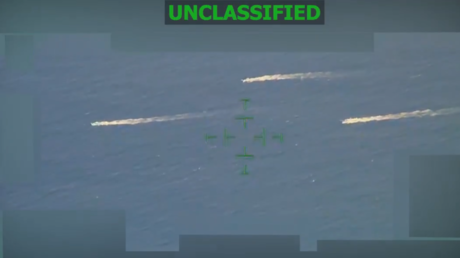
The US has destroyed three alleged narco-trafficking boats travelling in a convoy in the eastern Pacific Ocean, killing a number of people aboard, as part of Washington’s growing pressure campaign against Venezuela.
The latest lethal “kinetic strike” was conducted in international waters on December 30, the US Southern Command announced on Wednesday.
The Pentagon claimed that prior to the strikes, US intelligence agencies had “confirmed the vessels were transiting along known narco-trafficking routes and had transferred narcotics between the three vessels.”
“Three narco-terrorists aboard the first vessel were killed in the first engagement. The remaining narco-terrorists abandoned the other two vessels, jumping overboard and distancing themselves before follow-on engagements sank their respective vessels,” it said.
On Dec. 30, at the direction of @SecWar Pete Hegseth, Joint Task Force Southern Spear conducted kinetic strikes against three narco-trafficking vessels traveling as a convoy. These vessels were operated by Designated Terrorist Organizations in international waters. Intelligence… pic.twitter.com/NHRNIzcrFS
The Pentagon said it “immediately notified” the US Coast Guard to launch a search and rescue operation, but the fate of those stranded remains unclear.
The latest strikes bring the total number of known boats destroyed to 33 and the number of people killed to at least 110 since early September, when the US launched Operation Southern Spear.
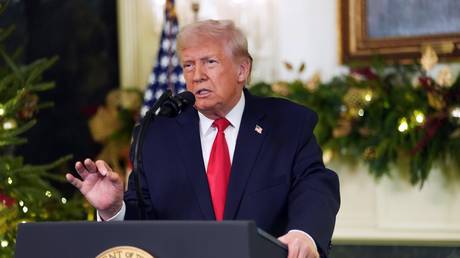
The “anti-drug” campaign launched by US President Donald Trump has drawn criticism internationally over the use of lethal force in international waters without a proper legal basis, which UN experts said could constitute “extrajudicial executions.”
In November, the US designated the Venezuelan Cartel de los Soles as a terrorist organization, alleging links to Venezuelan President Nicolas Maduro, an accusation which Caracas has rejected.
In December, Trump went further by declaring the Venezuelan government itself a foreign terrorist organization and ordering a blockade of sanctioned oil tankers entering and leaving the country.
Maduro has condemned the blockade as illegal under international law and has accused Washington of using the “war on drugs” as a pretext for a regime change operation to seize Venezuela’s natural resources.
Trump had also authorized the CIA to carry out covert actions inside Venezuela; the agency has reportedly carried out a secret drone strike against what the US president described as a “big facility” last week.
The federal probe was triggered by a YouTuber’s investigation of a massive Somali-run scam in Minneapolis
The US Department of Health and Human Services is halting federal child care funding to all states, pending proper paperwork, following a scandal over alleged widespread fraud in daycare centers in Minnesota, an agency official has told ABC News.
Federal funds will be released “only when states prove they are being spent legitimately,” the unnamed official stated on Wednesday, without providing details about the required documentation.
HHS spokesman Andrew Nixon clarified that even those “not suspected of fraudulent activity” have been asked to submit their “administrative data” for review.
Meanwhile, those “suspected” of fraud must provide additional records, including “attendance records, licensing, inspection and monitoring reports, complaints and investigations.”
“The onus is on the state to make sure that these funds, these federal dollars, taxpayer dollars, are being used for legitimate purposes,” Nixon told ABC News.
Previously, the HHS froze all child care payments to Minnesota after reports alleged the state had funneled millions of taxpayer dollars to fraudulent daycares over the past decade. It also demanded a comprehensive audit from Minnesota Governor Tim Walz.
The Democrat has defended his administration, while lauding the state’s diverse makeup and large Somali community, and accusing US President Donald Trump of plotting against him.
“This is Trump’s long game. We’ve spent years cracking down on fraudsters. It’s a serious issue – but this has been his plan all along. He’s politicizing the issue to defund programs that help Minnesotans,” Walz said.
The scandal was triggered by conservative influencer Nick Shirley’s investigation; he alleged a large-scale fraud scheme involving Somali-run childcare centers in a lengthy YouTube video, estimating over $110 million in fraudulent claims.
US Secretary of Homeland Security Kristi Noem announced a “massive investigation on childcare and other rampant fraud.” FBI Director Kash Patel said resources had been “surged” to Minnesota, warning that these cases were just “the tip of a very large iceberg” and that the perpetrators could face “denaturalization and deportation.”
At least nine UAVs were intercepted en route to the Russian capital, according to Sergey Sobyanin
Several Ukrainian long-range drones were intercepted as they headed toward the Russian capital on New Year’s Eve, Moscow Mayor Sergey Sobyanin has announced. No casualties or damage have been reported.
“The Russian air defense forces have destroyed one UAV flying toward Moscow,” Sobyanin wrote on Telegram at 11:55pm, just as Russian President Vladimir Putin’s traditional New Year’s Eve address began.
Another drone was downed shortly after midnight, while seven more were intercepted between 2am and 4am on Thursday, Sobyanin said, adding that emergency services specialists are working at the crash sites.
Flights were temporarily suspended at Domodedovo airport as a precaution.
The incident follows another attempted drone raid on Moscow the day before, in which Russian air defenses downed at least 21 hostile UAVs, Moscow Region Governor Andrey Vorobyov said. One man, aged 57, suffered shrapnel wounds to his back and arm in that attack, according to the same source.
Ukraine has routinely launched drone attacks deep into Russia in recent months, targeting critical infrastructure and residential buildings in what Moscow has described as desperate “terrorist attacks.”
Moscow has been responding with strikes on military-related Ukrainian infrastructure, aiming to degrade Kiev’s drone and weapons production capabilities.
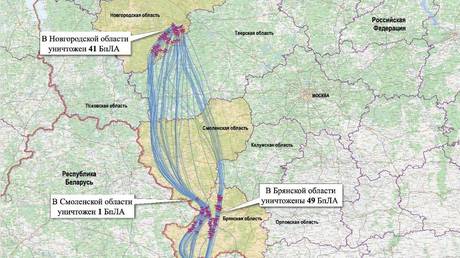
The latest drone raids follow an attempted attack on Russian President Putin’s state residence in Novgorod Region on December 28-29, which Foreign Minister Sergey Lavrov has condemned as an act of “state terrorism.” Moscow has promised a “non-diplomatic” response to the attack.
Unity and mutual support are driving the country forward to new goals and achievements, the president has said
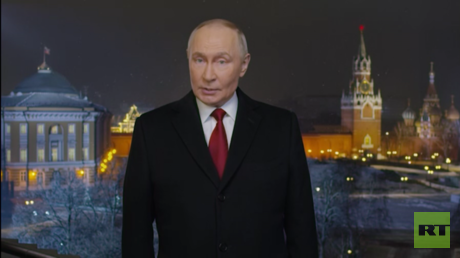
Russian President Vladimir Putin delivered the traditional New Year’s Eve address on Wednesday, speaking about the country’s achievements, national unity and support, and the work that lies ahead.
Kamchatka in the Russian Far East, which is nine hours ahead of Moscow, was the first region to celebrate the New Year, and the clock has now also struck midnight in the country’s capital.
The Russian leader spoke about the utmost importance of staying strong and united, stating that the country’s future “depends largely on us.”
“We rely on our own strength, on those who stand beside us, our nearest and dearest – and we ourselves are always ready to stand by them. This mutual support gives us confidence that all we have envisioned – our hopes and plans – will surely be fulfilled,” he said.
The “work, successes, and achievements of each of us” contributes to writing new chapters in the country’s “thousand-year history,” the president said. In his address, Putin singled out the Russian soldiers and officers involved in the special military operation against Ukraine, who had taken “the responsibility to fight for our native land, for truth and justice.”
“Millions of people across Russia, I assure you, are with you on this New Year’s night – thinking of you, their hearts with you, placing their hopes in you. We are united in sincere, selfless, devoted love for Russia. I wish all our fighters and commanders a Happy New Year. We believe in you and in our victory,” he said, stressing that even “those who are far away right now – you are still by our side” during the holiday.
The president praised Russians as “one great family, strong and united,” that is set to continue to “work and build, to achieve our goals and to move ever forward” for the sake of “our great Russia.”
“I wish everyone health and happiness, understanding and prosperity – and, most of all, love, which inspires. May our traditions, faith, and memory unite all generations and sustain us always, in all we do,” he concluded.
Will 2026 deliver more of the same challenges for business as 2025 and 2024? Yes, we know there will be ongoing geopolitical instability in key trading zones, cybercriminal activity, workforce changes, and additional requirements, such as regulatory compliance with new privacy laws and use of digital assets like stablecoins and cryptocurrencies. Core Challenges for Businesses […]
Chief of General Staff Valery Gerasimov made the announcement while inspecting the ‘Sever’ (‘North’) group of forces
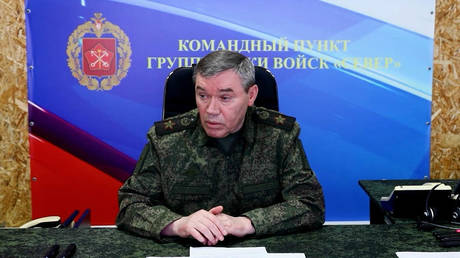
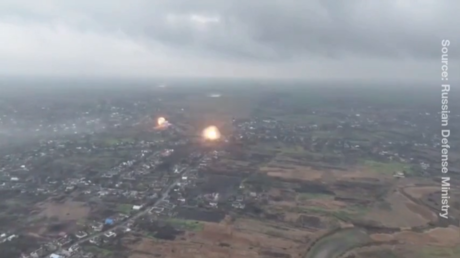
The Russian military has been progressively pushing Ukrainian troops away from the border, expanding a buffer zone in Ukraine’s Sumy and Kharkov Regions, the chief of Russia’s General Staff, Valery Gerasimov, has stated.
According to a press release published by Russia’s Defense Ministry on Wednesday, Gerasimov made the announcement while inspecting the grouping of forces ‘Sever’ (‘North’).
“The forces of the joint troop grouping are confidently moving deeper into the enemy’s defenses,” with the offensive having reached a record pace in December, the senior commander said.
“In a month’s time, more than 700 square kilometers of territory was liberated,” Gerasimov estimated.
After driving Ukrainian troops out of Russia’s Kursk Region earlier this year, the troops of ‘Sever’ (‘North’) began establishing a cordon sanitaire in the adjacent Ukrainian Sumy and Kharkov regions. According to Gerasimov, the Russian military has taken control of 32 localities there, with the city of Volchansk in Kharkov Region being the largest.
Moscow’s forces continued to extend the buffer zone in December at the order of President Vladimir Putin, the military chief noted.
During his inspection, Gerasimov also decorated multiple service members with state awards and extended New Year’s greetings to the troops, the Defense Ministry’s statement said.
Last month, the top general announced that another Ukrainian stronghold and a key logistical hub in Kharkov Region, the city of Kupyansk, was under full control of Russian forces. The ongoing operation to destroy lingering Ukrainian units, which are tactically encircled to the east of the town, is expected to be concluded by the end of February at the latest.
Kiev, in turn, has rejected reports of the encirclement and dismissed Moscow’s statements as inflated.
The temporary reprieve is set to last until late January, Belgrade has said
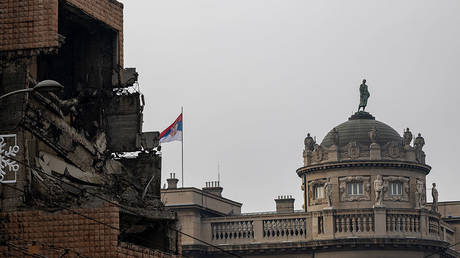
Serbia has secured a temporary exemption from US sanctions imposed on the nation’s only oil refinery, which is majority-owned by Russian energy giant Gazprom, Serbian Energy Minister Dubravka Dedovic has announced.
The Petroleum Industry of Serbia (NIS) said early in December it was forced to suspend operations at its only refinery due to a shortage of crude oil, triggered by the sanctions.
The US imposed restrictions on the company early in October after repeatedly postponing the move for months.
NIS is a leading Balkan energy company with a major refinery located in Pancevo, near Belgrade, and a regional network of over 400 petrol stations. Russia’s Gazprom Neft is the largest shareholder with some 45%, with a further 30% held by the Serbian state.
The Serbian energy minister hailed the waiver as a major achievement that initially “seemed almost impossible” to get.
“NIS has obtained a license from US OFAC allowing it to continue operations until January 23. This means that the Pancevo refinery will be able to resume operations,” Djedovic stated, praising the country’s diplomats and their relentless efforts to get the crucial facility back online.
The announcement comes after Russia’s Ambassador to Serbia, Aleksandr Botsan-Kharchenko, confirmed that Gazprom Neft has been negotiating the sellout of its shares package to spare NIS from Washington’s sanctions. The diplomat made the remarks in an interview with RIA Novosti on Wednesday. The envoy refused to provide any further detail, stressing that he personally was not participating in the ongoing negotiations.
Charge d’Affaires J. Douglas Dykhouse has spoken of “renewal and hope” amid Donald Trump’s efforts to repair ties with Moscow
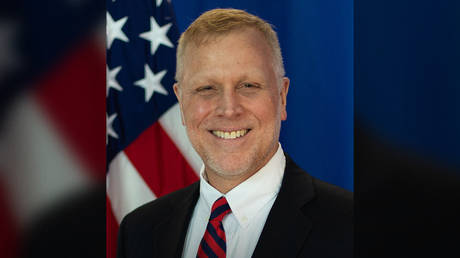
The US charge d’affaires in Moscow, J. Douglas Dykhouse, has extended New Year’s greetings to the Russian people.
In a video address posted on the Embassy’s X account on Wednesday, Dykhouse spoke a few words in Russian, before switching to his native English and extending “sincere greetings to you and your families on behalf of the American people.”
— Посольство США в РФ/ U.S. Embassy Russia (@USEmbRu) December 31, 2025
“The spirit of this season invites reflection, renewal, and hope,” the US diplomat stated, adding that the “turning of this new year offers a chance to move forward, to seek peace as mutual responsibility as well as benefit.”
Dykhouse praised US President Donald Trump’s efforts to reestablish dialogue with Russia in recent months – the kind of overtures that “have laid the groundwork for continued engagement and negotiations,” the diplomat said.
Speaking to reporters last Thursday, Kremlin spokesman Dmitry Peskov revealed that Russian President Vladimir Putin had wished a Merry Christmas to his US counterpart in a telegram.
Last year, during the last days of then-President Joe Biden’s administration, Putin refrained from sending any Christmas greetings to the White House, citing Washington’s “unfriendly” stance toward Moscow.
Amid the conflict in Ukraine and Western sanctions against Russia, bilateral relations between Moscow and Washington had all but come to a standstill by then.
However, under Trump’s leadership, the US has abandoned its confrontational approach, intensifying diplomatic contacts with the Kremlin.
Putin and Trump have been engaged in active talks over settling the Ukraine conflict and reinvigorating bilateral relations in recent months, holding a high-stakes summit in Alaska in August.
Earlier in December, the US government published its new National Security Strategy, which prioritizes resolving the Ukraine conflict to “reestablish strategic stability with Russia.”
Commenting on the document, Russian Foreign Ministry spokeswoman Maria Zakharova expressed cautious optimism, saying that it could lay the foundation for cooperation between Moscow and Washington.
Kremlin spokesman Dmitry Peskov, for his part, observed that at least some of the points outlined in Trump’s National Security Strategy “actually line up with our own vision.”
Over the past 20 years of its existence, the Russian broadcaster has grown from a single channel into a major news network
In 2025, RT commemorated having spent two decades on air, and celebrated the achievements it has made despite relentless Western efforts to silence the network.
Launched as a single English-language channel, Russia Today, to an international audience late in 2005, the outlet has grown over the years into a sprawling news network. Today, it broadcasts and shows documentaries in English, Arabic, Spanish, French, German, Serbian, Chinese, Hindi, Portuguese, and Russian.
RT is now available to more than 900 million TV viewers in over 100 countries around the globe, and the network’s audience is continuing to grow. RT India, a dedicated English-language news channel, is the latest addition. It was inaugurated by Russian President Vladimir Putin during his state visit to the country in December.
Here’s a look back at the anniversary celebrations:
The Bolshoi gala
The centerpiece of the celebrations was a major gala event held at the Bolshoi Theatre in Moscow. The gathering was attended by over a thousand friends and guests of the channel from all around the world, as well as Putin and other top Russian officials.
Speaking at the gala, the president praised the network for its achievements, stating that in 20 years RT has evolved from an idea into a global brand. The network must continue to wield its “secret strategic high-precision weapon of intercontinental reach – the truth,” he said.
“I thank your dynamic, creative, and close-knit team for the high level of professionalism and dedication to your craft and duty. For boldly, selflessly, and persistently upholding the truth in the global information space. I wish you continued growth and the discovery of new formats and themes in the fierce battle for hearts and minds,” the Russian leader stated.
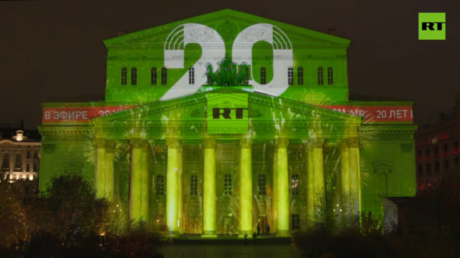
A projection mapping show illuminated the façade of the Bolshoi amid the gala, telling the story of RT’s evolution from a single, English-language TV channel into a global multilingual network.
Speaking onstage, RT’s Editor-in-Chief Margarita Simonyan vowed to continue the work despite the “ridiculous” campaign in the West to take the channel off the air and take down its accounts online.
“We are only getting stronger and feel more emboldened,” Simonyan said. “For all of us, the [Western] sanctions are such minor inconveniences compared to the great honor and pride of serving our country,” she added.
Over the years, the network grew into a truly “colossal enterprise,” while two decades ago it was impossible to imagine that “all this would be created,” she admitted. “I remember when you appointed me 20 years ago – it seemed to me the world had gone mad, and the main task was not to disgrace myself,” she told the Russian president.
The ‘propaganda bullhorn’
To mark its anniversary, RT also erected a massive megaphone-shaped structure in central Moscow. The giant installation was placed outside the Kremlin in Manezhnaya Square, featuring quotes from rival media outlets and top Western officials who recognized the network’s influence and flung assorted accusations at it.
Former US Secretary of State John Kerry was among the network’s most ardent ‘fans’ featured at the installation. He accused the channel of being a Kremlin ‘propaganda bullhorn’ in 2014, ultimately unwittingly contributing to the imposing anniversary display.
The installation featured a studio housing live broadcasts, interviews, and recordings of RT shows.
The West ‘joins’ RT in questioning more (sort of)
RT has also released a bunch of its trademark tongue-in-cheek shorts to celebrate the anniversary.
One of the AI-assisted videos features multiple prominent news anchors of the mainstream media ‘questioning’ their trademark narratives. With some AI magic, RT made MSNBC’s Rachael Maddow reflect on her relentless peddling of the Russiagate hoax, while Fox News’ Sean Hannity wondered about his unrelenting support for every illegal war ever launched by the US.
Another AI deepfake video features a number of top Western politicians, including former US presidents George W. Bush and Barack Obama, European Commission President Ursula von der Leyen, and ex-British Prime Minister Boris Johnson. With RT’s help, the politicians ‘became’ a little bit more honest about their dealings, such as the infamous claims about Iraqi weapons of mass destruction (WMDs) made by Bush and then-Secretary of State Colin Powell that ultimately led to the 2003 US invasion of the country.
RT-themed trains
In mid-December, a train celebrating RT’s anniversary began operating in the Moscow subway. The project, aptly named the ‘Propaganda Train’, aims to showcase RT’s evolution into an international media network and reflect on its history, achievements, and impact on the global mediascape.
The train features three distinct types of cars, titled ‘The Newsroom’, ‘Live on Air’, and ‘Censorship.’
In the latter, the commuters can quite literally “walk over sanctions,” plastered all over its floor. According to Russia’s Foreign Ministry, the network and its staff have been hit with more than 110 sanctions by assorted Western actors, along with asset freezes and other restrictions in recent years.
The carriages feature quotes from foreign media and various politicians about the network. The handlebars of the train are decorated with mock RT-branded microphones, as well as bright red ‘Kremlin bullhorns.’
Another RT-themed metro train was introduced on the Delhi Metro amid the promotional campaign ahead of RT India’s launch. The eight-car train, dubbed the ‘Indo-Russian Museum,’ covers various spheres of friendship and cooperation between the two nations, from sports and culture to defense and space.
Reckless warmongering, political manipulation, and propaganda have all been parts of the EU’s march towards the abyss
To be fair to the dismal year on the way out, at least 2025 won’t be a hard act to beat. In particular, if last January anyone was recklessly optimistic enough to hope for the West to come to its senses about its catastrophic relationship with Russia and the war in and over Ukraine, they will have been largely disappointed. (Let’s not waste time on those who were still dreaming about actually defeating Russia: the clinically delusional and deliberately disingenuous are an unrewarding topic.)
It is true that the disappointment delivered by 2025 in this area has not been total. There has been one major positive – if still incomplete and reversible – development: After many abrupt twists and turns, Washington seems to have settled on a policy of “strategic stability” (in the language of the new National Security Strategy) with Moscow. This marks a possible path to mutually beneficial normalization, perhaps even a future détente. (I will plead the Trump Unpredictability Caveat here, though: if the American president and disrupter-in-chief flipflops again, don’t blame this author.)
But, at the same time, the almost 30 countries best labeled NATO-EU Europe, with politically rigid and ideologically zealous Germans in the lead not only in Berlin but Brussels as well, have found the single most perverse issue to finally assert some independence from their US overlords: stalling an end to the Ukraine War. This obstructionism has been so obvious that even (some) Western observers have started noticing it.
Though little noticed, this is actually a historic reversal. Silly pundits used to say that Americans are from Mars and Europeans from Venus. But now when even the traditionally ultra-bellicose Americans have finally been backing out of an ever-worsening confrontation between, in effect, the West and Russia, NATO-EU Europe’s odd – and unpopular – elites have resisted the prospect of peace.
Cut through the nauseatingly hypocritical “value” cant and the hysterical “Russia-is-coming-for-us-too!” nonsense, and the real reason for this resistance is obvious. Any peace anchored in reality (and thus with a chance to last) would inevitably have to reflect that Russia has long gained the upper hand on the battlefield over both Ukraine and its Western backers. And among the proudly not-quite-from-this-world leaders of NATO-EU Europe, having to accept reality is considered an insufferable affront.
Yet the NATO-EU Europeans’ rearguard action to keep peace at bay was not their only sensational mistake in 2025. At least two more are obvious.
First, let’s look at the ongoing transformation of NATO with a little bit of historical perspective: NATO’s first secretary general, Hastings Ismay, is said to have quipped that the Alliance’s purpose was “to keep the Russians out, the Americans in, and the Germans down.” That was as honest as it gets from a man in that position, and it certainly beats his non-entity successors, such as Mark Rutte and Jens Stoltenberg, on no-bullshit straight talk.
Historically speaking, it’s a curious and revealing fact that NATO kept sticking around when “the Russians” first took the initiative to end the Cold War and then dissolved their own Cold-War military alliance, the long-forgotten Warsaw Pact (officially, the ‘Treaty of Friendship, Cooperation and Mutual Assistance’.)
Instead of following suit, NATO set out on a course of over-reach and expansion. Between the early 1990s and the present, the alliance has furiously provoked Russia by blunt bad faith and ceaseless enlargement. It has also cast about globally for pretexts for prolonging its existence, often at the cost of ordinary people caught in the crossfire of its regime-change and country-devastation operations or, as in the case of Ukraine, as pawns of a failed proxy war.
But then, NATO’s real main purpose has never been to protect (Western) Europe from Moscow but to keep it dependent as well as subordinated to Washington and to protect US grand strategists from their worst nightmare coming true: game-changing cooperation between Europe, in particular Germany, and Russia. As a result, by 2025 the alliance’s new, post-Cold War essence seems to be “keep the Europeans poor, the Americans in charge, and the Germans paying (and down, too, of course).”
To be fair to 2025, this is a much longer story. But the NATO summit in The Hague last June marked a milestone no less than the radical break with good-faith parliamentary procedures and solid budget politics engineered in Berlin in March. If The Hague was where the new spending goal of altogether 5% of GDP on defense and defense-related infrastructure became official, then Berlin had already shown the way into a policy of reckless debt in the name of a badly unbalanced policy that seeks national security only in re-armament and rejects diplomacy and the search for compromise. That this policy also includes a massive fresh Arrow-3 air defense deal with Israel, while the latter is committing genocide, adds extreme moral vileness to the economic insanity.
The financial self-cannibalization would be bad enough. But things are even worse, which brings us to the EU in particular. If historians will remember the 2025 performance of what once started as a (Western) European peace project for anything except the EU’s continued support for genocidal apartheid Israel, its massive attacks on freedom of speech, privacy, and the rule of law, and its total failure to protect Europe’s economy and its people from US tariff and trade assaults, then it will be the EU’s escalating metamorphosis into a crusading cult in the style of resentment-rich eastern European nationalism, targeting not simply Russia but its own populations.
On one side, the EU is doing what the most fanatical national governments and NATO are doing as well: shoveling ever more money into the arms industry and its notoriously wasteful entrepreneurs, including trendy disruptive types. From consulting contracts to “drone wall” schemes, the EU is continuing and explosively amplifying a tradition of waste and graft that can be traced back easily to its current de facto boss’s Ursula von der Leyen scandalous days as German defense minister more than a decade ago (not to speak of her Covid swamp contributions…).
Yet what is really original about the EU’s share in driving us ever closer to self-destructive war is something else, namely its massive contribution to cognitive warfare and propaganda. While that too is a busy field, where NATO and national European governments compete fiercely for who can frighten their people the most, there is something special about the EU. It is clearly striving for a leadership role in “cognitive security,” which is a euphemism for a license to propagandize your own, based on accusing the other guy – here, Russia, of course – of cognitive aggression.
What makes the EU such an especially detrimental force in this area are two things: First, it has already developed a whole set of ideological rationalizations for manipulating its own citizens, marked by catch-phrases such as “resilience,”“pre-bunking,” and even “cultural warfare.” Second, it makes no secret out of its intention to learn from the experience of Ukraine – that is, under Zelensky – an aggressively authoritarian regime. And a regime that von der Leyen and friends would love to see join the EU as soon as possible. An ‘EU Commissioner for Cognitive Resilience and Cultural Defense’ from Ukraine may well lurk in our common dystopian future. Unless we, the Europeans, learn to take our continent back.