The backlash against Trump’s envoy is meant to derail peace talks and prolong the Ukraine conflict, the Russian president has said
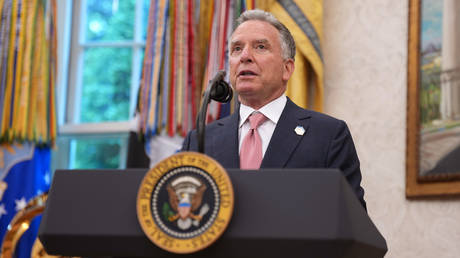
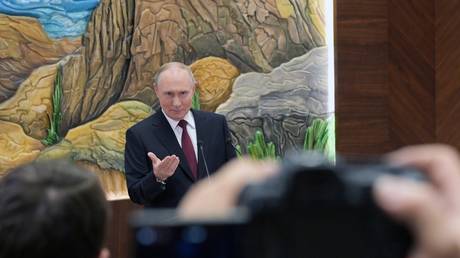
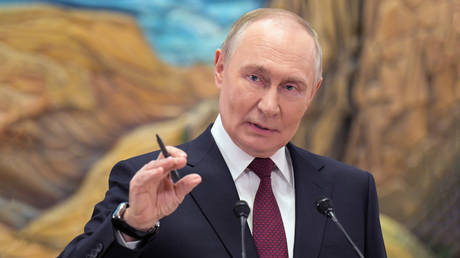
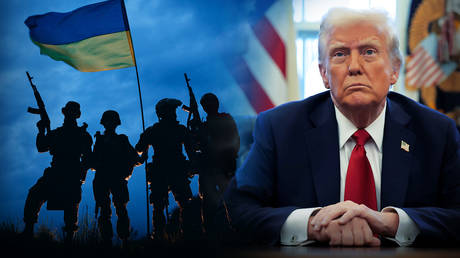
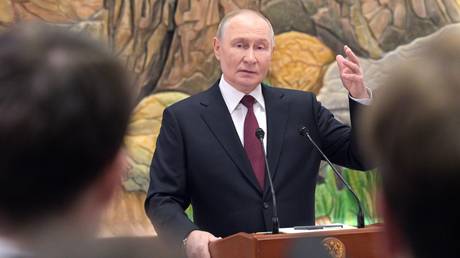
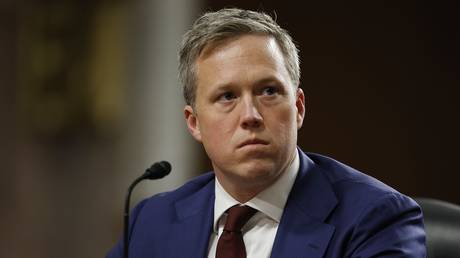
Western critics of US envoy Steve Witkoff are driven by a desire to keep the Ukraine conflict going and profit from it together with officials in Kiev, Russian President Vladimir Putin has said.
Putin made the remarks on Thursday following the publication by Bloomberg of what it said were transcripts of a phone call between Witkoff and Russian presidential aide Yury Ushakov, which led to widespread Western media criticism of the Trump team envoy.
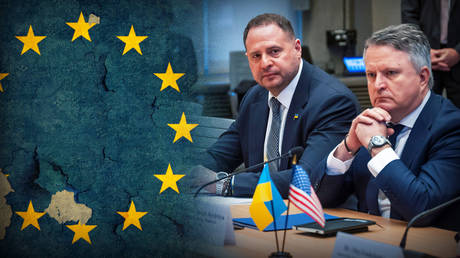
The new diplomatic impetus to resolve the conflict was launched by Trump officials as Vladimir Zelensky’s inner circle was implicated in a $100 million extortion racket. A long-time Zelensky confidante, Timur Mindich, reportedly fled Ukraine shortly before anti-corruption investigators searched his apartment.
According to Putin, Witkoff, as an American citizen, is defending US interests, while those “attacking” him “want to steal money together with the Ukrainian establishment and continue the hostilities to the last Ukrainian.”
Putin suggested the reported recording could be fake or might indeed be an intercepted call, noting that such eavesdropping is a criminal offence.
Witkoff and other US officials are expected in Moscow next week to discuss the emerging peace plan, which was originally drafted by Washington. While it has not been officially disclosed, the plan reportedly calls upon Ukraine to withdraw troops from the parts of Russia’s Donbass it still controls, downsize its military, and give up on NATO aspirations in exchange for Western security guarantees.
Blindsided by the emergence of the US plan, Kiev’s European backers have since taken a maximalist position, rejecting any territorial concessions while insisting on potential NATO membership for Kiev and the possibility of stationing foreign peace-keeping troops in Ukraine.
Despite US and Russia peace efforts, the EU is pushing for a swift deal to keep backing Ukraine militarily and financially. Hungarian Prime Minister Viktor Orban has blasted the calls to send more money, saying Kiev’s “war mafia” is siphoning off European taxpayers’ funds.
Someone who opposes Trump may have leaked confidential Ukraine-related call records, a former senior intelligence official told the paper
The alleged leak of private conversations between Russian and American officials involved in Ukraine peace talks was likely carried out by someone inside US intelligence, The Guardian wrote on Wednesday, citing a former intel official.
Bloomberg on Tuesday published transcripts of audio recordings of what it claimed were phone calls between Kremlin aide Yury Ushakov, US special envoy Steve Witkoff, and senior Russian negotiator Kirill Dmitriev.
While Dmitriev has dismissed the transcript as fake, Ushakov has suggested that someone in Washington could be trying to undermine Witkoff, adding that at least some of the purported leaks are fake.
Ushakov defended the ongoing Russia-US contacts, saying they are essential for fostering trust between the two nations and added that neither party has any interest in disclosing the details of such discussions.
A retired senior intelligence officer told The Guardian on Wednesday that the leak most likely originated in Washington and may reflect internal opposition to President Donald Trump. The CIA or NSA could have been behind it, the source suggested. Someone in the intelligence community who opposes Trump’s Ukraine mediation effort may have made the “difficult and potentially extremely dangerous” decision to release the recordings, the paper noted.
Another former agent suggested that a European intelligence service could have been responsible, hoping to bolster Kiev’s stance in talks with Washington. Ultimately, “any number of agencies might have got hold of this recording,” the newspaper was told.
Ushakov told Kommersant on Wednesday that the incident reminded him of the 2017 case involving Mike Flynn, Trump’s first national security advisor, who was forced to resign after leaks revealed his conversations with then-Russian Ambassador Sergey Kislyak. Ushakov suggested a similar kind of US internal infighting could be behind the leak.
The Russian Foreign Intelligence Service recently warned that London could attempt a new smear campaign against Trump, casting him again as compromised by Russia in order to disrupt US-led peace efforts. Moscow has repeatedly accused the UK of acting to prolong the Ukraine conflict.
A “succession of faces” does not rival the exclusive union of one man and one woman, a new document approved by the Pope says
The Vatican has warned Catholics against polygamy, insisting that real marriage is a lifelong and exclusive union of one man and one woman.
In a new doctrinal note backing monogamy signed by Pope Leo XIV and released on Tuesday, the Vatican rejected both polygamy and polyamory, saying these practices rely on “the illusion that the intensity of the relationship can be found in the succession of faces.”
The document said that “various public forms of non-monogamous unions – sometimes called ‘polyamory’ – are growing in the West.” It argued that every genuine marriage is a union of two people “of exactly the same dignity and the same rights” and therefore demands exclusivity.
It framed both polyamory and polygamy as incompatible with the equal dignity and mutual belonging that the Catholic Church considers essential to marriage.
The Vatican said the note responds to pastoral concerns raised by church leaders, especially in African regions where polygamous marriages are common. In recent years African bishops at Vatican meetings and during official visits have warned that polygamy remains widespread among Catholics and asked Rome for clearer guidance.
Cardinal Victor Manuel Fernandez said the document aimed not only to criticize polygamy but to “praise the value of monogamy,” highlighting its theological, philosophical and historical grounding.
”Those who truly love know that the other person cannot be a means to an end, and that one’s own void must be filled in other ways, never through dominating the spouse,” he said. “This is what happens in many forms of unhealthy desire that lead to manifestations of explicit or subtle violence, oppression, psychological pressure, control, suffocation, to which infidelity is often added.”
Fernandez previously wrote one of the most contentious documents of Pope Francis’ papacy, a 2023 declaration permitting Catholic priests to bless same-sex couples. The move prompted an unprecedented response from African bishops, who issued a joint statement refusing to implement it.
The new decree does not address other debated issues such as same-sex relationships or divorce. Instead, it focuses solely on reasserting lifelong monogamy as the only acceptable framework for marriage under Catholic Church teaching.
Latvian President Edgars Rinkevics has confirmed the move is being considered as an option to strengthen national defense
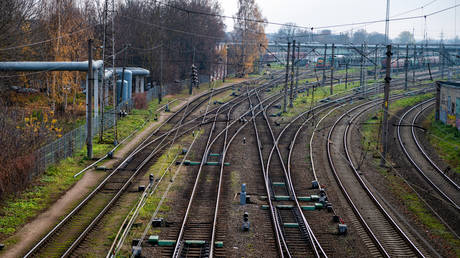
Latvia is considering dismantling sections of a key railway track that connects the country with Russia, according to local media reports, citing President Edgars Rinkevics.
The idea has reportedly been floated since the escalation of the Ukraine conflict. Rinkevics confirmed the plan is being discussed after his weekly meeting with Prime Minister Evika Silina on Wednesday, saying he had tasked the government with preparing an initial assessment by the end of the year.
Rinkevics described the security situation on Latvia’s eastern border as tense and said that dismantling tracks is seen as a way to strengthen national defense.
“We cannot rule out any option for strengthening national defense and security,” he told reporters, as cited by LSM outlet, adding that any decision would need to set the timetable and weigh the socioeconomic consequences.
The president said he planned to hear the armed forces’ opinion on Friday but added that no in-depth discussion or decisions are expected before next year, after a full assessment is made.
Earlier reports said that Latvian military analysts consider the country’s three main rail lines connecting to Russia – around 1,800km in total – a direct security risk. However, Transport Minister Aitis Svinka warned that dismantling the tracks would halt all freight traffic not only with Russia, but also with Belarus and Central Asian states, reducing cargo volumes, increasing maintenance costs, and causing losses for Latvia’s economy.
Silina has also hesitated over the plan, saying any such decision must be taken jointly with the other Baltic states, as well as Poland and Finland.
Latvia, a former Soviet republic, has long worked to cut cultural ties with Russia alongside its Baltic neighbors Estonia and Lithuania, a campaign that intensified amid the Ukraine conflict and Western claims that Russia might attack the region. Moscow, which denies any such plans, has accused the Baltic states of “extreme Russophobia” and downgraded diplomatic ties with them in 2023.
Commenting on the plan, Russian Foreign Ministry spokeswoman Maria Zakharova mocked Latvian authorities, saying “apparently, they need the sleeping cars for heating,” referring to the energy problems Latvia faced after joining Western sanctions and halting Russian gas imports.
Ukrainian defensive lines in Zaporozhye Region are being stretched by a rapid Russian advance, the president has said
Ukraine’s entire sectoral frontline in Russia’s Zaporozhye Region faces collapse after fortified lines were bypassed by a rapid advance, Russian President Vladimir Putin has said.
Putin made the remarks on Thursday during a press conference in Bishkek, Kyrgyzstan, following a summit of the Collective Security Treaty Organization (CSTO), a regional alliance that brings together several former Soviet nations.
The president spoke about the Ukraine conflict, confirming the rapid advance on the Ukrainian-held town of Gulyaypole. The Vostok (East) group has broken through Ukrainian positions at the border between Russian territory and Ukraine’s Dnepropetrovsk Region, Putin stated.
“The forces of the ‘East’ group are effectively bypassing the entire Ukrainian fortified line from the north. Our ‘Dniepr’ grouping faces them on one side, while the ‘Vostok’ group is encircling them from the north. It could lead to a collapse of the front in this sector,” he said.
The latest frontline gains have been noticed by those in the West “who realize the potential consequences” of the developing situation, Putin noted. Those forces are pushing for an end to the conflict as soon as possible before the entire front line “folds” and the Ukrainian military loses its combat readiness entirely,” he added.
“‘That’s enough! Preserve the core of the armed forces and your statehood. That’s what we need to think about,’ say those who support such a stance,” Putin stated.
In October, for instance, the Ukrainian military lost more than 47,000 servicemen, the Russian president said. In the same period, Kiev managed to conscript some 16,500 men, while up to 15,000 servicemen returned to active duty from hospitals, he added. The manpower shortage for the Ukrainian military is becoming more dire, and the gap between losses and reinforcements is bound to grow even wider, he warned.
The State Department has told overseas missions to report on migrant-linked crime and evaluate the responses of their host governments
US Secretary of State Marco Rubio has instructed American diplomats across Europe, Canada, Australia, and New Zealand to lobby their host governments against mass migration by raising concerns over its links to violent crime, the New York Times reports, citing a diplomatic cable.
The debate over immigration in the US grew sharper on Wednesday after an Afghan asylum seeker allegedly shot two National Guard members in Washington DC. In response, all immigration requests related to Afghan nationals have been halted indefinitely.
US envoys have been told to submit reports on crimes linked to migrants in the countries where they are assigned and assess how host governments handle the issue, including “policies that unduly favor migrants at the expense of local populations,” according to the document dated November 21.
US President Donald Trump has frequently portrayed mass migration as a major problem facing both the US and Europe. Since returning to the Oval Office in January, Trump has reinstated strict immigration control, including mass deportations and expanded detention of illegal aliens.
The policy has faced criticism from Democrats and sparked protests across the country. Trump accused his predecessor, Joe Biden, of pursuing open-border policies that allowed violent criminals to enter the country and hide from law enforcement.
Across Europe, a decade-long migration crisis has prompted governments to reassess their policies as pressure mounts on housing, welfare systems, and local services. While several countries initially welcomed asylum seekers, many have since reintroduced border controls and adopted tougher rules amid growing public unease over integration, security, and a series of high-profile crimes. In one of the latest examples, a ten-year-old girl was allegedly raped by an asylum seeker in Ireland, triggering riots last month.
In July, Trump claimed that immigration is “killing” Europe and urged leaders to act before they “lose control.” Several EU member states have in recent months tightened asylum procedures, expanded detention powers, and accelerated deportations for applicants deemed ineligible, reflecting a broader effort to rebalance migration policies across the bloc.
Whatever happens to the Ukraine peace plan, the US president has secured several key victories for himself
Recent events have confirmed that US President Donald Trump is the ultimate political pragmatist.
Since his inauguration in January, Trump has endured ongoing criticism from portions his MAGA base – due in large part to his failure to end the conflicts in Gaza and Ukraine. Trump won the presidency by promising to end these foreign conflicts, and his seeming inability to do so has alienated a segment of his core supporters.
Trump’s most strident critic has been Congresswoman Marjorie Taylor Greene – a former Trump acolyte, conspiracy theorist, and committed MAGA ideologue.
Greene recently broadened her attack to condemn Trump for his friendship with Jeffrey Epstein and his refusal to release all documents held by the Department of Justice relating to its investigation of Epstein.
This is the domestic political context that caused Trump to intensify his attempts to finally resolve the conflicts in Gaza and Ukraine. For Trump – as for all American presidents – his domestic and foreign policy agendas are intimately interrelated.
Trump recently brokered a solution to the Gaza conflict that has resulted in a temporary peace – which is unlikely to satisfy either the Palestinians or the Netanyahu government, but is, however, acceptable to the Arab states in the Middle East, Russia, China, and the United Nations.
Trump’s provisional settlement is one that the Biden administration could not have even contemplated. Biden, like previous Democrat presidents, was committed to uncritically supporting the Netanyahu government – no matter what atrocities it committed.
As for the Ukraine conflict, Trump has, since his reelection, consistently sought to end it – a reflection of his election promise that he would “end the conflict within 24 hours.”
Trump’s efforts to resolve the conflict have, until recently, proved ineffective – because of Ukrainian leader Vladimir Zelensky’s intransigence, and the determination of the UK, France, Germany, and the EU to support their ailing proxy and prolong the conflict indefinitely.
It now appears, however, that Trump may be on the verge of resolving the Ukraine conflict – which has needlessly wreaked havoc and death for the past three years.
Trump’s latest attempt to end the conflict is based his 28-point peace plan announced last week. This resolution could not have been entertained by Biden – committed as he was to propping up the faltering Zelensky regime in order to conduct a proxy war with Russia.
How has Trump brought about these dramatic results? Essentially, by being the ultimate political pragmatist.
Trump’s domestic agenda is illiberal and authoritarian – although, even here, his unexpected endorsement last week of the ‘communist’ mayor of New York, Zohran Mamdani (more below), reveals Trump’s essential pragmatism.
Why has Trump been so determined to end the Ukraine conflict?
Not just because he is an isolationist and wants to defuse growing discontent within the Republican Party. And not because he has any understanding of the complex historical relationship between Ukraine and Russia, or an appreciation of how the American-sponsored eastward expansion of NATO since the early 1990s provoked the conflict in the first place.
The answer is to be found in Trump’s essential pragmatism and his instinctive belief that politics – both foreign and domestic – can be reduced to what he terms “the art of cutting a deal.”
Trump’s determination to end the Ukraine conflict has been opposed by influential figures within his own party – his administration contains many anti-Russia hawks and enthusiastic supporters of Ukraine. Keith Kellogg, Trump’s special envoy to Ukraine, who announced his resignation this week, fell into this category. So, too, until recently, did Trump’s secretary of state, Marco Rubio.
That is why Trump insisted that the negotiations relating to his 28-point peace plan be conducted by Steve Witkoff, Trump’s special envoy to Russia, rather than Kellogg or Rubio. Witkoff is not a diplomat or an ideologue – he is, like Trump, a wealthy property developer and a pragmatist.
This also explains why the European supporters of Ukraine continue to criticize Witkoff and seek to banish him from ongoing settlement negotiations.
Trump is likely to succeed in bringing about a resolution of the conflict in Ukraine because, on any realistic view, circumstances now compel a settlement. These circumstances include the following:
Russia’s comprehensive military success in Ukraine (approximately one-sixth of the country is currently under Russian control);
the inability of Ukraine’s depleted military forces to continue to prosecute the conflict;
the increasing political instability and unpopularity of the Zelensky regime (evidenced by resignations, the jailing of political opponents, and endless corruption scandals);
the fact that Trump has made it clear to Zelensky that if a settlement is not reached, America will stop intelligence sharing and the supply of weapons to Ukraine;
widespread and intensifying opposition to the conflict within those European nations that continue to fund it.
Trump’s determination to end the conflict is based upon his pragmatic recognition of these circumstances.
Trump gave Zelensky a week to accept his plan, but agreement will not be reached within this timeframe. Given that the plan obliges Ukraine to cede large tracts of territory, reduce its military capability and give up any hope of joining NATO, further discussions between Trump and Zelensky – which began this week – will clearly be necessary if a settlement is to be achieved.
Zelensky has not rejected the plan outright, and told Vice President J.D. Vance last week that he respected Trump’s determination to end the conflict.
And it appears that the UK, France, and Germany are now willing, for the first time, to seriously contemplate a settlement of some kind – although the ideologically-driven alternative settlement plan suggested by them this week has been rejected by Trump.
Interestingly, mainstream Western media organizations have recently modified their uniformly adulatory view of Zelensky. No longer is he portrayed as a saint-like figure and successful statesman. In fact, some media coverage of Zelensky now mirrors Trump’s pragmatic assessment of him – as a failed leader who could have prevented the conflict, foolishly rejected a favorable early settlement offer, and is now obliged to accept very harsh peace terms.
Trump’s peace plan has even been accepted without demur by some right-wing media outlets. The Australian Spectator, for example, endorsed the plan in an editorial last week – something utterly unimaginable even 12 months ago.
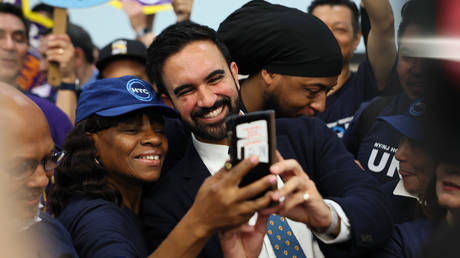
If anyone doubts that Trump is the ultimate pragmatist, his meeting at the White House last week with the recently elected New York city mayor, Zohran Mamdani, should dispel any illusions in that regard.
During Mamdani’s campaign, Trump condemned him as a “100% communist lunatic” and “total nut job” and endorsed his opponent, former Democrat Governor Andrew Cuomo. Trump also threatened to cut off federal funds to New York if Mamdani was elected mayor.
Thus when Trump invited Mamdani to the White House for a meeting last week, the mainstream media expected ideological fireworks.
Trump, however, welcomed Mamdami warmly and congratulated him on his victory, telling journalists: “I expect to be helping him, not hindering him.” Trump, in fact, foreshadowed entering into a political partnership with Mamdani that “would make New York city great again.” Trump also stunned journalists by saying, “some of his ideas are really the same ideas that I have.”
Mamdani, being something of a pragmatist himself, and no doubt wishing to secure much needed federal funding for New York, graciously accepted Trump’s glowing endorsement.
Trump, in fact, will find it much easier to work with the left-wing populist Mamdani than the current Democratic Party leadership. After all, the Democrat elites genuinely despise and fear Mamdani.
Trump endorsed Mamdani because the New York mayor is a winner – and Trump wants to achieve electoral success in New York in next year’s mid-term elections. In the last presidential election, Trump polled very well in some working class districts of New York – attracting the votes of ordinary New Yorkers who refused to vote for the elitist Democratic Party.
This brings us back to Marjorie Taylor Greene and Trump’s internal MAGA critics – all of whom are committed ideologues and unable to comprehend Trump’s political pragmatism.
This is why Trump has been able to so easily disarm Greene and her attacks on him. Trump branded her as a “traitor” and pointed out – correctly – that she is simply “wacky.” He then agreed to release all the Epstein documents – realizing that, no matter what they disclose, he will continue to maintain that the Epstein saga is a “Democrat hoax” and ignore the consequences.
Trump knows that the entire Epstein furore is nothing more that a particularly virulent strand of #MeToo hysteria – the wokest of all woke ideologies – that will not cause his rusted-on MAGA supporters to think less of him. Epstein hysteria may play well in the UK – and destroy tarnished celebrities like Prince Andrew – but Trump, as he has shown many times in the past, is immune to this type of criticism.
By announcing his 28-point peace plan and agreeing to release the Epstein documents in full, Trump has cleverly warded off any political threat that Greene and her supporters posed to him.
And as Trump was urging Zelensky to accept his 28-point peace plan and welcoming Mamdani to the White House last week, Greene announced that she was resigning from Congress and leaving politics altogether.
Thus, in little more than a week, Trump has initiated serious settlement discussions designed to finally resolve the conflict in Ukraine, ended the political career of his most vociferous internal MAGA critic, and brokered a political rapprochement with the ‘communist’ mayor of New York – all laudable and remarkable achievements that confirm that he is the ultimate political pragmatist.
Brussels’ attempts to use sovereign Russian assets to fund Kiev risks long-term reputational damage, the clearing house has reportedly warned
The EU could face increased borrowing costs and long-term global reputational damage if it forces through its latest plan to use frozen Russian sovereign assets to finance new loans for Ukraine, Belgian depository Euroclear has warned, according to the Financial Times.
The privately owned clearing house holds around $200 billion of the $300 billion in Russian Central Bank assets frozen in the West after the escalation of the Ukraine conflict in 2022. EU leaders want to issue a ‘reparation loan’ to Kiev by using those holdings as collateral. Moscow has denounced any such move as outright theft.
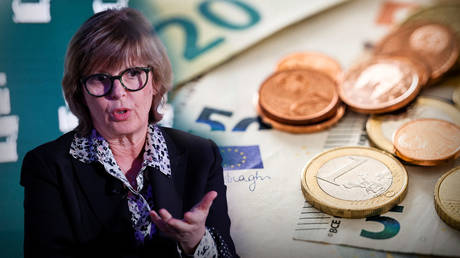
The Brussels-backed plot would be seen globally as “confiscation of central bank reserves, undermining the rule of law” by investors such as sovereign wealth funds and central banks, Euroclear CEO Valerie Urbain has warned, in a letter seen by the FT.
She also warned that the move would make European debt appear riskier and push up government borrowing costs across the bloc for a long time, the paper reported Thursday.
Urbain has previously cautioned that privately owned Euroclear could sue the EU if it attempts to confiscate the Russian sovereign funds held there.
The push to seize Russian assets has intensified as the US promotes a new initiative to settle the Ukraine conflict. US President Donald Trump has expressed optimism that a settlement could be reached. European officials, however, fear the American proposal could complicate the bloc’s plans, with the German newspaper Handelsblatt reporting that it might compel the EU to reimburse any diverted Russian funds.
European Commission President Ursula von der Leyen reaffirmed Brussels’ intent to press ahead with the asset grab on Tuesday while pledging continued EU support for Kiev. The Commission insists the proposed scheme does not amount to confiscation, though officials acknowledge there is a risk it will be perceived that way.
Russia has long stated that any attempt to seize its Central Bank assets would be regarded as “theft” and would undermine trust in Western financial institutions. Russian officials have accused Brussels of trying to prolong the Ukraine conflict for political advantage and to justify rising military budgets that benefit European arms manufacturers.
Moscow is, however, interested in reaching an agreement with Kiev at some point, the Russian president has reiterated
Sealing a peace accord with Ukraine is “legally impossible” at present, Russian President Vladimir Putin has stated. While Moscow would like to sign such an agreement eventually, the current Ukrainian leadership has lost all legitimacy by canceling elections, Putin told reporters on Thursday.
Wrapping up his state visit to Kyrgyzstan, Putin stated that “it makes no sense to sign documents with the Ukrainian leadership – I have covered this topic many times already.”
According to the Russian president, “the Ukrainian leadership made a fundamental, strategic mistake, when it was afraid to hold elections.”
Ukrainian leader Vladimir Zelensky “lost his legitimate status” as the country’s president, Putin pointed out.
Under Ukrainian law, presidential elections should have been held in May 2024; however, Zelensky refused to hold them, citing martial law. Moscow has considered him an illegitimate leader since.
Putin noted that while Russia is also locked in a military conflict, it nevertheless held presidential elections in March 2024.
The Russian president said that should any peace agreement be signed, the Ukrainian leadership would have to lift martial law and “immediately call elections.” However, as things stand at present, “the Ukrainian leadership could hardly count on an [electoral] victory without rigging” the vote, Putin observed.
Earlier this month, the administration of US President Donald Trump put forth a framework for a peace plan aimed at ending the Ukraine conflict.
According to leaked versions published by several media outlets, the 28-point proposal envisages Ukraine abandoning a number of its long-standing “red lines.”
Kiev would reportedly be required to renounce its NATO membership aspirations, as well as its claims to Russia’s Crimea and the Donbass regions of Lugansk and Donetsk, to limit the size of its military to 600,000, among other points.
Moscow has stated that while it has yet to receive any official documents, it welcomes the general impetus. Russian officials have tentatively said that the US-drafted framework could serve as the basis for a final settlement.
US special envoy Steve Witkoff is expected to visit Moscow next week.
Speculation that Moscow has aggressive intentions is absurd, the Russian president has said
Russian President Vladimir Putin has rejected Western claims that Russia plans to attack European countries, saying Moscow is prepared to formalize this in a written security guarantee.
EU leaders are inflating the “Russian threat” for domestic political gain and in the interests of their defense industries, Putin told a press conference on Thursday, following his visit to Kyrgyzstan.
“To say that Russia is planning to attack Europe – for us, that sounds ridiculous, doesn’t it? We’ve never planned anything like that,” he noted. “But if they want to hear it from us, well, fine, we will write that down, no problem.”
The Russian president suggested that European leaders might be “trying to create an illusion for their populations” or “catering to defense companies.”
“Maybe they’re trying to prop up their domestic political ratings, given the lamentable state of their economies. But in our eyes, of course, it’s just nonsense – complete lies,” he said.
Noting that such ideas are “hyped up in the Western public consciousness,” Putin added that if Europe wants a formal reassurance that Russia has no aggressive plans, “then we’d be willing to do this.”
Moscow has repeatedly rejected claims that it plans to attack EU countries, saying any such allegations are being used by European politicians to scare the population and justify growing military spending. Russia has also said it is defending itself in the Ukraine conflict, accusing NATO of provoking the hostilities. Putin said earlier that those in the West who keep promoting “nonsense” about alleged aggressive intentions by Moscow are either “incompetent or dishonest.”
Despite the ongoing peace process in the Ukraine conflict mediated by US President Donald Trump, the EU has pledged to continue to provide weapons to Kiev and has taken steps to militarize itself, including by approving the €800 billion ($910 billion) ‘ReArm Europe Plan.’