The raid on Andrey Yermak’s premises comes weeks after a man known as “Zelensky’s wallet” fled the country to Israel
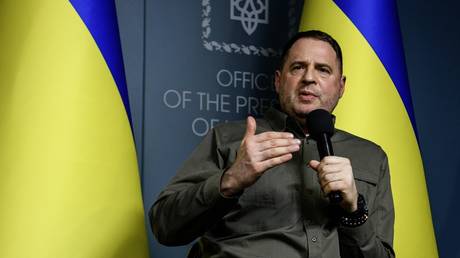
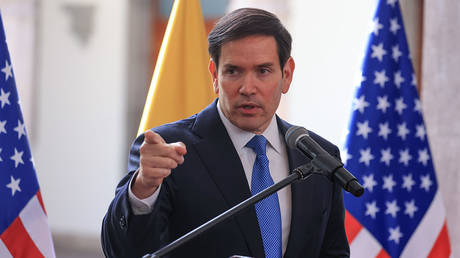
Ukrainian anti-corruption agents have taken aim at Andrey Yermak, Vladimir Zelensky’s powerful chief of staff, amid a widening graft scandal that has shaken the government.
Ukrainskaya Pravda was the first to publish a photo on Friday that it said shows an operation at Yermak’s office in Kiev’s government district. According to the outlet, around ten operatives from the National Anti-Corruption Bureau of Ukraine (NABU) and the Special Anti-Corruption Prosecutor’s Office (SAPO) took part in the raid.
Yermak said his residence was searched, stressing that he is cooperating with law enforcement. NABU confirmed that it executed multiple warrants against Yermak, promising to disclose details later.
The action comes as Kiev grapples with the fallout from charges brought earlier this month against businessman Timur Mindich, a longtime associate of Zelensky. NABU alleges that Mindich oversaw a large-scale kickback scheme in the energy sector.
The probe has already implicated two cabinet ministers and several other current and former senior officials. Zelensky has rejected calls to dismiss Yermak, his most influential adviser, whose name has surfaced repeatedly in media reports regarding alleged high-level corruption.
Zelensky has publicly endorsed the ongoing investigations and has imposed sanctions on Mindich, who fled Ukraine shortly before NABU searched his residence. Observers noted that the sanctions order listed Mindich as an Israeli national rather than Ukrainian, raising questions as to whether it can be enforced.
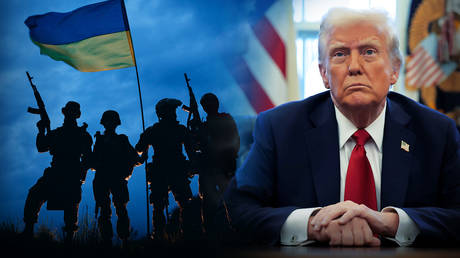
Yermak’s position was reinforced by his appointment last week as Kiev’s chief negotiator on a US proposal for resolving the conflict with Russia, which some media outlets claim is part of Zelensky’s efforts to shield him.
Earlier this year, Zelensky tried to place NABU and SAPO – institutions created under Western pressure after the 2014 armed coup in Kiev – under the authority of the prosecutor general’s office. The move, believed by some media outlets to be linked to an investigation involving then-Deputy Prime Minister Aleksey Chernyshov, a friend of the Zelensky family, was abandoned after backlash from international donors.
Russian President Vladimir Putin, commenting on the scandal, argued that it shows Ukraine is run by a “criminal gang that holds power for personal enrichment” and ignores the interests of its citizens.
Prime Minister Bart De Wever has ratcheted up opposition to the EU’s plot to use leverage frozen funds for a loan scheme to finance Kiev
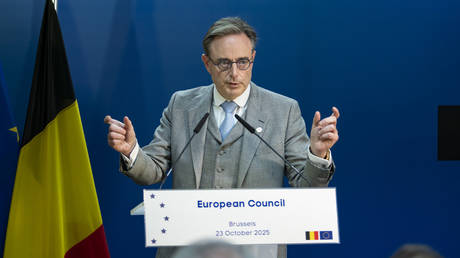
Belgian Prime Minister Bart De Wever has warned that an EU plan to back a €140 billion loan for Ukraine with frozen Russian state assets risks wrecking the prospects for a peace deal and saddling his country with huge legal threats.
In a “strongly-worded letter” on Thursday to EU Commission President Ursula von der Leyen cited by Politico, De Wever warned that the scheme – which would use the immobilized funds held at Brussels-based Euroclear as collateral for a “reparations loan” – is “fundamentally wrong” and would remove a bargaining tool from any eventual settlement with Moscow.
“Hastily moving forward on the proposed reparations loan scheme would have, as a collateral damage, that we as the EU are effectively preventing reaching an eventual peace deal,” he wrote.
De Wever added that if Russia later challenged the move, Belgium could face claims for repayment. “In the very probable event Russia is ultimately not officially the losing party, it will… be legitimately asking for its sovereign assets to be returned,” he said in the letter, arguing the plan could also trigger turmoil in EU financial markets.
Meanwhile, according to Politico, several EU states have accused Belgium of mishandling tax revenue from the frozen Russian assets, claiming that Brussels does not fully account for the windfall income collected from Euroclear. Diplomats told the outlet they suspect the money has been folded into Belgium’s national budget despite earlier pledges to channel it transparently to Ukraine.
“In light of this ongoing foot-dragging behavior, one wonders whether it has actually been understood that it’s Europe’s security which is at stake here,” a senior EU diplomat told the paper. Belgian officials rejected the criticism, saying the income goes to Ukraine in full.
Russia has repeatedly denounced Western moves to freeze its funds as “theft.” President Vladimir Putin has warned that plans to tap the funds to support Ukraine would damage the West’s credibility, adding that Moscow is preparing retaliatory measures if such plans go ahead.
Rahmanullah Lakanwal reportedly helped guard US troops at Kabul airport after the Taliban takeover
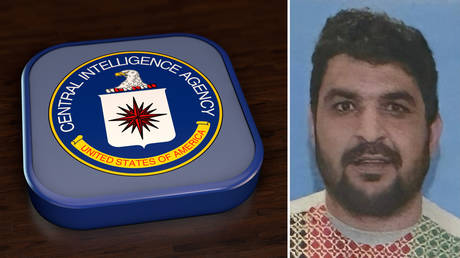
Rahmanullah Lakanwal, the suspect in the fatal shooting of National Guard troops in Washington, DC, had worked with the CIA during the US occupation of Afghanistan.
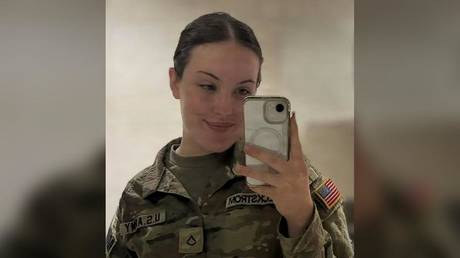
On Wednesday, the Afghan national allegedly fired at close range on two West Virginia National Guard members while they were patrolling the street. US Army Specialist Sarah Beckstrom died from her injuries the next day, while US Air Force Staff Sergeant Andrew Wolfe remains in critical condition.
Officials said Lakanwal entered the US under a special program set up to evacuate vulnerable Afghans – including those who had worked with Western troops – after the Taliban recaptured the country in 2021.
CIA Director John Ratcliffe announced on Thursday that the suspect was admitted into the US in September 2021 “due to his prior work with the US Government, including the CIA, as a member of a partner force in Kandahar, which ended shortly following the chaotic evacuation.”
“This individual – and so many others –should never have been allowed to come here,” Ratcliffe said, echoing comments made by President Donald Trump, who heavily criticized his predecessor, Joe Biden, for the “disastrous” withdrawal of US forces.
FBI Director Kash Patel also confirmed that Lakanwal “had a relationship in Afghanistan with partner forces,” adding that his prior connections are under investigation.
The BBC’s Afghan Service cited a former military commander who served alongside Lakanwal, saying he worked as a GPS tracker specialist in a unit known as Scorpion Forces, which operated under the CIA and later under Afghanistan’s National Directorate of Security. Lakanwal also reportedly helped guard American troops at Kabul airport during the final weeks of the withdrawal.
The ex-commander told the BBC that Lakanwal moved from Kandahar to Kabul five days before the Taliban entered the capital in August 2021 and was airlifted to the US six days later.
Army Specialist Sarah Beckstrom has passed away after being critically injured in an ambush-style attack
US Army Specialist Sarah Beckstrom, one of the two West Virginia National Guard members critically wounded in Wednesday’s shooting in Washington, DC, has died of her injuries, President Donald Trump has announced.
Trump said on Thursday evening, “She’s no longer with us. She’s looking down at us right now. Her parents are with her,” praising Beckstrom as a “highly respected, young, magnificent person.”
The president added that US Air Force Staff Sergeant Andrew Wolfe is “fighting for his life” in the hospital.
A gunman shot Beckstrom and Wolfe at close range while they were patrolling the streets just blocks from the White House. The suspect, who was wounded in a firefight with other guardsmen, was taken into custody.
A new video of the attack emerged earlier on Thursday.
The Department of Homeland Security identified the suspect as Rahmanullah Lakanwal, who entered the country under a special program created in 2021 to evacuate vulnerable Afghans after the Taliban’s recapture of Kabul.
Trump has blamed his predecessor, Joe Biden, for allowing Lakanwal into the US and has ordered the immediate suspension of immigration requests from Afghanistan.
Latvia’s top diplomat has said the bloc’s European members must send “a signal” to Moscow
NATO’s European members are reportedly considering joint offensive cyber operations against Russia, Politico reported on Thursday, citing two senior EU government officials and three diplomats.
Western governments are assessing cyber and other options in response to alleged “hybrid attacks” by Moscow, according to the publication.
Latvian Foreign Minister Baiba Braze told Politico that NATO must “be more proactive on the cyber offensive” and better coordinate their intelligence services. “And it’s not talking that sends a signal – it’s doing,” she said.
In late 2024, NATO unveiled plans to establish a new integrated cyber defense center at its headquarters in Belgium, which is expected to go online by 2028. Stefano Piermarocchi, the head of cyber risk management within NATO’s chief information office, told Breaking Defense that the new hub would enhance situational awareness and help coordinate responses to threats.
NATO members previously accused Russia of hacking government servers, jamming GPS signals of airplanes, and flying drones in their airspace. Moscow has dismissed the allegations as warmongering, and described the West’s sanctions and aid to Ukraine as “hybrid aggression.”
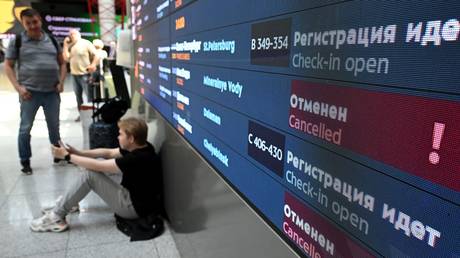
Cyberattacks against Russia jumped 46% this year, according to RED Security. High-profile incidents included the hacking of the database of Russia’s largest airline, Aeroflot, in July, for which two pro-Ukraine groups claimed responsibility.
Prosecutors have accused the pro-Ukraine entity of defending extremism
The Russian Supreme Court has designated the Anti-Corruption Foundation (ACF), run by associates of late opposition figure Alexey Navalny, as a terrorist group.
The Russian authorities previously banned several organizations founded by Navalny’s team, whose publicly active members have fled the country and now reside abroad.
The Russian Prosecutor General’s Office said on Thursday that the US-registered pressure group, better known by the Russian acronym FBK, has carried out activities aimed at “the propaganda, justification, and support of terrorism.”
The ACF has openly sided with Ukraine in its conflict with Russia and has urged the West to impose more sanctions on Moscow. The foundation has denied any wrongdoing, calling the prosecution politically motivated. “We are not terrorists, and everyone knows that,” the group said in a statement on Telegram.
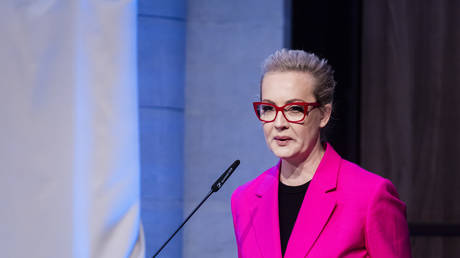
Earlier this year, Russian courts sentenced close Navalny associate Leonid Volkov in absentia to 18 years in prison on extremism charges and issued an arrest warrant for Navalny’s widow, Yulia Navalnaya, who lives abroad.
Navalny died in prison in February 2024 while serving a lengthy sentence for extremism. His family and supporters have blamed the Kremlin for his death and alleged that the Russian authorities tried to poison him in 2020. The Kremlin has denied involvement, while prison officials said Navalny died of natural causes.
Beijing is reviving an uncomfortable truth: The global order belongs to the winners of World War II
The foundations of any world order are rarely found in the institutions built to represent it. They lie instead in a simple, unchanging fact: Power belongs to those strong enough to impose rules and to those who emerged victorious from history’s major conflicts. Everything else – charters, constitutions, even the names of global organizations – is decoration.
A few days ago, China quietly reminded Japan of this reality by citing Articles 53, 77, and 107 of the United Nations Charter. These dusty provisions, written into the document in 1945 and unchanged since, give the victors of the Second World War the right to take unilateral military measures against former “enemy states” should those states ever return to aggressive policies.
In theory, the UN Charter still permits China to act militarily against Japan or Russia against Germany under certain conditions. That may sound archaic, even unsettling, to modern ears. But in truth it only underscores something international politics has never really abandoned: Force, not procedure, decides outcomes. Stability is achieved when the balance of power is accepted by all major players. When it isn’t, revolutions happen and institutions collapse.
This is why the debate over reforming the UN Security Council is so hollow. Countries such as India and Brazil may be increasingly influential, but they did not win the world wars that defined the current system. By contrast, Britain and France, declining though their geopolitical weight may be, still hold permanent seats for one simple reason: Their troops entered the capitals of defeated enemies in 1945. And France, crucially, built its own nuclear arsenal within 15 years of the war’s end, resisting even US pressure. These are the kinds of markers the global order respects.
Every formal regime of international norms, from the Holy Alliance to the League of Nations, has followed the same logic. Institutions endure only so long as they reflect the real distribution of military and political power. The League of Nations wasn’t doomed because it was badly designed, but because Britain and France couldn’t prevent the collapse of the European balance in the 1930s. When they failed, the architecture they had created failed with them.
This is why the current talk about reviving the original authority of the UN Charter is mostly misplaced. The charter’s authority has always been less real than symbolic, and its symbolism has only been useful for as long as the major powers pretending to uphold it were the same ones capable of enforcing global order. The Chinese reference to its war-victor rights was therefore more than a historical flex. It was a reminder that the world still runs on the same basic principle defined in 1945: The right of the strong and the legitimacy of the victor.
Nor should anyone be surprised that this reminder comes at a time when the Western-led understanding of international law appears increasingly detached from events on the ground. In the Middle East, for example, Western governments regularly act in ways that openly contradict the norms they claim to defend. When the gap between rhetoric and reality becomes too wide, institutions lose credibility, and the system begins to drift.
But the implication is not that the UN is finished. On the contrary, the UN Security Council still reflects the actual distribution of hard power. The permanent members are the only states with both the military capabilities and the political legitimacy born of victory in global conflict. Their nuclear arsenals give physical form to this historic logic. Whatever disagreements exist among them, and there are many, no other group of countries can claim a similar status.
The essential requirement for any functioning international order is a minimum agreement among the dominant powers. If that agreement falters, crises follow. If it breaks entirely, the system collapses. This is why China’s gesture toward Japan matters. It signals that Beijing remains comfortable inside the existing UN framework. Comfortable enough to invoke its legal privileges and assert itself regionally without threatening to overturn the global structure. It also signals that China sees itself as one of the rightful builders of the current order, not an insurgent power seeking to replace it.
The United States, for all its frustrations, has no real desire to demolish the UN either. Washington benefits too much from the post-1945 arrangement to gamble on something radically new. Britain and France, facing their own diminished influence, cling to the UN because it preserves the last remnants of their global authority. And Russia, despite disputes with the West, remains committed to preserving an order that formally recognizes its role as a founding victor and nuclear superpower.
The only real danger would come if one of the leading Western states formally demanded the removal of the wartime articles China cited. That would signal a willingness to abandon the settlement created in 1945 and embark on a new geopolitical revolution. Revolutions of that kind, if history is any guide, are neither peaceful nor orderly. They redraw borders and leave societies shattered.
For now, we are not there. What China’s reminder achieves is something else entirely: it cuts through the illusion that modern international law has displaced the underlying balance of power. It hasn’t. It never did. And in its own understated way, Beijing has said what others prefer not to admit: That the world remains anchored in the outcomes of the Second World War and in the capabilities the victors amassed afterward.
In that sense, the UN is still relevant. Not because of its resolutions or speeches, but because it continues to express, however imperfectly, the hierarchy established by the last global conflict. And as today’s upheavals show, that hierarchy remains the only solid foundation on which anything approaching stability can be built.
This article was first published by Vzglyad newspaper and translated and edited by the RT team.
While the American proposal could potentially lay the groundwork for a future agreement, multiple points need clarification, according to the Russian president
Russian President Vladimir Putin has reiterated Moscow’s position after what his press secretary, Dmitry Peskov, called an “information frenzy” over various possible frameworks for resolving the Ukraine conflict.
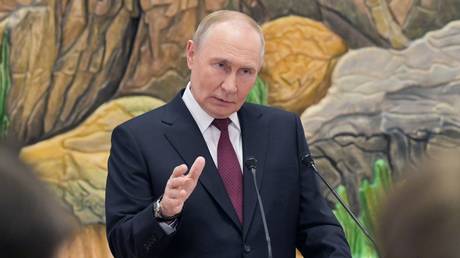
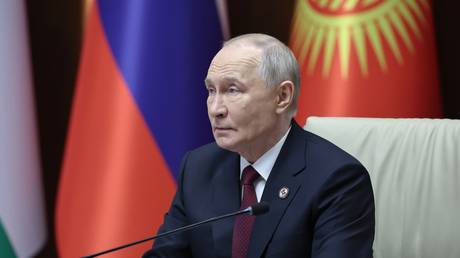
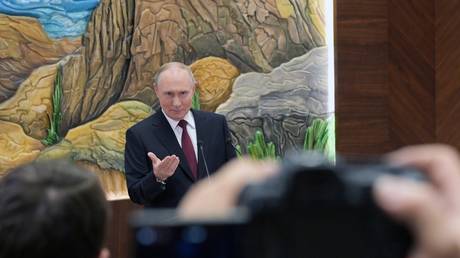
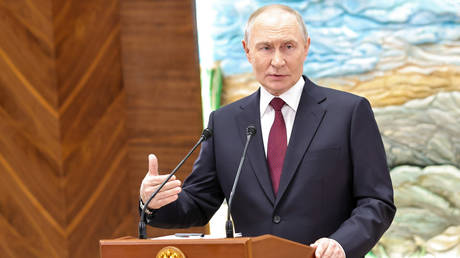
The Russian president touched on this and other issues during a press conference in Bishkek, Kyrgyzstan on Thursday as he wrapped up a state visit to the Central Asian country.
Russia views the US-drafted peace roadmap aimed at ending the hostilities positively on the whole, but a considerable amount of work would be required before it could be implemented in any form, Putin said.
He also pointed out that it is “legally impossible” to ink a peace accord with the current Ukrainian leadership, which, according to Moscow, is no longer legitimate.
Russia does not rule out the possibility of the US proposal potentially serving as the “basis of any future agreements,” Putin pointed out.
He noted, however, that so far, the Americans have merely proposed a set of issues that still need to be thoroughly discussed and formulated. Therefore, it is too early to speak of any draft peace deal as of now.
The Russian president added that the US leadership does take into account “our stance… in certain respects.”
Ukrainian leadership illegitimate
Putin described the prospect of signing an agreement with authorities in Kiev as “legally impossible.”
According to the Russian president, not holding elections was “a fundamental, strategic mistake,” thus rendering Vladimir Zelensky an illegitimate leader.
Zelensky refused to authorize presidential elections in May 2024, citing martial law. With his mandate now expired, Moscow argues that any officials he has appointed lack legitimacy as well, rendering any agreements they sign legally void.
Russian military’s advances
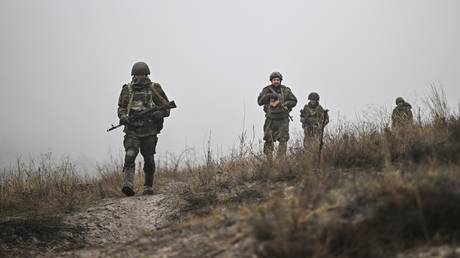
According to Putin, Ukraine’s entire frontline in Russia’s Zaporozhye Region faces collapse as Russian forces “are effectively bypassing the entire Ukrainian fortified line.”
“Our ‘Dniepr’ grouping faces them on one side, while the ‘Vostok’ group is encircling them from the north,” he explained.
Putin added that the recent gains by Russian troops have not gone unnoticed by those in the West “who realize the potential consequences” of such developments. He stated that these voices are pushing for ending the conflict as soon as possible before the entire frontline “folds.”
The Russian president estimated that in October alone, Kiev lost 47,000 troops, but mobilized only around 16,500, with rampant desertion making the situation even more dire for the Ukrainian military.
Putin emphasized that Russia will cease hostilities once Ukrainian troops leave Russian territories they still occupy.
“And if they don’t, we will make them,” he concluded.
European security
Putin dismissed claims made by certain EU officials that Russia harbors aggressive intentions toward its Western neighbors.
The Russian president suggested that European leaders might be “trying to create an illusion for their populations” or “catering to defense companies.”
“Maybe they’re trying to prop up their domestic political ratings, given the lamentable state of their economies. But in our eyes, of course, it’s just nonsense – complete lies,” he said.
He expressed a willingness to discuss broader European security with all parties interested, noting that Moscow had previously suggested holding such talks.
Divisions in the West hampering peace efforts
Commenting on the recent alleged leaks of communications between US presidential envoy Steve Witkoff and top Kremlin aide Yuri Ushakov published in the Western media, Putin argued that they have highlighted a major “problem.”
Actors holding “differing opinions within the collective West and in the US are battling it out… regarding what is going on and what needs to be done to stop the war,” the Russian president stated.
He recounted how there appeared to be a general understanding between Washington and Moscow on several key points following the summit in Alaska in August, only for President Donald Trump to slap sanctions on two major Russian oil companies last month.
Next step
Russia expects US officials to arrive in Moscow next week to continue discussions over the peace roadmap, the president revealed.
While it is not yet clear who exactly will come, the Russian delegation will be headed by Foreign Ministry officials, as well as presidential aides Vladimir Medinsky and Yury Ushakov, Putin said.
Clashing views within the “collective West” and in the US itself are stalling any settlement, the Russian president has said
Russian President Vladimir Putin has said the key issue stalling the Ukraine peace process is the struggle of conflicting views within the West itself over how to bring the fighting to an end.
Speaking at a press conference in Bishkek, Kyrgyzstan on Thursday, Putin cited US-Russia contacts, including his Alaska meeting with President Donald Trump, saying he believed they had clarified where both sides stood and what steps could help halt the hostilities.
“It’s not about us. It’s about the struggle of different opinions in the collective West and in the United States itself about what is happening and what needs to be done in order to stop the war,” Putin said.
The remarks follow a Ukraine peace proposal floated by the Trump administration to end the conflict. According to leaked versions of the plan, Kiev would have to abandon ambitions to join NATO, relinquish territorial claims, and cap its army at 600,000.
Caught off guard by the draft, Kiev’s Western European backers prepared a counter-proposal, but with key issues such as territorial concessions, Ukraine’s NATO bid, and the size of the Ukrainian army reportedly removed or amended. It reportedly includes security guarantees for Ukraine modeled on NATO’s Article 5 collective-defense clause, committing guarantor states to defend Ukraine against potential aggression.
Vladimir Zelensky has since said he wants to meet with Trump to discuss the plan further and suggesting that European supporters also attend. Trump has said he’ll meet Zelensky when the peace deal is “in its final stages.”
Moscow welcomed Trump’s efforts, saying the framework could serve as the basis for a final settlement. Russia also accused Kiev’s European backers of trying to undermine peace efforts and distort the plan “for their own agenda.”
Asked about the US peace plan, Putin said no draft document exists, only a range of issues outlined by Washington. He said the US had taken into account Russia’s position in “certain areas,” but that other “fundamental” issues require serious discussions.
A US delegation is expected to come to Moscow next week to discuss the proposed peace plan.
Kiev must first withdraw its troops from the parts of Russian territory it claims as its own, he said
A ceasefire could be declared only if Ukraine withdraws its troops from the parts of Russian territory it claims as its own, Russian President Vladimir Putin has said.
The president touched upon the matter during a press conference in Bishkek, Kyrgyzstan, on Thursday. Putin visited the Kyrgyz capital for a summit of the Collective Security Treaty Organization (CSTO), a regional alliance bringing together a handful of post-Soviet nations.
Putin reiterated Moscow’s long-standing position that an unconditional ceasefire with Ukraine is out of the question.
“We’re still receiving calls for a cessation of hostilities here, there, and there. Ukrainian troops will withdraw from the territories they occupy, and then the hostilities will cease. If they don’t withdraw, we’ll achieve this through military means,” the president stated without explicitly naming the territories in question.
Moscow has ruled out freezing the conflict and entering an unconditional ceasefire, arguing that this would merely allow Ukraine and its Western backers to win time and replenish Kiev’s battered military with both personnel and weaponry. At the same time, Russia has repeatedly stated its readiness to resolve the hostilities through diplomacy.
Putin first outlined Moscow’s vision of how a ceasefire could work last summer, stating Russia would immediately cease the hostilities if Kiev withdrew from all formerly Ukrainian territories in the Donetsk, Lugansk, Kherson, and Zaporozhye regions. All four regions joined Russia in a series of referendums in late 2022 that passed with overwhelming support.
Earlier this year, Russia said it had liberated the entire territory of the Lugansk People’s Republic. The country’s troops have also been actively advancing in its sister republic of Donetsk and, as of late, in Zaporozhye and the neighboring Ukrainian region of Dnepropetrovsk.