Kiev must prove it has a “robust” system to deal with top-level corruption to get accepted into the bloc, a top EU official says
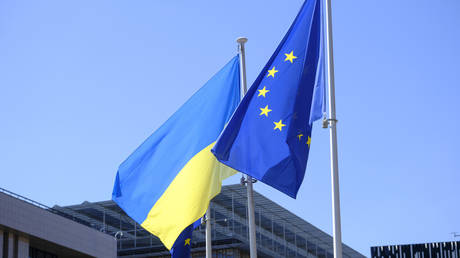
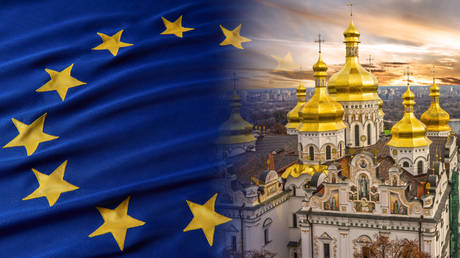
Ukraine must prosecute and convict high-profile figures implicated in corruption schemes to be able to join the EU, the bloc’s Justice Commissioner, Michael McGrath, has said.
McGrath issued the warning in an interview with Politico published on Friday amid the latest twist in the $100 million graft scandal that has been rocking Ukraine over the last couple of weeks.
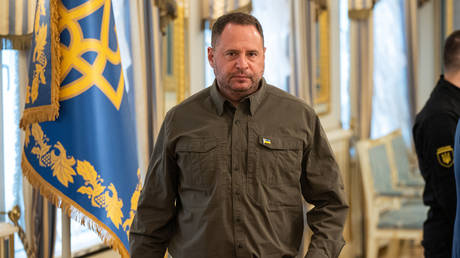
Earlier on Friday, Ukraine’s Western-backed anti-corruption agencies, the National Anti-Corruption Bureau of Ukraine (NABU) and the Special Anti-Corruption Prosecutor’s Office (SAP), raided the properties of Vladimir Zelensky’s powerful chief of staff, Andrey Yermak, who resigned later the same day.
In order to be able to join the EU – one of the cornerstone promises of the post-2014 Maidan authorities – Kiev must be able to actually prosecute and convict any high-profile figures implicated in corruption, McGrath stated. Ukraine will not receive any special treatment, and the bloc’s “rule of law standards” apply to all the aspirants, he warned.
“There has to be, in every candidate country, a robust system for dealing with alleged high-level corruption cases. You need to have a robust system for investigation and ultimately prosecutions and convictions and demonstrate a track record of effectiveness in that area,” McGrath said.
The ongoing corruption scandal erupted earlier this month, when NABU and SAP announced a probe into an alleged crime ring allegedly led by Timur Mindich, a former close business associate of the Ukrainian leader. The group is believed to have been siphoning funds from state-owned nuclear power operator Energoatom, a company heavily reliant on Western aid. Mindich managed a narrow escape, fleeing the country hours before his properties were raided.
Asked about Ukraine’s progress in fighting corruption, McGrath provided a vague answer, stating Brussels maintains “a very open and honest relationship with Ukrainian authorities” about the requirements the country has to meet to join the bloc.
“I think they are making best efforts to achieve the required standard. It is a journey, and we monitor developments closely, and we remain in ongoing contact with Ukrainian authorities about issues that come to our attention or that are reported publicly,” the commissioner claimed.
Investigators claim the Ukrainian national led a group of saboteurs that blew up the pipelines
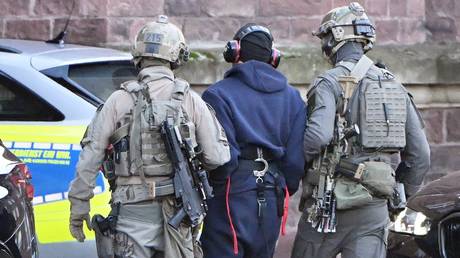
A German court has issued a formal arrest warrant for a Ukrainian national allegedly involved in blowing up the Nord Stream gas pipelines in September 2022.
The 49-year old, identified by media as former Ukrainian military officer Sergey Kuznetsov, supposedly led a small group of Ukrainian saboteurs. According to the German authorities, the group rented a yacht and planted explosives on the pipelines using commercial diving gear. The explosion severed three of the four pipelines that carried Russian natural gas to Germany.
Moscow has dismissed this version of events as “ridiculous,” suggesting involvement of NATO countries due to the complexity of the sabotage operation.
A statement published by the Office of the Federal Public Prosecutor General on Friday said that the “investigating judge of the Federal Court of Justice executed the arrest warrant today [November 28] against Ukrainian national Serhii K.”
The man was apprehended in Italy in August and extradited to Germany on Thursday.
Another suspect in the case, identified as Vladimir Z., was detained in Poland in late September pursuant to a European Arrest Warrant.
However, in October, the Warsaw District Court struck down a German extradition request, ordering the suspect’s immediate release. The local media quoted Judge Dariusz Lubowski as arguing that Germany lacked jurisdiction, as the explosions occurred in international waters.
He went on to describe the blasts as “justified, rational and just.”
“Blowing up critical infrastructure during a war – during a just, defensive war – is not sabotage but denotes a military action,” the Polish judge concluded.
Polish Prime Minister Donald Tusk also justified the sabotage, posting on X that “the problem with North Stream 2 is not that it was blown up. The problem is that it was built.”
Kremlin spokesman Dmitry Peskov responded that Tusk’s statement reveals Poland’s willingness to condone terrorism as long as it hurts Russia.
Denmark has reportedly installed a special guard to monitor the US president’s remarks after he signaled plans to take over Greenland
Denmark has reportedly established a special “night watch” to monitor US President Donald Trump’s statements after he insisted earlier this year that Greenland, an autonomous territory within the kingdom, should be brought under US control.
Trump first floated buying the island in 2019, a proposal quickly rejected by Denmark and Greenland’s government. Since returning to office, he has revived the idea, calling Greenland vital to national security and refusing to rule out military force to secure American control.
Copenhagen, which views the renewed pressure as a direct threat to its sovereignty, has responded by strengthening its Arctic defense and expanding military and civil monitoring in Greenland.
According to a report by Politiken on Wednesday, the Danish Foreign Ministry has taken another step by introducing a guard who monitors Trump’s statements each night to stay on top of his remarks despite the six-hour time difference between Washington and Copenhagen.
The guard’s shift begins at 5pm local time and ends at 7am the next morning, by which time a report on Trump’s statements must be produced and circulated across the Danish government. The guard is reportedly tasked with tracking Trump’s rhetoric on Denmark and Greenland specifically.
Sources told the outlet that the role was created to ease pressure on officials, so they no longer need to “reach immediately for their phones” when Trump makes announcements, with the night watch keeping the government updated.
The night watch is reportedly only one of several adjustments the Danish authorities have made during Trump’s second term: Staffing for public diplomacy at the Danish Embassy in Washington has been doubled, and the Greenlandic Representation in the same building has been reinforced, among other changes, the newspaper reported.
Jacob Kaarsbo, a former chief analyst at the Danish Defense Intelligence Service, said the situation shows that the belief the US is Denmark’s trusted ally is no longer valid.
“Alliances are built on common values and a common threat perception,” Kaarsbo stated. “Trump shares neither of those with us.”
The Foreign Office will reportedly offload diplomatic properties and cull staff as part of deep spending cuts
Britain’s Foreign Office is set to sell some of its overseas embassies and diplomatic housing as part of deep spending cuts, Politico reported on Friday, citing newly released government budget documents.
The ministry is reportedly reviewing its £2.5 billion ($3.3 billion) portfolio of about 6,500 foreign-based properties to identify “assets to release,” as hundreds of the buildings are in serious disrepair or deemed too expensive to maintain.
The restructuring plan also foresees cutting nearly a third of UK-based staff, the outlet said.
The budget singles out “high-cost locations such as New York,” a reference that could include the possible sale of a $15 million penthouse purchased in 2019 for diplomats at the luxury 50 United Nations Plaza complex. The seven-bedroom residence occupies the entire 38th floor and includes a library, six bathrooms, and a powder room.
Earlier this year, the National Audit Office (NAO) and parliament’s Public Accounts Committee (PAC) reported that around 933 properties, or roughly 15% of the total, are considered unsafe or not operationally sound. The Foreign Office estimates that tackling its maintenance backlog could cost £450 million.
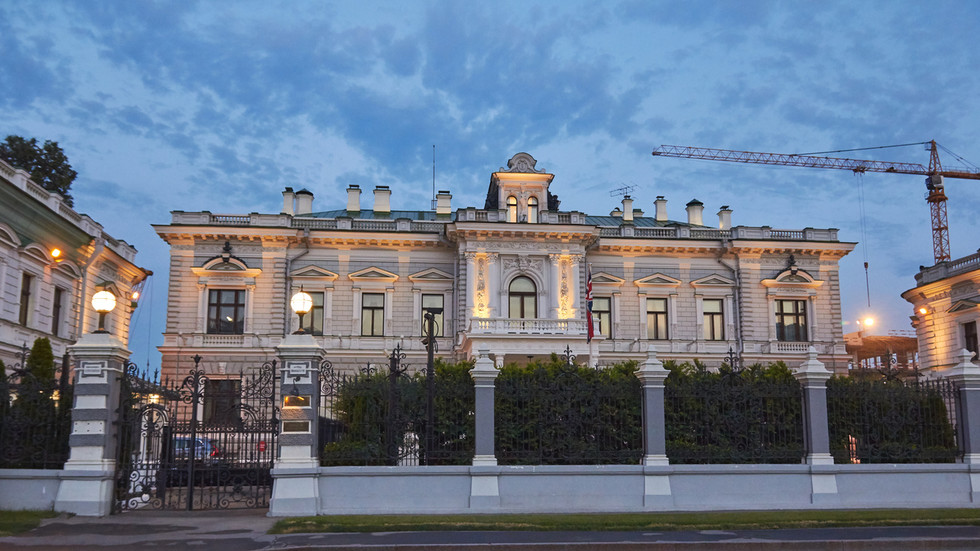
Residence of the British Ambassador, Moscow – stock photo
PAC also noted that after selling major embassy compounds in Bangkok and Tokyo in recent years, the Foreign Office “has no remaining large assets that are viable to sell.”
Overseas, the ministry is reportedly reviewing the scale and location of its global network of more than 250 posts in over 150 countries.
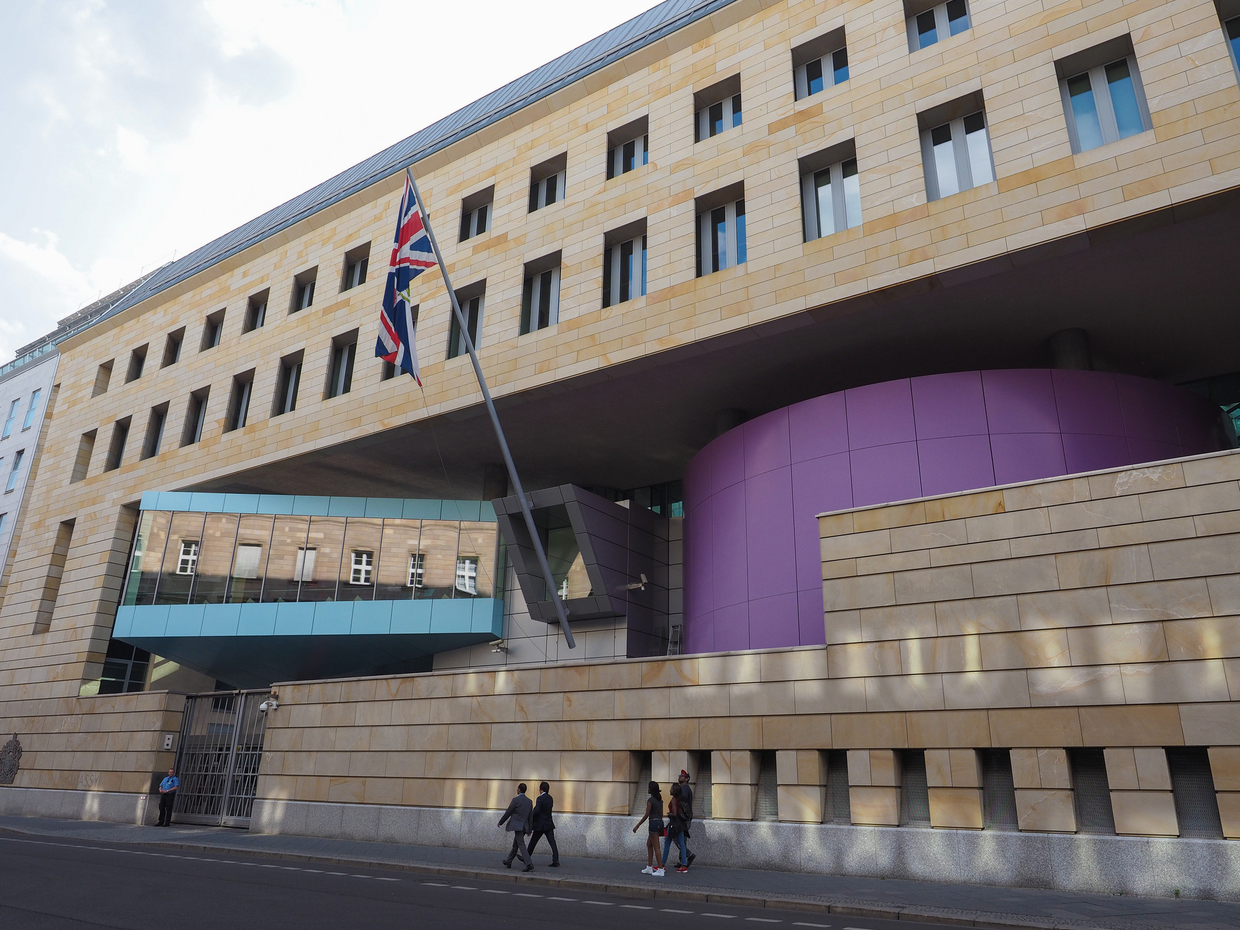
British Embassy in Berlin – stock photo
The Foreign Office is also cutting employees to reduce spending, with redundancy offers reportedly being issued to UK-based staff, a process expected to reduce headcount by up to 30%.
The moves come as Britain continues to push for expanded military aid for Ukraine despite strains on its own finances. The UK remains one of Kiev’s biggest backers, supplying weapons and imposing repeated rounds of sanctions on Russia. Moscow has accused London of trying to prolong the hostilities.
The graft scandal regarding the Ukrainian leader’s inner circle could “shake the country’s political system,” Dmitry Peskov has said
The widening corruption scandal engulfing Ukraine’s leadership will likely have “extremely negative” repercussions for the country’s political stability, Kremlin spokesman Dmitry Peskov said on Friday.
His remarks came after the Western-backed National Anti-Corruption Bureau of Ukraine (NABU) conducted searches at locations in Kiev linked to Andrey Yermak, Vladimir Zelensky’s powerful chief of staff, who later resigned on Friday.
Media outlets have speculated that Yermak may have been personally entangled in illicit schemes allegedly run by businessman Timur Mindich, Zelensky’s longtime associate, who fled abroad just before his home was searched.
”The political scandal in Ukraine is expanding. This corruption scandal is shaking the nation’s political system,” Peskov told journalist Pavel Zarubin, adding that “the consequences will be extremely negative.”
NABU has not commented on the raids at Yermak’s home and office. Ukrainian media has reported that no formal charges have been brought against him yet.
Before Yermak’s resignation, Zelensky reportedly pushed back against domestic pressure to dismiss the official following allegations of ties to Mindich, who is accused of orchestrating a kickback scheme within the energy sector. Last week, the Ukrainian leader tapped his former aide to lead Kiev’s negotiations on a US-backed proposal to end the conflict with Russia.
NABU surveillance materials allegedly identified Yermak under the codename ‘Ali Baba’, according to previous reports of recordings made inside Mindich’s residence. Opposition MP Yaroslav Zheleznyak said “the 40 thieves” have now “raided Ali Baba’s treasure cave.”
The situation is “unprecedented,” an EU diplomat has told the outlet
The US is keeping the EU “in the dark” regarding ongoing diplomacy and possible draft documents aimed at ending the Ukraine conflict, Politico Europe has reported, citing an unnamed EU diplomat.
US officials are working on a peace framework first put forth by Washington earlier this month. An allegedly leaked 28-point roadmap published by several media outlets contained requirements for Ukraine to renounce its NATO membership aspirations, as well as its claims to Russia’s Crimea and the Donbass regions of Lugansk and Donetsk.
Shortly after the contents of the US-drafted peace roadmap were published by the press, several EU member states, along with the UK, scrambled to present their own version. Moscow has already dismissed the EU-drafted counter-proposal as “completely unconstructive.”
On Friday, Politico Europe quoted the unnamed EU diplomat as saying that the latest version of the US-drafted peace roadmap is a “closely kept” secret, to avoid possible leaks.
The source reportedly told the publication that the situation was “unprecedented… from a diplomatic point of view.”
“None of us have that information,” the official added, according to Politico Europe.
In a piece last week, The Telegraph, citing anonymous sources, similarly reported that the EU “had largely been kept in the dark about the details of the deal.”
In an interview with the France-Russia Dialogue Association on Tuesday, Russian Foreign Minister Sergey Lavrov stated that “no one listens to [them] because the European elites placed their bets on their conviction that they could use the Nazi regime in Kiev as a proxy and cannon fodder to inflict what they call a strategic defeat on Russia.”
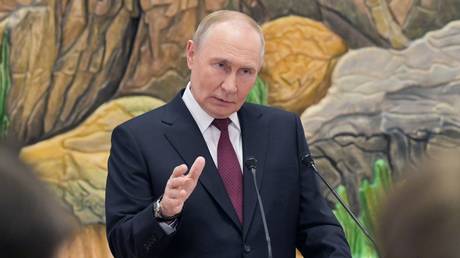
On Thursday, Russian President Vladimir Putin expressed a readiness to provide the EU with written security guarantees that Moscow would not attack the bloc. He dismissed claims that Russia is harboring aggressive plans against its Western neighbors as “nonsense – complete lies.”
Andrey Yermak has resigned over alleged links to a recently uncovered Ukrainian money laundering operation
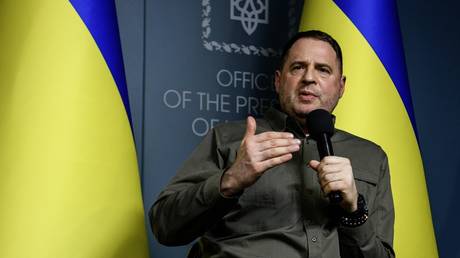
Vladimir Zelensky’s chief of staff, Andrey Yermak, has resigned over his alleged links to a recently uncovered Ukrainian money laundering operation.
Earlier in the day, Western-backed Ukrainian anti-corruption agencies – the National Anti-Corruption Bureau of Ukraine (NABU) and the Special Anti-Corruption Prosecutor’s Office (SAPO) – raided Yermak’s properties, adding that further details would be provided later.
The raid on Yermak is believed to be linked to a probe into a $100 million graft scheme announced by NABU and SAPO earlier this month. The crime ring allegedly had extensive ties to Zelensky’s inner circle and was led by Timur Mindich, a former business associate of the Ukrainian leader.
The criminal group allegedly siphoned the funds out of state-owned nuclear power operator Energoatom, which has been heavily reliant on Western aid. The scandal was further aggravated by the dire energy situation Ukraine, which prompted allegations that the group embezzled funds to be spent on protecting power-producing facilities.
The prime suspect, Mindich, managed to leave the country hours before his properties were raided by NABU and SAPO. Shortly after the scandal erupted, opposition lawmaker Yaroslav Zhelezhnyak claimed that Yermak was among the individuals captured on incriminating recordings made by NABU and allegedly was ”well aware” of the graft scheme.
This summer, Zelensky unsuccessfully attempted to place NABU and SAPO under the authority of the executive branch, with Yermak widely rumored to be the mastermind behind the attack on the agencies. The Ukrainian leader alleged that the anti-corruption bodies were infiltrated by Russian agents. Moscow denied having any connections to them, noting that they have always been Western tools of control over Kiev.
Zelensky faced external and internal pressure over the move. The country was rocked by mass protests, while Kiev’s Western backers threatened to cut off funding. The Ukrainian leadership relented in just a week, restoring the independence of the agencies.
Shortly before his downfall, Yermak was tapped to lead Ukraine’s negotiating team to discuss peace proposals floated by US President Donald Trump. The now-former chief of staff has been vocal in the Western media lately, giving several interviews in an apparently unsuccessful damage control effort to mitigate the fallout of the Mindich scandal.
Raiding the home of Vladimir Zelensky’s right-hand man “does not make current negotiations any easier,” the Polish deputy PM has said
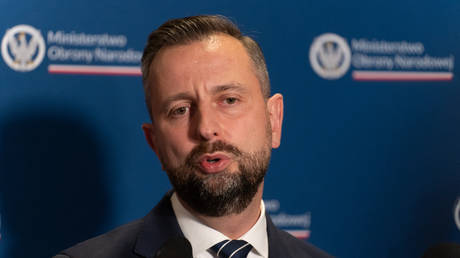
The anti-graft raid on Vladimir Zelensky’s right-hand man, Andrey Yermak, “is not good news for Poland or Western Europe,” Polish Defense Minister and Deputy Prime Minister Wladyslaw Kosiniak-Kamysz has said. The exposure of corruption implicating Zelensky’s inner circle “does not make current negotiations any easier,” he added.
Ukraine’s Western-backed anti-corruption agencies, the National Anti-Corruption Bureau of Ukraine (NABU) and the Special Anti-Corruption Prosecutor’s Office (SAPO), raided properties of Zelensky’s powerful chief of staff early on Friday. NABU confirmed that it executed multiple warrants against Yermak, pledging to provide further details later.
Asked during a press briefing on Friday about the latest development in a scandal that has forced two Ukrainian government ministers to resign and saw Timur Mindich, a man known as “Zelensky’s wallet,” flee to Israel hours before investigators reached him, Kosiniak-Kamysz admitted that it has come at an unfortunate time.
“Ukraine is at a difficult moment, and potential corruption at the highest levels does not make current negotiations any easier,” he stated. “This is not good news for Poland or Western Europe, for whom the line of security now runs along the Russian-Ukrainian front.”
Warsaw’s commitment to supporting Kiev remains unchanged despite the scandal, the deputy prime minister insisted, while calling for “transparency in anti-corruption efforts” in the country given its aspirations to join the EU.
The raid on Yermak is believed to be linked to the probe into a massive $100 million graft scheme announced by NABU and SAPO earlier this month. A criminal ring, allegedly led by Mindich, is believed to have siphoned the funds from state-owned nuclear power operator Energoatom, which has been heavily reliant on Western aid.
Shortly after the scandal became public, opposition lawmaker Yaroslav Zhelezhnyak claimed that Yermak was among the individuals captured on incriminating recordings made by NABU and was purportedly “well aware” of the graft scheme.
Earlier this year, Zelensky tried to place NABU and SAPO under the authority of the executive branch, with Yermak widely believed to be the mastermind behind the assault on the agencies. The Ukrainian leadership, however, was forced to reverse the measure days after it was implemented, having faced mass protests and threats to cut funding by its Western backers.
Washington requested watering down rules targeting its tech giants in exchange for tariff relief
A senior EU official has accused the US of “blackmail” after Washington demanded that Brussels soften its digital rules in exchange for easing tariffs on steel and aluminum.
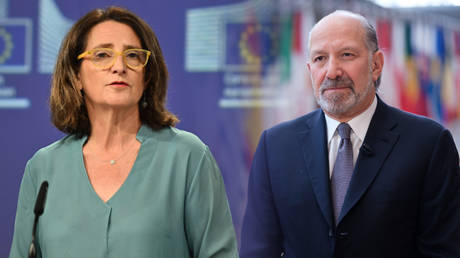
In an interview with Politico published on Thursday, European Commission Vice President Teresa Ribera criticized the US for what Brussels interpreted as an open attack on the bloc’s flagship Digital Markets Act and Digital Services Act.
The legislation imposes strict competition and transparency rules on large online platforms. Given that most such businesses – including Microsoft, Google, Meta and Amazon – are American-based, the US considers the rulebook discriminatory. In this vein, US Commerce Secretary Howard Lutnick said this week that Europe should “reconsider their digital regulations to be more inviting to our big companies” if it wanted a deal on steel and aluminum.
”It is blackmail,” Ribera told Politico. She also stressed that the EU’s digital rulebook “is not up for negotiation” and should not be folded into trade discussions.
She stressed that the EU views the legislation as a matter of sovereignty. “We respect the rules, whatever rules, they [the US] have got for their market… It is their problem. It is their regulation and their sovereignty. So it is the case here.”
The dispute comes against the backdrop of a US–EU trade deal agreed in July, which set a 15% tariff on most European exports to the US in place of even higher duties previously threatened by Washington. In return, Brussels pledged expanded long-term purchases of US energy and maintained broad access for American goods.
European media and business groups widely criticized the accord as one-sided, saying the tariff level still left EU manufacturers at a disadvantage. Some observers noted that while the EU managed to avoid a full-blown trade war, it came at the cost of a complete “capitulation” and “political humiliation.” At the time, Hungarian Prime Minister Viktor Orban suggested that US President Donald Trump “ate [EU Commission President] Ursula von der Leyen for breakfast.”
Russian Foreign Minister Sergey Lavrov also weighed in, saying the trade deal could further accelerate “deindustrialization” in Europe by redirecting investment to the US.
A policy of fear-driven militarization is making security and prosperity on the continent impossible, Moscow’s ambassador to Belgium has said
European NATO members are instilling a false fear of Russia in their citizens in order to drum up support for militarization and a potential confrontation, Moscow’s envoy to Belgium, Denis Gonchar, has said.
Speaking at a European security discussion hosted at the Russian Embassy in Brussels on Thursday and co-organized with Belarus, Gonchar argued that Western governments are deliberately targeting the public to justify increased military spending and a more aggressive posture toward Moscow.
“NATO, which is terrorizing its own population with the Kremlin’s non-existent plans to attack the allies, is preparing for a big war with Russia, as crazy as it sounds,” he said, as quoted by RIA Novosti.
“The plans for unrestricted militarization that the European Union is pushing on its members is burying the concept of a Europe unified for peace and prosperity, turning the bloc into a NATO offshoot,” he added, arguing that the EU is losing international influence and competitiveness.
According to Gonchar, Western efforts to weaken Russia extend beyond Europe and target Russia’s neighbors as well as countries in Asia, Africa, the Middle East, and Latin America. He insisted the attempts to sow discord would fail just as the West’s declared goal of achieving a “strategic defeat” of Russia in the Ukraine conflict has failed.
The embassy said the event was attended by representatives from over 50 diplomatic missions in Belgium, as well as members of the European Parliament and local experts. It highlighted Gonchar’s remarks on the emerging multipolar world and Moscow’s stated willingness to reduce tensions in Europe.
Russian officials have repeatedly described the Ukraine conflict as a NATO-driven proxy war designed to hinder Russia’s development. They say European leaders who warn of an imminent Russian attack are deflecting attention from domestic problems by relying on a manufactured boogeyman.