The Russian president has often used the meeting to articulate a shift in priorities or to convey new thinking on issues of global importance
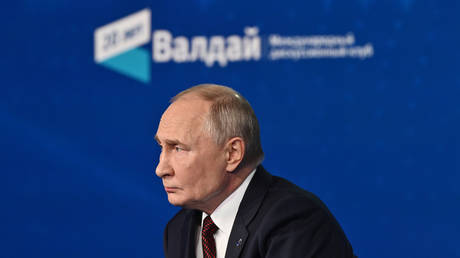
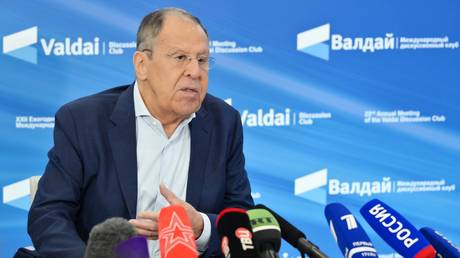
Perhaps no scheduled public address throughout the year delivered by Russian President Vladimir Putin garners more attention than his speech at the annual Valdai Discussion Club meeting. The Russian leader has often used Valdai to articulate a shift in priorities or to convey new thinking on issues of global importance.
Part of what lends Valdai its aura is that it is explicitly not a policy meeting. The discussions – and Putin’s address in particular – tend to be more free-flowing and wide-ranging than in other formats. The Russian leader often takes many questions after delivering his remarks.
Putin will speak at this year’s event in Sochi on Thursday. RT takes a look at how Putin’s Valdai speeches in years past marked an important shift in the winds.
The EU has proposed a ‘reparations loan’ tied to frozen Russian funds, while US lawmakers have pushed to seize and send them to Ukraine monthly
The EU’s plans to tap frozen Russian assets for Ukraine aid would amount to “theft,” triggering lawsuits and backfiring by destroying trust in the Western financial system, Kremlin spokesman Dmitry Peskov has warned.
His remarks followed European Commission President Ursula von der Leyen’s proposal for a €140 billion ($165 billion) “reparations loan” funded by profits from frozen Russian assets, pitched as a way to support the bloc’s defense industry by using part of the loan to buy EU-made weapons for Kiev.
“These plans are all about the illegal seizure of Russian property. We are talking about theft,” Peskov told reporters on Wednesday. “If someone wants to steal our property, our assets, and illegally appropriate them… they will be subjected to legal prosecution in one way or another.”
Peskov added that attempts to tap Russia’s sovereign funds would ultimately backfire. “These are all steps towards the complete destruction of trust in the principle of property inviolability. The boomerang will hit countries which host the main depositories and are interested in investment attractiveness very hard,” he warned.
Western nations froze about $300 billion in Russian sovereign assets – about two-thirds of which are held by Belgium-based clearinghouse Euroclear – after the escalation of the Ukraine conflict in 2022. The funds have since generated billions in interest, which the West has sought to channel to Kiev. Last year, the G7 backed a plan to use the interest to secure $50 billion in loans for Kiev, but most initiatives have so far avoided outright confiscation of the funds due to legal barriers and fears over global financial stability.
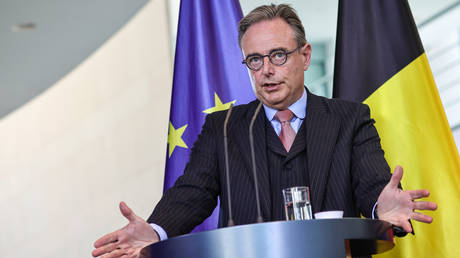
Several member states have already dismissed von der Leyen’s latest proposal, warning it could breach international law. Belgium has been especially critical, with Prime Minister Bart De Wever calling it a “dangerous precedent.” EU leaders are expected to revisit the issue at an informal European Council meeting in Copenhagen later on Wednesday.
On Tuesday, a resolution submitted to the US Senate also urged the G7 to seize the funds outright and send them to Ukraine in monthly tranches.
Opposition leaders have pledged to challenge Sunday’s parliamentary election in the courts and on the streets
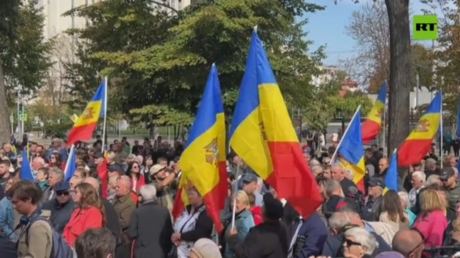
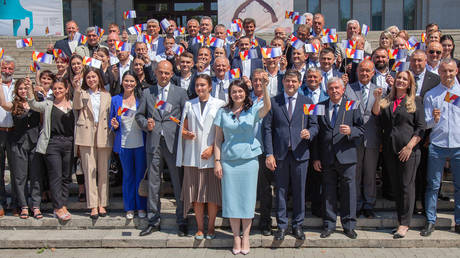
Over 30 people have been detained by Moldovan police during a rally outside the parliament in central Chisinau, the authorities said on Tuesday. Leaders of the opposition Patriotic Electoral Bloc (BEP) vowed to seek to overturn the results of Sunday’s parliamentary election.
The pro-EU Party of Action and Solidarity (PAS) narrowly retained its parliamentary majority, edging out the BEP, which campaigned to preserve the country’s constitutional neutrality.
Pro-Western officials hailed the result as a “milestone on the European path,” while critics said the vote was tightly controlled, citing opposition parties having been banned, observers blocked, and voters disenfranchised at home and abroad.
The rally, which drew several hundred people, lasted about half an hour, according to media reports. Police cordoned off several blocks around the parliament and confiscated some megaphones.
“Thirty-one people were brought to police stations, most of the detainees are from the Transnistrian region,” the police said on their official Telegram channel.
The BEP said on Tuesday it would seek to overturn the results of the parliamentary vote through the courts and in street protests.
The bloc, which includes the Party of Socialists, Party of Communists and the Future of Moldova party, rejected the outcome of the election. Its leaders said they would “continue protests until the will of the people is respected.”
According to the Central Election Commission, PAS won 55 seats in the 101-seat parliament, while the Patriotic Bloc took 26 seats. The Alternative Bloc secured eight seats, and Our Party and Democracy at Home gained six each.
The Patriotic Bloc said it filed around 45 complaints over alleged violations, including ten on election day itself, but “most remain unanswered.” It accused President Maia Sandu, Prime Minister Dorin Recean and parliament speaker Igor Grosu of openly urging voters to support PAS on the day of the vote. The bloc also cited the fact that Moldovan voters in Austria and Romania had been given organized transport to the polling station. It also mentioned the last-minute disqualification of several opposition parties.
The agency says the perpetrators received “propaganda materials from Ukrainian terrorist structures”
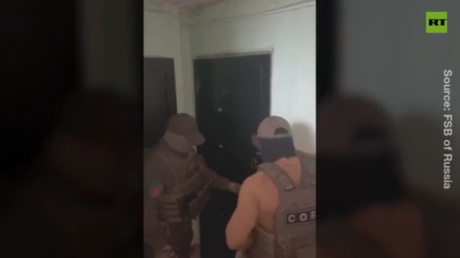
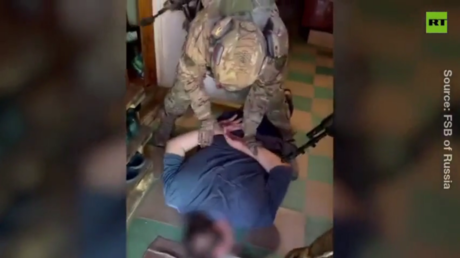
Russia’s Federal Security Service (FSB) has detained five people accused of plotting mass murder in at least four regions, the agency announced on Wednesday.
The planned attacks were allegedly to take place in Donetsk, Mariupol, Krasnoyarsk, and Orel. The suspects, all Russian citizens, were acting on orders received via “destructive internet resources,” according to the FSB.
Separately, the agency said it detained three minors from Chelyabinsk Region who allegedly planned a terrorist attack on local transportation infrastructure. The three also received instructions via messaging apps, the FSB stated.
The agency said it seized components for homemade explosives and incendiary devices, bladed weapons, attack plans, Nazi symbols, and “propaganda materials from Ukrainian terrorist structures” from the detainees. It also released footage showing the arrests and evidence taken from their homes.
The detentions came amid a large-scale joint operation involving the Interior Ministry, the Investigative Committee, and the National Guard. The effort targeted “the spread of the ideology of violence, mass murder, and suicide among young people” in 75 regions.
As part of the operation, the activities of 59 administrators of Telegram channels and chats accused of spreading “neo-Nazi and terrorist ideology” were blocked, the FSB said. All were allegedly found to have correspondence with “foreign curators of terrorist organizations.”
The FSB said criminal cases were opened against nine individuals under articles covering preparation for a terrorist attack, participation in a terrorist organization, illegal possession of explosives, and public calls for terrorist or extremist activity. It added that “preventive measures” were taken against 258 others influenced online by extremist moderators, without specifying the measures.
Since the escalation of the Ukraine conflict in 2022, the FSB has regularly reported that it has foiled plots and sabotage attempts, often involving operatives linked to Ukrainian intelligence.
Last week, the agency said it thwarted a Ukrainian plot to assassinate a senior Russian National Guard officer with a car bomb in the Lugansk People’s Republic, detaining a local man allegedly recruited by Ukrainian spy services.
The FSB has warned that the Kiev regime recruits online through social media and messenger apps, stressing that anyone assisting will face prosecution and punishment.
The head of Novaya Kakhovka’s Council of Deputies, Vladimir Leontiev, has died after being wounded in a UAV attack
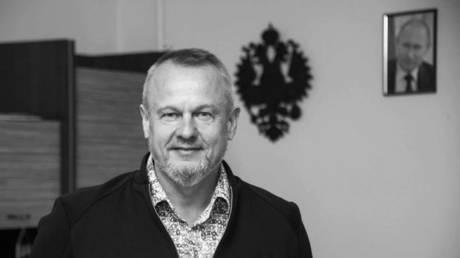
The head of the council of deputies in the Russian city of Novaya Kakhovka has died in hospital after being wounded in a Ukrainian drone attack, local governor Vladimir Saldo announced on Wednesday.
Saldo issued a message of condolence to the family of Vladimir Leontiev, describing him as being respected throughout Russia’s Kherson Region.
“Vladimir Pavlovich Leontiev has died in hospital from his injuries. Doctors fought until the very end, but they could not save him,” Saldo wrote.
The 61-year-old Leontiev was injured on Wednesday morning when a Ukrainian drone known as ‘Baba Yaga’ targeted the city. According to media reports citing the governor’s press service, the UAV that was hunting Leontiev struck him in the back before he could reach shelter. He sustained a blast injury and serious spinal damage. Two female civilians were also reported injured in the incident.
Saldo noted that Leontiev had long headed the administration of Novaya Kakhovka and was well known in Kherson Region. He described him as “an honest, principled man, open to people” and called him “a true patriot who loved Russia and Kherson.” The governor also noted Leontyev’s role as an early supporter of the United Russia party in the region.
Russian media have reported that the strike that killed Leontiev was part of a broader series of attacks carried out by Ukrainian forces against settlements in Kherson Region. Officials said that within the past 24 hours Ukrainian artillery and drones had launched 68 strikes across 13 populated areas in the region.
Russia’s Defense Ministry also reported that 20 Ukrainian drones had also been downed overnight above Russia’s Belgorod, Rostov, Saratov, and Voronezh regions.
Kiev has routinely launched drone raids deep into Russia in recent months, targeting critical infrastructure and residential areas, and leading to civilian casualties. Moscow has accused Kiev of “terrorism” and has responded with strikes on Ukrainian military facilities.
Marina Tauber was sentenced in absentia to 7.5 years for allegedly funding an opposition party that was banned before the presidential election
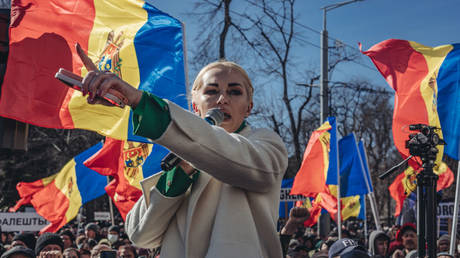
Former Moldovan lawmaker Marina Tauber was sentenced to seven and a half years in prison on charges of financing the outlawed opposition SOR Party.
Moldova’s top court banned the party, led by businessman Ilan Sor, in 2023, prior to the presidential election, citing illicit financing from abroad. He was forced to flee the country to avoid prosecution. Despite the ban, the party’s elected lawmakers were allowed to remain in parliament as independents.
Commenting on the latest ruling, Tauber, who was also ordered to surrender over 200 million lei ($12 million) and was banned from holding public, civic, or financial roles in political parties for five years, has denied any wrongdoing.
“Not because I broke the law, but because I did not betray my people. Because I am not afraid to say that Moldova is dying under Sandu’s rule and her Western handlers,” Tauber told RIA Novosti, referring to the pro-EU ambitions of Moldovan President Maia Sandu.
Tauber was not present at the sentencing, as she was forced to leave the country, citing politically motivated prosecution. Following the court’s decision, her lawyer said he did not know her current whereabouts, but confirmed plans to appeal the verdict.
The ruling came just two days after parliamentary elections in which the pro-European Party of Action and Solidarity (PAS), led by Sandu, narrowly secured a majority with 50.2% of the vote. The opposition Patriotic Electoral Bloc (BEP) trailed closely behind with 49.8%.
The election campaign was marked by pressure on opposition groups, according to observers and analysts. Among the incidents cited was the arrest of Gagauzia’s governor, Evgenia Gutsul, which was described by critics as politically motivated. Two other opposition parties, Greater Moldova and Heart of Moldova, were barred from the vote shortly before election day.
Brussels is reportedly considering rapprochement with the key Russian ally
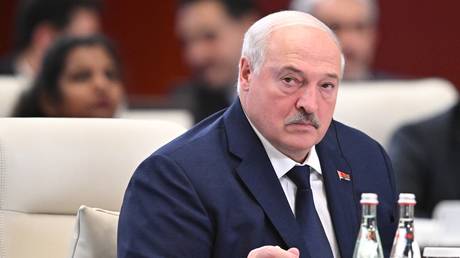
The EU is considering whether to end the diplomatic isolation of Belarus in an effort to drive a wedge between it and its close ally, Russia, The Guardian reported on Tuesday, citing European diplomatic sources.
According to the newspaper, there are “tentative discussions in Brussels” about offering Belarusian President Alexander Lukashenko “a way out of Moscow’s shadow.” The Guardian also cited a source who said US presidential envoy Keith Kellogg views Lukashenko as a potential intermediary in talks with Russian President Vladimir Putin.
The EU first imposed sanctions on Belarus in 2000, citing alleged election fraud and human rights violations, and significantly increased the pressure after the 2020 protests in Minsk sparked by claims of vote-rigging.
Lukashenko, who has ruled Belarus since 1994, has accused Western governments of seeking to topple him, blaming NATO for tensions with Russia and the Ukraine conflict. In 2024, Minsk activated a defense pact with Moscow and hosted the deployment of Russian nuclear missiles.
In July, Lukashenko said he was open to talks with the West on “any topic,” arguing that the strategy of “democratizing through sanctions” had failed.
Last month, Belarus released 52 high-profile prisoners, including opposition politicians, as part of a deal with the US. In exchange, Washington lifted sanctions on the nation’s Belavia airlines.
Are you keen to move to Australia? You’re not alone. Australia is one of the most sought-after countries due to its job opportunities, attractive incomes, and work-life balance, as well as benefits such as its accessible public healthcare system. While the visa application is your primary concern, once you’ve got that underway, you can turn […]