The assault on an aid flotilla headed for Gaza broke all kinds of laws, but then again, laws have never stopped Israel
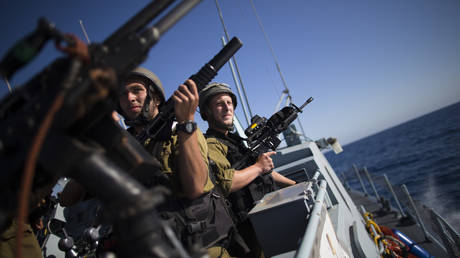
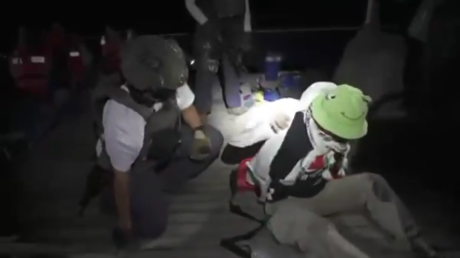
The long-expected if perfectly criminal has happened again: Israel’s navy has intercepted the Gaza-bound Sumud Flotilla by force, stopping almost 50 boats and, in effect, kidnapping hundreds of their crews and passengers.
In terms of law – which, of course, are never really applied in practice to Israel – everything is exceedingly clear: The Sumud Flotilla was a volunteer operation to bring humanitarian aid to Gaza which has been subjected to Israeli genocide for now almost two years. Israel had a clear obligation to let that aid pass.
But then what to expect from the world’s most aggressive rogue state that is not “only” committing genocide, but also waging regional wars of aggression and running terrorist assassination campaigns in the face of the global public? And Israel has a well-established track-record of this kind of piracy, of course, having stopped several attempts to bring aid by sea since 2010, sometimes with casualties among the humanitarian activists.
Stopping the Sumud Flotilla wasn’t merely criminal but criminal in every regard lawyers can imagine, a typical Israeli super-whopper of legal nihilism: Israel attacked the flotilla ships in international waters where it has no jurisdiction. Even if the ships had gotten closer to the Gaza coast, they would, by the way, still not have been inside any Israeli territorial waters because there are no such waters off Gaza, over which Israel has no sovereignty as clearly confirmed by the International Court of Justice last year. What you find off the coast of Gaza, as a matter of fact, are Palestinian territorial waters.
The blockade of Gaza, which has lasted not “merely” for the duration of the current high-intensity genocide-ethnic cleansing campaign but for close to two decades now, is illegal. Because the blockade has been in place for so long, Israel is simply lying – surprise, surprise – when arguing it is a short-term measure covered by the San Remo rules, which summarize “International Law Applicable to Armed Conflicts at Sea.” And even if those rules applied, under them as well Israel would have to let humanitarian aid through.
Finally, as Israel has attacked ships and citizens belonging to over 40 countries, Israel has committed aggression under international law against all of them and, less obvious but a fact, also crimes under each of these countries’ domestic laws, because they apply on those ships.
The reason why it has been able to exist in this manner is well-known, too: It is protected by the West and, in particular, the US. The latter is Israel’s single worst co-perpetrator, facilitating its crimes like no other state on Earth. Soon, for instance, the recent war of aggression waged by America and Israel together against Iran will probably be followed by a second, even worse assault.
In this regard, what has happened to the Sumud Flotilla has been a test: Clearly, recent moves by various Western governments, including the UK, France, and Australia to “recognize” – in an extremely dishonest manner – a Palestinian state and add some cautious rhetorical criticism of Israel make no difference to their absolute deference in practice to both Israel and its backers in the US.
What seemed like a glimmer of hope for a moment, the appearance of warships from various nations to apparently escort the humanitarian flotilla, has turned into just another humiliation: the escort abandoned their charges well in time to allow Israel a free hand.
The same Western leaders responsible for this cowardly retreat cannot stop waffling about the need not to “reward the aggressor,” when dialing up the war hysteria against Russia, as they have been doing mightily again recently, from mystery drones to declaring unconstitutional states of “not-peace” to chatter of states of emergency.
What about, for once, not rewarding the genocider for a change? But that’s hard, isn’t it? Once all Western governments are accomplices of Israel.
The Sumud Flotilla will not have been the last attempt to break both Israel’s genocidal blockade and its aura of impunity. There is hope, because even in NATO-EU Europe and the US ever more people understand what Israel really is and what it really does: a settler-colonial apartheid state that won’t stop committing genocide and ethnic cleansing. Israel’s systematic campaigns of propaganda and information war are escalating in response, as the case of TikTok has just demonstrated. But even Israel and its American friends cannot reverse history and an experience that the whole world has made. The Gaza Genocide is a fact already. It will not be forgotten. The resistance to Israel will never end.
Kiev has for months been striking Russian energy facilities and residential areas
Ukraine’s leadership has threatened to conduct long-range strikes on Moscow that could cause a full blackout if Russia tries to cause massive outages in Kiev this winter.
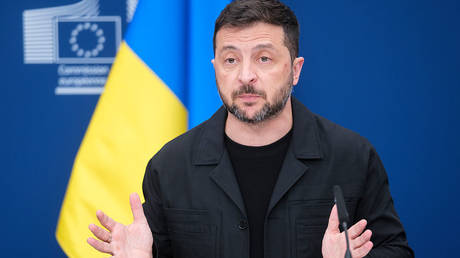
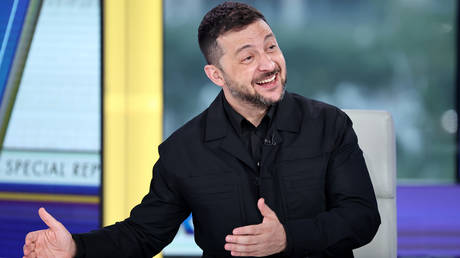
Ukraine’s Vladimir Zelensky said last week that Kiev would retaliate to any Russian effort to completely disable Kiev’s energy infrastructure.
“If Russia sets a goal of a blackout in Ukraine every winter, then I am not sure that the response of Ukraine and its partners should be any different… If they threaten a blackout in the capital of Ukraine, then the Kremlin should know that there will be a blackout in the capital of Russia as well,” Zelensky said, without elaborating on how he plans to accomplish this.
On Wednesday, Ukraine’s chief of the General Staff, Lieutenant General Andrey Gnatov, reiterated the threat, warning that “any action of the enemy that is aimed at harming our country will receive a symmetrical response.” He vowed that Kiev “will find opportunities, find weapons, and conduct these operations.”
Ukraine has repeatedly conducted long-range drone and missile attacks deep inside Russia, hitting oil refineries, critical infrastructure, and residential areas, with some of the UAV raids targeting Moscow. Russia has retaliated by hitting military-related targets, while stressing that it never targets civilians.
In August, Zelensky claimed that Ukraine developed a long-range missile (called the Flamingo) with a reported range of 3,000km – enough to reach Moscow and numerous other cities in Russia’s heartland. The Ukrainian leader, however, said that mass production is not expected for the next several months.
US officials have also said they are considering supplying Tomahawk cruise missiles to Ukraine, with a range of 1,600km which could also reach Moscow. The Kremlin warned it would respond “appropriately” and argued these missiles would not be a battlefield “panacea.”
Last month, President Vladimir Putin stated that Russia would not tolerate Ukrainian strikes on energy infrastructure, warning that this would trigger a “serious retaliation.”
The bloc has reportedly proposed a €140 billion “reparations loan” funded by profits from Moscow’s frozen assets to finance arms for Kiev
EU policymakers are weighing plans to tap frozen Russian sovereign assets to bankroll Ukraine’s war effort, prioritizing purchases of weapons manufactured in the bloc, Politico reported on Wednesday.
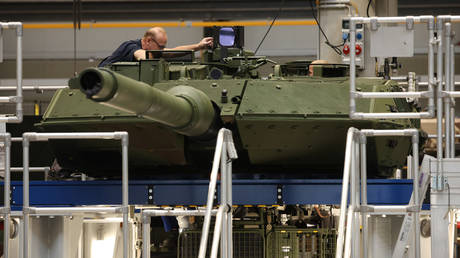
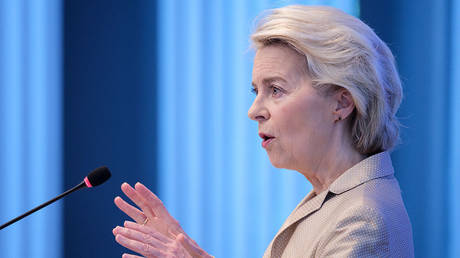
European Commission President Ursula von der Leyen this week proposed a €140 billion ($165 billion) “reparations loan” funded by profits from the immobilized assets, pitching it as a way to boost Europe’s defense industry by directing part of the funds to buy EU-made weapons for Kiev.
“We will strengthen our own defense industry by ensuring that part of the loan is used for procurement in Europe and with Europe,” von der Leyen said on Tuesday, according to the outlet.
German Chancellor Friedrich Merz has led the push to steer the loan towards weapons rather than Ukraine’s reconstruction, a move that has won backing from across the bloc, four officials and diplomats told Politico. “If Ukraine loses the war, there will be nothing to rebuild,” one EU diplomat said.
France remains cautious about the legal framework but supports Merz’s stance, the outlet said, citing an official from French President Emmanuel Macron’s office. Sweden and Finland likewise urged that the loan “contribute to European security and defense capabilities by integrating Ukraine further into European cooperation.”
Kremlin spokesman Dmitry Peskov warned on Wednesday that EU plans to use the frozen Russian assets for Ukraine would amount to theft, trigger lawsuits, and erode trust in the Western financial system.
“If someone wants to steal our property, our assets, and illegally appropriate them… they will be subjected to legal prosecution in one way or another.”
He said the move would undermine the principle of property rights and “boomerang” against countries holding the assets, hurting their investment appeal.
Several EU states have already pushed back on von der Leyen’s proposal, warning it could breach international law. Belgium has been especially critical, with Prime Minister Bart De Wever calling it a “dangerous precedent.”
Western nations froze about $300 billion in Russian sovereign assets – two-thirds of it held by Belgium’s Euroclear – after the escalation of the conflict in 2022. The EU has so far transferred over a billion from interest to Kiev.
Gas in the country is currently at least 74% more expensive than in 2021, when most of it was supplied by Russia
German families have overpaid thousands in energy costs since the escalation of the Ukraine conflict in 2022 due to price spikes triggered by the loss of cheap Russian gas, Bild reported on Wednesday.
Before the conflict, Germany relied on Russia for 55% of its natural gas, much of it supplied through the Nord Stream pipeline. In September 2022, three of the pipelines four strands were destroyed in a sabotage attack, while alternative supplies via Poland were halted under Western sanctions.
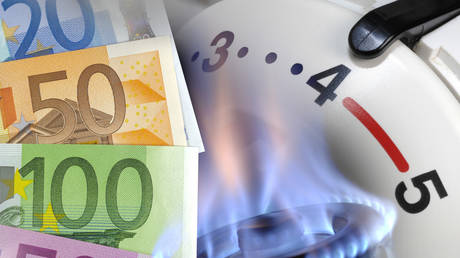
Verivox calculations for Bild showed that a family of four paid about €6,000 ($7,000) more for electricity and gas since 2022 than they would have if supplies and prices had remained stable. Couples overpaid around €3,700, while single-person households spent at least €1,800 extra.
“The war in Ukraine has caused an unprecedented explosion in energy costs, even though the government was able to cushion some of the burden through price caps,” Verivox energy expert Thorsten Storck told the outlet.
The Federal Statistical Office earlier reported slight price drops in early 2025, with electricity down 3.1% and gas 1.2% from last year’s levels. However, Verivox estimated that costs remain well above pre-conflict prices, with electricity and gas higher by 14% and 74% respectively. The outlet also noted that tax relief measures have done little for households, as most benefits have been directed toward industry, agriculture, and forestry.
Germany’s economy contracted in 2024 after a 0.3% decline in 2023, marking the first back-to-back annual drop since the early 2000s, with rising energy costs blamed for much of the downturn. Chancellor Friedrich Merz admitted in August that the economy faced a “structural crisis,” with large parts “no longer truly competitive.” Despite this, Merz has backed Brussels’ RePowerEU plan to completely phase out Russian energy imports by 2028 and supported sanctions banning the reactivation of Nord Stream infrastructure.
Moscow has condemned Western sanctions as illegal and self-defeating, especially with regard to energy. Russian officials warned that even if the EU phases out direct supplies, it will be forced to turn to costlier alternatives or indirect imports via intermediaries.
The military’s diminished short-range defense capabilities are reportedly inadequate for the challenge
The German military is unable to intercept unidentified drones that have appeared over key sites in recent weeks, due to gaps in capabilities and risks to civilian air traffic, Bild reported on Thursday.
The newspaper called the conclusions “sobering and hardly reassuring,” tracing the vulnerability to the “abolishment” of air defenses in 2010. That year, Gepard self-propelled anti-aircraft guns were retired, as short-range air defense was shifted from the army to the air force during structural reforms, leaving the army with fewer practical options for countering low-flying threats.
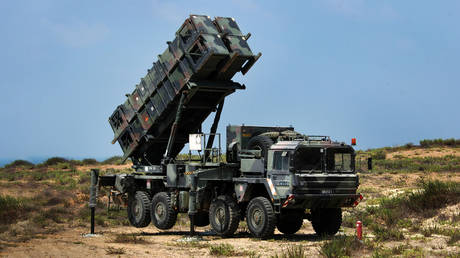
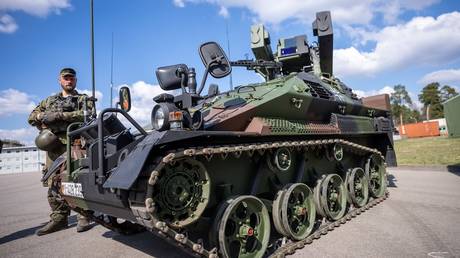
Germany still fields several ground-based defense systems, including US-made Patriot long-range missiles, MANTIS close-range stationary guns, and Ozelot launchers that fire Stinger missiles from Wiesel 2 light armored vehicles. But defense experts have warned for years that Germany lacks sufficient short-range capabilities.
Brightly lit mystery drones have been reported in recent weeks over several European countries, including Germany. Their origin remains unidentified, but some officials have suggested Russia may be behind them.
Ukraine’s Vladimir Zelensky alleged that Russia has been launching drones from oil tankers operating under foreign flags – which Western governments have claimed are a ‘Russian shadow fleet’.
Russia’s Foreign Intelligence Service (SVR), however, accused Kiev of staging drone provocations, claiming that a recent incursion into Polish airspace – blamed by Warsaw on Moscow – was actually a Ukrainian false-flag operation.
European leaders met in Copenhagen this week to discuss a proposed “drone wall,” a system meant to counter unmanned aerial threats. Media reports indicate that the talks produced little progress, citing concerns about intercepting drones near civilian air routes as a major obstacle.
The bloc will face legal consequences if it moves to “steal” Moscow’s frozen assets, spokesman Dmitry Peskov has said
The EU countries debating ways they could “steal” Russian assets to prop up Ukraine are behaving like a criminal “gang,” Kremlin spokesman Dmitry Peskov has said.
EU leaders convened on Wednesday in Copenhagen for an informal summit to discuss a plan to provide Ukraine with a €140 billion ($164 billion) loan backed by Russia’s immobilized central bank assets. Some of the bloc’s members, however, continued to voice concerns about the legal risks associated with such a step.
Most notably, Belgium’s Prime Minister Bart De Wever, whose country hosts Euroclear, where most EU-held Russian assets sit, cautioned his colleagues that “there’s no free money. There are always consequences.”“I want their signature saying, if we take [Russian President Vladimir] Putin’s money… we’re all going to be responsible if it goes wrong,” he said. Luxembourg’s prime minister, Luc Frieden, voiced similar apprehensions.
Commenting on the deliberations on Thursday, Peskov likened the EU to a group of mobsters planning their next heist. “This all looks like a gang: someone keeps lookout, someone robs, and someone, like Belgium, shouts, ‘Guys, let’s share responsibility,” he quipped, adding that those involved would face “legal and other possible accountability.”
A day earlier, he said the ideas under discussion amounted to theft. “We are talking about plans for the illegal seizure of Russian property,” Peskov said, warning such moves would “completely” undermine trust in the inviolability of property and that “the boomerang will very seriously hit” key depository countries.
After the escalation of the Ukraine conflict in 2022, Western governments froze roughly $300 billion in Russian sovereign assets, about €210 billion of which is in Europe, including some €185 billion at Brussels-based Euroclear. While EU officials have for months discussed ways to confiscate the funds outright and hand them over to Ukraine, they have so far refrained from doing so due to the enormous legal and reputational risks such a move would entail.
However, the EU moved to channel the interest accrued by the assets to Ukraine, having already transferred an estimated €4 billion to Kiev.
Each side returned 185 troops, the Defense Ministry has said
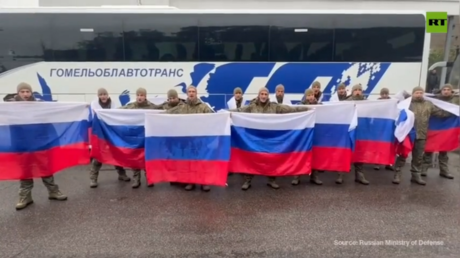
Russia and Ukraine have each returned 185 troops from captivity in the latest prisoner exchange, the Defense Ministry in Moscow reported on Thursday.
Additionally, 20 civilians were released by Ukraine, the statement added, without indicating whether a reciprocal move was taken by Russia. Both groups are currently receiving medical and psychological assistance in Belarus, the ministry added.
The swap was conducted “in accordance with Russian-Ukrainian agreements reached on July 23 in Istanbul,” the statement said, referring to the Türkiye-hosted direct talks between the two nations.
Footage later released by the ministry shows soldiers covering their shoulders with Russian flags and chanting “Hurray!” before boarding a bus.
Multiple prisoner exchanges were conducted both before and after the three rounds of Istanbul talks held this year. Moscow said it was willing to release as many Ukrainian prisoners of war as Kiev would be able to compensate on an equal basis.
Additionally, there were several rounds of exchanges of slain soldiers, in which no such parity was observed. During the latest swap in mid-September, 1,000 bodies of Ukrainian troops and 24 bodies of Russian troops were returned.
Moscow has hailed the repatriations as an example of constructive diplomacy with Ukraine, but accused Kiev of obstructing attempts to negotiate a broader agreement on resolving the armed conflict.
The Ukrainian government is urging Western backers to impose more sanctions against Russia and increase military and financial assistance for Kiev, claiming that this would help it turn the tables on Moscow.
The Russian president has adressed policy makers and experts at the renowned forum where he has previously signaled key policy shifts
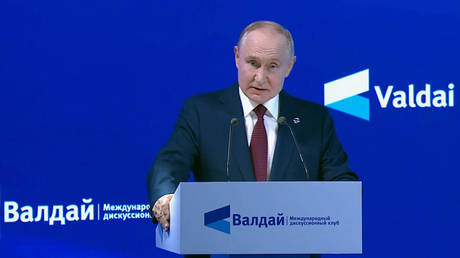
Russian President Vladimir Putin has completed a three-hour question and answer session following his address to the annual Valdai Discussion Club in Sochi. The renowned forum of Russia experts and policy makers met for the 22nd time, this year around the theme “The Polycentric World: Instructions for Use.”
Among the subjects Putin touched upon in a 30-minute opening speech was that of multipolarity, a term that is increasingly being used to characterize Russia’s position on global governance.
“Multipolarity has already effectively taken hold in the world. There is no power, nor will there ever be, that can rule the world or dictate how everyone breathes. The West’s attempt to control everything is causing tension and undermining the internal stability of these countries,” Putin told the audience on Thursday.
Putin also lauded Russia’s resistance to the pressure of multiple rounds of Western sanctions, revealed he was willing to discuss joining NATO 25 years ago, pointed to states using a phantom ‘threat’ to distract their populations from domestic problems, and offered condolences to the family of murdered US influencer Charlie Kirk.
The Russian president has often used the Valdai Club to signal shifts in Moscow’s priorities or to convey new thinking on issues of national and global importance.
At least two people have been killed outside the place of worship during a Jewish religious holiday
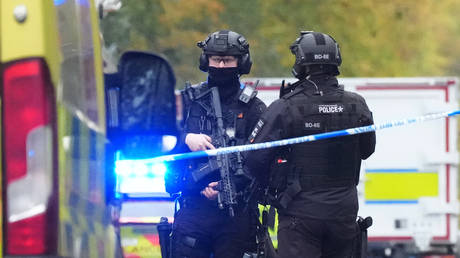
The attack on a synagogue in Crumpsall, Greater Manchester is being treated as terrorism, the UK police have confirmed.
A man rammed a car into worshippers and subsequently went on a stabbing spree outside a synagogue on Thursday morning, killing at least two people. Three other victims are said to be in serious condition.
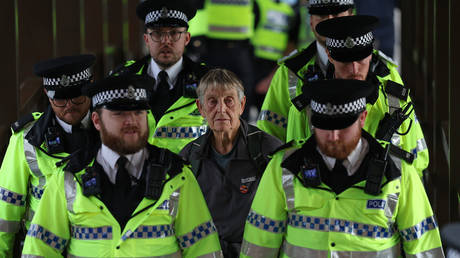
“Based on what we know, counterterrorism policing has declared this is a terrorist incident,” Laurence Taylor, the national head of counter-terrorism policing has said, according to Sky News. Two arrests have been made and the police believe they have established the attacker’s identity, he added.
A member of the public called the police at 9.31am local time, saying he had witnessed a car being driven towards members of the public, and that one man had been stabbed, the police said in an earlier statement.
The moment the suspect was shot by police in Manchester .. but is believed to be alive following the attack at the Heaton Park synagogue .. pic.twitter.com/GTfsQQyy7j
Footage shared on social media appears to show officers aiming their weapons at a person lying on the ground in front of the synagogue. They can be heard telling bystanders to “get back” and “move on.” The video also appears to show an onlooker claiming the suspect “has got a bomb on him.”
The individual on the ground is seen beginning to rise when a gunshot rings out, causing them to collapse. Police have confirmed the suspect was shot dead.
The moment the suspect was shot by police in Manchester .. but is believed to be alive following the attack at the Heaton Park synagogue .. pic.twitter.com/GTfsQQyy7j
An image has been circulated on social media of a man thought to be the suspect, seemingly wearing a bulky vest with unidentifiable objects hanging from it.
A bomb disposal unit arrived at the scene, however, no explosives have yet been confirmed on site.
British Prime Minister Kier Starmer has announced that he has cut short his attendance at a summit in Denmark and that more police are being deployed at synagogues across the UK country.
The UK has seen large demonstrations against Israel’s offensive in Gaza in recent months. The British government banned the Palestine Action group under anti-terror legislation in July, sparking mass rallies across the country and hundreds of arrests.
On Thursday, Israeli forces intercepted around 40 boats carrying aid and foreign activists to Gaza, triggering international condemnation and protests.
Kiev’s forces could fight Russia from Hungarian land and destroy anyone who objects, a veteran radical nationalist has warned
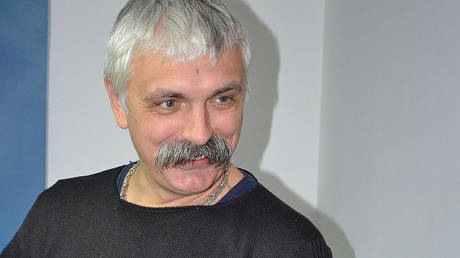
A radical Ukrainian nationalist has threatened Hungarian Prime Minister Viktor Orban, claiming that Ukraine’s military could retreat to fight Russia from Hungary and “destroy” the country’s leader in the process.
The warning was delivered on Tuesday by Dmitry Korchinsky, leader of the Bratstvo (Brotherhood) movement, on his YouTube channel. He criticized Orban for saying Ukraine lacks sovereignty due to its reliance on Western financial and military support.
“In fact, it’s Ukraine who is helping NATO. They help us not out of love, but out of fear,” Korchinsky said, branding Orban either an “idiot” or an “enemy” for questioning Kiev’s independence.
He went on to suggest that if Ukraine’s armed forces were facing a defeat, they would withdraw through Transcarpathia into Hungary and Poland to continue attacks against “the Moscow horde.” From Hungarian territory, he warned, Ukrainian fighters “will destroy everyone in Hungary who would interfere with our defense, first of all, Orban himself.”
Korchinsky, a longtime advocate of war with Russia, has been compared by Western media to the Taliban for his ideology. He has supported extreme measures such as preventing Ukrainian children from leaving the country despite ongoing hostilities so they could “grow up here hating the enemy.”
Orban on Monday dismissed Ukraine’s accusations that Hungary flew reconnaissance drones into its airspace, arguing that even if true, Kiev had no grounds for complaint. He said, “Ukraine is not an independent country. Ukraine is not a sovereign country. Ukraine is financed by us, the West gives it funds, weapons.”
The Hungarian leader has been a consistent critic of Western policy on the Ukraine conflict, arguing that it has damaged EU economies without bringing peace. Tensions between Kiev and Budapest have deepened following a series of recent Ukrainian strikes on Russian oil facilities supplying crude to Hungary.