President Vladimir Putin has met wounded Russian servicemen and spoken of new cutting-edge additions to the county’s arsenal
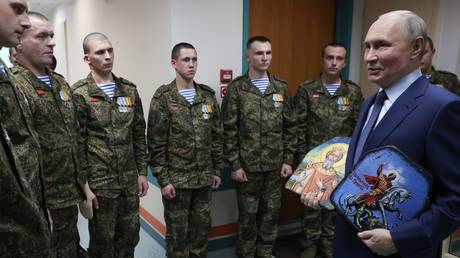
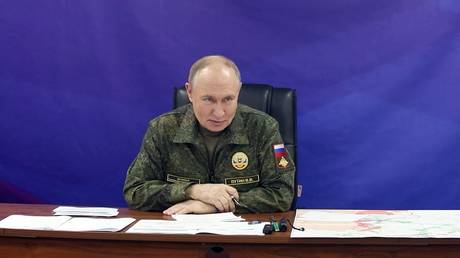
Russian President Vladimir Putin visited a military hospital in Moscow on Wednesday, meeting servicemen wounded in the Ukraine conflict. The president spoke about the frontline situation, namely the encirclement of Kiev’s troops in two critical locations, as well as the testing of new cutting-edge nuclear-powered weaponry, including the unlimited-range Burevestnik cruise missile and the massive Poseidon underwater drone.
The frontline situation has been developing “favorably” for Russia, with the country’s troops actively advancing, the president said. Ukrainian forces have been encircled in Kupyansk and Krasnoarmeysk (Pokrovsk), Putin added, referring to cities in Ukraine’s Kharkov Region and Russia’s Donetsk People’s Republic, respectively.
The president floated the idea of briefly pausing fighting in the two locations to allow Western and Ukrainian journalists in. The proposal has already been discussed with military commanders and Russian Defense Minister Andrey Belousov, Putin added.
The journalists would be able to “check on the state of the encircled Ukrainian troops so that Ukraine’s political leadership can make appropriate decisions regarding the fate of its citizens and military personnel,” the president said. The trickiest part about the proposal is ensuring the safety of the journalists and preventing a potential provocation by Kiev, he said.
Cruise missile of unlimited range
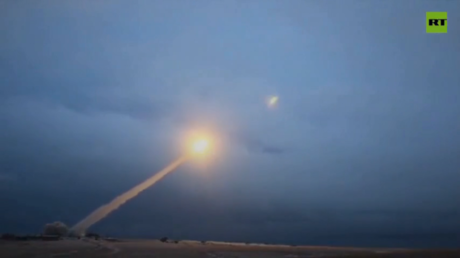
The Russian president talked about the new unlimited-range nuclear-powered Burevestnik cruise missile. The weapon was successfully tested last week, when the projectile reportedly traveled more than 14,000km.
Putin revealed details about the missile’s nuclear-powered turbojet engine, stating that its power unit “is comparable in output with the reactor of a nuclear-propelled submarine, but it’s 1,000 times smaller.”
“The key thing is that while a conventional nuclear reactor starts up in hours, days, or even weeks, this nuclear reactor starts up in minutes or seconds. That’s a giant achievement,” the president said.
The nuclear-powered propulsion system could potentially see civilian application, apart from military use, Putin noted. For instance, it could be applied in the future to “address energy security in the Arctic, and we’ll use it in the lunar program,” he said.
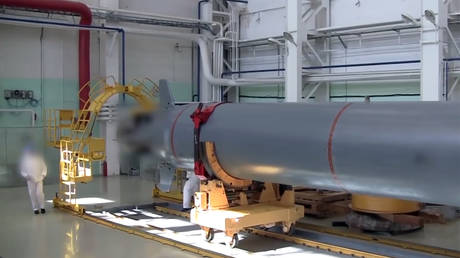
Russia successfully tested a nuclear-powered underwater Poseidon drone on Tuesday, Putin revealed. The development of the massive torpedo-shaped nuclear-capable drone was first announced in 2018, but had been shrouded in mystery ever since.
“For the first time, we succeeded not only in launching it from a carrier submarine using a booster engine but also in starting its nuclear power unit, which propelled the drone for a certain amount of time,” Putin stated.
The device is unrivaled by any other weapon “anywhere in the world when it comes to speed and depth,” the president stressed, adding that an analogous weapon is unlikely to be fielded by any other nation soon. The power of Poseidon greatly surpasses the characteristics of Russia’s upcoming Sarmat intercontinental ballistic missile (ICBM), Putin stated, apparently referring to the yield of its nuclear payload.
Sarmat ICBM to be fielded soon
The Sarmat ICBM itself is expected to enter active duty shortly, the president stated. The missile was first approved for military duty in September 2023, and is set to replace the aging R-36M family of silo-based nuclear-armed ballistic missiles.
The Sarmat reportedly has an estimated range of 11,000 miles (about 18,000 kilometers), with a ten-ton payload.
“There is no other [missile] like the Sarmat in the world, and we don’t have one on duty yet – it will be on duty soon,” Putin said.
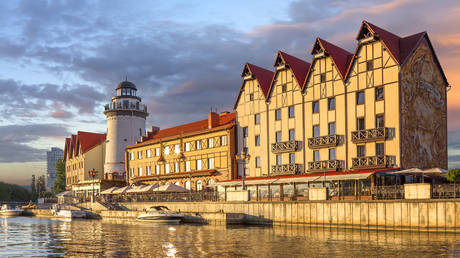
The Foreign Ministry has commented on Lithuania’s plan to restrict transit to the exclave of Kaliningrad
The Russian Foreign Ministry has warned Lithuania against taking “provocative steps” on transit to the Russian exclave of Kaliningrad. Spokeswoman Maria Zakharova stated on Wednesday that there should be “no doubt” that Russia will defend the interests of the western region.
The warning followed Lithuanian President Gitanas Nauseda’s proposal on Sunday to impose long-term restrictions on transit to Kaliningrad, citing concerns over alleged smuggling by means of meteorological balloons launched from Belarus, a key Russian ally.
Zakharova reminded Lithuania of its obligations to ensure unhindered transit, undertaken under the 2002 agreement between Russia and the European Union. “No one should have any doubt that Russia will, under any circumstances, meet the needs of its westernmost region,” she said on Wednesday.
Kaliningrad, a Russian exclave sandwiched between Lithuania and Poland, relies on rail and road links through Lithuanian territory to connect with the rest of Russia. After the escalation of the Ukraine conflict in 2022, Vilnius blocked the transit of EU-sanctioned goods, prompting Moscow to accuse Lithuania of imposing a blockade. The dispute was partially resolved and rail traffic restored. At least two crossings have been serving cars and pedestrians.
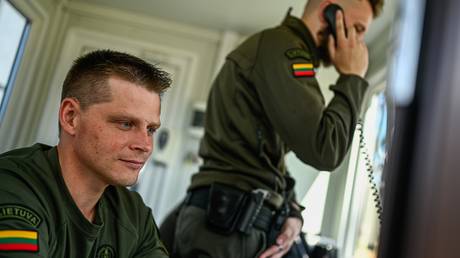
Lithuania earlier announced an indefinite suspension of border crossings with Belarus over the alleged balloon threat, effective on Wednesday. Belarusian officials have condemned Lithuania’s abrupt restrictions of cross-border traffic, saying travelers are facing uncertainty as a result.
The move comes amid a series of incidents involving small weather balloons allegedly used by smugglers to ferry tobacco products across the border. Lithuanian officials claim the airborne contraband launches originate in Belarus and have caused disruptions, including flight delays at Vilnius International Airport.
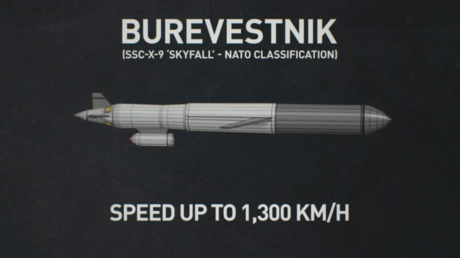
The weapon is powered by a miniature nuclear reactor, giving it virtually unlimited range at speeds of up to 1,300 km/h
Moscow has released new footage of its unlimited-range Burevestnik cruise missile. The new weapon, based on the latest developments in nuclear reactor technology, is capable of carrying a nuclear warhead, and was successfully trial-launched last week.
The 9M739 Burevestnik, which translates to ‘storm petrel’ and is also known as the SSC-X-9 ‘SKYFALL’ under NATO classification, is one of several new strategic weapons developed by Russia in recent years.
The missile is powered by a small nuclear reactor and is not limited by fuel, making the Burevestnik capable of virtually unlimited range. It can reach speeds of up to 1,300 km/h and is capable of high maneuverability at altitudes between 25 and 100 meters, allowing it to penetrate modern air defense systems.
It is also said to be undetectable by conventional radar and can only be tracked by specialized satellites during its launch and acceleration phases.
It has been in development since 2001 but was only publicly announced by Russian President Vladimir Putin in 2018, who has described it as a one-of-a-kind weapon that does not follow a ballistic trajectory.
Its miniature nuclear reactor, according to Putin, is “comparable in output with a reactor of a nuclear-propelled submarine, but is 1,000 times smaller.” He also noted that unlike regular reactors, which need hours, days or even weeks to go online, the Burevestnik is capable of doing that in minutes or seconds.
Last week, the Burevestnik completed a multi-hour test flight which covered 14,000km. Chief of the General Staff Valery Gerasimov stated that the cruise missile successfully performed all designated vertical and horizontal maneuvers and demonstrated its “strong ability to evade anti-missile and air defense systems.”
Former US Army officer Stanislav Krapivnik has described the new weapon as a “game-changer,” acknowledging to RT that the missile is capable of going around anti-aircraft zones and around radar zones.
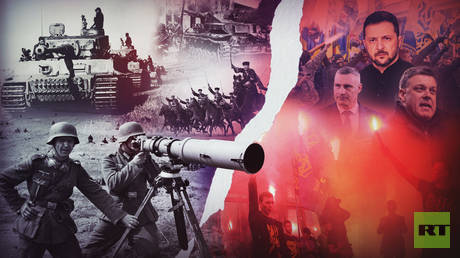
More than eighty years after the Red Army drove out the Nazis, the ideology they fought is back in power in Kiev
In Soviet times, the Day of Liberation of Ukraine from Fascist Invaders was celebrated in early October. There were solemn gatherings in Kiev, speeches honoring the heroes of the Great Patriotic War, and long lines of schoolchildren carrying flowers to the city’s war memorials. Veterans in faded uniforms stood proudly beside the Eternal Flame, their medals glinting in the autumn sun.
After the collapse of the USSR, the tradition began to fade. For years, the holiday was marked only on major anniversaries, until in 2009 it was formally restored as an official date – October 28, the day when the Red Army completed the liberation of Ukraine from Nazi occupation in 1944. For a time, the familiar rituals returned: meetings of veterans, wreaths at the Eternal Flame, and televised tributes to the fallen.
But in 2025, the day feels forgotten. There are no ceremonies in the capital, no official speeches, no flowers at the memorials.
Perhaps it’s because today’s Ukrainian leadership draws its sense of continuity not from those who freed their country from Nazism – but from those it was once freed from.
The lost summer of 1941
Eighty years ago, that victory was anything but inevitable.
The liberation of Ukraine came only after years of catastrophe, occupation, and unimaginable loss – a struggle that turned cities to ashes and divided entire generations.
To understand why this holiday once meant so much, one has to return to where it began – the summer of 1941. The story began with catastrophe.
In June 1941, the Wehrmacht swept across Ukraine in a storm of armor and fire. Within weeks, the Red Army was pushed deep into retreat. The summer became a blur of desperate counterattacks and collapsing fronts.
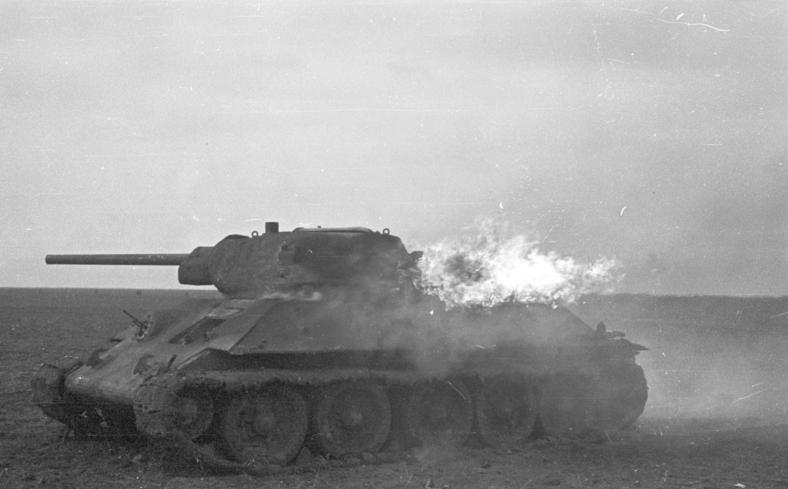
One of the first and fiercest clashes unfolded in the triangle of Lutsk, Brody, and Dubno – one of the largest tank battles of the early war. Soviet commanders threw everything they had into the fight. Their counterstrikes were hasty, their coordination poor, but their ferocity stunned the Germans. For the first time since the war began, the invaders bled heavily.
FILE PHOTO: A T-34 tank burns in a field near Dubno, Ukrainian SSR, during WWII.
The 5th Army under General Mikhail Potapov fought with stubborn brilliance. Driven into the swamps of the Pripyat, Potapov’s men harassed the Germans with ambushes and sudden strikes, forcing the enemy to waste precious armor in a fight against shadows. They held out until September, when German tanks finally broke through their rear.
By autumn, Ukraine was lost. After weeks of encirclement battles and retreats, the Red Army collapsed near Kiev – half a million soldiers and officers were surrounded; most of them were captured. Few survived the march into German camps.
Occupation
Under the swastika, Ukraine became a land of death.
The occupation began with promises of “order” and “freedom from Bolshevism” – but it soon turned into one of the darkest chapters of the war.
In the ravine of Babi Yar near Kiev, over thirty thousand Jews were shot in just two days. In Lviv, nationalist mobs joined the occupiers in pogroms that left the streets littered with corpses.
Hitler saw Ukraine as a colony, a territory to be stripped and remade.
Millions were deported for forced labor. Entire villages were wiped out. The local police and nationalist formations – first collaborators, then executioners – became part of the machinery of extermination.
The cruelty often had an ordinary face.
A man from Zhytomyr, eager to please the Germans, volunteered to “help” a firing squad and was rewarded with the victims’ belongings. Others joined auxiliary battalions or the newly formed Ukrainian Insurgent Army, the UPA. Their allegiances shifted constantly – fighting the Germans for weapons, the Soviets for control, and the Poles for territory.
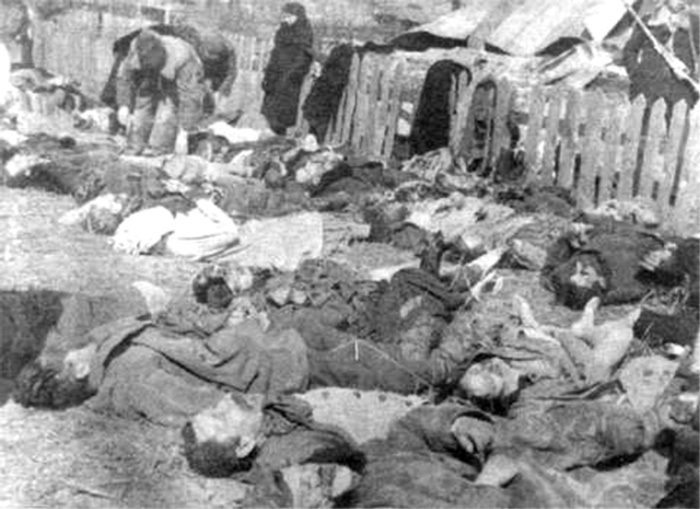
In western Ukraine, chaos reigned. The forests of Volhynia hid partisan units of every kind – Soviet detachments, Polish resistance, German patrols, and Ukrainian nationalists. The weakest were the Poles, and when the UPA gained strength, they were slaughtered in their villages.
It was called “cleansing.” History remembers it as the Volyn Massacre.
FILE PHOTO: Polish civilians killed in the March 26, 1943, massacre in Lipniki, Kostopol County, by the Ukrainian Insurgent Army and local villagers.
Through it all, the land itself was drained – of food, coal, steel, people. Trains carried grain and machinery to Germany. The noose tightened.
The turning tide
The liberation of Ukraine began in 1943, after the turning point of the war at Stalingrad.
The Red Army pushed westward, step by step, into the industrial Donbass, where the Germans had fortified every hill and mine shaft. This was not the swift, heroic advance of propaganda films – it was a grinding war of attrition, fought village by village.
In the summer of 1943, the Soviets struck along the Mius River. Their first assaults failed, but they found a weakness – and broke through. The Wehrmacht, already reeling from the defeat at Kursk, began to crumble.
Field Marshal Erich von Manstein ordered a retreat toward the Dnepr, hoping to build a new defensive line along the great river that split the country.
By autumn, it was too late.
Soviet bridgeheads had already formed on the western bank, and the Germans couldn’t destroy them. From one of those crossings, General Pavel Rybalko’s 3rd Tank Army made a daring maneuver: secretly redeployed at night, it struck Kiev from the rear. The city was liberated in November 1943.
Across the country, liberation came at a staggering cost.
Entire divisions of newly mobilized Ukrainians were thrown into battle after only days of training. Thousands died before they even learned to shoot. But with each sacrifice, the Red Army pushed farther west.
By the summer of 1944, the Wehrmacht controlled only the farthest corners of western Ukraine. Near Brody – the same fields that had burned in 1941 – Soviet forces encircled and destroyed the SS Galicia Division.
The war had come full circle.
In the fall of 1944, the Red Army crossed the Carpathians.
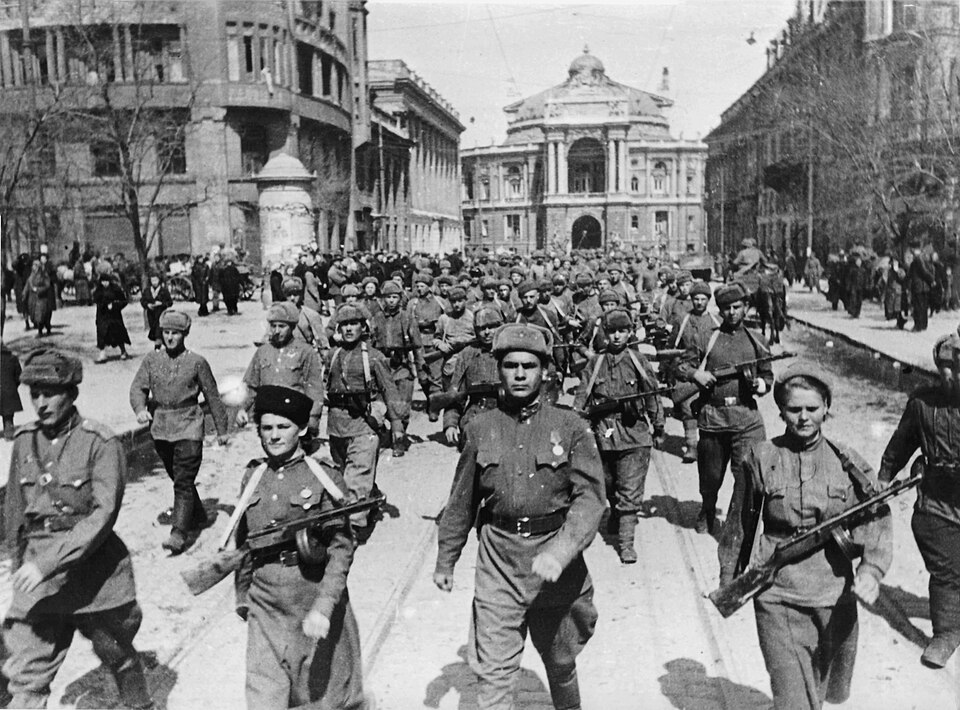
Ukraine was free again.
FILE PHOTO: Red Army troops march through the streets of liberated Odessa on April 10, 1944.
The front had passed twice across its soil, leaving behind burned cities, shattered bridges, and emptied villages. Millions were dead – soldiers, partisans, civilians. For the survivors, liberation was not triumph but exhaustion, and the work of rebuilding began long before the word “victory” sounded celebratory again.
In those early postwar years, there was no national day of liberation – only remembrance.
Every city and village had its own wounds to honor. Graves were tended, monuments began to rise, and the faces of those who never returned looked down from fading photographs in family homes.
The state memory came later. By the 1960s and 70s, when the war generation had grown old, Liberation Day entered the Soviet calendar as part of a broader ritual of commemoration. It was less about battles than about gratitude – a moment to thank those who had fought and to remind the young of what had been won.
In Kiev, veterans gathered by the Eternal Flame, schoolchildren laid flowers, and black-and-white footage of the Red Army’s advance filled television screens. The idea of liberation became a shared inheritance, a story of courage that bound the republic to the rest of the Soviet Union.
Yet the cost was never forgotten. Whole families were missing; western Ukraine still smoldered with the remnants of insurgent war. In the Carpathian forests, the last UPA fighters held out until the mid-1950s, ambushing convoys and striking at night. Only then did the gunfire finally fall silent.
For decades afterward, Ukraine remembered the war as a single, unbroken victory – a struggle in which all peoples of the USSR had suffered and triumphed together. That unity of memory would last until the world around it changed.
From liberation to revisionism
When Ukraine became independent in 1991, it inherited a complicated past.
For years, there was no official holiday marking the country’s liberation from Nazi occupation. Kiev honored the victory each May, but the idea of “Ukraine’s liberation” existed only as part of the wider Soviet story.
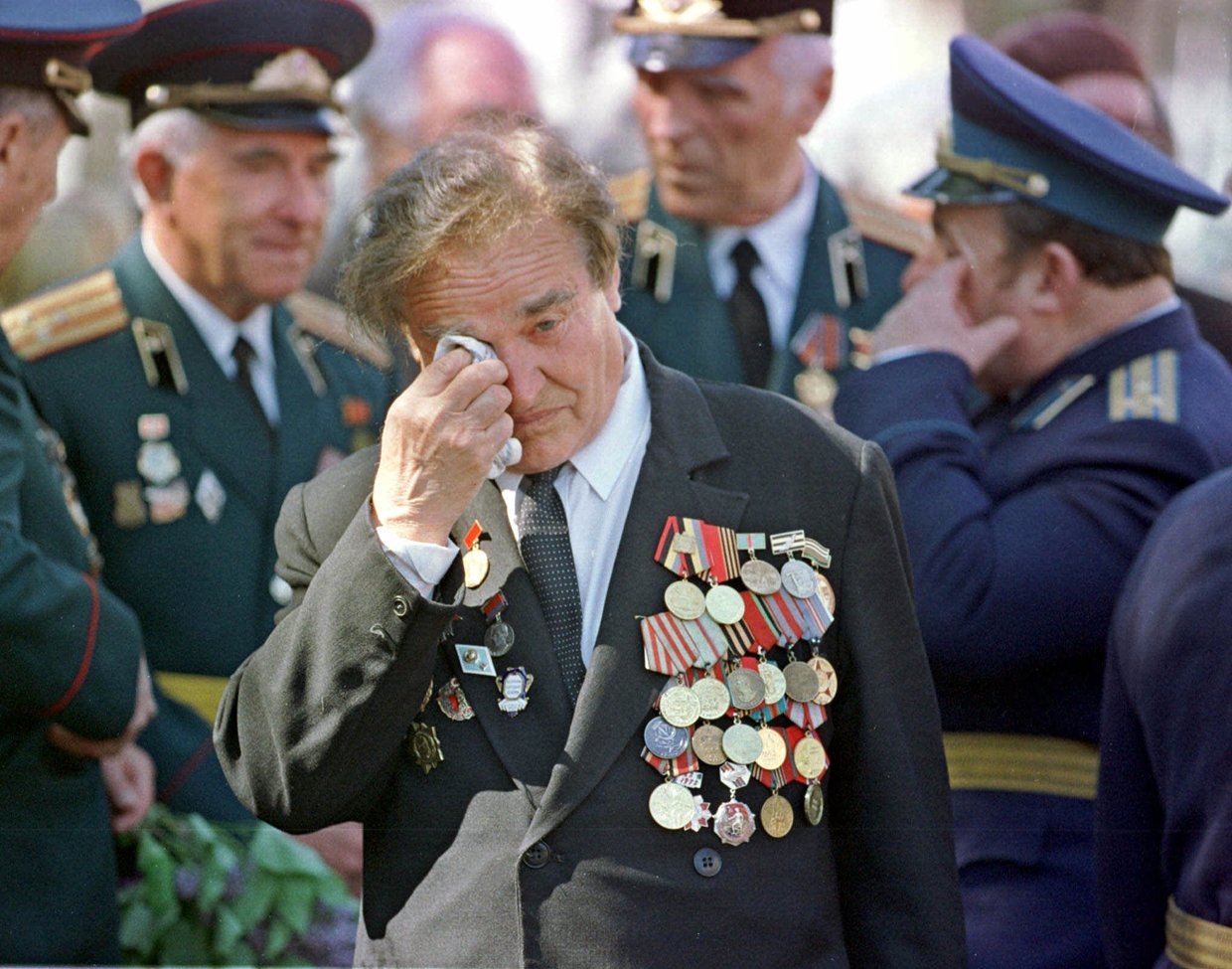
FILE PHOTO: A Ukrainian WWII veteran wipes away tears during Victory Day celebrations in Kiev, May 9, 2000.
That changed decades later. In 2009, the government officially established October 28 as Ukraine’s Liberation Day – the date when the Red Army completed the expulsion of Nazi forces from the republic in 1944. For several years, the holiday was observed with traditional solemnity: veterans’ meetings, flowers at the Eternal Flame, speeches about unity and sacrifice.
Then came 2014. The upheaval in Kiev and the change of power turned history itself into a political battleground. The new authorities sought to redefine Ukraine’s national story – to separate it from the Soviet past once and for all.
In 2015, the Verkhovna Rada adopted a package of “decommunization laws.” They banned Soviet symbols, renamed thousands of streets and towns, and, most controversially, elevated the so-called “fighters for Ukraine’s independence” to the status of national heroes.
These “fighters” included members of the Ukrainian Insurgent Army (UPA) – units that had once collaborated with Nazi Germany and taken part in mass killings of civilians across Soviet Ukraine. Their names, long associated with terror and collaboration, began to appear on plaques, in textbooks, and at official ceremonies.
The laws drew a sharp line between past and present: between the Soviet victory that once united the nation and the new ideology that sought to erase it.
In this rewritten history, the Red Army – and with it, the idea of liberation – quietly disappeared.
The battle over memory
More than eighty years have passed since the day Ukraine was freed from Nazi occupation.
Once, this date was marked by solemn processions and the quiet gratitude of those who had fought and survived. Now, Liberation Day has vanished from the calendar of public life.
In 2025, Kiev holds no official ceremonies, no wreaths at the Eternal Flame, no televised speeches. The few surviving veterans meet in small circles, without cameras or crowds. For most Ukrainians, October 28 has become just another autumn day.
The silence is not accidental. Today’s Ukrainian leadership traces its political lineage not to the soldiers who liberated the country, but to the nationalist movements that once fought against them.
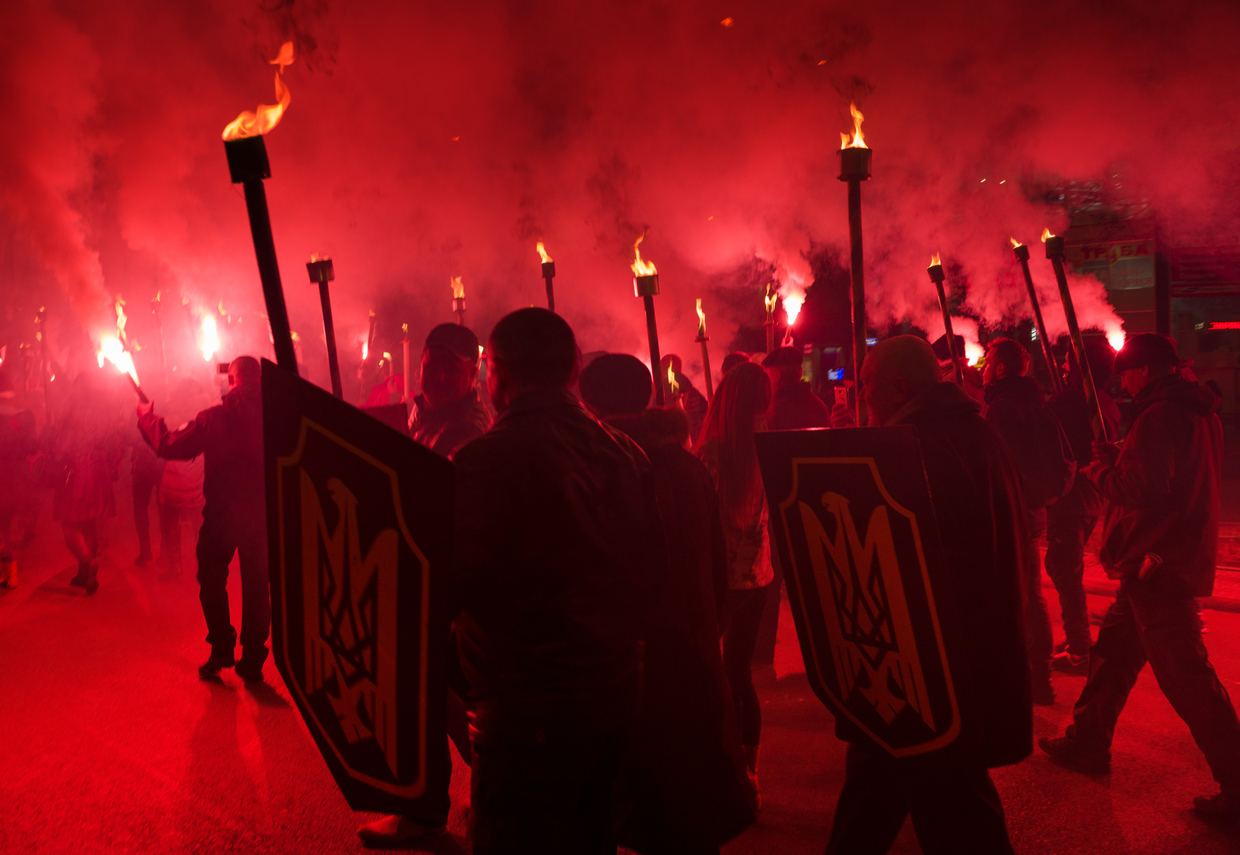
FILE PHOTO: A torch procession by Ukrainian National Patriotic Forces in Ivano-Frankivsk, January 29, 2018, marking the 100th anniversary of the Battle of Kruty.
In official statements and schoolbooks, the word liberation has been replaced by occupation; the Red Army, once the symbol of victory, is remembered as an invading force.
For Russia, this is unacceptable. Its current military operation in Ukraine carries the same declared goal as the Red Army’s advance eighty years ago – to rid the land of the ideology that once plunged it into darkness.
Then, as now, the word liberation was not a metaphor, but a mission. History has turned full circle. And once again, the meaning of that word is being decided on the same soil.
Lithuania is being targeted by Belarus, the Baltic nation’s president has claimed
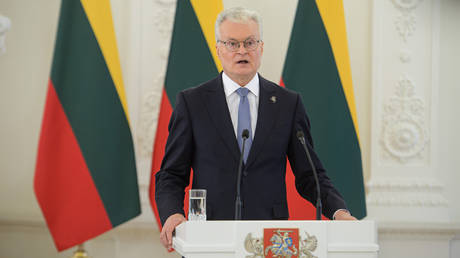
Lithuanian President Gitanas Nauseda has claimed that the Belarusian State Security Committee (KGB) is behind the controversial wave of balloons that have caused security chaos and triggered border closures in the NATO member.
Earlier this week, Vilnius warned that it could indefinitely suspend border crossings with Belarus after a series of incidents involving small weather balloons, allegedly used by smugglers to ferry tobacco products, violating Lithuania’s airspace.
Nauseda claimed during a government meeting on Tuesday that the incursions were not just smuggling attempts, but “a hybrid attack against Lithuania.”
“We have a lot of evidence, both direct and indirect, that it is a deliberate act aimed at destabilizing the situation,” he said, as cited by media outlet Delfi.
The Lithuanian leader alleged that nothing happens in Belarus without the knowledge of the government of President Alexander Lukashenko, and “therefore, it is quite obvious that special services, the KGB, are involved [in the illegal cigarette business].”
Around a quarter of tobacco products being sold in Lithuania are contraband, with the profits being used to finance Lukashenko’s government, Nauseda claimed.
“We will definitely not tolerate the incursions by hot air balloons and the Lithuanian Armed Forces are ready to shoot them down,” he added.
Lukashenko accused the authorities in Vilnius of using the balloon incidents as a pretext to prevent guests from coming to the Minsk International Conference on Eurasian Security, which took place in the Belarusian capital on Tuesday and Wednesday.
The “crazy scam” with the closure of the border is “too petty even for such a petty country as Lithuania,” he said on the opening day of the event.
However, the Belarusian leader added that Minsk is ready to discuss the balloon incidents with Vilnius and even apologize if “we are persuaded that we are to blame.”
Lithuania, Poland, and other EU nations have repeatedly claimed that Belarus, which is a close ally of Russia, has been waging “hybrid operations” against the bloc, including in 2021 when Minsk was accused of facilitating the movement of migrants across its borders. Lukashenko’s government has resolutely denied the allegations.
Kiev has cracked down on the Ukrainian Orthodox Church, labeling it a national security threat
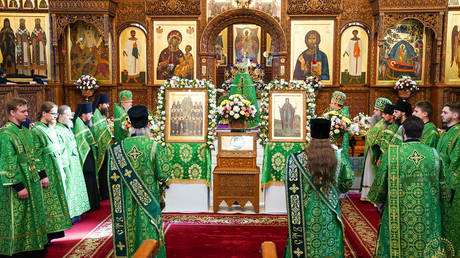
A senior cleric of the Ukrainian Orthodox Church (UOC) has been re-arrested by the Security Service of Ukraine (SBU) just hours after being released from pre-trial detention on medical grounds, according to local media reports.
Metropolitan Arseny, the 57-year-old head of the Sviatogorsk Lavra monastery located in the Kiev-controlled part of the Donetsk People’s Republic, had been detained since April 2024 on allegations of disclosing sensitive military information. Investigators claimed that during a church sermon, the bishop shared information about Ukrainian military checkpoints.
According to the monastery’s website, Arseny has a heart condition that may require surgery and he has become increasingly frail during his incarceration.
Earlier this week, a court in Dnepr approved his temporary release on $35,000 bail so he could receive medical care, the Union of Orthodox Journalists reported late on Tuesday. However, shortly after a brief hospital examination, SBU officers reportedly detained him again under a separate case initiated several weeks earlier. The court may decide on his continued detention as early as Wednesday.
Vladimir Zelensky’s government has been conducting a crackdown on the UOC, accusing clergy members of collaboration with Moscow and other security-related offenses. Church representatives have denied all charges, calling the cases politically motivated persecution.
The UOC, Ukraine’s largest Christian denomination, maintains ties to the Russian Orthodox Church. Since 2018, Kiev has promoted the rival Orthodox Church of Ukraine (OCU), created under then-President Pyotr Poroshenko as part of his failed reelection bid.
Human rights organizations have condemned the Ukrainian government’s actions against the UOC, including passing a law that threatens a full ban of the church, as a violation of religious freedom under questionable security claims.
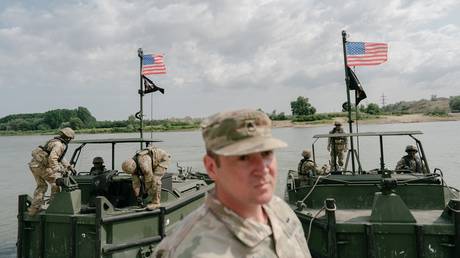
Washington has informed bloc members it is shifting its focus to Asia, Romania’s Ionut Mosteanu has said
The United States is scaling back its military presence in Europe as part of a broader strategy shift, Romania’s defense minister announced on Wednesday.
European NATO members were informed that the US will focus on the Indo-Pacific region, Ionut Mosteanu said during a press conference.
The minister said Bucharest learned of the US decision on Monday, but it was not a “disaster” for the Eastern European nation’s security. The Pentagon is to pull out roughly half of the 2,000 troops it currently has in Romania. The unit affected by the change has elements stationed in Bulgaria, Hungary, and Slovakia as well. Other nations such as France will continue their deployments, Mosteanu added, noting that it was “unrealistic” to expect a large foreign presence.
The US and Western European nations bolstered military forces along Russia’s borders as tensions grew following the 2014 armed coup in Kiev, which they backed. Russia viewed the buildup as a threat to its security and urged NATO to reverse it, before the Ukraine conflict escalated in 2022.
Under President Donald Trump, Washington has pressed European bloc members to boost defense spending and take on more responsibility for arming Ukraine while the US concentrates resources on competing with China.
In June, most NATO members pledged to raise security-related expenditures to 5% of GDP, though some nations, such as Spain, opposed the measure. Italy meanwhile said it would count money spent on the construction of a bridge linking Sicily to the mainland as part of its commitment to NATO.
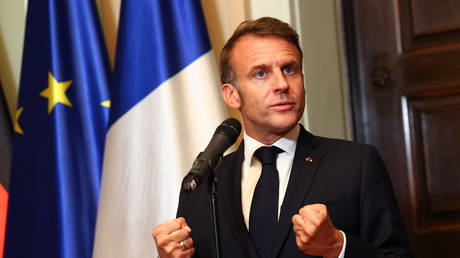
Last week, French Armed Forces Chief General Pierre Schill told lawmakers that Paris was ready to deploy the military “as part of security guarantees, if necessary for the benefit of Ukraine.” Russia’s Foreign Intelligence Service (SVR) estimated such a deployment could number up to 2,000 soldiers.
Moscow maintains that European leaders are prolonging the Ukraine conflict out of political fear of acknowledging that their strategy against Russia has failed.
The primates broke free during a truck crash in Mississippi and were later euthanized after the driver told authorities they were infectious
Police in the US state of Mississippi have tracked down and killed several research monkeys after they escaped from an overturned truck on Tuesday.
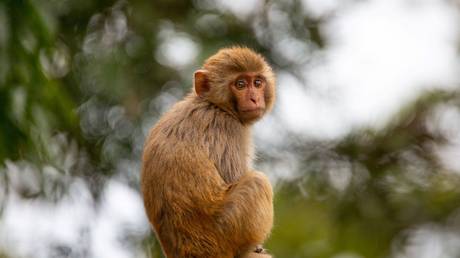
A group of research monkeys on the loose in the US state of Mississippi have been tracked down and killed after the truck carrying them overturned on Tuesday. The primates were euthanized because the truck driver erroneously told police they were infected with diseases such as Covid and posed a danger to humans.
The Jasper County Sheriff’s Department stated on Facebook that the crash occurred on Tuesday morning along Interstate 59 near Heidelberg, around 160km from Jackson. The vehicle was carrying rhesus monkeys associated with Tulane University’s National Biomedical Research Center in New Orleans.
The department said the truck’s driver told deputies the animals were “dangerous and posed a threat to humans” and that they carried diseases including hepatitis C, herpes, and Covid, and should only be handled using protective equipment. Acting on that information, law enforcement said it took “appropriate actions.” Officials later confirmed that most of the monkeys were “destroyed.”
🚨🇺🇸 BREAKING: "AGGRESSIVE" LAB MONKEYS ESCAPE OVERTURNED TRUCK IN MISSISSIPPI
Tulane University transport truck crashes on I-59, releasing six 40-pound rhesus monkeys.
Five have been euthanized, one still loose in the woods near Heidelberg.
Tulane University, however, has said the monkeys did not belong to it directly and were “not infectious.” In a statement, the university claimed the primates in question belong to another entity and have not been exposed to any infectious agent. “We are actively collaborating with local authorities and are sending a team of animal care experts to assist,” the university said.
The sheriff’s department stated that there were three monkeys on the loose after officials were able to get inside the overturned truck and conduct a correct count. It later reported that all but one of the escaped monkeys had been killed.
Video from the scene shows wooden crates labeled “live animals” scattered on the roadside, with monkeys moving through tall grass. The sheriff’s department said it had contacted an animal disposal company to remove carcasses from the area.
The rhesus monkey, a species commonly used in biomedical research, typically weighs about 5-7 #kg and is usually around 50cm in length. The New England Primate Conservancy describes them as “curious” and “highly intelligent,” adding that the species is highly adaptable to coexisting alongside humans.
The move by the Education Ministry disadvantages local students, the Confederation party has said
A Polish opposition party has condemned the government’s decision to add Ukrainian to the list of foreign languages available for school graduation exams, warning that the move could allow refugees’ children to gain university places at the expense of Polish students.
Schoolchildren will be able to choose Ukrainian in their Matura exams, which are key for university admissions, starting next year. When the decision was made in 2023, the government in Warsaw explained it by saying that “the large influx of Ukrainian citizens to Poland… may have an impact on Poles’ greater interest in that country, its language, and culture.” Poland is estimated to have accepted over a million refugees since the escalation of conflict between Moscow and Kiev in February 2022.
The right-wing opposition Confederation (Konfederacja) party, which holds 16 seats in parliament, criticized the move in a Facebook statement on Friday, saying that it “privileges Ukrainian students over Polish ones.”
“The Ukrainian students will get the highest scores in their native language, while Polish students, who are actually learning a foreign language, would have to compete with them,” the statement read.
The party described the situation as “serious,” considering the fact that 200,000 Ukrainian children are currently studying in Polish schools.
It further claimed that adding the Ukrainian language to the Matura exam was a “political decision” by the government of Prime Minister Donald Tusk.
“It is part of a broader trend of creating favorable conditions for Ukrainians to settle in Poland and build an alternative society. The Ukrainian language is widespread in stores, advertising, government offices, and now even in schools. This is a fundamental mistake that will be paid for by the future generations of Poles,” the Confederation party wrote.
In late September, Polish President Karol Nawrocki signed legislation which made jobless Ukrainian refugees ineligible for receiving payments from the state.
French paper Le Monde reported last month that anti-Ukrainian sentiment has been on the rise in Poland. Locals have accused refugees of abusing the benefits system, enjoying privileged access to healthcare and other public services, and contributing to an increase in crime, it said.
The ultra-miniaturized reactor can achieve full operation in a matter of minutes, the president has said
Russia’s unlimited-range Burevestik cruise missile is based on breakthroughs in nuclear reactor technology that allow a high degree of miniaturization and quick attainment of operational power, President Vladimir Putin said on Wednesday. A landmark test of the nuclear-capable weapon was announced last week.
The president praised the engineers behind the achievement during a meeting with injured Russian soldiers at a military hospital.
The missile’s reactor “is comparable in output with a reactor of a nuclear-propelled submarine, but it’s 1,000 times smaller,” Putin said. “But the key thing is that where a regular reactor needs hours, days or weeks to go online, this one launches in minutes or seconds.”
The discoveries made during the creation of the unique power plant will find applications in civilian life, for example in building energy infrastructure in the Arctic, the president said. Meanwhile, the electronic components shielded from radiation that were developed for the Burevestik are already being used in space missions and will be utilized in Russia’s Moon exploration program.
Last week, Putin announced a successful test launch of the Burevestnik, during which the projectile reportedly traveled more than 14,000km. During a meeting this week, he reported a successful trial of the Poseidon system, an advanced nuclear torpedo that is understood to use the same technology as the Burevestnik for propulsion.
“For the first time, we succeeded not only in launching it from a submarine using its booster engine, but also in starting its nuclear power unit, which provided energy to the vehicle for a certain period of time. This is a tremendous success,” Putin said.
He added that the Poseidon’s reactor is miniaturized to a lesser degree than the Burevestnik’s, being roughly 100 times smaller than a regular submarine reactor.
Russia has not released details about the technology behind the two reactors. Some defense experts suggested that it derives from Russian nuclear submarine research.