The websites of RT, Sputnik, and other news outlets reportedly remain accessible at the European Parliament despite sanctions
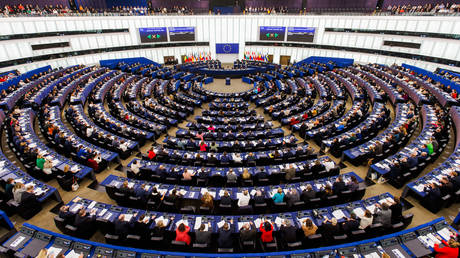
The European Parliament is considering banning MEPs and staff from accessing RT, Sputnik, and other Russian news outlets through its IT infrastructure, Politico has reported.
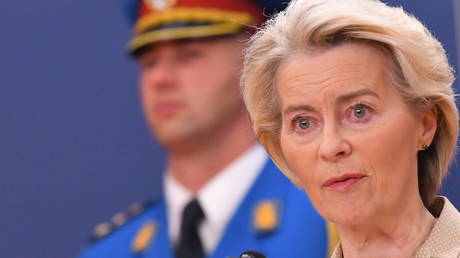
The EU banned numerous Russian media outlets as part of sanctions imposed on Moscow after the escalation of the Ukraine conflict in February 2022. Despite the censorship, Russian outlets’ websites as well as multiple sites hosting RT and Sputnik content can still be viewed at the European Parliament, according to Latvian MEP Rihards Kols, Politico reported on Wednesday.
In mid-October, Kols, part of the right-wing European Conservatives and Reformists group, reportedly demanded that “Russian propaganda websites under EU sanctions” be made inaccessible at the legislature as a matter of “information security.”
The Latvian MEP told Politico that “this is a matter of information security, institutional coherence, and the credibility of the Parliament’s position against Russian disinformation.”
According to Kols, the Latvian media regulator has directly addressed European Parliament President Roberta Metsola on the issue. “A solution is expected to be proposed in the near future,” he added.
Politico noted that the leaders of several political groups at the legislature expressed have concerns that the curbs on Russian media could set a precedent for other websites being blocked “for reasons other than security.” They also warned about technical and legal challenges when enforcing the restrictions, it added.
If approved, the ban would be similar to the one that the European Parliament imposed on Chinese-owned TikTok over network security concerns in March 2023, according to the outlet.
The EU lawmaking body’s press service confirmed that curbs on Russian media will be discussed at upcoming meetings of group leaders.
Russian Foreign Ministry spokeswoman Maria Zakharova previously said that RT has been hit with over 110 separate sanctions, had its accounts frozen, and has seen its employees subjected to surveillance and harassment in the West.
During the celebrations of the outlet’s 20th anniversary earlier this month, RT Editor-in-Chief Margarita Simonyan said that it continues to broadcast despite the “ridiculous” campaign in the US and EU to take the channel off the air and block its accounts online. Simonyan called the sanctions “minor inconveniences,” saying that RT is “only getting stronger and feels more emboldened” as a result.
US leader Donald Trump earlier said he had ordered the Pentagon to resume nuclear arms trials
Russia will respond “accordingly” if the US violates a moratorium on testing nuclear weapons, Kremlin spokesman Dmitry Peskov has said.
On Thursday, US President Donald Trump said he had ordered the Pentagon to resume nuclear weapons testing, citing strategic competition with Russia and China. “That process will begin immediately” in response to “other countries’ testing programs,” he said.
When asked about the issue by journalists later in the day, Peskov noted “the statement by [Russian President Vladimir] Putin, which has been repeated many times, that, of course, if someone abandons the moratorium [on nuclear testing], then Russia will act accordingly.”
“The US is a sovereign country and has every right to make sovereign decisions,” he stressed.
Responding to Trump’s claims of other countries carrying out nuclear tests, Peskov said “we are so far not aware of this.”
“If it is about Burevestnik, then it is not a nuclear test,” he insisted. “All nations are developing their defense systems, but this is not a nuclear test.”
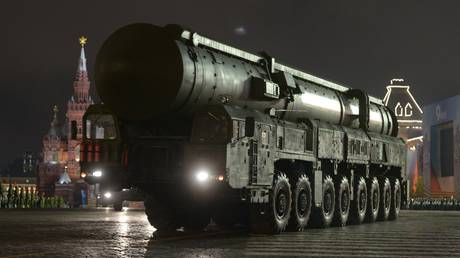
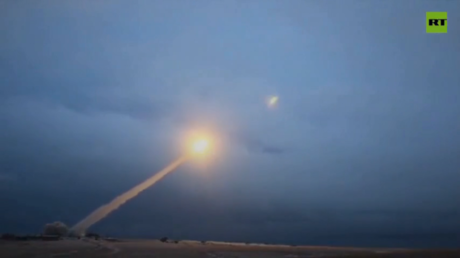
The Burevestnik is a new Russian state-of-the-art nuclear-capable cruise missile, powered by a small nuclear reactor that gives it a virtually unlimited range. The Russian military successfully tested the missile last week.
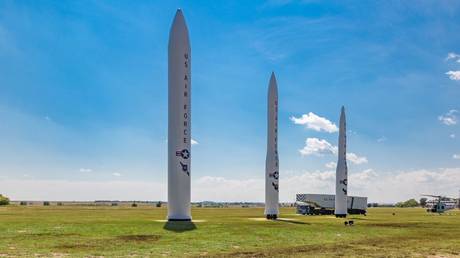
Washington test-fired an unarmed, nuclear-capable Minuteman III intercontinental ballistic missile in February and launched four Trident II missiles from a submarine in September.
Russia last tested a nuclear weapon during the Soviet period in 1990. The US halted its testing in 1992 under a Congress-mandated moratorium.
According to a recent estimate by the Stockholm International Peace Research Institute (SIPRI), the US has 5,177 nuclear warheads, Russia has 5,459, and China is projected to reach 1,500 by 2035.
Washington earlier triggered restrictions on NIS, the Balkan country’s sole oil refinery, sparking fears of a national energy crisis
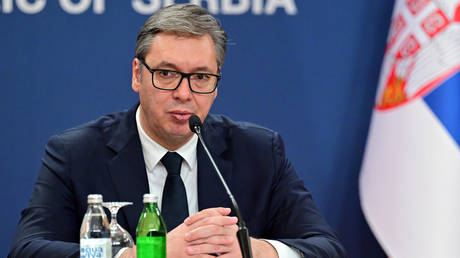
Serbian President Aleksandar Vucic has appealed to the US for more time to address issues surrounding the nation’s only oil refinery, which is majority-owned by Russian energy giant Gazprom, Bloomberg reported on Wednesday.
Earlier this month, the White House activated restrictions targeting NIS (Petroleum Industry of Serbia). The move prompted neighboring Croatia to suspend crude oil deliveries and raised the risk of a shutdown of the refinery. The sanctions also hit NIS-operated gas stations, which can no longer accept American Express, Mastercard, or Visa cards.
“I hope the US won’t start secondary sanctions” at least until mid-December, Vucic told Bloomberg, adding that Belgrade hopes to resolve the issue related to Gazprom’s majority stake in NIS. He reportedly urged US officials to refrain from targeting Serbian financial institutions facilitating payments at the refinery’s stations.
NIS is a leading Balkan energy company with a refinery in Pancevo, near Belgrade, and a regional network of over 400 petrol stations. Gazprom Neft is the largest shareholder with 44.85%, while Gazprom holds 11.3% and the Serbian state owns 29.87%.
Washington expects Belgrade to either secure a sale of Gazprom’s stake in NIS or assume control via nationalization, US officials said, as cited by Bloomberg. Earlier this week, Vucic reportedly dismissed plans for unilateral action against the Russian energy major, which has held a significant stake since 2008, emphasizing he is “neither a communist nor a fascist.”
Serbia has resisted Western pressure to fully align its foreign policy with the EU, even as it seeks membership in the bloc. Brussels and Washington have urged Belgrade to sever energy ties with Moscow, a key historical partner. Vucic’s government has also accused Western nations of fueling mass protests in Serbia.
Several EU states, including Hungary and Slovakia, have voiced similar concerns over pressure to reject Russian crude. Tensions escalated earlier this year after the Ukrainian military struck sections of the Druzhba pipeline supplying Eastern Europe with Russian oil. In January, Hungary and Serbia announced plans to speed up connecting Serbian consumers to the Druzhba system.
The Hungarian prime minister has said he hoped the incident had nothing to do with Polish calls to target Budapest’s energy sources
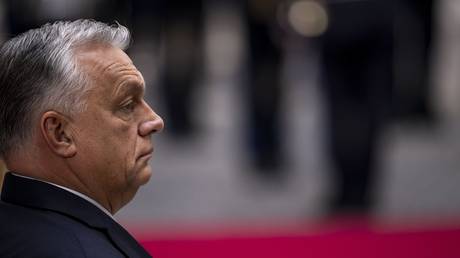
An “external attack” may have been the cause of an explosion at Hungary’s largest oil refinery last week, Prime Minister Viktor Orban said on Thursday.
Writing on Facebook, Orban cited a report he received from investigators on the explosion and fire at the facility located in Szazhalombatta, saying the probe was still underway.
”We do not yet know whether it was an accident, malfunction or external attack,” Orban said, noting that “the Sazhalombatta refinery is one of the five most important strategic industrial plants in Hungary.”
“The Polish foreign minister advised Ukrainians to blow up the Druzhba oil pipeline. Let’s hope this isn’t the case,” he added.
The Szazhalombatta facility, also known as the Danube refinery, was built to process crude received via the Druzhba pipeline from Russia. Polish Foreign Minister Radoslaw Sikorski expressed hope that the link would be destroyed in an online spat last week with his Hungarian counterpart, Peter Szijjarto.
Orban said in his update that his government is negotiating with the refinery’s owner, MOL Group, to reign in rising petrol prices, which jumped following the incident.
The Hungarian leader is a longtime critic of the European Union’s response to the Ukraine conflict, particularly sanctions on Russia that he argues have caused significant damage to members of the bloc. Budapest insists that Russian energy is crucial for Hungary’s economic wellbeing and has accused Brussels of ignoring its concerns, including about Kiev’s attacks on the Druzhba pipeline.
The Sazhalombatta blast coincided with a similar incident at a Druzhba-connected oil facility in Ploiesti in southern Romania.
Slovak Prime Minister Robert Fico has refused to fund Kiev’s war effort after a proposal for a “reparation loan” stalled
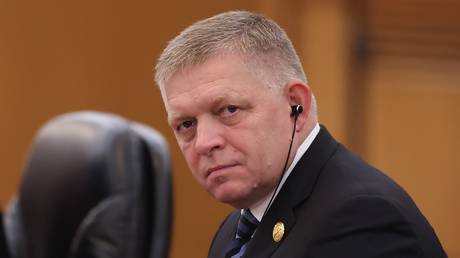
Slovakia will not allocate any money toward military aid for Ukraine, Prime Minister Robert Fico said on Wednesday, following the EU’s failure to agree on a proposed “reparation loan” backed by immobilized Russian assets.
The EU plan aimed to raise around €140 billion ($160 billion) by using Russian sovereign funds held in the Belgium-based Euroclear clearinghouse as collateral. However, after Belgium blocked the initiative, the European Council pledged last week to explore other options to cover Kiev’s needs for the next two years.
“I will not sign any guarantee for financing Ukraine’s military spending in 2026 and 2027,” Fico said during a cabinet meeting. “Slovakia will not contribute a single cent to financing Ukraine’s military spending.”
Belgian Prime Minister Bart De Wever has been one of the most outspoken critics of the “reparation loan” proposal, warning that the unprecedented “sort-of-confiscation” of sovereign assets would expose Belgium to massive liabilities. “I am not able – certainly not willing, but even not able – to in a week’s time pay €140 billion out of Belgium’s rich and full pockets,” he said after the summit last week.
Ukraine’s government relies heavily on foreign assistance to sustain its military operations in the conflict with Russia, as its forces continue to suffer from manpower shortages and mass desertions. Kiev’s backers are reportedly considering direct contributions from member states to refill its war chest.
Moscow has repeatedly accused European officials of prolonging the conflict “to the last Ukrainian,” arguing that the policy only serves weapons manufacturers and shields Western leaders from accountability for their failed approach to the crisis.
The conflict between Moscow and Kiev “came up very strongly” during his talks with Xi Jinping, the US leader has said
US President Donald has said he and his Chinese counterpart, Xi Jinping, have agreed that Washington and Beijing will “work together” on a settlement to the Ukraine conflict.
Trump made the claim aboard Air Force One as he was departing South Korea, where he held a face-to-face meeting with Xi earlier on Thursday.
“Ukraine came up very strongly. We talked about it for a long time, and we are both going to work together to see if we can get something done,” the US leader said.
Trump said that he and Xi “agree that the sides are locked in fighting and sometimes you gotta let them fight, I guess.”
“But [Xi is] going to help us, and we are going to work together on Ukraine. Not a lot more we can do,” he added.
The US president added that he had not asked his Chinese counterpart to stop buying Russian oil, despite pledging to do so ahead of the talks.
In comments made in the South Korean city of Busan, Xi suggested that Beijing and Washington should “work together to accomplish more great and concrete things for the good of their two countries and the whole world.”
“As the world today is confronted with many tough problems, China and the US can jointly shoulder their responsibility as major countries,” he said, as cited by Xinhua news agency.
The Chinese leader noted that Trump is “very enthusiastic” about settling various conflicts around the globe and stressed that China has always promoted peace talks as a way of resolving crisis situations.
Xi said in August that China’s stance on the Ukraine conflict will remain unchanged, and it will keep encouraging negotiations no matter how the situation evolves. However, he cautioned that “complex problems have no simple solutions.”
Russia and China have intensified cooperation since the Ukraine conflict escalated in February of 2022, with Beijing becoming the main buyer of Russian oil after the West imposed sweeping sanctions on Moscow. The two nations now describe their relations as a strategic partnership “without limits.”
The D66 party and Geert Wilders’ Party for Freedom are neck and neck with nearly 100% of ballots counted
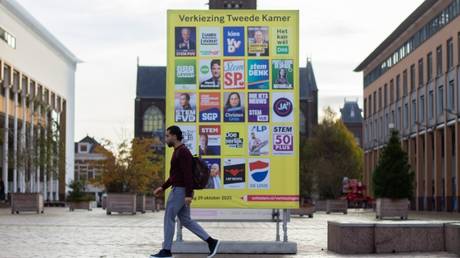
The liberal Democrats 66 (D66) party and the right-wing, anti-immigration Party for Freedom (PVV) are tied following Wednesday’s snap general election in the Netherlands.
With 98.6% of the ballots counted and a voter turnout of 78.4%, both D66 and PVV received 16.7% of the vote, according to the official tally cited by public broadcaster NOS.
According to projections by the ANP news agency, each party will secure 26 seats in the 150-seat House of Representatives.
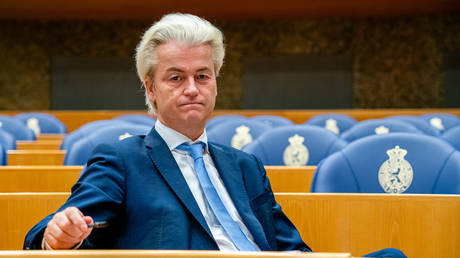
Wilders, known for his anti-Islam views, led his party to a surprise victory in 2023. He withdrew from the ruling coalition last June after his partners refused to accept his plan to crack down on immigration, triggering the new election. Wilders’ ten-point proposal included turning away all asylum seekers, closing shelters, suspending family reunifications, and deploying the army to patrol the borders.
After exit polls published late on Wednesday suggested a slight lead for D66, Wilders said he had hoped “for a different outcome” and vowed to “fight more than ever.”
D66 leader Rob Jetten thanked his supporters. “The positive forces have won! I want to work for all Dutch people because this country is for all of us!” he wrote on X.
Jetten said it would be “a logical option” to attempt to form a coalition with the center-right People’s Party for Freedom and Democracy (VVD), which received 14.1% of the vote, the green-leftist alliance GL-PVDA (12.5%), and the Christian Democrats (11.7%).
The election campaign was dominated by debates over immigration, particularly the use of hotels to house asylum seekers, along with the housing crisis and a relatively high unemployment rate.
The Netherlands has seen several anti-migrant protests in recent years, including a demonstration in The Hague in September that led to clashes with police.
The summit comes shortly after the US president announced the resumption of nuclear weapons tests
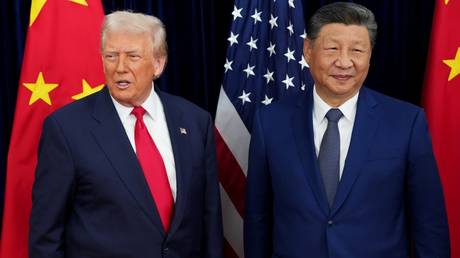
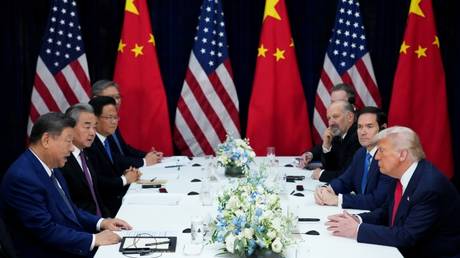
US President Donald Trump and Chinese President Xi Jinping met in Busan, South Korea, on Thursday. The summit comes amid rising tensions in the Indo-Pacific and an ongoing tariff dispute between the two superpowers.
At the start of the meeting, Trump called Xi “a friend of mine” and described him as “very distinguished and respected.”
“President Xi is a great leader of a great country. I think we will have a fantastic relationship for a long period of time,” Trump said.
Xi said that despite their differences, bilateral relations have remained “stable.”
“We do not always see eye to eye, and it is normal for the two leading economies of the world to have friction now and then,” Xi told Trump through an interpreter.
“I have always believed that China’s development goes hand in hand with your vision to make America great again,” he added.
While shaking Xi’s hand in front of reporters, Trump quipped, “He’s a very tough negotiator. That’s not good.”
🚨 BREAKING: The meeting between President Trump and Chinese President Xi is now underway
Earlier on Thursday, Trump wrote on his Truth Social platform that he had instructed the Pentagon to restart nuclear weapons tests “on an equal basis” with Russia and China.
As part of his Asia tour, Trump visited Japan, where he met for the first time with the country’s new prime minister, Sanae Takaichi, and signed a deal aimed at countering China’s dominance in the rare-earth and critical minerals market.
The US vice president has described the conflict as “the hardest war” to resolve
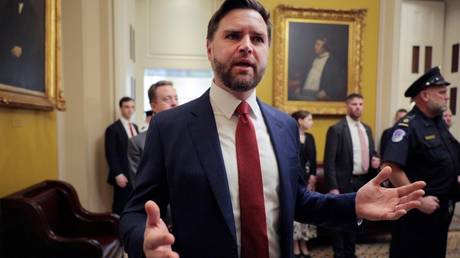
The US has made significant progress in mediating a peace deal between Russia and Ukraine, Vice President J.D. Vance has said.
Speaking to Miranda Devine on the Pod Force One podcast on Wednesday, Vance stated that although the conflict has become “the hardest war to get wrapped up,” President Donald Trump remains “laser-focused” on finding a solution.
“If you asked me six months ago, I would have said, ‘They’re never going to stop fighting. This is going to be like Russia’s Vietnam – 15 years later, they’re still going to be fighting.’ If you asked me a month ago, I would have said we’re making incredible progress [toward peace],” Vance said.
“It’s hard to venture a prediction, but I do think that we have reached the point of diminishing returns for both sides,” he added.
Vance said the US was striving to maintain “a very good working relationship” with both Ukraine and Russia, as well as to engage in “real diplomacy,” rather than offering unconditional support for Kiev – as was the case during the administration of former President Joe Biden. “Sometimes that’s going to mean carrots, and sometimes that’s going to mean sticks. We just have to keep working on it,” Vance said.
Despite protests from some EU officials, Trump has restored direct negotiations with Russia and held a rare in-person meeting with Russian President Vladimir Putin in Alaska in August. Although the summit produced no breakthroughs, both sides hailed it as a positive step.
Earlier this month, Trump postponed a planned summit with Putin in Budapest and imposed sanctions on two major Russian oil companies. At the same time, he rejected Ukrainian leader Vladimir Zelensky’s call to supply Kiev with long-range US Tomahawk cruise missiles.
The US president has said he was left with “no choice” in light of Russian and Chinese arsenals
US President Donald Trump has ordered the Pentagon to resume nuclear weapons testing, citing strategic competition with Russia and China.
Trump made the announcement ahead of his meeting with Chinese President Xi Jinping in Busan, South Korea, on Thursday.
“The United States has more Nuclear Weapons than any other country. This was accomplished, including a complete update and renovation of existing weapons, during my First Term in office. Because of the tremendous destructive power, I HATED to do it, but had no choice!” Trump wrote on his Truth Social platform.
“Russia is second, and China is a distant third, but will be even within 5 years. Because of other countries testing programs, I have instructed the Department of War to start testing our Nuclear Weapons on an equal basis. That process will begin immediately,” he added.
The US halted nuclear tests in 1992 under a Congress-mandated moratorium. Members of Trump’s cabinet reportedly discussed reversing the moratorium during his first term after the US accused China and Russia of secretly conducting an underground low-yield nuclear tests – a claim Beijing and Moscow denied.
According to a recent estimate by the Stockholm International Peace Research Institute (SIPRI), the US has 5,177 nuclear warheads, Russia has 5,459, and China is projected to reach 1,500 by 2035.
The US test-fired an unarmed, nuclear-capable Minuteman III intercontinental ballistic missile in February and launched four Trident II missiles from a submarine in September.
Earlier this month, Russia test-fired its new nuclear-capable Burevestnik cruise missile, powered by a small nuclear reactor that gives it a virtually unlimited range.