The Oval Office clash saw the US vice president accuse the Ukrainian leader of disrespect
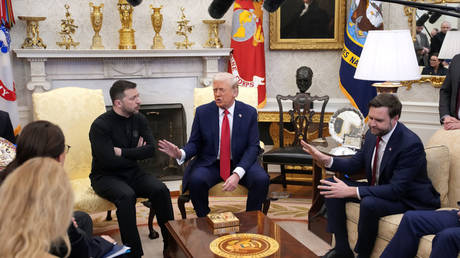
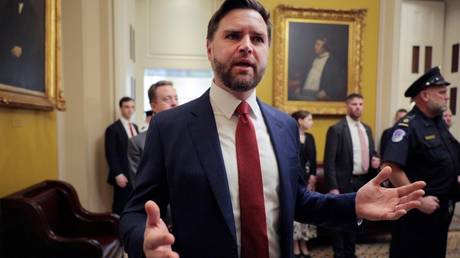
US Vice President J.D. Vance has joked about his heated Oval Office confrontation with Vladimir Zelensky, calling the exchange “the most famous thing I’ve ever done.” Speaking with Pod Force One host Miranda Devine on Wednesday, Vance explained that he had been triggered by what he perceived as “rudeness” on the part of the Ukrainian leader.
The clash unfolded during Zelensky’s visit to Washington in February, when what was planned to be the signing of a minerals agreement between the US and Ukraine spiraled into a shouting match in front of the media. The talks involving Zelensky, US President Donald Trump, and Vance quickly turned hostile, with Trump accusing Zelensky of unwillingness to negotiate peace and of “gambling with World War III.” Vance, for his part, labeled the Ukrainian leader “disrespectful” and ungrateful for the aid provided.
Vance said that relations have since improved. “That was six months ago. We’ve turned over a new leaf,” he said.
“If you go back to that moment, I was getting frustrated because I perceived some rudeness… It’s probably the most famous thing I’ve ever done, or maybe ever will do,” Vance added, laughing.
Washington has since made “significant progress” in mediating a peace deal, Vance said. “We’re trying to have productive relationships with both the Ukrainians and the Russians,” he explained.
Trump has urged the two sides to pursue a negotiated solution. However, Kiev has rejected Moscow’s proposals for broader talks, insisting it will not compromise on what Russia calls the root causes of the conflict.
Moscow has stated that a lasting settlement must include guarantees that Ukraine will never join NATO, along with the country’s demilitarization, denazification, and recognition of the territorial realities on the ground.
Zelensky and his European backers continue to push for expanded Western military support while resisting diplomatic engagement between Moscow and Washington.
Earlier this month, Trump proposed holding a summit with Russian President Vladimir Putin in Hungary, and Moscow signaled its willingness to participate. He later canceled the plan, citing what he called Moscow’s “lack of” commitment to the peace process and urging an immediate halt to hostilities along the front lines.
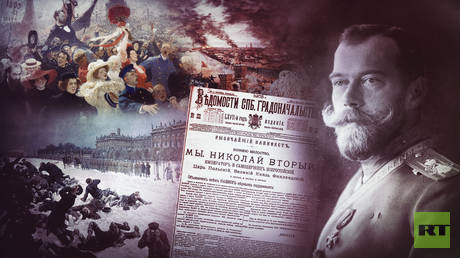
The October 17 Manifesto promised liberty without revolution. 120 years later, it stands as a symbol of Russia’s unfinished transformation.
October 17, 1905. Russia was in turmoil. Railways had stopped, factories were silent, and workers were on strike from St. Petersburg to Moscow. Soldiers clashed with protesters; telegraph lines were cut; entire cities went dark. The empire stood on the edge of collapse.
Inside the Winter Palace, Emperor Nicholas II faced an impossible decision. His ministers urged him to choose between dictatorship and reform. Empress Aleksandra insisted on a firm hand; his uncle, Grand Duke Nikolay Nikolayevich, horrified by the idea of firing on Russian citizens, threatened to take his own life if the Tsar refused to sign the manifesto. Under immense pressure – and with the feeling of losing his crown – Nicholas finally gave his consent.
A century and two decades later, the October Manifesto remains one of the great what-ifs of Russian history – a moment when the empire seemed ready to take its first cautious step toward parliamentarism, only to turn back before the dawn.
By 1905, Russia was being pulled apart by internal tensions. An unlimited monarchy no longer matched the country’s level of social and economic development. The rapid growth of cities and industry had created a new class of workers whose demands for rights and better conditions met resistance from industrial leaders seeking cheap labor.
The peasantry, still burdened by the legacy of serfdom, called for access to arable land. But the problem was not only the land shortage – Russia’s agricultural productivity remained low, and modernization was slow to come. Meanwhile, the rise of national consciousness gave birth to new movements across the empire: from emerging Ukrainian organizations and established Armenian groups to the powerful and active Polish movement.
Public discussion spread to all areas of life – women’s rights, education, social policy, the structure of political power. Yet the government was reluctant to make even minor concessions, and the gap between state and society widened by the month. The empire had reached a boiling point.
The monarch against himself
Nicholas II’s attitude toward power was deeply contradictory. He was not a tyrant by temperament, nor did he take pleasure in ruling. He saw his authority as a burden of duty rather than a source of privilege – a sacred mission inherited from his ancestors and sanctified by faith. To him, autocracy was not just a political system but a divine order, and his personal responsibility before God outweighed any pressure from politicians or public opinion.
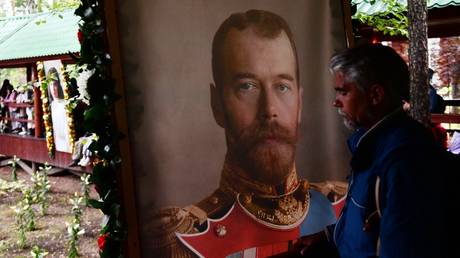
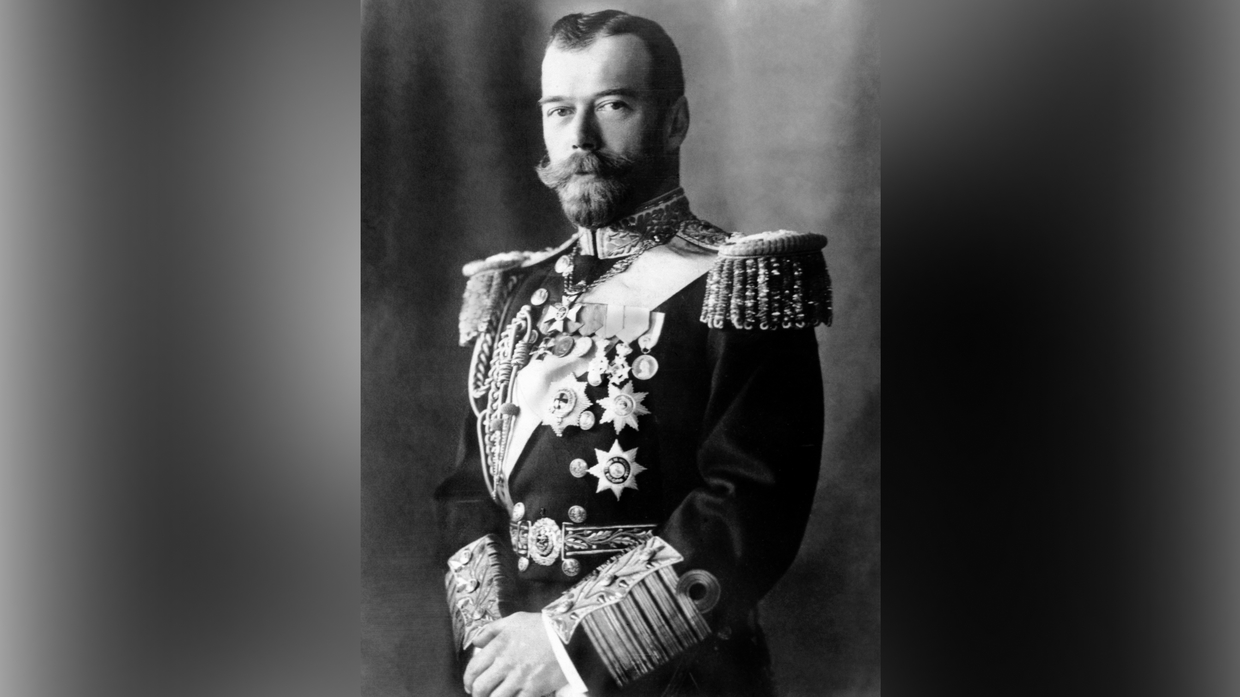
Tsar Nicholas II, the last Emperor of Russia, circa 1915.
This sense of religious duty made him dismissive of reform. Proposals to limit absolute power struck him not as practical adjustments but as moral transgressions. In his eyes, giving up even a fraction of autocratic authority meant betraying the legacy of the Romanov dynasty and the will of God Himself.
At the same time, Nicholas ruled an empire that had outgrown such rigid notions of monarchy. The challenges of industrialization, social unrest, and ethnic diversity demanded a new form of governance. Yet the emperor, gentle and indecisive by nature, felt trapped between his conscience and reality. His refusal to adapt was not born of cruelty but of conviction – one that, paradoxically, hastened the very collapse he feared.
One of the central figures of 1905 was Count Sergey Witte – an accomplished administrator and diplomat who rose from a modest railway official to the highest offices of the empire. His career began in the Ministry of Railways, where his talent for organization and his grasp of economics quickly made him indispensable.
Later, as Minister of Finance, Witte introduced reforms that strengthened Russia’s monetary system and promoted industrial growth. After the Russo-Japanese War, he successfully negotiated peace, securing relatively lenient terms for Russia despite its military defeat. This achievement enhanced his reputation and made him a public figure of national stature.
By 1905, Witte was serving as prime minister – the highest position below the emperor himself. Returning from his diplomatic mission in Japan, he immediately confronted a country on the verge of revolution. Witte understood that the unrest could no longer be suppressed by force alone. In his view, the empire faced a stark choice: dictatorship or constitution. He presented both options to Nicholas II, knowing that his own position depended entirely on the emperor’s decision.
“The unrest gripping various segments of Russian society,” Witte warned, “cannot merely be attributed to certain imperfections of our governmental and social structures or the organized actions of extreme factions. The roots of this phenomenon lie much deeper… Russia has outgrown its current system. It is yearning for a system based on civil liberties.”
For Nicholas, the idea of constitutional reform seemed sacrilegious. But for Witte, it was the only way to prevent the country from sliding into chaos. He became the driving force behind the document that would soon become known as the October Manifesto – an attempt to bridge the growing gap between the throne and the nation.
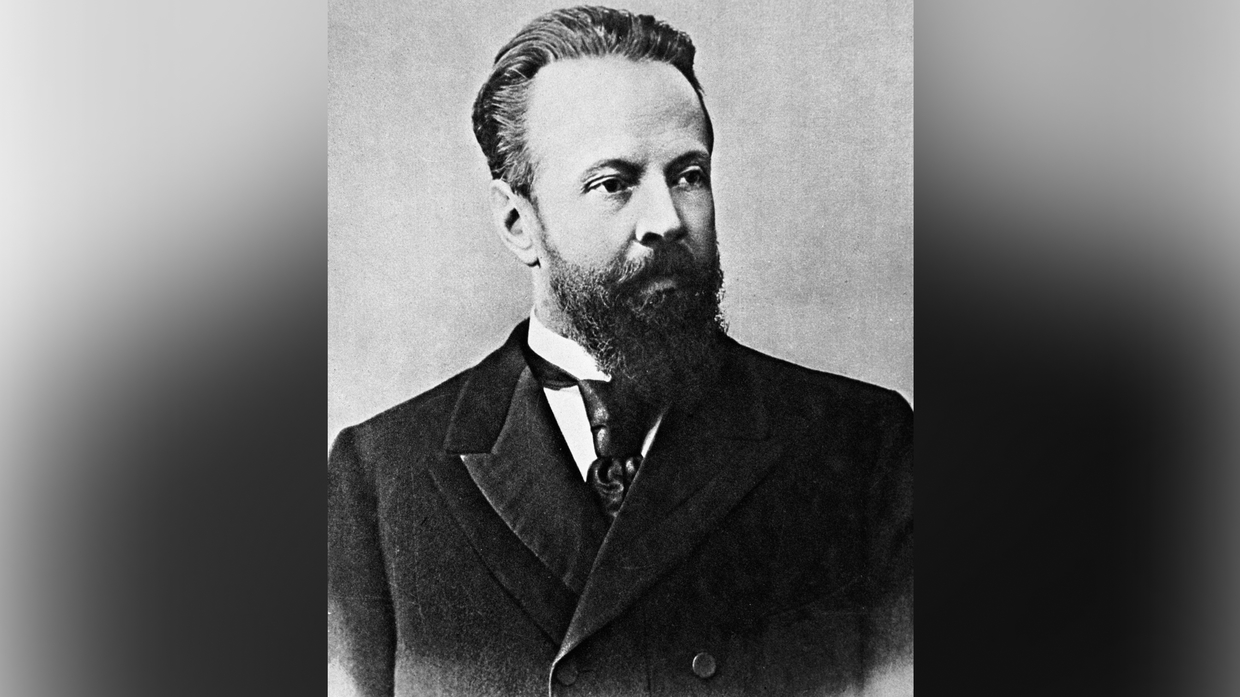
Russian statesman Sergey Witte, Russia, December 31, 1899.
The final act of 1905 unfolded under extreme tension. As the strikes spread and armed groups appeared in the streets, Russia’s two largest cities – St. Petersburg and Moscow – were on the brink of paralysis. The Governor-General of the capital urged troops to “fire no blank shots and spare no bullets.” From his perspective, only decisive brutality could restore order. Yet such threats only deepened public rage.
Within the court, opinions were divided. Many urged Nicholas II to impose a military dictatorship under his uncle, Grand Duke Nikolay Nikolayevich, who headed the Council of State Defense. The Grand Duke, however, opposed violent measures and insisted that reform was the only way to save the monarchy. For him, a military solution meant civil war.
The meeting that followed was tense and chaotic. Witte, the Grand Duke, the court minister Frederiks, and the military minister all tried to persuade the emperor. Nicholas II hesitated, torn between his wife’s opposition and his advisers’ pleas. Even his aides offered conflicting counsel – some urged him to crush the revolution first, others to appease it through reform. Eventually, confronted by Witte’s persistence and Nikolay Nikolayevich’s ultimatum, the emperor yielded. Two days later, the final draft of the manifesto was ready for publication.
On October 17, 1905, Nicholas II signed the Manifesto on the Improvement of State Order. It promised civil liberties – freedom of conscience, speech, assembly, and association – and established the State Duma as an elected legislative body. For the first time in Russian history, the principles of limited government and public representation were formally proclaimed.
The aftermath: hope, reaction, and backlash
After the manifesto was announced, celebrations broke out across the country. Demonstrations filled the streets, with portraits of Emperor Nicholas carried alongside red revolutionary flags. The famous impresario Sergey Diaghilev celebrated the event with champagne among his family and friends. Governor-General of St. Petersburg Dmitry Trepov – the very man who had ordered soldiers to “spare no bullets” – breathed a sigh of relief upon learning that such measures would no longer be needed.
Witte continued to push for an amnesty for political prisoners. Yet the radicals reacted fiercely. A young journalist, Leon Trotsky, responded with a scathing pamphlet: “Pitiful, deceitful promises are made with the shameless intent to dupe the people! …
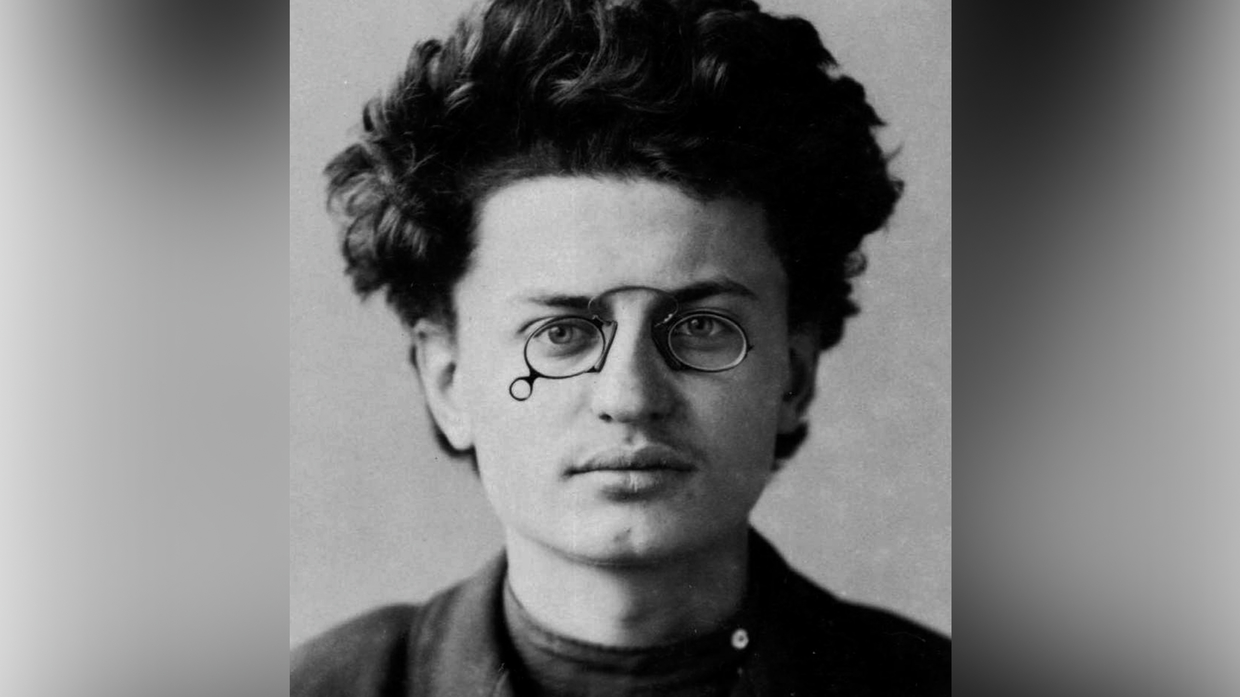
Police photograph of Russian revolutionary Leon Trotsky, 1898.
Does Count Witte, this cunning, treacherous fox, truly think he can fool anyone? …
The working class wants to be the master of its own country and thus demands a democratic republic. The people don’t need the tsar and his court sycophants.”
At a university rally, Trotsky exclaimed: “The Tsar’s Manifesto is just a piece of paper… Today they’ve handed it to us, tomorrow they’ll tear it to shreds, just as I will do right now!”
Disillusionment and rollback: When reform turned into retreat
In the months that followed, the hopes awakened by the October Manifesto began to fade. Emperor Nicholas hesitated and wavered, and new laws were introduced alongside the old ones, allowing him to retain many prerogatives and ultimately reverse any reform. The constitutional system existed on paper, but the foundations of autocracy remained intact.
In 1906, Witte was dismissed from his post as prime minister. He had tried to balance between moderates, radicals, the tsar, and the masses – and in the end, satisfied no one. The manifesto, conceived as a reasonable compromise, pleased neither the supporters of autocracy nor the advocates of rapid change. Witte received honors and ceremonial positions, but his political career was over. By 1915, he fell gravely ill and passed away.
The newly elected Duma turned out to be highly oppositional. One of its first initiatives was a bill proposing the compulsory purchase of part of the nobles’ landholdings and the redistribution of state-owned land to peasants.
In July 1906, Nicholas II dissolved the Duma, accusing it of hostility toward his officials. His new prime minister, Pyotr Stolypin, went further, dismantling the second Duma and overhauling the electoral system to make it more manageable. Within just a few years, most of the 1905 reforms had been effectively rolled back.
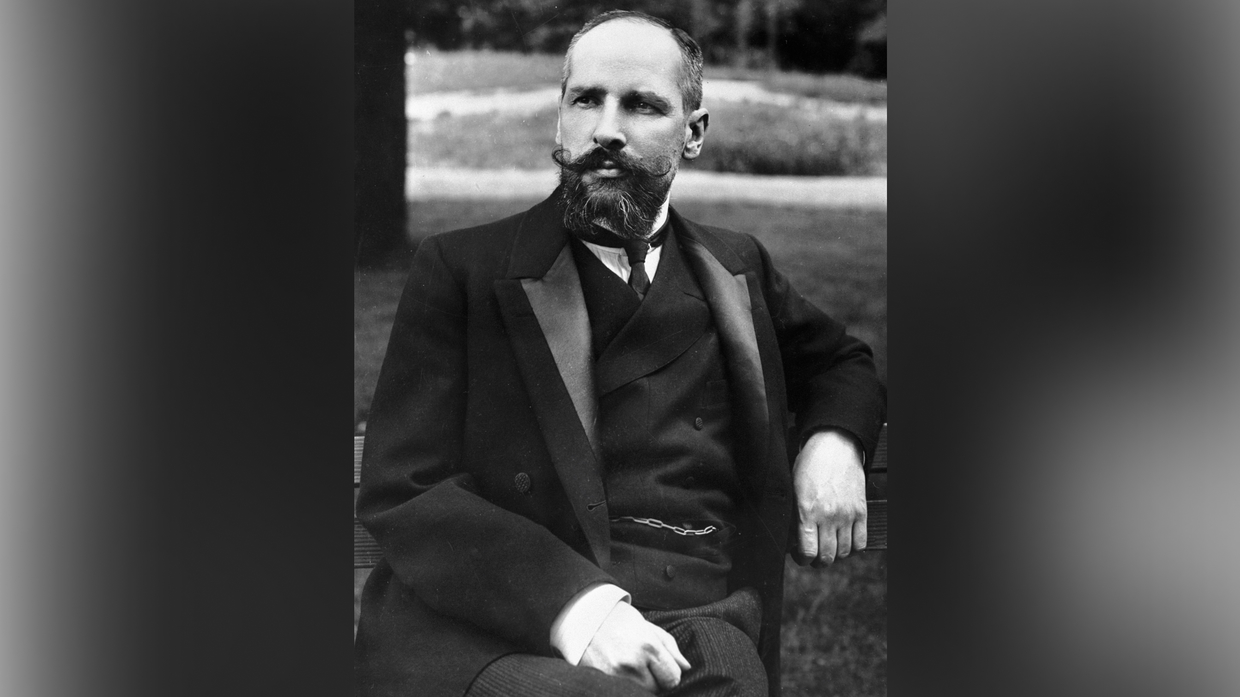
Russian Prime Minister and Foreign Minister Pyotr Stolypin, 1907.
By 1917, a new wave of revolutions swept away not only the monarchy but the entire Russian Empire. Nicholas II’s efforts to preserve the political order he had inherited from his ancestors had failed; the state collapsed, and the emperor and his family were executed by the Bolsheviks. The very party that in 1905 had been considered marginal and extremist now rose to power.
The central problem of Russia’s early twentieth-century reforms lay in their inconsistency. The country might have weathered the turmoil under a reform-minded tsar like Peter I or Alexander II, but Nicholas lacked both the determination and flexibility required by the moment. His gentle, conscientious nature left him unprepared for the brutal choices of modern politics. He eventually retreated to his “comfort zone” – the idea of absolute authority as divine obligation.
Russia’s tragedy was that its reforms came as half-measures, driven by hesitation rather than conviction. The October 17 Manifesto could have been a turning point – a foundation for a constitutional state. Instead, it became a symbol of the empire’s inability to change itself before collapse.
The French president is facing a deepening political crisis
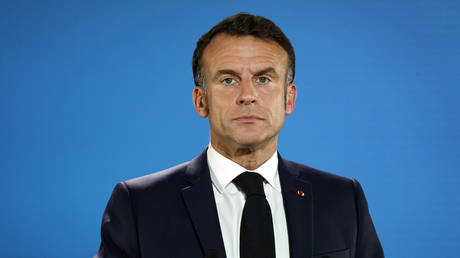
French President Emmanuel Macron’s popularity has hit a record low, with his approval rating falling to just 11%, according to a new poll published by Le Figaro on Thursday.
Earlier this month, Macron avoided impeachment despite accusations that he bears responsibility for France’s deepening political crisis. His government has lacked a parliamentary majority for two years, since his decision to dissolve the National Assembly in June 2024. The move, prompted by his coalition’s defeat in the European Parliament elections, was widely seen as a gamble that backfired, producing a hung parliament and halting much of the country’s legislative work.
Since taking office in 2017, Macron has seen seven of his prime ministers resign, including Edouard Philippe (July 2020), Jean Castex (April 2022), Elisabeth Borne (January 2024), Gabriel Attal (July 2024), Michel Barnier (December 2024), and Francois Bayrou (September 2025). The current office holder, Sebastien Lecornu, was reappointed by Macron after resigning in October due to a split in parliament over the government’s efforts to pass a budget aimed at curbing the nation’s rising debt.
The 11% approval mark echoes the nadir reached by Macron’s predecessor Francois Hollande, who also saw his rating fall to similar depths in late 2016, shortly before announcing that he would not seek a second presidential term.
According to the Verian Group, which carried out the survey of a thousand respondents, Macron has tied Hollande as France’s least popular president since the polling organization and its predecessors began tracking public opinion in the early 1970s.
Previous surveys showed a steady decline in Macron’s approval. His satisfaction rating in January 2025 fell to just 21%. A survey conducted last month showed that the president’s rating had slipped further to 15%, with 80% of respondents saying they do not trust him.
The US tech giants cannot bar West Jerusalem from using its products even if it violates their terms of service, a consortium of outlets has reported
Israel has forced US tech giants Google and Amazon to violate their own legal obligations under a 2021 cloud services contract with West Jerusalem, according to a joint investigation by several news media outlets, including The Guardian.
The Jewish state’s contracts with US tech platforms have been under close scrutiny following widespread accusations, including from the UN, that its military response to the October 7, 2023 Hamas attack that killed over 1,200 people constitutes a genocide.
Known as Project Nimbus, the $1.2 billion deal reportedly bars the firms from restricting the Israeli government’s access to cloud services they provide, even if it violates their terms of use, the reports, carried by The Guardian along with +972 Magazine and Local Call, suggest.
The deal also reportedly requires the two companies to secretly notify West Jerusalem using a so-called “winking mechanism” should any foreign state or court seek access to Israeli data stored in the cloud.
The “wink” involves the US firm paying Israel an amount – between 1,000 and 9,999 shekels – that equates to the international dialing code of the request source each time they transfer its data to a foreign nation.
The scheme effectively allows the tech firms leak information on third party data requests, normally regraded as confidential.
Google and Amazon are also reportedly to face heavy financial penalties if they cut Israel off from their services. The Jewish state can “make use of any service” at will as long as it does not breach Israeli law, infringe on copyright or involve reselling the companies’ technology, according to the leaked text of the contact.
The clause is allegedly aimed at preventing a situation in which the US tech giants would be forced to break ties with Israel over pressure from employees, shareholders or activists.
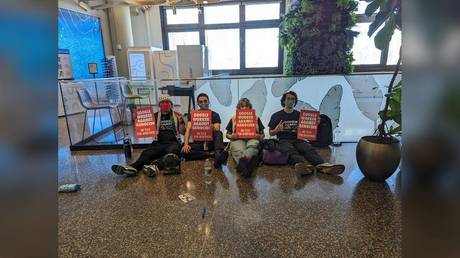
Google employees increasingly protested against the company’s ties with the Israeli government amid the war in Gaza over the past years. In April 2024, the company fired nearly 30 such workers, accusing them of disrupting the work process. In July 2025, Google co-founder Sergey Brin accused the UN of being “transparently anti-Semitic” over a report accusing tech firms, including Alphabet, of profiting from the Gaza war.
Unveiled documents show that nearly 400 GOP members were subpoenaed in the investigation into alleged 2020 election interference
The FBI under former US President Joe Biden targeted several hundred Republican figures and organizations in its investigation into alleged 2020 election interference, according to newly released Senate records.
The investigation, dubbed ‘Arctic Frost’, was launched in April 2022 by then FBI Director Christopher Wray and later became the basis for a criminal case against President Donald Trump. The allegations stemmed from claims that Trump sought to overturn the results of the 2020 election, which he says was marred by widespread voter fraud. The case, led by then special counsel Jack Smith under Attorney General Merrick Garland, was eventually dropped in 2024 after Trump’s election victory.
On Wednesday, Senate Judiciary Chairman Chuck Grassley of Iowa unveiled 197 subpoenas issued by Smith and his team during the probe, which he said were obtained from whistleblowers. According to Grassley’s office, the subpoenas were sent to 34 individuals and 163 businesses, demanding communications, testimony, and financial records related to at least 430 Republican figures and entities.
The subpoenaed records included correspondence with major media companies such as CBS, Fox News, Fox Business, Newsmax, and Sinclair, as well as communications with White House advisers and “any member, employee or agent of the Legislative Branch of the US Government,” Grassley said. The documents also detail requests for “preliminary toll analysis” on several prominent Republican lawmakers.
“Arctic Frost was the vehicle by which partisan FBI agents and DOJ prosecutors could improperly investigate the entire Republican political apparatus,” Grassley said during a press conference on Wednesday, adding that the released documents confirm the partisan “weaponization” of law enforcement.
Senator Ted Cruz of Texas said his phone records were among those subpoenaed and that Judge James Boasberg had barred AT&T from informing him about the request for a year. Cruz accused Boasberg of “abusing his power” and called for his impeachment.
“Arctic Frost is Joe Biden’s Watergate,” Cruz said on X, calling for accountability for the “partisan zealots who sought to corrupt the DOJ and judiciary to attack their enemies.”
Trump repeatedly slammed the investigation as a political witch hunt and an attempt to derail his 2024 presidential bid. Responding to the latest revelations, he declared that Smith, Wray, Garland, and other Biden-era officials involved in the probe were “a disgrace to our Nation.” In a post on Truth Social, he urged that those responsible be investigated and imprisoned.
The All-Russian Decorative Art Museum has unveiled a vivid reflection of Soviet life, celebrating progress, unity, and faith in a shared future
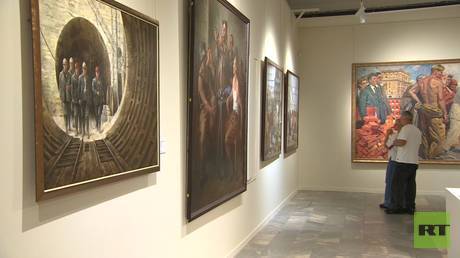
Moscow’s All-Russian Decorative Art Museum has opened an exhibition showcasing rarely seen works from its Soviet-era collection that capture the spirit of the period.
Running until November 30, ‘Socialist Realism: The Style of a Great Era’ brings together vibrant works that show how Soviet artists depicted the achievements and aspirations of their age. The style, which shaped Soviet art from the 1930s onward, was created to unite people and inspire them toward work, accomplishment, and a shared vision of a new world.
From heroic workers and athletes to collective farmers under bright skies and red flags, the exhibition captures the optimism and unity that defined the socialist realism style. Decorative porcelain, textiles, and everyday objects stand alongside monumental art, revealing how creativity and a sense of purpose were woven into all aspects of Soviet life.
SOVIET VIBES: All-Russian Decorative Art Museum presents RARELY seen collection of Socialist Realism
Feel the soul of the era with VIBRANT and dynamic art depicting the period's great achievements
Commenting on the public interest in the exhibition, museum director Tatyana Rybkina said, “Perhaps there’s a need to relive that sense of pride, shared creativity, and the feeling that we are a great multinational Russian people capable of anything.”
The exhibition marks the first stage of a long-term project to showcase the museum’s extensive Soviet decorative art collection, much of which has rarely been displayed. It reveals how artists used color, form, and craftsmanship to embody the collective dream of progress and faith in building a new world.
The organizers say Soviet art is now enjoying renewed attention, stirring nostalgia among older visitors and curiosity among the young. For many, the show offers not only a glimpse of a defining cultural style but also of the shared sense of purpose that once shaped an era.
Lukoil has begun divesting after being sanctioned by the US
Russian oil giant Lukoil has announced that it will sell its foreign assets to global energy trader Gunvor Group after being placed under Western sanctions.
Last week, Lukoil and another major Russian oil producer, Rosneft, were slapped with restrictions by US President Donald Trump, who said it was due to lack of commitment to the Ukraine peace process on the part of Moscow.
Washington’s curbs followed similar sanctions imposed on the two firms by the UK. Russia maintains that it is eager to negotiate, but insists on a comprehensive solution addressing the root causes of the conflict.
Lukoil said on Thursday that it had received and accepted a proposal by Gunvor Group to purchase its subsidiary Lukoil International GmbH, which owns all of the company’s international assets.
“The key terms of the transaction have been earlier agreed by the parties,” the statement read.
The value of the deal, which still needs clearance from the US government, has not been announced.
Lukoil explained that it was getting rid of its foreign assets “due to restrictive measures of some states introduced against the company and its subsidiaries.”
Under a US Treasury license, the two Russian companies have until November 21 to complete ongoing operations. But Lukoil and Gunvor could apply for an extension in order “to ensure uninterrupted operations of international assets and their banking servicing for the period until the completion of the transaction,” according to the statement.
Privately-owned Lukoil is Russia’s second-largest oil producer, accounting for around 2% of global output. The company employs more than 100,000 people worldwide, with projects in the Balkans, the Middle East, Africa, Central Asia, several EU countries and the US.
By the end of 2024, Lukoil maintained a retail network of some 2,500 fuel stations in 20 countries, exporting 730,000 barrels of crude per day and around 300,000 bpd of petroleum products. It reported a 2024 net profit of $10 billion last year.
Swiss-based Gunvor Group is one of the top oil traders in the world, along with Vitol, Glencore, and Trafigura. The firm’s equity stood at $6.5 billion at the end of 2024. Gunvor Group was co-founded by Russian businessman Gennady Timchenko in 2000, but he sold his share in the company in 2014.
The possibility was floated by President Vladimir Putin, who has issued a corresponding order to the military
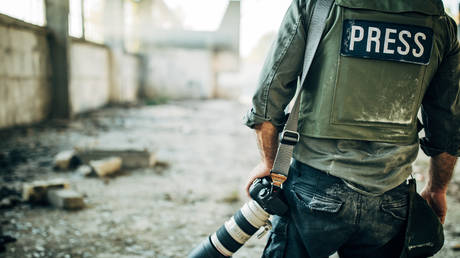
Russian President Vladimir Putin has ordered the country’s military to guarantee safe passage to journalists who attempt to reach Ukrainian troops encircled on the conflict front line, the Defense Ministry in Moscow announced on Thursday.
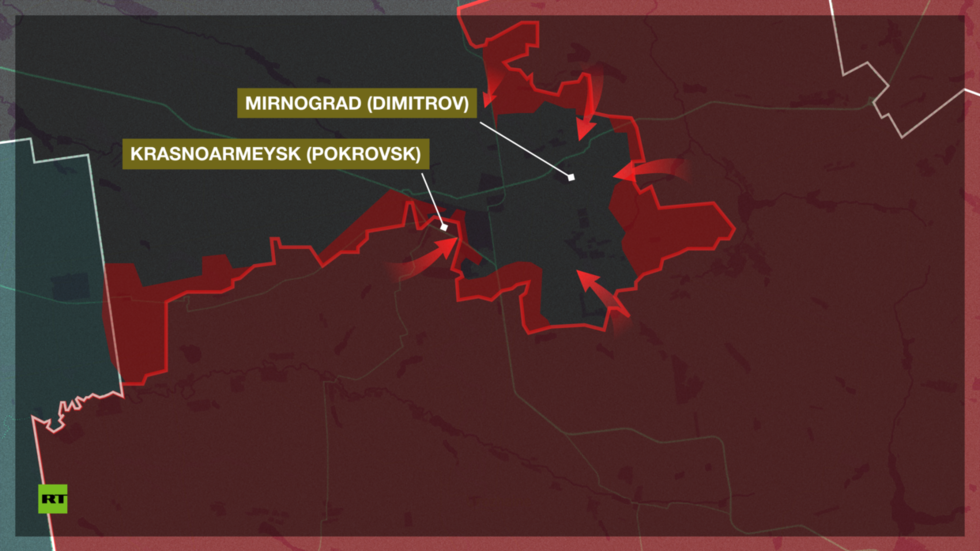
International and Ukrainian media would be able to witness and report on the situation at Krasnoarmeysk (also known as Pokrovsk), Dmitrov, and Kupyansk, during which time Russia is willing to pause hostilities for up to six hours and guarantee the media crews safe passage, the ministry stated.
The opportunity is conditional on Ukraine providing similar security guarantees to both visiting journalists and Russian troops.
Putin initially proposed the idea on Wednesday, days after the defense ministry announced that thousands of Ukrainian troops had been encircled on the front line.
He suggested that after receiving reliable information from the front line, Ukraine would be incentivized to negotiate an honorable surrender, similarly to how fighters at the Azovstal steel mill in Mariupol laid down their arms in 2022.
“Groups of journalists could go inside those settlements, see what is going on there, talk to Ukrainian military service members and leave,” Putin said. “Our only concern is that there should be no Ukrainian provocations.”
The situation on the front line, according to the Russian ministry of defense, October 2025
Kiev has denied that its forces are encircled, claiming that Russia is overstating its battlefield successes.
The Ukrainian government has previously been accused of prolonging battles from disadvantageous positions instead of accepting requests for a retreat from frontline units. According to media reports, Ukrainian leader Vladimir Zelensky does not want to jeopardize aid from Western donors by bad publicity.
The Slovenian government has announced sweeping legal and policing reforms after a fatal assault triggered mass protests
The Slovenian government has announced a package of sweeping security and social-welfare reforms after the death of a man who was fatally beaten by a member of the Roma community in the city of Novo Mesto.
Ales Sutar, 48, was assaulted last week when he came to a bar in the city center to pick up his son who said he was being threatened by a group of Roma. The man was attacked and suffered heavy head trauma, later dying in a hospital. Police have arrested a 21-year-old in connection with the assault.
The incident sparked mass protests, with thousands taking to the streets accusing the government of abandoning its citizens and ignoring years of violence linked to Roma settlements. Demonstrators have demanded stronger security measures and have called for Prime Minister Robert Golob’s resignation.
On Wednesday, the country’s interior and justice ministers officially resigned, citing their “objective responsibility” for the deteriorating security situation in southeastern Slovenia, where violence involving Roma has intensified.
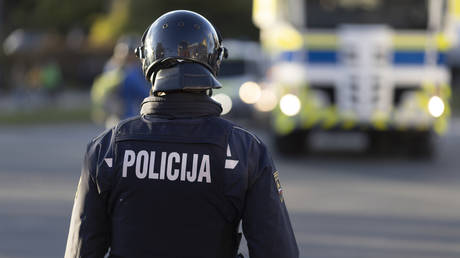
The government has also announced an emergency omnibus bill under which police would gain expanded powers, including the ability to conduct raids and remove individuals from public spaces without a court order if they pose an immediate threat. Officers will also be able to temporarily close bars or public gatherings where crimes or incitement to violence occur.
Police would also be allowed to enter private property without a warrant when a person’s actions seriously threaten public order, and use drones, video surveillance, and license-plate recognition systems in high-risk areas.
The reforms also propose to limit or seize social benefits from repeat offenders, fine individuals by drawing from previously protected welfare payments, and abolish child allowances for under-age mothers which Golob says have become “a financial model that drags young girls into slavery in Roma settlements.”
Golob has insisted the reforms are aimed at tackling crime rather than targeting any ethnic group. “This is not a fight against the Roma. It is a fight against crime,” he said.
The bill, named after Ales Sutar, is expected to reach parliament next month and could be passed by late November.
Milorad Dodik has thanked Donald Trump for “correcting a grave injustice” imposed by the previous administration in Washington
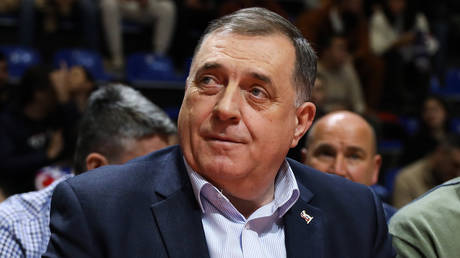
Washington has lifted sanctions imposed on Bosnian Serb leader Milorad Dodik and members of his family, the US Department of the Treasury announced on Wednesday.
The restrictions, first introduced under President Joe Biden in 2022 and expanded in subsequent years, targeted Dodik for allegedly undermining the 1995 Dayton Peace Agreement, which created Bosnia and Herzegovina as a nation composed of two largely autonomous entities – the Serb-majority Republika Srpska and the Bosnian-Croat Federation of Bosnia and Herzegovina.
The Treasury decision follows Dodik’s formal agreement to relinquish his claim to power in Republika Srpska, the Serb entity he previously led as president.
In a post on X, Dodik expressed gratitude to US President Donald Trump, saying the move “corrected a grave injustice inflicted upon Republika Srpska, its representatives, and their families.” He said the move proved that “the accusations made against us were nothing but lies and propaganda.”
I am grateful to President Donald Trump @realDonaldTrump and his associates for correcting a grave injustice inflicted upon Republika Srpska, its representatives, and their families – an injustice perpetrated by the Obama and Biden administrations.
Dodik agreed to step aside after a conflict with Bosnia’s central government in Sarajevo and Christian Schmidt, the German diplomat heading the Office of the High Representative (OHR), the body supervising implementation of the Dayton Agreement. A Bosnian court earlier handed Dodik a prison sentence, which was later reduced to a fine. A new regional election is scheduled for November.
The politician has long opposed Bosnia’s integration into NATO and the European Union, instead advocating closer ties with Serbia and Russia. In an interview earlier this month, Dodik told Russian media that EU leaders had “destroyed all the advantages that [Western] Europe once offered” and accused them of adopting authoritarian and militaristic policies to conceal their failures.