The weapons are an important part of America’s national security, the vice president has said
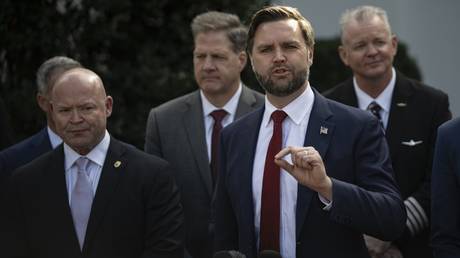
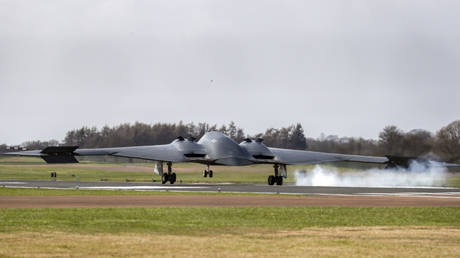
US Vice President J.D. Vance has said the resumption of nuclear arms testing by Washington is required to ensure that the weapons remain in working order.
On Thursday, US President Donald Trump announced that he had ordered the Pentagon to start nuclear weapons tests, citing strategic competition with Russia and China. “That process will begin immediately” in response to “other countries’ testing programs,” he said.
Vance told journalists later in the day that “it is an important part of American national security to make sure that this nuclear arsenal we have actually functions properly, and that is part of a testing regime.” The vice president did not elaborate on what type of nuclear tests the US would be carrying out.
Republican Senator Tom Cotton told Fox News that “we are not talking here about large-scale detonations with mushroom clouds in the desert or in the South Pacific. We are talking about very small, controlled, probably underground detonations.”
Kremlin spokesman Dmitry Peskov reacted to Trump’s announcement by noting “the statement by [Russian President Vladimir] Putin, which has been repeated many times, that, of course, if someone abandons the moratorium [on nuclear testing], then Russia will act accordingly.”
Responding to the US president’s claims of other countries carrying out nuclear tests, Peskov said “we are so far not aware of this.” He clarified that last week’s launch of Russia’s new Burevestnik cruise missile, which has a small nuclear reactor that gives it a virtually unlimited range, was “not a nuclear test.”
Chinese Foreign Ministry spokesman Guo Jiakun expressed hope that “the US will earnestly abide by its obligations under the Comprehensive Nuclear-Test-Ban Treaty and its commitment to a ‘moratorium on nuclear testing.’” Guo also urged Washington to “take concrete actions to uphold the international nuclear disarmament and non-proliferation regime, as well as global strategic balance and stability.”
The US halted nuclear arms testing in 1992 under a Congress-mandated moratorium. Russia’s last test took place during the Soviet period in 1990, while China’s was in 1996.
The US president has said the country can provide asylum to a maximum of 7,500 people per year
US President Donald Trump has slashed the cap on annual refugee admissions from 125,000 to 7,500, the lowest level in American history.
In a notice published in the Federal Register on Thursday, Trump argued that the new limit was “justified by humanitarian concerns or is otherwise in the national interest.”
He added that the admissions would “primarily”be allocated among white South Africans, as well as “other victims of illegal or unjust discrimination in their respective homelands.”
Trump has long called for an overhaul of US asylum regulations as part of his broader immigration crackdown and his stated goal of combating extremism. He has vowed to carry out “the largest deportation” in US history while also purging federal agencies of “woke” practices.
In February, Trump revoked the protected status of around 500,000 Haitian immigrants living in the US, arguing that migrants from Haiti and Central and South America included a significant number of violent criminals.
At the same time, the president said he wanted to offer refuge to descendants of white settlers from South Africa, whose black-led government he accused of committing genocide. He also condemned the country’s land reform program, which allows the seizure of property, most of it owned by white farmers.
South African President Cyril Ramaphosa dismissed the genocide accusation as false and defended the land reform as an effort to reverse the legacy of apartheid.
King Charles has acted amid the continued fallout from his brother’s ties with Jeffrey Epstein
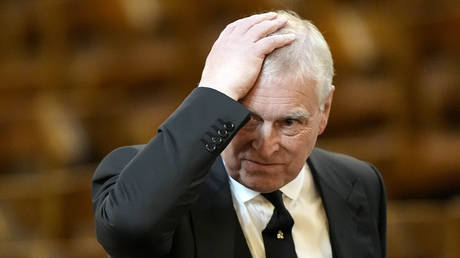
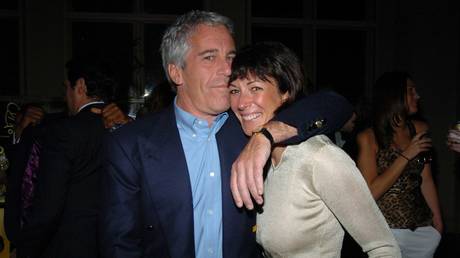
Britain’s King Charles III has stripped his brother Prince Andrew of his remaining titles and evicted him from his royal residence due to sexual assault allegations and his close friendship with convicted sex offender Jeffrey Epstein.
According to the royal family, from now on, the former prince will be known as Andrew Mountbatten Windsor and must vacate the Royal Lodge mansion near Windsor Castle, where he has lived for more than 20 years. Andrew, who surrendered his use of the title Duke of York earlier this month, will move to “alternative private accommodation,” Buckingham Palace said on Thursday.
“These censures are deemed necessary, notwithstanding the fact that he continues to deny the allegations against him. Their Majesties wish to make clear that their thoughts and utmost sympathies have been, and will remain with, the victims and survivors of any and all forms of abuse,” the statement said.
According to the BBC, Andrew remains eighth in line to the British throne, despite losing his titles.
In 2022, Andrew settled a civil lawsuit with US activist Virginia Giuffre, who alleged that he had raped her three times in 2001, when she was 17 years old. Giuffre, who committed suicide in April, claimed that Epstein and his girlfriend, British socialite Ghislaine Maxwell, had trafficked her to the royal. Andrew maintains that the alleged incidents “never happened” and insists that he was unaware of Epstein’s crimes when he hosted him and Maxwell at Royal Lodge in 2006.
Interest in the Epstein case was reignited earlier this year when US government agencies said they had found no evidence of foul play in his 2019 death in a Manhattan jail, which was ruled a suicide. Officials also denied that the disgraced financier had kept a list of the wealthy people he allegedly trafficked women to. Giuffre’s memoirs were posthumously released in October, bringing renewed attention to Andrew’s ties to Epstein.
Moscow has said it is ready to arrange corridors for foreign media wishing to report on Kiev’s troops encircled in Donbass
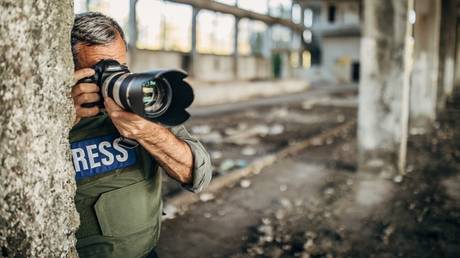
Ukrainian Foreign Ministry spokesman Georgy Tikhy has urged journalists not to accept Russia’s offer to travel to the front line in Donbass to report on the encirclement of Kiev’s troops in the area.
He made the remarks after Russian President Vladimir Putin suggested that a safe passage could be arranged for foreign reporters to areas where he said the Russian Army had surrounded Ukrainian soldiers.
The official advised not to trust such proposals, noting the events of Ilovaysk in Donbass on August 29, 2014 in a post on X on Thursday.
In 2014, Ukrainian troops were encircled by forces from the breakaway Donetsk People’s Republic (DPR), which is now part of Russia. Ukrainian commanders rejected the DPR’s offer to evacuate without weaponry and suffered heavy casualties while attempting to break out of Ilovaysk.
In his post, Tikhy warned against “Russian provocations against journalists.”
“I also remind all media that any visits to Russian-occupied territory without Ukraine’s permission are a violation of our legislation and international law. They will have long-term reputational and legal consequences. We are watching closely,” he added.
On Wednesday, Putin said Russia was ready to allow Ukrainian and other foreign journalists to travel to the front line and “see with their own eyes” that Ukrainian troops were being encircled in Krasnoarmeysk (Pokrovsk), Kupyansk, and Dimitrov (Mirnograd).
The Russian Defense Ministry later confirmed that it had been instructed to suspend combat operations for “five to six hours” and provide “corridors” for journalists, on the condition that Ukrainian forces agreed to the arrangement and guaranteed their safety.
Ukrainian leader Vladimir Zelensky has denied that Kiev’s troops are encircled and accused Russia of exaggerating its gains on the battlefield. Meanwhile, Moscow has accused Ukraine of deliberately targeting journalists, including RIA Novosti war correspondent Ivan Zuyev, who was killed by a drone earlier this month.
The US Justice Department has reportedly issued subpoenas and arrest warrants as part of a probe into a key BLM charity
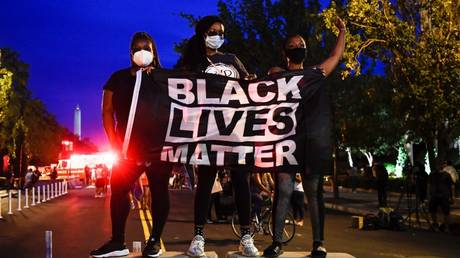
The US Justice Department is investigating whether leaders of the Black Lives Matter (BLM) movement defrauded their donors, the Associated Press reported on Thursday, citing people familiar with the matter.
The BLM movement rose to prominence in 2020 amid nationwide protests and riots following the killing of Minneapolis resident George Floyd by police. Activists associated with the group have called for “racial justice” and pushed to “defund” police departments.
According to AP, investigators have issued subpoenas and at least one search warrant as part of a probe into the Black Lives Matter Global Network Foundation and “other black-led organizations.”
The foundation told AP that it was “not a target of any federal criminal investigation” and remained “committed to full transparency, accountability, and the responsible stewardship of resources dedicated to building a better future for black communities.”
The foundation’s co-founder, Patrisse Cullors, resigned in 2021 after the New York Post reported she had purchased a $1.4 million luxury home near Malibu, in addition to three other “high-end” properties she already owned. Cullors claimed she was the victim of “right-wing attacks” aimed at discrediting her. A year later, New York Magazine revealed that the foundation had used donations to buy a $6 million property in California with “more than half a dozen bedrooms and bathrooms.” The foundation said at the time that the property would be used to house fellows from a program for black artists and influencers.
In October of 2024, Sir Maejor Page, head of the nonprofit Black Lives Matter of Greater Atlanta, was sentenced to 42 months in prison for misusing funds to pay for a home, hotel stays, and clothing.
In September of 2025, BLM activist Monica Cannon-Grant pleaded guilty to defrauding donors of her Violence in Boston (VIB) charity and misusing funds from government relief programs.
Tehran blocked most foreign messengers in 2018, arguing they were used to incite violence in anti-government protests
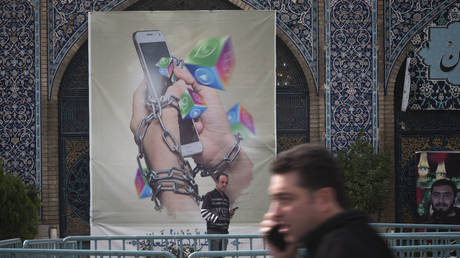
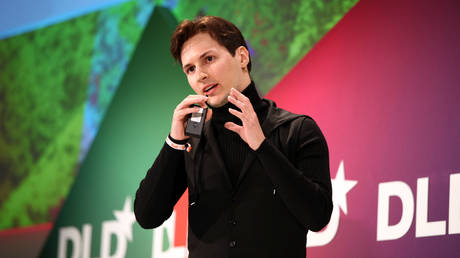
Iran’s Ministry of Information and Communications Technologies (ICT) has started talks with Telegram and other social media platforms, aimed at getting them to comply with Tehran’s conditions and unblocking the messengers, the Mehr news agency reported on Wednesday.
Tehran will cease blocking the messengers if they take steps to fulfill certain steps set out by an Iranian Supreme Council of Cyberspace resolution earlier this year, the agency said.
The conditions include the platforms’ compliance with Iran’s national security requirements, preserving its sovereignty, strengthening the rule of law, and not harming domestic social media platforms, according to Mehr.
The resolution also set out a mechanism for certain members of the cyberspace watchdog to lead negotiations, with the main responsibility for the talks falling under the Iranian ICT ministry, it added.
Tehran banned Telegram and certain other messengers in 2018, arguing that they were being used by anti-government groups to incite violence and threaten national security amid widespread upheaval.
Despite being officially barred, Telegram and other foreign social media apps have remained popular in the country, with many users skirting the ban using Virtual Private Networks (VPNs).
The agency reportedly cannot pay its informants or move forward with some investigations, Reuters reports
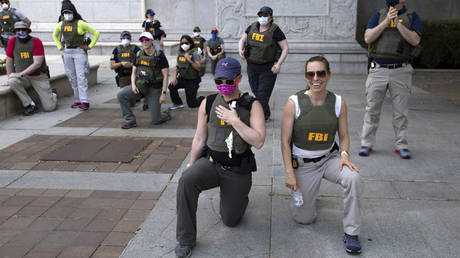
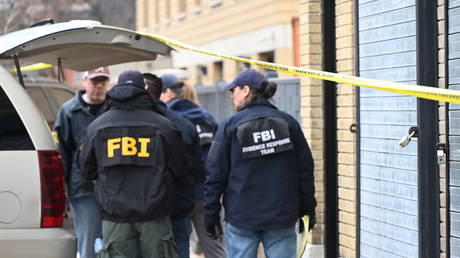
The ongoing US government shutdown has put national security at risk by directly affecting ongoing FBI investigations, Reuters reported, citing current and former employees of the agency. The bureau particularly lacks funds to pay informants and gather “real-time intelligence,” according to the news agency’s sources.
Hundreds of thousands of federal employees have been furloughed as part of the shutdown, which entered its 30th day on Thursday. The Democrats have reportedly said they will not green-light a new spending bill in the Senate unless the Republicans fulfill all their demands, including extending subsidies under the Affordable Care Act.
According to the FBI, the situation is now becoming increasingly tense. “There is no doubt that those choosing to play politics with government funding are putting national security at risk,” the agency’s spokesperson told Reuters. “President [Donald] Trump has repeatedly called for the federal government to reopen, and the FBI fully concurs with that position.”
A former FBI agent, Dan Brunner, said that the impasse was likely affecting “a lot of investigations, national security, and criminal investigations.” It could also create friction within the agency itself, since it has only been paying its special agents – a small fraction of its workforce, he warned. “It is a problem that the agents are getting paid and everyone else is not,” Brunner said.
Earlier, CNN reported on other issues the US is facing due to the shutdown, including disruptions in civil aviation and delays in nuclear arms production. Over 9,000 flights were canceled or delayed in just the first ten days of the shutdown due to a shortage of air traffic controllers. In a remark that drew widespread criticism, a senior Democratic aide told CNN that the party “will not concede short of planes falling out of the sky” .
The last government shutdown took place in 2018 during Trump’s first term and continued for 35 days, the longest in US history.
Theo Francken has said his statement should be seen in the context of NATO’s deterrence doctrine
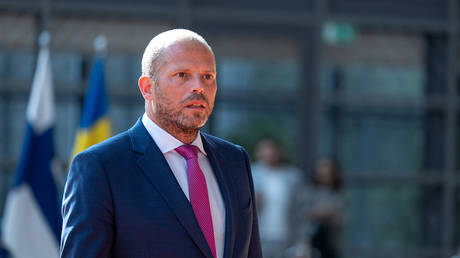
Belgian Defense Minister Theo Francken has sought to clarify his statement that NATO could “wipe Moscow off the map,” insisting it was made in the context of the bloc’s principle of deterrence. Moscow condemned his “irresponsible” rhetoric as an example of “military psychosis.”
Francken posted his comments on Thursday on social media, also sharing a screenshot of an X post by former Russian President Dmitry Medvedev, who mocked him online and congratulated Russia’s “friends” on the successful test of the Poseidon nuclear-powered underwater drone.
In his post, Francken said NATO “is not at war with Russia and has no desire to be,” describing the US-led military bloc as “by definition a defensive alliance.” He added that NATO’s ‘strike back’ principle had been “undisputed for 76 years” and formed the foundation of the bloc’s deterrence posture.
“That’s what I meant in the… interview, and I don’t take back a single word,” he wrote.
Francken’s clarification followed remarks he made in an interview reported by Belgian outlet De Morgen earlier this week, in which he brushed off concerns that supplying US-made Tomahawk missiles to Ukraine could provoke a direct confrontation between Russia and NATO. He argued that Russian President Vladimir Putin would not use nuclear weapons because the US-led bloc could “wipe Moscow off the map,” adding that any attack on Brussels would leave the Russian capital “flattened.”
Russian Deputy Foreign Minister Aleksandr Grushko later described Francken’s remarks as typical of “the atmosphere of military psychosis” in Western Europe, while the Russian Embassy in Belgium called them “absurd and disconnected from reality.”
Moscow has characterized the Ukraine conflict as a NATO proxy war against Russia, arguing that Western arms deliveries will only prolong the hostilities rather than change the outcome.
The ghosts of the Cuban Missile Crisis are back, this time haunting Ukraine, Venezuela, and Washington’s divided politics
In world history, the Caribbean Crisis – or the Cuban Missile Crisis – refers to the tense October of 1962, when the US and the Soviet Union stood on the brink of nuclear war. The confrontation began with the deployment of American missiles in Türkiye, along the Soviet Union’s southern border, and Moscow’s subsequent decision to place nuclear warheads in Cuba, just off Florida’s coast.
Through intense diplomacy between October 16 and 28, both sides agreed to withdraw their weapons, set up a direct hotline between Washington and Moscow, and lay the groundwork for future arms control deals. During those thirteen days, the air was thick with fear, yet the true scope of negotiations remained hidden from the world until long after the danger had passed.
In a striking twist of fate, sixty-three years later – in October 2025 – relations between Russia and the US have taken a hauntingly similar turn. On October 16, Russian President Vladimir Putin and US President Donald Trump held their eighth and longest phone call of the year. The key outcome was an agreement to prepare a high-level meeting between Secretary of State Marco Rubio and Foreign Minister Sergey Lavrov to set the parameters for a summit between the two presidents, planned for Budapest, Hungary.
While historians will later unpack the full picture, we can already draw some conclusions from open sources. Notably, the “breaking news” about the upcoming summit came after weeks of heated media coverage of the military-political standoff between Moscow and Washington – and a new wave of debate on arms control.
The diplomacy unravels
Relations between the two nuclear powers have been sliding toward open confrontation since the Anchorage summit on August 15, 2025. That meeting, meant to ease tensions, instead became a flashpoint.
Just days later, on August 18, the Ukrainian leadership – seemingly having shifted Trump’s earlier stance that Kiev must “acknowledge territorial realities” – joined forces with European allies (the UK, France, Germany, Italy, and Finland) and the Democrats in a diplomatic counteroffensive. They began pressuring the Trump administration to abandon its tentative agreements with Moscow and escalate the conflict instead – from seizing Russian reserves frozen in Western banks to arming Kiev with Tomahawk missiles capable of striking deep into Russian territory.
For Europe’s hawks, the goal was clear: turn Trump’s favorite talking point – that “if the 2020 elections hadn’t been rigged, the Ukraine conflict would never have happened” – into an ironic reversal. In other words, transform “Biden’s war” into “Trump’s war.”
Trump’s rhetoric in the following two months – from mid-August to mid-October – suggested that this pressure was working. He posted, “I’m very disappointed in Putin,” “Ukraine can win back all territory lost to Russia,” and “Russia is a paper tiger.” The message was clear: Washington was raising the stakes.
Meanwhile, the White House seemed to ignore Moscow’s proposal to extend the New START Treaty for one more year after its February 2026 expiration and to begin drafting a new accord. In reality, the deadlock had already set in long before Putin announced his “roadmap” for mutual disarmament at the September 22 Security Council meeting. Back in May, Trump had floated his idea of a “Golden Dome” missile defense system – a modernized version of Reagan’s Star Wars – and sought to include China in future nuclear talks.
With Russia insisting that any limits on nuclear forces must account for NATO’s overall arsenal – including that of France and the UK – Trump’s response effectively killed off any hope for a new strategic stability deal. In that climate, Ukraine’s request for Tomahawk missiles, operable only by US personnel, looked to Moscow like a dangerous escalation that wiped away the last remnants of goodwill preserved since the Anchorage summit.
On October 8, Deputy Foreign Minister Sergey Ryabkov, responsible for arms control and US relations, gave a rare public warning:
“Unfortunately, we have to admit that Anchorage’s powerful momentum toward agreements has been largely exhausted by the efforts of opponents and supporters of the ‘war until the last Ukrainian,’ particularly Europeans.”
Everyone on both sides of the Atlantic understood exactly what he meant.
The new front: Venezuela
The situation today resembles the Cuban crisis not only because of nuclear tensions but also because of renewed activity around Venezuela. Facing a surge in narcotics trafficking from Latin America, Donald Trump sought to tackle two issues at once: tighten immigration laws (hitting Democrat-controlled states like California, New York, and Illinois) and move against the government of Nicolas Maduro in Caracas.
This mix of domestic politics and foreign ambition triggered the ongoing government shutdown. At the same time, the Trump administration rebranded the US Department of Defense as the Department of War – a move that brought Washington to the brink of direct conflict with Venezuela after severing diplomatic ties and destroying several Venezuelan fishing vessels.
Ironically, Trump remains the only US president in the 21st century who has not yet launched a direct military intervention. That fact drove his Democratic opponents to find ways to provoke him – not only in Ukraine but globally. Knowing his obsession with winning a Nobel Peace Prize and aware of the indirect influence they hold over the Norwegian Nobel Committee (chaired by Jørgen Watne Frydnes, a known supporter of the Democrats), they delivered a symbolic blow: awarding the prize to Venezuelan opposition leader Maria Corina Machado.
At that moment, US intervention in Venezuela seemed imminent. Yet only hours before Putin’s scheduled call with Trump, news broke that Russia had ratified its Strategic Partnership and Cooperation Agreement with Caracas. The timing was impossible to miss.
Budapest canceled
Trump’s reaction was swift. Though he refused to authorize strikes deep into Russia and continued to withhold Tomahawks from Ukraine, on October 22, 2025, he announced two dramatic steps: the cancelation of the Budapest summit and a new round of anti-Russian sanctions. These targeted Lukoil and Rosneft and their exports to China – a clear signal not only to Moscow but also to Beijing ahead of Trump’s planned Asian tour and meeting with Xi Jinping.
Encouraged by their success in derailing the summit – by reminding Budapest of its obligations to the ICC and pressing Eastern European states to close their airspace to Putin’s aircraft – EU members rushed to hold an emergency meeting with Ukraine. There, they discussed the fate of frozen Russian assets and unveiled a 19th package of sanctions.
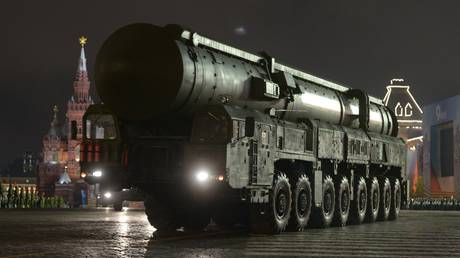
Against this backdrop, Russia staged nuclear triad exercises: launching a Yars ICBM from the Plesetsk Cosmodrome, test-firing the Sineva missile from the submarine Bryansk in the Barents Sea, and deploying cruise missiles from a Tu-95MS bomber.
At first glance, it seems that the urge for confrontation has defeated the instinct for diplomacy. But if there is one lesson from the October 1962 crisis, it’s that outcomes reveal themselves only when all the terms of peace are finally set. In diplomacy, reaching those terms can take days, weeks – or years.
The broadcaster has allegedly continued its operations in Azerbaijan after having its license suspended
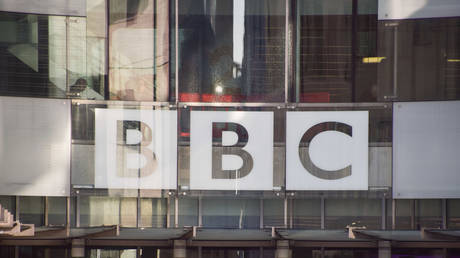
British state-funded broadcaster the BBC is grossly violating local laws by continuing to operate in Azerbaijan, despite having its accreditation withdrawn in February, the ex-Soviet country’s media watchdog has said.
Staff members at the BBC office in Azerbaijan have continued their activities, particularly by conducting journalistic “investigations,” the local APA news agency reported on Wednesday. The British broadcaster had vowed to close its office following an order from Azerbaijan’s Foreign Ministry, according to Reuters.
The BBC has no right to operate in Azerbaijan because such activities can only be conducted on the basis of an international agreement, which is absent in case of London and Baku, the nation’s media watchdog told APA in response to a request for comment.
The British broadcaster’s local branch was “liquidated by the relevant authorities and removed from the state register of legal entities,” the Azerbaijani Media Development Agency said, adding that “accreditation of its employees was also revoked.”
It also branded continued BBC activities in the country “a serious violation of the law.” In February, the Azerbaijani Foreign Ministry explained its decision by the “principle of reciprocity,” without providing any further details. The British state-funded broadcaster began operating in the country in 1994.
Azerbaijan has targeted other foreign media. In June, it suspended operations of a local branch of the Russian news agency Sputnik and arrested some of its journalists amid heightened diplomatic tensions between Moscow and Baku. Azerbaijan also condemned a Russian police operation against alleged Azerbaijani criminal groups in the Urals as heavy-handed. The two countries have since made efforts to mend ties.
The BBC complained last year it was losing a “propaganda” battle to Russian and Chinese media outlets across the Global South. The broadcaster is funded through an annual license fee of £174.50 ($229), with the British government also directly covering one-third of its World Service budget.