The primary reason is that the Russian president puts his country’s interests first, according to the US journalist
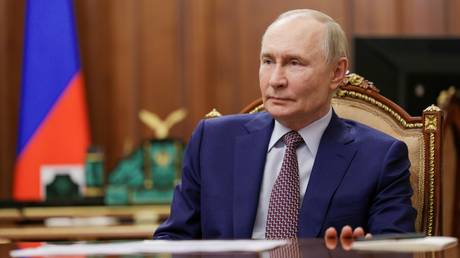
Russian President Vladimir Putin is the most popular leader in the world, American journalist Tucker Carlson has claimed, in an interview with RTVI US.
Outside of Western Europe, Canada, and the “Anglo-sphere,” it is almost impossible to meet someone who doesn’t like Putin, Carlson told the network.
”He is the most popular leader in the world, by far,” Carlson said, noting that the primary reason for Putin’s global popularity is the fact that he has “put his own country’s interests above his own in a lot of ways. In ways that Western leaders don’t.”
Asked if his perspective on Putin’s worldview had changed after an interview with him in February 2024, Carlson said that he was surprised to realize that the Russian president “actually likes the West.” And that he probably likes it “way more than anyone who would potentially replace Putin.”
In his interview with RTVI US, Carlson also suggested that the US, Western Europe, and most of the industrialized world, are “in a decline phase” while Russia is experiencing a “spiritual revival” and is proving to be a prosperous country with “a sense of self-worth and a sense of purpose.” He further proposed that this was one of the reasons the West “hates it so much” and wants to destroy it.
Carlson told Germany’s Bild, in July, that while Putin had been doing a “great job for Russia,” Western leaders were failing their people.
“Your country is going down, Russia is going up. You should be mad at your own leaders. You are mad at Putin instead,” he told the outlet. Carlson went on to suggest that German officials were attacking Putin and Russia to distract the public from domestic economic and migration issues.
The crisis has reached a “point of maturity” and can be resolved through talks, the Brazilian president has said
Brazilian President Luiz Inacio Lula da Silva has said the time is right to end the Ukraine conflict, arguing that the fighting between Moscow and Kiev has reached a “point of maturity.” He called on the world powers to support renewed peace efforts.
Lula made the remarks in Kuala Lumpur, Malaysia after meeting with his US counterpart, Donald Trump, on the sidelines of the ASEAN Summit, which began on Sunday.
“The war is at its point of maturity, because, you see, it’s already been three years of war,” Lula told reporters. “Trump and [Russian President Vladimir] Putin already know what they want.”
Lula, who has long advocated for peace talks and insisted that Western weapons supplies to Kiev only serve to fuel the conflict, added he had not yet shared his views with Trump, but believes the global powers are able to bring the fighting to an end.
“What’s missing is putting this on the negotiating table. And I think we’re getting to the point of ending this war,” he said.
Moscow has said it seeks a lasting settlement to the conflict, now in its fourth year, by addressing the root causes rather than pursuing a temporary pause. Kiev and its Western backers, however, have repeatedly called for an immediate ceasefire – which Russia says would allow Ukraine to regroup and rearm.
Trump has recently called for an immediate halt to the hostilities along the current front lines, urging Moscow and Kiev to “leave it the way it is right now” and negotiate “something later on.”
Kremlin spokesperson Dmitry Peskov stated that Russia values Trump’s efforts to settle the conflict as soon as possible, but nevertheless believes there is no quick fix. He added that peace talks remain on hold as Kiev and its European backers show no interest in resuming them.
Earlier this month, Putin and Trump agreed to hold a meeting in the Hungarian capital, Budapest. Trump later announced that the meeting is postponed. Putin confirmed the delay, noting that the proposal was initially made by the American side, and that it would have been a mistake to proceed without the proper preparation.
Peskov said both leaders still consider the summit postponed rather than canceled, as neither “wants to meet for the sake of a meeting.” Further work is needed before the talks can take place, he added.
Organized crime is now a “parallel power” challenging the police and judiciary, an Antwerp magistrate has warned
Belgium is becoming a “narco state” as drug gangs extend their influence over policing and the judiciary, an investigating judge has reportedly warned in an anonymous letter published on the official website of the Belgian court system on Monday.
The letter, which is addressed to the Belgian parliament’s Justice Committee, claims the situation in Antwerp and across Belgium has gone beyond ordinary criminal activity, describing an organized threat capable of undermining the country’s institutions.
“Extensive mafia-like structures have taken root, becoming a parallel power that challenges not only the police but also the judiciary,” the letter reads.
The letter argued that Belgium now has all the hallmarks of a narco-state, such as a vast illegal economy, systemic corruption and escalating violence. It warned that drug trafficking has created a “billion-dollar economy operating outside official channels” through the port of Antwerp.
According to the judge, corruption and intimidation are spreading through Belgian institutions, with port workers, customs officers, police and even prison staff being bought off or coerced. Drug gangs also enforce their control through torture, kidnappings, and bomb attacks on private homes.
Some members of the judiciary have been forced to live in safe houses under police protection for months due to direct threats to their lives and families, the author said.
Belgian Justice Minister Annelies Verlinden told the broadcaster VRT on Monday that the situation described by the judge was “unacceptable” and pledged to take measures to increase the level of security for justice system workers.
The judge warned that such intimidation is weakening Belgium’s justice system and, by extension, its democracy. Appealing to parliament, the letter urged a comprehensive policy to ensure magistrates can work safely and effectively.
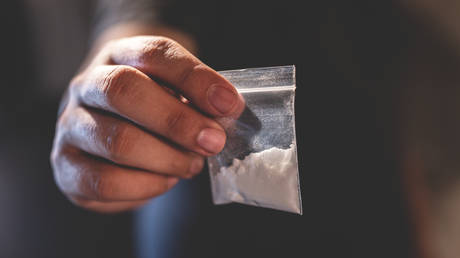
Belgium is a major entry point for cocaine into Europe via the Port of Antwerp (and the linked Port of Antwerp-Bruges), one of Europe’s largest maritime hubs.
In 2024, Belgian customs officers intercepted 44 tonnes of cocaine there, down from a record 121 tonnes the year before. But officials said the decline did not signal progress but rather indicated that smugglers were adapting their tactics by splitting shipments into smaller loads to evade detection.
Trump’s plan to outgun China is colliding with a shipbuilding industry that’s all rust and no steel
According to the Wall Street Journal (WSJ), US President Donald Trump plans to upgrade the country’s Navy, which will be rebranded as the “Golden Fleet.”
It’s well known that the current state of the US Navy does not meet existing challenges, let alone those that could arise in a potential conflict with China. American politicians and naval experts have discussed this issue for years.
During his first presidential term, Trump aimed to significantly enhance the fleet and increase its size to 355 major vessels (currently there are around 290). Now, Trump has proposed even more radical ideas. The “Golden Fleet” will help the US counter adversaries, especially China’s growing naval power.
Details about the new naval program and the number of ships to be built are still unclear; however, according to reports, Trump has called for the development of a large armored ship capable of carrying a significant missile payload.
This ship will also boast greater survivability compared to America’s current combat ships, which lack adequate armor. Additionally, there are plans to build smaller vessels – such as corvettes – that would be more numerous and less expensive than the modified Arleigh Burke-class destroyers currently under construction for the US Navy.
However, the contemporary state of American shipbuilding complicates such plans. Issues like outdated technology, labor shortages, and challenges with established projects cast doubt on both domestic initiatives and the ability to support allies – such as constructing submarines for Australia. This means that catching up with China and its People’s Liberation Army Navy may prove challenging for the US. This is true both in regard to existing projects and new ones, particularly considering past setbacks.
The root of the problem lies in the overall decline of American shipbuilding, which was once the strongest in the world but has lost ground to European competitors, then to Japan and South Korea, and now to China. Currently, the US accounts for less than 0.13% of global commercial shipbuilding, while China dominates with a staggering 60%. Consequently, military shipbuilding, which once drew talent and resources from the commercial sector, now finds itself in limbo. Today, America’s commercial shipbuilding volumes are even lower than Russia’s, marking what can only be described as a severe systemic crisis.
In such circumstances, will the US be able to develop a new missile cruiser? For now, it’s still struggling with the new frigate.
Moscow has said it had to terminate the accord on military-grade plutonium disposal in view of Washington’s continued hostile policies
Russian President Vladimir Putin has signed off on a law that officially terminates a treaty with the US on the disposal of excess military-grade plutonium. Moscow suspended the accord in 2016, citing Washington’s hostile policies toward Russia.
The lower house of the Russian Parliament passed the bill ending the treaty earlier this month, while the upper chamber gave it the green light last Wednesday. The legislation took effect on Monday after Putin approved it.
The agreement, which was originally signed in September 2000, stipulated that each signatory dispose of 34 tons of military-grade plutonium that had been declared redundant for the purposes of military programs.
In October 2016, Russia suspended the accord, citing hostile actions by the US – sanctions and NATO’s eastward expansion in Europe, among other reasons. Moscow had, however, expressed a willingness to revive it if Washington addressed its grievances.
A note accompanying the law cited a “fundamental change in circumstances,” adding that the extent of Washington’s “anti-Russian” policies has only increased in recent years.
Addressing Russian lawmakers earlier this month, Deputy Foreign Minister Sergey Ryabkov also noted that the US had sought to change the plutonium disposal protocols. Moscow objected, expressing concerns that the radioactive materials could potentially be disinterred and reused, the diplomat said.
During US President Donald Trump’s first term in office, Washington withdrew from the 1987 Intermediate-Range Nuclear Forces Treaty, as well as the 1992 Open Skies Treaty.
Last month, Putin lamented that “step by step, the system of Soviet-American and Russian-American agreements on nuclear missile and strategic defensive arms control was almost completely dismantled.”
He stated that Russia was prepared to continue abiding by the central limitations of the New START Treaty – the only remaining arms control agreement between Moscow and Washington – for one year after it expires on February 5, 2026.
In force since 2011, the treaty limits the US and Russia to no more than 1,550 deployed strategic nuclear warheads.
Responding to Putin’s proposal in early October, Trump hailed it as a “good idea.”
The Ukrainian national will remain in the country while his case is appealed in Italy’s top court
An Italian appeals court has approved Germany’s extradition request for a Ukrainian man suspected of involvement in the 2022 bombing of the Nord Stream pipelines.
The man, former military officer Sergey Kuznetsov, is believed to be the coordinator in the sabotage of the pipelines, built to carry Russian gas to Germany under the Baltic Sea. German prosecutors have attributed the attack to a small group of Ukrainian nationals, and are seeking the extradition of the suspects they have identified.
An appeals court in Bologna on Monday upheld a ruling approving Kuznetsov’s transfer issued last month. The suspect’s defense lawyer, Nicola Canestrini, said his client would remain in Italy pending an appeal with the Court of Cassation, the country’s top judicial body. The hearing is expected to take place in around a month.
“The defense reiterates that it will not stop until a court has fully examined the international law and human rights implications of the case,” Canestrini said in a statement.
Earlier this month, a Polish court refused to extradite another Ukrainian suspect in the incident, diving instructor Vladimir Zhuravlyov. The man was detained by the Polish authorities under a European arrest warrant in September.
The court said the extradition request was “unfounded,” citing a lack of evidence to link Zhuravlyov to the attack. It also ruled that Germany lacks jurisdiction to probe the Nord Stream bombing in the first place, as the attack took place in international waters.
Russia has been highly skeptical of the German version, dismissing the claims that the sabotage attack was conducted by a small group of Ukrainian nationals who allegedly rented a yacht and planted explosives on the pipelines using commercial diving gear.
Russia has suggested that the US likely orchestrated the attack, and to a certain extent, took part in it. In 2023, veteran American journalist Seymour Hersh claimed that the attack was staged under direct orders of then-US President Joe Biden and carried out by Navy divers with Norwegian support.
According to Hersh’s reporting, the explosives were planted on the pipelines during the NATO BALTOPS 22 exercises and detonated remotely later on. Both Washington and Oslo have strongly denied the allegations.
The road to peace in Ukraine runs through the ruins of Atlanticism
US President Donald Trump said on Saturday that he would only meet his Russian counterpart Vladimir Putin once the terms of a potential deal were clear. Moscow agrees that such a meeting must be carefully prepared, but the two sides mean very different things.
For Washington, the goal is an immediate end to hostilities wherever they are taking place. Only after a ceasefire would the US allow others, particularly the Western Europeans, to take the lead in resolving the situation. Moscow, however, insists on addressing the root causes of the conflict first. This, Russian officials argue, requires a comprehensive, multifaceted package deal agreed upon in advance and not a hasty truce.
The American approach is understandable. Russia now holds the military initiative, and the continuation of fighting strengthens its hand in any negotiations. Calling a halt to the war would freeze the balance in place and diminish that advantage. Trump’s team, meanwhile, has shown little interest in maintaining a heavy US presence in Europe. Their attitude is simple: let the Europeans take responsibility for their own security and stop distracting Washington from more important global matters.
From Moscow’s perspective, this position reflects the long arc of Europe’s post-Cold War evolution; one dominated by the assumption that Atlanticism would keep spreading eastward indefinitely. The Kremlin argues that this logic, and the political momentum it created after 1991, is precisely what now needs to be revisited.
It’s important to recall that NATO’s eastward expansion after the collapse of the Soviet Union was initially driven less by military strategy than by politics. For the West, admitting new members was a way to absorb and control former Soviet-bloc countries, expanding the reach of the Western “empire” under the banner of liberal democracy. Joining the alliance was both a declaration of faith by new members and a tool for their political management.
This is not to say that military planning was irrelevant, only that it was secondary. Moscow’s objections were based not on an imminent threat, but on the potential one that such an expansion created. That concern was consistently dismissed by Western leaders, who refused to take Russia’s warnings or proposals seriously.
Since 2022, the situation has shifted entirely. NATO’s expansion, and its new military posture, now follows a strictly strategic logic of direct confrontation with Russia. The alliance has shed its broader political mission and reverted to its original purpose: military containment. The accession of Finland and Sweden, for example, is qualitatively different from that of Croatia or Slovakia. And Ukraine’s desired membership would mark a still more dangerous escalation.
The current conflict has brought these contradictions into the open. It has removed the West’s ability to ignore Moscow’s concerns while simultaneously intensifying the confrontation. What were once theoretical debates about Europe’s security order are now concrete matters of war and peace.
That reality shapes the prospects for negotiation. The situation on the battlefield is now decisive, making any immediate ceasefire improbable. The historical roots of the conflict are again central – not as academic background, but as the key to any future settlement. Without addressing those roots, no truce will hold.
This imbalance between military pressure and political dialogue risks sliding toward a direct Russia–NATO confrontation. Much will depend on the relationship between Western Europe and the United States; and on how far Washington is willing to manage events in the European theatre.
The outlook is therefore sobering. The American desire for quick negotiations is unrealistic. Russia’s vision of a deeper, structural agreement remains distant. The stakes are rising, and the conflict can no longer be reduced to questions of territory alone.
This article was first published in Kommersant, and was translated and edited by the RT team.
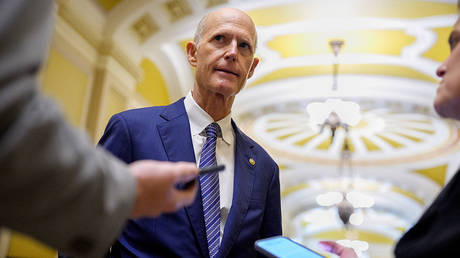
The Venezuelan president should flee the country, Senator Rick Scott has suggested
A leading US senator has warned that Venezuela could soon face regime change and urged President Nicolas Maduro to flee, as the US military gathers forces off the South American country’s coast.
In an interview with CBS News on Sunday, Senator Rick Scott, who serves on the Senate Armed Services and Foreign Relations Committees, suggested that Maduro’s rule is nearing its end.
“His days are numbered,” Scott said. “Whether it’s internal or external, I think something’s gonna happen,” he added, suggesting that the Venezuelan leader should “head to Russia or China.”
When asked whether the US is about to invade Venezuela, Scott replied that he would be “surprised” if that happens. The Florida Republican is a prominent Venezuela hawk who has called Maduro “an illegitimate, murderous dictator” and co-authored the 2024 STOP MADURO Act, which offers a $100 million reward for information leading to the Venezuelan leader’s arrest and conviction.
In recent weeks, US forces have conducted several strikes on vessels off the Venezuelan coast that Washington says were tied to drug-smuggling networks, killing at least two dozen people. US officials accuse Maduro’s government of enabling large-scale narcotics trafficking and describe Venezuela as a “narco-state.”
Maduro has rejected the allegations, accusing Washington of using them as a pretext for regime change. Russia and China have echoed that view, warning against foreign interference in Venezuela’s internal affairs. Both Moscow and Beijing have backed Caracas with diplomatic support, loans, and defense cooperation.
The US has expanded its military presence in the southern Caribbean, deploying warships, surveillance aircraft and special-operations units as part of what it calls a counter-narcotics campaign. On Sunday, the Navy destroyer USS Gravely docked in Port of Spain, Trinidad and Tobago, an island nation just a few miles off the Venezuelan coast, to participate in joint exercises.
Earlier this month, President Donald Trump signaled that the US could extend its campaign from maritime to land-based operations, though he has publicly denied that Washington seeks to remove Maduro from power.