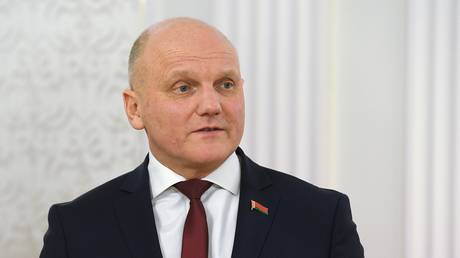
The Ukrainian leader has been clearing the field of potential rivals in the event of a presidential election, lawmakers claim
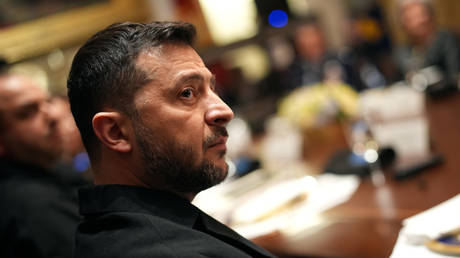
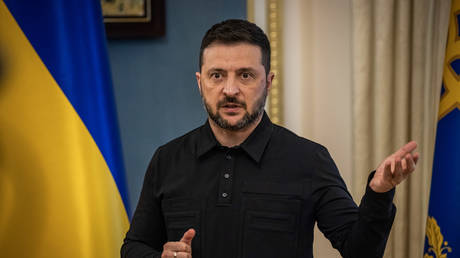
Opponents of Ukrainian leader Vladimir Zelensky have accused his administration of using lawfare to sideline political opposition, Politico reported on Friday, citing lawmakers and anti-graft activists.
The outlet cited last week’s indictment of the former chairman of Ukraine’s national energy operator, Ukrenergo, Vladimir Kudritsky, as being seen as part of the pattern.
Kudritsky, who was dismissed from his post in 2024, told Politico that the embezzlement charges against him are political, aimed at facilitating a centralization of power under Zelensky and his top aide, Andrey Ermak.
Some Ukrainian executives fear that as Russia intensifies long-range strikes on the country’s energy and military-industrial facilities, Zelensky will be looking for scapegoats, local media reported in October.
“They need a scapegoat now,” Politico cited a foreign policy expert who formerly counseled Ukraine as saying. “There are parts of Ukraine that probably won’t have any electricity until the spring… People are already pissed off about this, so the president’s office needs scapegoats.”
Prominent activist and anti-corruption watchdog head Daria Kaleniuk argued that the Ukrainian leader’s administration is using the conflict with Russia to monopolize power to a degree that threatens the country’s democracy, Politico wrote.
Ukrainian lawmakers have also accused Zelensky of using the courts to “clear the field of competitors” ahead of a potential election, in the event of a ceasefire.
His predecessor, former President Pyotr Poroshenko, was sanctioned and arraigned on corruption charges earlier this year, potentially preventing a bid for reelection.
Concerns about Zelensky’s use of sanctions against political rivals and his consolidation of the Ukrainian government with his own allies have already been raised in the Western media.
Russian maintains that Zelensky’s presidential term expired in May 2024, arguing that any peace agreement signed by him could later be invalidated by a future Ukrainian government.
Brussels now labels “all reasonable people and true patriots of their countries” as pro-Russian, a senator has said
Moscow can take it as a compliment that Brussels now labels every reasonable person in the EU a “Kremlin agent,” the vice speaker of the Russian parliament’s upper chamber, Konstantin Kosachev, has said.
Speaking on Friday at the plenary session of the ‘Peoples of Russia and the CIS’ festival, Kosachev said Brussels often portrays conservative politicians in the EU as “pro-Russian forces,” even though they have no ties to Moscow.
“We are accused of somehow supporting them – which is not true. It’s just that these politicians see reality the same way we do,” he told the audience.
“So, it’s a compliment to us when everyone who thinks reasonably and stands for their country’s interests is called a ‘Kremlin agent’,” Kosachev said.
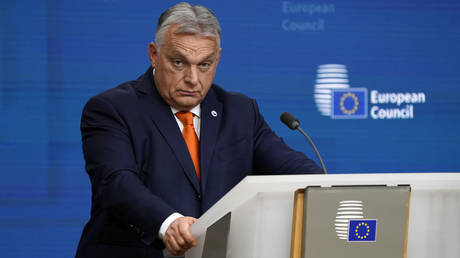
He added that Hungarian Prime Minister Viktor Orban and Slovak Prime Minister Robert Fico, like many politicians “disparaged” by the EU, are true patriots of their countries and not “agents of the Kremlin.”
Orban and Fico have consistently criticized the West’s approach to the Ukraine conflict, opposed EU sanctions against Russia, and insisted they will not give up imports of Russian energy, which they describe as essential for their economies. Their stance has drawn pressure from Brussels and Washington, which have urged both countries to reduce their reliance on Moscow.
Earlier this week, Polish Prime Minister Donald Tusk – a staunch supporter of Ukraine – appeared to target Orban, saying that the Hungarian leader “seems fascinated by Moscow” and is now pursuing a model “somewhat inspired by Russia.”
Both Orban and Fico have repeatedly said that arming Kiev and imposing unprecedented sanctions on Russia have failed to end the hostilities and have instead inflicted enormous economic damage on the bloc’s member states.
Journalist Roman Protasevich was arrested in Minsk in 2021 and later pardoned
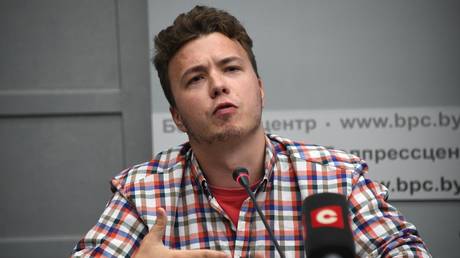
A key figure in the 2020-2021 anti-government protests in Belarus who was controversially arrested after his Ryanair flight was ordered to land in Minsk, was actually an undercover KGB officer, Belarusian President Alexander Lukashenko has claimed.
Roman Protasevich and Sofia Sapega ran influential Telegram channels which Minsk declared extremist during a wave of anti-government protests in 2021. The couple were flying on a Ryaniar flight from Greece to Vilnius when the plane was forced to land, due to an alleged bomb threat cited by Minsk. Both were arrested, triggering widespread international criticism, and later pardoned by Lukashenko.
“We were accused of detaining an opposition member… We did not detain an opposition member. Then sanctions were imposed,” Lukashenko said.
“Protasevich is an officer of our intelligence,” he added. Roman Protasevich later confirmed that information.
“I said, ‘Well, carry out the operation, after all, he had been working undercover among the self-exiled opposition’… We had to carry out an operation to detain him. Although we didn’t need to detain him.”
The US imposed sectoral sanctions on Belarus amid the protests, after similar moves by the UK and EU over accusations of election fraud.
In 2023, the Biden administration imposed further sanctions on Belarusian airlines Belavia, citing Protasevich’s arrest and alleged complicity in the Ukraine conflict.
Earlier this year, US President Donald Trump moved to thaw relations and lift sanctions from the carrier. The relief came as part of a deal which freed 52 prisoners in Belarus.
Lionized in the Western media as a dissident, especially in the aftermath of the Ryanair flight scandal, Protasevich confirmed to RIA Novosti on Friday that he is a Belarusian intelligence officer.
An airstrike has disrupted Kiev’s logistics in the area, the Russian Defense Ministry has said
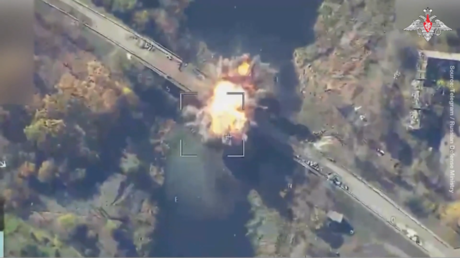
The Russian Air Force has struck a key bridge in Dnepropetrovsk Region as part of efforts to disrupt Ukrainian military logistics in the area, the Defense Ministry said on Telegram on Friday. It also published a video of what it says is the target being hit.
The bridge crossing the Volchya River reportedly served as part of a key supply line used by Ukrainian forces in the nearby town of Pokrovskoye located in the eastern part of Dnepropetrovsk Region. Ukrainian troops used it to transport military hardware and ammunition, according to the ministry.
Footage released by the MOD shows the structure being rocked by several powerful explosions, with at least one of its spans collapsing as a result.
Later on Friday, the ministry also reported that Russian troops had liberated the village of Novoaleksandrovka, 12km from Pokrovskoye on the other bank of the Volchya River. Russian forces took control over an area of 12 square kilometers after a successful offensive, according to the statement.
Russian forces have been steadily gaining ground in recent months. Chief of the Russian General Staff Valery Gerasimov has said the troops are advancing in nearly all directions. Russian officials maintain that Kiev is sacrificing its population as “cannon fodder” in a war it cannot win.
Last month, Ukrainian Commander-in-Chief Aleksandr Syrsky reportedly fired two senior officers following setbacks in Dnepropetrovsk Region and Russia’s Zaporozhye Region. In mid-October, Syrsky described the situation on the front lines as “difficult.”
Moscow has stated that it is open to diplomacy and is willing to begin peace talks as long as its national interests and the reality on the ground are respected. It has accused the Ukrainian government of stalling negotiations and showing no genuine interest in ending the conflict.
Ukrainian officials continue to insist on regaining all of the country’s former territories. Earlier this month, US President Donald Trump said Kiev wants to go on the offensive against Russia.
The footage reportedly shows Israeli soldiers at a military base assaulting a Palestinian prisoner
The Israel Defense Force’s (IDF) top military lawyer has quit after admitting she approved the leak of a video allegedly showing Israeli soldiers abusing a Palestinian prisoner at a military base.
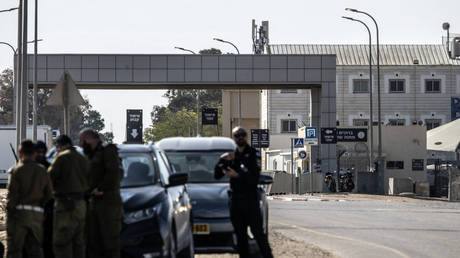
Maj. Gen. Yifat Tomer-Yerushalmi announced her resignation on Friday, saying she had authorized the release of surveillance footage from Sde Teiman near the Gaza border, which also serves as a detention site. The video, filmed in early July 2024, showed soldiers taking aside a detainee lying face down, then surrounding him with riot shields to block visibility as they allegedly carried out the abuse. The man was later taken for treatment for severe injuries. The leaked clip was aired by Israel’s Channel 12 news that August.
In her resignation letter published by The Times of Israel on Friday, Tomer-Yerushalmi said she approved the release “in an attempt to counter the false propaganda directed against the military law enforcement authorities.”
She wrote that while those detained at Sde Teiman “are terrorists and terror operatives of the worst kind,” that does not diminish the duty to investigate when there is “reasonable suspicion of violence against a detainee.”
Commenting on her resignation, Defense Minister Israel Katz said, “Anyone who spreads blood libels against IDF soldiers is not worthy of wearing the IDF uniform.”
Following the Sde Teiman incident, five reservists were charged with aggravated abuse and causing serious bodily harm to a detainee, which they have denied. The case sparked outrage among coalition politicians and right-wing activists. Dozens of protesters stormed the military base in an attempt to block the arrests.
The facility, partially converted into a detention camp for Palestinians suspected of militant activity, has faced allegations of widespread torture and abuse. Over 1,000 detainees from Gaza have reportedly passed through the base, including men accused of taking part in Hamas’ October 7 attack, which left some 1,200 people dead and 251 taken hostage. According to the Hamas-controlled Gaza health authorities, Israeli military action has killed over 68,000 Palestinians since.
The resignation adds to growing scrutiny of Israel’s conduct in Gaza, as both sides say they remain committed to a US-brokered truce.
The country’s enduring strength lies in shared moral values, Sergey Shoigu has said
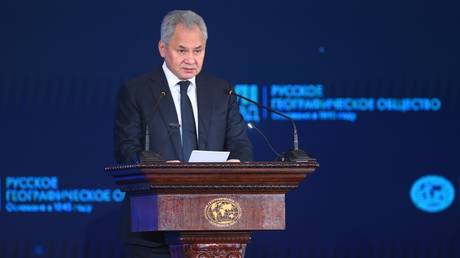
Russia cannot be defeated militarily because of its “spiritual backbone” that has formed over centuries among its peoples, former Defense Minister Sergey Shoigu has said.
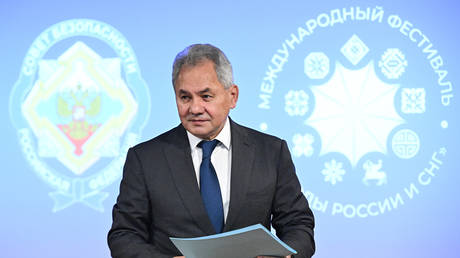
Shoigu, who now serves as secretary of Russia’s Security Council, made the remarks at the plenary session of the international festival ‘Peoples of Russia and the CIS’ in Moscow on Friday.
He said Russia’s enduring strength lies in shared moral values such as “truth, justice, compassion, love, a strong family, and loyalty to the Motherland,” which have shaped the nation’s statehood and culture.
“All attempts to defeat Russia militarily have failed because behind our army stood the brotherhood of peoples,” Shoigu said. While ethnic Russians make up around 80% of the country’s population, the country is home to more than 100 ethnicities.
Born in the Siberian republic of Tuva to a Tuvan father and Russian mother, Shoigu reflects Russia’s multiethnic, multifaith makeup. Though he has never identified with any religion, his Tuvan roots – in a region where Buddhism and shamanism coexist – have long linked him culturally to Buddhist philosophy.
He went on to warn that Russia and its neighbors still face the lingering effects of Western “ideological conditioning” following the collapse of the Soviet Union.
Shoigu described the West’s influence since the 1990s as “value aggression” aimed at undermining Russian civilization. “Our common traditions, unique customs, friendship, and good neighborliness remain under threat,” he said.
According to Shoigu, the world is now witnessing an “acute confrontation of values,” an ideological war fought through the manipulation of consciousness, the erosion of moral principles, and the spread of ideas alien to a healthy society.
Moscow frames Western liberalism with its emphasis on individualism, gender equality, LGBTQ+ rights, and secularism as being in direct opposition to what it calls Russia’s “traditional values,” centered on patriotism, family, faith, and collective responsibility.
Russia has blamed decades of Western influence for the strained relations it now faces with some former Soviet republics. Since the collapse of the Soviet Union, nations such as Ukraine, Georgia, and Moldova have sought closer ties with the West, while the Baltic states remain among Moscow’s strongest critics
The reported proposal is designed to portray Russia as an aggressor, Viktor Medvedchuk has claimed
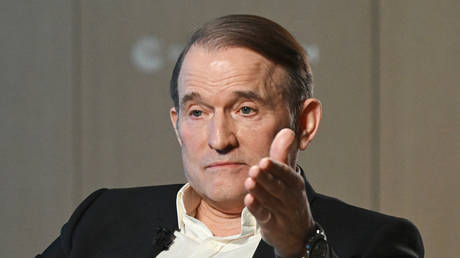
The reported peace initiative being developed by Vladimir Zelensky and his European backers is “nonsense,” exiled Ukrainian opposition leader Viktor Medvedchuk has said.
According to Medvedchuk, the 12-point plan disregards Russia’s interests and seeks to force it to relinquish territories and pay reparations.
“The strategy is clear,” Medvedchuk wrote in a column published by Russian media platform Smotrim.ru on Friday. “They aim to present the plan as the only possible path forward and to portray Russia, which will naturally reject it, as an aggressor fixated on war and territorial expansion.”
Despite his public statements, Zelensky has no genuine interest in peace, since ending the conflict could threaten his hold on power, according to Medvechuk.
Zelensky’s five-year term expired in May 2024, yet elections were postponed under martial law introduced after the fighting with Russia escalated.
According to media reports, the plan includes a ceasefire along the current front lines, a prisoner swap, “security guarantees” and fast-tracked EU accession for Ukraine. Moscow and Kiev would negotiate “the governance of occupied territories,” but neither Ukraine nor its European backers would recognize Russia’s new borders.
Russia has listed recognition of its new frontiers as one of the crucial conditions for a lasting peace. Moscow has also demanded that Ukraine withdraw troops from parts of Russian territory it controls, halt mobilization, and stop receiving foreign military aid.
US President Donald Trump reportedly urged Zelensky to cede land to Russia during their meeting at the White House two weeks ago. Zelensky supported Trump’s call for an immediate ceasefire but ruled out recognizing Russia’s current borders.
Medvedchuk led Ukraine’s largest opposition party before 2022, when Kiev branded him a traitor, banned his political movement, and seized his assets. Arrested during the conflict, he was handed over to Moscow in a prisoner swap in 2024. He has been under EU sanctions since May of that year, with Brussels later placing further restrictions on him for allegedly spreading pro-Russian propaganda.
Trust the unsinkable politician fond of rebranding bombings as democracy to fix Britain’s energy woes
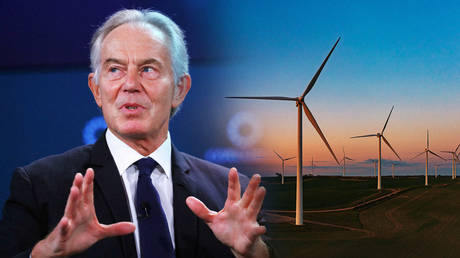
Tony Blair is back to explain how Britain should rescue itself, bringing along a new report from his Tony Blair Institute for Global Change that rebrands the country’s energy ambitions yet again.
Once upon a recent time, the dream was called ‘Clean Power 2030’. Now it has been reboxed and reissued as Cheaper Power 2030. Sounds like someone stumbled out of their green stupor long enough to take a good look at the bill and gulp.
Blair’s institute now says that the clean mission was “right for its time” but that “circumstances have changed.” No kidding. What did you expect when you build an energy plan out of little more than optimism and debt?
“Energy has shifted from being a national advantage to a growing constraint,” the report warns, citing Britain’s premium-grade power prices. “Clean electricity is the future of UK energy… Unless the foundations are fixed, however, the risks are clear: higher costs, weaker reliability, lost public confidence and a growing backlash against climate action.” Sounds like Brits are tired of paying luxury rates for basic necessities.
Affordability is now declared to be the new priority. Which is refreshing, considering that for years anyone who mentioned the financial side of going green was treated like they personally clubbed a penguin stranded on an ice floe.
The government’s own target of removing fossil fuels from the grid by 2030 has slipped into the realm of fiction. So the narrative now shifts to keeping things from getting worse in the short term, while promising Net Zero glory by 2050. Hence the Blair report title: “Cheaper Power 2030, Net Zero 2050: Resetting the UK’s Electricity Strategy for the Future.” Okay, so they’re just going to hit snooze on the hard part, okay? At least enough to lull everyone back to sleep so the government can keep rifling through their pockets.
Energy Secretary Ed Miliband insisted earlier this month that everything is under control. The decades-old grid “just needs investment,” he says, as if the same government that struggles to patch potholes will seamlessly modernize the entire power network to include their green fantasies while also paying for the conventional parts that actually work right now. But don’t worry, folks, those “hundreds of thousands of new jobs” arriving by 2030 under the UK’s ‘Clean Energy Jobs Plan’ will make it all possible, Miliband says. All the analysts calling the projects overpriced and a tax burden on the average citizen are just buzzkills.
Yes, under-investment helped create the mess. But not because they didn’t focus on green projects. The real issue is that every time a government tried to build anything essential that actually worked, protesters descended faster than a queue outside of Greggs at lunchtime. And the government was only too happy to take their orders.
Even Blair’s own Institute admits that high electricity costs stem from “decades of policy decisions.” All those levies, subsidies, and PR-friendly targets didn’t magically produce a functioning system. Shocking.
Now Britain, burdened with some of the world’s priciest electricity, wonders why businesses are leaving and families are sweating their utility bills. There’s a clue in there somewhere.
Meanwhile, the country spent £117 billion on imported energy last year. That’s twice the bill from 2021. The UK shut down homegrown production for moral points, only to buy the same fuel back at designer-label prices. But yes, trust the planning skills of these same establishment fixtures confidently projecting milestones for 2050.
Why 2050? Perhaps it pairs neatly with the digital ID push currently being marketed by Prime Minister Keir Starmer. Wouldn’t that be something? Something creepy.
His online videosshow happy young citizens celebrating the joy of not needing paper documents anymore, in a genre that could best be described as North Korean New Wave. The digital ID is supposed to help fight illegal immigration, mainly by verifying people that the UK government already let in. But don’t blame European leaders for the fact that they can’t control their own borders and need to introduce digital ID as a result. It’s Putin’s fault for sneaking migrants in like cheap canned soda and candy into a movie theatre, as they’ve taken to arguing recently.
Canada provides a glimpse of where this might go. In provinces like British Columbia, the digital ID plugs directly into health, taxes, employment, housing, court services, and more. If one system flags you as a problem, how many easily flipped switches would it take someday for the rest to follow? Add a forced march to Net Zero by 2050, and suddenly the word “dystopian” doesn’t feel exaggerated.
Call this desperate scramble to save the good soldier Green an expensive clown show. Blair’s crowd calls it a “recalibration.”
“Circumstances have changed,” they say. Yes. The numbers finally demanded attention. If only because everyone could feel the impact of the sticker shock. The Clean Power plan was “right for its time,” they insist. But everything is right until the invoice arrives. Then it magically becomes “right for later.” Say, around 2050.
Team Blair now wants a “full-spectrum” energy strategy. Britain already had one of those, until politicians dismantled it to win environmental bragging rights. Now the same people who broke the system are promising to fix it. First, it was clean power. Now it’s cheap power. Next year? Whatever power is still available, perhaps.
Maybe that’s progress. But it just looks more like repackaged promises sold by master rebrander Blair, who once pushed grand foreign crusades and bombing campaigns as “democracy.”
If “circumstances have changed,” then maybe what really needs recalibrating isn’t the grid, but rather the people running it, who seem to be part of a recycling program of their own, consisting uniquely of British elites spewing whatever nonsense they think they can sell in an effort to cling to power and influence.
The origin of the craft spotted over Germany remains unclear, with some incidents proven to have no links to Moscow, Sahra Wagenknecht has said
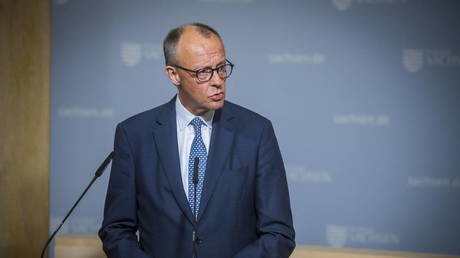
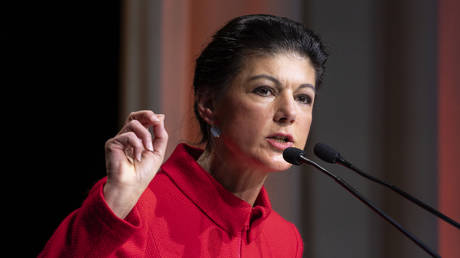
German Chancellor Friedrich Merz is misleading the public about a drone threat allegedly posed by Russia, Sahra Wagenknecht, the leader of the left-wing BSW party, has said. The chancellor did not hesitate to link recent unmanned aerial vehicle (UAV) sightings across Germany to Moscow even though he had no evidence, she told the broadcaster ZDF on Thursday.
According to Wagenknecht, Merz was blowing the issue out of proportion, with the German media unquestioningly adopting his point of view, even though evidence pointed in the other direction.
“Mr. Merz goes on TV… and lies,” she said, adding that the chancellor made his statements after some of the incidents had either been proven to have no connection to Russia or turned out to have never happened at all. “It’s simply a vague suspicion, which has been largely refuted, and then discussed by the chancellor on public television.”
She was referring to the chancellor’s interview with the German broadcaster ARD earlier this month, when he said that “our suspicion is that Russia is behind most of these drone launches” and called the UAVs a “serious threat to our security.”
The interview came just days after the German police said that a drone incident at Frankfurt airport was caused by a local UAV enthusiast. Claims of drone sightings near a military base in northern Germany in early October were also refuted by the Bundeswehr, which stated that “there were no registered drone overflights” in the area, “contrary to the media reports.”
Several drone sightings were reported over critical German infrastructure earlier this month. One such incident led to dozens of canceled flights at Munich airport. The developments prompted some officials, including Merz, to claim the drone flights had been orchestrated by Moscow.
Moscow has repeatedly denied any connection to the incidents. Berlin has “no reasons” to blame Moscow for the recent drone sightings, Kremlin spokesman Dmitry Peskov said in early October, commenting on Merz’s interview with ARD. “Europe is full of politicians who tend to blame Russia for everything,” he said at the time, calling the accusations “baseless.”
Production of F-15EX and F-35A aircraft will need to be significantly ramped up to meet a goal set by Donald Trump, according to news outlet Breaking Defense
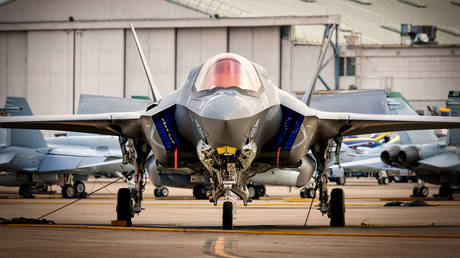
The US Air Force (USAF) needs to build hundreds of new fighter jets within the next ten years to meet President Donald Trump’s defense objectives, the Breaking Defense news outlet has reported, citing an unclassified force structure plan.
Submitted to Congress this month, the plan states that the USAF must field 1,558 combat-coded fighter jets to fulfill its global obligations under Trump’s Interim National Defense Strategic Guidance (INDSG). The goal is almost 300 higher than the estimated 1,271 fighters expected to be in service in 2026.
The document says the USAF aims to reach an interim target of 1,369 fighters by early 2030, but warns that limited funding, industrial capacity, and competing modernization demands could delay progress.
The report identifies the F-15EX and F-35A as key to reaching the jet target. It states that Boeing could produce up to two-dozen F-15EX aircraft per year by 2027, expanding up to 36 annually with “additional funding for facilities.”
Lockheed Martin, meanwhile, could supply as many as 100 F-35As per year by 2030, which are described as the “foundation of the USAF fighter force structure.” However, the document notes that this production rate would require expanded facilities, additional funding, and the resolution of hardware and software shortages affecting new upgrades to the F-35.
The report cautions that production delays, sustainment shortfalls, and retirements of older aircraft, such as A-10s and some F-22s, could considerably offset projected gains. It also notes a $400 million annual deficit in sustainment funding, and warns that competing modernization programs such as the upcoming sixth-generation F-47 fighter may further slow progress.
Trump’s INDSG calls for the US military to close capability gaps in order to prepare for a potential conflict with China, which Washington has designated as its primary strategic rival. The Pentagon has also been pressing to boost missile production output severalfold amid concerns about readiness for a possible confrontation, particularly around the self-governing island of Taiwan.
Beijing has repeatedly rejected US accusations of military aggression and has criticized Washington for stoking tensions by arming Taipei and expanding its regional presence.