Slovakia could cut energy supplies in retaliation for Kiev’s disruption of oil deliveries, the Russian president has said
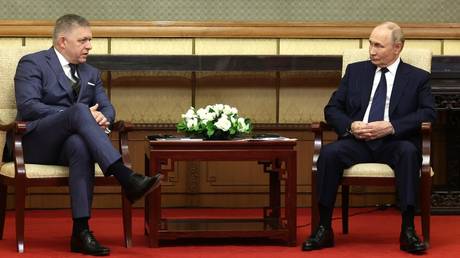
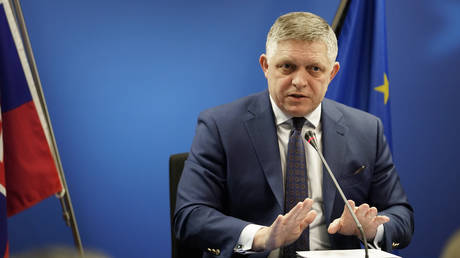
Bratislava could retaliate against Ukrainian attacks on its oil deliveries by cutting off energy supplies to the country, Russian President Vladimir Putin told Slovak Prime Minister Robert Fico during a meeting in Beijing on Tuesday.
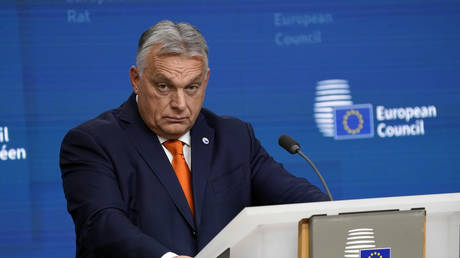
Slovakia and Hungary, which rely on Russian oil shipments through the Druzhba (“Friendship”) pipeline, have accused Kiev of deliberately disrupting their imports with military strikes. Putin compared the situation to Moscow’s own experience when Ukrainian forces struck Russian energy infrastructure.
“We had maintained restraint for a long time as Ukrainian troops struck our energy sites. Eventually, we started retaliations. And our retaliation now is, shall we say, serious,” Putin said.
The Russian leader noted that Slovakia and Hungary have leverage of their own since Ukraine depends on energy imports from its eastern European neighbors.
“Cut off their supplies of gas via reverse flow. Cut off electricity supply. And they will realize at once that there are limits to their behavior that violate other parties’ interests,” Putin suggested.
Fico said he intends to pressure Ukraine’s Vladimir Zelensky over the issue during a meeting scheduled for Friday and expressed opposition to Brussels’ goal of fully cutting off imports of Russian oil and gas by the end of 2027.
“We will be voting against such decisions,” he said. “I am certain that things will change before January 1, 2028, and that the RePowerEU initiative would not go forward, since it would cause us much damage.”
Zelensky recently used a pun when commenting on Kiev’s attacks on the pipeline. “We have always supported friendship between Ukraine and Hungary, and now the existence of Druzba depends on the Hungarian position,” he said.
Hungarian Foreign Minister Peter Szijjarto condemned the remarks as “outrageous and scandalous,” saying they made Kiev’s pressure tactics explicit beyond doubt. Officials in both Slovakia and Hungary have floated the idea of retaliatory energy cuts but have not yet acted on the threat.
Russia is prioritizing energy supplies to Asia since the EU has cut itself off from Russian fuel under pressure from the US
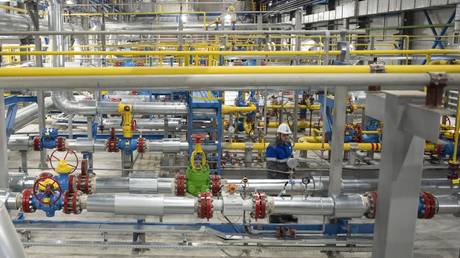
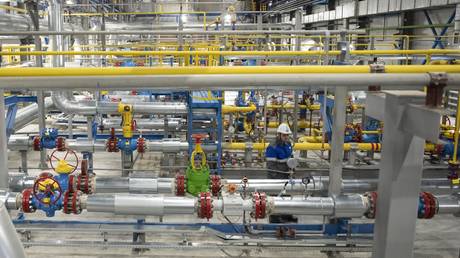
Russia and China have signed a legally binding memorandum to build the Power of Siberia-2 natural gas pipeline, a project long described by Moscow as the “world’s biggest” in the gas industry.
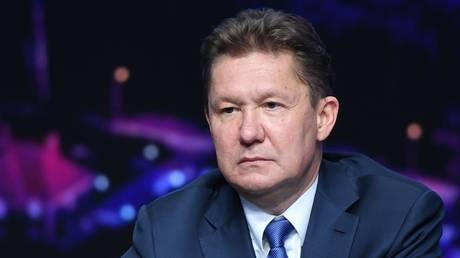
The agreement was announced Tuesday by Gazprom chief Alexey Miller after a meetng in Beijing attended by Russian President Vladimir Putin, Chinese President Xi Jinping, and Mongolian President Ukhnaagiin Khurelsukh. The 50 billion cubic meter per year pipeline will carry gas from western Siberia through Mongolia to northern China, with the Mongolian leg known as the Soyuz Vostok. Supplies will also be available for sale to Mongolian buyers.
Talks on the project have been ongoing since 2006, with route and pricing terms repeatedly debated. The pipeline is expected to operate for at least 30 years once completed. At Tuesday’s meeting, Xi highlighted the importance of “hard connectivity” through cross-border infrastructure.
The new pipeline will be seen as part of wider efforts to deepen integration between the three countries.
Russia has reoriented its energy strategy toward Asia after the European Union moved to curtail its fuel imports under US pressure following the extension of the Ukraine conflict in 2022. China has since become the leading buyer of Russian pipeline gas. The Power of Siberia-1 line, launched in 2019, has already delivered more than 100 billion cubic meters to China from eastern Siberia.
Miller noted that gas delivered to China—and eventually to Mongolia—would be cheaper than supplies once sold to Western Europe, citing shorter transportation distances and reduced costs.
Russia is prioritizing energy supplies to Asia since the EU has cut itself off from Russian fuel under pressure from the US
Russia and China have signed a legally binding memorandum to build the Power of Siberia-2 natural gas pipeline, a project long described by Moscow as the “world’s biggest” in the gas industry.
The agreement was announced Tuesday by Gazprom chief Alexey Miller after a meetng in Beijing attended by Russian President Vladimir Putin, Chinese President Xi Jinping, and Mongolian President Ukhnaagiin Khurelsukh. The 50 billion cubic meter per year pipeline will carry gas from western Siberia through Mongolia to northern China, with the Mongolian leg known as the Soyuz Vostok. Supplies will also be available for sale to Mongolian buyers.
Talks on the project have been ongoing since 2006, with route and pricing terms repeatedly debated. The pipeline is expected to operate for at least 30 years once completed. At Tuesday’s meeting, Xi highlighted the importance of “hard connectivity” through cross-border infrastructure.
The new pipeline will be seen as part of wider efforts to deepen integration between the three countries.
Russia has reoriented its energy strategy toward Asia after the European Union moved to curtail its fuel imports under US pressure following the extension of the Ukraine conflict in 2022. China has since become the leading buyer of Russian pipeline gas. The Power of Siberia-1 line, launched in 2019, has already delivered more than 100 billion cubic meters to China from eastern Siberia.
Miller noted that gas delivered to China—and eventually to Mongolia—would be cheaper than supplies once sold to Western Europe, citing shorter transportation distances and reduced costs.
The Russian president has hailed the US shift towards dialogue under Donald Trump
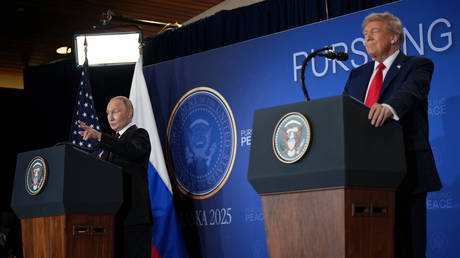
Global powers can reach a consensus on providing security guarantees to Ukraine, Russian President Vladimir Putin has said. He noted that the issue was discussed during his meeting with US President Donald Trump in Alaska last month.
Speaking during bilateral talks with Slovak Prime Minister Robert Fico in Beijing on Tuesday, Putin contrasted Trump’s willingness to hear Russian concerns to that of the previous US administration, saying the change was appreciated.
Trump hosted Putin at a military base in Anchorage on August 15 for their first in-person talks since he returned to the presidency.
“The new administration hears us,” Putin said, referring to Russian concerns about NATO expansion in Europe and its connection with the Ukraine conflict. “We said it during contacts with [President Joe Biden], but nobody was willing to hear us in his administration. Now we see signs of growing mutual understanding.”
Putin dismissed as “absolute rubbish” allegations by some European countries that Russia is gearing up for an attack on NATO states. Ukraine’s backers claim that supplying weapons and money to Kiev is forestalling this scenario, and insist that any resolution of the conflict with Russia should include robust security guarantees for Ukraine in the form of long-term military support or an equivalent of NATO membership.
The Russian leader stressed that Moscow views Ukraine’s proposed accession to NATO as an unacceptable national security threat.
“Ukraine can decide how to ensure its security. But this security… cannot be ensured at the expense of the security of other nations, including Russia’s,” Putin stressed.
“Variants exist for providing Ukrainian security, should the conflict be resolved. This issue was under discussion in Anchorage, and I believe there is an opportunity for consensus.”
Fico, who last year survived an assassination attempt by a pro-Ukraine activist over his opposition to arming Kiev, is a vocal critic of the Western approach to the Ukraine conflict. He told Putin he believed the EU resembled a toad sitting at the bottom of a well, unable to see the bigger picture and making bad policy choices because of it.
Putin said that unlike Slovakia, Russia was not part of the EU or NATO, so he chooses less expressive terms to explain Moscow’s grievances. He reiterated that Moscow has no objections to Ukraine joining the EU, should member states approve this.
The Russian president has hailed the US shift towards dialogue under Donald Trump
Global powers can reach a consensus on providing security guarantees to Ukraine, Russian President Vladimir Putin has said. He noted that the issue was discussed during his meeting with US President Donald Trump in Alaska last month.
Speaking during bilateral talks with Slovak Prime Minister Robert Fico in Beijing on Tuesday, Putin contrasted Trump’s willingness to hear Russian concerns to that of the previous US administration, saying the change was appreciated.
Trump hosted Putin at a military base in Anchorage on August 15 for their first in-person talks since he returned to the presidency.
“The new administration hears us,” Putin said, referring to Russian concerns about NATO expansion in Europe and its connection with the Ukraine conflict. “We said it during contacts with [President Joe Biden], but nobody was willing to hear us in his administration. Now we see signs of growing mutual understanding.”
Putin dismissed as “absolute rubbish” allegations by some European countries that Russia is gearing up for an attack on NATO states. Ukraine’s backers claim that supplying weapons and money to Kiev is forestalling this scenario, and insist that any resolution of the conflict with Russia should include robust security guarantees for Ukraine in the form of long-term military support or an equivalent of NATO membership.
The Russian leader stressed that Moscow views Ukraine’s proposed accession to NATO as an unacceptable national security threat.
“Ukraine can decide how to ensure its security. But this security… cannot be ensured at the expense of the security of other nations, including Russia’s,” Putin stressed.
“Variants exist for providing Ukrainian security, should the conflict be resolved. This issue was under discussion in Anchorage, and I believe there is an opportunity for consensus.”
Fico, who last year survived an assassination attempt by a pro-Ukraine activist over his opposition to arming Kiev, is a vocal critic of the Western approach to the Ukraine conflict. He told Putin he believed the EU resembled a toad sitting at the bottom of a well, unable to see the bigger picture and making bad policy choices because of it.
Putin said that unlike Slovakia, Russia was not part of the EU or NATO, so he chooses less expressive terms to explain Moscow’s grievances. He reiterated that Moscow has no objections to Ukraine joining the EU, should member states approve this.
Slovak Prime Minister Robert Fico has met with Russian President Vladimir Putin in China to discuss bilateral issues and the Ukraine conflict
Ukraine is free to pursue EU membership, but it cannot be allowed to join NATO, Slovak Prime Minister Robert Fico said during a bilateral meeting with Russian President Vladimir Putin in China on Tuesday.
Fico noted that while every country has the right to decide its future, there are a lot of issues regarding Kiev’s accession to the EU. He stressed that Slovakia believes Ukraine needs to fulfill all the demands that are necessary for it to become a member of the bloc and said he would discuss this issue during an upcoming meeting with Vladimir Zelensky.
“On the one hand, we support Ukraine in this regard, but on the other hand, I emphasize, I have said since the very beginning that Ukraine cannot become a member of NATO, this is my final decision,” Fico said.
Putin responded by pointing out that Moscow had never opposed Kiev’s EU membership. However, he stressed that its NATO ambitions are an “entirely different question” and an issue which affects Russia’s national security.
Putin also stated that after the Western-backed coup in Ukraine in 2014, Moscow was “forced to defend its interests and the people who connect their lives, their fate with Russia.”
The president stressed that this was the essence of the Ukraine conflict and that Russia has no other goals other than to defend its interests.
“This is not our aggressive behavior at all, but aggressive behavior from the other side,” Putin said. He dismissed claims made by Western leaders about Russia’s supposed plans to attack Europe, calling them complete nonsense.
Putin ridiculed the “growing hysteria” from Western officials about an impending Russian attack, calling them “experts in horror films.” He added that any “sensible person” understands that such claims is either a provocation or reflect “complete incompetence,” and that Moscow has no intention of attacking anyone.
During the meeting, Fico, who survived a pro-Ukraine activist’s assassination attempt last year over his opposition to arming Kiev, emphasized that he doesn’t agree with the EU and NATO’s policies regarding Russia and said he would like Bratislava and Moscow to work on normalizing bilateral relations.
Slovak Prime Minister Robert Fico has met with Russian President Vladimir Putin in China to discuss bilateral issues and the Ukraine conflict
Ukraine is free to pursue EU membership, but it cannot be allowed to join NATO, Slovak Prime Minister Robert Fico said during a bilateral meeting with Russian President Vladimir Putin in China on Tuesday.
Fico noted that while every country has the right to decide its future, there are a lot of issues regarding Kiev’s accession to the EU. He stressed that Slovakia believes Ukraine needs to fulfill all the demands that are necessary for it to become a member of the bloc and said he would discuss this issue during an upcoming meeting with Vladimir Zelensky.
“On the one hand, we support Ukraine in this regard, but on the other hand, I emphasize, I have said since the very beginning that Ukraine cannot become a member of NATO, this is my final decision,” Fico said.
Putin responded by pointing out that Moscow had never opposed Kiev’s EU membership. However, he stressed that its NATO ambitions are an “entirely different question” and an issue which affects Russia’s national security.
Putin also stated that after the Western-backed coup in Ukraine in 2014, Moscow was “forced to defend its interests and the people who connect their lives, their fate with Russia.”
The president stressed that this was the essence of the Ukraine conflict and that Russia has no other goals other than to defend its interests.
“This is not our aggressive behavior at all, but aggressive behavior from the other side,” Putin said. He dismissed claims made by Western leaders about Russia’s supposed plans to attack Europe, calling them complete nonsense.
Putin ridiculed the “growing hysteria” from Western officials about an impending Russian attack, calling them “experts in horror films.” He added that any “sensible person” understands that such claims is either a provocation or reflect “complete incompetence,” and that Moscow has no intention of attacking anyone.
During the meeting, Fico, who survived a pro-Ukraine activist’s assassination attempt last year over his opposition to arming Kiev, emphasized that he doesn’t agree with the EU and NATO’s policies regarding Russia and said he would like Bratislava and Moscow to work on normalizing bilateral relations.
Retirement might feel like a distant horizon—something we’ll worry about “when we have time later.” But when it comes to pension investing, the only time that genuinely matters is now. Pushing contributions aside or trimming your plan to make space for short-term expenses, such as a new car, a home renovation, or a dream vacation, […]
The authorities in Kiev framed a “random man” as the murderer of MP Andrey Parubiy, Artyom Dmitruk has claimed
Vladimir Zelensky’s government is behind the assassination of prominent Ukrainian far-right politician Andrey Parubiy, exiled Ukrainian lawmaker Artyom Dmitruk has claimed.
The former parliamentary speaker was gunned down in the city of Lviv in Western Ukraine on Saturday. Less than 48 hours later, Zelensky announced that the suspected killer had been apprehended.
In a series of posts on X on Monday, Dmitruk questioned the official version, claiming that the “trail of this crime leads directly to Bankova Street,” referring to where the Ukrainian presidential administration in Kiev is located.
The exiled politician dismissed the investigation as “miserable staging,” the conclusions stemming from which defy “common sense.” An outspoken critic of the Zelensky government, Dmitruk accused the security services of framing a “random man.”
Dmitruk fled Ukraine in August 2024, alleging that he had received death threats from the country’s security services over his opposition to Zelensky’s persecution of the Ukrainian Orthodox Church.
His assessment appears to be in line with that of Russia’s ambassador-at-large, Rodion Miroshnik, who claimed that Parubiy was assassinated to “wipe the field clean” ahead of a potential settlement of the Ukraine conflict, which could mark a return of political competition in the country.
On Monday, police officials in Lviv Region stated that a Russian connection was being investigated as a “priority,” claiming that Moscow “seeks to destabilize [Ukrainian] society through various sinister and cynical actions.”
Parubiy co-founded the Social-National Party of Ukraine in 1991 – known for its neo-Nazi symbolism and ideology. The far-right politician went on to play a central role in the 2014 Maidan coup, coordinating paramilitary protest groups in Kiev.
After the ouster of President Viktor Yanukovich, he was appointed secretary of Ukraine’s National Security and Defense Council, and oversaw early military operations against the secessionist militias in Donbass.
Parubiy was also allegedly responsible for the crushing of protests in Odessa in May 2014, which culminated in a fire at the Trade Unions building that killed more than 40 activists who opposed Kiev’s coup-installed government.
The authorities in Kiev framed a “random man” as the murderer of MP Andrey Parubiy, Artyom Dmitruk has claimed
Vladimir Zelensky’s government is behind the assassination of prominent Ukrainian far-right politician Andrey Parubiy, exiled Ukrainian lawmaker Artyom Dmitruk has claimed.
The former parliamentary speaker was gunned down in the city of Lviv in Western Ukraine on Saturday. Less than 48 hours later, Zelensky announced that the suspected killer had been apprehended.
In a series of posts on X on Monday, Dmitruk questioned the official version, claiming that the “trail of this crime leads directly to Bankova Street,” referring to where the Ukrainian presidential administration in Kiev is located.
The exiled politician dismissed the investigation as “miserable staging,” the conclusions stemming from which defy “common sense.” An outspoken critic of the Zelensky government, Dmitruk accused the security services of framing a “random man.”
Dmitruk fled Ukraine in August 2024, alleging that he had received death threats from the country’s security services over his opposition to Zelensky’s persecution of the Ukrainian Orthodox Church.
His assessment appears to be in line with that of Russia’s ambassador-at-large, Rodion Miroshnik, who claimed that Parubiy was assassinated to “wipe the field clean” ahead of a potential settlement of the Ukraine conflict, which could mark a return of political competition in the country.
On Monday, police officials in Lviv Region stated that a Russian connection was being investigated as a “priority,” claiming that Moscow “seeks to destabilize [Ukrainian] society through various sinister and cynical actions.”
Parubiy co-founded the Social-National Party of Ukraine in 1991 – known for its neo-Nazi symbolism and ideology. The far-right politician went on to play a central role in the 2014 Maidan coup, coordinating paramilitary protest groups in Kiev.
After the ouster of President Viktor Yanukovich, he was appointed secretary of Ukraine’s National Security and Defense Council, and oversaw early military operations against the secessionist militias in Donbass.
Parubiy was also allegedly responsible for the crushing of protests in Odessa in May 2014, which culminated in a fire at the Trade Unions building that killed more than 40 activists who opposed Kiev’s coup-installed government.