Moldova voted on Sunday, but opposition parties were erased, leaders detained, and international monitors shut out
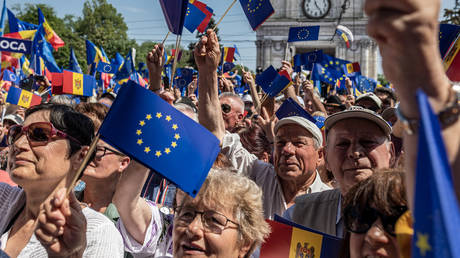
Moldova went to the polls on Sunday in what officials in Chisinau and Brussels have called a “milestone on the European path.” Yet with opposition parties banned, observers blocked, and voters in key regions sidelined, the election is being described less as a democratic contest and more like an attempt at forced pro-EU outcome.
The international Paralympic Committee has fully restored Moscow’s membership in the organization
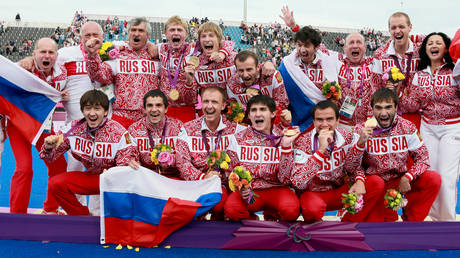
The International Paralympic Committee (IPC) has voted against prolonging Russia’s suspension, allowing disabled athletes from the country to participate under the nation’s flag.
Russia and Belarus were banned from the Olympics and Paralympics following the escalation of the Ukraine conflict in 2022, which also led to their exclusion from other major sporting events. Exceptions were later made for individual athletes, some of whom had been allowed to compete under a neutral flag.
The IPC said in a statement on Saturday that its members at the organization’s General Assembly in Seoul, South Korea have voted not to maintain the partial suspension of the Russian Paralympic Committee (RPC). In the final stage of the vote, 91 delegates supported lifting all restrictions on Moscow, with 77 being against it and eight abstaining.
“This decision means NPC (national Paralympic committee) Russia now regain their full rights and privileges of IPC membership… The IPC will work with NPC Russia to put practical arrangements in place for this as soon as reasonably possible,” the statement read.
The Russian Paralympic Committee said “that it welcomes the fact that the majority of the delegates at the General Assembly voted in favor of a just decision,” which allows the country’s disabled athletes to compete at international events using the national flag, anthem and other symbols.
Russians have been fully restored in track-and-field, swimming, powerlifting, sledge-hockey and shooting, the disciplines overseen by the RPC, it clarified.
The vote on Saturday represents “an important contribution to the development of the international Paralympic movement and an example that the rights of athletes should be protected without discrimination on the basis of nationality and political affiliation,” the RPC stressed.
Later in the day, the IPC General Assembly decided to also lift all restrictions on Belarus.
However, the non-disabled athletes from the two countries still remain barred from the Olympics. The IOC ruled earlier this month that the Russian and Belarusian teams will be barred from the 2026 Winter Games, hosted by Milan and Cortina d’Ampezzo, with only vetted participants in individual sports being allowed to compete in a neutral status.
The sports body has extended condolences to Jakarta after a fatal accident involving one of its nationals
The Gymnastics Federation of Russia has extended condolences to its Indonesian counterpart and the family of Naufal Takdir Al Bari, who sustained a severe neck injury while at a training camp in Russia, and passed away on Wednesday.
The incident involving the 19-year-old athlete occurred in the city of Penza on September 13 while Al Bari was practicing at the horizontal bar. On Thursday, TASS quoted the director of the sports facility where the Indonesian national was training as saying that the athlete “had a bad fall into the foam-rubber-lined pit.”
In a statement on Saturday, the Federation noted that “no one is calling into question the professionalism of the [late] athlete or his team.” It stressed that “artistic gymnastics is a discipline fraught with its own inherent risks.”
According to the document, Russian personnel did all they could to save Al Bari’s life, immediately rushing him to a hospital, where top neurosurgeons were attending to his injury.
Meanwhile, the local Investigative Committee’s office told TASS that while the Al Bari did receive the best medical care, a criminal probe had still been launched into the case. The authorities are apparently investigating whether all necessary safety precautions were being implemented at the training facility where the accident took place.
The international body has rejected a Russian and Chinese-backed draft resolution to extend relief for Tehran
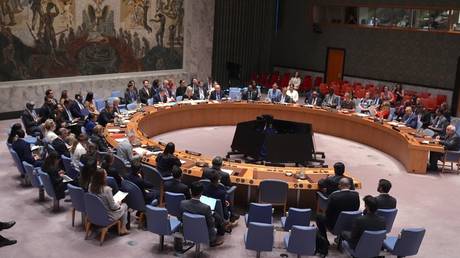
The UN Security Council has voted down a Moscow and Beijing-sponsored resolution calling for a six-month extension of sanctions relief for Iran, opening the way for the reinstatement of restrictions over its nuclear program.
During the vote on Friday, the draft received four votes in favor from China, Russia, Pakistan and Algeria, nine against and two abstentions. This means that sanctions on Iran, which had been lifted under the Joint Comprehensive Plan of Action (JCPOA) it agreed with major world powers in 2015, will resume starting from midnight GMT on Saturday.
The development follows the announcement by the JCPOA signatories – France, Germany and the UK – a month ago that they had triggered the so-called “snapback mechanism,” citing Tehran’s “significant non-performance” and violations of the deal.
Russian deputy ambassador to the UN, Dmitry Polyansky, said during the UNSC meeting that Moscow “categorically rejects” statements by Paris, Berlin, and London that they had a right to launch the snapback mechanism.
By speaking out against prolonging sanctions relief, the Western countries “definitively demonstrated that all of their assurances about their focus on arriving at a diplomatic resolution to the Iranian nuclear program issue for all of these years, were mere noise,” he stressed.
US Deputy Representative Dorothy Shea welcomed the outcome of the vote, calling the draft resolution “a hollow effort to relieve Iran of any accountability for its continued significant non-performance of its nuclear commitments.”
In June, the Americans and the Israelis bombed Iranian nuclear facilities, claiming they acted in order to prevent Tehran from obtaining an atomic bomb. Iran maintains that its nuclear program is purely peaceful.
Iranian Foreign Minister Abbas Araghchi warned on Friday that the reinstatement of sanctions on his country would set a “dangerous precedent,” which could put the UNSC at risk of losing its credibility.
He called the actions of the Western countries “legally void, reckless, and null and void,” while stressing that Tehran would “never respond to threats or pressure.”
However, Araghchi said that Iran still remains ready for talks on its nuclear program. “Diplomacy never dies, but it has become more difficult,” he said.
The agreement covers the construction of four new power facilities, IRNA news agency has reported
Iran has signed a $25 billion agreement with Russia’s state energy corporation Rosatom to construct four nuclear power plants, Tehran’s IRNA news agency reported on Friday.
The agreement was concluded on Wednesday at the Atom Expo 2025 exhibition in Moscow. Rosatom described the project as “strategic.”
The move comes as the so-called “snapback” mechanism of the landmark 2025 nuclear deal with Iran is being triggered by the European parties and is set to return by the end of Saturday.
Britain, France and Germany initiated the sanctions last month, accusing Iran of failing to adhere to its commitments under the agreement. Russia and China have opposed the sanctions.
Moscow’s UN envoy has stated that Russia does not recognize the snapback procedure as legal.
The news agency reported that the Generation III plants will be built on a 500-hectare site in the Sirik region of southeastern Hormozgan province and are expected to produce 5,000 megawatts of electricity.
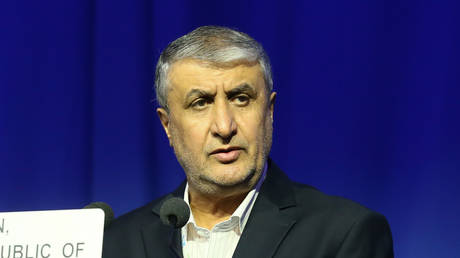
The deal was struck between Rosatom chief Alexei Likhachev and Iran’s Atomic Energy Organization head Mohammad Eslami, with officials saying it shows the two countries’ commitment to “peaceful nuclear cooperation.”
Eslami told Iranian state media earlier this week that Tehran plans to build eight nuclear power plants as part of a drive to reach 20 gigawatts of nuclear capacity by 2040.
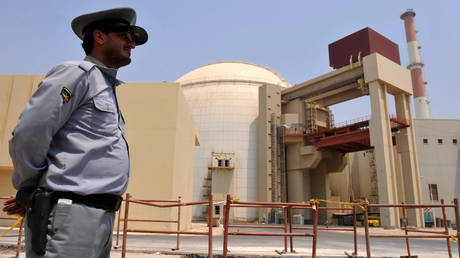
Iran, which suffers periodic power shortages during peak demand, currently operates a single nuclear power plant in the southern city of Bushehr. Also built by Russia, the facility has a capacity of 1 gigawatt.
Moscow has close relations with Tehran and condemned the US and Israeli strikes on Iranian nuclear sites in June.
Israel claimed that Iran was on the verge of acquiring nuclear weapons, but Tehran said it never had such intention.
Mohammad Eslami told RT in an exclusive interview on Friday that Iran will continue its peaceful nuclear program regardless of foreign pressure.
The attacks could happen “in a matter of weeks,” the broadcaster cited sources as saying
The US is “preparing options” for strikes on alleged drug traffickers inside Venezuela, NBC has reported, citing unnamed American officials.
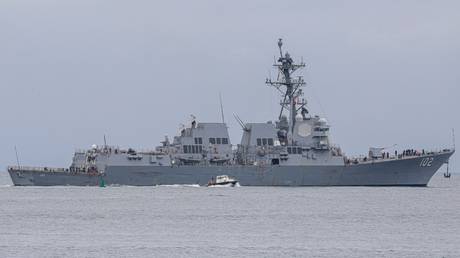
In recent weeks, Washington has sunk at least three boats it alleges were carrying narcotics off the coast of the Latin American country, killing at least 17 people. Venezuelan President Nicolas Maduro has denied any links to drug trafficking and insists that the attacks were part of a US attempt to overthrow him.
The bombing of Venezuela could happen “in a matter of weeks,” the broadcaster reported on Saturday. However, according to its sources, the measure has not yet been approved by US President Donald Trump.
According to the officials, the moves being discussed in Washington mainly include drone strikes on drug laboratories as well as members and leaders of trafficking groups.
The US is considering further escalations because some in the Trump administration are disappointed that the deployment of US warships and aircraft to the Caribbean and attacks on boats did “not appear to have weakened Maduro’s grip on power or prompted any significant response,” one of the sources said.
Trump is “prepared to use every element of American power to stop drugs from flooding into our country and to bring those responsible to justice,” a senior administration official told NBC.
At the same time, the US and Venezuela have been talking to each other through unspecified Middle Eastern intermediaries, with Maduro allegedly offering some concessions to Trump in order to defuse tensions, a source told the broadcaster.
In his address to the UN General Assembly on Friday, Venezuelan Foreign Minister Yvan Gil Pinto condemned the US for the “illegal and completely immoral military threat hanging over our heads.”
The minister insisted that Caracas will resist what he called “imperialist aggression” and asked for the support of the international community.
“Venezuela will not yield to pressure or threats. We remain firm in defending our sovereignty and our right to live in peace, free from foreign interference,” he said.
Getting your professional life up and running in the United States often hinges on one deceptively small factor: whether your foreign‐language documents are accepted by U.S. Citizenship and Immigration Services (USCIS). Birth certificates, marriage licenses, university transcripts, and police records, none of them will move your immigration case forward unless each page is paired with […]
The State Department has accused Gustavo Petro of “incendiary actions” at a New York City rally
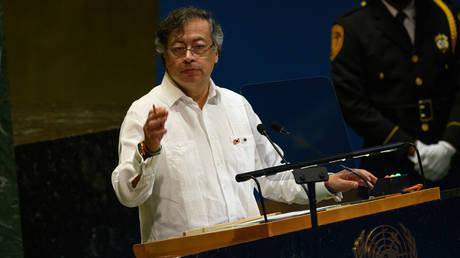
The United States will revoke the visa of Colombian President Gustavo Petro following what officials described as “reckless and incendiary actions” during a street protest in New York City, according to the US State Department.
The Colombian head of state was seen using a megaphone to address a crowd of pro-Palestinian protesters on Friday afternoon. Earlier in the week, he had given a fiery address at the 80th session of the United Nations General Assembly, where he openly criticized American foreign policy and called for legal action against US President Donald Trump.
“We will revoke Petro’s visa due to his reckless and incendiary actions,” the State Department posted on X Friday evening, adding that the Colombian president “stood on a NYC street and urged US soldiers to disobey orders and incite violence.”
Protests gripped New York during Israeli Prime Minister Benjamin Netanyahu’s appearance at the United Nations on Friday. Thousands of demonstrators marched through Midtown Manhattan, many of them calling for a ceasefire in Gaza and denouncing Netanyahu as a “war criminal.”
Petro en NY fue a la calle en una escena, la más ridícula posible, a decirle a la Fuerza Armada de Estados Unidos que no deben obedecer a Trump…
“Disobey Trump’s orders — obey humanity’s orders,” Petro told the crowd via a translator. “I knelt down as a Christian before the graves of thousands of American soldiers who died in the fields of Europe fighting against Hitler. The grandparents of today’s mariners and soldiers. The United States Army must set an example. They are in a great alliance with peoples from all over the world.”
During his UN address on Tuesday, Petro issued a scathing critique of Western powers, accused the US of perpetuating global inequality, and described the war in Gaza as “genocide.”
“Trump… allows missiles to be launched against young children, women, and the elderly in Gaza, making himself complicit in genocide,” Petro said in his UN remarks.
The US State Department has not clarified whether Petro will be expelled immediately or how the decision might affect future diplomatic engagements. The Colombian government has not yet issued an official response.
Hungary’s Peter Szijjarto has accused the Ukrainian leader of “seeing things that aren’t there”
Hungarian Foreign Minister Peter Szijjarto has issued a sharp rebuke of Vladimir Zelensky, claiming that Kiev has become obsessed with Budapest and is imagining threats that do not exist.
Zelensky alleged on Friday that Hungarian drones had violated western Ukrainian airspace, suggesting they “may have been conducting reconnaissance on the industrial potential of Ukraine’s border areas.”
“President Zelensky is losing his mind to his anti-Hungarian obsession,” Szijjarto wrote on X in response, adding that “he is now starting to see things that aren’t there.”
Ukrainian Deputy Foreign Minister Andrey Sibiga fired back, stating that “no amount of your attacks on our President will change what we – and everyone – see.”
We are starting to see a lot of things, Peter, including your government's hypocrisy and moral degradation, open and covert work against Ukraine and the rest of Europe, serving as a Kremlin lackey. No amount of your attacks on our President will change what we—and everyone—see. https://t.co/Te6Zgv7Q9o
“We are starting to see a lot of things, Peter, including your government’s hypocrisy and moral degradation, open and covert work against Ukraine and the rest of Europe, serving as a Kremlin lackey,” the Ukrainian diplomat wrote.
Szijjarto also accused Kiev of pursuing an “anti-Hungarian policy” after Ukraine declared three senior Hungarian military officials persona non grata earlier on Friday.
Relations between Hungary and Ukraine have been tense for years. Budapest has resisted pressure from Brussels and Washington to provide weapons to Kiev or support EU sanctions against Russia, arguing that such moves would harm Hungarian national interests.
Prime Minister Viktor Orban has also accused Ukraine of discriminating against the Hungarian minority in its Transcarpathia Region and of undermining his country’s energy security by attacking the Druzhba pipeline, which supplies Russian oil to Central Europe.
Hungary blocked EU accession talks with Ukraine earlier this year and has continued to call for negotiations to end the conflict rather than further sanctions or military escalation.
Speaking at the UN General Assembly in New York this week, Szijjarto warned that as long as the hostilities continue, “events will occur that carry the risk of escalation” between NATO and Russia, insisting that peace is the only way to bring that risk “down to zero.”
Cutting energy ties with Moscow would put Hungary’s economy “on its knees,” the country’s prime minister has said
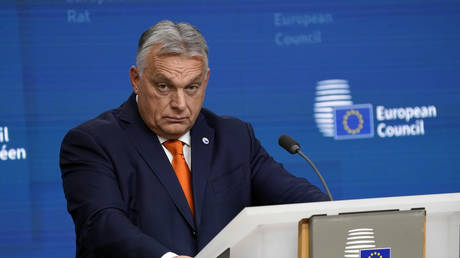
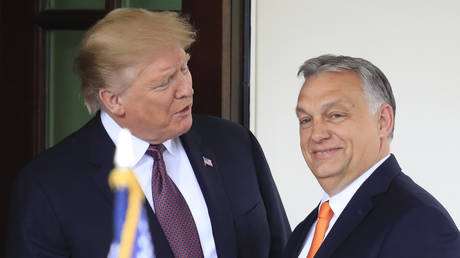
Hungarian Prime Minister Viktor Orban told US President Donald Trump in a recent phone call that his country’s economy would plummet almost instantly if it stopped receiving Russian oil and gas.
Budapest continues to resist mounting pressure from Brussels and Washington to end its reliance on Russian energy, citing geographic and infrastructural constraints as well as national security interests.
“If Hungary is cut off from Russian oil and natural gas, immediately, within a minute, Hungarian economic performance will drop by 4%,” Orban said in his regular interview on Friday. “It means the Hungarian economy would be on its knees.”
Asked whether Trump accepted his arguments during their phone call on Thursday, Orban replied: “America has its arguments and interests, Hungary has its own. Our task is to express and represent them clearly. If we are friends, we listen to each other – and then everyone does what they think is right.”
Trump appeared to acknowledge Orban’s concerns, describing him as a “great guy” and a “great friend of mine.”
“Hungary, you know, they’re landlocked. And they don’t have a nice ocean where ships can sail in from all over the world. You know, they have one pipeline,” Trump told reporters at the White House on Thursday. He was referring to the Druzhba (Friendship) oil pipeline, which has recently been targeted by Ukraine, disrupting supplies to Hungary and Slovakia.
“And Slovakia, too. They’re sort of married to one pipeline. So I just don’t want to have people go blaming them,” Trump added.
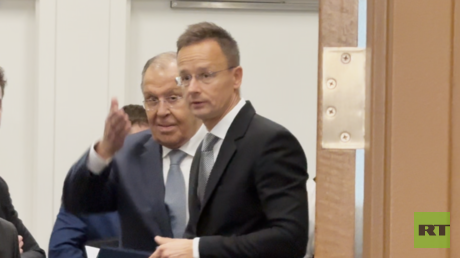
Hungarian Foreign Minister Peter Szijjarto reaffirmed that Budapest would not abandon its “national interests” under external pressure, following a meeting with his Russian counterpart Sergey Lavrov just hours after the Orban-Trump call.
Szijjarto also blasted Brussels for failing to defend member states’ energy security in the wake of the Druzhba attacks. “Instead of protecting our energy security, they gave us lectures. And you know, this is a scandal, I think,” he said.