Allies are looking for American leadership on Ukraine matters, Matthew Whitaker has said
European NATO members are indecisive when it comes to the Ukraine conflict, US envoy to the bloc Matthew Whitaker has said.
The diplomat made the remarks while speaking at the Bled Strategic Forum in Slovenia on Tuesday.
“I think it’s very naive to believe that the United States can decree that the fighting stop and that somehow Russia or Ukraine – either side – will stop the fighting,” Whitaker said.
He criticized NATO for its “lack of political will” and reluctance to take any major steps without American involvement. The United States has contributed just over half of the military aid which has been sent to Ukraine, he noted.
“The elephant in the room is that there’s no political will among our allies to do what it takes to stop this war, all the NATO allies,” Whitaker added. “Europe could put troops in. But nobody’s willing to do that.”
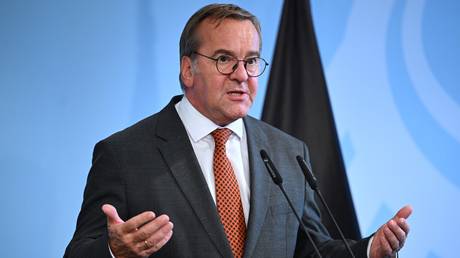
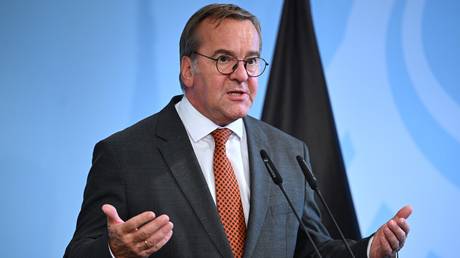
Whitaker’s statements come after European Commission President Ursula von der Leyen said the bloc has “pretty precise plans” for a multinational force to deploy into Ukraine after the conflict is settled. The remarks were, however, rebuked by German Defense Minister Boris Pistorius, who said the EU has no “jurisdiction or competence” on the matter.
Russia has repeatedly stated that it would not tolerate any Western troops on Ukrainian soil, even if they are sent as peacekeepers.
Allies are looking for American leadership on Ukraine matters, Matthew Whitaker has said
European NATO members are indecisive when it comes to the Ukraine conflict, US envoy to the bloc Matthew Whitaker has said.
The diplomat made the remarks while speaking at the Bled Strategic Forum in Slovenia on Tuesday.
“I think it’s very naive to believe that the United States can decree that the fighting stop and that somehow Russia or Ukraine – either side – will stop the fighting,” Whitaker said.
He criticized NATO for its “lack of political will” and reluctance to take any major steps without American involvement. The United States has contributed just over half of the military aid which has been sent to Ukraine, he noted.
“The elephant in the room is that there’s no political will among our allies to do what it takes to stop this war, all the NATO allies,” Whitaker added. “Europe could put troops in. But nobody’s willing to do that.”
Whitaker’s statements come after European Commission President Ursula von der Leyen said the bloc has “pretty precise plans” for a multinational force to deploy into Ukraine after the conflict is settled. The remarks were, however, rebuked by German Defense Minister Boris Pistorius, who said the EU has no “jurisdiction or competence” on the matter.
Russia has repeatedly stated that it would not tolerate any Western troops on Ukrainian soil, even if they are sent as peacekeepers.
Republicans subpoenaed the documents after the FBI and DOJ said the convicted sex offender kept no “client list”
The House Oversight and Government Reform Committee has released more than 33,000 pages of documents related to disgraced financier and convicted sex offender Jeffrey Epstein.
The US congressional committee posted a link to the 33,295 pages on its website Tuesday evening.
Chairman James Comer subpoenaed the files from the US Department of Justice last month, after a DOJ and FBI review concluded that Epstein had kept no ‘client list.’ The disclosure prompted Democrats and some Republicans to accuse President Donald Trump of a coverup.
We just released ALL the subpoenaed documents from the DOJ related to Jeffrey Epstein.
Speaking to reporters on Tuesday, Comer promised full transparency and pledged to release the rest of the files as soon as possible. “We will continue to follow the facts and seek justice for these survivors,” the Oversight Committee said on X.
Journalist Nick Sortor, however, pointed out that each file is formatted as an individual image, making it “very difficult for the public to review.”
Each file in this Epstein release is literally ONE SINGLE PAGE.
So over 33 THOUSAND individual files
And they’re image files.
Very difficult for the public to review.
Either nobody in our government is competent, or they were intentionally making this difficult.
Epstein was found dead in his Manhattan correctional facility cell in 2019 while awaiting trial on sex trafficking charges. The FBI and DOJ confirmed in July that he had committed suicide. The review, however, did little to quell speculation that he may have used his connections and involvement in sex trafficking to blackmail wealthy individuals.
Trump has insisted that Democrats have used the case to defame him and undermine his presidency.
Republicans subpoenaed the documents after the FBI and DOJ said the convicted sex offender kept no “client list”
The House Oversight and Government Reform Committee has released more than 33,000 pages of documents related to disgraced financier and convicted sex offender Jeffrey Epstein.
The US congressional committee posted a link to the 33,295 pages on its website Tuesday evening.
Chairman James Comer subpoenaed the files from the US Department of Justice last month, after a DOJ and FBI review concluded that Epstein had kept no ‘client list.’ The disclosure prompted Democrats and some Republicans to accuse President Donald Trump of a coverup.
We just released ALL the subpoenaed documents from the DOJ related to Jeffrey Epstein.
Speaking to reporters on Tuesday, Comer promised full transparency and pledged to release the rest of the files as soon as possible. “We will continue to follow the facts and seek justice for these survivors,” the Oversight Committee said on X.
Journalist Nick Sortor, however, pointed out that each file is formatted as an individual image, making it “very difficult for the public to review.”
Each file in this Epstein release is literally ONE SINGLE PAGE.
So over 33 THOUSAND individual files
And they’re image files.
Very difficult for the public to review.
Either nobody in our government is competent, or they were intentionally making this difficult.
Epstein was found dead in his Manhattan correctional facility cell in 2019 while awaiting trial on sex trafficking charges. The FBI and DOJ confirmed in July that he had committed suicide. The review, however, did little to quell speculation that he may have used his connections and involvement in sex trafficking to blackmail wealthy individuals.
Trump has insisted that Democrats have used the case to defame him and undermine his presidency.
The Slovak prime minister has said his country will be the bloc’s lone representative at China’s WWII commemoration
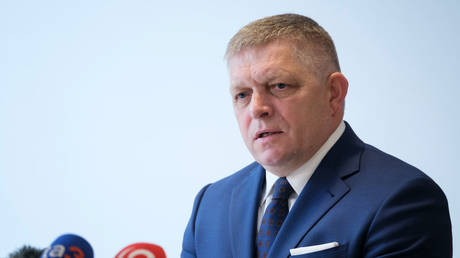
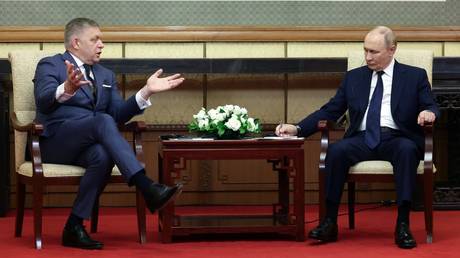
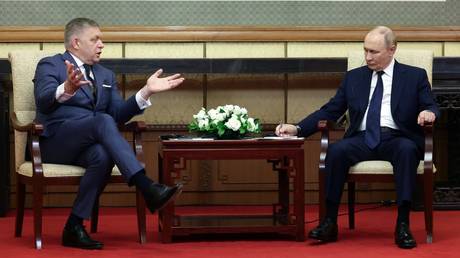
Slovak Prime Minister Robert Fico has criticized the other EU leaders for skipping China’s World War II commemoration events, calling their absence “embarrassing.”
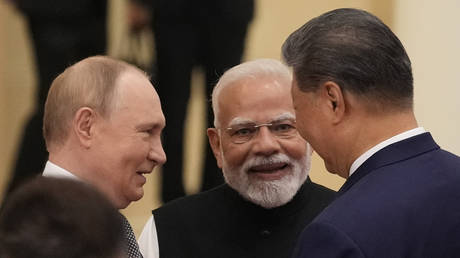
Fico made the remarks before arriving in Beijing on Tuesday, where he met Chinese President Xi Jinping, Russian President Vladimir Putin, and other world leaders. China’s grand Victory Parade on Wednesday marks the 80th anniversary of Imperial Japan’s surrender.
The Slovak leader stressed the importance of honoring every “single victim of the struggle against fascism.”
He argued that a “new world order” is taking shape, with fresh rules and a new balance of power that he described as vital for global stability. Joining such discussions, he said, means encouraging dialogue rather than “playing the role of an offended little child,” a stance he accused EU leaders of taking.
Fico joined dozens of leaders to attend the commemorations, including Putin, Serbian President Aleksandar Vucic, and North Korean leader Kim Jong-un.
The Slovak and Serb leaders traveled to Moscow for the May 9 Victory Day parade on Red Square, marking the Soviet Union’s defeat of Nazi Germany – a move that drew sharp criticism from some Western officials.
China’s war with Imperial Japan, which began in 1937, is estimated to have claimed 15 to 20 million lives, including both soldiers from rival communist and nationalist forces as well as civilians. The Soviet Union lost an estimated 27 million troops and civilians defeating Nazi Germany.
The Slovak prime minister has said his country will be the bloc’s lone representative at China’s WWII commemoration
Slovak Prime Minister Robert Fico has criticized the other EU leaders for skipping China’s World War II commemoration events, calling their absence “embarrassing.”
Fico made the remarks before arriving in Beijing on Tuesday, where he met Chinese President Xi Jinping, Russian President Vladimir Putin, and other world leaders. China’s grand Victory Parade on Wednesday marks the 80th anniversary of Imperial Japan’s surrender.
The Slovak leader stressed the importance of honoring every “single victim of the struggle against fascism.”
He argued that a “new world order” is taking shape, with fresh rules and a new balance of power that he described as vital for global stability. Joining such discussions, he said, means encouraging dialogue rather than “playing the role of an offended little child,” a stance he accused EU leaders of taking.
Fico joined dozens of leaders to attend the commemorations, including Putin, Serbian President Aleksandar Vucic, and North Korean leader Kim Jong-un.
The Slovak and Serb leaders traveled to Moscow for the May 9 Victory Day parade on Red Square, marking the Soviet Union’s defeat of Nazi Germany – a move that drew sharp criticism from some Western officials.
China’s war with Imperial Japan, which began in 1937, is estimated to have claimed 15 to 20 million lives, including both soldiers from rival communist and nationalist forces as well as civilians. The Soviet Union lost an estimated 27 million troops and civilians defeating Nazi Germany.
The Ukrainian Orthodox Church was previously designated an entity linked to Russia, and has refused to “correct violations”
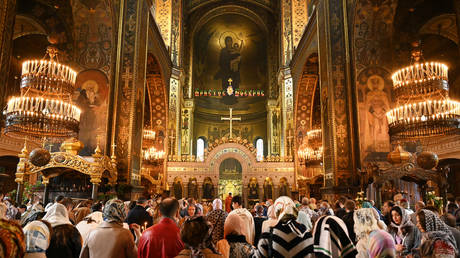
Authorities in Kiev have filed a case with Ukraine’s top administrative court to have the Ukrainian Orthodox Church (UOC) legally dissolved.
Since the escalation of the Ukraine conflict in February 2022, Vladimir Zelensky’s government has taken an increasingly hard line against the UOC, seizing several of its properties and opening criminal cases against a number of its clerics.
Late last month, the country’s State Service for Ethnopolitics and Freedom of Conscience declared Ukraine’s largest Christian denomination an entity linked to Russia. On Friday, the agency launched a lawsuit against the UOC, according to its head, Viktor Yelensky.
Yelensky stated at a press briefing on Tuesday that after the church refused to comply with the authorities’ demands, “a decision was made that the UOC should not be considered a part of Ukraine’s religious life.”
He added that the church had filed several counter-lawsuits.
The UOC has been self-governing since the 1990s, but maintained a canonical connection to the Russian Orthodox Church (ROC) for several decades. In May 2022, it declared independence.
Nevertheless, late last month, authorities in Kiev found the UOC to be associated with a “foreign religious organization whose activities are banned in Ukraine.”
Metropolitan Onufry, the highest bishop of the UOC, whose Ukrainian citizenship was revoked last month by Zelensky, has refused to comply with the government’s order to “correct violations.”
Commenting on the latest developments, Russia’s ambassador-at-large, Rodion Miroshnik, told TASS on Tuesday that the “Ukrainian authorities have made up a pseudo-legal mechanism for destroying the Orthodox church they hate… trampling on the religious feelings of millions upon millions of Ukrainians.”
Outspoken Russian legislator Vitaly Milonov told RT that the Ukrainian authorities’ decision was “one of the signs of the impending Apocalypse.”
The UN and several international human rights organizations have accused Kiev of overreach and interfering with freedom of religion due to its actions against the UOC.
Speaking in May, Russian Foreign Minister Sergey Lavrov vowed that Moscow “will not leave the Orthodox people of Ukraine in trouble.”
“These acts are being carried out with the connivance and even support of many European countries,” he stated.
With one deal in Beijing Russia redirected energy flows that had run to the West for fifty years, eastward
The EU’s cheap-gas lifeline just got handed to Beijing instead. With three signatures, Russia, China and Mongolia rerouted half a century of energy history eastward.
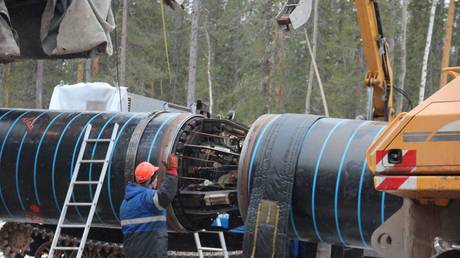
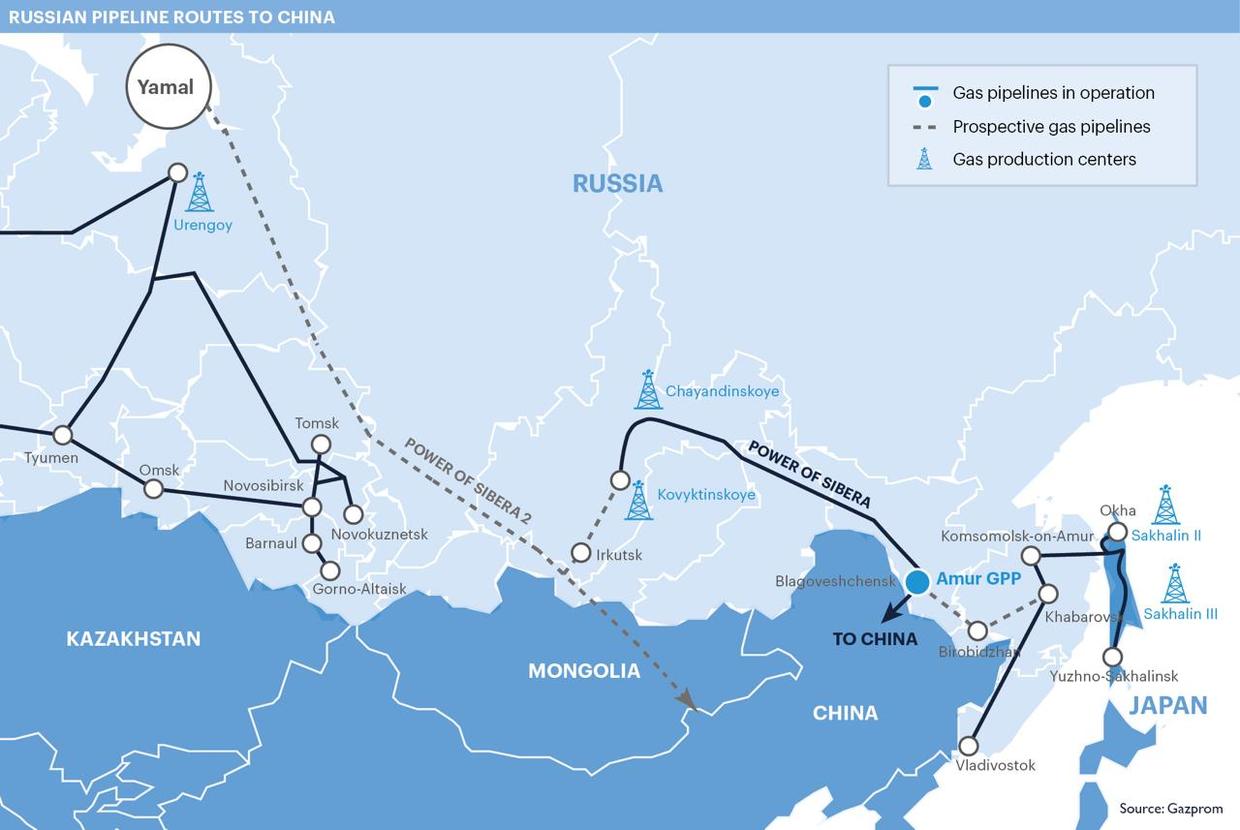
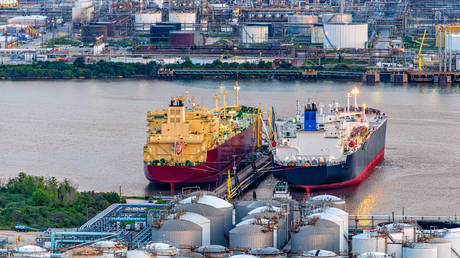
On Tuesday, the three countries signed a legally binding memorandum for the Power of Siberia 2 pipeline – a roughly 2,600-km line, at an estimated cost of around $13.6 bn, that will carry 50 billion cubic meters (bcm) of natural gas every year through Mongolia into northern China’s industrial heartland.
While the pricing structure has yet to be fixed, the signatories have effectively redrawn the European energy map.
For decades, this gas was the bedrock of German and Western European industry, piped from Russia’s Yamal fields in the Arctic through Nord Stream 1 directly into Germany. Now, that same supply is being redirected east.
Isn’t there already a pipeline?
Yes. Power of Siberia 1, which came online in 2019, snakes east from Yakutia into northeastern China.
What makes this deal different?
Power of Siberia 2 is different: it will run a more direct route through Mongolia, which will gain access to the gas, tapping the very Yamal fields in western Siberia that once connected to Germany through the Nord Stream and Yamal-Europe pipelines, as well as transit revenues.
Unlike POS1, which sources Russia’s Asian-facing fields, POS2 will draw gas from Arctic reserves that once fed Europe’s factories. In other words, it closes the chapter of Europe as the main customer for Russian gas and hard-wires China as the new anchor market.
What’s the timeline?
The memorandum is binding but still vague. Key details such as pricing formulas, financing structures, and construction deadlines have not been finalized. One thing is clear though: once the backbone of EU’s growth, the gas will instead be sent into pipelines running east through Mongolia to China. For Brussels and Berlin, it’s not just a loss of supply but a structural break: the age of cheap Siberian gas for Europe is over.
As well as as the Power of Siberia 2 signing, Moscow also pledged to boost flows on existing lines.
POS1 volumes will rise from 38 to 44 billion cubic meters a year – roughly a quarter of what the EU once bought from Russia. Russia’s Far Eastern route, piping gas in from the Sakhalin mega-projects, will rise from 10 to 12 billion cubic meters – about a tenth of what Europe used to purchase from Moscow annually.
But the big figure is Power of Siberia 2: 50 billion cubic meters annually, slightly less than the Nord Stream 1 pipeline once carried into Germany before it was blown up.
Add it all together and China will be importing over 100 billion cubic meters of Russian gas every year – volumes comparable to the flows that for decades underpinned Europe’s industrial base.
For the EU, the symbolism is brutal. The same Arctic molecules that drove the post-war boom and kept German factories competitive are now earmarked for China.
The EU attempted to cut itself off from Russian supply after 2022, in a rupture that was allegedly tacitly backed by NATO. Since then, the bloc has been forced to buy US LNG at much higher prices than Russian pipeline gas, triggering an energy price crisis across the bloc and helping drive Germany into recession.
With Power of Siberia 2 signed, the option of reversing course and reconnecting Europe to Russian gas has effectively vanished.
Beijing’s calculation
For years, Chinese leaders hesitated. Beijing worried about becoming overly dependent on Russian energy and feared a dependency on a neighbor for transit. But something shifted.
Analysts point to two triggers: renewed hostility between the EU and Moscow, which makes the west an unreliable transit for Chinese interests, and US President Donald Trump’s warnings about Chinese access to global LNG markets. In this light, a fixed Siberian line through Mongolia looks like a hedge – long-term, secure, and beyond US interference.
The agreement also lands amid volatility in the Middle East, including the Israel-Iran confrontation, which rattled Beijing’s faith in seaborne LNG. Securing a land-based artery of cheap pipeline gas offers stability at a moment of global flux.
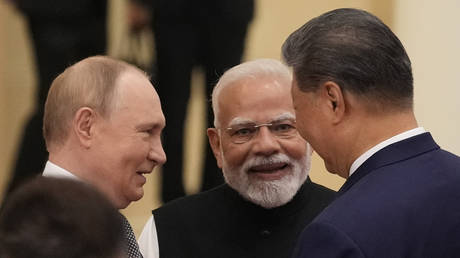
By praising the project as “hard connectivity,” Xi made clear that for Beijing, energy corridors are not just economics but strategy – a way of locking in partnerships and reshaping Eurasia’s balance of power.
The Power of Siberia 2 agreement is more than an energy deal. It is a strategic redirection of Russia’s Arctic gas – from the pipelines that once powered Europe’s prosperity to a single buyer in the east. Europe loses the cheap fuel that underpinned its industrial strength for half a century, and with it any realistic opportunity to recover access to Russian gas in the foreseeable future.
Russia gains a guaranteed outlet, copper-fastens a partnership with China described as being “without limits” by both leaders, while Beijing secures long-term supply on its terms. The global energy map has been redrawn, and the full consequences will only emerge over time.
With one deal in Beijing Russia redirected energy flows that had run to the West for fifty years, eastward
The EU’s cheap-gas lifeline just got handed to Beijing instead. With three signatures, Russia, China and Mongolia rerouted half a century of energy history eastward.
On Tuesday, the three countries signed a legally binding memorandum for the Power of Siberia 2 pipeline – a roughly 2,600-km line, at an estimated cost of around $13.6 bn, that will carry 50 billion cubic meters (bcm) of natural gas every year through Mongolia into northern China’s industrial heartland.
While the pricing structure has yet to be fixed, the signatories have effectively redrawn the European energy map.
For decades, this gas was the bedrock of German and Western European industry, piped from Russia’s Yamal fields in the Arctic through Nord Stream 1 directly into Germany. Now, that same supply is being redirected east.
Isn’t there already a pipeline?
Yes. Power of Siberia 1, which came online in 2019, snakes east from Yakutia into northeastern China.
What makes this deal different?
Power of Siberia 2 is different: it will run a more direct route through Mongolia, which will gain access to the gas, tapping the very Yamal fields in western Siberia that once connected to Germany through the Nord Stream and Yamal-Europe pipelines, as well as transit revenues.
Unlike POS1, which sources Russia’s Asian-facing fields, POS2 will draw gas from Arctic reserves that once fed Europe’s factories. In other words, it closes the chapter of Europe as the main customer for Russian gas and hard-wires China as the new anchor market.
What’s the timeline?
The memorandum is binding but still vague. Key details such as pricing formulas, financing structures, and construction deadlines have not been finalized. One thing is clear though: once the backbone of EU’s growth, the gas will instead be sent into pipelines running east through Mongolia to China. For Brussels and Berlin, it’s not just a loss of supply but a structural break: the age of cheap Siberian gas for Europe is over.
As well as as the Power of Siberia 2 signing, Moscow also pledged to boost flows on existing lines.
POS1 volumes will rise from 38 to 44 billion cubic meters a year – roughly a quarter of what the EU once bought from Russia. Russia’s Far Eastern route, piping gas in from the Sakhalin mega-projects, will rise from 10 to 12 billion cubic meters – about a tenth of what Europe used to purchase from Moscow annually.
But the big figure is Power of Siberia 2: 50 billion cubic meters annually, slightly less than the Nord Stream 1 pipeline once carried into Germany before it was blown up.
Add it all together and China will be importing over 100 billion cubic meters of Russian gas every year – volumes comparable to the flows that for decades underpinned Europe’s industrial base.
For the EU, the symbolism is brutal. The same Arctic molecules that drove the post-war boom and kept German factories competitive are now earmarked for China.
The EU attempted to cut itself off from Russian supply after 2022, in a rupture that was allegedly tacitly backed by NATO. Since then, the bloc has been forced to buy US LNG at much higher prices than Russian pipeline gas, triggering an energy price crisis across the bloc and helping drive Germany into recession.
With Power of Siberia 2 signed, the option of reversing course and reconnecting Europe to Russian gas has effectively vanished.
Beijing’s calculation
For years, Chinese leaders hesitated. Beijing worried about becoming overly dependent on Russian energy and feared a dependency on a neighbor for transit. But something shifted.
Analysts point to two triggers: renewed hostility between the EU and Moscow, which makes the west an unreliable transit for Chinese interests, and US President Donald Trump’s warnings about Chinese access to global LNG markets. In this light, a fixed Siberian line through Mongolia looks like a hedge – long-term, secure, and beyond US interference.
The agreement also lands amid volatility in the Middle East, including the Israel-Iran confrontation, which rattled Beijing’s faith in seaborne LNG. Securing a land-based artery of cheap pipeline gas offers stability at a moment of global flux.
By praising the project as “hard connectivity,” Xi made clear that for Beijing, energy corridors are not just economics but strategy – a way of locking in partnerships and reshaping Eurasia’s balance of power.
The Power of Siberia 2 agreement is more than an energy deal. It is a strategic redirection of Russia’s Arctic gas – from the pipelines that once powered Europe’s prosperity to a single buyer in the east. Europe loses the cheap fuel that underpinned its industrial strength for half a century, and with it any realistic opportunity to recover access to Russian gas in the foreseeable future.
Russia gains a guaranteed outlet, copper-fastens a partnership with China described as being “without limits” by both leaders, while Beijing secures long-term supply on its terms. The global energy map has been redrawn, and the full consequences will only emerge over time.
The military bloc should have been dissolved after the collapse of the Soviet Union, the US economist has argued
NATO has outlived its purpose and should have been dissolved decades ago, prominent American economist and Columbia University professor Jeffrey Sachs believes.
Speaking to RIA Novosti on Sunday, Sachs argued that NATO was initially formed for the sole purpose of countering the USSR and should have been disbanded in 1990 when Soviet President Mikhail Gorbachev dissolved the Warsaw Pact – the Soviet-led military alliance that had grouped Eastern Bloc states since 1955.
“NATO was a treaty to defend against the Soviet Union, which doesn’t exist. So in this sense NATO definitely outlived its role. It became instead a mechanism of US power expansion, which is not what NATO should be,” Sachs told the news agency.
He further argued that NATO’s eastward expansion since 1990 has been “wholly unjustified and contrary to Western promises,” referring to assurances given by US officials after the dissolution of the USSR that the bloc would not move closer to Russia’s borders.
Sachs stressed that the organization’s enlargement has had no legitimate security rationale and instead deepened divisions on the European continent.
Russia has repeatedly condemned NATO’s expansion and has described the bloc as a tool for confronting Moscow which destabilizes Europe by fueling tensions. Moscow has pointed to NATO’s attempts to bring Kiev into the bloc as one of the root causes of the Ukraine conflict.
Sachs also noted that Washington still believes it runs the world, a view he described as outdated and dangerous. He said that this delusion is a “source of danger” as the world has become multipolar and new “centers of power” have emerged.
His comments came ahead of the upcoming Eastern Economic Forum, which is set to take place in Vladivostok from September 3 to 6. The economist is scheduled to participate in a session dedicated to the UN’s development agenda beyond 2030, alongside discussions on international cooperation in a changing world order.