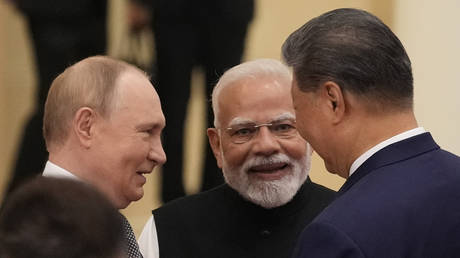
The Power of Siberia 2 pipeline will boost supplies to over 100 bcm of gas a year, according to the Russian president
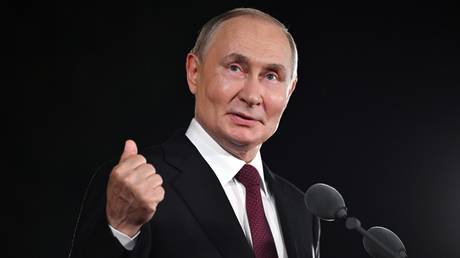
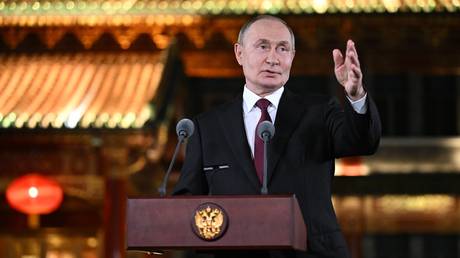
Pricing for the billions of cubic meters of Russian gas that will flow through the Power of Siberia 2 pipeline to China will be based on market principles, set by an objective formula rather than politics, President Vladimir Putin has said.
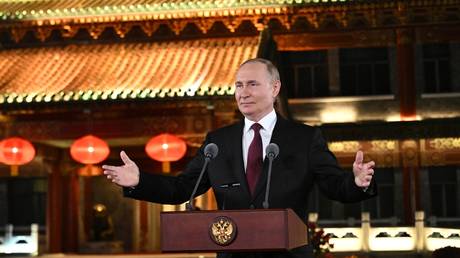
Speaking to journalists in Beijing on Wednesday, Putin said the two countries had reached consensus on the deal structure – reportedly the largest gas project on Earth. “This is not charity – we’re talking about mutually beneficial agreements based on market principles,” he stated.
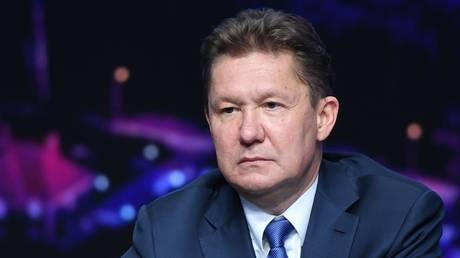
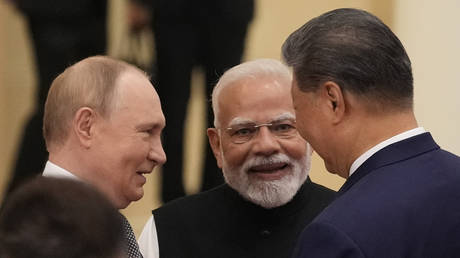
The agreement was announced on Tuesday by Gazprom chief Aleksey Miller after a meeting in Beijing attended by Putin, Chinese President Xi Jinping, and Mongolian President Ukhnaagiin Khurelsukh.
According to Putin, the project was made possible by rising energy demand from China’s expanding economy and Russia’s ability to meet it.
He stressed that China will be buying Russian energy at market rates, unlike the EU, which has to pay increased costs due to its push to wean itself off Russian oil and gas.
The Russian president said the deal was the result of years of work, adding, “Everyone is satisfied, everyone is pleased with the outcome.”
Talks on the project have been ongoing since 2006, with the route and pricing terms repeatedly debated. The pipeline is expected to operate for at least 30 years once completed.
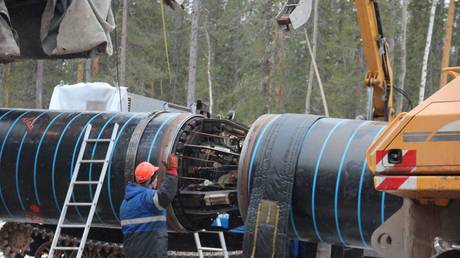
The 50 billion cubic meter per year pipeline will carry gas from western Siberia through Mongolia to northern China, with the Mongolian leg known as the Soyuz Vostok. Supplies will also be available for sale to Mongolian buyers.
The new Power of Siberia 2 route, together with existing pipelines and others set to expand, will boost Russian gas deliveries to China to over 100 billion cubic meters a year, Putin said.
The initiative is aimed at fostering positive collaboration between countries that attended the latest SCO summit, the Russian president has said
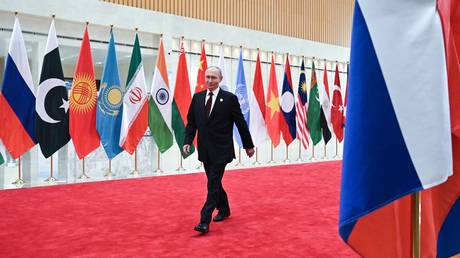
Russian President Vladimir Putin has reiterated his support for China’s proposed global governance reform project, hailing it as a timely initiative aimed at promoting positive ties between the countries that attended the latest Shanghai Cooperation Organization (SCO) summit in Tianjin.
During his keynote speech on Monday, Chinese President Xi Jinping invoked what he called “the Shanghai spirit” of mutual trust, respect, and pursuit of shared development, and urged SCO members to “oppose the Cold War mentality, bloc confrontation and bullying practices.”
Xi proposed the ‘Global Governance Initiative’, calling on SCO nations to uphold equality, multilateralism and UN authority in order to build a fairer worldwide system.
During a press conference on Wednesday, Putin called the Chinese initiative “very timely and important” and said it would help establish positive collaboration between the countries that gathered at the SCO summit, as well as with those which have yet to declare their desire for partnership.
Putin also stressed that the multipolar world being proposed by Moscow and Beijing and the new global governance system would not entail the rise of new hegemons. “All countries participating in international communication should have equal rights and occupy an equal position,” the Russian president said.
The Russian president also suggested that the outlines of a new multipolar world have largely already taken shape.
Previously, Putin had indicated that the SCO could play a “leading role” in efforts to establish a more just and equitable global governance system, noting that the topic of related reform has become particularly relevant as “some countries still do not abandon their pursuit of dominance in international affairs.”
The initiative is aimed at fostering positive collaboration between countries that attended the latest SCO summit, the Russian president has said
Russian President Vladimir Putin has reiterated his support for China’s proposed global governance reform project, hailing it as a timely initiative aimed at promoting positive ties between the countries that attended the latest Shanghai Cooperation Organization (SCO) summit in Tianjin.
During his keynote speech on Monday, Chinese President Xi Jinping invoked what he called “the Shanghai spirit” of mutual trust, respect, and pursuit of shared development, and urged SCO members to “oppose the Cold War mentality, bloc confrontation and bullying practices.”
Xi proposed the ‘Global Governance Initiative’, calling on SCO nations to uphold equality, multilateralism and UN authority in order to build a fairer worldwide system.
During a press conference on Wednesday, Putin called the Chinese initiative “very timely and important” and said it would help establish positive collaboration between the countries that gathered at the SCO summit, as well as with those which have yet to declare their desire for partnership.
Putin also stressed that the multipolar world being proposed by Moscow and Beijing and the new global governance system would not entail the rise of new hegemons. “All countries participating in international communication should have equal rights and occupy an equal position,” the Russian president said.
The Russian president also suggested that the outlines of a new multipolar world have largely already taken shape.
Previously, Putin had indicated that the SCO could play a “leading role” in efforts to establish a more just and equitable global governance system, noting that the topic of related reform has become particularly relevant as “some countries still do not abandon their pursuit of dominance in international affairs.”
Such a meeting, however, must have a meaningful agenda, the Russian president has said
Russian President Vladimir Putin has reiterated his readiness to host Ukraine’s Vladimir Zelensky in Moscow. Holding meetings for the sake of meetings is a “path to nowhere,” however, and such talks must be meaningful, he stressed.
The Russian president was speaking to gathered media on Wednesday at the Diaoyutai Residence in Beijing, China, marking the end of a 4-day visit – his longest trip abroad since 2012 – to China, that included the SCO summit, bilateral talks and a military parade on Tiananmen Square.
“It’s a path to nowhere, to just meet, let’s put it carefully, the de-facto head of the [Ukrainian] administration. It’s possible, I’ve never refused to, if such a meeting is well-prepared and would lead to some potential positive results,” Putin stated, in response to a question on whether he planned to meet Zelensky.
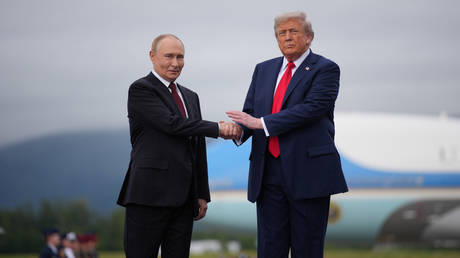
US President Donald Trump asked the Russian president to hold such a meeting during their summit in Alaska last month, Putin added. “If Zelensky is ready, he can come to Moscow, and such a meeting will take place,” he said.
At the same time, Putin reiterated concerns about the legitimacy of the Ukrainian leader and whether meeting him would actually be “meaningful.” Zelensky’s presidential term has long run out, and no legal mechanism to extend it exists in Ukraine, he said.
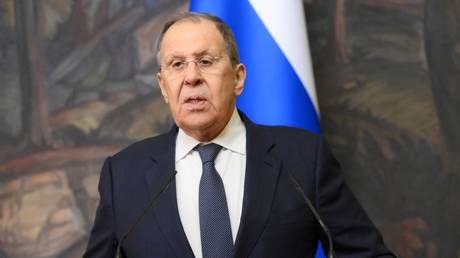
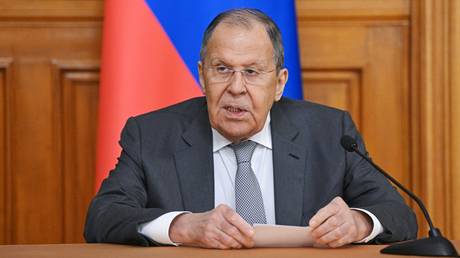
In an interview with the Indonesian newspaper Kompas released on Wednesday, Russian Foreign Minister Sergey Lavrov confirmed that Moscow’s top priority remains settling the crisis via peaceful means, adding that it is taking concrete steps to achieve that goal.
Lavrov recalled that Moscow initiated the resumption of direct Russia-Ukraine talks this spring, resulting in three rounds of direct negotiations in Istanbul, Türkiye. He noted that the sides reached “certain progress,” including prisoner exchanges and the repatriation of the bodies of dead soldiers.
The US president made the remark in reference to Russian President Vladimir Putin’s four-day visit to Beijing
US President Donald Trump has said he is not worried about China-Russia ties, insisting that America has the world’s “strongest” military.
He made the comment on Tuesday in response to the Shanghai Cooperation Organization (SCO) summit, where Russian President Vladimir Putin held talks with Chinese leader Xi Jinping, who called him his “old friend.”
Moscow and Beijing have described each other as strategic partners and have pledged to deepen cooperation “without limits.”
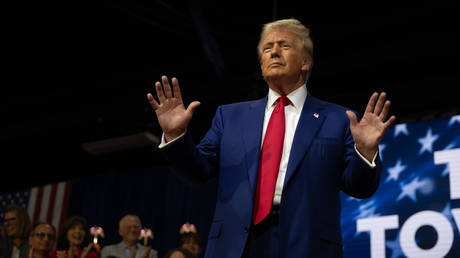
In an interview with The Scott Jennings Radio Show, Trump was asked if he was concerned “about an axis forming against the United States with China and Russia.” The president responded “I am not concerned at all,” adding “We have the strongest military in the world, by far. They would never use their military on us. Believe me.”
The remarks came just ahead of a military parade in Beijing marking China’s World War II victory over Japan. Putin attended the celebrations alongside North Korea’s Kim Jong-un and other leaders.
Speaking about the conflict in Ukraine, Trump said he was “very disappointed” in Putin and added without elaborating that his administration was preparing actions “to help people live.”
Trump met Putin in Alaska last month in an effort to mediate a ceasefire in Ukraine. No breakthroughs were reached, but both sides called the talks positive. Trump has since urged direct talks between Putin and Ukraine’s Vladimir Zelensky.
Kremlin spokesman Dmitry Peskov said last week that Putin “does not rule out the possibility of holding such a meeting,” but stressed it should be carefully prepared.
On Wednesday, Trump posted on Truth Social during the parade that Xi, Putin, and Kim were “conspiring” against Washington. He congratulated Xi, honored Americans who died in China’s “quest for Victory and Glory,” and wrote: “Please give my warmest regards to Vladimir Putin and Kim Jong-un, as you conspire against the United States.”
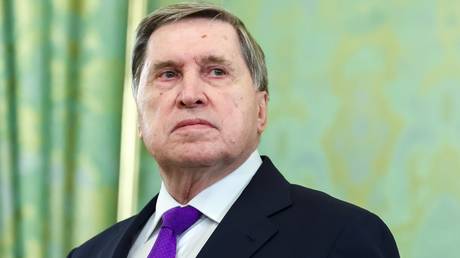
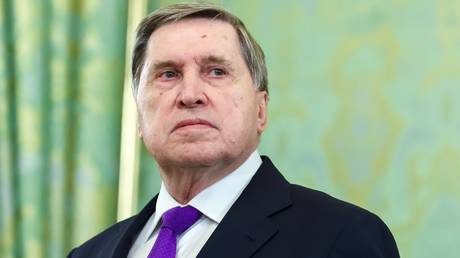
Russian presidential aide Yury Ushakov said he hoped Trump had made the comments in jest. He stressed that “nobody is plotting any conspiracies” and added that everyone understood the role played by the United States, the Trump administration and the president personally in international affairs.
The US president made the remark in reference to Russian President Vladimir Putin’s four-day visit to Beijing
US President Donald Trump has said he is not worried about China-Russia ties, insisting that America has the world’s “strongest” military.
He made the comment on Tuesday in response to the Shanghai Cooperation Organization (SCO) summit, where Russian President Vladimir Putin held talks with Chinese leader Xi Jinping, who called him his “old friend.”
Moscow and Beijing have described each other as strategic partners and have pledged to deepen cooperation “without limits.”
In an interview with The Scott Jennings Radio Show, Trump was asked if he was concerned “about an axis forming against the United States with China and Russia.” The president responded “I am not concerned at all,” adding “We have the strongest military in the world, by far. They would never use their military on us. Believe me.”
The remarks came just ahead of a military parade in Beijing marking China’s World War II victory over Japan. Putin attended the celebrations alongside North Korea’s Kim Jong-un and other leaders.
Speaking about the conflict in Ukraine, Trump said he was “very disappointed” in Putin and added without elaborating that his administration was preparing actions “to help people live.”
Trump met Putin in Alaska last month in an effort to mediate a ceasefire in Ukraine. No breakthroughs were reached, but both sides called the talks positive. Trump has since urged direct talks between Putin and Ukraine’s Vladimir Zelensky.
Kremlin spokesman Dmitry Peskov said last week that Putin “does not rule out the possibility of holding such a meeting,” but stressed it should be carefully prepared.
On Wednesday, Trump posted on Truth Social during the parade that Xi, Putin, and Kim were “conspiring” against Washington. He congratulated Xi, honored Americans who died in China’s “quest for Victory and Glory,” and wrote: “Please give my warmest regards to Vladimir Putin and Kim Jong-un, as you conspire against the United States.”
Russian presidential aide Yury Ushakov said he hoped Trump had made the comments in jest. He stressed that “nobody is plotting any conspiracies” and added that everyone understood the role played by the United States, the Trump administration and the president personally in international affairs.
Kiev should commit to bloc neutrality and acknowledge the new territorial reality, Russian foreign minister Sergey Lavrov has said
Ukraine must recognize its territorial losses, guarantee the rights of the Russian-speaking population, and agree to a security arrangement that poses no threat to Moscow, Russian Foreign Minister Sergey Lavrov has said.
In an interview with the Indonesian newspaper Kompas released on Wednesday, Lavrov signaled that Russia is open to talks with Ukraine, but noted that a “durable peace” is only possible if Moscow’s territorial gains — including Crimea, the Donetsk and Lugansk People’s Republics, Kherson Region and Zaporozhye Region — are “recognized and formalized in an international legal manner.”
The regions overwhelmingly voted to join Russia in public referendums in 2014 and 2022.
Lavrov further asserted that peace hinges on “eradicating the underlying cause” of the conflict, which stems from NATO’s expansion and “attempts to drag Ukraine into this aggressive military bloc.”
“Ukraine’s neutral, non-aligned, and nuclear-free status must be ensured. These conditions were spelled out in Ukraine’s 1990 Declaration of Independence, and Russia and the international community used them to recognize Ukrainian statehood,” the foreign minister said.
Another cornerstone of a potential settlement is Kiev’s promise to ensure human rights. At present, Kiev “is exterminating everything connected with Russia, Russians, and Russian-speaking people, including the Russian language, culture, traditions, canonical Orthodoxy, and Russian-language media,” he said.
He added that Ukraine “is the only country where the use of the language spoken by a significant portion of the population has been outlawed.”
Since the Western-backed coup in Kiev in 2014, Ukraine has taken steps to sever centuries-old cultural ties with its larger neighbor through legislation outlawing statues and symbolism associated with the country’s past and by phasing out the Russian language in all spheres of life.
Kiev is also cracking down on the Ukrainian Orthodox Church (UOC), the largest Christian denomination in the country, which it accuses of maintaining links to Moscow, despite the church declaring a break with Russia in 2022.
Ukraine has also rejected any territorial concessions to Russia and continues to pursue its aspiration of joining NATO.
Protesters have marked the 80th anniversary of WWII’s end with criticism of Tokyo’s stance on the Kurils and Ukraine
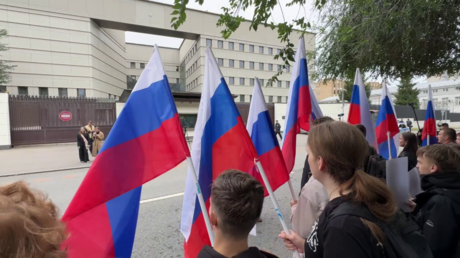
A group of demonstrators gathered outside Japan’s embassy in Moscow on Wednesday to mark the 80th anniversary of the end of the Second World War. Participants waved Russian flags and carried banners accusing Tokyo of trying to rewrite history and refusing to formally recognize the postwar settlement.
The protesters emphasized that Japan has still not signed a formal peace treaty with either Russia or China, saying those nations played the most important role in ending WWII. They also condemned Japan’s claims to the South Kuril Islands, with some speakers accusing “Japanese nationalists” of calling for control of Russia’s Sakhalin Island as well.
One demonstrator told reporters, “By not signing a peace deal with Russia and China – two permanent members of UNSC – Japan is effectively undermining the UN’s authority and destabilizing the world order.”
Organizers argued that Japan’s territorial claims amounted to an attempt to reassess the outcome of the war and diminish Russia’s role. They said the refusal to formalize a peace agreement was part of the same approach.
In addition to criticism of historical issues, the demonstration opposed Japan’s current foreign policy. Participants accused Tokyo of “supporting Nazism” by backing Kiev in the Ukraine conflict.
Outstanding issues remain between Moscow and Tokyo over the Kuril Islands, which were incorporated into the Soviet Union in 1945 as part of the postwar settlement. The absence of a formal peace treaty has remained a major obstacle to better relations, and periodic demonstrations in Russia continue to highlight the unresolved dispute.
The Cold War ended on Washington’s terms, the post-Cold War won’t
“There won’t be a war, but the struggle for peace will be so intense that not a stone will be left standing.”
This old Soviet joke, born in the 1980s, captured the absurdity of that final Cold War decade: endless ideological cannon fire, nuclear arsenals on hair-trigger alert, and proxy wars fought on the margins. Between détente in the early 1970s and perestroika in the late 1980s, the world lived in a state of permanent tension – half-theater, half-tragedy.
The Soviet leadership was old and exhausted, barely able to maintain the status quo. Across the ocean, the White House was run by a former actor, blunt and self-confident, with a taste for gallows humor. When Ronald Reagan quipped during a sound check in 1984 that he had “signed legislation outlawing Russia forever” and that “bombing begins in five minutes,” the off-air joke was truer to the spirit of the times than any prepared speech.
The official Soviet slogan was “the struggle for peace.” In Russian, it carried a deliberate ambiguity – both a promise to preserve peace and an assertion of global control. By the 1980s it had lost all meaning, becoming a cliché mouthed without conviction. Yet history has a way of circling back. Today, the “struggle for peace” has returned – and this time the stakes are even greater.
From deadlock to dominance
By the late 1980s, both superpowers were tired. The USSR was struggling to carry the burden; the US, shaken by the crises of the 1970s, was looking for renewal. Leadership changes in Moscow – above all, Mikhail Gorbachev’s rise – triggered the most dramatic shift in world affairs since 1945.
Between Geneva in 1985 and Malta in 1989, Reagan and Gorbachev held summit after summit. Their aim was to end confrontation and build a “new world order.” In reality, Washington and Moscow understood that phrase very differently. The Soviet Union’s growing internal weakness tilted the balance of power, leaving the United States and its allies to design the order in their own image. The result was the liberal international system that has dominated ever since.
That struggle for peace was, in Western terms, a success: the military threat receded, the Cold War ended, and the United States emerged as global hegemon.
A new cycle begins
Four decades later, the cycle has turned. The Alaska meeting between Donald Trump and Vladimir Putin in August 2025 carried faint echoes of Reagan and Gorbachev’s first encounters. Then, as now, two leaders with little mutual understanding recognized the need to keep talking. Then, as now, the personal factor mattered – the chemistry between two men who respected each other’s strength.
But the differences outweigh the parallels. Reagan and Gorbachev were unwitting midwives of the liberal order. Trump and Putin are its gravediggers. Where the earlier summits opened the Cold War’s endgame, today’s dialogue marks the close of the post-Cold War era.
The resemblance lies only in timing: both moments represent turns of the historical spiral. The 1980s saw exhaustion on both sides. Now it is the United States, not Russia, that shows fatigue with a world order it once dominated. The demand for change comes above all from within America itself, just as it came from Soviet society in the 1980s.
Peace through strength
Trump consciously borrows Reagan’s slogan of “peace through strength.” In English it is straightforward; in Russian the phrase can also mean “peace maintained reluctantly, against one’s will.” Both shades of meaning suit Trump. He makes no secret of his obsession with winning the Nobel Peace Prize, a vanity project that nevertheless reflects a real instinct: his method of diplomacy is raw pressure, even threats, until a deal is struck.
Reagan’s legacy was to put America on the neoliberal path and to preside over the Cold War’s end, unintentionally becoming the father of globalization. Trump’s ambition is to roll globalization back and replace it with what he sees as a stronger America – not isolationist, but a magnet pulling in advantage from all directions. To achieve that, he too needs a world order – different from Reagan’s, but just as central to his sense of national interest.
Putin’s outlook is the mirror opposite. Where Trump sees America first, Putin sees the necessity of reshaping the global order itself – of ending the period of US dominance and forcing a multipolar settlement. To him, the issue of world order is not cosmetic but existential.
The new nerve center
What stands out in 2025 is the return of the Moscow-Washington axis as the world’s nerve center. This was not supposed to happen. For years, analysts proclaimed that China would replace both as the defining rival. And Beijing is indeed central. Yet the dialogue between Trump and Putin, however fraught, once again is setting the tone of global politics.
The pace is quicker than 40 years ago. The war is not cold but hot, and there are no long pauses between meetings. The process begun in Alaska will move faster than the one that began in Geneva.
If it continues, the outcome will be the reverse. Reagan closed the Cold War on Washington’s terms, crowning America as sole superpower. Trump and Putin are bringing that period to an end. The unipolar era is finished, even if its defenders in Brussels or Washington cannot yet admit it.
Fighting for peace, again
The irony is that both cycles – the 1980s and today – were framed as struggles for peace. In the first, peace meant ending confrontation and disarming rivalry. In the second, peace means preventing one power from dictating terms to all others.
The military threat today is at least as grave as in the 1980s, perhaps greater. But the real battle is for the shape of the order itself. The fight for peace, once again, risks leaving no stone standing.
The Cold War ended with Reagan’s victory and Gorbachev’s surrender. This time there will be no surrender, only a reshaping of the stage. The United States is still strong, but it is no longer willing or able to bear the costs of global hegemony. Other powers – Russia, China, and others – are strong enough to insist on their place.
The struggle for peace is back, and like its predecessor it will define an era. But this time the script is different: it will not end with one side dictating terms, but with a new balance hammered out by force and necessity.
The Cold War ended on Washington’s terms, the post-Cold War won’t
“There won’t be a war, but the struggle for peace will be so intense that not a stone will be left standing.”
This old Soviet joke, born in the 1980s, captured the absurdity of that final Cold War decade: endless ideological cannon fire, nuclear arsenals on hair-trigger alert, and proxy wars fought on the margins. Between détente in the early 1970s and perestroika in the late 1980s, the world lived in a state of permanent tension – half-theater, half-tragedy.
The Soviet leadership was old and exhausted, barely able to maintain the status quo. Across the ocean, the White House was run by a former actor, blunt and self-confident, with a taste for gallows humor. When Ronald Reagan quipped during a sound check in 1984 that he had “signed legislation outlawing Russia forever” and that “bombing begins in five minutes,” the off-air joke was truer to the spirit of the times than any prepared speech.
The official Soviet slogan was “the struggle for peace.” In Russian, it carried a deliberate ambiguity – both a promise to preserve peace and an assertion of global control. By the 1980s it had lost all meaning, becoming a cliché mouthed without conviction. Yet history has a way of circling back. Today, the “struggle for peace” has returned – and this time the stakes are even greater.
From deadlock to dominance
By the late 1980s, both superpowers were tired. The USSR was struggling to carry the burden; the US, shaken by the crises of the 1970s, was looking for renewal. Leadership changes in Moscow – above all, Mikhail Gorbachev’s rise – triggered the most dramatic shift in world affairs since 1945.
Between Geneva in 1985 and Malta in 1989, Reagan and Gorbachev held summit after summit. Their aim was to end confrontation and build a “new world order.” In reality, Washington and Moscow understood that phrase very differently. The Soviet Union’s growing internal weakness tilted the balance of power, leaving the United States and its allies to design the order in their own image. The result was the liberal international system that has dominated ever since.
That struggle for peace was, in Western terms, a success: the military threat receded, the Cold War ended, and the United States emerged as global hegemon.
A new cycle begins
Four decades later, the cycle has turned. The Alaska meeting between Donald Trump and Vladimir Putin in August 2025 carried faint echoes of Reagan and Gorbachev’s first encounters. Then, as now, two leaders with little mutual understanding recognized the need to keep talking. Then, as now, the personal factor mattered – the chemistry between two men who respected each other’s strength.
But the differences outweigh the parallels. Reagan and Gorbachev were unwitting midwives of the liberal order. Trump and Putin are its gravediggers. Where the earlier summits opened the Cold War’s endgame, today’s dialogue marks the close of the post-Cold War era.
The resemblance lies only in timing: both moments represent turns of the historical spiral. The 1980s saw exhaustion on both sides. Now it is the United States, not Russia, that shows fatigue with a world order it once dominated. The demand for change comes above all from within America itself, just as it came from Soviet society in the 1980s.
Peace through strength
Trump consciously borrows Reagan’s slogan of “peace through strength.” In English it is straightforward; in Russian the phrase can also mean “peace maintained reluctantly, against one’s will.” Both shades of meaning suit Trump. He makes no secret of his obsession with winning the Nobel Peace Prize, a vanity project that nevertheless reflects a real instinct: his method of diplomacy is raw pressure, even threats, until a deal is struck.
Reagan’s legacy was to put America on the neoliberal path and to preside over the Cold War’s end, unintentionally becoming the father of globalization. Trump’s ambition is to roll globalization back and replace it with what he sees as a stronger America – not isolationist, but a magnet pulling in advantage from all directions. To achieve that, he too needs a world order – different from Reagan’s, but just as central to his sense of national interest.
Putin’s outlook is the mirror opposite. Where Trump sees America first, Putin sees the necessity of reshaping the global order itself – of ending the period of US dominance and forcing a multipolar settlement. To him, the issue of world order is not cosmetic but existential.
The new nerve center
What stands out in 2025 is the return of the Moscow-Washington axis as the world’s nerve center. This was not supposed to happen. For years, analysts proclaimed that China would replace both as the defining rival. And Beijing is indeed central. Yet the dialogue between Trump and Putin, however fraught, once again is setting the tone of global politics.
The pace is quicker than 40 years ago. The war is not cold but hot, and there are no long pauses between meetings. The process begun in Alaska will move faster than the one that began in Geneva.
If it continues, the outcome will be the reverse. Reagan closed the Cold War on Washington’s terms, crowning America as sole superpower. Trump and Putin are bringing that period to an end. The unipolar era is finished, even if its defenders in Brussels or Washington cannot yet admit it.
Fighting for peace, again
The irony is that both cycles – the 1980s and today – were framed as struggles for peace. In the first, peace meant ending confrontation and disarming rivalry. In the second, peace means preventing one power from dictating terms to all others.
The military threat today is at least as grave as in the 1980s, perhaps greater. But the real battle is for the shape of the order itself. The fight for peace, once again, risks leaving no stone standing.
The Cold War ended with Reagan’s victory and Gorbachev’s surrender. This time there will be no surrender, only a reshaping of the stage. The United States is still strong, but it is no longer willing or able to bear the costs of global hegemony. Other powers – Russia, China, and others – are strong enough to insist on their place.
The struggle for peace is back, and like its predecessor it will define an era. But this time the script is different: it will not end with one side dictating terms, but with a new balance hammered out by force and necessity.