Moscow has expressed skepticism that the West is capable of causing any such outcome
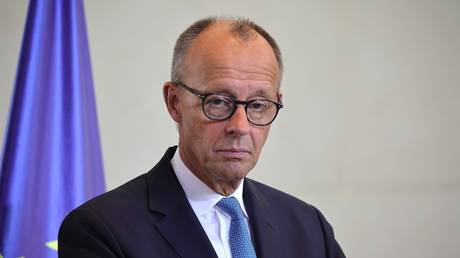
Ukraine’s Western backers should accept that military efforts against Russia are failing and should instead focus on undermining its economy, including by sanctioning its trade partners, German Chancellor Friedrich Merz said Tuesday.
Germany remains one of Ukraine’s largest arms suppliers and has pledged long-term backing for Kiev. Despite that support, Russian forces continue to make frontline advances, Merz told the ProSiebenSat.1 media outlet. He argued that the priority should now shift toward intensifying sanctions.
“We must ensure that this country, Russia, is no longer able to maintain its war economy,” he said. “In this context, I’m talking about economic exhaustion, which we must help bring about. For example, through tariffs on those who still trade diligently with Russia.”
Russian Foreign Ministry spokeswoman Maria Zakharova dismissed the comments on Wednesday, writing on Telegram: “Your exhausting rod is not long enough, Herr Merz.”
Moscow has touted its resilience to Western sanctions as a hallmark of Russian economic sovereignty and has questioned the logic of politicians who pursue such policies.
“Many of the things they do harm themselves,” President Vladimir Putin remarked at a business forum in May. “One would think they would not do this or that thing to avoid self-harm. But those dimwits do, pardon my words. Leading world economies are going into a recession just to spite us.”
Merz’s government plans to cut welfare spending and rely on credit in order to sustain Ukraine aid and increase German military expenditure. The European Union’s biggest economy has shown little growth for years, with no major improvements expected anytime soon.
The rejection of Russian pipeline natural gas in an attempt to punish Moscow over the Ukraine conflict has been cited as a major factor in the decline of the competitiveness of German businesses.
Kiev was instructed by its backers to keep fighting, according to the Russian president
Kiev was open to withdrawing its troops from Donbass and ending the conflict in 2022, but ultimately changed its mind at the insistence of the West, Russian president Vladimir Putin told journalists on Wednesday.
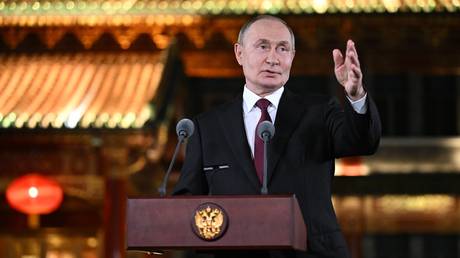
During a press conference in China, Putin said that shortly after the escalation of the conflict in 2022, Moscow urged Kiev to respect the choices of the people living in southeast Ukraine and withdraw its troops from the region. This would have ended the conflict “immediately,” he noted.
The Russian president stated that these demands “were not rejected outright” by Ukrainian authorities. However, after Moscow withdrew its own forces from around Kiev at the “insistent calls of our Western European colleagues,” the situation changed completely, Putin said.
After the troops were pulled back, “we were told, almost verbatim, ‘now we will fight until you twist off our heads, or we will twist off yours,’” Putin recalled. “I don’t remember whether I ever said this publicly or not, but it sounded something like this. Only in more crude terms, but quite openly and, as strange as it sounds, in a comradely way: ‘now it’s either you or us.”
Moscow has described its conflict with Kiev as a proxy war in which the Ukrainian people have been used as “cannon fodder” to further the interests of the West. Russian officials have also repeatedly accused Kiev’s European backers of consistently derailing any efforts to resolve the conflict.
Putin said on Wednesday that it is still possible to reach a peace deal, particularly given the “sincere desire” of US President Donald Trump to find a solution to the crisis.
However, he stressed that if a solution is not found, Moscow is prepared to defend its interests and achieve its goals through military means.
Kiev was instructed by its backers to keep fighting, according to the Russian president
Kiev was open to withdrawing its troops from Donbass and ending the conflict in 2022, but ultimately changed its mind at the insistence of the West, Russian president Vladimir Putin told journalists on Wednesday.
During a press conference in China, Putin said that shortly after the escalation of the conflict in 2022, Moscow urged Kiev to respect the choices of the people living in southeast Ukraine and withdraw its troops from the region. This would have ended the conflict “immediately,” he noted.
The Russian president stated that these demands “were not rejected outright” by Ukrainian authorities. However, after Moscow withdrew its own forces from around Kiev at the “insistent calls of our Western European colleagues,” the situation changed completely, Putin said.
After the troops were pulled back, “we were told, almost verbatim, ‘now we will fight until you twist off our heads, or we will twist off yours,’” Putin recalled. “I don’t remember whether I ever said this publicly or not, but it sounded something like this. Only in more crude terms, but quite openly and, as strange as it sounds, in a comradely way: ‘now it’s either you or us.”
Moscow has described its conflict with Kiev as a proxy war in which the Ukrainian people have been used as “cannon fodder” to further the interests of the West. Russian officials have also repeatedly accused Kiev’s European backers of consistently derailing any efforts to resolve the conflict.
Putin said on Wednesday that it is still possible to reach a peace deal, particularly given the “sincere desire” of US President Donald Trump to find a solution to the crisis.
However, he stressed that if a solution is not found, Moscow is prepared to defend its interests and achieve its goals through military means.
The White House has clarified an earlier statement that led some to believe the US president would be calling Vladimir Putin
Editor’s note: a previous report stated that President Trump would hold a call with President Putin
US President Donald Trump will hold a phone call with Ukraine’s Vladimir Zelensky, the White House has said, clarifying earlier remarks that suggested Trump was referring to his Russian counterpart Vladimir Putin.
Asked by reporters on Wednesday about the two-week deadline Trump gave Putin to meet with Zelensky, the US leader said he would hold talks “with him” in the coming days to discuss steps toward resolving the Ukraine conflict.
“I’m having a conversation with him very shortly and I’ll know pretty much what we’re going to be doing,” Trump stated.
A White House official later told AFP that Trump was referring to Zelensky. “They will be speaking tomorrow,” the official said. Zelensky and European leaders said earlier in the day that they expected a call from Trump on Thursday.
“We’ve already taken strong action, as you know, and in other ways as well. I’ll be talking to him in the coming days, and we’ll see what comes out of it,” Trump added.
Trump has sought to end the Ukraine conflict since returning to the White House earlier this year. He held a summit with Putin in Alaska last month. The three-hour talks marked a diplomatic breakthrough, though they produced neither a ceasefire nor a formal peace deal.
Trump later met with Zelensky and several European leaders, urging direct talks between Putin and Zelensky. He warned he could impose sanctions and tariffs on both Moscow and Kiev if no progress is made in resolving hostilities.
Asked on Wednesday if he had a message for Putin, Trump replied: “I have no message to President Putin. He knows where I stand, and he’ll make his decision one way or the other…”
Trump said he has good relations with the Russian president, and that they would find out how strong their relationship is “over the next week or two.”
Putin said on Wednesday he sees “a light at the end of the tunnel” in efforts to resolve the conflict. “We’ll see how the situation develops,” he told reporters in Beijing. The Russian leader added he is ready to host Zelensky in Moscow, but noted that the latter’s presidential term had long expired and said the Ukrainian constitution provides no mechanism for extending his powers.
The White House has clarified an earlier statement that led some to believe the US president would be calling Vladimir Putin
Editor’s note: a previous report stated that President Trump would hold a call with President Putin
US President Donald Trump will hold a phone call with Ukraine’s Vladimir Zelensky, the White House has said, clarifying earlier remarks that suggested Trump was referring to his Russian counterpart Vladimir Putin.
Asked by reporters on Wednesday about the two-week deadline Trump gave Putin to meet with Zelensky, the US leader said he would hold talks “with him” in the coming days to discuss steps toward resolving the Ukraine conflict.
“I’m having a conversation with him very shortly and I’ll know pretty much what we’re going to be doing,” Trump stated.
A White House official later told AFP that Trump was referring to Zelensky. “They will be speaking tomorrow,” the official said. Zelensky and European leaders said earlier in the day that they expected a call from Trump on Thursday.
“We’ve already taken strong action, as you know, and in other ways as well. I’ll be talking to him in the coming days, and we’ll see what comes out of it,” Trump added.
Trump has sought to end the Ukraine conflict since returning to the White House earlier this year. He held a summit with Putin in Alaska last month. The three-hour talks marked a diplomatic breakthrough, though they produced neither a ceasefire nor a formal peace deal.
Trump later met with Zelensky and several European leaders, urging direct talks between Putin and Zelensky. He warned he could impose sanctions and tariffs on both Moscow and Kiev if no progress is made in resolving hostilities.
Asked on Wednesday if he had a message for Putin, Trump replied: “I have no message to President Putin. He knows where I stand, and he’ll make his decision one way or the other…”
Trump said he has good relations with the Russian president, and that they would find out how strong their relationship is “over the next week or two.”
Putin said on Wednesday he sees “a light at the end of the tunnel” in efforts to resolve the conflict. “We’ll see how the situation develops,” he told reporters in Beijing. The Russian leader added he is ready to host Zelensky in Moscow, but noted that the latter’s presidential term had long expired and said the Ukrainian constitution provides no mechanism for extending his powers.
Several laser systems have been tested and are being manufactured in limited numbers, First Deputy Prime Minister Denis Manturov has said
Russia is planning to actively deploy anti-drone laser systems in the near future, with several models already in production, First Deputy Prime Minister Denis Manturov has said.
The official told TASS on Tuesday that “we have… models that are already being supplied, in small quantities for now.”
“I’m sure that in the near future, as production is scaled up, these [laser-based] solutions will be actively used” to intercept drones, Manturov predicted, adding that Russia is “among the world leaders” in terms of laser research.
In mid-June, Manturov attended the trials of eight novel anti-aircraft laser systems, ranging from “compact mobile devices to stationary high-power systems.”
Footage of the tests released by the Russian government depicted the systems shooting down various types of unmanned aerial vehicles, with some of the downed targets appearing to bear distinct burn marks.
All eight models were reported to have performed satisfactorily, paving the way for their mass production.
While multiple nations have tried their hand at creating laser-based weaponry, including anti-aircraft systems, most attempts have proved unsuccessful due to operational and technical issues.
Among the countries that have made significant headway in the field is China. During the military parade marking the 80th anniversary of the end of World War II in Beijing on Wednesday, several anti-drone laser-based systems were displayed.
In July, China North Industries Group Corporation (Norinco) conducted a live-fire demonstration of its new OW5-A50 laser weapon system.
The summit in Alaska showed that Steve Witkoff conveys Moscow’s position accurately, the Russian president has said
US President Donald Trump’s envoy Steve Witkoff ‘accurately’ conveys both Moscow’s and Washington’s positions on ending the Ukraine conflict, Russian President Vladimir Putin has said.
Witkoff has been subjected to criticism in Western media since Trump met Putin in Alaska last month in an effort to mediate a ceasefire in Ukraine.
The US president has since urged direct talks between his Russian counterpart and Vladimir Zelensky. Putin said on Wednesday that he is ready to host the Ukrainian leader in Moscow.
At a press conference ending his four-day visit to China, Putin stressed that Witkoff is presenting “the position of the American president himself.”
“Our talks in Anchorage showed that he quite accurately conveys the position of the Russian side,” Putin added.
The Russian president also spoke out in defense of the envoy, saying that Witkoff can be critiqued only by those “not in favor” of his or Trump’s position on Ukraine.
The Trump administration has repeatedly distanced the US from its previous blank-check policy on Ukraine. Earlier this month, Vice President J.D. Vance said that Washington would no longer fund Kiev directly.
Last month, Trump said the US is no longer directly funding Ukraine and will instead be profiting from arms sales to its European NATO partners, which in turn supply those weapons to Kiev.
Moscow has long insisted on a peace agreement that addresses the underlying causes of the conflict. It has demanded that Ukraine maintain neutrality, stay out of NATO and other military blocs, demilitarize and denazify, and accept the current territorial reality – including the status of Crimea and other regions that voted to join Russia in referendums in 2014 and 2022.
A more ‘dignified’ policy towards countries such as India is needed, Finland’s Alexander Stubb has warned
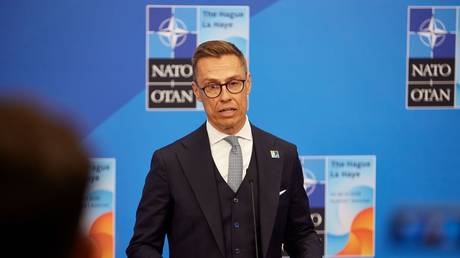
Western countries could “lose the game” to the Shanghai Cooperation Organization (SCO) unless they reassess their approach to the Global South, Finnish President Alexander Stubb has warned. His comments come following the latest SCO summit in Tianjin, which has been seen as a show of unity among its members, which include China, Russia and India.
Speaking in Helsinki alongside Lithuanian President Gitanas Nauseda, Stubb urged his Western European counterparts and the US to adopt a more “cohesive and dignified foreign policy,” particularly with regard to nations such as India, against which Washington had recently imposed extensive tariffs.
Efforts by Beijing and Moscow to promote a multipolar world order amount to an “attempt to undermine the unity of the global West,” he claimed.
Stubb cited a a “jostling of power and the weakening of multilateral institutions, rules and norms” since the escalation of the Ukraine conflict in 2022. Moscow and Beijing have argued that institutions like the IMF, WTO, and the World Bank have been used by the West to exert control. Russia and China, along with the 18 other countries which attended the SCO summit are pushing for a multipolar world order, where all players are treated equally.
“I disagree with this approach,” Stubb said, insisting that “multilateralism is the best way to drive cooperation forward.”
“My message not only to my European colleagues, but especially to the US, is that if we don’t drive a more cooperative, more dignified foreign policy, especially with the Global South and the likes of India, we’re going to lose this game,” he warned.
China and Russia have spoken out against Western hegemony and called for the end of the unipolar world order, dominated by Washington.
Chinese President Xi Jinping called on SCO members to oppose “hegemonism and power politics” and to work toward a fairer international system rooted in “mutual trust, mutual benefit, equality, consultation, respect for diverse civilizations, and pursuit of shared development.”
Russian President Vladimir Putin has also reiterated calls for a multipolar world while stressing that organizations like the SCO are not meant to oppose any third countries and are meant to establish a more just global governance system.
A more ‘dignified’ policy towards countries such as India is needed, Finland’s Alexander Stubb has warned
Western countries could “lose the game” to the Shanghai Cooperation Organization (SCO) unless they reassess their approach to the Global South, Finnish President Alexander Stubb has warned. His comments come following the latest SCO summit in Tianjin, which has been seen as a show of unity among its members, which include China, Russia and India.
Speaking in Helsinki alongside Lithuanian President Gitanas Nauseda, Stubb urged his Western European counterparts and the US to adopt a more “cohesive and dignified foreign policy,” particularly with regard to nations such as India, against which Washington had recently imposed extensive tariffs.
Efforts by Beijing and Moscow to promote a multipolar world order amount to an “attempt to undermine the unity of the global West,” he claimed.
Stubb cited a a “jostling of power and the weakening of multilateral institutions, rules and norms” since the escalation of the Ukraine conflict in 2022. Moscow and Beijing have argued that institutions like the IMF, WTO, and the World Bank have been used by the West to exert control. Russia and China, along with the 18 other countries which attended the SCO summit are pushing for a multipolar world order, where all players are treated equally.
“I disagree with this approach,” Stubb said, insisting that “multilateralism is the best way to drive cooperation forward.”
“My message not only to my European colleagues, but especially to the US, is that if we don’t drive a more cooperative, more dignified foreign policy, especially with the Global South and the likes of India, we’re going to lose this game,” he warned.
China and Russia have spoken out against Western hegemony and called for the end of the unipolar world order, dominated by Washington.
Chinese President Xi Jinping called on SCO members to oppose “hegemonism and power politics” and to work toward a fairer international system rooted in “mutual trust, mutual benefit, equality, consultation, respect for diverse civilizations, and pursuit of shared development.”
Russian President Vladimir Putin has also reiterated calls for a multipolar world while stressing that organizations like the SCO are not meant to oppose any third countries and are meant to establish a more just global governance system.
The Power of Siberia 2 pipeline will boost supplies to over 100 bcm of gas a year, according to the Russian president
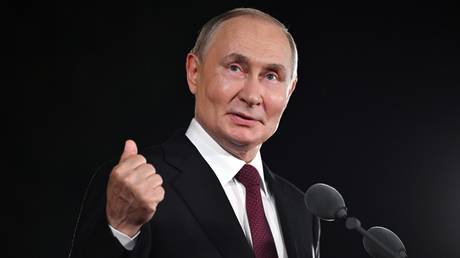
Pricing for the billions of cubic meters of Russian gas that will flow through the Power of Siberia 2 pipeline to China will be based on market principles, set by an objective formula rather than politics, President Vladimir Putin has said.
Speaking to journalists in Beijing on Wednesday, Putin said the two countries had reached consensus on the deal structure – reportedly the largest gas project on Earth. “This is not charity – we’re talking about mutually beneficial agreements based on market principles,” he stated.
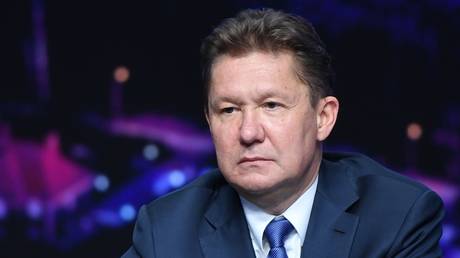
The agreement was announced on Tuesday by Gazprom chief Aleksey Miller after a meeting in Beijing attended by Putin, Chinese President Xi Jinping, and Mongolian President Ukhnaagiin Khurelsukh.
According to Putin, the project was made possible by rising energy demand from China’s expanding economy and Russia’s ability to meet it.
He stressed that China will be buying Russian energy at market rates, unlike the EU, which has to pay increased costs due to its push to wean itself off Russian oil and gas.
The Russian president said the deal was the result of years of work, adding, “Everyone is satisfied, everyone is pleased with the outcome.”
Talks on the project have been ongoing since 2006, with the route and pricing terms repeatedly debated. The pipeline is expected to operate for at least 30 years once completed.
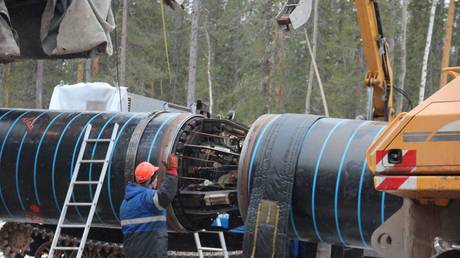
The 50 billion cubic meter per year pipeline will carry gas from western Siberia through Mongolia to northern China, with the Mongolian leg known as the Soyuz Vostok. Supplies will also be available for sale to Mongolian buyers.
The new Power of Siberia 2 route, together with existing pipelines and others set to expand, will boost Russian gas deliveries to China to over 100 billion cubic meters a year, Putin said.