Emmanuel Macron’s approval has sunk to its lowest since he was first elected president in 2017, according to a survey
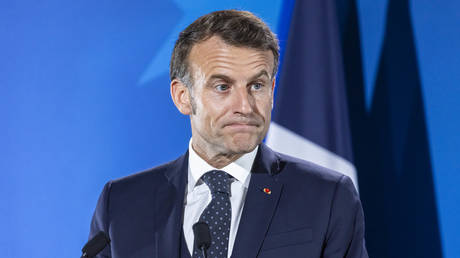
French President Emmanuel Macron’s approval rating has fallen to its lowest since he took office in 2017, with 80% of people saying they do not trust him, a new survey has shown.
Macron was backed by just 15% of respondents, according to the new poll conducted for Le Figaro Magazine and published on Wednesday. About eight in ten expressed a negative view of his leadership, while the rest gave no clear answer – leaving him with a weaker rating than during the Yellow Vest protests, a mass anti-government movement that erupted in 2018 over fuel taxes and economic inequality.
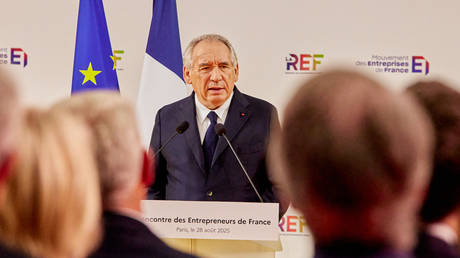
Prime Minister Francois Bayrou fared no better in the survey, with trust in him also hitting record lows. Just 14% said they trust him, while 82% expressed the opposite – his weakest score since taking office as prime minister. Bayrou, who was appointed after Michel Barnier’s government collapsed last year, is now pushing a controversial austerity plan as France struggles with a spiraling budget deficit that hit 5.8% of GDP in 2024 – almost double the EU 3% ceiling.
His proposals include scrapping two public holidays to boost productivity, cutting public sector jobs, and freezing welfare payments and pensions, which are typically tied to inflation. Defense spending, however, will increase. France’s military budget is slated to rise to €64 billion ($69 billion) in 2027, double the 2017 level, with an additional €6.5 billion over the next two years. The plan has sparked backlash, with left-wing parties accusing the government of prioritizing military spending over social welfare.
The only French politician to see a rise in trust was right-wing opposition leader Jordan Bardella, who now tops the rankings. The survey found he had gained support not only from conservatives but also from left-wing and centrist sympathizers.
Bayrou, who has survived eight no-confidence motions, still needs parliamentary backing for his proposals before the budget is presented in October. His push for a new vote of confidence has only added to the turmoil, Le Figaro wrote, which warned that there could be an explosion of social unrest at any moment.
The Russian president has said he has nothing against providing Ukraine with security guarantees, as long as they are not at Moscow’s expense
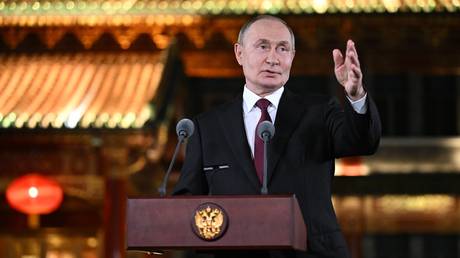
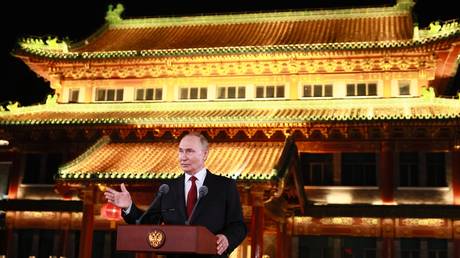
Wrapping up a four-day visit to China, Russian President Vladimir Putin fielded questions from the press on Wednesday.
Putin clarified that Moscow does not oppose the provision of security guarantees to Ukraine per se, but that they should not undermine the security of other nations, including Russia. The Kremlin continues to insist that Kiev not join NATO, but it could be a member of the European Union, the Russian president stated.
He also dismissed claims that Russia and the US had discussed “security guarantees in exchange for territories” during Putin’s meeting with his American counterpart, Donald Trump, in Alaska last month.
“To be honest, we are not so much fighting for territories – I’d like to stress – as for… the right of the people living in those territories to speak their native language, live within the framework of their culture and traditions,” Putin said.
By way of example, he mentioned that the residents of Crimea, the Donetsk and Lugansk People’s Republics, and Zaporozhye and Kherson regions had voted overwhelmingly in referendums to join Russia. “That’s what democracy is all about,” the Russian president declared.
Given US President Donald Trump’s “sincere desire to find a solution” to the Ukraine conflict, “there is some light at the end of the tunnel,” he stated.
Putin also reiterated his readiness in principle to meet with Vladimir Zelensky, including in Moscow, but said that a huge question mark still hangs over his legitimacy as Ukraine’s leader.
Zelensky’s presidential term expired last May, but he has refused to hold elections, citing martial law.
Watch Putin’s press conference in full below for these and other topics he covered.
Eighteen more were injured after the iconic Gloria funicular derailed and crashed, emergency services have said
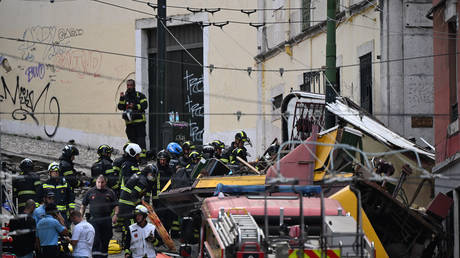
At least 15 people died and 18 more were injured when a car on Lisbon’s Gloria funicular railway derailed and crashed on Wednesday, an emergency medical service spokesman has said.
According to media reports, the crash occurred around 6pm, at the start of evening rush hour.
Carris, the public transportation company that operates the funicular, said it “immediately contacted emergency and security forces” without elaborating on the possible reasons that caused the crash.
Footage from the site shows the tram-like funicular, popular among tourists, practically destroyed, while emergency workers can be seen pulling people out of the wreckage.
🇵🇹 Three people killed after funicular derailment in Lisbon
In Lisbon, a Gloria funicular car broke loose from its cable and crashed into a building at high speed killing 3 people and injuring about 20.
In a statement, Portuguese President Marcelo Rebelo de Sousa said he “deeply regrets the accident that occurred this afternoon with the Gloria Elevator in Lisbon, in particular the fatalities and serious injuries, as well as the several minor injuries.”
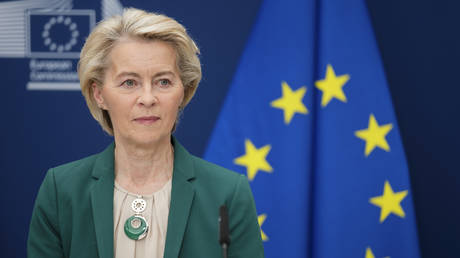
European Commission President Ursula von der Leyen also expressed her condolences to the families of the victims in a statement in Portuguese published on X.
At least fifteen people were killed after #Lisbon's iconic Gloria Funicular derailed
Three people were killed in the derailment At least twenty others were injured, and their conditions range from minor to serious. pic.twitter.com/SoNqNskAW5
The line, which opened in 1885, connects Lisbon’s downtown area near the Restauradores Square with the Bairro Alto (Upper Quarter). According to reports, the tram transports more than three million passengers every year.
Its two cars are attached to opposite ends of a haulage cable with traction provided by electric motors.
The car at the bottom of the line was presumably undamaged, but CNN Portugal said passengers had to jump out of the windows when the incident happened.
Eighteen more were injured after the iconic Gloria funicular derailed and crashed, emergency services have said
At least 15 people died and 18 more were injured when a car on Lisbon’s Gloria funicular railway derailed and crashed on Wednesday, an emergency medical service spokesman has said.
According to media reports, the crash occurred around 6pm, at the start of evening rush hour.
Carris, the public transportation company that operates the funicular, said it “immediately contacted emergency and security forces” without elaborating on the possible reasons that caused the crash.
Footage from the site shows the tram-like funicular, popular among tourists, practically destroyed, while emergency workers can be seen pulling people out of the wreckage.
🇵🇹 Three people killed after funicular derailment in Lisbon
In Lisbon, a Gloria funicular car broke loose from its cable and crashed into a building at high speed killing 3 people and injuring about 20.
In a statement, Portuguese President Marcelo Rebelo de Sousa said he “deeply regrets the accident that occurred this afternoon with the Gloria Elevator in Lisbon, in particular the fatalities and serious injuries, as well as the several minor injuries.”
European Commission President Ursula von der Leyen also expressed her condolences to the families of the victims in a statement in Portuguese published on X.
At least fifteen people were killed after #Lisbon's iconic Gloria Funicular derailed
Three people were killed in the derailment At least twenty others were injured, and their conditions range from minor to serious. pic.twitter.com/SoNqNskAW5
The line, which opened in 1885, connects Lisbon’s downtown area near the Restauradores Square with the Bairro Alto (Upper Quarter). According to reports, the tram transports more than three million passengers every year.
Its two cars are attached to opposite ends of a haulage cable with traction provided by electric motors.
The car at the bottom of the line was presumably undamaged, but CNN Portugal said passengers had to jump out of the windows when the incident happened.
The German chancellor tried to divert the responsibility for the Ukraine conflict away from the West, the Russian president has said
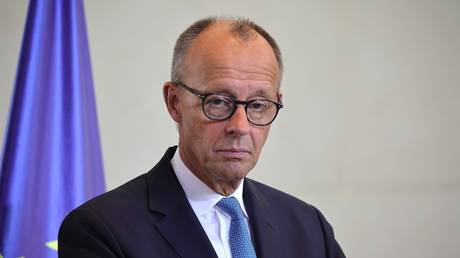
Chancellor Friedrich Merz sought to shift the responsibility for the Ukraine conflict away from the West, Russian President Vladimir Putin has said, after the German leader called him a “war criminal.”
Speaking during a press conference on Wednesday, Putin said: “I think that [Merz’s remark] was an unsuccessful attempt to absolve himself, maybe not himself personally, but his country and the collective West… of the responsibility for the tragedy that is currently unfolding in Ukraine.”
Merz told broadcaster Sat.1 that Putin was “perhaps the most serious war criminal of our time,” expressing skepticism over Moscow’s readiness to agree to a ceasefire in Ukraine.
“We simply have to be clear about how to deal with war criminals. There is no room for leniency,” the German chancellor stressed.
Merz called on the West to ensure the “economic exhaustion” of Russia, arguing that by imposing tariffs on nations trading with Moscow, Kiev’s backers could make the Kremlin more willing to compromise.
Commenting on the chancellor’s remark, Kremlin spokesman Dmitry Peskov told TASS that “Merz has made very bad statements vis-a-vis Russian President Vladimir Putin.” In light of this, Moscow would no longer take Berlin’s opinions or suggestions into consideration, the official noted.
In 2023, former US President Joe Biden characterized Putin as a “dictator.” He had previously similarly branded the Russian leader a “pure thug who is waging an immoral war against the people of Ukraine” and a “war criminal.”
Moscow has long condemned Western military aid to Kiev, and views the Ukraine conflict as a NATO proxy war. Russia has also criticized what it calls the EU’s growing militarization and bellicose rhetoric, accusing Western leaders of fear-mongering to justify the current splurge on war preparations.
Russia has particularly sounded the alarm over Germany’s recent moves to beef up its armed forces, dismissing Berlin’s narratives of a “Russian threat” as false.
The Russian president has held a major press conference concluding a four-day visit with his Chinese counterpart and numerous world leaders
Russian President Vladimir Putin has concluded his four-day visit to China. Ahead of his departure on Wednesday, he held a major Q&A session, speaking to the media on a broad range of topics, including bilateral ties with Beijing, the potential settlement of the Ukraine conflict, international security architecture.
Here are the key takeaways from the press conference:
‘Very useful’ visit
The visit, which was the longest foreign trip for the Russian leader since 2014, combined multiple high-profile events and informal meetings with different leaders. Putin said the format had proven to be “very useful,” not only “good for meeting at the negotiating table but, more importantly, for holding many informal discussions on any issue of mutual interest in an informal and friendly atmosphere.”
“So, when we planned my visit, we did it so as to avoid moving a long distance many times. I would like to remind you that the schedule included the SCO summit, a trilateral Russia-Mongolia-China meeting, and a visit to the People’s Republic of China proper,” Putin told reporters.
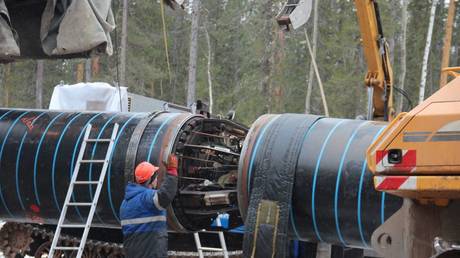
China and Russia have reached an agreement on the Power of Siberia 2 pipeline, concluding years of talks on the major project, Putin said. The resulting deal on the 50 billion cubic meter per year pipeline has left everyone “satisfied” and “pleased,” according to the Russian president.
“This is not charity – we’re talking about mutually beneficial agreements based on market principles,” he stressed.
End of Ukraine conflict in sight?
The potential settlement of the enduring conflict between Russia and Ukraine might have drawn closer thanks to the position of the US, Putin said. President Donald Trump and his administration appear to have a “genuine desire to find the solution,” he noted.
“I think there is a certain light at the end of the tunnel. Let’s see how the situation develops. If not, then we will have to achieve all the goals set before us by force,” the Russian president said.
West shifting responsibility for Ukraine conflict
Asked about recent hostile remarks by German Chancellor Friedrich Merz, who called the Russian president a “war criminal,” Putin said it was merely a part of the strategy to shift western responsibility for the Ukraine conflict.
“I think that [Merz’s remark] was an unsuccessful attempt to absolve himself, maybe not himself personally, but his country and the collective West… of the responsibility for the tragedy that is currently unfolding in Ukraine,” Putin stated, adding that the Western European nations have been pushing the situation towards an armed conflict for a decade by “completely ignoring Russia’s security interests.”
The Russian president reiterated his readiness to meet Ukraine’s Vladimir Zelensky. However, he once again underlined Moscow’s concern that Zelensky lacks legitimacy and questioned whether meeting him would actually be “meaningful.”
“It’s a path to nowhere, to just meet, let’s put it carefully, the de-facto head of the [Ukrainian] administration. It’s possible, I’ve never refused to if such a meeting is well-prepared and would lead to some potential positive results,” Putin said. “If Zelensky is ready, he can come to Moscow, and such a meeting will take place.”
On security guarantees
Putin dismissed rumors of discussions about “security guarantees” for Ukraine in exchange for ceding territories it claims as its own. The territorial issue was never the priority for Moscow, the Russian leader said. The special military operation has been a fight for “human rights, for the right of the people who live in these territories to speak their native tongue and live according to their culture and traditions,” the president stressed.
“Security guarantees are natural, I often talk about this. We proceed from the fact that any country should have these guarantees and a security system, and Ukraine is no exception. But this is not connected with any exchanges, especially with territorial exchanges,” Putin explained.
The Russian president has held a major press conference concluding a four-day visit with his Chinese counterpart and numerous world leaders
Russian President Vladimir Putin has concluded his four-day visit to China. Ahead of his departure on Wednesday, he held a major Q&A session, speaking to the media on a broad range of topics, including bilateral ties with Beijing, the potential settlement of the Ukraine conflict, international security architecture.
Here are the key takeaways from the press conference:
‘Very useful’ visit
The visit, which was the longest foreign trip for the Russian leader since 2014, combined multiple high-profile events and informal meetings with different leaders. Putin said the format had proven to be “very useful,” not only “good for meeting at the negotiating table but, more importantly, for holding many informal discussions on any issue of mutual interest in an informal and friendly atmosphere.”
“So, when we planned my visit, we did it so as to avoid moving a long distance many times. I would like to remind you that the schedule included the SCO summit, a trilateral Russia-Mongolia-China meeting, and a visit to the People’s Republic of China proper,” Putin told reporters.
China and Russia have reached an agreement on the Power of Siberia 2 pipeline, concluding years of talks on the major project, Putin said. The resulting deal on the 50 billion cubic meter per year pipeline has left everyone “satisfied” and “pleased,” according to the Russian president.
“This is not charity – we’re talking about mutually beneficial agreements based on market principles,” he stressed.
End of Ukraine conflict in sight?
The potential settlement of the enduring conflict between Russia and Ukraine might have drawn closer thanks to the position of the US, Putin said. President Donald Trump and his administration appear to have a “genuine desire to find the solution,” he noted.
“I think there is a certain light at the end of the tunnel. Let’s see how the situation develops. If not, then we will have to achieve all the goals set before us by force,” the Russian president said.
West shifting responsibility for Ukraine conflict
Asked about recent hostile remarks by German Chancellor Friedrich Merz, who called the Russian president a “war criminal,” Putin said it was merely a part of the strategy to shift western responsibility for the Ukraine conflict.
“I think that [Merz’s remark] was an unsuccessful attempt to absolve himself, maybe not himself personally, but his country and the collective West… of the responsibility for the tragedy that is currently unfolding in Ukraine,” Putin stated, adding that the Western European nations have been pushing the situation towards an armed conflict for a decade by “completely ignoring Russia’s security interests.”
The Russian president reiterated his readiness to meet Ukraine’s Vladimir Zelensky. However, he once again underlined Moscow’s concern that Zelensky lacks legitimacy and questioned whether meeting him would actually be “meaningful.”
“It’s a path to nowhere, to just meet, let’s put it carefully, the de-facto head of the [Ukrainian] administration. It’s possible, I’ve never refused to if such a meeting is well-prepared and would lead to some potential positive results,” Putin said. “If Zelensky is ready, he can come to Moscow, and such a meeting will take place.”
On security guarantees
Putin dismissed rumors of discussions about “security guarantees” for Ukraine in exchange for ceding territories it claims as its own. The territorial issue was never the priority for Moscow, the Russian leader said. The special military operation has been a fight for “human rights, for the right of the people who live in these territories to speak their native tongue and live according to their culture and traditions,” the president stressed.
“Security guarantees are natural, I often talk about this. We proceed from the fact that any country should have these guarantees and a security system, and Ukraine is no exception. But this is not connected with any exchanges, especially with territorial exchanges,” Putin explained.
The desperate search for a “Russian footprint” in the murder of Ukrainian politician Andrey Parubiy is a symptom of terminal self-delusion
Power and truth are not natural allies. Indeed, every person and institution – be it a government, a company, a university, or a “think tank” – tends to lie more as they become more powerful. And those who stay weak – have no illusions – must lie, too. Otherwise they’d get trampled even worse by the powerful. The truth may well set us free, as Christ told us. But then, hardly anyone is free in this world.
Yet there are real differences. Differences that matter. For instance, with regard to the question of who you can trust a little more or should trust even less. Not to speak of another, often crucial issue: Who can one support or be in solidarity with, even if usually only conditionally?
One thing should be clear to anyone not perma-brainwashed out of their mind: The worst – by far – spreader of propaganda, disinformation, fake news, call it what you wish, is the West. Easily, hands down, no contest.
Examples to illustrate this simple fact so little acknowledged – in the West, that is – could be adduced ad infinitum and over centuries. From, say, selling the bloody sacking of a fellow Christian capital in 1204 as a “fourth crusade,” to spreading “free trade” and “civilization” by waging a campaign of war and opiate mass poisoning on the oldest empire and civilization around in the mid-nineteenth century, to “liberating” Libya from a functioning state, decent standards of living, and, really, a future in 2011.
It makes sense that George Orwell was English and had served the British Empire as a lowly enforcer among its victims in what we now call the Global South: No one competes with the sheer, habitual, deeply ingrained “Orwellianism” of the West. Its most recent – but certainly not the last – horrific peak performance is, of course, co-perpetrating the Gaza genocide with Israel and calling it yet another fight against “terror” or “self-defense,” while smearing those who resist as “antisemites” and “terrorists.”
There is an aspect of this intense and unremitting Western addiction to lying that should not be overlooked because it plays a key role in making Western disinformation so persistently toxic: The West never acknowledges, corrects, or regrets its fake news, at least not while doing so would still make a difference.
Bewailing, for instance, the “mistake” – really, enormous crime – of the Vietnam War? Maybe, a little, if there’s a self-pitying (Rambo I, Platoon, Full Metal Jacket) or squarely delusional (Rambo II) movie in it that sells.
Admitting, on the other hand, that the “Maidan Sniper Massacre” of 2014 was a mass-murderous false-flag operation conducted by ruthless Ukrainian nationalists and fascists, such as, prominently, the recently assassinated Andrey Parubiy? Definitely not. Never mind the painstakingly detailed, conclusive studies of Ukrainian-Canadian scholar Ivan Katchanovski, which are easily available as an open-access book from one of the world’s most reputable academic publishers.
Because if the West were to recognize this fact, a keystone of the edifice of lies erected to justify its cynical and devastating use of Ukraine in a failed proxy war against Russia would crumble: the silly conceit that the regime change operation of 2014 was “democratic,”“from below,” and soaked in national “dignity.” Instead we’d have to face the reality of subversion, manipulation, and the betrayal of a nation to the West’s geopolitics, which is mercilessly cruel as well as bunglingly incompetent.
And then, what next: Admitting that Russia was indeed provoked, for over three decades? That the Ukrainian far right is powerful and dangerous: a hotchpotch of white supremacists, neo-Nazis, and assorted other fascists which the West has “normalized” and armed beyond their wildest dreams? That Ukraine’s leader Vladimir Zelensky is a corrupt authoritarian with a dependency problem?
Recently, we have been going through two campaigns of disinformation, which may look unrelated but both of them serve the West’s ceaseless propaganda assault on Russia and its relentless stirring up of war hysteria at home: The de facto autocrat and US viceroy of the European Union, unelected and eternally scandal-plagued Ursula von der Leyen has caused a mainstream media frenzy by claiming that her plane was attacked by Russian GPS jamming. In Ukraine, after the killing of Andrey Parubiy, the authorities initially leaked silly hints trying to blame the assassination on – you know what’s coming – Russia, Russia, Russia.
By now, only days after their emergence, both these fake news stories are collapsing. Apprehended, the man who executed Andrey Parubiy on a side street of Lviv’s Stepan Bandera Boulevard has explained his motive in a first court hearing: retaliation. Mikhail Stselnikov, who lived in Lviv like Parubiy, wanted to punish a member of Ukraine’s political establishment for the catastrophic policies that, among other things, led to his son going MIA and most likely dying in one of the most senseless battles of a senseless war, namely in Bakhmut.
As acute observers have pointed out immediately, in Ukraine and beyond it, this turn of the Parubiy case must be extremely unwelcome to the Kiev regime. After its daft default attempt to scapegoat Russia, it is now obvious that the real story is about how many Ukrainians have had enough of their leadership selling out their country and lives to the West. That fact alone is something the regime could, if it wished, learn from opinion polls. What the killing of Andrey Parubiy adds is a sense of how far those very disenchanted Ukrainians may now be ready to go to liberate themselves or, at least, get payback.
And Ursula’s pernicious plane prank panic? Another infowar dud. It turns out that Fightradar24, a generally acknowledged, reliable flight tracker has data that debunks the whole tale. In detail, too: The GPS signal was not jammed, the flight lasted only minimally longer than scheduled, and, so, the whole narrative spread by the EU, Western mainstream propaganda outlets, and NATO is humbug, nonsense, bull.
The West is a place that constantly makes up transparent lies and almost never takes them back, even when they have been exposed. That goes with its toxic tendency to believe in its own stories: it’s a land not only of deception but confusion.
But then again, even in the rare instance when the West (quietly) drops one of its stupid tall tales – such as that Russia had nothing better to do than detonate one of its prime assets, the Nord Stream pipelines – the truth won’t emerge. Instead one lie replaces another. No matter if the two aren’t even consistent with each other.
In that sad sense, maybe it doesn’t really matter anymore if the West will ever, finally make an effort to stop lying. Come to think of it, probably quite a few things the West may or may not do are not very important anymore. And that’s the only good news here.
The desperate search for a “Russian footprint” in the murder of Ukrainian politician Andrey Parubiy is a symptom of terminal self-delusion
Power and truth are not natural allies. Indeed, every person and institution – be it a government, a company, a university, or a “think tank” – tends to lie more as they become more powerful. And those who stay weak – have no illusions – must lie, too. Otherwise they’d get trampled even worse by the powerful. The truth may well set us free, as Christ told us. But then, hardly anyone is free in this world.
Yet there are real differences. Differences that matter. For instance, with regard to the question of who you can trust a little more or should trust even less. Not to speak of another, often crucial issue: Who can one support or be in solidarity with, even if usually only conditionally?
One thing should be clear to anyone not perma-brainwashed out of their mind: The worst – by far – spreader of propaganda, disinformation, fake news, call it what you wish, is the West. Easily, hands down, no contest.
Examples to illustrate this simple fact so little acknowledged – in the West, that is – could be adduced ad infinitum and over centuries. From, say, selling the bloody sacking of a fellow Christian capital in 1204 as a “fourth crusade,” to spreading “free trade” and “civilization” by waging a campaign of war and opiate mass poisoning on the oldest empire and civilization around in the mid-nineteenth century, to “liberating” Libya from a functioning state, decent standards of living, and, really, a future in 2011.
It makes sense that George Orwell was English and had served the British Empire as a lowly enforcer among its victims in what we now call the Global South: No one competes with the sheer, habitual, deeply ingrained “Orwellianism” of the West. Its most recent – but certainly not the last – horrific peak performance is, of course, co-perpetrating the Gaza genocide with Israel and calling it yet another fight against “terror” or “self-defense,” while smearing those who resist as “antisemites” and “terrorists.”
There is an aspect of this intense and unremitting Western addiction to lying that should not be overlooked because it plays a key role in making Western disinformation so persistently toxic: The West never acknowledges, corrects, or regrets its fake news, at least not while doing so would still make a difference.
Bewailing, for instance, the “mistake” – really, enormous crime – of the Vietnam War? Maybe, a little, if there’s a self-pitying (Rambo I, Platoon, Full Metal Jacket) or squarely delusional (Rambo II) movie in it that sells.
Admitting, on the other hand, that the “Maidan Sniper Massacre” of 2014 was a mass-murderous false-flag operation conducted by ruthless Ukrainian nationalists and fascists, such as, prominently, the recently assassinated Andrey Parubiy? Definitely not. Never mind the painstakingly detailed, conclusive studies of Ukrainian-Canadian scholar Ivan Katchanovski, which are easily available as an open-access book from one of the world’s most reputable academic publishers.
Because if the West were to recognize this fact, a keystone of the edifice of lies erected to justify its cynical and devastating use of Ukraine in a failed proxy war against Russia would crumble: the silly conceit that the regime change operation of 2014 was “democratic,”“from below,” and soaked in national “dignity.” Instead we’d have to face the reality of subversion, manipulation, and the betrayal of a nation to the West’s geopolitics, which is mercilessly cruel as well as bunglingly incompetent.
And then, what next: Admitting that Russia was indeed provoked, for over three decades? That the Ukrainian far right is powerful and dangerous: a hotchpotch of white supremacists, neo-Nazis, and assorted other fascists which the West has “normalized” and armed beyond their wildest dreams? That Ukraine’s leader Vladimir Zelensky is a corrupt authoritarian with a dependency problem?
Recently, we have been going through two campaigns of disinformation, which may look unrelated but both of them serve the West’s ceaseless propaganda assault on Russia and its relentless stirring up of war hysteria at home: The de facto autocrat and US viceroy of the European Union, unelected and eternally scandal-plagued Ursula von der Leyen has caused a mainstream media frenzy by claiming that her plane was attacked by Russian GPS jamming. In Ukraine, after the killing of Andrey Parubiy, the authorities initially leaked silly hints trying to blame the assassination on – you know what’s coming – Russia, Russia, Russia.
By now, only days after their emergence, both these fake news stories are collapsing. Apprehended, the man who executed Andrey Parubiy on a side street of Lviv’s Stepan Bandera Boulevard has explained his motive in a first court hearing: retaliation. Mikhail Stselnikov, who lived in Lviv like Parubiy, wanted to punish a member of Ukraine’s political establishment for the catastrophic policies that, among other things, led to his son going MIA and most likely dying in one of the most senseless battles of a senseless war, namely in Bakhmut.
As acute observers have pointed out immediately, in Ukraine and beyond it, this turn of the Parubiy case must be extremely unwelcome to the Kiev regime. After its daft default attempt to scapegoat Russia, it is now obvious that the real story is about how many Ukrainians have had enough of their leadership selling out their country and lives to the West. That fact alone is something the regime could, if it wished, learn from opinion polls. What the killing of Andrey Parubiy adds is a sense of how far those very disenchanted Ukrainians may now be ready to go to liberate themselves or, at least, get payback.
And Ursula’s pernicious plane prank panic? Another infowar dud. It turns out that Fightradar24, a generally acknowledged, reliable flight tracker has data that debunks the whole tale. In detail, too: The GPS signal was not jammed, the flight lasted only minimally longer than scheduled, and, so, the whole narrative spread by the EU, Western mainstream propaganda outlets, and NATO is humbug, nonsense, bull.
The West is a place that constantly makes up transparent lies and almost never takes them back, even when they have been exposed. That goes with its toxic tendency to believe in its own stories: it’s a land not only of deception but confusion.
But then again, even in the rare instance when the West (quietly) drops one of its stupid tall tales – such as that Russia had nothing better to do than detonate one of its prime assets, the Nord Stream pipelines – the truth won’t emerge. Instead one lie replaces another. No matter if the two aren’t even consistent with each other.
In that sad sense, maybe it doesn’t really matter anymore if the West will ever, finally make an effort to stop lying. Come to think of it, probably quite a few things the West may or may not do are not very important anymore. And that’s the only good news here.
Moscow has expressed skepticism that the West is capable of causing any such outcome
Ukraine’s Western backers should accept that military efforts against Russia are failing and should instead focus on undermining its economy, including by sanctioning its trade partners, German Chancellor Friedrich Merz said Tuesday.
Germany remains one of Ukraine’s largest arms suppliers and has pledged long-term backing for Kiev. Despite that support, Russian forces continue to make frontline advances, Merz told the ProSiebenSat.1 media outlet. He argued that the priority should now shift toward intensifying sanctions.
“We must ensure that this country, Russia, is no longer able to maintain its war economy,” he said. “In this context, I’m talking about economic exhaustion, which we must help bring about. For example, through tariffs on those who still trade diligently with Russia.”
Russian Foreign Ministry spokeswoman Maria Zakharova dismissed the comments on Wednesday, writing on Telegram: “Your exhausting rod is not long enough, Herr Merz.”
Moscow has touted its resilience to Western sanctions as a hallmark of Russian economic sovereignty and has questioned the logic of politicians who pursue such policies.
“Many of the things they do harm themselves,” President Vladimir Putin remarked at a business forum in May. “One would think they would not do this or that thing to avoid self-harm. But those dimwits do, pardon my words. Leading world economies are going into a recession just to spite us.”
Merz’s government plans to cut welfare spending and rely on credit in order to sustain Ukraine aid and increase German military expenditure. The European Union’s biggest economy has shown little growth for years, with no major improvements expected anytime soon.
The rejection of Russian pipeline natural gas in an attempt to punish Moscow over the Ukraine conflict has been cited as a major factor in the decline of the competitiveness of German businesses.