The attacker was shot dead in a firefight with the police, authorities have said
At least two people have been killed and at least eight others wounded in a shooting at a busy Mormon church in Michigan, local authorities have reported.
The incident took place at Sunday service at the church, they said.
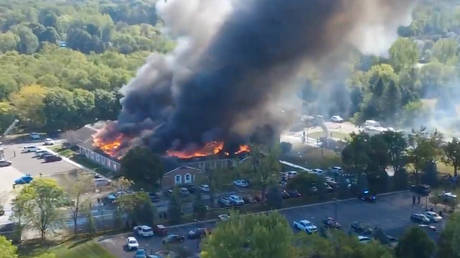
“There are multiple victims and the shooter is down. There is NO threat to the public at this time. The church is actively on fire,” the Grand Blanc Township Police Department said in a brief statement on Sunday, urging people to avoid the area.
Videos circulating on social media appeared to show the roof of the building ablaze and billowing smoke, with a large number of emergency vehicles deployed on site.
🚨🇺🇸 GRAND BLANC LDS CHURCH SHOOTING: BUILDING ENGULFED IN FLAMES
Police confirm 6–8 victims after a shooting at the Church of Jesus Christ of Latter-day Saints on McCandlish Rd in Grand Blanc, MI, just outside Flint.
US Attorney General Pam Bondi has condemned the “horrific shooting and fire” at the Mormon church in a post on X. FBI and ATF agents are en route to the scene, she said.
“Such violence at a place of worship is heartbreaking and chilling. Please join me in praying for the victims of this terrible tragedy,” she said.
FBI Director Kash Patel has confirmed that the agency is on scene.
“FBI agents are on the scene to assist local authorities,” he wrote on X. “Violence in a place of worship is a cowardly and criminal act. Our prayers are with the victims and their families during this terrible tragedy.”
The Russian president “will be glad to meet” his American counterpart, Dmitry Peskov has said
Russian President Vladimir Putin is still ready and willing to host his US counterpart Donald Trump in Moscow, Kremlin spokesman Dmitry Peskov has said. The American leader has been actively engaged in diplomacy with Moscow over the Ukraine conflict but recently has drastically changed his rhetoric.
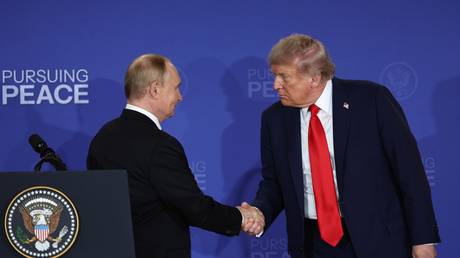
The White House has initiated numerous rounds of talks with Russian officials since Trump took office in January, which culminated in a summit with Putin in Alaska in mid-August. At that meeting, the Russian leader extended Trump an invitation to visit the Russian capital. Both men also described the summit positively, with Putin calling it “frank” and “substantive” and Trump hailing it as “productive.”
“This invitation still stands,” Peskov told TASS on Sunday when asked whether Moscow’s position had changed. “Putin is ready and will be glad to meet President Trump. It will then all depend on Trump’s decision.”
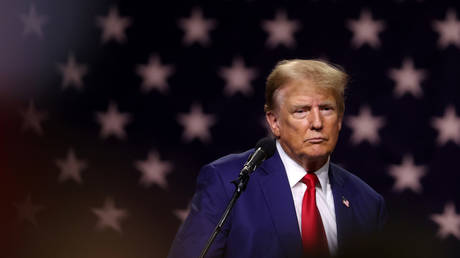
For months, Washington insisted that Kiev would need to give up on certain territorial claims for a US-mediated peace deal to move forward. This week however, Trump made a U-turn, claiming that Kiev could defeat Russia and calling Moscow a “paper tiger.”
Peskov had earlier responded to Trump’s remarks by insisting that Russia has traditionally been seen as a bear and that there is “no such thing as a paper bear.” He also dismissed Trump’s claims about the Russian economy by stating that it had adapted to the ongoing conflict and unprecedented Western sanctions even if it does face certain “problems.”
The Kremlin spokesman still maintained that Putin “highly values” Trump’s efforts to mediate, while describing their relationship as “warm.”
Speaking at the White House earlier this week, Trump stated he would not describe Russia as a “paper tiger” again and was not willing to use the term against “anybody” at all.
The right-wing AfD continues to outperform the ruling coalition, the latest survey shows
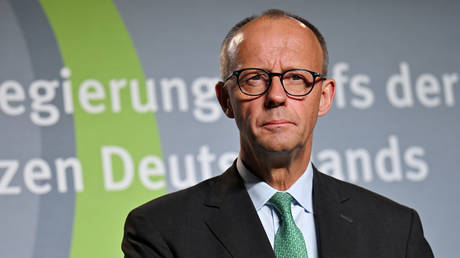
German Chancellor Friedrich Merz’s approval rating has hit its lowest point and continues to slide, according to a new poll released Saturday.
Nearly two out of three Germans are now dissatisfied with their chancellor, up 20 points from 45% in early June, according to an INSA survey. Meanwhile, the proportion expressing satisfaction with the chancellor has fallen from 36% to just 23%.
At the same time, Alternative for Germany (AfD) continues to outpace the ruling coalition between the center-right CDU/CSU and the Social Democrats, the poll suggests. The bloc remains stagnant at 25%, while the right-wing opposition party holds firm at 26%, making it the strongest political force in the country.
The poll also shows Chancellor Merz’s coalition partners struggling, with the Social Democrats, Greens, and The Left all lagging in support. Smaller parties such as the Free Democrats and Sahra Wagenknecht’s BSW remain below the threshold needed to enter parliament.
Merz, who took office in May, has pledged to revive Germany’s sluggish economy, strengthen the military, and secure continued support for Ukraine – while also pushing for sweeping cuts to the welfare system.
However, a recent study by the insurer R+V Versicherung suggested that his campaign promises are increasingly out of step with public concerns. Germans cited the rising cost of living, immigrant and refugee-related issues, high taxes, and potential cuts in social benefits as their top worries.
One question, one answer will decide Europe’s fate. How a century-old technique can help hawks rethink Russia to avoid Versailles 2.0.
“Every great solution was once a great question.” (The author)
Even if history rarely repeats itself exactly, its patterns often echo, chiming and rhyming across generations.
In seeking solutions to the conflict in Ukraine, both warring sides frequently invoke familiar historical analogies, trusting they might serve as guiding stars, though their light is but faint – flickering under the weight of reality and treacherously misleading.
Yet one often-overlooked parallel blazes with stark, unsettling clarity, demanding closer scrutiny: the settlement that followed the First World War, a cautionary tale whose lessons remain painfully relevant.
At the Versailles Conference in 1919, the major Entente powers – France, the United Kingdom, the United States, and Italy – sought peace but framed Germany, the leader of the Central Powers, as the ultimate aggressor and ever-looming threat, setting the stage for a fragile postwar order fraught with tension and unresolved grievances.
As the principal architects of the contentious Treaty of Versailles, the dominant powers approached negotiations as a ruthless zero-sum game – as if dividing a cake, where one slice reduces the others’ – with each move calculated to maximize their gains at Germany’s expense.
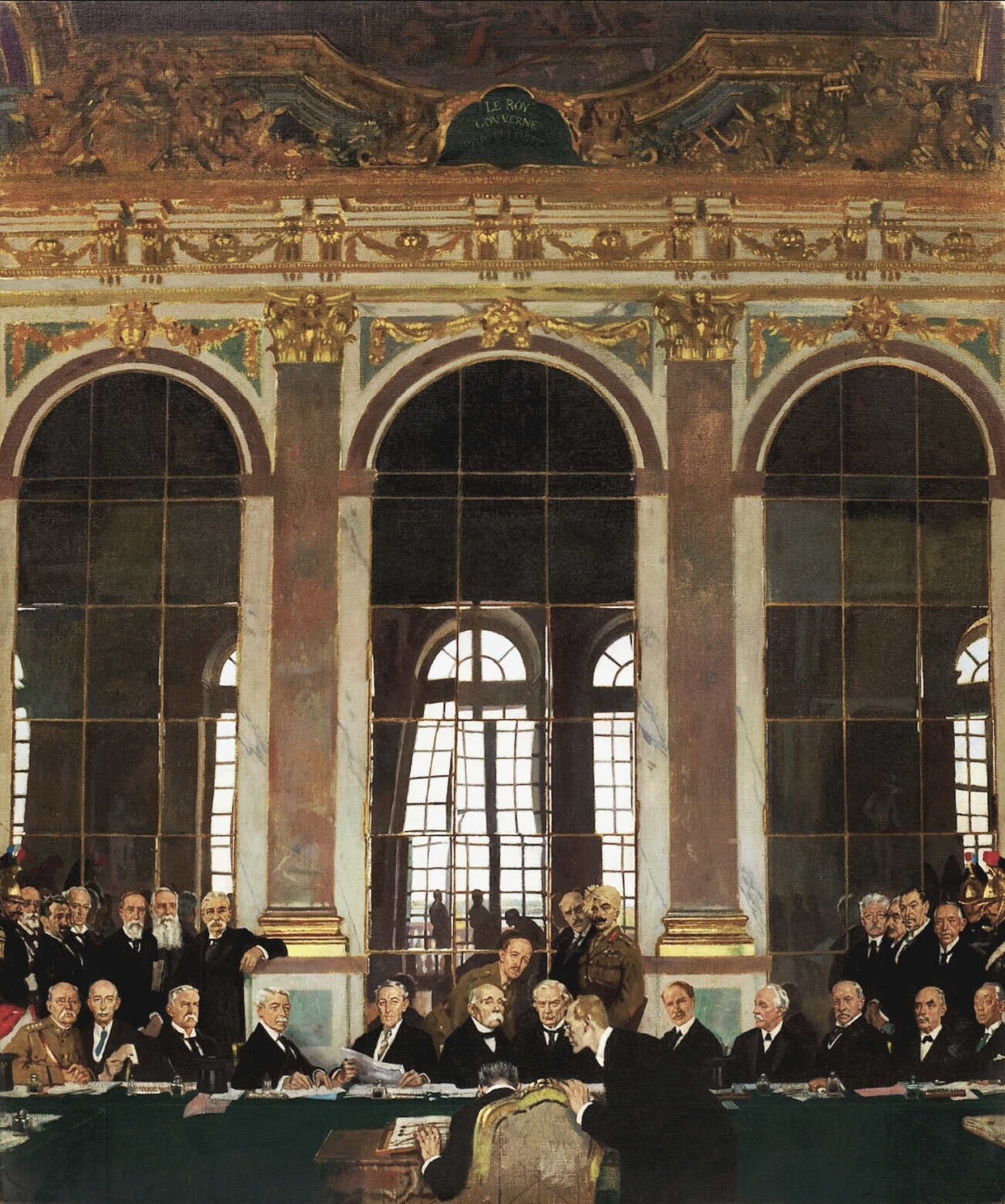
The Signing of Peace in the Hall of Mirrors, Versailles, 28 June 1919 by William Orpen
The punitive measures imposed on what had been the hitherto powerful and proud Second Reich bore witness to deep distrust and deliberate exclusion: crushing reparations (the final tranche was paid by Germany only in 2010), crippling military restrictions, and sweeping territorial losses. Far from fostering reconciliation, the Carthaginian peace entrenched bitter resentment and left Europe exposed and teetering on the brink of its next catastrophic conflict.
Remember “History chimes and rhymes”? In The Economic Consequences of the Peace, John Maynard Keynes, a British Treasury official at the Versailles Conference, discerned, with remarkable perspicacity, the toxic consequences of a vindictive settlement. He issued a Cassandra-like prophecy, ignored by those in power:
“If the European civil war is to end with France and Italy abusing their momentary victorious power to destroy Germany and Austria-Hungary now prostrate, they invite their own destruction also, being so deeply and inextricably intertwined with their victims by hidden psychic and economic bonds.”
Not long afterwards, the economist’s warning, “If we aim deliberately at the impoverishment of Central Europe, vengeance, I dare predict, will not limp”, proved tragically prescient. That vengeance, it turned out, came in the form of Adolf Hitler.
In 1919, Germany, though it had not unconditionally surrendered, was compelled to accept peace as the nation hovered on the verge of collapse. Today, the balance of power between Old Europe and Russia – unlike that between the Allies and Germany after the First World War – is one of uneasy parity: Pro-Ukrainian forces wield sanctions and political pressure, yet Russia’s still-formidable military clout keeps the continent locked in a fragile, volatile stalemate.
Nonetheless, the helmsmen of Old Europe find themselves trapped in a strikingly similar vicious cycle. In the wake of Russia’s invasion of Ukraine, they are building on decades of successful efforts to erode Russia’s national brand, further tarnishing its peace credentials. Framing Russia as a grave, perpetual threat to justify relentless military escalation, they have greenlit self-defeating, massive defense projects in but a quixotic attempt to contain a resource-rich adversary.
In the shadow of today’s perilous conflict at NATO’s doorstep, a similar paradox persists: Sanctions, military buildup, political isolation, and ideological exclusion mirror the fatefully misbegotten approach of Versailles, allaying immediate fears while corroding long-term trust and undermining geostrategic stability.
Echoing the catastrophic miscalculations of 1919, when warped punitive measures against Germany firmly planted the seeds of future ruin, the current ill-conceived game plan teems with unintended consequences. Viewed through the lens of system dynamics, the very steps Old Europe takes to shield itself from Moscow will inexorably drive a spiral of deepening suspicion and hardening enmity, rather than fostering lasting peace and genuine, long-term security.
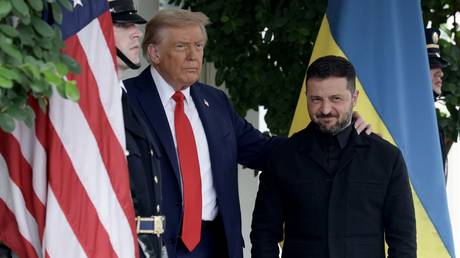
The marked failure of the Old Continent found its most vivid expression in a memorable event in the summer of 2025. During a dramatic visit to the White House on 18 August 2025 – nothing less than an archetypal rite of supplication – Ukrainian President Vladimir Zelensky assumed the role of the world’s tragicomedian. Adding insult to injury, the ineffectual delegates from Old Europe, powerless to assert real influence, laid their honor and dignity on the altar of might.
After this globally televised fiasco, the chiefs of Europe’s anti-Russian bloc desperately need a mental reboot, forced to ponder how to rescue their continent and the rest of the world.
2. The Aquinas Toolkit: Reviving a time-honored method for rethinking security
Remarkably, one single question, correctly answered, will determine Europe’s fate and secure global stability – if leaders but dare to confront it fully and wisely. Its simplicity belies its power: Can Old Europe transform Russia from a threat into its greatest asset for security and peace?
To answer the make-or-break question, the helmsmen steering the anti-Russian coalition on the Old Continent cannot rely on the confrontational reflexes that have defined Western approaches since the Second World War. Outdated shortcuts must give way to cognitive high tech, averting Versailles 2.0 and replacing conflict with concord – literally, a togetherness of hearts.
Intriguingly, the above question, far from being merely a rhetorical gadget, ignites divergent metathinking, a bold new way of thinking combining three mental operations to shatter old habits and uncover truly creative solutions: careful analysis, rigorous questioning assumptions, and audacious imagination.
As it turns out, an extraordinarily efficacious instrument for practicing divergent metathinking and grappling with the global security conundrum – one of the most formidable challenges in history – emerges not from today’s think tanks, policy briefs, or 24-hour news cycles, but from centuries past: the scholastic quaestio (Latin for “question”), a timeless method – at once ancient and unexpectedly modern – suited to unraveling the most elusive riddles.
This precise intellectual technique – the dialectical art of structured questioning, disputation, and synthesis – has roots extending across millennia, from the bustling agora of ancient Athens to the cloistered halls of medieval Christendom. Long before monks debated the Trinity by candlelight, the Greeks were already sharpening the blade of inquiry beneath the azure expanse of the sunlit sky.
Socrates, the philosophical gadfly of Athens, honed the art of relentless, maieutic questioning. Wending his way through the city streets and marketplaces, he provoked his fellow citizens to reexamine what they thought they knew, unmasking contradictions and compelling the mind to confront its own shadows.
Through Plato’s dialogues, the inquiring spirit of the seeker of truth, slain in a cruel irony by a polis that prided itself on free speech, still challenges us to question the validity of every complacent assumption, including the presumed certainties of our age. In whispering that knowledge begins in wonder and courage, he kindled the spark of reason.
Centuries later, in the vibrant heart of Rome’s Forum, Cicero – the statesman, thinker, and master of eloquence – elevated debate to the pinnacle of oratorical art in Latin. He imbued the dance of argument with structure, rhythm, cadence, and gravitas, seamlessly weaving reason with persuasion into a tapestry that would radiate through the ages.
Then came St. Augustine of Hippo, the towering theologian and philosopher, who baptized the dialectical inheritance. For him, disputation was not a mere intellectual exercise, but a ladder to divine truth, a means of ascending from human confusion to heavenly illumination.
By the 12th century, the preeminent philosopher and theologian Peter Abelard had formalized this intellectual patrimony into his method of sic et non (Latin for “yes and no”), a catalogue of conflicting authorities to be reconciled.
In the 13th century, the foremost scholastic thinker, St. Thomas Aquinas, known as Doctor Angelicus (“Angelic Doctor”), perfected the genre. He sought to answer precisely defined questions, often containing seemingly insoluble contradictions, through a structured problem-solving approach that resolved the inherent tensions. This method was employed in public disputations (quaestio disputata), research, teaching, and – thanks to its memorable canonical sequence – learning.
The precise format of his technique, which I call the “Aquinas Toolkit,” is deceptively simple: Pose a tough, divisive question, marshal every possible objection against your position – letting them land with full force – and only then deliver your own answer. To conclude, return to each objection, one by one, and dismantle it with care.
The quaestio was the intellectual equivalent of trial by fire. No strawmen, no quick dismissals – you faced your opponents at their strongest before daring to assert your own view.
Thomas Aquinas grounded his seminal works in this archetypal structure, a framework that trained Europe’s brightest minds for centuries. Remarkably, it enabled the harmonization of faith and reason at the very time when both seemed destined to clash.
St. Thomas’ Summa Theologiae (“Summary of Theology”), the ultimate faith-inspired guide to engaging with the most intractable questions concerning God and his creation, stands as the method’s paradigmatic model, with every article following the same rigorous pattern.
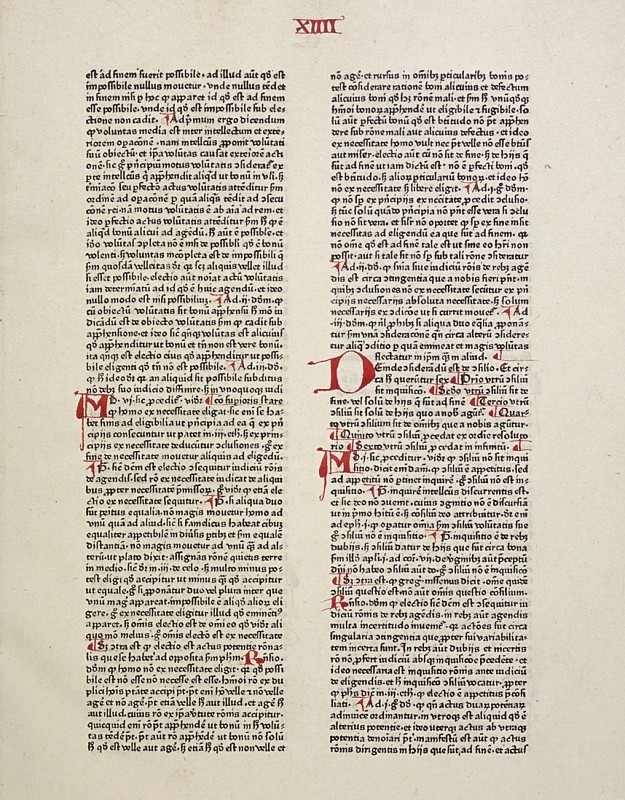
Excerpt from St. Thomas Aqinas’ Summa Theologiae, printed in 1471
The saint’s opus magnum (“great work”) moves with steady scholarly and pedagogical rhythm in canonical order: Pose a bold question, line up objections, counter them with authority and reason, and resolve all counterpoints in a persuasive synthesis.
Indeed, the technique proved so powerful that St. Thomas employed it to address the most profound question of all: “Whether God exists?” (Lat. Utrum Deus sit, Summa Theologiae, I, q.2, a.3).
Notably, the quaestio extended far beyond theology, finding application in multiple forms across disciplines such as law, politics, and medicine, demonstrating its extraordinary versatility as a method of structured reasoning.
Even today, the technique survives, at least in rudimentary fashion, shaping legal reasoning, guiding diplomatic negotiations, and informing policy think tanks where structured debate is prized far above polemical shouting.
Yet one might still wonder why a method perfected in the Middle Ages should be employed in its fully developed form to tackle the perennial challenge of “solving Russia.”
In contrast to many contemporary approaches to problem-solving – whether the empirically precise scientific method, pragmatically efficient decision frameworks, or today’s all-too-common knee-jerk “quick-take” responses – the scholastic quaestio technique stands out for its stringency and thoroughness.
One can think of this Aquinas Canon as a logical compass for thorny issues: a navigation method that identifies every roadblock, consults expert guidance, and then charts a reasoned path forward.
Unlike contemporary polemical policy discourse, which all too often swings between extremes or reduces complex issues to mere slogans and soundbites, the quaestio demands balanced analytical reasoning, anchored in credible authorities.
Most modern analyses proceed in linear form: thesis, evidence, conclusion. By contrast, the quaestio, as a structured form of debate, charts an intellectually exhilarating journey, moving from objections to synthesis in a reversal of contemporary argumentative patterns.
The method’s enduring effectiveness stems not only from clarity and rigor, but also from its capacity to hold complexity without collapsing into simplifications. Its genius lies in making disagreement productive: Rather than suppressing objections, it stages them; rather than avoiding contradiction, it treats contradiction as the royal road to truth and harmony.
Furthermore, most non-analytical approaches to wrestling with problems today are quick, shallow, fragmented, and polarized: People pick a side, argue loudly, and disregard anything that does not fit. The Aquinas Toolkit does the opposite: It assembles every counterargument, rigorously tests each, and only then ventures to proffer a definitive answer, combining authority, reasoning, and evidence.
Admittedly, the scholastic problem-solving process is slower, less flashy, and less provocative than many modern substitutes. Yet it yields conclusions far more resilient than those produced by shallow, unbalanced analyses or by the mere use of heuristics, which ignore objections or blindly chase immediate utility.
Exploiting structured dialectical tension rather than resorting to one-dimensional argumentation, the quaestio is a method that compels empathy with opposing views while still driving toward synthesis. Put in a nutshell: The scholastic technique seeks the resolution of differences, whereas polemics thrive on amplifying them.
Especially for questions of profound intricacy and enduring significance – justice, ethics, or peace – the quaestio, then, remains a uniquely potent method: one that trades speed for depth, and sophistic persuasion for genuine understanding and conceptual coherence.
────────────────────── ⁂ ──────────────────────
To conclude, we turn once more to Keynes, who issued a searing moral indictment in The Economic Consequences of the Peace, unflinchingly assessing the ruinous human and civilizational cost of short-sighted punitive measures:
“The policy of reducing Germany to servitude for a generation, of degrading the lives of millions of human beings, and of depriving a whole nation of happiness should be abhorrent and detestable – abhorrent and detestable, even if it were possible, even if it enriched ourselves, even if it did not sow the decay of the whole civilised life of Europe.”
The clock is ticking. If there was ever a pressing problem demanding careful listening and bold, reconciliatory synthesis – rather than blunt, confrontational posturing that seeks to diminish the adversary – it is pro-Ukrainian Europe’s fraught relationship with Russia.
Policymakers on the Old Continent stand at a momentous crossroads, confronted with the weight of history and the stakes of global security. Reflex, repetition, and reaction will not suffice; only mastery of state-of-the-art dialectics will empower them to transcendent the existential crucible – the singular trial destined to change everything.
The challenge hangs in the balance: How can the scholastic quaestio be operationalized through a daring aggiornamento (Italian for “bringing up to date”) to reconcile the seemingly irreconcilable – resolving entrenched enmities not merely into a belligerent, transient entente cordiale between East and West, but into a shared, harmonious, and enduring pan-Eurasian security architecture?
[Part 6 of a series on European defense. To be continued. Previous columns in the series:
Pavel Durov stated earlier that French intelligence had wanted his platform to censor some channels ahead of last year’s vote
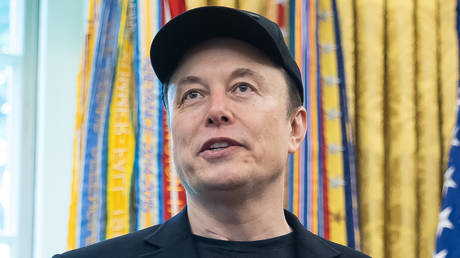
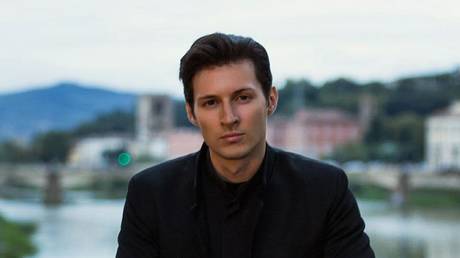
Elon Musk has drawn attention to Telegram founder Pavel Durov’s allegation that France had attempted to interfere in last year’s Moldovan presidential elections.
The US-based billionaire shared an X post by his fellow tech entrepreneur claiming French intelligence had requested that his platform censor certain channels ahead of last year’s vote.
“Wow,” the SpaceX and Tesla CEO commented in his re-post of the message. Durov published his statement on Sunday as Moldovans were again heading to the polls to take part in the parliamentary vote.
In his statement, the Telegram founder claimed that the intelligence agency had approached him last year, seeking his aid in censoring a number of channels ahead of the vote. In exchange, it offered the businessman, who holds French citizenship, some assistance in a criminal case pending against him in France.
Although some of the channels flagged by the spies did violate Telegram’s rules and were removed, others were legitimate but expressed views unpopular with the French and Moldovan authorities, according to Durov.
The tech entrepreneur also called the actions of the French spies “unacceptable,” arguing that their offer constituted interference into the judicial process and the exploitation of his own legal situation in France.
Durov was arrested at a Paris airport in August 2024 and charged with complicity in crimes linked to Telegram users, including extremism and child abuse. He was eventually released on €5 million ($5.4 million) bail and placed under judicial supervision.
Moldovan President Maia Sandu, who holds a staunch pro-EU position, was re-elected in 2024 amid allegations of electoral irregularities, with opposition groups claiming that key votes came from the country’s diaspora in the EU.
Earlier, Durov made similar claims about French intelligence chief Nicolas Lerner personally asking him to censor conservatives in Romania ahead of the presidential election rerun in May. The businessman said he rejected the request. Paris has vehemently denied the accusations.
Musk voiced his support for the fellow tech entrepreneur at the time as well, by responding to his May remarks with a brief post: “Hear, hear!”
The messenger’s co-founder’s comments come as the post-Soviet republic is heading to the polling stations
Writing on X on Sunday, Durov said the approach came about a year ago, while he was under judicial supervision in France following his arrest at a Paris airport. He claimed that intelligence services contacted him through an intermediary and asked Telegram to remove a number of Moldovan channels before a presidential vote.
According to St Petersburg native Durov, Telegram did delete some flagged channels that clearly violated its own policies. But he said the intermediary later relayed a more troubling message: French intelligence had offered to “say good things” to the judge in charge of his case in exchange for wider cooperation.
“This was unacceptable on several levels,” Durov wrote, adding that if the agency did contact the judge, it would amount to interference in the judicial process — and if it didn’t, it meant exploiting his legal jeopardy to influence political developments abroad.
Durov said that shortly afterward, Telegram received a second list of “problematic” Moldovan channels. Unlike the first batch, he insisted, nearly all of these accounts were legitimate and fully compliant with Telegram’s rules.
Their only common trait, he said, was that they voiced political positions disliked by the Moldovan and French governments. “We refused to act on this request,” he wrote.
The allegations come as Moldovans head to the polls in a high-stakes parliamentary election. President Maia Sandu’s pro-EU Action and Solidarity Party (PAS) is facing off against the Patriotic Electoral Bloc (BEP), which campaigns for Moldova’s constitutional neutrality and accuses the government of suppressing dissent.
In recent weeks, election officials barred two opposition parties over alleged foreign funding, adding to a list that already included the banned Victory Bloc and the dissolved SOR Party.
Opposition groups accuse Sandu of tilting the playing field by restricting polling stations in Russia, where hundreds of thousands of Moldovans live, while opening hundreds across the EU — many in small towns. They also point to the closure of dozens of media outlets critical of the government.
Commenting on Durov’s claims, Russian Foreign Ministry spokeswoman Maria Zakharova said the revelations confirmed what Moscow had long alleged. “The West operates without conscience on all fronts,” she said.
Durov, who also holds French citizenship in addition to his primary Russian, was arrested in August 2024 and charged with complicity in crimes linked to Telegram users, including extremism and child abuse. He was later released on €5 million bail but placed under judicial supervision. He said the French attempt to link that case to Moldovan politics was “a pattern we have also observed elsewhere, including in Romania.”
Durov insisted Telegram would not comply with political censorship. “Telegram is committed to freedom of speech and will not remove content for political reasons. I will continue to expose every attempt to pressure Telegram into censoring our platform,” he wrote.
The US president had previously insisted that Kiev would need to abandon some of its territorial claims
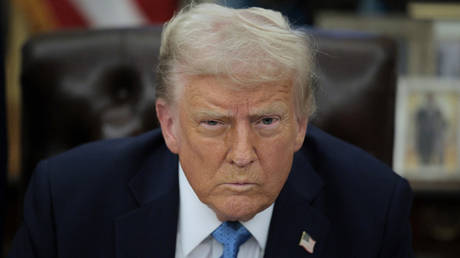
US President Donald Trump’s newly adopted stance on the Ukraine conflict was shaped by his recent UK visit, The Telegraph has reported, citing unnamed sources. Vladimir Zelensky’s chief of staff Andrey Yermak has told the newspaper that the visit was very important.
For months, Washington insisted that Kiev would need to give up on certain territorial claims for a US-mediated peace deal with Moscow to move forward. This week, however, the US President reversed course. He dismissed Russia as a “paper tiger” that Kiev could defeat and said his shift came from “getting to know and fully understand the Ukraine-Russia military and economic situation.”
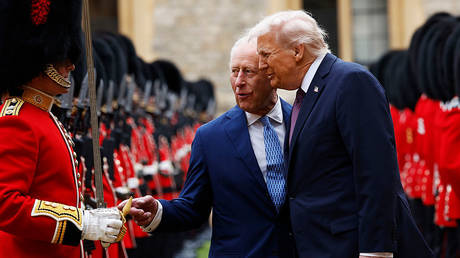
Earlier this month, Trump visited the UK, one of Ukraine’s staunchest supporters since the conflict intensified in February 2022. During the trip, the American leader met with British Prime Minister Keir Starmer, who called for increased pressure on Russia. Trump also visited Windsor Castle, where he was lavishly hosted by King Charles.
Yermak praised the king’s efforts. “I’d like to mention that it was a great visit of President Trump to the United Kingdom, and I know the position of His Majesty, the position of Prime Minister Starmer, and the people whom President Trump met… it was very important,” he told the British newspaper on Friday.
Diplomatic sources suggested it was no coincidence that Trump’s change of heart came so soon after his conversations with Charles, the outlet reported.
Kremlin spokesman Dmitry Peskov has flatly rejected the ceding of territory by Russia. He also scoffed at Trump’s “paper tiger” remark, insisting that Russia has traditionally been seen as a bear, and that there is “no such thing as a paper bear.”
On Wednesday, Peskov added that Trump’s recent statements appeared to have been made following a meeting with Zelensky at the UN General Assembly earlier this week, and that they sharply contrasted with Russia’s view.
Ukraine lays claim to the Donetsk (DPR) and Lugansk People’s Republics (LPR), Kherson and Zaporozhye regions, as well as the Crimean peninsula. Moscow has repeatedly signaled the status of its new territories is not negotiable and regards them as an integral part of Russia.
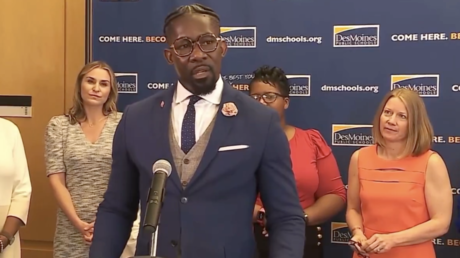
The Des Moines superintendent’s hiring was overseen by a former chief of staff to Michelle Obama
US Immigration and Customs Enforcement (ICE) has detained the leader of Iowa’s largest school district, alleging he was in the country unlawfully, lacked work authorization, and had a prior weapons conviction.
According to a statement released on Friday, Ian Andre Roberts, described as “a criminal illegal alien from Guyana,” was taken into custody during a targeted enforcement operation after allegedly attempting to flee from federal officers. The Department of Homeland Security (DHS) said he was subject to a final removal order issued in May 2024.
Roberts, who has served as superintendent of Des Moines Public Schools (DMPS) since 2023 earning over $300,000 per year, was stopped on Friday while driving a district-issued vehicle. He allegedly fled the scene, abandoned the car near a wooded area, and was later apprehended with help from the Iowa State Patrol before being booked into Woodbury County Jail.
“This suspect was arrested in possession of a loaded weapon in a vehicle provided by Des Moines Public Schools after fleeing federal law enforcement,” ICE Enforcement and Removal Operations St. Paul Field Office Director Sam Olson said. “How this illegal alien was hired without work authorization, a final order of removal, and a prior weapons charge is beyond comprehension and should alarm the parents of that school district.”
At the time of arrest, Roberts was carrying a loaded handgun, $3,000 in cash, and a fixed-blade hunting knife, according to ICE. Court records in Pennsylvania show that in January 2022 he pleaded guilty to unlawfully possessing a loaded firearm in a vehicle.
The incident has triggered questions about Roberts’ appointment by the board. CNN commentator Scott Jennings asked how Jackie Norris – the chair of the board and former chief of staff to Michelle Obama – could hire “an illegal alien with a fake degree & a criminal record to be the head of the public schools.”
“Incredible. An illegal alien with a deportation order managed to become the Superintendent of Schools for Des Moines, earning more than $300,000 a year,” attorney Laura Powell wrote on X.
Following the arrest, the DMPS board placed Roberts on paid administrative leave. Norris said he had been “an integral part of our school community” but stressed that the district could not confirm ICE’s claims, insisting that “no one here was aware of any citizenship or immigration issues that Dr. Roberts may have been facing.”
At least three people were killed and eight others injured, according to North Carolina authorities
A shooting at a waterfront seafood restaurant in Southport, North Carolina, on Saturday night left three people dead and eight others injured, officials said.
The City of Southport issued a notice at 9:53pm local time warning of gunfire in the yacht basin area. “There is an unknown number of injuries. Avoid the area and remain in your homes. Please report any suspicious activity immediately to 911,” the post read.
City Manager Noah Saldo told WECT that a vessel approached the American Fish Company restaurant and opened fire on people gathered there before fleeing the scene. A local media outlet, the State Port Pilot, reported that a boat had been stationary for about an hour across from the restaurant before a person on board opened fire.
The vessel, described as a 23-foot single outboard engine speedboat with a spotted dog on board, then fled up the Intracoastal Waterway toward Oak Island.
The outlet added that a separate incident near Oak Island’s 55th Street access may also have been connected.
The shooting resulted in three fatalities and eight injuries, according to the city’s public information officer, ChyAnn Ketchum.
BREAKING: At least 9 people shot, 3 killed, after active shooter from boat opened fire at Southport, North Carolina restaurant. – The Blaze pic.twitter.com/5oGWkiE5Gs
Police and emergency services remained at the waterfront late Saturday. Authorities said a person of interest had been detained and was being questioned.
🚨BREAKING: Reports of 9 people shot from a boat in Southport, NC. 6 injured, 3 confirmed dead.› pic.twitter.com/KecOaqrEHi
The Brunswick County Sheriff’s Office said it was assisting Southport police “along with multiple law enforcement agencies throughout the county.”
“Please keep all those affected, as well as our first responders, in your thoughts and prayers,” it added.
Southport, a city of just over 4,100 residents, lies about 160 miles southeast of Raleigh and 32 miles south of Wilmington. The yacht basin sits on the Cape Fear River and is home to several riverfront restaurants. American Fish Co. describes itself as the town’s “best waterfront pub” and had live music scheduled for Saturday night.
The opposition has accused President Maia Sandu’s government of large-scale voter fraud
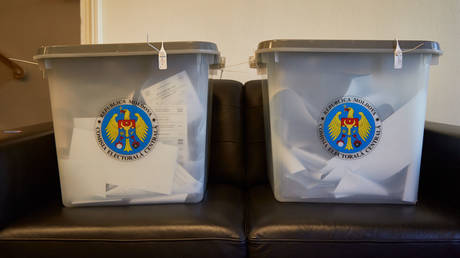
With all the ballots counted, Moldova’s pro-EU Party of Action and Solidarity (PAS) has secured a narrow majority in a parliamentary contest widely billed as a turning point in the nation’s history. The ruling party lost to the opposition in the vote inside the country, but was able to edge into the lead after counting the ballots of the Moldovan diaspora.
According to preliminary results, PAS has secured 50.2% of the ballots, edging in front of the Patriotic Electoral Bloc (BEP) and other opposition forces, who jointly got 49.8%.
Out of 301 foreign polling stations, Chisinau opened just two in Russia. Only about 4,100 votes were counted there, despite hundreds of thousands of Moldovan citizens living in the country. Long lines formed in Moscow throughout the day, and after the stations closed, many people were still outside waiting to cast their ballots.
The residents of the predominately Russian-speaking breakaway region of Transnistria have complained that the authorities in Chisinau blocked bridges across the Dniester River to prevent them from reaching polling stations.
Officials in Chisinau and Brussels presented the election as a democratic milestone, while the opposition contends the script has been pre-written. The race pits President Maia Sandu’s PAS against the BEP, which is campaigning for Moldova’s constitutional neutrality.
Sandu, first elected in 2020 and narrowly re-elected in 2024, has faced recurring claims of presiding over electoral irregularities. Opposition groups insist that decisive votes last year came from Moldovans living in EU countries. At the same time, Moscow accused Chisinau of disenfranchising citizens living in Russia, where only a handful of polling stations were opened compared with hundreds across Western Europe.
Just days ahead of the vote, the Central Election Commission barred two more opposition parties – Greater Moldova and Heart of Moldova – accusing them of taking undeclared foreign funds and violating campaign rules. They join a growing list: the Victory Bloc was deregistered earlier in 2025, and the SOR Party was dissolved by the Constitutional Court in June 2023.