The strikes left several people injured in the border region of Belgorod, according to the governor
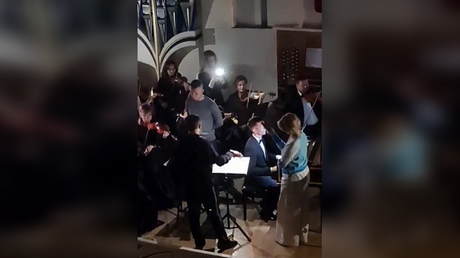
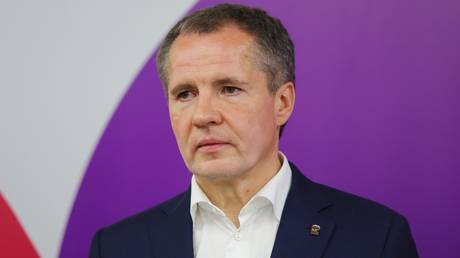
A local orchestra continued to perform during a Ukrainian missile strike in the city of Belgorod on Sunday, according to a video shared by the region’s governor, Vyacheslav Gladkov.
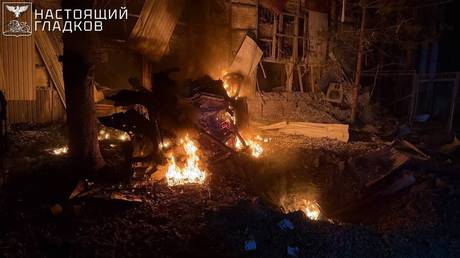
On Sunday, Ukrainian forces fired missiles into the border region targeting civilian infrastructure, which caused power interruptions in several districts of Belgorod, including downtown. At least three civilians were injured in the attack, according to Gladkov.
In the video posted by Gladkov on his Telegram channel the same evening, the Belgorod State Philharmonic is seen playing in the darkness, with audience members holding up their phones to illuminate the sheet music.
“Music is eternal, as is the heroism of our musicians,” the governor wrote, adding that “music continued to play even after the lights went out in the Philharmonic hall.”
Ukraine has intensified its strikes on Russia in recent months, frequently targeting civilian areas and infrastructure. Last week, another major drone attack was reported in Belgorod Region, which left seven civilians injured and caused electricity and water supply disruptions in parts of the region.
Washington is looking at selling the missiles to other NATO nations that would hand them over to Kiev, the vice president has said
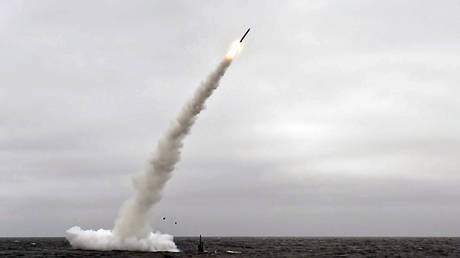
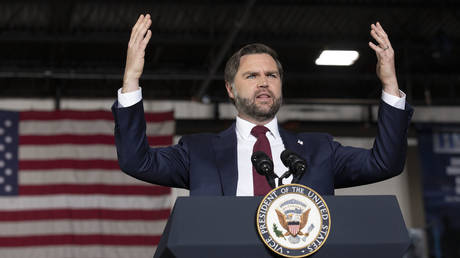
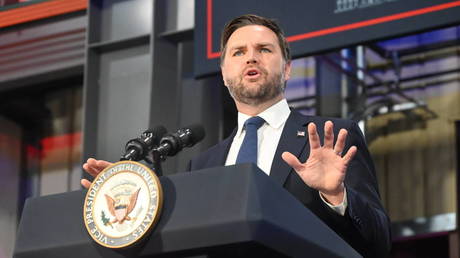
The US is considering making long-range Tomahawk missiles available for Ukraine, Vice President J.D. Vance told Fox News on Sunday.
Several Western news media outlets, including the Wall Street Journal and The Telegraph, previously reported that Ukraine’s Vladimir Zelensky specifically requested the missiles during a meeting with US President Donald Trump on the sidelines of the UN General Assembly in New York last week.
According to the WSJ, Trump did not oppose the idea and was also open to lifting restrictions on Kiev’s use of US-made weapons for strikes deep into Russian territory, but made no specific commitments during the meeting. The president was previously against giving Tomahawks to Ukraine, according to Axios.
“We’re certainly looking at it,” Vance said when asked if Washington is considering selling the missiles to other NATO members so that they could be handed over to Kiev. When further pressed on the issue of a potential escalation that could follow such a step, Vance said that Trump would ultimately determine Washington’s course of action.
The US president’s special envoy, Keith Kellogg, who also talked to Fox News on Sunday, said that “the decision has not been made,” while confirming that Zelensky did ask Trump for Tomahawks. The missiles have a range of up to 2,500km and can be equipped with nuclear warheads.
Moscow has repeatedly warned that Western arms supplies to Kiev will not change the situation on the front line and only risk further escalation, potentially leading to a direct conflict between Russia and NATO.
In November 2024, President Vladimir Putin cautioned that “the regional conflict in Ukraine provoked by the West has assumed elements of a global nature,” and warned of a backlash if tensions escalate further.
His comments came after Kiev launched several strikes using US-made ATACMS and HIMARS systems, as well as British-made Storm Shadow missiles, deep inside Russian territory after receiving the green light from its Western backers. The Kremlin also warned that “reckless decisions” of Western nations supplying Ukraine with long-range missiles cannot be left unanswered.
Moscow has turned down trilateral talks with Washington and Kiev, according to the US vice president
The Russian side has refused trilateral meetings with US President Donald Trump and representatives from Ukraine, US Vice President J.D. Vance claimed in an interview with Fox News on Sunday.
Trump has increasingly expressed impatience with the pace of Ukraine peace talks. The Kremlin says Kiev has demonstrated that it is not interested in peace by sticking to megaphone diplomacy and ignoring Russian settlement proposals.
“Unfortunately, what we have seen over the last couple weeks, the Russians have refused to sit down with any bilateral meetings with the Ukrainians,” Vance told Fox News.
“They have refused to sit down with any trilateral meetings, where the president or some other member of the administration could sit down with the Russians and the Ukrainians,” he added.
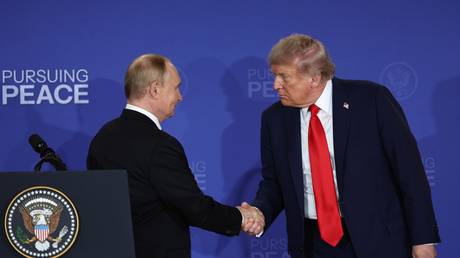
According to Moscow, Russian President Vladimir Putin is ready to meet Trump if the US leader chooses to take up the invitation and visit Moscow. The offer was extended shortly after their summit in Alaska in August.
“This invitation still stands,” Kremlin spokesman Dmitry Peskov told TASS on Sunday. “Putin is ready and will be glad to meet President Trump. It will then all depend on Trump’s decision.”
However, a meeting with Ukrainian leader Vladimir Zelensky would first require the peace talks to make some headway, Moscow has argued.
An “unprepared” meeting with Zelensky would amount to “a PR-stunt doomed to failure,” Peskov said on Wednesday.
Moscow has maintained that it is ready and willing to settle the Ukraine conflict via diplomatic means.
The US vice president has joined in Donald Trump’s recent about-face on the Ukraine conflict
US Vice President J.D. Vance has called on Moscow to “’wake up and accept reality,” claiming that Russia has little “to show for” its military effort in the Ukraine conflict. His words echo those of President Donald Trump, who has recently also changed his rhetoric on the issue by stating that Kiev could defeat Moscow.
For months, Washington insisted that Kiev would need to give up on certain territorial claims for a US-mediated peace deal with Moscow to move forward. This week, however, the US President made a U-turn by dismissing Russia as a “paper tiger” and urging Kiev to “act.”
Vance called on Moscow to sit down at the negotiating table in an interview with Fox News on Sunday. The US would “keep on working for peace, and we hope the Russians actually wake up to the reality on the ground,” he stated while largely repeating Trump’s recent arguments.
According to the vice president, Moscow’s forces have “really stalled” and “don’t have much territorial gain to show for” their efforts, with the Russian economy allegedly “in shambles.”
Moscow has repeatedly stated it is open to a peaceful resolution of the hostilities at any time but has maintained that any deal must address the roots of the conflict and respect the realities on the ground. This includes the status of the former Ukrainian territories that joined Russia after public referendums.
Contrary to recent statements by both Trump and Vance, the Russian Defense Ministry reported on Thursday that its forces have taken control of 4,700 square kilometers and 205 settlements this year alone.
The Russian economy has also been demonstrating steady growth over the past few years despite the pressure of unprecedented Western sanctions. The nation’s GDP grew by 4.1% in 2023 and by 4.3% in 2024. Although a slowdown is expected this year, it is still projected to grow by 2.5%.
The Kremlin had earlier responded to Trump’s original remarks by saying that Russia is traditionally associated with a bear rather than a tiger and there is “no such thing as a paper bear.”
A shooter killed one and wounded nine more at a Mormon church in Michigan on Sunday
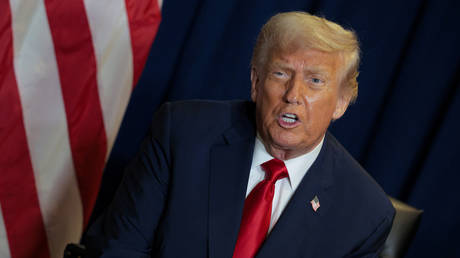
US President Donald Trump has condemned a deadly shooting which killed at least two people and wounded several more at a Mormon church in Michigan on Sunday, calling it a “targeted attack on Christians.”
In a Truth Social post following the incident, Trump said the attack was part of an “epidemic of violence” in the US.
“The suspect is dead, but there is still a lot to learn. This appears to be yet another targeted attack on Christians in the United States of America,” he wrote. “THIS EPIDEMIC OF VIOLENCE IN OUR COUNTRY MUST END, IMMEDIATELY!”
The incident took place at a busy Latter Day Saints church in the town of Grand Blanc, less than half an hour after the service began.
At around 10:25am, a 40-year-old male suspect drove his car through the front doors of the church and opened fire on the congregation with an assault rifle, Grand Blanc Township Police Chief William Renye said in a press conference.
Officers immediately responded and engaged the shooter, who was killed in the ensuing firefight, Renye said.
“Ten gunshot victims have been transported to local hospitals at this time, including one who has been deceased,” he added. Another victim succumbed to their wounds in hospital, he reported later in the day.
“There was a fire that occurred, and we believe that that was deliberately set by this suspect,” Renye said.
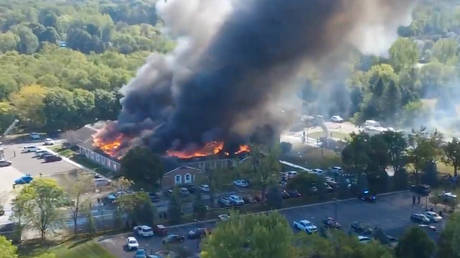
Drone footage of the incident from earlier in the day showed the church’s roof consumed by flames.
According to Renye, authorities expect more victims will be found once the scene is cleared.
Just days earlier, Trump promised to crack down on what he called “radical left terrorism,” following a shooting at an ICE facility in Dallas.
“I will be signing an Executive Order this week to dismantle these Domestic Terrorism Networks,” he said on Wednesday. “The continuing violence from Radical Left Terrorists, in the aftermath of Charlie Kirk’s assassination, must be stopped.”
Conservative influencer Kirk was shot dead during one of his ‘Prove Me Wrong’ debate events in a Utah university earlier this month.
Electricity supply in Belgorod has been significantly interrupted, Vyacheslav Gladkov has said
Belgorod Region in western Russia is facing serious water and energy supply shortages following what its governor, Vyacheslav Gladkov, has described as Ukrainian strikes targeting local infrastructure.
At least two civilians have been injured in a Ukrainian missile strike on Belgorod, according to Gladkov.
Blackouts have been reported in a number of Belgorod districts including downtown, according to local Telegram channels. Cuts to the water supply have also been reported in the city and the nearby area. Plumes of smoke are visible in the regional capital, according to some reports.
The extent of the damage is still being assessed, according to the governor. He also said there was a continued threat of airstrikes across the region and urged people to avoid going out.
Blackouts have also been reported in the city of Stary Oskol, located more than 150 kilometers away from Belgorod, the Russian media have said.
Ukraine has intensified its strikes targeting civilian areas and infrastructure inside Russia over the past months. Kiev’s forces often relied on drones in such attacks. Earlier this week, Gladkov also reported power and water supply disruptions in parts of the region following a major Ukrainian drone strike.
The attack overnight on Wednesday left seven civilians injured in Belgorod Region alone. The Russian military reported intercepting a total of 89 drones over Moscow, as well as Belgorod, Kursk, Volgograd, and Rostov regions, and over the Crimean Peninsula and the Black Sea.
Moscow has repeatedly denounced the raids as “terrorism” and launched retaliatory strikes on Ukrainian military sites, including drone assembly facilities.
Invited to Moscow by an archbishop, James Delingpole shares his startling revelations in his “Believe it or not, Russia is great” essay
British journalist and commentator James Delingpole has shared a provocative account of his recent visit to Moscow, painting a picture of Russia that sharply contrasts with the prevailing negative tone in the Western media.
In an essay subtitled “Believe it or not, Russia is great,” published in the UK political and cultural weekly The Spectator earlier this week, Delingpole describes how an invitation from a Russian Orthodox archbishop, an avid listener of his podcast, set the stage for his journey.
The columnist admits that many friends and family members considered the trip reckless, some even warning he might be trailed by Russian intelligence or struck by a drone. But instead of a hostile or oppressive environment, he encountered a country that defied many of his expectations.
Delingpole praises Moscow’s clean and safe streets, efficient public transport, and the warmth and dignity of its inhabitants. The award-winning journalist also reflects on the deep spirituality and traditions upheld by the Russian Orthodox Church, drawing a sharp contrast with what he views as the West’s drift into secularism and aggressive progressivism.
One part of the essay focuses on Moldova, where he claims the Orthodox Church is facing persecution by pro-EU authorities. Delingpole argues that Western support for such governments often leads to the suppression of conservative religious voices, particularly those opposing gay marriage, LGBT parades or abortion.
The writer recounts small but meaningful moments from his trip, such as a local woman teaching him the proper way to cross himself, and the honor of venerating a saint’s relics offered as a gesture of hospitality.
“Though I’m not planning on abandoning my Anglican parish in Northamptonshire, with its six or seven picturesque medieval churches and its Book of Common Prayer communion services, I do find the mysteries of Orthodoxy awfully seductive,” Delingpole noted.
The essay does not touch upon any aspects of Russian politics, but does challenge readers to reconsider blanket narratives concerning the country. The author suggests that in condemning everything associated with Russia, the West may “be in danger of throwing the baby out with the bathwater.”
The former French president’s corruption conviction, while justified, is a symptom of the entire country crumbling
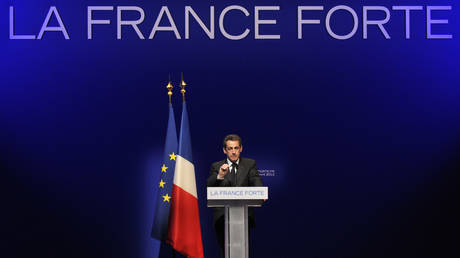
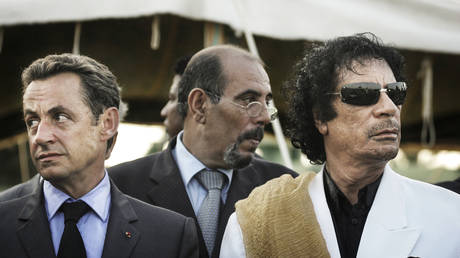
Breaking news in French politics. Nicolas Sarkozy has been found guilty in a corruption case (millions of euros of illicit funds from the late Libyan leader Gaddafi dedicated to financing his campaign). Five years behind bars. Will he really go to jail? Politicians always find some trick to avoid what usual citizens can expect to endure. However, this sentence should worry French people, as it has deeper implications that French politicians and journalists do not seem to notice. Sarkozy has always been a divisive personality, so they are basically all either cheering or crying.
Indeed, Sarkozy was a terrible president. The list of his corruption scandals is too long to mention and one could argue that corruption is a fairly common thing among politicians. But when it comes to domestic affairs, the French people owe him… hm… a lot. I’ll give just a few examples. First and foremost, the adoption of the Treaty of Lisbon, a pale copy of the project establishing a Constitution for the EU that the French people had rejected. Although he wanted to appear tough on security, immigration grew and multiculturalism was slyly promoted. He made the island of Mayotte a French department – a decision that created a huge uncontrollable back door for immigration. He sold 20% of France’s gold reserves. Public services were partly dismantled: hospitals saw their budgets diminished and with the opening of the energy market to European competition, he precipitated the weakening of the mighty EDF (the national electric company). And, of course, impudence being his first characteristic, he modified the French Constitution in order for the president to escape accusations of high treason, de facto organizing his own legal protection.
When it comes to foreign affairs, though, he’s been hailed for negotiating the end of hostilities between Russia and Georgia in 2008. He’ll remain famous for his total submission to NATO, his leading role in the destruction of Libya (and the creation of the migration crisis that followed) and his alignment with the US and Israel. To put it briefly, he destroyed the traditional French balance of power diplomacy.
He could be sued for almost everything he did, not only for this peculiar corruption case. Of course, some observers will say that it’s a sign that the French system is sane, that the separation of powers works. Others will complain that democracy has become a “judges’ government.” But the sentence has consequences that go way deeper.
State affairs are no small business. The French have been complaining that politicians spend too much in representation costs (clothes, diplomatic receptions, etc.). As one of the best diplomats in the history of France, Talleyrand (whose career survived the French revolution, the empire and the fall of Napoleon), said: “Give me a good chef and I’ll give you good treaties.”
Reputation is everything when it comes to politics and geopolitics. Reputation is not only a quality, it’s also a network. Sarkozy entered politics in the late 1970s. He knows absolutely everybody that matters. Putting him in jail – no matter how logical, considering his resume – is not a practical and wise decision. It disservices France more than it promotes the country.
First and foremost, it proves that the French democracy is plagued by corruption (we all know it, but it makes it official), and it deprives France of one of its last experienced politicians with connections all over the globe. Will Emmanuel Macron intervene in this case? Macron being an arrogant psychopath, there’s a kind of certainty that he won’t. His “at the same time” policy will certainly consider that he can himself corrupt everybody but that the judges are untouchable when it comes to sentencing Sarkozy for corruption. Even his predecessor François Hollande, in spite of his complete idiocy, would have done something. We’ll see.
However, the French authorities – again – have proven to be incompetent ideologues. The Italians know better: another experienced political crook, Berlusconi, while sentenced, never went to jail.
The task appears insurmountable for Kiev and would require direct NATO involvement, experts have told the media outlet
Kiev is in no position to reclaim the former Ukrainian regions it lost to Russia without the active participation of its NATO backers, The Independent has reported, citing a group of experts. Earlier this week, US President Donald Trump claimed that the country could potentially win back the territory it lays claim to.
The US president likened Russia to a “paper tiger” and said it was “time for Ukraine to act” in a post on Truth Social that was praised by Vladimir Zelensky. However, the experts approached by The Independent poured cold water on Kiev’s hopes.
Ukraine would need its NATO backers to provide it with an effective “sky shield” and long-range weapons if it hopes to overpower Russia, according to John Lough, the head of foreign policy at the New Eurasian Strategies Center. “It doesn’t really look realistic unless Russia can be crippled economically,” he added.
Emil Kastehelmi, a military analyst at Black Bird Group, a Finnish open-source intelligence project, called such a prospect nearly unimaginable. “I do not find it possible, under the current circumstances, that Ukraine would be able to take all of its land back,” he told The Independent, adding that such an “immense task” would require the direct participation of NATO nations.
He also questioned recent statements by Zelensky about an offensive in the Donetsk People’s Republic, where the Ukrainian leader claimed Kiev’s troops had thwarted a major Russian attack.
“The amount of land that he’s saying has been taken back seems to be over-exaggerated,” the analyst said, adding that he did not even entirely understand what Zelensky was “actually talking about.”
Contrary to Trump’s “paper tiger” claims, the Russian Defense Ministry has been reporting steady advances in recent months, particularly in the Donetsk People’s Republic.
Russian forces have taken control of 4,700 square kilometers and 205 settlements this year, it reported on Thursday.
Earlier this month, Ukrainian Commander-in-Chief Aleksandr Syrsky also admitted that Russia was superior on the front line, with its troops prevailing in all key areas.
Only 13% of Britons approve of their prime minister’s performance, according to a recent Ipsos survey
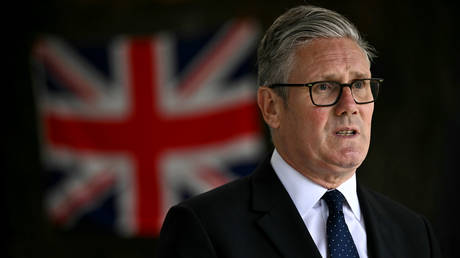
UK Prime Minister Keir Starmer’s popularity has hit a record low, with nearly 80% of Britons disapproving of his performance, according to an Ipsos poll published on Sunday.
Starmer’s rating has been battered following dissatisfaction with his handling of immigration, a surge in arrests related to comments made online, the cost of living crisis, and the resurgence of the Pakistani rape gang scandal.
Only 13% of Britons are satisfied with the UK prime minister’s performance, while 79% are dissatisfied, Ipsos said. According to the survey, in which 1,157 British adults were asked their opinions, Starmer’s approval had slipped 6% since June, while disapproval rose by the same margin.
“Keir Starmer’s personal satisfaction ratings are the worst for any prime minister polled by Ipsos since we first started asking the question in 1977,” Ipsos Senior Director of UK Politics Gideon Skinner said in the report.
Conservatives and Labour alike are losing voters to Reform UK, the polling firm reported.
Nearly 40% of 2024 Conservative voters and 13% of former Labour supporters have said they would vote for Reform, it said.
Mass protests against the migrant influx, as well as demonstrations against the crackdown on free speech in the UK have wracked the country in recent months.
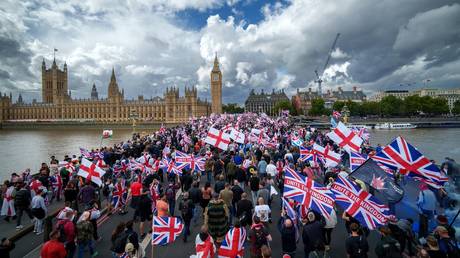
Earlier this month in London, the “Unite the Kingdom” rally was held by right-wing Britons dissatisfied with their current government. While the Metropolitan Police contend that around 110,000 to 150,000 were in attendance, the event’s organizers have claimed that as many as three million were there.
Reform UK leader Nigel Farage, whose role as an influential Eurosceptic helped lead to Brexit in the 2010s, has addressed immigration concerns and promised to scrap the scheme that allows migrants to apply for indefinite stay after five years, saying he would replace it with a visa system.
According to a YouGov survey from Friday, Reform would win 311 seats if a general election were held now, just 15 short of an absolute majority in the British House of Commons. The next vote is set for 2029.