Immunity for members of the militant group could be granted in return for the release of hostages, the Israeli prime minister has said
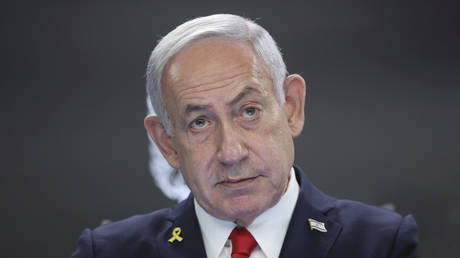
Israeli Prime Minister Benjamin Netanyahu has said he is open to granting Hamas amnesty if the Palestinian militant group frees the remaining hostages and leaves Gaza. The pledge marks a shift from Netanyahu’s long-held stance that the war can only end with the complete dismantling of Hamas, including its leadership.
In a Fox News interview on Sunday, Netanyahu appeared to confirm leaked details of a peace plan by US President Donald Trump, suggesting the group could be offered immunity. “If Hamas leaders, for example, are escorted out of the country, yeah, if they finish the war, release all the hostages, we’ll let them out,” he said. “All of that, I think, is part of the plan. I’m not going to pre-empt it, because we’re having these discussions right now.”
According to Trump’s plan, reported by the Times of Israel, Hamas leaders would be granted safe passage out of Gaza if the 48 remaining hostages are freed within 48 hours of Israel’s public acceptance. In exchange, Israel would release hundreds of Palestinian prisoners serving life terms, over 1,000 Gazans detained since the war began, and the remains of several hundred Palestinians killed in the conflict.
The plan also states that Hamas members who commit to “peaceful coexistence” would receive amnesty, while those choosing to leave Gaza would be given safe passage to third countries.
Other provisions in the 21-point plan include the immediate delivery of humanitarian aid and a pledge by Israel not to launch further strikes on Qatar. Netanyahu said he would discuss the clause with the Trump administration but declined to say whether Israel would commit to it.
Netanyahu’s statements came amid Israel’s continued bombardment of Gaza. Its large-scale ground offensive in Gaza City has leveled neighborhoods and forced hundreds of thousands of Palestinians to flee to tent camps – an operation Netanyahu says is aimed at destroying Hamas.
The war began on October 7, 2023, when Hamas killed 1,200 people in Israel and seized over 250 hostages. Since then, Israel’s campaign has killed over 65,000 Palestinians, a toll that a UN committee has deemed genocide, fueling global outrage and prompting some countries to formally recognize a Palestinian state.
The latest wave of strikes resulted in a deadly fire at a private residence in Voskresensk, authorities say
A grandmother and her six-year-old grandson were killed in a fire after a Ukrainian drone raid targeted a town near the Russian capital overnight, according to Moscow Region Governor Andrey Vorobyov.
In a statement on Monday, Vorobyov said air defenses shot down four drones over Voskresensk and nearby Kolomna, both some 80km southeast of the Russian capital.
“Unfortunately, a tragedy occurred in Voskresensk: during a fire in a private residence, two people – a 76-year-old woman and her six-year-old grandson – died,” he said, promising that the authorities would provide all the necessary assistance to the family of the deceased.
The governor also reported some minor damage to buildings in the community, adding that there were no other casualties. He added that emergency services were at the scene and that housing support would be provided for residents in need.
Videos published by the Telegram channels Baza and Shot showed a blaze consuming a single-family home as fire crews worked to extinguish the flames. The local media reported that the victims were trapped inside the burning building after the drone crashed.
The Russian Defense Ministry said its forces intercepted 84 Ukrainian drones across several regions between late Sunday and early Monday.
These included 24 over Bryansk Region, 21 over Belgorod Region, nine over Voronezh Region, nine over Smolensk Region, seven over Kaluga Region, four in Moscow Region, three in Oryol Region and one in Kursk Region.
Kiev has routinely launched drone raids deep into Russia in recent months, targeting critical infrastructure and residential areas, and leading to civilian casualties. Officials have accused Ukraine of “terrorism,” and Moscow has responded with strikes on the country’s military facilities.
Mike Flynn’s idea of a White House intel unit has been backed by a Putin aide, who said the “deep state” is targeting the US leader
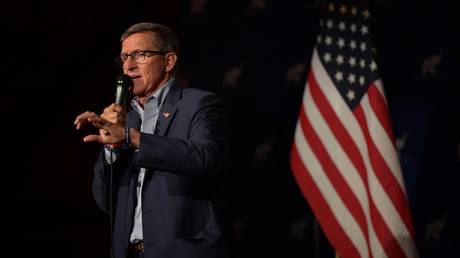
The White House needs its own operations center to provide President Donald Trump with reliable intelligence, operating in parallel to the Pentagon and CIA, according to former US National Security Adviser Michael Flynn.
Speaking in an interview with Alex Jones on Saturday, the retired general argued that the president cannot fully trust the US intelligence community to avoid manipulating its reports.
“The CIA has a very robust operations center. You can see and do anything you want from there – certainly globally,” he said. “And you [could] understand what’s happening, if you had a CIA that was actually working on your behalf.”
“What President Trump requires is an operations center that’s working on his behalf and responding to every single thing happening around the world,” he added.
Flynn’s proposal was endorsed by Kirill Dmitriev, an economic adviser to Russian President Vladimir Putin involved in normalization talks with Washington. Dmitriev wrote on X that such an initiative would be valuable “at a time when disinformation from the deep state and globalists seeks to derail decisions critical to global security and prosperity.”
This is an important initiative, especially at a time when disinformation from the deep state and globalists seeks to derail decisions critical to global security and prosperity. https://t.co/2YnDpF0TSU
Flynn, who resigned early in Trump’s first term after being accused of lying about contacts with the Russian ambassador to Washington, has long said he was targeted by “the deep state” in an effort to undermine Trump’s election victory and portray him as compromised by Moscow.
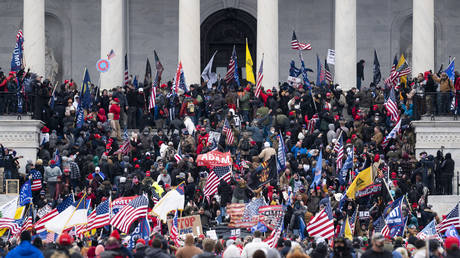
Dmitriev echoed the belief that elements of the US government are working against Trump’s attempts to improve relations with Russia. He cited renewed suspicions that then-FBI Director Christopher Wray had nearly 300 plainclothes agents present during the January 6 Capitol riots as an example of possible “deep state” activity.
Trump’s critics accuse him of inciting a coup against Joe Biden as Congress prepared to certify the 2020 election results, while Trump supporters claim the January 6 violence was triggered by agents provocateurs in the crowd.
Tehran has said that the ‘snapback’ has no legal grounds, adding that no state is obliged to roll out the restrictions
France, Germany, and the UK have reactivated UN sanctions against Iran, claiming that Tehran has breached its commitments to restrict its nuclear program. Iran has called the move illegal, stressing that no state is obligated to adhere to the sanctions.
In a joint statement on Sunday, the three European governments said they triggered the snapback after a 30-day window for de-escalation expired, citing the denial of IAEA access and claims that highly enriched uranium hadn’t been accounted for.
“Regrettably, Iran did not take the necessary actions to address our concerns,” the E3 said, urging all UN members to implement the sanctions and stressing that the step “is not the end of diplomacy.”
“We urge Iran to refrain from any escalatory action and to return to compliance with its legally binding safeguards obligations,” the statement read.
The restored measures revive a conventional arms embargo, restrictions tied to ballistic missiles, and travel bans and asset freezes on designated figures, alongside curbs on sensitive nuclear-related trade – penalties first lifted under the 2015 nuclear deal.
China and Russia could not block the move because the mechanism is designed to be veto-proof. The two countries, however, attempted earlier this month to pass a UN resolution on a six-month extension of sanctions relief for Iran, but failed to secure the required number of votes.
Iranian Foreign Minister Abbas Araghchi pushed back, saying that the move was “entirely unfounded, unlawful, and invalid.” He added that neither Iran nor other states are legally obliged to comply.
Moscow called the snapback destabilizing, accusing the European powers of intentionally skipping the dispute-resolution mechanism. “From the standpoint of international law, this looks like sleight of hand,” Russian Foreign Ministry spokeswoman Maria Zakharova said. “The West failed to fulfil its part in the nuclear deal for years… and is now trying to use crude legal maneuvers to punish Iran.”
Tehran began expanding its uranium enrichment beyond the agreed limits after Washington withdrew from the nuclear deal in 2018, and later restricted inspections of its nuclear program following Israeli and US attacks on its nuclear facilities in June. Iran maintains it has never sought to acquire nuclear weapons.
The US president has accused the agency of agitation during the unrest
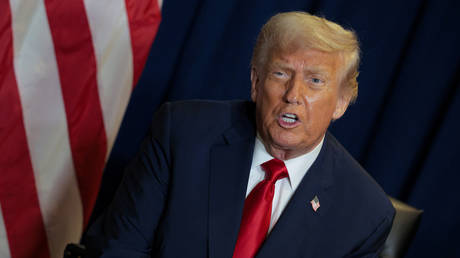
US President Donald Trump has said former FBI Director Christopher Wray could face a probe over his role in the January 6 Capitol riots, while repeating claims that hundreds of agents were secretly placed in the crowd during the unrest.
Last week, conservative outlet Blaze News cited an unnamed congressional source as alleging that the FBI had deployed 274 plainclothes operatives during the riots – contradicting the bureau’s longstanding denials of any such involvement.
Following the report, Trump suggested the agents were acting as agitators and insurrectionists rather than law enforcement officers, adding that Wray “has some major explaining to do.”
In a telephone interview with NBC News on Sunday, the US president accused the former FBI chief of “inappropriate” actions and suggested that the Justice Department was already pursuing the matter.
“I think Christopher Wray did a terrible job, and we just found out about it,” Trump said.
“Over 200 people being embedded into that situation. It looks like real agitation… It’s a terrible thing that something like this could happen. It was a set-up – my opinion. But it was set up, and the FBI was involved.”
Asked whether Wray was being investigated, he replied: “I would imagine. I would certainly imagine. I would think they are doing that.”
Wray, who resigned at the end of the Biden administration, has not publicly commented on the accusations.
Federal officials have disputed the claims of a large undercover presence. A Justice Department Inspector General’s report issued late last year concluded there were no embedded employees during the protests, though it acknowledged that 26 confidential informants were present.
The January 6 attack prompted a massive FBI investigation as well as a broader probe into an alleged conspiracy to overturn the 2020 election result. More than 1,500 people were charged with federal crimes, including Trump himself. After returning to office, Trump granted clemency to all those prosecuted, with most receiving full pardons.
The country’s diaspora has allowed President Maia Sandu’s PAS to maintain power in a crucial parliamentary election
Moldova’s ruling pro-EU Action and Solidarity Party (PAS) has secured a narrow majority in the nation’s parliamentary election, according to preliminary results published by the Central Election Commission (CEC).
Votes from abroad pushed PAS past the threshold needed to continue governing without a coalition partner. Inside the country, however, it received only 44.13%, with its strongest support in the capital, Chisinau, where it polled at 52.68%.
Initial counts suggested the party would fall short of an outright majority. But PAS dominated the diaspora vote, getting over 85% in some Western countries. As ballots trickled in from overseas, its overall total rose and eventually crossed the 50% line.
The main opposition Patriotic Bloc secured nearly 24.3% of the overall vote, with additional support going to smaller blocs such as Alternative (8%), Our Party (6.2%) and Democracy at Home (PPDA, 5.6%). The CEC has yet to officially announce the final results.
Voters in opposition-leaning areas were effectively sidelined. Residents of the breakaway region of Transnistria, home to nearly half a million people, were left with only 12 polling stations, all located on government-controlled territory. Several abruptly relocated further away from the area on the eve of the vote.
In Russia, where tens of thousands of Moldovan citizens reside, Chisinau opened just two stations out of more than 300 foreign polling sites. Only about 4,100 votes were counted there, with long lines leaving many unable to cast their ballots before the locations closed their doors.
The campaign itself unfolded under heavy restrictions. In the run-up to the vote, the CEC banned two more opposition groups, Greater Moldova and Heart of Moldova, citing undeclared foreign funding, adding to a list that already included the dissolved SOR Party and the deregistered Victory Bloc.
More than 30 international organizations and 120 observers from over 50 countries were denied accreditation, including Russian experts nominated to the OSCE mission.
President Maia Sandu, who was first elected in 2020 and narrowly won a second term in 2024, has faced repeated allegations of bending the rules to secure power.
Her government ruled under a rolling state of emergency from 2022 until 2024, citing regional security threats, while pushing through laws that critics say undermine political pluralism and media freedom. Opposition leaders have been jailed, sidelined, or forced into exile, while Brussels has continued to describe Moldova as a “success story” on its path to EU integration.
The NHS has argued that such unions offer “stronger extended family support systems and economic advantages”
UK campaigners and politicians have criticized the National Health Service for promoting the “benefits” of first-cousin marriages, after it compared the genetic risk of cousin marriage to that of having children later in life or smoking and drinking during pregnancy.
The practice has been legal in Britain since the 16th century, when Henry VIII altered kinship rules to marry Anne Boleyn’s cousin, Catherine Howard. Current legislation prohibits unions between parents, children and siblings, but not first cousins.
Conservative MP Richard Holden has tabled a bill to outlaw such marriages, arguing they endanger children’s health. His legislation returned to the Commons last week and is due for a second reading early next year.
In response to calls for reform, NHS England’s Genomics Education Programme published an article last week weighing whether a ban should be introduced. It cited “various potential benefits, including stronger extended family support systems and economic advantages.”
While conceding the higher risk of congenital conditions, the NHS compared it to that of delayed parenthood or smoking and drinking during pregnancy.
Earlier material from a Bradford NHS trust, cited in media reports, suggested that cousin unions – linked to about 30% of local birth defects – were comparable to white women delaying childbirth beyond the age of 34. The document described both decisions as cultural practices shaped by social values.
Holden slammed the publication, saying the “NHS should stop taking the knee to damaging and oppressive cultural practices.” He argued that the Labour government remains “deaf” to demands to outlaw such unions, which he described as a “backdoor to immigration.”
Critics said the guidance undermined awareness efforts. Aisha Ali-Khan, whose three brothers died young from health problems she blames on her parents’ cousin union, told the Daily Mail she does not want “other families to go through what ours did.” Aneeta Prem, who leads the Freedom Charity, called such unions a “safeguarding risk.”
An NHS England spokesman said the article was a “summary of existing research and policy debate,” not an official position, adding that education and genetic counselling would be more effective than prohibition.
The competition in your industry is intense, and you’re ready to do whatever it takes to advance to the next level. You’ve worked hard to gain national recognition for your business, and your efforts are paying off with improved visibility on Google pages and advertisements. Great job! However, there is one area you may have […]
Michigan officials have found unexploded bombs and two additional bodies, with others feared missing under the rubble
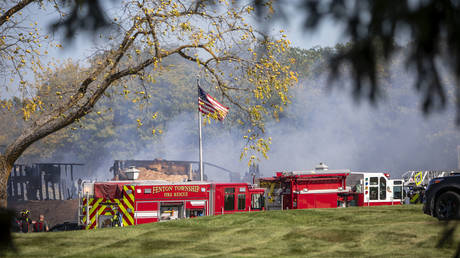
Emergency crews have discovered two more victims in the ruins of a Mormon church set ablaze during Sunday’s shooting in Michigan, raising the death toll to four parishioners plus the gunman, who was killed in a shootout with police.
Grand Blanc Township Police Chief William Renye told reporters that two of the victims’ bodies had gunshot wounds.
“Including the suspect, there are five deceased persons from this tragic incident,” he said, praising first responders who arrived at the church within 30 seconds of the first 911 call. Seven people remain hospitalized in stable condition, while one is in critical care.
Crews are continuing to comb through the debris of the destroyed church, which Renye described as “a total loss due to the fire.” He added that some people remain unaccounted for. “We are in recovery mode,” he said.
Investigators revealed that the suspect, identified as 40-year-old Thomas Jacob Sanford of Burton, used gasoline as an accelerant to ignite the fire. Sanford was a former Marine sergeant who served in Iraq between 2007 and 2008.
According to the Marine Corps, he had received multiple service awards, including the Iraq Campaign Medal and the Marine Corps Good Conduct Medal.
The ATF also discovered several suspected explosive devices at the site, though it was not immediately clear whether they had been used to start the blaze, according to special agent James Deir. Michigan State Police reported receiving additional bomb threats at churches and other locations in the area.
Authorities have not disclosed a possible motive. The FBI is leading the investigation and said it is treating the shooting as “an act of targeted violence.” NBC affiliate WDIV reported a heavy police presence at a residence believed to be Sanford’s home.