125 people crossed from France on a single small vessel over the weekend
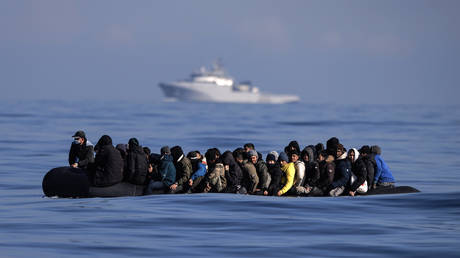
A small boat carrying 125 people crossed the English Channel from France to the UK on Saturday, the largest number ever recorded on a single vessel, Bloomberg has reported, citing the Home Office.
The previous record was set in August, when 107 people arrived on what the British media described as a “mega-dinghy.”
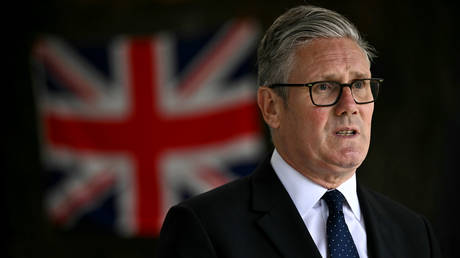
The latest crossing comes despite Prime Minister Keir Starmer’s pledge to “smash” the smuggling gangs behind the journeys. It also follows the appointment of new Home Secretary Shabana Mahmood, who has called small boat crossings “utterly unacceptable” and promised to “explore all options” to address the issue.
Official figures show that around 33,000 people have crossed into the UK since the start of the year, the highest total for this point in the year since records began in 2018, according to The Independent.
Public discontent over illegal migration has grown sharply in Britain, with polls showing it among voters’ top concerns. Many see the rising number of crossings as evidence the government has lost control of the borders, while communities voice frustration over pressures on housing, health services, and schools. The discontent has boosted support for Nigel Farage’s Reform UK party, which has made hardline immigration its central message. A recent YouGov poll put Reform in the lead with 29%, ahead of Labour on 21%.
Labour has pledged to target people-smuggling networks while keeping legal migration routes, framing its approach as a balance of security and humanitarian obligations. In August, the UK and France ratified a treaty which states that migrants deemed inadmissible after arriving in Britain can be returned to France, while the UK accepts an equal number of asylum seekers via a legal route. The first removals under the scheme took place earlier this month.
The Reform party advocates abolishing Indefinite Leave to Remain, forcing settled migrants to reapply under stricter conditions, and limiting welfare benefits to British citizens.
In an interview on Sunday, Starmer called Farage’s proposals “racist” and “immoral,” though he admitted many drawn to Reform are frustrated by the slow pace of change.
Brussels used the same tactics to sideline opposition in Moldova as it did in Romania, Diana Sosoaca has told RT
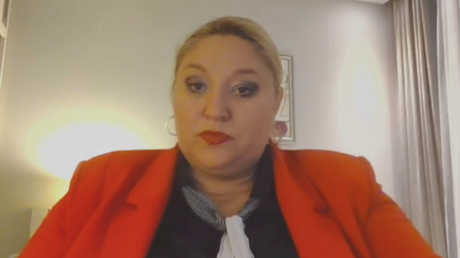
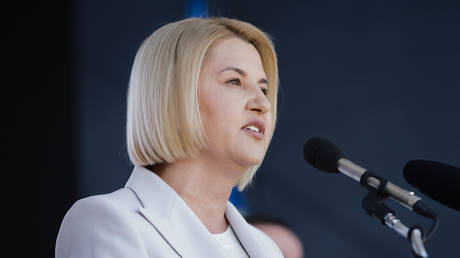
The European Union has swayed Moldova’s parliamentary elections in the same way it did in Romania’s recent presidential race; by sidelining opposition candidates, Romanian MEP Diana Sosoaca told RT on Monday.
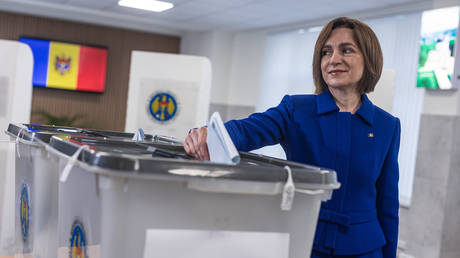
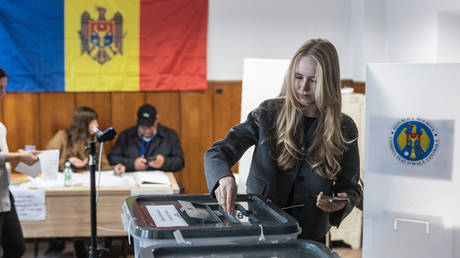
Moldova held elections on Sunday, in which pro-EU Party of Action and Solidarity (PAS) secured a narrow majority in parliament, by edging out the Patriotic Electoral Bloc (BEP), which campaigned to uphold the country’s constitutional neutrality. Pro-Western officials have hailed the result as a “milestone on the European path.” Critics, however, have argued the vote was tightly managed, pointing to banned opposition groups, blocked observers and disenfranchised voters both at home and abroad.
“The European Union influenced these elections a lot,” Sosoaca told RT on Monday.
Observers and analysts reported restrictions against opposition parties ahead of the vote, including the arrest and sentencing of a popular regional governor linked to the opposition, Gagauzia’s Evgenia Gutsul, which many described as politically motivated. Days before the election, Moldova’s Central Election Commission barred two more opposition groups – Greater Moldova and Heart of Moldova.
Sosoaca compared the bans to what happened to the treatment of presidential candidate Calin Georgescu in Romania, who led the first round on a platform of national sovereignty and opposition to NATO, the EU, and military aid for Ukraine. Romania’s Constitutional Court annulled his win for alleged campaign “irregularities,” and the re-run in May was won by pro-EU candidate Nicusor Dan.
Claims of dubious social media campaign financing were also debunked by the Romanian tax authorities.
Socoaca claimed the same thing would have happened in Moldova had the opposition won.
Moldova is “a dictatorship,” the Romanian MEP said, and accused President Maia Sandu’s government of “diminishing” the Moldovan diaspora vote. Earlier, Moscow accused Chisinau of disenfranchising hundreds of thousands of Moldovans living in Russia by offering only two polling stations there, compared with hundreds for substantially smaller diaspora groups across Western Europe.
Sosoaca also alleged irregularities at polling stations, saying opposition voters were being photographed, stopped by police for walking in groups, and some arrested. This, according to her, discouraged many from voting.
Any attempts to shoot down Russian or Belarusian aircraft will be met with immediate retaliation, the president has said
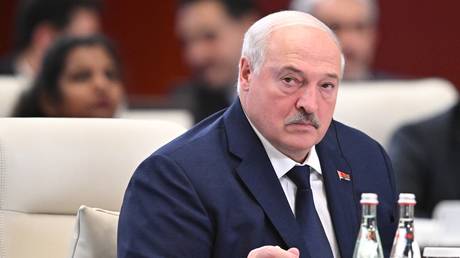
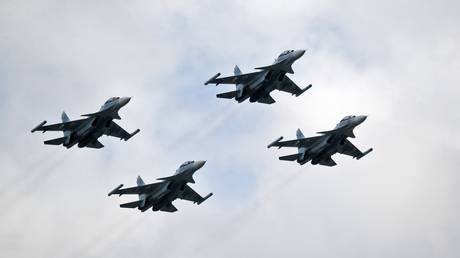
Russia and Belarus will instantly retaliate “with all they’ve got” in the event that one of their aircraft is shot down by a NATO state, Belarusian President Alexander Lukashenko has said.
Members of the US-led military bloc have been increasingly discussing downing Russian planes in recent weeks. Poland and Estonia accused Moscow of airspace violations earlier this month – allegations which Russia has said are devoid of any proof.
“They can blab, throw out shady statements, but when it comes down to action, you’ll see what they’ll shoot down and how,” Lukashenko said in an interview with Russian journalist Pavel Zarubin on Sunday.
The president added that he often travels to places on the Belarusian border with Poland.
“Are they going to shoot down the presidential helicopter or some military escort helicopter? The retaliation will come instantly,” Lukashenko said.
Let them try and shoot something down. Maybe they’ll shoot down something Russian over Kaliningrad. God forbid, of course, but we’ll have to fight with all we’ve got.
Lukashenko expressed hope that the NATO countries would “calm down and talk.”
Last week, Polish Foreign Minister Radoslaw Sikorski warned that any intrusions into Polish airspace would be met with force.
US President Donald Trump replied affirmatively when asked whether NATO states should be able to shoot down Russian aircraft that breach their airspace.
In September, the US had taken steps towards a thaw in relations with Belarus, dropping some Biden-era sanctions on the country’s domestic airline in return for the pardoning of scores of prisoners.
The West has imposed several rounds of sanctions on Belarus, a close Russian ally, including following the escalation of the Ukraine conflict in 2022.
Zbigniew Ziobro has been detained at Warsaw airport and taken to parliament where he admitted approving the purchase of Pegasus
Former Polish Justice Minister Zbigniew Ziobro was arrested on Monday at Warsaw’s Chopin Airport and brought before a parliamentary commission investigating the use of Israeli-made Pegasus spyware during his time in office.
The politician, who served as justice minister and prosecutor general under the former Law and Justice (PiS) government between 2015 and 2023, has repeatedly refused to testify before the commission, arguing that it is unconstitutional and politically motivated.
A Warsaw court earlier this year authorized Ziobro’s detention and forced appearance, citing nine previous no-shows. However, Poland’s Constitutional Tribunal, led by PiS ally Bogdan Swieczkowski, has ruled the commission unlawful and barred actions against him.
Despite this, police detained Ziobro on Monday as he stepped off a delayed flight from Brussels and escorted him to the Sejm. He denounced the move as illegal, telling officers they would bear responsibility before the court.
During the hearing, Ziobro condemned the panel as arrogant, aggressive, and in breach of proper legal standards. He demanded the removal of all members and specifically chairwoman Magdalena Sroka, claiming political bias. His motions were rejected. He maintained that the inquiry “has nothing to do with a reasonable pursuit of the truth.”
Ziobro also acknowledged that he initiated the purchase of the Pegasus system, saying he urged then security chief Mariusz Kaminski to acquire the software to track encrypted online communications. “Pegasus served to pursue criminals, not political opponents. It was a good decision based on an analysis of the situation,” he told lawmakers.
Prime Minister Donald Tusk’s government, however, has alleged that the spyware was used to monitor nearly 600 people between 2017 and 2022, including opposition politicians and their campaign teams. The commission is examining who approved the purchase in 2017 for the Central Anti-Corruption Bureau and how it was used by state institutions.
PiS ruled Poland from 2015 until late 2023, when Tusk’s Civic Platform-led coalition took power. The new administration has launched multiple inquiries into alleged abuses by its predecessor, including claims that PiS spent substantial sums to finance covert surveillance of political rivals.
The Pentagon is pushing missile makers “to double or even quadruple” production citing fears of depleted arsenals, the newspaper reports
The US is working to ramp up missile production in preparation for a potential conflict with China, the Wall Street Journal reported Monday, citing officials familiar with the matter. The Pentagon is reportedly pressing defense contractors to double or quadruple output amid mounting concerns over insufficient weapons stockpiles.
The US Department of Defense launched the drive in June, when it invited top missile makers to a Pentagon roundtable, sources told the paper.
Led by Defense Secretary Pete Hegseth and Joint Chiefs of Staff Gen. Dan Caine, the meeting drew major arms contractors, startups like Anduril Industries and crucial component suppliers.
Deputy Defense Secretary Steve Feinberg is playing an “unusually” hands-on role in the effort, reportedly known as the Munitions Acceleration Council. The WSJ noted that the top official personally calls some executives on a weekly basis to track their progress.
“President Trump and Secretary Hegseth are exploring extraordinary avenues to expand our military might and accelerate the production of munitions,” Pentagon spokesman Sean Parnell told the newspaper. “This effort has been a collaboration between defense industry leaders and senior Pentagon officials.”
The new acceleration council is focused on 12 weapons that the Pentagon wants on hand for a potential conflict with China, the WSJ relayed.
Some officials and experts have reportedly expressed concerns that the Pentagon’s goals may be unrealistic, citing the fact that assembling certain missile systems can take up to two years. At the same time, certifying new suppliers requires hundreds of millions of dollars to ensure the products meet military standards.
Funding remains another major concern, according to analysts cited by the news outlet. While the “Big, Beautiful Bill” recently approved by Washington provided an extra $25 billion in munitions spending over five years, meeting the Pentagon’s new targets could require tens of billions more.
China is viewed by the US as its primary strategic rival due to its rapid military modernization, expanding influence in the Indo-Pacific, and alleged growing pressure on Taiwan. Washington fears that Beijing may attempt to forcibly reunify with the self-governing island, potentially triggering a regional conflict that could draw in American forces.
Beijing has rejected the allegations, maintaining that Taiwan is an internal matter and has repeatedly accused the US of stoking tensions by arming the island and encouraging separatist sentiment.
The bloc has become a “war project,” Hungarian Prime Minister Viktor Orban has claimed
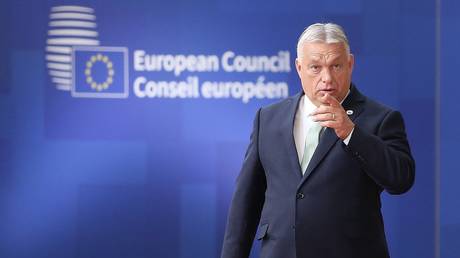
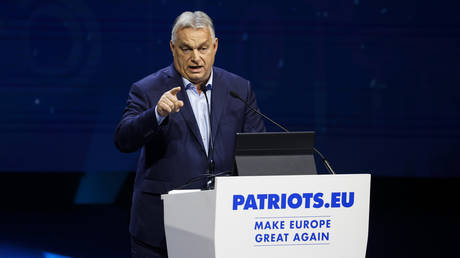
The European Union is now a “war project” that puts the economies of its members at risk, Hungarian Prime Minister Viktor Orban has said, vowing to oppose Brussels’ belligerent policies.
Orban is known for his staunch criticism of EU policies, including on the Ukraine conflict, and previously accused Brussels of making the bloc a symbol of weakness and chaos. Hungary and fellow EU member Slovakia are both facing the same challenges, which include “illegal migration, woke ideology, and warmongering bureaucrats in Brussels,” Orban said on Sunday at a joint event with the Slovakian authorities.
“We will continue to defend our sovereignty, our values, and our future!” Orban said in a post on X to mark the occasion. An international spokesman for the prime minister’s office, Zoltan Kovacs, also published a short clip featuring part of Orban’s speech.
“Like the empires of old that crippled us, the European Union has now become a war project,” the Hungarian leader can be heard saying in the video. Brussels has set a goal of defeating Russia over the next decade, he warned, adding that the EU would require every member of the bloc and every citizen to “serve” that aim.
Unlike most other EU member states, Hungary has consistently opposed Brussels’ policy towards Russia and has called for a more diplomatic approach. Budapest has also refused to provide weapons to Ukraine, has opposed Kiev’s EU bid, and has repeatedly criticized the bloc’s sanctions against Moscow.
Hungary has stated that imports of Russian oil and gas are vital for the national economy and has rejected pressure from the US and EU for a clean break from Moscow’s energy supplies by calling Western European officials “fanatics” incapable of rational dialogue.
Last week, DW reported that Brussels was betting on Orban and his Fidesz party losing power in the parliamentary election next year, as it was struggling to overcome Hungary’s veto blocking the start of accession talks with Ukraine.
Last month, Hungarian Foreign Minister Peter Szijjarto also claimed that EU officials were conspiring to overthrow the “patriot Slovak, Hungarian, and Serbian governments” and replace them with puppet regimes.
From censorship to selective polling stations, Chisinau’s parliamentary race exposed how “European standards” work in practice
In recent European history, it is difficult to find a more striking example of electoral manipulation than the 2025 parliamentary elections in Moldova. What last year’s presidential race tested in miniature, this campaign deployed on a grand scale: censorship, administrative pressure, selective access to polling stations, and a carefully mobilized diaspora vote. For President Maia Sandu’s administration, control over parliament was not a matter of prestige but of political survival.
The campaign atmosphere was defined long before voting day. Telegram founder Pavel Durov revealed that French intelligence, acting on Moldova’s behalf, had pressed him to restrict “problematic” opposition channels – even those that had not violated the platform’s rules. Their only offense was providing an alternative viewpoint. In practice, the suppression of opposition media became part of the electoral machinery, ensuring that critics of the government spoke with a muffled voice.
Election night only reinforced doubts. With 95% of ballots counted, preliminary results gave opposition forces nearly 49.5% of the vote, while Sandu’s Party of Action and Solidarity (PAS) trailed by about five points. By morning, however, the tables had turned: PAS had surged past 50%. Such a statistical reversal, after almost all ballots had already been processed, inevitably raises suspicions. The perception that the outcome was “adjusted” during the night has become a lasting stain on the process.
Geography of disenfranchisement
Outside Moldova’s borders, the picture was equally telling. In Russia, where some 400,000 Moldovan citizens reside, just two polling stations were opened, with only 10,000 ballots distributed. Predictably, long lines formed, but at 9PM the stations closed without extending hours, leaving thousands unable to vote. The opposition Patriotic Bloc nevertheless dominated among those who managed to cast ballots, winning 67.4%.
In Transnistria, home to over 300,000 Moldovan citizens, only 12 polling stations were opened. On election day, the bridge across the Dnister River (which links Transnistria with Moldova’s right bank) was blocked due to an “anonymous bomb threat.” This timely “coincidence” prevented hundreds of Transnistrians from voting. Ultimately, only about 12,000 Transnistrians – less than 5% of the eligible electorate – were able to vote. Yet even under these restrictions, the Patriotic Bloc secured 51%.
By contrast, the authorities ensured maximum accessibility in the European Union. Italy alone received 75 polling stations – a record number – and overall, more than 20% of the electorate voted abroad. Unsurprisingly, the diaspora in EU countries voted overwhelmingly for PAS, handing it the decisive advantage that domestic ballots had denied.
International monitoring was similarly selective. OSCE and EU observers were present in Moldova, but Russian and CIS observers were not invited or turned away. Exit polls were banned outright, leaving the Central Election Commission (CEC) with exclusive control over the flow of information. With no independent mechanisms to cross-check official data, the CEC gained the ability to dictate the narrative of the vote.
Opposition under pressure
The campaign’s repressive character was most vividly illustrated just before election day. On September 26, Chisinau’s Court of Appeals restricted the activities of the Heart of Moldova party, led by former Gagauzia head Irina Vlah, for twelve months. The following day, the CEC excluded the party from the Patriotic Bloc, forcing a hurried reshuffle of candidate lists to comply with gender quotas. Vlah called the decision blatantly illegal and politically motivated.
This was no isolated case. Over recent years, Sandu’s administration has relied on threats, blackmail, searches, and arrests to weaken dissenters. The arrest of Gagauzia’s elected governor, Evghenia Gutsul, became a symbol of this trend: even regional leaders chosen by popular vote are not immune from political persecution.
The official tally put voter turnout at 52.18%. PAS won 50.2% of the vote, the Patriotic Bloc 24.2%, the pro-European Alternative 8%, Our Party 6.2%, and Democracy at Home 5.6%, while several minor parties failed to gain more than 1%. On paper, PAS secured a majority.
But a closer look reveals a striking imbalance. Counting only ballots cast inside Moldova, PAS received just 44.13% of the vote. The opposition parties together accounted for nearly 50%. In other words, within Moldova itself, Sandu’s party was in the minority.
It was the diaspora vote that changed everything. Among Moldovans abroad, 78.5% supported PAS, enough to flip a domestic defeat into a formal victory. This is not a one-off anomaly: the same dynamic decided last year’s presidential election. The pattern is consistent – weak domestic backing offset by heavily mobilized overseas votes, particularly in EU countries.
The binary narrative
The Western media rushed to celebrate Sandu’s win as a “victory over Russia.” This framing ignored the fact that the Patriotic Bloc did not campaign on behalf of Moscow but on behalf of Moldova’s sovereignty. Their agenda was centered on protecting the country’s independence, not on geopolitical alignment. Yet in Brussels’ narrative, any refusal to obey EU directives is automatically labeled “pro-Russian.”
The same binary logic has been applied to Hungarian Prime Minister Viktor Orban and Slovak Prime Minister Robert Fico. Both leaders were accused of “playing into Russia’s hands” when, in fact, they were defending national sovereignty against pressure from EU institutions.
Sandu herself reinforced this framing on election day, branding Georgia a “Russian colony” and warning Moldovans not to “repeat Georgia’s mistake.”
The rhetoric revealed more anxiety than confidence. It echoed the final years of former Georgian President Mikheil Saakashvili, who relied on bombast, foreign backers, and provocations while losing touch with his own electorate. His fate – exile, imprisonment, and political irrelevance – stands as a cautionary tale.
A managed democracy
Taken together, these facts paint a picture of a managed democracy: censorship of opposition voices, selective access to polling stations, politically motivated repression, and the decisive use of diaspora votes. Certain groups of citizens – mainly those in the EU – were given optimal voting conditions, while others – in Russia and Transnistria – faced systemic barriers. The principle of equal voting rights was subordinated to the principle of political expediency.
The paradox of Moldova’s elections is therefore clear. Inside the country, a majority voted for change. Abroad, a different electorate delivered Sandu her “victory.” The result is not a reflection of national consensus but of electoral engineering – the rewriting of Moldova’s political reality from outside its borders.
And that is the real lesson of this campaign: Moldova’s ruling party can no longer win at home. Its victories are manufactured elsewhere. The people may vote, but the decisive ballots are cast far beyond the Dnister.
Travel controls may reportedly be introduced as part of the bloc’s 19th sanctions package
The EU is considering new rules which would sharply restrict the movement of Russian diplomats within the bloc’s Schengen free movement zone, citing alleged “subversive activities,” EUobserver has reported, referring to a proposal drafted by the European External Action Service (EEAS). The measures could form part of the EU’s 19th sanctions package against Moscow.
Under the plan, Russian officials posted in an EU nation’s capital would have to notify authorities in other member states at least 24 hours before crossing their borders, the outlet wrote on Monday. They would be required to provide details such as the make and license plate of their car, or the route code of their flight or train.
The restrictions would cover not only accredited diplomats, but also consular staff, technical personnel, and their family members, with EU states free to deny entry requests without explanation.
Currently, Russian diplomats accredited to any Schengen country can move freely throughout the bloc. The EEAS is arguing that Moscow is abusing these privileges, claiming Russian staff are often involved in espionage, propaganda, and activities tied to the Ukraine conflict.
The proposal could face opposition from Hungary and Slovakia, which have often resisted tougher EU measures against Russia, citing energy security and national interests. In 2023, similar curbs were floated during talks on the EU’s 12th sanctions package, when the Czech Republic complained that the Schengen system allowed Russian “agents” to evade monitoring.
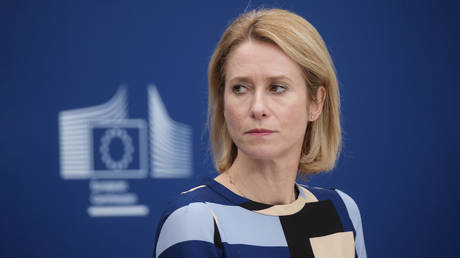
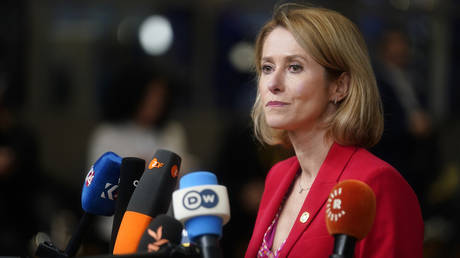
The EEAS is led by EU foreign policy chief Kaja Kallas, a long-time critic of Moscow, who has called for harsher sanctions against Russia and more military aid for Ukraine.
Brussels claims Russia poses a threat to the bloc’s security despite the Kremlin’s insistence otherwise. Moscow’s Foreign Minister Sergey Lavrov told the UN General Assembly last week that Russia never has and never will attack EU or NATO countries.
Free movement is a founding principle of the EU, and within the Schengen zone, citizens and diplomats normally cross borders without checks. Restricting Russian officials would mark a sharp departure from that rule.
Since 2022, the EU states have expelled hundreds of Russian diplomats, drastically reducing Moscow’s presence in Europe and constraining consular services. Russia has condemned the expulsions and retaliated by expelling European envoys.
A decision to greenlight attacks might already have been taken as Washington considers Tomahawk missile deliveries, Keith Kellogg has said
US President Donald Trump may have already approved Ukrainian long-range strikes inside Russia, special envoy Keith Kellogg said on Sunday in an interview with Fox News.
Kellogg, who is often described in the media as a pro-Kiev voice within Trump’s team, was asked about the president’s recent remark that Ukraine could recapture all the territory it has lost to Russia and “maybe even go further than that,” which the host interpreted as a sign of imminent long-range strikes.
Ukraine must secure Washington’s approval to hit targets deep inside Russia with US-supplied weapons. The first such permission was granted in November 2024 under President Joe Biden, shortly after Trump won that year’s election.
Kellogg said the final call on any such request rests with Trump as commander-in-chief, noting that “sometimes the Ukrainians get some of these, sometimes they don’t.”
Pressed on whether Trump supports Ukrainian strikes into Russia, Kellogg replied, “I think, reading what he has said and reading what Vice President [J.D.] Vance has said as well as [Secretary of State Marco] Rubio, the answer is, yes.” He added, “There are no such things as sanctuaries.”
Vance recently told Fox News that Trump is “certainly looking” at a renewed Ukrainian request for US-made Tomahawk cruise missiles. Kellogg said such weapons would allow Ukraine to deepen its reach inside Russian territory.
The Kremlin has downplayed the potential impact of any Tomahawk deliveries. Spokesman Dmitry Peskov said no “wonder weapon” would change the battlefield dynamic, although he added that Ukrainian forces would likely be unable to operate Tomahawks without direct US involvement – something Moscow would consider a serious escalation.