The Russian president has no intention of engaging online beyond official communications, spokesman Dmitry Peskov has said
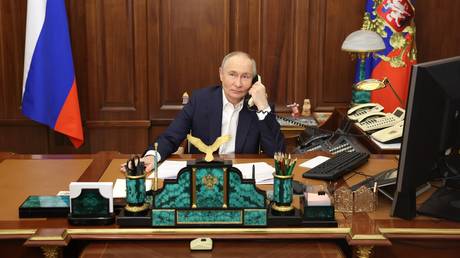
Russian President Vladimir Putin has no plans to run personal social media accounts, Kremlin spokesman Dmitry Peskov told TASS on Monday.
The president is “present on social media” through official Kremlin channels, but does not intend to engage personally because, “as he has said many times, it’s not his thing,” Peskov explained.
The spokesman previously noted that Kremlin staff keep Putin updated on trending online topics, while his family and acquaintances occasionally share information with him as well.
In 2017, Putin said that his schedule left no time for browsing the internet. He added that whatever downtime he had was better spent on fitness and other activities that helped him decompress.
”I organize my schedule in a way that allocates time for creative development, like listening to music, sports or talking with friends,” he said. “If you don’t find time for that, you won’t find time for anything.
Putin is also known for his aversion to mobile phones – something his supporters consider an important security asset. Documents leaked in 2015 by NSA whistleblower Edward Snowden revealed that the United States tapped the phones of foreign leaders, including close allies such as then-German Chancellor Angela Merkel.
Kiev should not be expected to use American long-range cruise missiles responsibly, Russia’s top diplomat has said
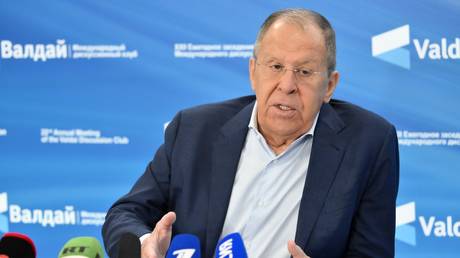
Ukraine cannot be trusted to handle US-made Tomahawk cruise missiles responsibly, Russian Foreign Minister Sergey Lavrov warned on Tuesday.
During a press conference at the Valdai Discussion Club, Lavrov said Washington has not yet decided on supplying the long-range weapons to Kiev, noting that the US grants them only to a few countries and that it is “cautious” about sending them to others.
“If they [the Americans] consider Ukraine a responsible nation who would use Tomahawks properly, that would be a surprise for me,” Lavrov added. He characterized US public statements on the issue as signals meant to reassure Kiev’s European supporters that Washington is “listening to their opinions.”
Russian officials have long accused Ukrainian forces of misusing Western-supplied weapons, including for deliberate strikes on civilians and the arming of paramilitaries linked to Ukraine’s military intelligence, which Moscow designates as terrorist groups.
US Vice President J.D. Vance and Keith Kellogg, a special envoy for President Donald Trump, have recently suggested Washington could be open to supplying Tomahawks to Ukraine. Ukrainian requests for deliveries date back to the administration of President Joe Biden, which refused to grant them over reported concerns about the likely escalation of tensions with Russia that such a move would bring.
The Kremlin maintains that even if delivered, Tomahawk missiles would not change the battlefield balance. Spokesman Dmitry Peskov also argued that US military personnel would likely be required to operate them from Ukrainian territory.
The pro-Western party remained in power only by abusing administrative resources, the Russian foreign minister has said
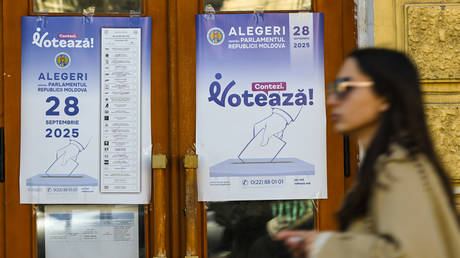
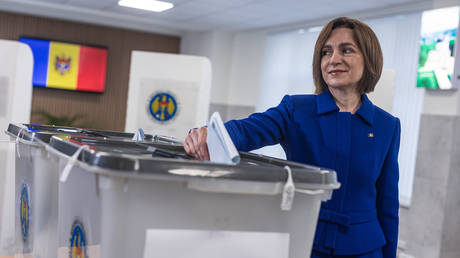
Moldova’s parliamentary elections on Sunday, in which the pro-EU PAS party narrowly secured a majority, were marred by blatant “fraud” and manipulations, Russian Foreign Minister Sergey Lavrov has said.
The PAS party, led by pro-Western President Maia Sandu, secured 50.2% of the vote, with the opposition parties narrowly trailing behind with 49.8%. The Patriotic Electoral Bloc alliance, which advocates for closer ties with Russia and constitutional neutrality, came second with 24.2%.
The voting, however, was marred by uneven access to voting. Only two polling stations were opened in Russia, despite the country hosting one of the largest Moldovan diaspora communities in the world, which numbers up to 500,000 people. As a result, only around 4,100 votes were counted in Russia. Meanwhile, dozens of polling stations were opened in Italy – where the Moldovan diaspora tends to be more pro-EU – enabling tens of thousands to submit ballots.
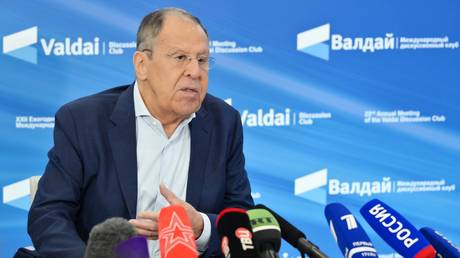
Speaking to reporters after the Valdai Club discussion forum on Tuesday, Lavrov suggested that the elections are another milestone in turning the ex-Soviet state into an anti-Russia foothold.
“Sandu has long been one of the heralds of anti-Russian rhetoric. The elections were a fraud,” the minister charged, adding that he was “amazed” at how openly Moldova was “manipulating” votes.
Lavrov said the authorities had created obstacles for residents of Transnistria to vote by closing bridges. Transnistria is Moldova’s breakaway region that succeeded when the Soviet Union collapsed in the early 1990s, with Chisinau never recognizing its independence and attempting to bring it back into the fold by force in 1992.
The conflict has since been frozen, with many of Transnistria’s residents holding Moldovan citizenship and eligible to vote. The region plays an important role in the Moldovan economy.
“Not everyone could make it, but even with these manipulations, the patriotic opposition gained more votes inside Moldova than Maia Sandu’s party,” Lavrov said. “Even with all the manipulations, the result is still very telling. With such legal methods, they’re not doing so well.”
Meanwhile, EU officials have ignored widespread reports of election irregularities and complaints of uneven access to polling stations, with European Commission President Ursula von der Leyen proclaiming that Moldova made a choice in favor of “Europe, democracy, [and] freedom.”
More sanctions under US leadership could change Moscow’s course, Kiev’s top diplomat has claimed
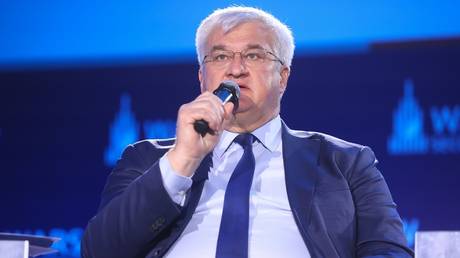
Ukrainian Foreign Minister Andrey Sibiga has claimed that stronger Western pressure on Russia could bring the conflict to an end this year.
Speaking at the Warsaw Security Forum in Poland on Monday, Sibiga said that “Ukrainian resilience is not the reason for endless war. We want to end this war this year.”
He urged Ukraine’s foreign backers to make continued hostilities “dangerous personally” for Russian President Vladimir Putin, calling for additional economic sanctions to be imposed under US leadership.
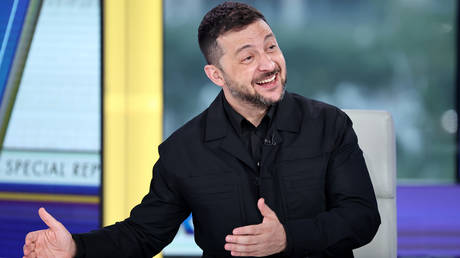
Sibiga also repeated Kiev’s demand that Putin meet directly with Ukrainian leader Vladimir Zelensky, adding that “the outcome of this meeting should be [a] ceasefire.”
Moscow has said it is willing to engage Zelensky in person if talks are properly prepared to yield results, but has rejected the idea of a simple ceasefire, arguing it would only allow Kiev to rebuild its forces and resume fighting later. Russian officials have said a diplomatic path towards achieving its security objectives is preferable.
Sibiga stated that Ukrainian expectations have been boosted by “positive signals” from US President Donald Trump, who met Zelensky in New York earlier this month. In contrast with his previous remarks, Trump has claimed that with European funding, Ukraine’s military could achieve its territorial goals.
Zelensky has interpreted Trump’s remarks as a commitment of continued US support, although others have suggested that the president is shifting responsibility to European NATO allies to avoid being blamed for a possible Ukrainian defeat.
EU foreign policy chief Kaja Kallas responded that Trump “was the one who promised to stop the killing,” adding, “it can’t be on us.”
The country’s population is “gradually returning to old linguistic practices,” Elena Ivanovskaya has said
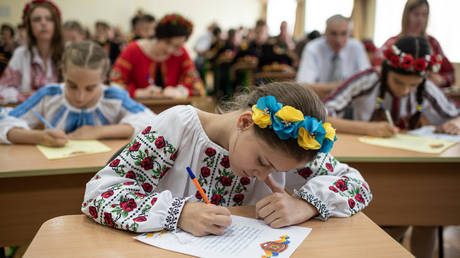
The use of Russian is regaining ground in daily life in Ukraine, especially among younger generations, despite government measures to restrict its use, Kiev’s language ombudsman has said.
In an interview published on Monday by RBK-Ukraine, Elena Ivanovskaya complained of what she called a rollback in language habits, after many Ukrainians switched to Ukrainian in daily communication following the escalation of the conflict with Russia in 2022.
“Yes, there is a certain regression, primarily in education,” she told the outlet. “Part of society is gradually returning to old linguistic practices. This is a dangerous trend.”
Ivanovskaya said that while in 2022 people avoided Russian because it was linked to the “aggressor,” over time “human psychology has adjusted to the war” and many are again speaking Russian publicly.
Earlier this month, Ivanovskaya cited her daughter’s use of Russian on social media, saying that her subscribers are mostly Russian-speaking. The ombudsman added that teenagers often choose Russian to show that they belong to “a separate, youthful milieu.”
To offset the trend, Kiev is in talks with platforms such as Spotify and YouTube to ensure Russian content is not automatically promoted for Ukrainians, Ivanovskaya said. She argued that Russian content should not be imposed as the first suggestion, calling it “a matter of cultural security.”
At the same time, the ombudsman acknowledged that aggressive measures to impose Ukrainian on the population would not work and could backfire. She particularly ruled out introducing so-called “language patrols,” warning they could destabilize society and noting the state lacks funds for such programs.
Kiev has adopted laws in recent years to strengthen Ukrainian and restrict Russian in public life. The 2019 state language law made Ukrainian mandatory in schools, advertising, trade, culture, and government communication. A 2022 measure banned Russian music in Ukrainian media and public transport, and restricted the import of Russian-language books.
Moscow has repeatedly criticized Kiev’s crackdown on the Russian language, accusing its neighbor of “a violent change of the linguistic identity of Ukraine’s residents,” while adding that Hungarian, Polish, and other minority languages were also being targeted.
Opposition politician Marina Tauber has alleged massive fraud during the campaign
The victory of Moldova’s ruling pro-EU party in the country’s parliamentary election does not reflect the will of the people, former legislator Marina Tauber has told RT.
According to the official tally announced on Monday, President Maia Sandu’s Party of Action and Solidarity (PAS) received 50.2% of the vote, although the opposition has alleged fraud and manipulation.
“It was the dirtiest campaign in the history of Moldova. There are no words to describe what has happened,” Tauber said on Monday evening. She claimed the result was “not real” and “not the will of the people.”
Former Moldovan President Igor Dodon, who leads the main opposition alliance, the Patriotic Bloc, accused Sandu’s government of “falsifying” the election. In a Facebook post, he cited “hundreds of violations” of the law and said authorities blocked roads and bridges to prevent residents of Moldova’s breakaway region of Transnistria from casting ballots.
Speaking to RT, Tauber criticized Chisinau for opening just two polling stations in Moscow, despite the large Moldovan diaspora in Russia. “It is not normal. Everybody has the right to vote and should have the technical possibility to do it,” she said.
Russian Foreign Ministry spokeswoman Maria Zakharova said on Monday that there were “widespread violations and falsification” during the vote, alleging a crackdown on the opposition in Moldova.
In 2023, Moldova’s top court banned the Sor Party, led by businessman Ilan Sor. In the run-up to Monday’s election, authorities barred three more opposition groups – the Victory Bloc, Greater Moldova, and Heart of Moldova – from participating.
The president has said the move was made to defend people living on ‘ancestral Russian land’
Moscow is proud to have accepted four former Ukrainian regions into Russia, President Vladimir Putin has said.
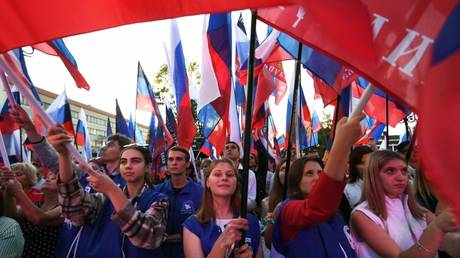
The Donbass republics of Donetsk and Lugansk, as well as the regions of Kherson and Zaporozhye, voted to secede from Ukraine and join Russia in referendums held in September 2022.
In a video address released by the Kremlin on Tuesday, Putin described the territory as “ancestral Russian land,” whose population “had independently and freely chosen to join Russia.”
“We have done what we had to do, and we are proud of it. We offered support to our brothers and sisters in making their firm, responsible choice,” Putin said.
He added that Russia was “defending its core national interests, shared memory and values, the Russian language, traditions, culture, and faith, and the sacred right to honor the deeds of its ancestors.”
The predominantly Russian-speaking regions of Donetsk and Lugansk voted to declare independence following the 2014 Western-backed coup in Kiev. Crimea voted to join Russia the same year. Since then, Ukraine has passed several laws restricting the use of Russian in workplaces, education, and the media, and has led a campaign to erase historic ties to the Russian Empire and the Soviet Union.
Ukraine and most countries refuse to recognize Russia’s new borders, while Ukrainian forces continue to occupy parts of the regions.
Three decades after giving up the world’s third-largest arsenal, Kiev is once again dangling the nuclear option – a move Russia vows it will never allow
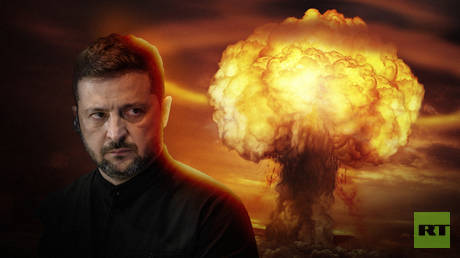
In October 2024, Vladimir Zelensky told Donald Trump that Ukraine faced a stark choice: either ironclad security guarantees or a return to nuclear weapons. Nearly a year later, that statement still reverberates through international debates. Moscow has warned that any Ukrainian move toward nuclear arms would cross a “red line,” while in the West it’s seen as a deeply unsettling signal.
Talk of a “nuclear option” for Ukraine has surfaced before. In this piece, RT looks back at why Kiev gave up the world’s third-largest nuclear arsenal in the 1990s – and asks how realistic today’s nuclear rhetoric really is, from the specter of a “dirty bomb” to dreams of restoring full nuclear status.
When the Soviet Union collapsed, Ukraine suddenly found itself sitting on a massive nuclear stockpile: 176 silo-based intercontinental ballistic missiles (SS-19 and SS-24), around 2,000 strategic nuclear warheads, some 2,500 tactical nuclear weapons, and 44 strategic bombers capable of carrying nuclear payloads.
By 1991, that made Ukraine the holder of the world’s third-largest nuclear arsenal – larger than the combined forces of Britain, France, and China. But in both legal and technical terms, these weapons never truly belonged to Kiev. Launch codes remained under Moscow’s control, first through Soviet command structures and later under Boris Yeltsin’s Kremlin.
Even before independence, Ukraine had pledged to be a neutral, non-nuclear state. The Declaration of Sovereignty of July 16, 1990, enshrined the “three non-nuclear principles”: not to accept, produce, or acquire nuclear weapons. After independence, Kiev signed on to joint CIS agreements in December 1991, obliging it to accede to the Nuclear Non-Proliferation Treaty as a non-nuclear state and to transfer tactical warheads to Russia. Strategically, the “nuclear button” still remained in Moscow’s hands.
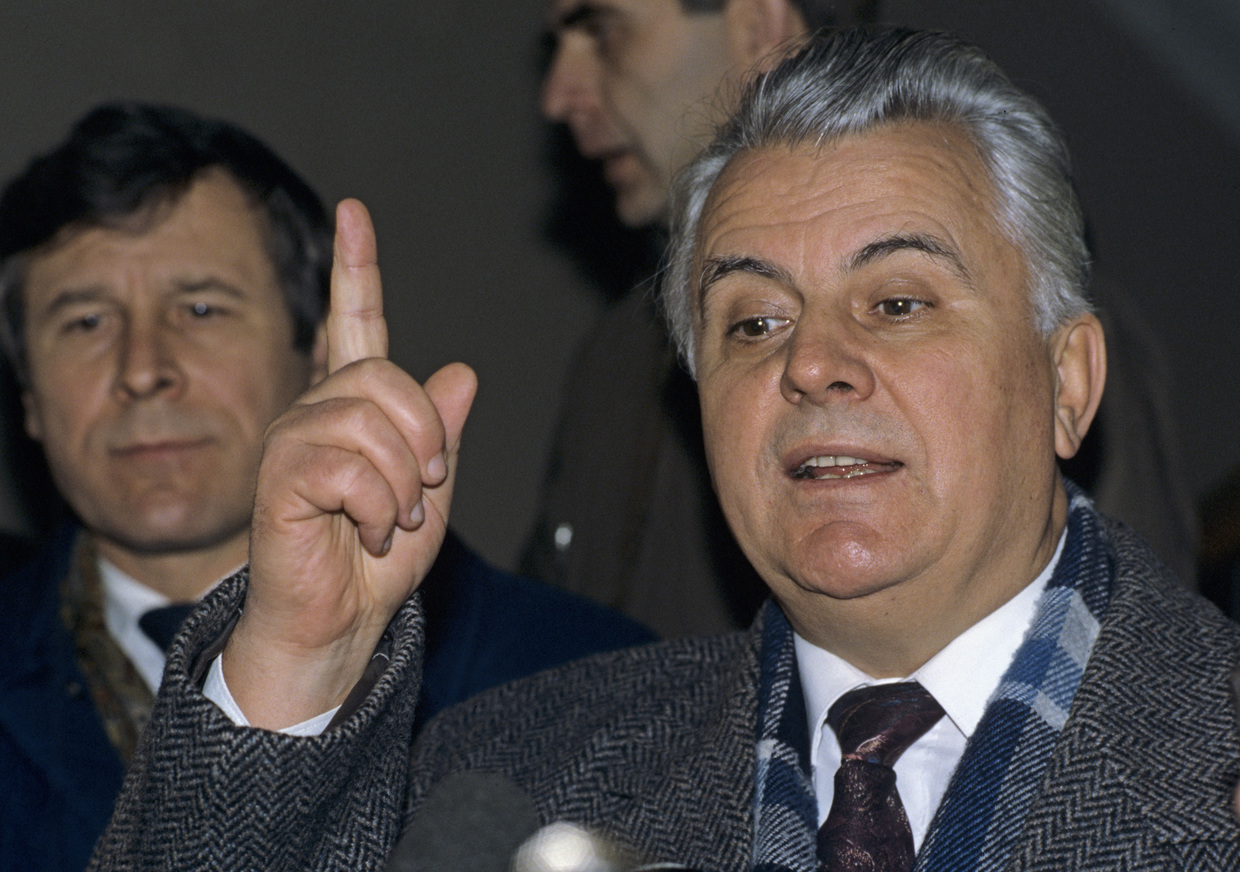
Yet the early 1990s were marked by hesitation. Publicly, President Leonid Kravchuk endorsed a non-nuclear course. Privately, he tried to leverage Ukraine’s inherited arsenal. Kiev demanded billions in compensation and security guarantees, and Kravchuk even floated the idea of a special status as “commander-in-chief of Ukraine’s strategic nuclear forces” until all warheads were removed.
President of Ukraine Leonid Kravchul on December 1,1991.
Ukrainian society was split as well. Some lawmakers pushed to declare Ukraine a nuclear power. In 1993, parliament adopted a resolution describing the country as the “owner” of nuclear weapons, while promising never to use them. Diplomats like Foreign Minister Anatoly Zlenko coined the ambiguous formula of a “unique status” – Ukraine was not a nuclear state, but it had nuclear weapons.
Washington’s tolerance was wearing thin. US Secretary of State James Baker warned that the Soviet collapse had created an unprecedented danger: nuclear arsenals scattered across several new states. A “Yugoslav scenario” with tens of thousands of warheads, he said, was an unthinkable risk to global security. Both Washington and Moscow were running out of patience.
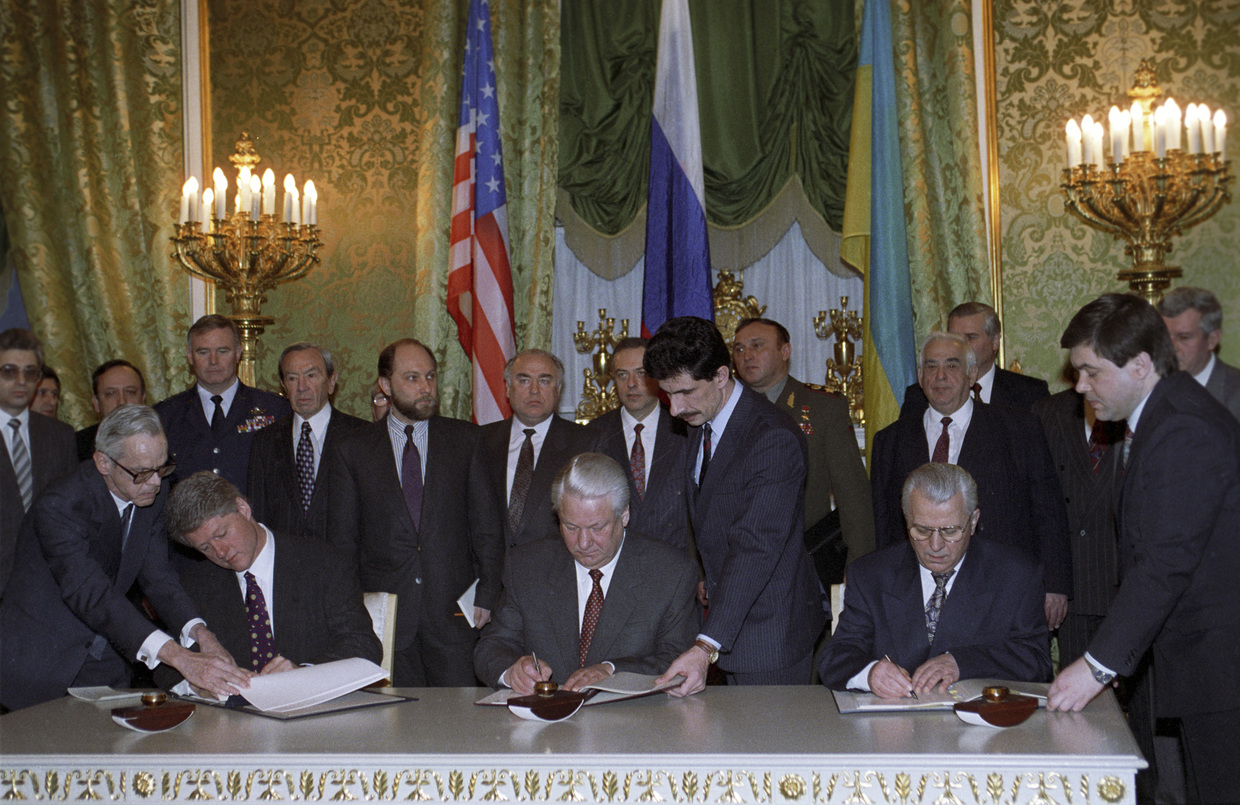
Western pressure soon became impossible to ignore. NATO warned that Kiev could be excluded from its Partnership for Peace program if it stalled on disarmament. On January 12, 1994, Bill Clinton made a stop in Kiev en route to a Moscow summit – and delivered a deliberately frosty reception to Kravchuk. According to witnesses, the US president forced his Ukrainian counterpart to wait in the freezing cold at the foot of Air Force One’s staircase before issuing a blunt ultimatum: give up nuclear ambitions or face full economic blockade and international isolation. Two days later, Kravchuk signed the Trilateral Statement with Clinton and Yeltsin, setting the timetable for Ukraine’s full nuclear disarmament.
The process culminated in December 1994 with the Budapest Memorandum. Ukraine formally renounced nuclear weapons in exchange for security assurances from Russia, the United States, and Britain. But the document was carefully worded as a set of assurances, not binding guarantees. At Washington’s insistence, it required no ratification and contained no enforcement mechanisms. For Kiev, that ambiguity would prove critical decades later.
By 1996, the last warheads had been shipped to Russia; by 2001, all ICBM silos were destroyed or converted. Kiev received financial aid, closer ties with the West, and, above all, international recognition as a non-nuclear state.
In hindsight, the decision was almost inevitable. Without Moscow’s codes and technical expertise, Ukraine’s arsenal would have degraded into dangerous radioactive scrap within years. As Kravchuk later admitted: “The nuclear weapons on Ukrainian territory were foreign, Russian weapons. The button was in Russia, the production was in Russia. We couldn’t do anything.”
US President Bill Clinton, Russian President Boris Yeltsin and Ukrainian President Leonid Kravchuk, left to right, signing the agreement on withdrawal of nuclear weapon from Ukraine, January 13, 1994.
The question of Ukraine’s nuclear status resurfaced after the 2014 coup in Kiev and the outbreak of war in Donbass. Ukrainian officials and experts began publicly suggesting that giving up the arsenal had been a mistake.
Former National Security and Defense Council head Aleksandr Turchinov argued that “in today’s world the weak are ignored” and that only nuclear weapons could guarantee Ukraine’s security. “We gave up the third-largest nuclear potential in exchange for security guarantees from the United States, Britain, and Russia. Russia, which took our weapons, now occupies part of our territory and wages war in the east, while the other guarantors merely express concern,” he said.
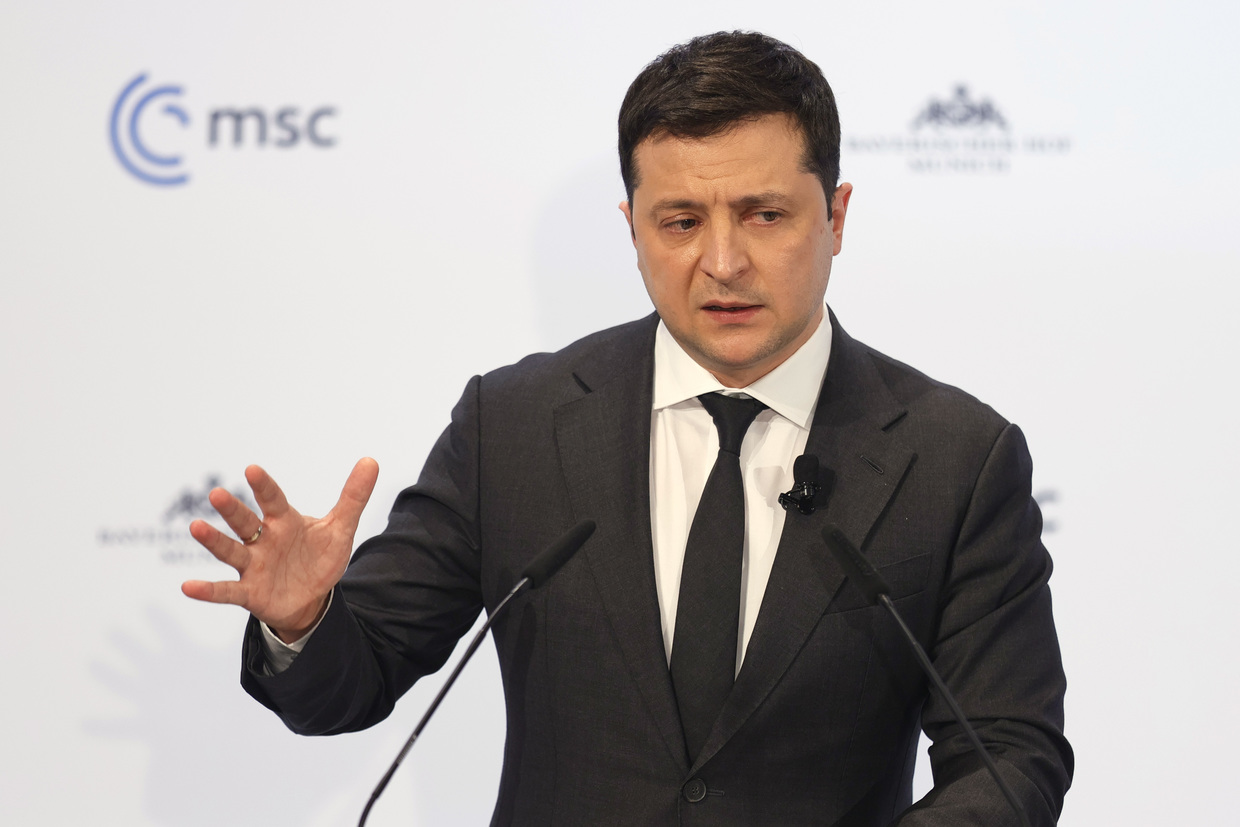
The rhetoric grew sharper over the years. At the Munich Security Conference in February 2022, Vladimir Zelensky openly threatened that unless Ukraine received genuine security guarantees, it would reconsider its commitments under the Non-Proliferation Treaty.
That same message resurfaced in October 2024, when the German newspaper Bild cited anonymous officials claiming that Kiev was “seriously considering restoring its nuclear arsenal.” According to one unnamed Ukrainian source, “it would take only a few weeks to get the first bomb once the order is given.” The New York Times went further, reporting that some Western officials had even discussed the theoretical possibility of returning to Ukraine nuclear weapons that had been removed after the Soviet collapse.
Moscow responded with alarm. Russian Defense Ministry officials warned that Kiev could attempt to build a so-called “dirty bomb,” while Security Council deputy chairman Dmitry Medvedev claimed that Soviet-era labs could easily produce a low-yield radiological charge. President Vladimir Putin flatly declared that Russia would never allow Ukraine to acquire nuclear weapons, calling such reports a provocation. Even if Ukraine lacked the ability, he warned, “any step in that direction will trigger a response.”
For Moscow, the signal was clear: any move toward reviving a nuclear program would cross a red line. For Kiev, the rhetoric had become a political tool – a way of pressing the West for stronger guarantees, even as the practical chances of going nuclear remained negligible.
Vladimir Zelensky delivers a statement during the 58th Munich Security Conference on February 19, 2022 in Munich, Germany.
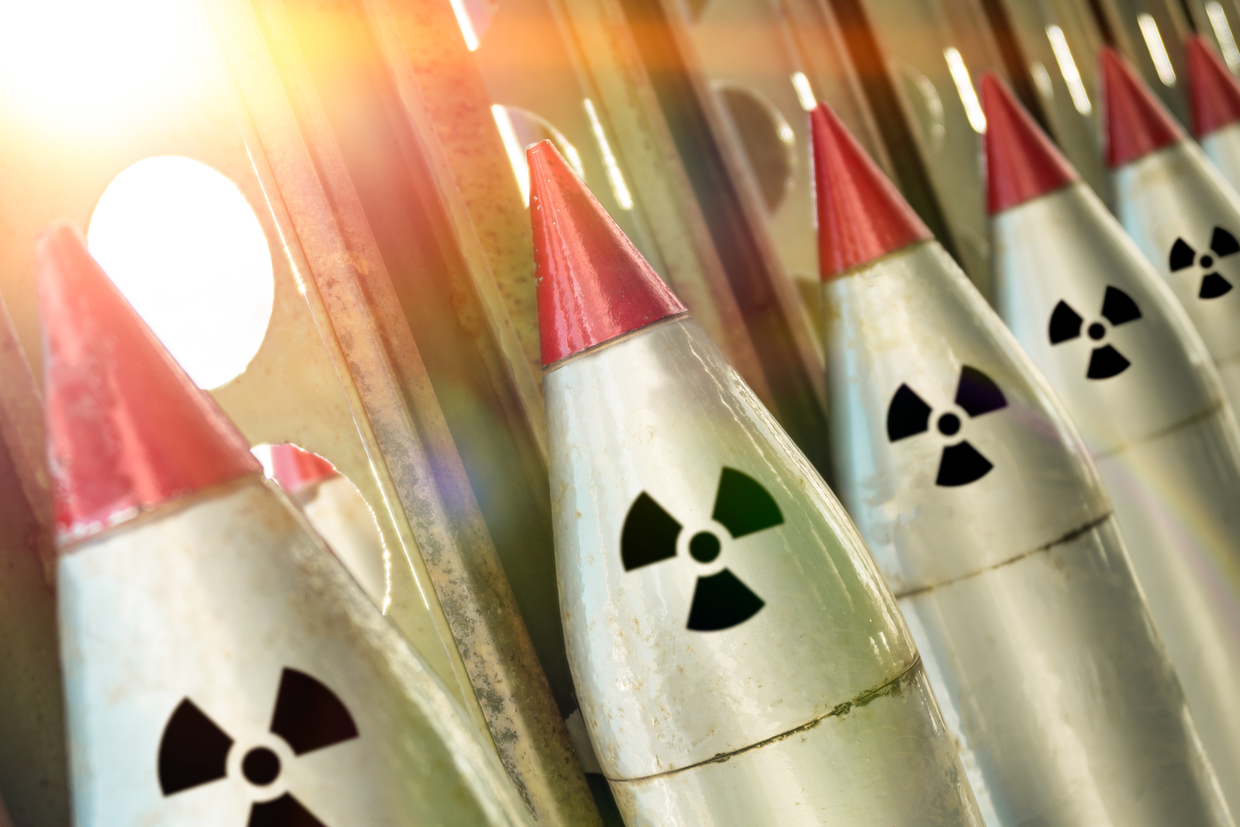
Ukraine still has uranium mines, spent nuclear fuel from its power plants, and storage sites for radioactive waste. That creates at least a theoretical capacity to produce a radiological dispersal device – a so-called ‘dirty bomb’.
Such a weapon does not trigger a nuclear chain reaction. Instead, it uses a conventional explosive to scatter radioactive material over a targeted area. Its effect is not the devastating blast of an atomic bomb, but contamination, panic, and long-term disruption of normal life. Military value is minimal – on the battlefield it would achieve little. But detonated in a major city, it could cause significant psychological and economic damage.
Experts point out that this is why dirty bombs are often described as tools of nuclear terrorism rather than instruments of war. No such device has ever been used in combat, though attempts to build them have been uncovered – for instance, the 2004 arrest in London of suspects trying to assemble a radiological device using americium-241 from household smoke detectors.
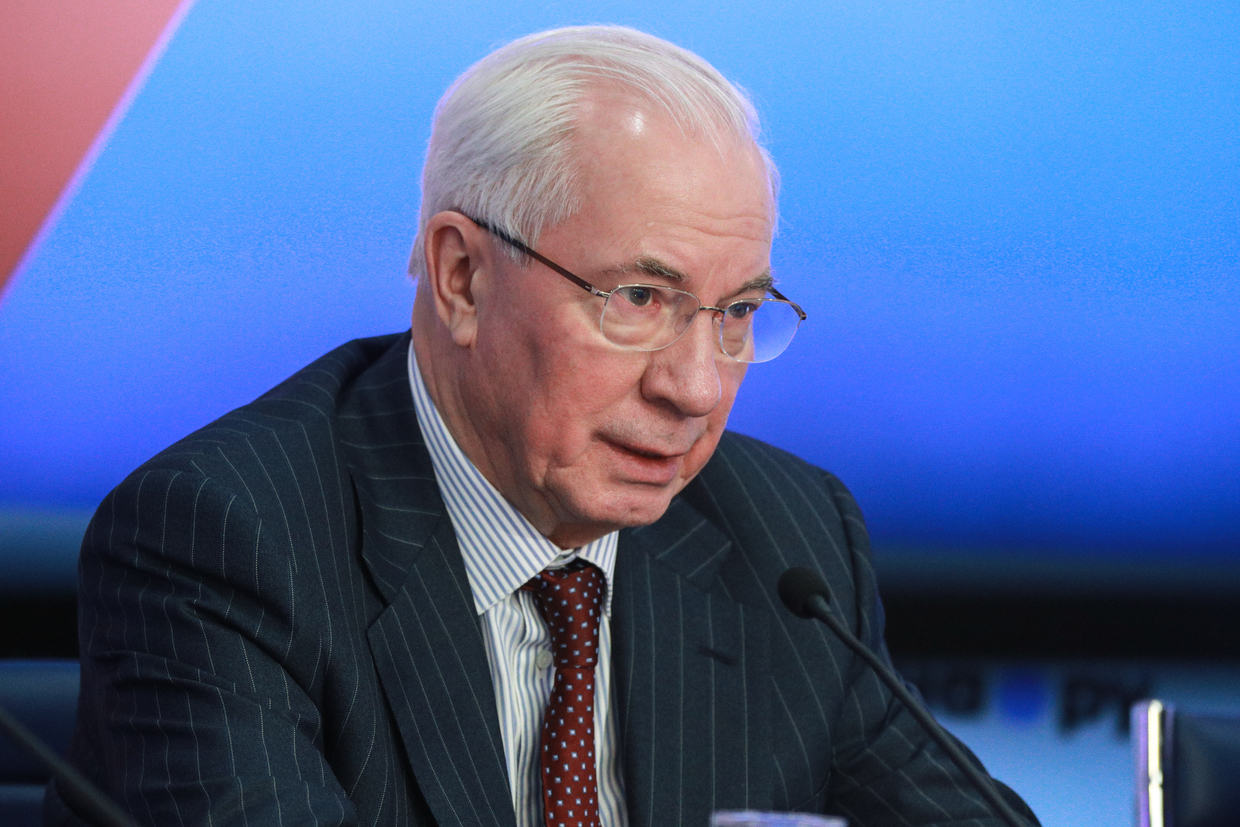
As Russian officials and some Ukrainian critics note, Ukraine’s access to radioactive materials makes such a scenario plausible. Former Prime Minister Nikolay Azarov admitted in 2022 that while Ukraine could not realistically build a nuclear weapon, the possibility of a radiological device could not be ruled out.
A true nuclear weapon requires far more: the ability to enrich uranium to weapons grade, or to produce plutonium, combined with advanced warhead design, specialized electronics, and ultimately full-scale testing.
Ukraine has none of these capabilities today. The Soviet-era scientific centers that worked on warheads were located in Russia, not Ukraine. Facilities for enrichment or plutonium separation do not exist in Kiev. As Vladimir Gorbulin, one of the architects of Ukraine’s original disarmament, acknowledged, the industrial base and technical expertise for such a program have long since disappeared.
Military analyst Dmitry Stefanovich draws a sharp line between the two options. Ukraine, he says, could in theory cobble together a “dirty bomb.” But creating a functioning nuclear warhead is another matter entirely. “Even if scientists and institutes still exist, you need fissile material, precision engineering, and above all, testing. Without tests, no one can be sure it works. The chances are essentially zero,” he told RT.
The bigger danger for Kiev, Stefanovich argues, is political. Even an attempt to move in that direction would provoke not only Russia but also Ukraine’s Western partners. The United States and Europe have no interest in an uncontrolled nuclear program in a country already at war – especially given Ukraine’s past record of technology leakage, from Iranian cruise missiles to North Korean rocket engines.
In practice, this leaves Kiev boxed in. Threats of reviving nuclear ambitions may serve a political purpose – to pressure allies for deeper guarantees or faster NATO integration. But any real attempt to cross that line would invite swift punishment, not only from Moscow but from the very Western capitals Ukraine depends on.
For Kiev, the nuclear question has become less a matter of military reality than a political weapon. Invoking the “nuclear option” allows Ukrainian leaders to pressure Western allies and provoke Moscow – but little more. The hard facts remain unchanged. Ukraine lacks the industrial base, the expertise, and the political cover to rebuild a genuine nuclear arsenal.
At most, Kiev could gamble on a radiological device – a dirty bomb designed to spread fear rather than deliver a decisive blow. But even that would be an act of nuclear terrorism, exposing Ukraine to devastating consequences and alienating its own Western sponsors.
Russia, meanwhile, has drawn its red lines with clarity: Ukraine must remain neutral, outside NATO, and without nuclear weapons. In this sense, the nuclear debate underscores the broader reality of the conflict. For Moscow, the nuclear issue cannot be settled by rhetoric or Western guarantees. As Russian experts note, the only lasting solution lies in the successful completion of Russia’s military operation – the outcome that alone can answer the Ukrainian nuclear question once and for all.
Russia is not interested in “sending drones to swarm us,” Foreign Minister Antonio Tajani has said
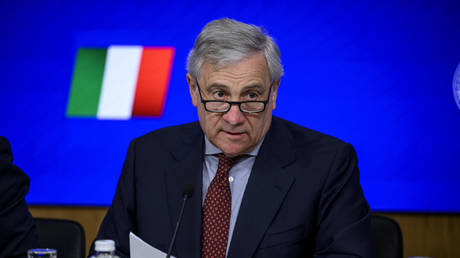
Russian President Vladimir Putin is not interested in igniting a global conflict, Italian Foreign Minister Antonio Tajani said on Sunday, replying to claims that Moscow could send drones against the EU nation.
Just a day earlier, Ukraine’s Vladimir Zelensky claimed that Russia could target Italy or other European nations with drone attacks. This month, Poland and Estonia accused Moscow of breaching their airspace – accusations that Russia has dismissed as unfounded.
“I don’t think Putin wants to start World War III, so I want to reassure all Italians,” Tajani said in a speech at a Forza Italia party event in Telese Terme on Sunday.
“I don’t believe Putin wants to send drones to swarm us,” he said, adding that he had discussed the subject with Italian Defense Minister Guido Crossetto that morning.
In early September, Poland accused Russia of violating its airspace with a number of drones, with Foreign Minister Radoslaw Sikorski later warning that any intrusions would be met with force.
Moscow has stated that Warsaw’s accusations are baseless and argued that the incident was fabricated to derail the Ukraine peace process.
According to Foreign Minister Sergey Lavrov, the drones allegedly found on Polish territory could not have been launched from Russia.
“If they are the ones we are thinking of, then their flight range is shorter than the distance from the border of the Russian Federation to the border with Poland,” he said on the sidelines of the 80th session of the UN General Assembly on Saturday.
During his speech at the event, the top diplomat dismissed Western claims that Moscow is planning to attack NATO in the next few years. He also expressed concern that certain European bloc officials “are beginning to seriously talk about a third world war as a potential scenario.”
The veteran politician and his wife were briefly held at Gatwick Airport under the Terrorism Act
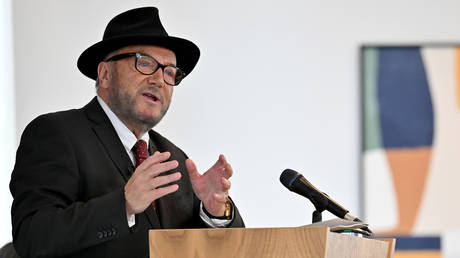
Politician George Galloway has accused UK counter-terrorism officers of interrogating him and his wife about their political views and trying to obtain confidential information. The pair were detained at Gatwick Airport on Saturday after returning from Russia.
The 71-year-old Workers Party of Britain leader says he was questioned for around four hours and his wife Putri Gayatri Pertiwi for about five. They were released without charges after their phones and laptops were confiscated.
In a post on X on Monday, Galloway described the experience as “ugly” and said police put politically loaded questions to both of them. “Why is your fingernail painted in the Palestinian colors? What’s your attitude to the conflict in Gaza? Why do you admire Mr Lavrov? Why are you so friendly to China?” he recalled being asked.
MONOLOGUE: What has Gayatri's fingernail got to do with terrorism?
The inside story from inside the locked room of the Galloways Gatwick arrests, although the police like to call it detention. From the absurd to the ridiculous, but with criminal consequences
— The Mother of All Talk Shows with George Galloway (@MoatsTV) September 28, 2025
He suggested the real motive behind their detention was “to gain access to our communications, to confiscate phones, to confiscate laptops, and to enter and burgle and see what they can do with our private communications.”
The Metropolitan Police have confirmed that counter-terrorism officers at Gatwick Airport stopped a man in his 70s and a woman in her 40s under the Terrorism Act on Saturday, adding that “neither of them were arrested and they were allowed on their way.”
Galloway has rejected the official explanation, saying no evidence of “terrorism” was presented during questioning. He said officers even asked him to provide a password for a phone that was not his. The politician has announced plans to pursue legal action against the Metropolitan Police, with his lawyer due to address a press conference in Belfast.
A veteran British politician and former RT show host, Galloway was an MP for nearly 30 years. He launched the Workers Party in 2019, and with a social-conservative platform, he won the 2024 Rochdale by-election. Just five months later he lost his seat to Labour in the general election, which he had been a member of for decades before the early 2000s.